
Cat Litter Odor Control in America: What US Cat Owners Need to Know
Read more →

Vous préférez une vidéo rapide? Regardez la plus récente vidéo vérifiée de notre chaîne YouTube officielle et suivez @PurrifyHQ pour les prochaines mises à jour de marque et de produit.
Purr Purr Purrify | Song about Cat Litter Odour Control Made in Canada
Sources
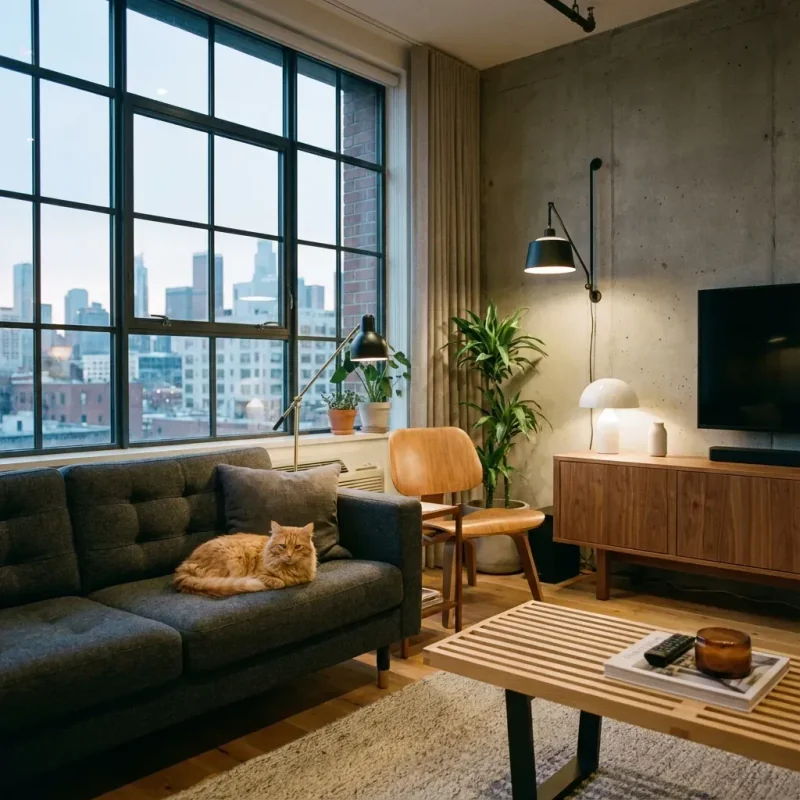
Pour vous débarrasser de l'odeur de litière dans une maison ou un appartement, commencez par réduire l'ammoniac au bac, améliorer la circulation d'air et adopter une routine anti-odeur qui fonctionne même dans les studios, les condos et les autres petits espaces.
Nettoyez le bac deux fois par jour et ne laissez pas l'urine reposer assez longtemps pour donner à toute la pièce cette odeur âcre et chimique.
Installez le bac près d'une source d'air quand c'est possible pour que l'odeur ne s'accumule pas dans les garde-robes, les couloirs ou les chambres.
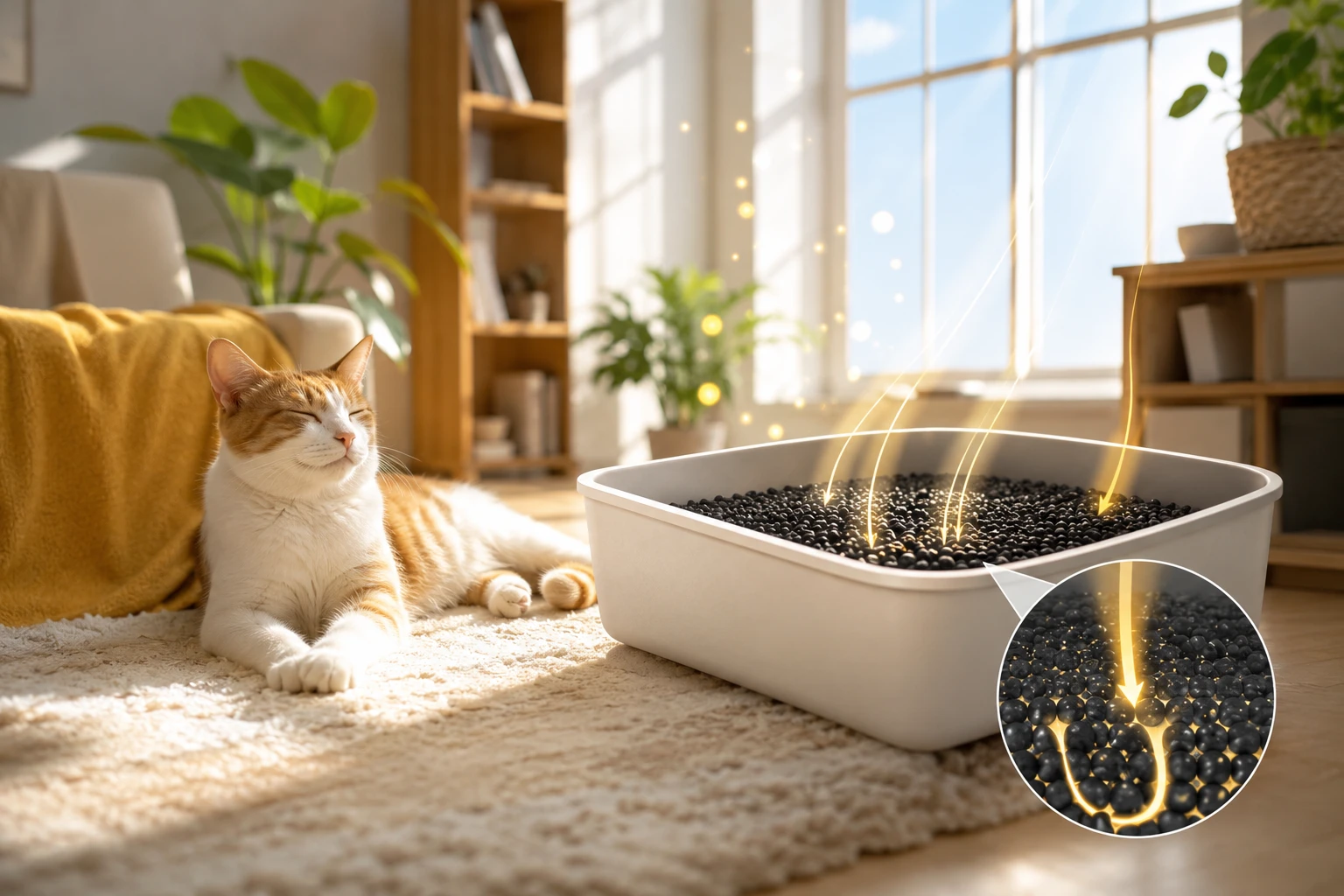
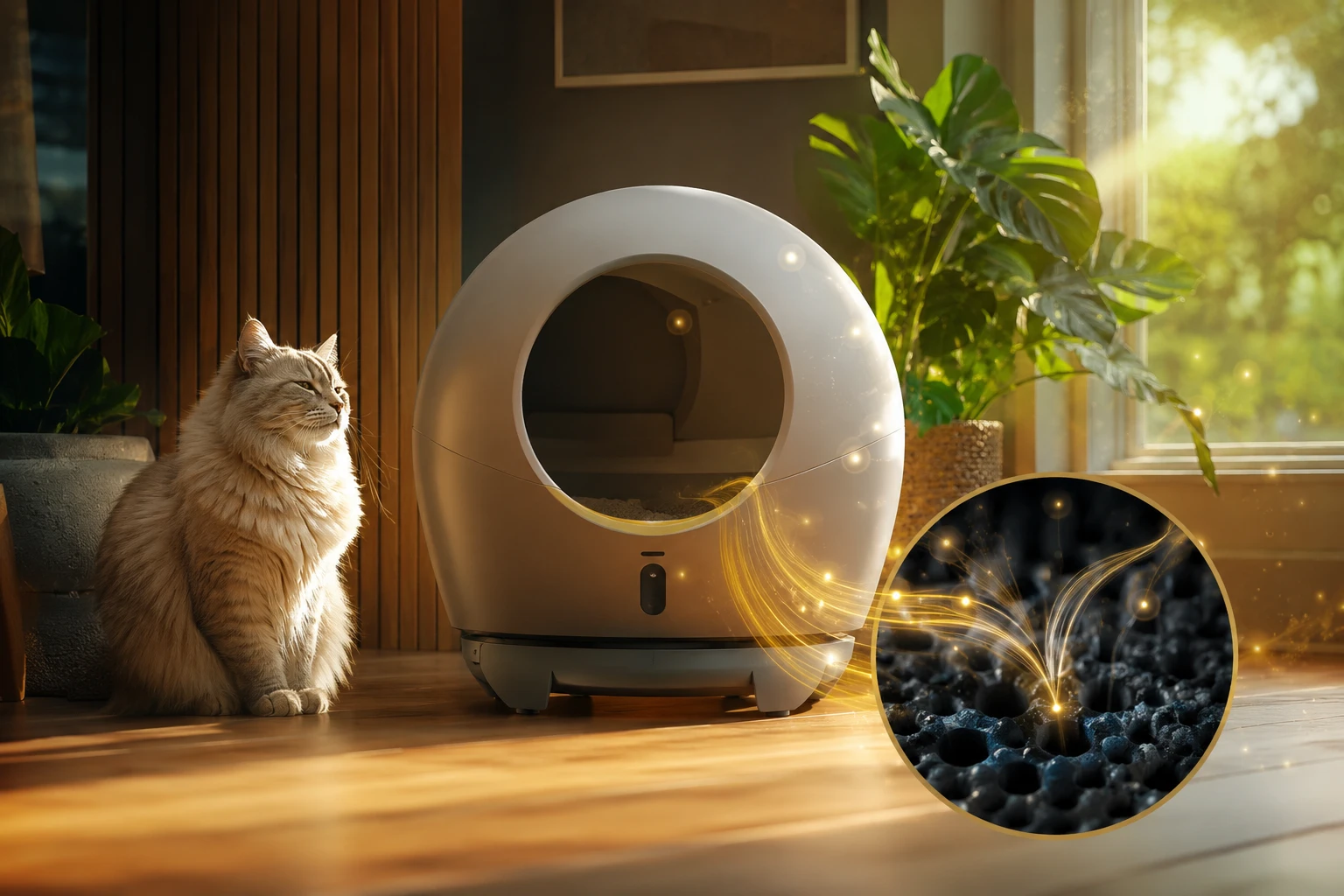
Le charbon actif aide à emprisonner les molécules d'odeur avant qu'elles ne se répandent dans le reste de la maison.
Direct Answer
To get rid of cat litter smell in a house or apartment, reduce ammonia at the box before it has time to spread through the rest of the space.
That usually means scooping at least once or twice a day, placing the litter box where there is some airflow, deep-cleaning the box before residue builds up, and using activated carbon to trap odor molecules instead of covering them with fragrance.
Small homes, studios, and condos smell worse faster because there is less air volume to dilute fresh ammonia, so a weak routine gets exposed quickly.
Covered boxes, closet corners, and unventilated bathrooms can make the problem feel stronger even when the litter looks clean.
The most effective apartment odor routine combines fast waste removal, better placement, and a material that keeps working between scoopings.
Vivre en appartement avec des chats amène ses propres défis. Le manque d'espace fait que les odeurs n'ont nulle part où aller, et la proximité des voisins demande de la discrétion. Purrify élimine les odeurs à la source et vous laisse profiter de la vie en appartement avec vos amis félins.
Agit dès le contact avec les odeurs
Sans danger pour les chats, les humains et l'environnement
Prolonge la durée de la litière et réduit le gaspillage
Dans un petit appartement, il y a moins de volume d'air pour diluer l'ammoniac frais. Un bac qui reste supportable dans une maison unifamiliale peut donc sentir très fort dans une salle de bain, une garde-robe de couloir ou un coin de chambre.
L'objectif n'est pas seulement de camoufler l'odeur. Une meilleure solution anti-odeur pour appartement réduit d'abord la quantité d'ammoniac libérée, accélère votre routine de nettoyage et laisse aux molécules d'odeur moins de chances de se répandre dans un espace de vie partagé.
Si l'odeur de votre bac a déjà ce côté âcre et chimique, lisez pourquoi la litière se met à sentir l'ammoniac . Pour comparer à quelle vitesse différentes routines de litière deviennent coûteuses, utilisez le calculateur de litière . Pour les questions d'entretien au quotidien, la FAQ sur le contrôle des odeurs est une bonne prochaine étape.
Vous vivez dans un studio ou un 3 et demi? Notre guide sur comment éliminer l'odeur de litière pour chat en appartement rapidement explique ce qui fonctionne vraiment dans un espace restreint.
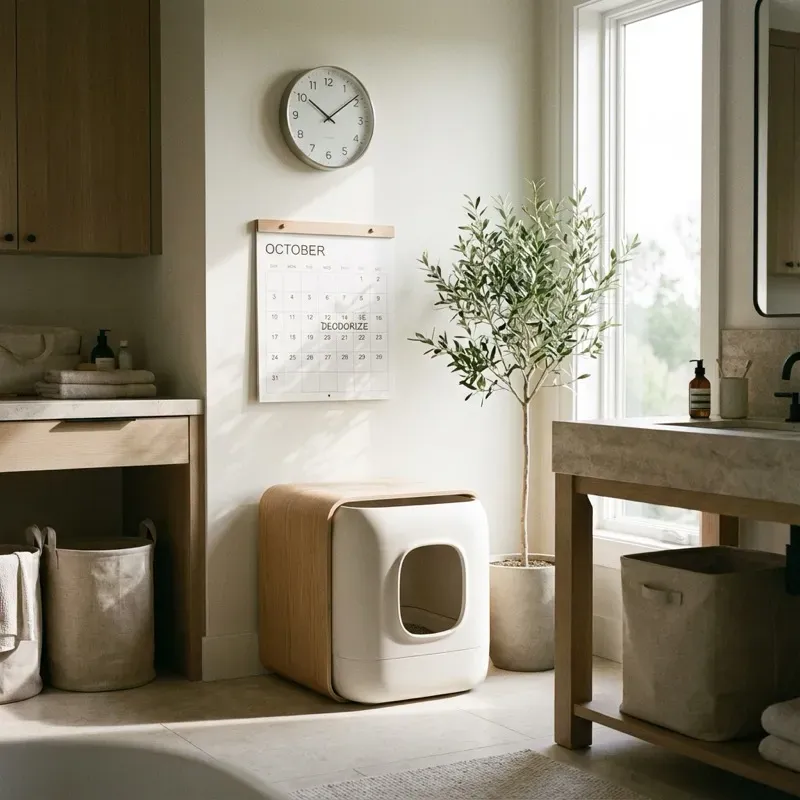
En appartement, les bacs à litière se retrouvent souvent dans les salles de bain, les chambres ou les garde-robes, là où les odeurs se concentrent
Le charbon actif se met instantanément à absorber les molécules d'odeur avant qu'elles ne se répandent dans votre espace
Gardez un appartement toujours frais dont vous êtes fier
Rejoignez les milliers de personnes en appartement qui ont transformé leur espace de vie avec Purrify.
Follow this 5-step system to get rid of cat litter smell in house or apartment spaces, even with limited ventilation or small square footage.
Time needed: 15 minutes setup, then 5 minutes daily
In apartments, placement matters more than ever. Choose a spot with some airflow-bathroom with exhaust fan, near a window, or in a closet with ventilation. Avoid bedrooms and kitchens.
Pro tip: A covered litter box can help contain odors while activated carbon handles what escapes.
Clumping litter isolates urine into removable clumps, preventing it from spreading through the box. This reduces the surface area producing ammonia.
Sprinkle 2-3 tablespoons of activated carbon onto the litter and mix it in. For studios or apartments under 600 sq ft, consider using 3-4 tablespoons for extra protection.
In apartments, odors concentrate faster due to limited air volume. Scooping morning and evening prevents ammonia buildup between cleanings.
Pro tip: Keep a covered waste bin with baking soda nearby for scooped waste.
Add a tablespoon of fresh carbon every 2-3 days. Open windows when possible, and run bathroom exhaust fans during and after scooping to help clear any airborne odor.
La ventilation est la deuxième ligne de défense après le contrôle des odeurs à la source. En appartement, il n'est pas toujours possible d'ouvrir toutes les fenêtres ni d'utiliser un système central. Ces solutions restent réalistes dans un logement locatif.
Faites-le fonctionner pendant le ramassage et pendant 15 minutes après. Un ventilateur de salle de bain déplace souvent 50 à 110 pieds cubes d'air par minute, ce qui suffit à évacuer rapidement l'ammoniac d'une petite pièce. Placez le bac aussi près que possible de l'aspiration.
Ouvrez des fenêtres opposées pendant 10 à 15 minutes le matin et le soir. Même par temps froid, une courte purge d'air est plus efficace qu'un air stagnant pendant 24 heures.
Un purificateur HEPA avec préfiltre au charbon actif placé à 2 ou 3 mètres du bac capte les particules et composés volatils qui s'en échappent. La couche de charbon vise le même ammoniac gazeux que les granules dans la litière.
Placer le bac près d'un retour d'air au sol fait passer l'air ambiant devant les granules de charbon avant qu'il ne circule ailleurs dans l'appartement. L'effet est indirect, mais réel.
Si le bac doit rester dans un placard ou une alcôve, laissez la porte entrouverte de quelques centimètres. Un espace totalement fermé retient l'humidité et accélère l'activité bactérienne ainsi que la formation d'ammoniac.
Les locataires ne peuvent pas percer les murs, installer une ventilation permanente ou modifier le sol. Ces configurations apportent une vraie réduction des odeurs sans mettre le dépôt de garantie en danger.
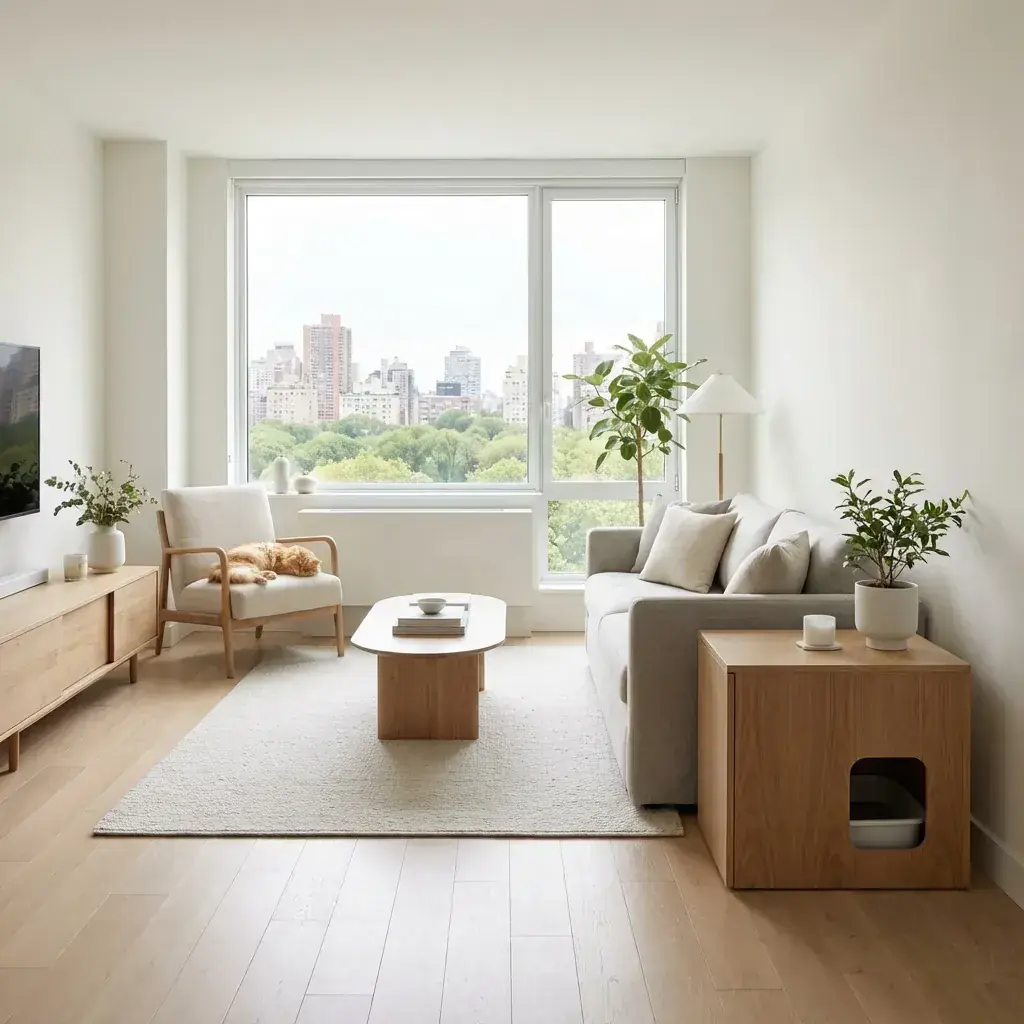
Les modèles type table d'appoint ou petit meuble avec entrée latérale limitent la dispersion et rendent les panaches d'odeur moins visibles. La plupart se posent simplement au sol.
Une tringle à pression avec un rideau permet de créer une zone semi-fermée dans une salle de bain ou une buanderie, sans percer.
Des patins en caoutchouc protègent le parquet contre les résidus d'ammoniac et l'humidité. Ils s'enlèvent et se nettoient facilement sans laisser de trace.
Les petits purificateurs HEPA avec étage au charbon actif se posent sur une étagère ou un comptoir et se branchent sur une prise existante. Aucune installation fixe n'est nécessaire.
Un tapis texturé avec rebord retient les grains sortis du bac et facilite le nettoyage. Il limite aussi le déplacement des particules porteuses d'odeur vers les autres pièces.
Prévoyez environ 40 à 120 $ CA pour une installation complète adaptée à la location : meuble ou rideau, purificateur et tapis. C'est un coût ponctuel comparé à l'achat continu de sprays parfumés.
L'objectif est un appartement qui sent neutre : ni l'animal, ni le parfum qui essaie de le cacher. Avec une routine stable et un petit protocole avant la visite, ce résultat est atteignable.
Si le charbon actif a été rechargé dans les 5 à 7 derniers jours et que vous ramassez chaque jour, la plupart des appartements restent indiscernables d'un logement sans animal pendant une visite de 2 à 3 heures. Le protocole ci-dessus est une assurance, pas une obligation.
Read more →
Read more →
Read more →

Read more →

Read more →

Read more →

Read more →
Read more →