

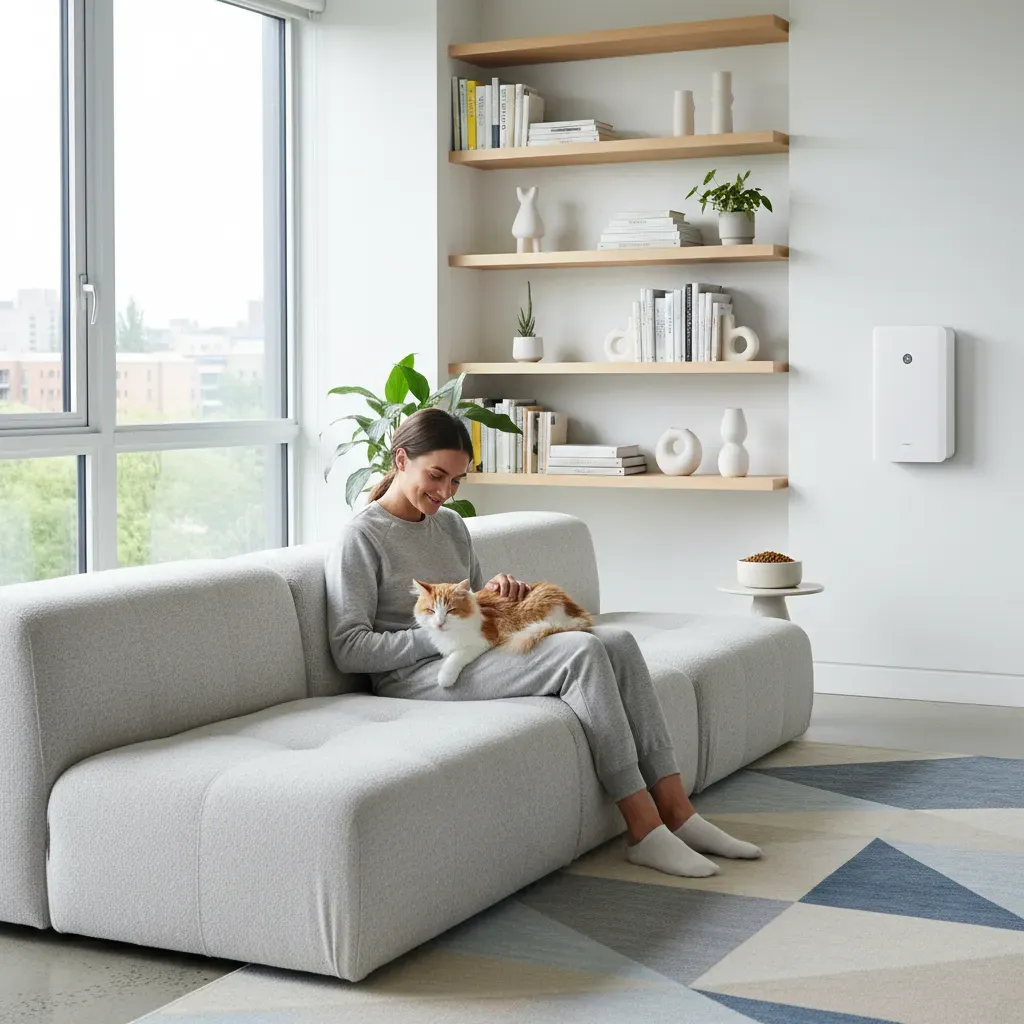
Cat Litter Odor Control in America: What US Cat Owners Need to Know
Read more →

Prefer a quick video? Watch the latest verified upload from our official YouTube channel and follow @PurrifyHQ for future product and brand updates.
Purr Purr Purrify | Song about Cat Litter Odour Control Made in Canada
Sources
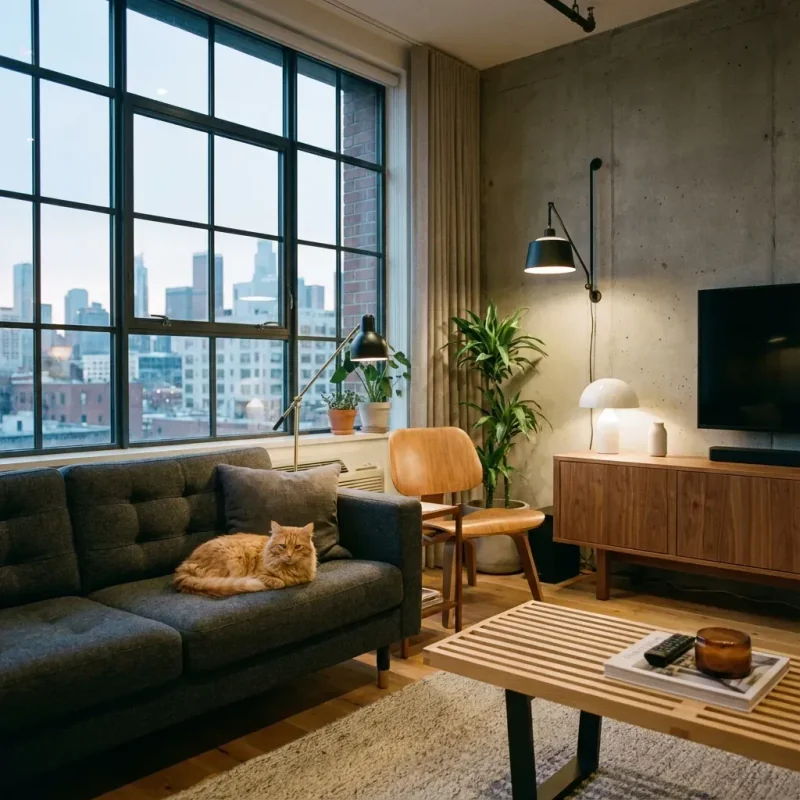
If you need to get rid of cat litter smell in house or apartment spaces, start by reducing ammonia at the box, improving airflow, and using an odor-control routine that still works in studios, condos, and other tight layouts.
Scoop twice a day and do not let urine sit long enough to turn the whole room sharp and chemical.
Put the litter box near airflow when possible so odor does not collect in closets, hallways, or bedrooms.
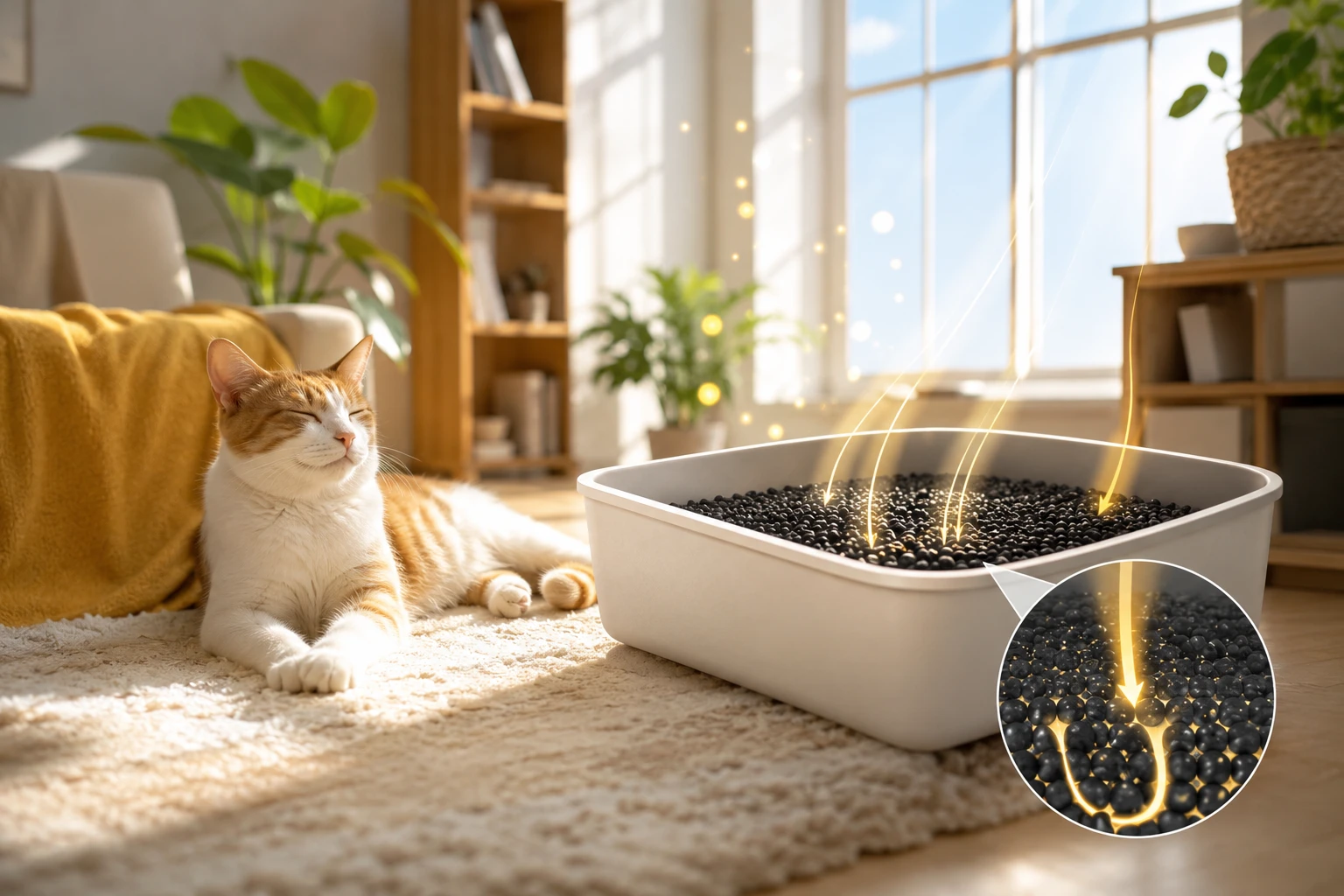
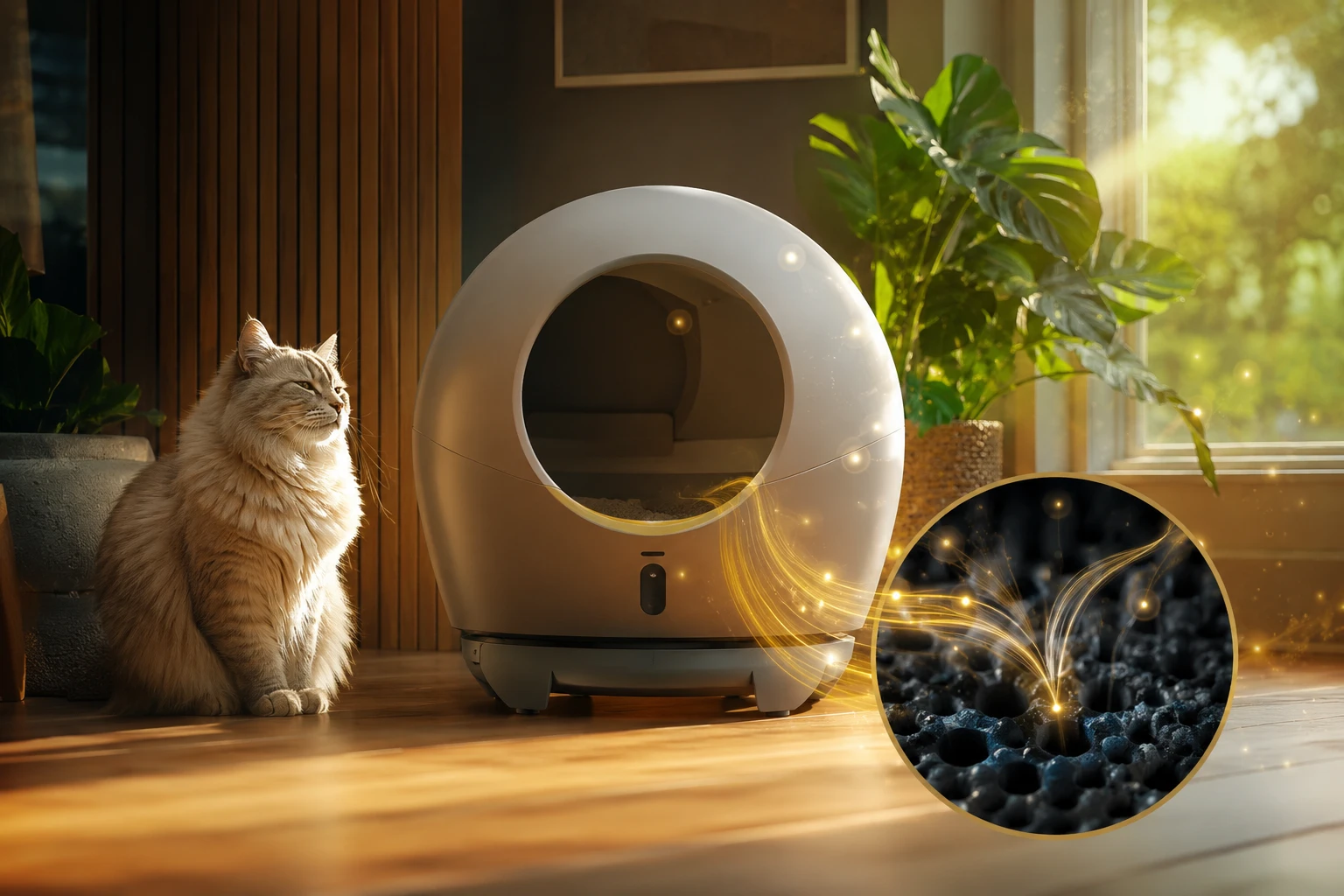
Activated carbon helps trap odor molecules before they spread through the rest of your home.
Direct Answer
To get rid of cat litter smell in a house or apartment, reduce ammonia at the box before it has time to spread through the rest of the space.
That usually means scooping at least once or twice a day, placing the litter box where there is some airflow, deep-cleaning the box before residue builds up, and using activated carbon to trap odor molecules instead of covering them with fragrance.
Small homes, studios, and condos smell worse faster because there is less air volume to dilute fresh ammonia, so a weak routine gets exposed quickly.
Covered boxes, closet corners, and unventilated bathrooms can make the problem feel stronger even when the litter looks clean.
The most effective apartment odor routine combines fast waste removal, better placement, and a material that keeps working between scoopings.
Living in an apartment with cats presents unique challenges. Limited space means odors have nowhere to go, and close quarters with neighbors require discretion. Purrify eliminates odors at the source, giving you the freedom to enjoy apartment living with your feline friends.
Works immediately upon contact with odors
Safe for cats, humans, and the environment
Extends litter life and reduces waste
In a small apartment, there is less air volume to dilute fresh ammonia. That means a box that feels manageable in a detached home can smell intense in a bathroom, hallway closet, or bedroom corner.
The goal is not just to cover up odor. A stronger apartment cat smell solution lowers the amount of ammonia released in the first place, speeds up your cleanup rhythm, and gives odor molecules fewer chances to spread through shared living space.
If your litter box smell already has that sharp chemical edge, read why cat litter starts smelling like ammonia . If you want to compare how fast different litter routines get expensive, use the cat litter calculator . For everyday maintenance questions, the odor-control FAQ is a good next stop.
Working with a studio or a one-bedroom? Our guide to the fastest way to get rid of cat litter smell in an apartment covers what actually works in a tight space.
In apartments, litter boxes are often in bathrooms, bedrooms, or closets where odors concentrate
Activated carbon instantly begins absorbing odor molecules before they can spread through your space
Maintain a consistently fresh apartment that you're proud to call home
Join thousands of apartment dwellers who've transformed their living spaces with Purrify.
Follow this 5-step system to get rid of cat litter smell in house or apartment spaces, even with limited ventilation or small square footage.
Time needed: 15 minutes setup, then 5 minutes daily
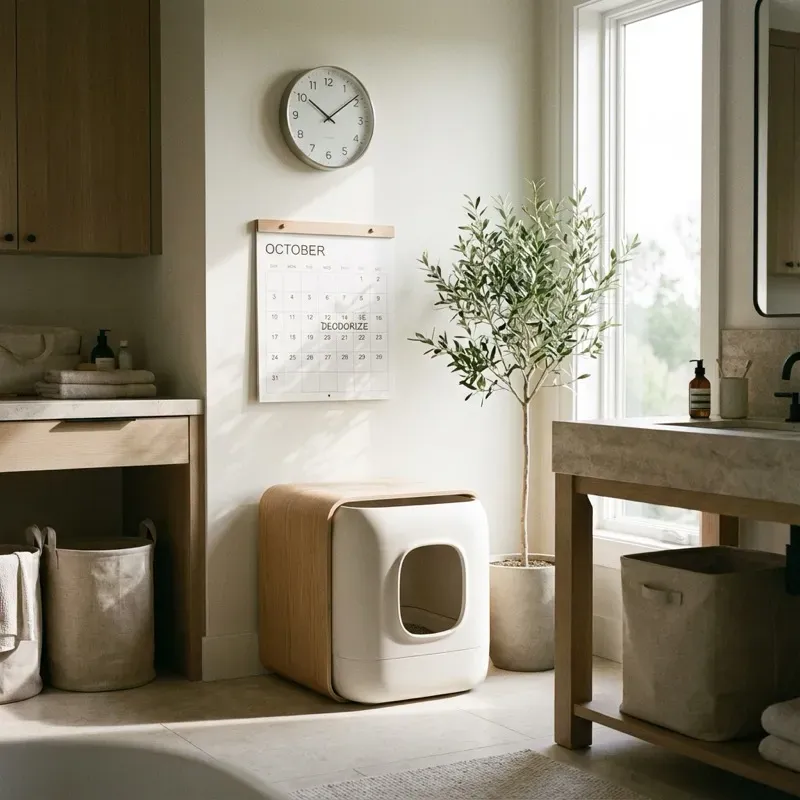
In apartments, placement matters more than ever. Choose a spot with some airflow-bathroom with exhaust fan, near a window, or in a closet with ventilation. Avoid bedrooms and kitchens.
Pro tip: A covered litter box can help contain odors while activated carbon handles what escapes.
Clumping litter isolates urine into removable clumps, preventing it from spreading through the box. This reduces the surface area producing ammonia.
Sprinkle 2-3 tablespoons of activated carbon onto the litter and mix it in. For studios or apartments under 600 sq ft, consider using 3-4 tablespoons for extra protection.
In apartments, odors concentrate faster due to limited air volume. Scooping morning and evening prevents ammonia buildup between cleanings.
Pro tip: Keep a covered waste bin with baking soda nearby for scooped waste.
Add a tablespoon of fresh carbon every 2-3 days. Open windows when possible, and run bathroom exhaust fans during and after scooping to help clear any airborne odor.
Ventilation is the second line of defense after odor control at the source. In apartments, you often cannot open every window or run a whole-house HVAC. These strategies work within typical rental constraints.
Run the fan during scooping and for 15 minutes after. Bathroom exhaust fans move 50-110 cubic feet per minute - enough to clear a small bathroom of airborne ammonia quickly. Place the box as close to the fan intake as practical.
Open windows on opposite sides of the apartment for 10-15 minutes morning and evening. Even in cold weather, a brief flush is more effective than stagnant air accumulating over 24 hours.
A HEPA purifier with an activated carbon pre-filter placed within 2-3 meters of the litter box catches airborne particles and VOCs that escape the box. The carbon layer in the purifier targets the same gas-phase ammonia the granules do in the litter.
Placing the litter box near a floor-level HVAC return vent means circulated air passes through the carbon granules before reaching the rest of the apartment. This is incidental but measurable.
If the box must be in a closet or alcove, leave the door open at least a few centimetres. A fully sealed enclosure amplifies humidity, which speeds up bacterial activity and ammonia formation.
Apartment renters cannot drill into walls, install permanent ventilation, or modify flooring. These setups provide real odor reduction without risking your security deposit.
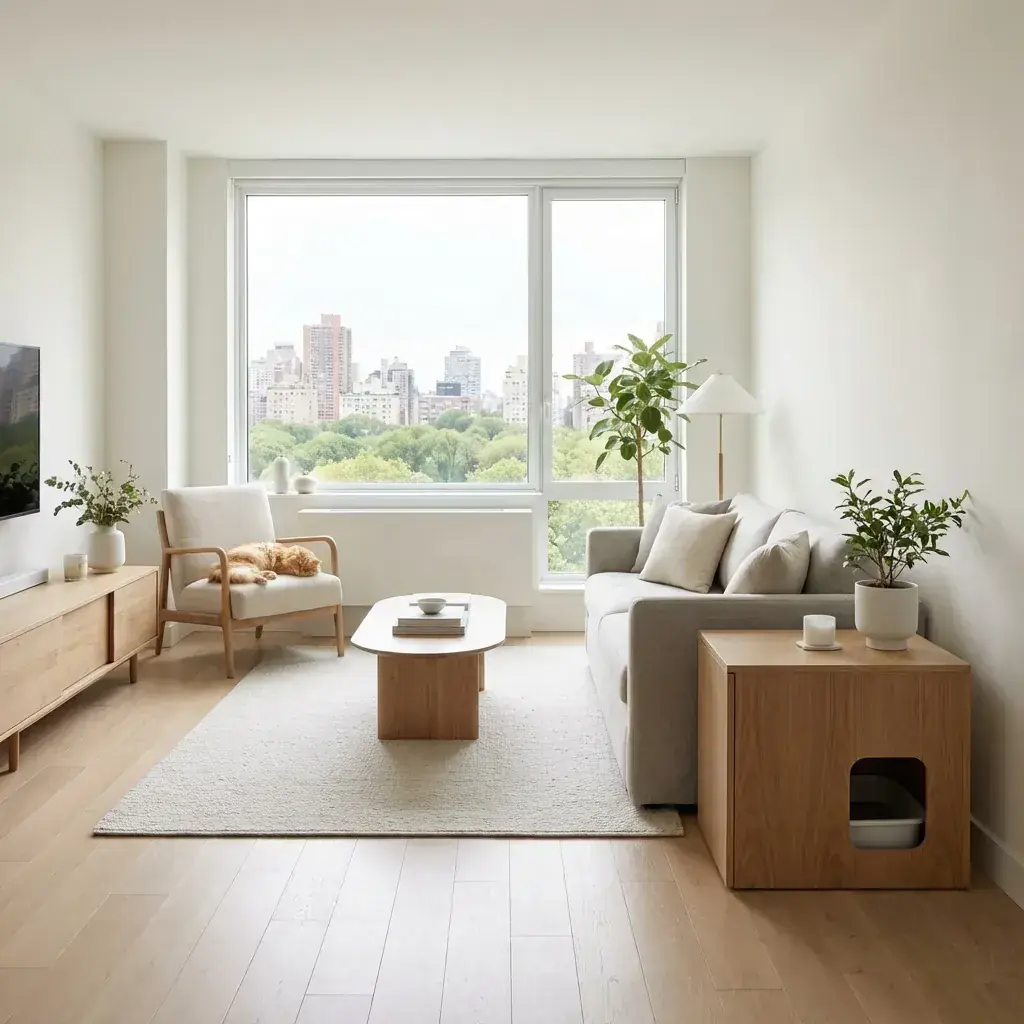
Side-table or cabinet units with a side entry hole contain scatter and reduce visible odor plumes. Most use tension fittings or simply sit on the floor.
A tension rod in a doorway with a fabric curtain creates a semi-enclosed litter area in a bathroom or laundry nook - no drilling needed.
Rubber furniture pads protect hardwood floors from ammonia residue and moisture. Easy to remove and clean without leaving marks.
Small plug-in HEPA units with activated carbon stages sit on a shelf or countertop and connect to an existing outlet. No installation, fully portable.
A textured mat with a raised perimeter catches tracked litter and allows easy sweep-up. Reduces how much litter - and odor-carrying particles - migrates into other rooms.
Budget for a complete rental-friendly setup: roughly $40-120 CAD for a litter enclosure or curtain system, purifier, and mat. A one-time cost compared to ongoing fragrance sprays.
The goal is an apartment that smells neutral - not like pets, not like fragrance covering pets. That threshold is reachable with consistent maintenance and a quick pre-visit protocol.
If your activated carbon is refreshed within 5-7 days and you scoop daily, most apartments will be indistinguishable from a no-pet home for a 2-3 hour visit with no special preparation beyond scooping. The protocol above is insurance, not a requirement.
Read more →
Read more →
Read more →

Read more →

Read more →

Read more →
Read more →
Read more →