


Skip to main contentSkip to productsSkip to testimonials
Purrify
Products
For Retailers
Learn
BlogFun & Games
About
Get a free sample
Purrify - Premium Activated Carbon Cat Litter Additive - Return to Home Page

Love your cat, lose the smell. Water-filter grade activated carbon eliminates ammonia odors - no perfumes, just science. Try FREE (just pay shipping). Made in Canada, ships across North America.

Products

  • Get Purrify Near You
  • Buy Online
  • Free Sample
  • Standard 50g
  • Large Pack
  • Compare Sizes

Learn

  • How It Works
  • FAQ
  • All Tools
  • Cat Litter Guide
  • Ammonia Science
  • Safety Information
  • Glossary
  • Odor Solutions
  • Science
  • Ammonia Control

Company

  • About Us
  • Blog
  • Fun & Games
  • Case Studies
  • About Purrify
  • Team
  • Editorial Policy
  • Testing Policy
  • Referral Program
  • Returns Policy
  • Documents
  • For Retailers
  • B2B Inquiry
  • Affiliate Program
  • Contact
  • Shipping & Returns

Locations

  • All Locations
  • Canada Wide
  • Montreal
  • United States
  • Stores in Quebec

Resources

  • Odor Control Litter Guide
  • Water & Carbon Science
  • PFAS Canada
  • Comparison Lab
  • Comparison Lab Methodology
  • Ammonia Health Risks
  • Litter Box Smell Elimination
  • Multiple Cats Odor Control
  • Natural Cat Litter Additive
  • Senior Cat Litter Solutions
  • How to Neutralize Ammonia
  • Contact Support
  • Retailer Get Started
  • Retailer Reorder
  • Free Trial
Privacy PolicyTerms of ServiceSitemap

© 2026 Purrify | All Rights Reserved

YouTube
Purr Purr Purrify | Song about Cat Litter Odour Control Made in Canada

Watch Purrify on YouTube

Prefer a quick video? Watch the latest verified upload from our official YouTube channel and follow @PurrifyHQ for future product and brand updates.

Purr Purr Purrify | Song about Cat Litter Odour Control Made in Canada

Published March 7, 2026Duration 3:53@PurrifyHQ
Watch Featured VideoVisit @PurrifyHQ

Sources

  1. 1.Urease-mediated urea hydrolysis and ammonia production - National Institutes of Health (PMC)
  2. 2.OSHA ammonia exposure limits and annotated permissible exposure limits - U.S. Department of Labor (OSHA)
  3. 3.Activated carbon adsorbers: surface area, pore structure, and adsorption basics - U.S. Environmental Protection Agency
  4. 4.Peer-reviewed study on ammonia removal using activated carbons - PubMed
HomeLearnCat Litter Types Guide

Cat Litter Types Guide: How to Choose the Right Litter

Use this reference guide to compare clay, crystal, tofu, paper, wood, and natural grain litters by odor control, dust, tracking, clumping, and cost.

Last updated: April 2, 2026

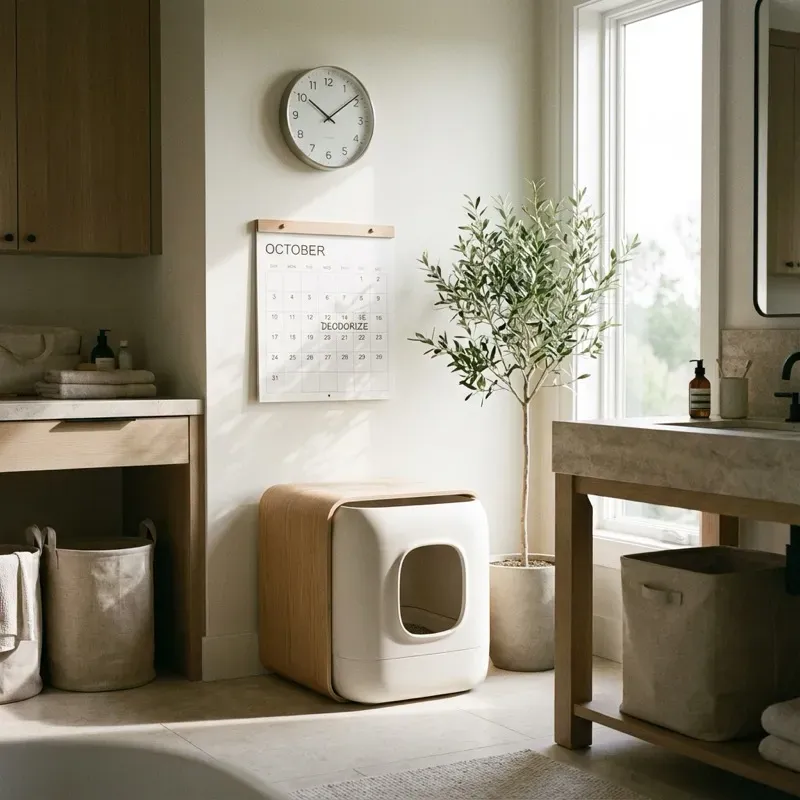
Modern cat litter box setup showing different litter materials and maintenance tools

Quick Answer

Start with the litter texture your cat already tolerates, then match the category to your biggest constraint. These are the fastest shortcuts for most homes.

  • Most balanced default: Clumping clay if you want predictable clumps, broad cat acceptance, and easy daily cleanup.
  • Lowest dust routine: Silica crystal or tofu if dust is the top problem and your cat accepts a different texture.
  • Softest option: Paper if you are dealing with a kitten, post-surgery recovery, or very sensitive paws.
  • Most natural feel: Corn, wheat, or wood if you want a plant-based option and do not mind testing performance by climate.

Table of Contents

  1. 1. Cat litter types compared
  2. 2. Best buying guides by use case
  3. 3. 5-step selection framework
  4. 4. Setup and daily routine
  5. 5. Core maintenance rules
  6. 6. Weekly and monthly schedule
  7. 7. Common problems and fixes
  8. 8. Health and behavior warning signs
  9. 9. FAQ for cat owners
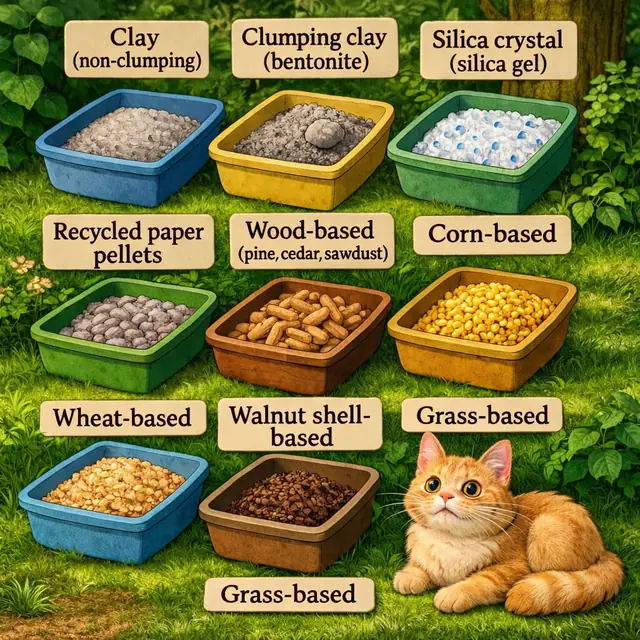
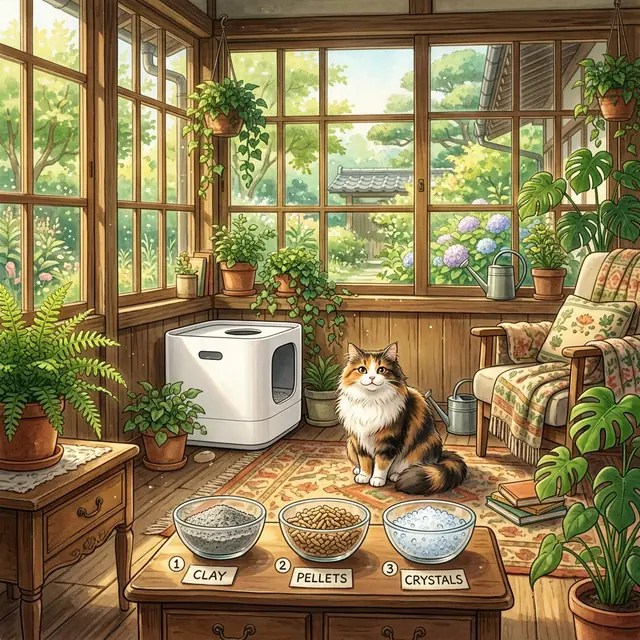
Different cat litter textures displayed side by side for comparison

Cat Litter Types Compared

This page is a reference guide, not a brand ranking. Use it to compare the main litter categories before you decide which buying guide or product test to read next.

Comparison Matrix

Each row summarizes how a litter category usually behaves in a typical home. Real-world performance still depends on box size, scoop timing, humidity, and how much your cat likes the texture.

TypeOdor controlDustTrackingClumpingCostBest forWatch-outs
Non-clumping clayLowHighMediumNoneLowBudget-first homes testing litter texture acceptance.Odor builds quickly because urine stays in the box until the full change.
Clumping clayStrongMediumMedium to highStrongLow to mediumHomes that want reliable daily cleanup and broad cat acceptance.Some formulas are dusty, and shallow fill depth can make clumps break apart.
Silica crystalStrongLowMediumLow or noneHighPeople who want less dust and a longer replacement interval.Some cats dislike the feel or sound of crystals underfoot.
TofuMedium to strongLowMediumMedium to strongMedium to highHomes that want a lighter, lower-dust clumping litter.Performance varies a lot by brand, especially with clump strength and tracking.
PaperLow to mediumLowLowNone or weakMediumKittens, recovery periods, sensitive paws, and homes that prioritize softness.Because it often does not clump, wet zones can build up faster than owners expect.
Pine / woodMediumLowLow to mediumLow to mediumMediumHomes that want a wood-based natural option and do not need a fine-grain texture.Pellet texture can be a tough transition for cats used to fine clay.
Corn, wheat, and other natural grain littersMediumLow to mediumMediumMediumMedium to highHomes that want plant-based litter and are willing to test formulas carefully.Performance can shift with humidity, and one grain-based litter is not a stand-in for the whole category.

How to use this guide

Do not choose by marketing language alone. Most litter regret starts when a bag promises low odor but creates new problems with dust, tracking, or box refusal.

If your cat already uses one texture without stress, keep that as your baseline. In many homes, a better box setup and more consistent scooping improve results faster than a full litter switch.

Treat this page as a first pass. Once you know which category fits your home, move to a dedicated buying guide for odor control, sensitive cats, apartments, or natural litter.

When an odor-control additive makes sense

An odor-control additive is not a litter type. It is a separate layer you can add when your current litter is mostly working but still struggles between scoop cycles.

  • Use it when odor is your only weak point and your cat already likes the current litter texture.
  • Use it in apartments, humid rooms, and multi-cat homes where odor load rises faster.
  • Do not use it as a substitute for scooping, box washing, or replacing a worn plastic box.

Type-by-type breakdown

Non-clumping clay

The old-school baseline: inexpensive, familiar, and absorbent, but usually the weakest long-term option for odor and cleanup.

Odor controlLow
DustHigh
TrackingMedium
ClumpingNone
Pros
  • Low upfront cost
  • Easy to find
  • Familiar fine texture for many cats
Cons
  • Weak odor control over time
  • Dusty when poured
  • Requires more complete changes

Non-clumping clay still has one advantage: many cats recognize the texture right away. That makes it a common fallback when you are trying to re-establish box use.

The downside is maintenance. Because waste does not form scoopable clumps, the box saturates faster and starts to smell sooner.

Clumping clay

The most common default because it is easy to scoop, widely available, and usually the most predictable for odor control.

Odor controlStrong
DustMedium
TrackingMedium to high
ClumpingStrong
Pros
  • Fast scoopable clumps
  • Good category-level odor control
  • Many cats accept the texture
Cons
  • Can still create dust
  • Heavy to carry
  • Not the lowest-tracking option

Clumping clay is usually the safest starting point when you are unsure what to buy. It solves the biggest maintenance problem by making urine easier to remove quickly.

Not every formula performs equally. Premium low-dust versions tend to behave much better than bargain blends with fragile clumps.

Silica crystal

A low-dust, moisture-managing category that can last longer between full changes if your cat accepts the texture.

Odor controlStrong
DustLow
TrackingMedium
ClumpingLow or none
Pros
  • Very low dust in many formulas
  • Strong moisture control
  • Often lasts longer than clay
Cons
  • Higher price point
  • Texture can be a deal-breaker
  • Not every crystal litter clumps

Silica works by pulling moisture away from waste quickly. That makes it especially appealing in homes where daily dust exposure is a bigger problem than bag price.

The main risk is cat acceptance. If your cat avoids coarse or crunchy textures, crystals can fail even when the odor performance is good.

Tofu

A newer plant-based clumping option that is often lower in dust than clay and easier to carry.

Odor controlMedium to strong
DustLow
TrackingMedium
ClumpingMedium to strong
Pros
  • Often low dust
  • Usually lighter than clay
  • Can clump well without a strong fragrance
Cons
  • Quality varies by brand
  • Can track more than expected
  • Usually costs more than clay

Tofu is attractive because it promises a clumping experience with less dust and less bag weight. In a good formula, that can be true.

The catch is inconsistency. Some tofu litters form neat clumps, while others get soft quickly and need more careful scooping.

Paper

Soft, low-dust, and gentle on paws, but not usually the strongest category for long-cycle odor control.

Odor controlLow to medium
DustLow
TrackingLow
ClumpingNone or weak
Pros
  • Soft texture
  • Very low dust
  • Often low tracking
Cons
  • Usually weak clumping
  • Can saturate fast
  • Not ideal for heavy odor load

Paper litter is a comfort-first category. It is often recommended when paw sensitivity matters more than maximum odor control.

For that reason, it can be a great niche solution but a weaker universal default. Expect more frequent monitoring of wet areas.

Pine / wood

A low-dust natural option that can work well for odor in some homes, but often comes with a more obvious texture change.

Odor controlMedium
DustLow
TrackingLow to medium
ClumpingLow to medium
Pros
  • Usually lower dust than clay
  • Can smell fresher in dry rooms
  • Often lighter than mineral litter
Cons
  • Texture can trigger box refusal
  • Clumping behavior varies
  • Not every cat tolerates pellets

Wood litters can feel cleaner underfoot and release less visible dust than standard clay. That makes them appealing in smaller homes where dust is easy to notice.

The main question is acceptance. Cats that strongly prefer fine particles may not like pellets or larger fibers at first.

Corn, wheat, and other natural grain litters

A broad family of natural litters with variable clumping, odor control, and humidity tolerance.

Odor controlMedium
DustLow to medium
TrackingMedium
ClumpingMedium
Pros
  • Plant-based options
  • Often lighter than clay
  • Can offer a fine texture without strong fragrance
Cons
  • Performance differs widely
  • Humidity can shorten useful life
  • Odor control is less consistent than the best clay formulas

This category includes several different materials, so it is the least useful place to make blanket claims. Some grain litters clump surprisingly well, while others struggle after a few days.

If you want a natural litter, test it the same way you would test any other category: over 10 to 14 days, at fixed odor checkpoints, in your actual room conditions.

Need a buying guide instead?

If your real goal is to shop for a specific problem, start with one of these pages. This keeps the reference guide focused on litter categories and sends buying intent to the right destination.

  • Best cat litter for smell
  • Best natural cat litter for odor control
  • Best unscented cat litter for sensitive cats
  • Best litter odor remover for small apartments

A 5-Step Framework to Choose the Right Litter

Use this sequence when you are deciding between categories. It keeps the choice practical and prevents expensive trial-and-error.

Step 1: Start with texture tolerance

Cats notice texture faster than marketing claims. If your cat strongly prefers fine grains, do not jump straight to pellets or large crystals without a slow transition.

  • Match your starting point to the texture your cat already uses.
  • Avoid fragrance if your cat is scent-sensitive.
  • Transition over 7 to 10 days, not overnight.
  • Track box visits after any change.

Step 2: Pick one primary goal

Most homes do better when they optimize one problem first. Decide whether the next 14 days are about odor, dust, tracking, or cost control.

  • Choose one main problem and one secondary problem.
  • Check odor at fixed times, not only after cleaning.
  • Notice dust while pouring and scooping.
  • Count cleanup time so convenience is measurable.

Step 3: Match the category to household load

Single-cat homes can tolerate lighter-maintenance categories. Multi-cat homes and small apartments need categories that recover quickly after repeated use.

  • Use larger boxes and more stable depth in multi-cat homes.
  • Increase scoop frequency in warm or humid weather.
  • Prioritize low-dust options for respiratory sensitivity.
  • Separate texture preference from odor-control needs.

Step 4: Fix setup before blaming the litter

A strong litter can still fail in a cramped box or poorly ventilated corner. Setup problems often look like product problems until you isolate them.

  • Confirm the box is large enough for turning and digging.
  • Keep litter depth consistent after scooping.
  • Wash nearby mats and fabrics on schedule.
  • Replace scratched boxes that hold odor.

Step 5: Only add complexity if the basics already work

Once texture, setup, and scoop timing are stable, then you can decide whether to add an odor-control layer or test a different category.

  • Change one variable at a time.
  • Run each test for 10 to 14 days.
  • Record odor, dust, tracking, and cat behavior.
  • Keep the category if the result is steady, not just promising for one day.

How to set up a litter box area that stays manageable

Start with box size. Most litter complaints get worse when the box is too short for full turning and digging. A practical baseline is a box around 1.5 times your cat body length, excluding the tail.

Place the box in a low-traffic area with predictable access. Avoid sealed corners that trap humidity and odor, especially in small apartments, bathrooms, and laundry rooms.

Keep litter depth steady. For most clumping litters, 2.5 to 3.5 inches gives enough material for clumps without wasting product or making the box harder to clean.

In multi-cat homes, spread boxes across at least two zones when you can. The usual rule of thumb is one box per cat plus one extra.

Clean the area around the box as well as the box itself. Mats, baseboards, and nearby fabrics can hold odor and make a good litter seem worse than it is.

Independent feline-care organizations consistently list box cleanliness, box size, and placement among the biggest factors in litter box success. Source: iCatCare

Core maintenance rules

A good litter performs best when the maintenance pattern is predictable. These four habits matter more than constant brand switching.

Scoop on schedule

Scoop morning and evening if possible. Predictable removal reduces odor spikes and helps you notice behavior changes faster.

Protect litter depth

Top up after scooping so urine does not hit the box floor and clumps stay easier to remove.

Wash the zone

Weekly mat and box-edge cleaning prevents tracked residue from becoming a separate odor source.

Replace old plastic

A scratched box can hold odor no matter which litter you buy. Replace it before you blame the category again.

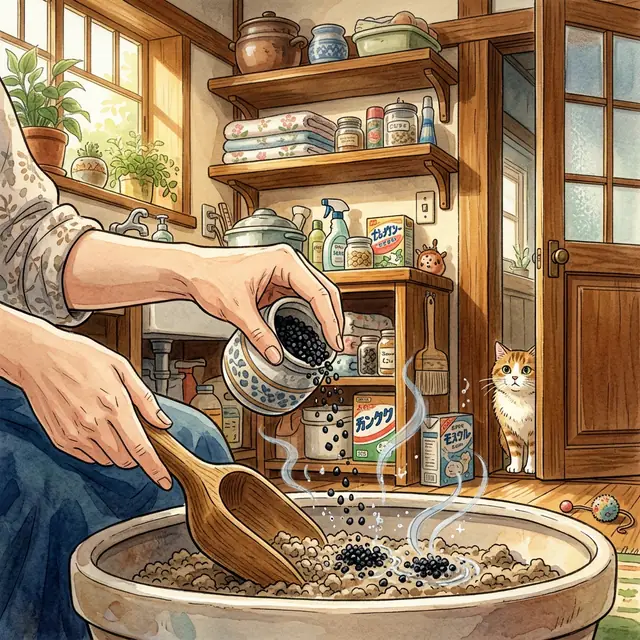
Cat owner performing a consistent litter box cleaning routine

Weekly and monthly litter care schedule

This schedule is designed to be realistic. Tighten the cadence if you have multiple cats, high humidity, or a small room.

FrequencyTaskWhy it matters
Twice dailyScoop solids and clumps, then smooth the surface.Prevents local saturation and keeps odor from building between cleanings.
DailyTop up to the target depth for that litter category.Keeps clumping and moisture control more consistent.
WeeklyWash box edges, the scoop, nearby mats, and the floor around the box.Stops tracked residue from becoming a second odor problem.
Weekly or biweeklyDo a full reset based on how quickly odor returns in your home.Different litter categories exhaust at different speeds.
MonthlyCheck the room for hidden spray, damp corners, or trapped fabrics.Room odor is often blamed on litter when the source is nearby residue.
Every 6 to 12 monthsReplace scratched or odor-retaining plastic boxes.Old plastic can hold smell even when daily care is good.

Common problems and practical fixes

Most litter problems have more than one cause. Fix the setup and timing first, then decide whether you actually need a different litter category.

Problem: Strong odor even after daily scooping

Fix: Check litter depth, box size, and nearby fabrics first. If the litter texture already works for your cat, add a separate odor-control layer instead of switching categories immediately.

Problem: Tracking across the room

Fix: Reduce overfilling, use a larger mat, and look at the litter texture. Lightweight pellets and crystals often track differently than fine grains.

Problem: Dust during pours and scooping

Fix: Pour from a lower height, ventilate the room, and compare the category itself. Some low-dust claims are much more reliable in tofu, paper, and quality crystal litters than in standard clay.

Problem: Too many full litter changes

Fix: Tighten scoop timing and box cleaning before you assume the category is wrong. Many homes can extend performance with better maintenance instead of a full product jump.

Calm cat household with a clean and well-maintained litter area

Warning signs you should not ignore

A litter problem can also be a health problem. If the behavior change is sudden, painful, or persistent, involve your veterinarian early.

Frequent box visits with very little urine output

Treat this as urgent, especially for male cats. Urinary blockage can become an emergency quickly.

Sudden box avoidance after months of normal use

Check for pain, inflammation, or infection before you assume the litter texture is the only issue.

Blood in urine, straining, or vocalizing while urinating

Seek same-day veterinary care instead of troubleshooting litter products at home.

Large increase in urine volume or water intake

Track the change and discuss it with your vet. A medical condition may be involved.

Persistent coughing or sneezing around litter handling

Move toward lower-dust options and improve airflow. Escalate to a medical review if symptoms continue.

For broader care guidance, visit FAQ and Science.

Related reference guides

These supporting pages go deeper on odor chemistry, safety, and troubleshooting without turning this page into a product pitch.

  • How activated carbon works
  • Safety guidance for litter additives
  • Science behind odor molecules
  • Common questions and troubleshooting

External references

These veterinary and feline-care resources are useful when you want independent guidance on behavior, hygiene, and litter box management.

  • ASPCA - Common Cat Behavior Issues: Litter Box Problems
  • AAFP Cat Friendly Practice Guidelines
  • Cornell Feline Health Center

Frequently asked questions

Which cat litter type controls odor best on its own?

Clumping clay and silica crystal litters usually control odor best without extra help. The tradeoff is that clay can be dusty, while crystals can be expensive and texture-sensitive for some cats.

What is the easiest litter type for daily scooping?

Clumping clay is usually the easiest because waste forms clear scoopable clumps. Tofu can also be easy to scoop, but brand quality varies more.

What litter type is best for sensitive paws or post-surgery care?

Paper litter is often the softest and least abrasive choice. It is commonly used for kittens, recovery periods, and cats that do not tolerate coarse textures.

Can I mix two litter types together?

You can, but change slowly and track whether the texture mix affects box use. Mixing is usually a second-step experiment, not the first fix.

How do I know when a problem is the litter and not the setup?

If the same odor, dust, or tracking issue follows you across multiple brands in the same room and box, the setup is often the real problem. Check box size, depth, scoop timing, and room cleaning before changing categories again.

Do natural litters all perform the same way?

No. Paper, pine, tofu, corn, and wheat litters behave very differently. Treat natural litter as a family of categories, not one single performance profile.

Ready to improve odor control without changing your litter?

If your current litter already works for dust, texture, and tracking, Purrify can add an odor-control layer without forcing a full switch.

Related Articles

Ghibli-style illustration of a contented cat near a fresh litter box in a cozy home

Best Cat Litter for Smell: Honest Reviews & What Actually Works (2026)

Read more →

Low-dust cat litter options compared for odor control in 2026

Top 10 Best Cat Litters for Odor Control (2026 Guide)

Read more →

Best self-cleaning automatic litter boxes for odor control comparison with activated carbon enhancement

Best Self-Cleaning Litter Boxes for Odor Control (2026 Comparison)

Read more →

Most powerful cat litter odor absorber comparison test

Most Powerful Odor Absorber for Cat Litter: Activated Carbon Guide

Read more →

Small apartment ventilation setup for litter box odor control

Best Cat Litter Odor Remover for Small Apartments: Urban Solutions

Read more →

Cat lounging comfortably in summer heat

Why Cat Litter Smells Worse in Summer (And 4 Solutions That Actually Work)

Read more →

Cat looking out at winter scenery from warm room

Why Cat Litter Smells Worse in Winter (And 5 Solutions That Don't Require Opening Windows)

Read more →

Why does my house smell like cat litter? Complete fix guide

House Smells Like Cat Litter? 7 Proven Solutions to Control Cat Litter Smell

Read more →