
Activated Carbon With Natural Litter: Does It Work With Tofu, Pine, Corn and Paper?
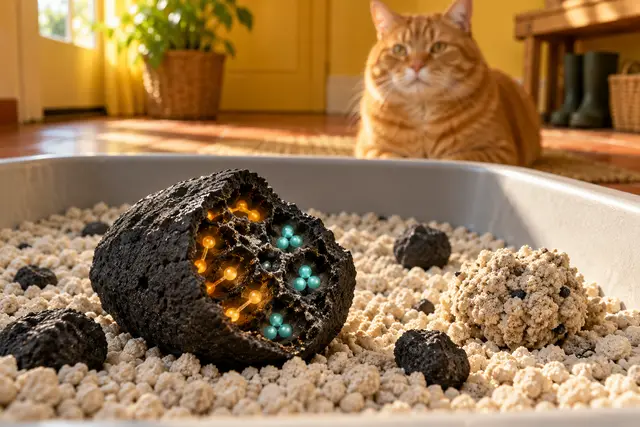
Yes. Purrify mixes into tofu, pine, corn and paper litter without changing how it clumps or scoops. Here is each maker's own care routine and the dose.
Read MoreGuide to cat litter odor: tips on cat care, litter odor control and a healthier home.
Yes. Purrify mixes into tofu, pine, corn and paper litter without changing how it clumps or scoops. Here is each maker's own care routine and the dose.
Read More
A plain answer on dust and white paws: what the carbon maker lists, what hardness does and does not tell you, and a wipe test you can run at home.
Read More
Four litter deodorizers in one table. See what each maker says about format, ingredients, scent and directions, with a source link for every claim.
Read More
The tomcat smell is the sulfur edge of cat urine. See what researchers link it to, what neutering studies found and what a litter box routine does about it.
Read More
Cat litter smell facts came under review: we checked 274 litter-smell claims on Google's top pages, and 16 cite a source. Here is what research measured on scooping, boxes, carbon and more.
Read More
Biodegradable cat litter only helps if your city composts it. Toronto does, Montréal and Metro Vancouver don't. Four brands, what each says, and how to waste less.
Read More
See a vet first, because straining to pee is an emergency. After that, a one-week two-box test tells you whether the scented litter is what your cat is refusing.
Read More
Before you buy a cat air freshener, see what vets say about sprays, plug-ins, diffusers and essential oils, the signs to watch for, and what clears litter smell.
Read More
A filter only treats air that reaches it. Learn how to choose the right pad, when to replace it, and where a litter additive goes to work.
Read More
Open, covered, top-entry, steel or automatic? See what each box type does to the smell, and the habits that make any litter box smell less.
Read More
A cat does not need square feet. It needs height, a routine, a hiding spot and a litter box that does not turn your studio into a litter box. Here is the small-space setup, plus what your lease can and cannot say about pets in Quebec and Ontario.
Read More
You can mix cat litters during a gradual switch, but a permanent blend can weaken clumps and confuse product instructions. Here is how to tell the difference.
Read More
An air purifier can cut litter box smell only if it filters gases. HEPA catches litter dust; odor needs plenty of activated carbon, and the box still comes first.
Read More
A ranked, fix-first guide to the litter box setup and cleaning mistakes that make a home smell worse, frustrate cats, and hide useful health clues.
Read More
A rotten-egg smell near the litter box is not the usual stale urine odor. Learn how to separate stool, anal gland, litter, drain, and possible gas sources, plus when to call the vet.
Read More
Yes. Ammonia from a litter box can sting your eyes, nose and throat, and a lot of it can hurt your lungs. How strong it smells won't tell you how much is in the air, because your nose gets used to it.
Read More
Urine smell, a smelly drawer, or odor after cleaning? Start with the source, follow the matching Litter-Robot fix, and keep all nine checks close by.
Read More
Reduce ammonia smell in cat litter with waste removal, cleaning and ventilation. Get the baking soda answer and learn the limits of activated carbon.
Read More
Why does your house smell like cat litter after scooping? Check the box, hidden urine, nearby fabrics and airflow, then rule out look-alikes like a dry drain.
Read More
Find the source of cat pee smell in your apartment, then choose label-directed cleanup for the surface. Includes previous-tenant and litter-box paths.
Read More
Litter-box odors can include ammonia. Learn which symptoms need attention, when to get fresh air or medical help, and how cleaning and ventilation fit into your routine.
Read More
Compare named Fresh Step and Arm & Hammer formulas, with manufacturer sources, scent differences and a clear way to assess clumps and odor at home.
Read More
Pick an unscented litter that clumps hard, like Dr. Elsey's Ultra or OdourLock Unscented, and if your cat already likes its litter, keep it and add Purrify for the smell that's left.
Read More
Compare activated charcoal and baking soda for litter box odor. Understand how each works, their limits, and what neither replaces in your cleaning routine.
Read More
Best cat litter deodorizer, litter box deodorizer or odor eliminator? It depends on where the smell starts. Here is what each type does, with Purrify first.
Read More
Activated charcoal for cat litter is activated carbon. Learn how it works, how to dose it with your current litter, and where to buy Purrify, made from steam-activated coconut shells.
Read More
If your automatic litter box still smells, waste may be sitting, sensors may miss residue, and ammonia can escape before the cycle runs. Here is the fix.
Read More
Compare activated carbon, zeolite, baking soda and silica gel for litter-box odor, with practical guidance on ingredients, dosing and everyday maintenance.
Read More
Why litter odor can become more noticeable in summer, plus four ways to adjust cleaning, ventilation, placement and additive use in hot weather.
Read More
Choose unscented cat litter by fragrance, dust and your cat's acceptance. For asthma, ask your vet about the exact formula. Clean the box first, then add your additive.
Read MoreStrategies, product comparisons, and science-backed guidance for eliminating litter box odor.
Evidence-based explainers on ammonia, activated carbon, and the chemistry behind litter box smell.
Hands-on comparisons and shortlist guides for choosing the right litter, box, or deodorizer.
Advice for keeping a small space fresh when the litter box is close to living areas: placement, odor control, disposal and litter picks. Purrify blog.
Review-style breakdowns of litter boxes, litter types, and odor-control options.
Practical routines, cleanup habits, and setup tips that keep cat homes fresher day to day.
Guidance that connects litter box odor issues with cat routines, comfort, and behavior.
Step-by-step guidance for choosing, using, and comparing odor-control products.
Health-focused advice for sensitive cats, fragrance-free setups, and safer litter box routines.
Actionable, step-by-step fixes for common litter box odor problems.
Head-to-head breakdowns of product types, ingredients, and odor-control approaches.
Advice focused on box styles, placement, and enclosure decisions that affect odor spread.
Low-perfume, lower-waste, and natural-litter guidance for eco-conscious cat households.
Buying and odor-control guidance tailored to shoppers and households in the United States.
Posts that explain how activated carbon traps odor molecules and where it fits into litter routines.
Articles about litter formats, materials, and how litter choice affects odor performance.
Guides focused on actually removing litter box odor instead of masking it with fragrance.
Posts for households where more cats mean stronger odor load, heavier use, and tighter routines.
Natural-litter, lower-waste, and ingredient-conscious posts for eco-minded cat owners.
Cat comfort, safety, and sensitivity considerations tied to litter box odor control.
Maintenance routines, cleaning workflows, and setup changes that reduce odor buildup.
Posts centered on ammonia smell, why it spikes, and how to reduce it before it spreads.
Fragrance-free litter and deodorizer advice for sensitive cats and scent-averse households.
A broad archive of posts that touch on litter boxes, mixing box design and placement with cat care and odor control.