Prefer a quick video? Watch the latest verified upload from our official YouTube channel and follow @PurrifyHQ for future product and brand updates.
Purr Purr Purrify | Song about Cat Litter Odour Control Made in Canada
Sources
Inside every Purrify granule is a structure with more surface area than your apartment. Spread one teaspoon flat and it would cover a tennis court. Here's how that's possible - and why it matters when your cat walks back from the litter box.
Direct Answer
Activated carbon starts as a carbon-rich raw material - usually coconut shell.
It is heated to around 800 degrees Celsius to drive off everything that is not carbon, then steam-activated at roughly 1,000 degrees Celsius to blow open millions of microscopic pores.
The finished granule traps gas molecules on the walls of those pores by physical adsorption.
That is why a teaspoon of it can hold an outsized amount of odor before it saturates.
Here is the part nobody tells you. The activated carbon in your cat's litter box used to be a coconut. A specific coconut. Probably grown on a smallholder farm in the Philippines, Indonesia, Sri Lanka, or India. The journey from husk to granule is more interesting than you would expect, and once you understand it, the whole product makes more sense.

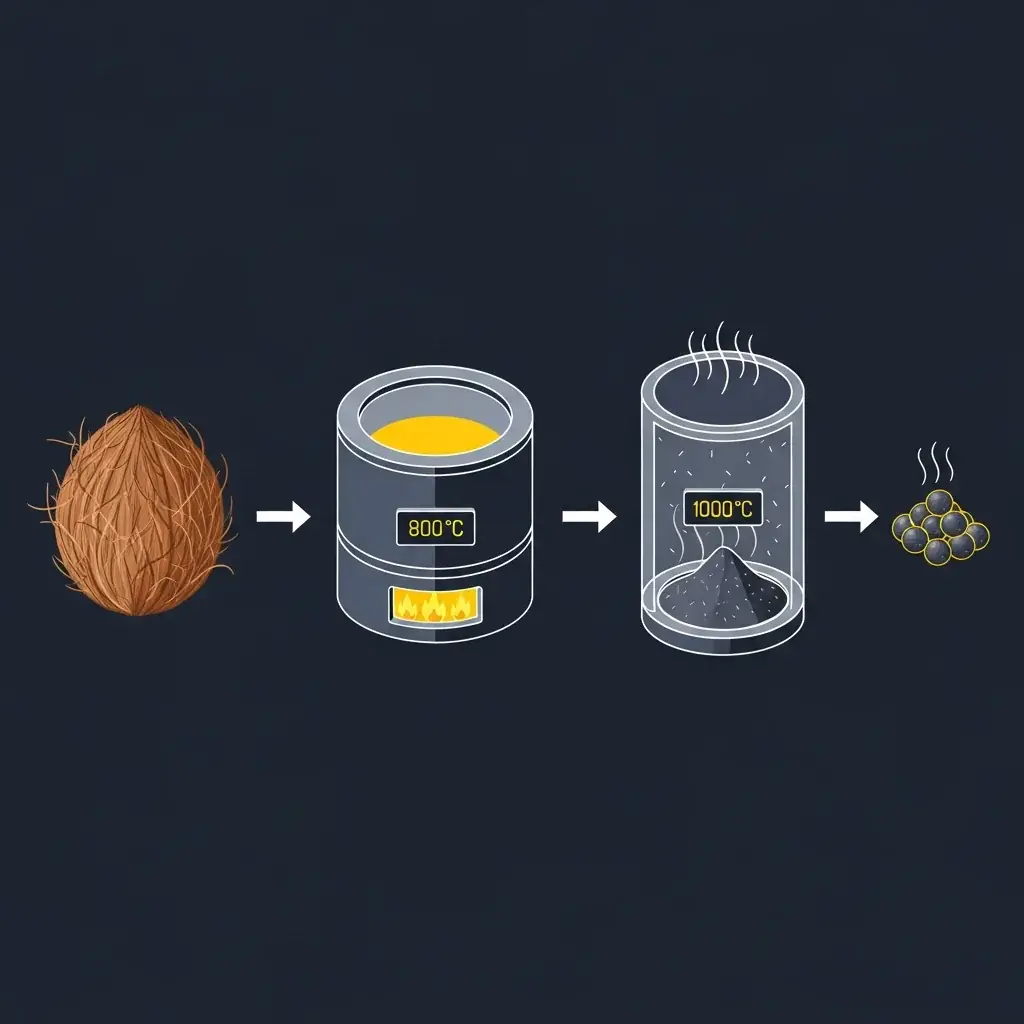
Step one happens on the farm. After the coconut meat and water are sold off, the leftover husk and shell are usually treated as waste. Some get burned in cooking fires. The good ones get dried in the sun until the moisture content drops low enough to handle the next step.
Step two is carbonization. The dried shells go into a sealed kiln and get heated to around 800 degrees Celsius with very little oxygen. Without oxygen, the shells cannot burn. Instead, everything that is not carbon - water, oils, volatile compounds - gets driven out as gas. What is left is char: pure carbon, but solid and mostly closed off. Useless for odor control on its own.
Step three is activation, and this is where the magic happens. The char gets moved into a second chamber and heated to roughly 1,000 degrees Celsius. Superheated steam is forced through it. The steam reacts with the surface carbon and blasts open millions of microscopic pores throughout the structure. A piece of char the size of a pencil eraser ends up with the internal surface area of a small parking lot.
Step four is screening and quality control. The activated carbon gets sized into granules, dust gets removed, batches get tested for surface area and pore distribution. The good granules get bagged and shipped. The dust gets recycled into pressed carbon blocks for water filters.
Step five is where your cat comes in. The granules cross an ocean, get blended into the Purrify additive, get sprinkled into a litter box in a Canadian apartment, and start trapping ammonia molecules within minutes. Same material, different ZIP code.
You would end up with charcoal. Not activated carbon. Charcoal. The kind of stuff your grandfather threw on a barbecue grill, or that artists draw with. It is mostly closed-off carbon with very little internal surface area, almost no microporosity, and effectively no ability to grab gas molecules out of the air. Skip activation, and you have a black lump that is good for fires and not much else. Activation is the entire reason this material does what it does.
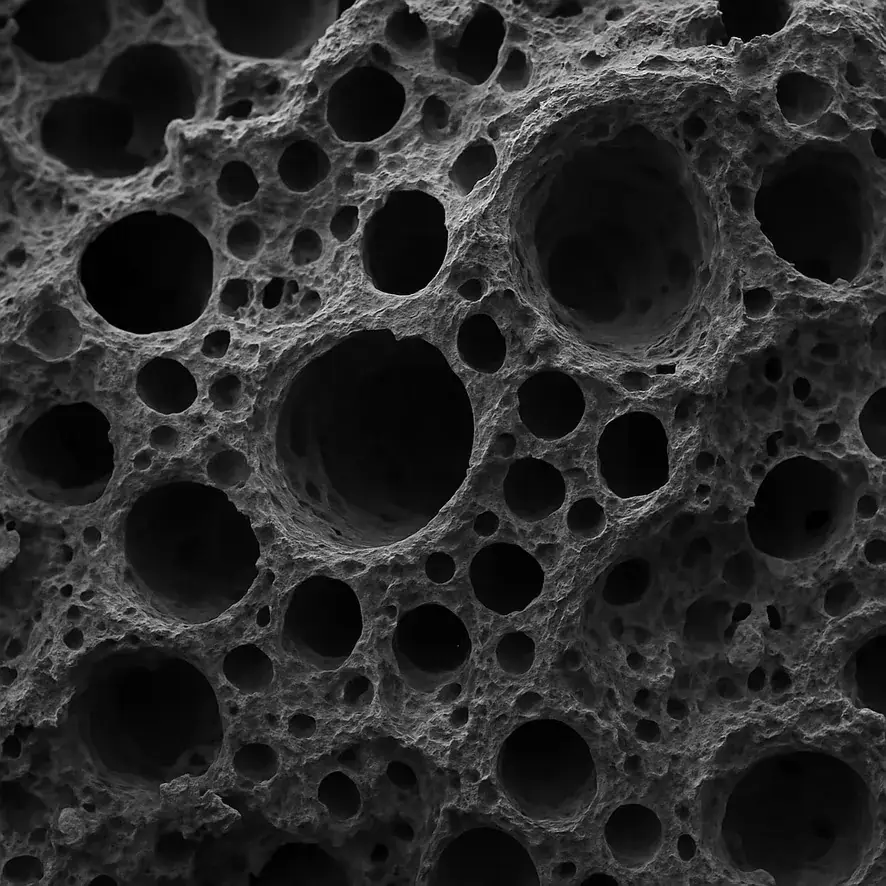
Activated carbon is carbon that has been put through that two-stage burn until it is mostly hollow on the inside. Take a granule, slice it open, look at the inside under an electron microscope, and you see something that looks like a sponge made of stone. That sponge is the entire product.Activated carbon is widely used to reduce organic contaminants and VOCs in air and water. (Source: EPA Indoor Air Quality)
The raw material matters more than people think. Coconut shell is the gold standard for odor work because it carbonizes into a structure that is unusually rich in the tiniest pores - the ones small gas molecules like ammonia fit into perfectly. Wood-based activated carbon has bigger pores and is better suited to liquid filtration. Coal-based carbon is mass-produced and inexpensive but typically has a wider, less ammonia-tuned pore distribution. Bamboo is a more recent renewable option that behaves somewhere between coconut and wood.
The raw material determines the pore structure. The pore structure determines what kinds of molecules the finished carbon can actually catch.
Micropore-rich and especially strong for small gases like ammonia. This is what Purrify uses.
Larger average pore size. More common in liquid filtration and air treatment for larger VOCs.
Industrial workhorse. Cheap at scale, but pore distribution is less tuned for litter-box-specific gases.
Renewable, behaves between coconut and wood. Still less common in consumer odor products.
Two stages: carbonize the raw material to strip out everything that is not carbon, then activate it with steam or chemicals to open the pore network. Skip stage two and you have charcoal. Do both well and you have a working adsorbent.
Production is really pore engineering. The same coconut shell, run at different temperatures for different durations, ends up with different pore-size distributions. That is why the "made from coconut" claim alone tells you almost nothing about how good the carbon is.
Smaller particles adsorb faster because gas molecules have a shorter path to travel before hitting a pore. Larger particles produce less dust and move air better. Purrify uses a granule size chosen to mix cleanly into litter without going airborne when your cat scratches.
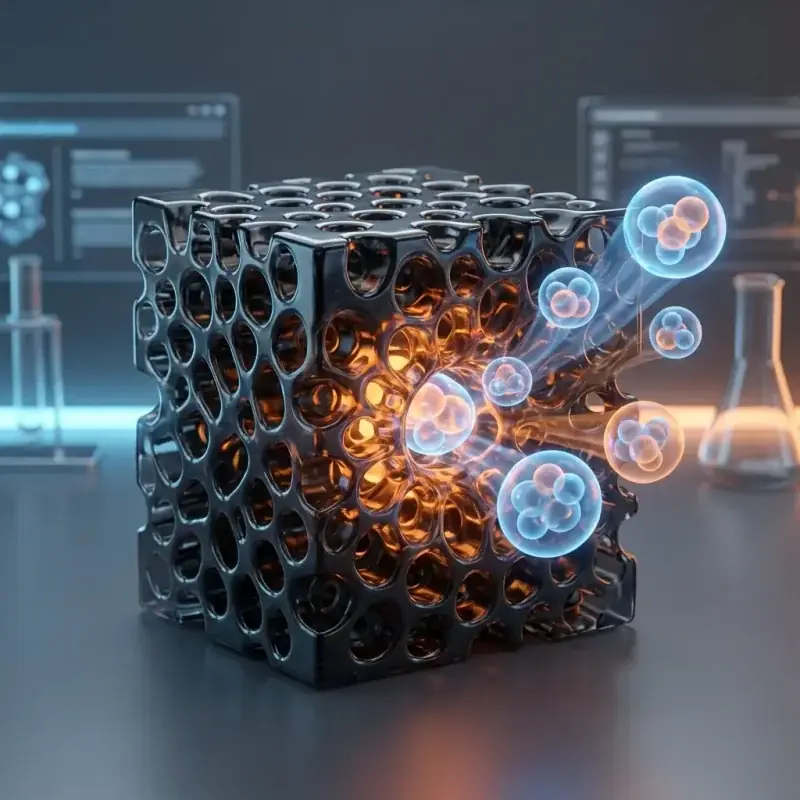
If activated carbon worked by absorption, summer heat and air movement would push the trapped ammonia right back out into your living room. Because it works by adsorption, those molecules stay locked onto the pore walls until you change the litter. The smell does not come back the next warm afternoon.
Activated carbon does not have one kind of pore. It has three, and they each do a different job. Think of a single granule as a building: macropores are the front doors, mesopores are the hallways, and micropores are the closets where things actually get stored.
Picture a gas molecule wandering into a granule. It enters through a macropore (wide enough to walk through), drifts down a mesopore (tighter, more turns), and finally tucks into a micropore (just barely wide enough to fit). The smaller the final hiding spot, the harder it is for that molecule to escape again. That is why micropore-rich carbon is what you want for small smelly gases like ammonia.
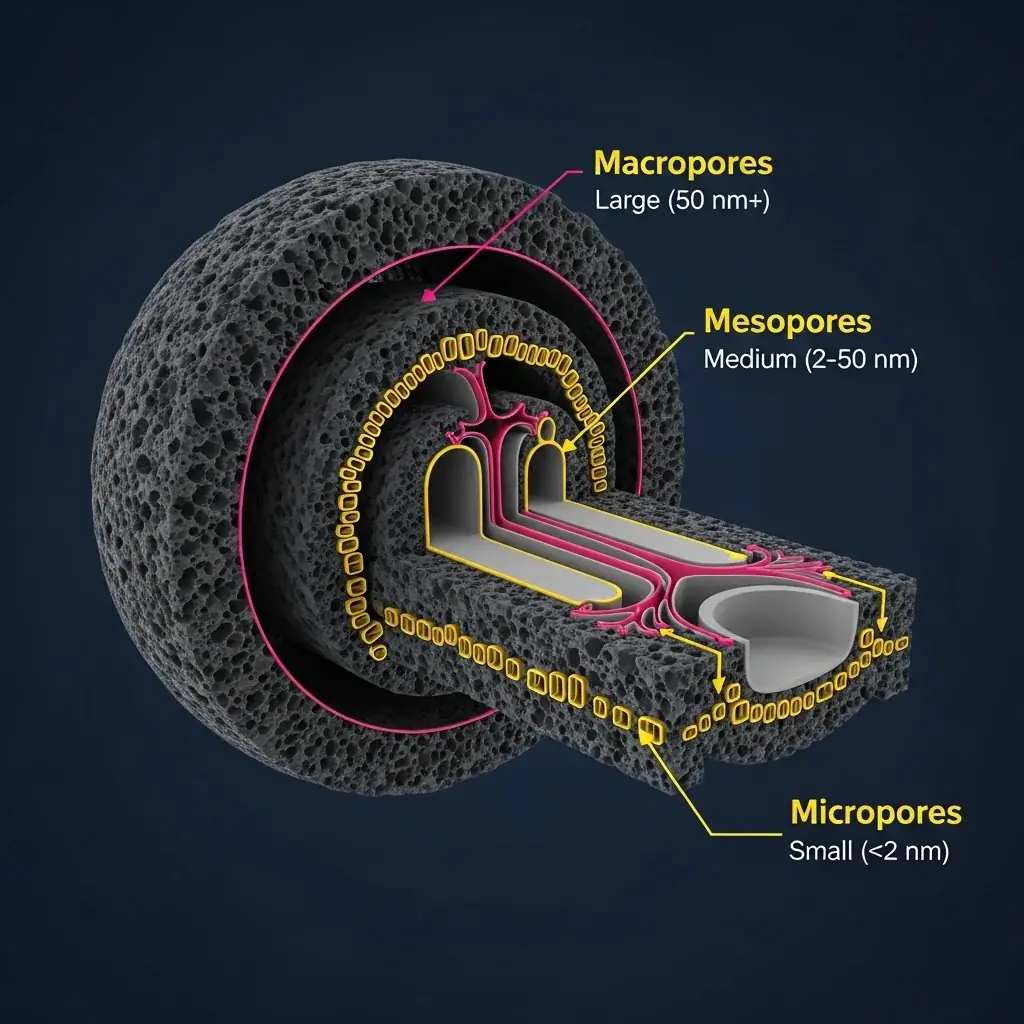
Best for: Small gases such as ammonia, hydrogen sulfide, and many VOCs
Micropores account for the majority of the internal surface area in a well-made granule. They are also where the strongest adsorption happens, because the pore walls are close enough to the trapped molecule to apply force from multiple sides at once.
Closets. Small. Final hiding spot. Where molecules end up and stay.
Best for: Medium-sized molecules and transport into deeper pores
Mesopores are the connective tissue. They are too big to hold tiny molecules tightly on their own, but they are the only way deeper gas molecules can travel to reach the micropore network.
Hallways. Movement, not storage. Without these, the closets are unreachable.
Best for: Entry pathways and bulk airflow
Macropores are the front doors. Gases would never reach the inside of the granule without them. They contribute very little surface area on their own, but they decide how fast a granule can take in new contaminants.
Doorways. Big. Necessary. Almost no storage value on their own.
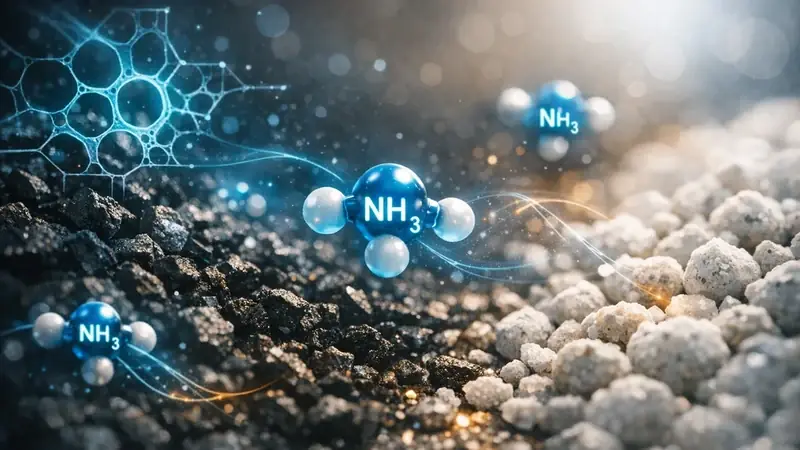
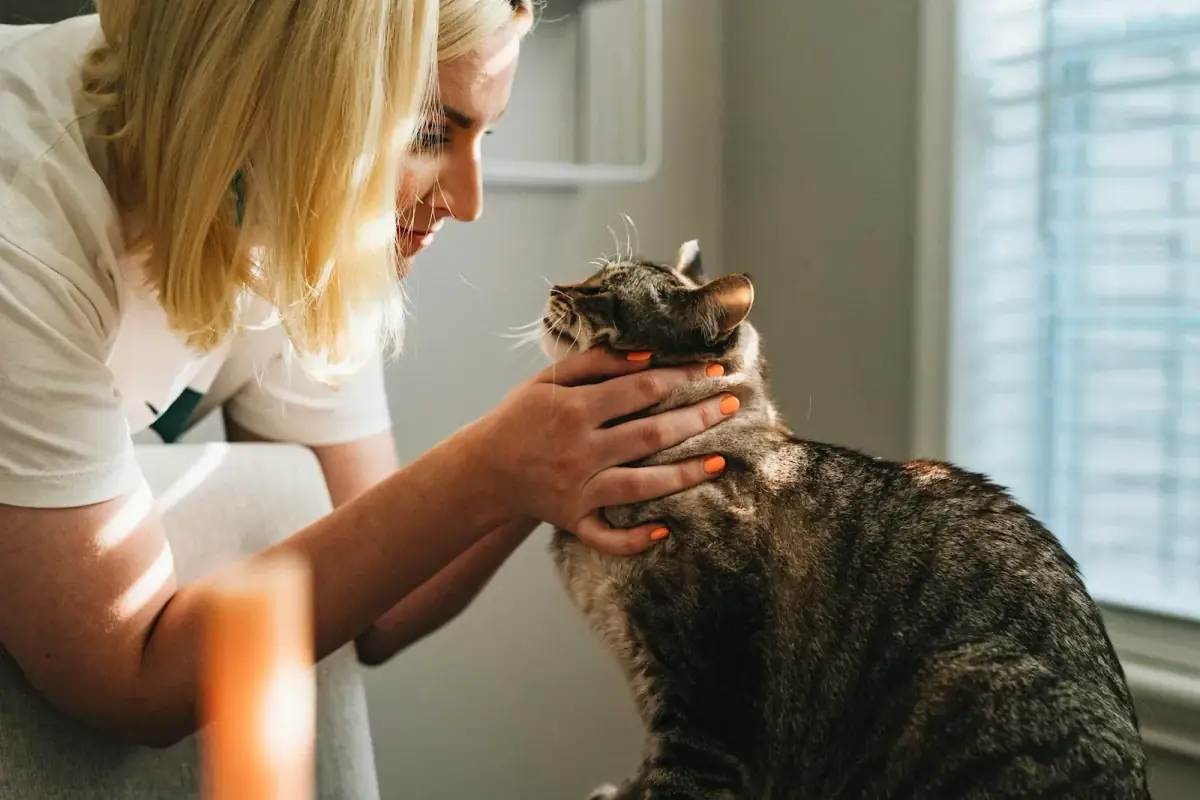
Cat urine contains urea. Within hours of hitting the litter, bacteria break that urea down and release ammonia as a gas. That sharp, eye-watering smell is the molecule you are about to launch into the air every time your cat covers up. The chemistry of why this happens, and what makes urine pH spike the way it does, is a full topic on its own.Ammonia from urine breakdown is a known respiratory irritant at higher concentrations. (Source: EPA Indoor Air Quality)
Urea (from urine) + bacteria -> ammonia (NH3) + CO2 + H2O
The process starts within hours and intensifies. Clumping litters help isolate the waste, but clumping alone does not stop ammonia from making it into the air above the box.
Once Purrify granules are mixed into the litter, those pores start doing their job in your box - the hour-by-hour breakdown of what that looks like, and how to place the granules so they actually catch the ammonia at the source, lives on the mechanism page. How Purrify works in your litter box.
Here is something the activated carbon industry quietly tolerates: a lot of products labeled "charcoal" or "activated carbon" on store shelves are barely either. The word is unregulated. There is no minimum surface area required to put it on a label. A product can contain 5 percent low-grade carbon mixed with 95 percent filler and still legally say it works through carbon adsorption.
Real, filtration-grade activated carbon - the kind used in municipal water plants, hospital air handlers, and chemical-warfare gas masks - has a specific identity. It has a published surface area number. It has a known pore distribution. It comes from a documented feedstock processed under controlled conditions. None of that is true for the gray dust someone scooped into a bag and called "odor charcoal."
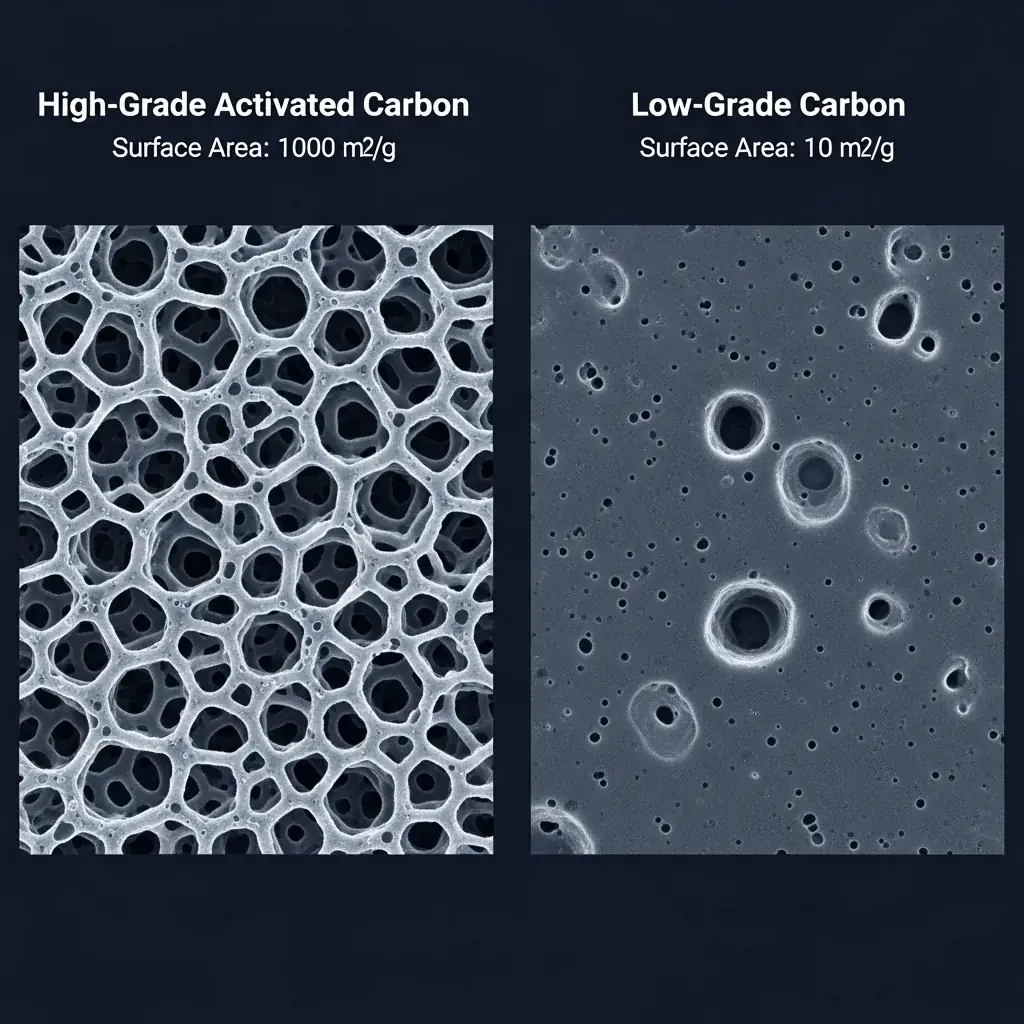
A lot of "charcoal-infused" litter additives, deodorizing pads, and pet odor sprays use a tiny amount of low-grade carbon mostly as a marketing claim. The carbon is there. It just is not enough of it, and not the right kind, to do meaningful work. If you have ever bought a "charcoal" product that did almost nothing, this is probably why.
Purrify discloses what is in the bag: 100 percent steam-activated coconut-shell activated carbon, micropore-tuned for ammonia and small VOC capture, food-grade safe. No fillers, no perfumes, no charcoal-flavored filler dust.
Here is the trust check. The activated carbon Purrify uses is not some niche pet-industry material. It is the same general class of adsorbent already deployed in places where the cost of failure is much higher than a stinky litter box.
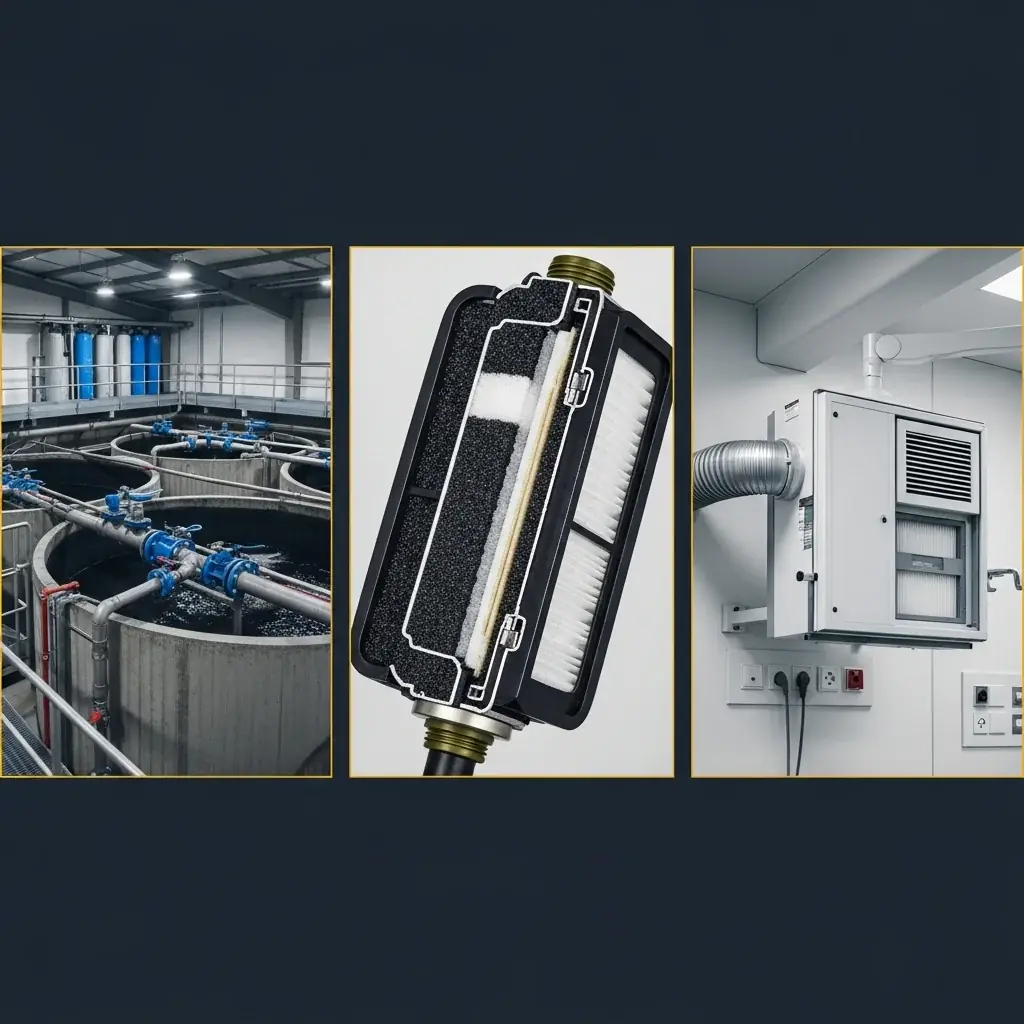
Yes - same material family, different particle size and packaging. The granules in a city water plant are a little coarser. The carbon in a gas mask cartridge is packed denser. The activated carbon scrubbing anesthesia out of an operating-room exhaust is held in a sealed canister. But the underlying material - high-surface-area coconut or coal-based activated carbon - is the same family that ends up in the Purrify bag.
Most large municipal water treatment plants use activated carbon to pull chlorine byproducts, taste compounds, and trace organics out of the water before it reaches your tap. Same adsorption mechanism. Different shape - usually packed beds inside large columns.
Anesthesia gases that escape during surgery are scrubbed by activated carbon filters before the exhaust hits the outside air. Surgeons literally trust this material to keep operating-room atmospheres clean.
Every standard-issue gas-mask filter cartridge in modern militaries contains a layer of impregnated activated carbon. It is the front line of defense against industrial gases and chemical agents.
Nuclear submarines stay submerged for weeks at a time. The air inside is scrubbed continuously by activated carbon and other adsorbents so the crew is not breathing accumulated CO2 and trace VOCs.
Activated carbon is used in some dialysis circuits to remove toxins from blood that diseased kidneys cannot filter on their own.
Sugar refineries, wine producers, vegetable-oil processors, and bottled water plants use activated carbon to remove off-flavors, off-colors, and impurities. Food-grade carbon is held to even higher purity standards than industrial grades.
If activated carbon is good enough to scrub anesthesia out of operating-room air, and good enough to keep a submarine crew breathing for two months underwater, it is good enough for a kitten box. The cost of failure in those other environments is human life. The cost of failure in yours is an apartment that smells like ammonia. The material is overqualified, on purpose.
| Method | Mechanism | Effectiveness | Lasting odor control |
|---|---|---|---|
| Activated carbon | Physical adsorption | High | High - until pores saturate |
| Baking soda | Light chemical neutralization | Limited | Low |
| Zeolite | Ion exchange | Moderate | Moderate |
| Air fresheners | Masking only | Low | Hours |
For specific refresh cadence, dosing, and what to expect day by day in your own box, see how Purrify works in the litter box.
Baking soda neutralizes acids. Ammonia is a base. The chemistry barely engages, which is why a box of baking soda in the bottom of a litter pan does very little against the ammonia smell most people are actually trying to fight.
Zeolite can hold some ammonia through ion exchange, but its capacity drops fast in mixed-odor environments and its working temperature window is narrower than activated carbon. Useful, but not the same league.
Wondering which one actually pulls ahead? See our full odor-absorber comparison.
Knowing the material is half the picture. The other half is putting it in the right place at the right depth at the right time, which is its own page. See how to use Purrify in the litter box.
Three other pages cover the topics this one deliberately keeps short.
Dosing, placement, refresh timing, what to expect day by day, troubleshooting the smell coming back.
Read the mechanism guideThe urea-to-ammonia chemistry, why urine pH spikes, what bacteria are doing in there, and why diet changes the smell.
Read the chemistry breakdownPeer-reviewed sources on activated carbon performance, ammonia exposure thresholds, and adsorption mechanics.
See the evidencePurrify uses steam-activated coconut-shell activated carbon, micropore-tuned for ammonia and small VOC capture. Mix it into the litter you already use. Smell stays out of the air. No perfume, no masking.