Skip to main contentSkip to productsSkip to testimonials
Purrify
Products
For Retailers
Learn
BlogFun & Games
About
Get a free sample
Purrify - Premium Activated Carbon Cat Litter Additive - Return to Home Page

Love your cat, lose the smell. Water-filter grade activated carbon eliminates ammonia odors - no perfumes, just science. Try FREE (just pay shipping). Made in Canada, ships across North America.

Products

  • Get Purrify Near You
  • Buy Online
  • Free Sample
  • Standard 50g
  • Large Pack
  • Compare Sizes

Learn

  • How It Works
  • FAQ
  • All Tools
  • Cat Litter Guide
  • Ammonia Science
  • Safety Information
  • Glossary
  • Odor Solutions
  • Science
  • Ammonia Control

Company

  • About Us
  • Blog
  • Fun & Games
  • Case Studies
  • About Purrify
  • Team
  • Editorial Policy
  • Testing Policy
  • Referral Program
  • Returns Policy
  • Documents
  • For Retailers
  • B2B Inquiry
  • Affiliate Program
  • Contact
  • Shipping & Returns

Locations

  • All Locations
  • Canada Wide
  • Montreal
  • United States
  • Stores in Quebec

Resources

  • Odor Control Litter Guide
  • Water & Carbon Science
  • PFAS Canada
  • Comparison Lab
  • Comparison Lab Methodology
  • Ammonia Health Risks
  • Litter Box Smell Elimination
  • Multiple Cats Odor Control
  • Natural Cat Litter Additive
  • Senior Cat Litter Solutions
  • How to Neutralize Ammonia
  • Contact Support
  • Retailer Get Started
  • Retailer Reorder
  • Free Trial
Privacy PolicyTerms of ServiceSitemap

© 2026 Purrify | All Rights Reserved

YouTube
Purr Purr Purrify | Song about Cat Litter Odour Control Made in Canada

Watch Purrify on YouTube

Prefer a quick video? Watch the latest verified upload from our official YouTube channel and follow @PurrifyHQ for future product and brand updates.

Purr Purr Purrify | Song about Cat Litter Odour Control Made in Canada

Published March 7, 2026Duration 3:53@PurrifyHQ
Watch Featured VideoVisit @PurrifyHQ

Sources

  1. 1.Urease-mediated urea hydrolysis and ammonia production - National Institutes of Health (PMC)
  2. 2.OSHA ammonia exposure limits and annotated permissible exposure limits - U.S. Department of Labor (OSHA)
  3. 3.Activated carbon adsorbers: surface area, pore structure, and adsorption basics - U.S. Environmental Protection Agency
  4. 4.Peer-reviewed study on ammonia removal using activated carbons - PubMed
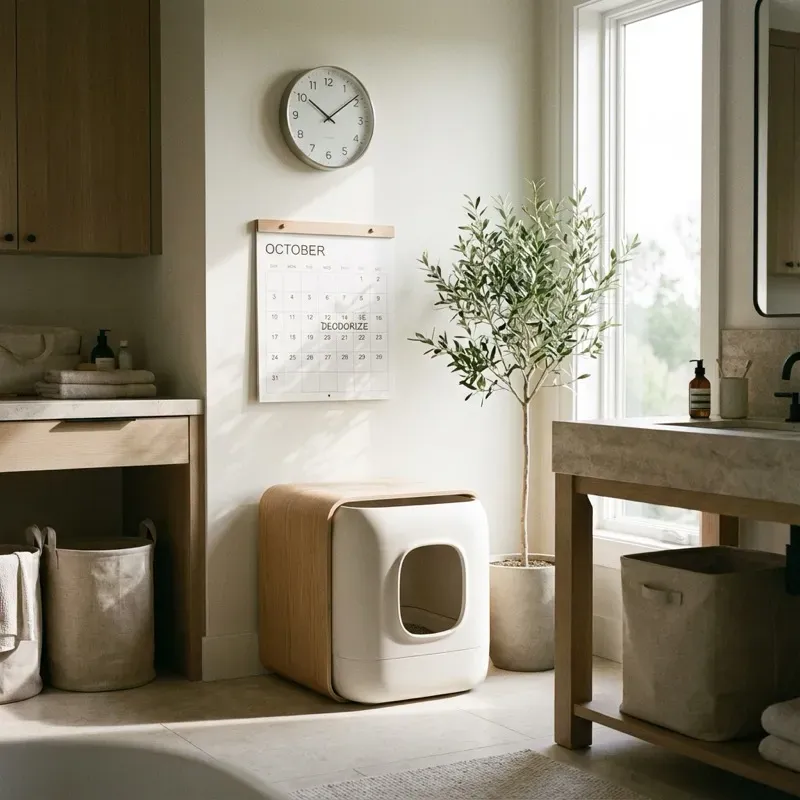
Clean litter box with cat - complete odor elimination

Litter Box Smell Elimination: Why Cleaning Alone Is Not Enough

Litter box smell elimination requires stopping ammonia between cleanings, not just removing waste. You cleaned the box - so why does it still smell? Bacteria convert urine to ammonia gas within 2-4 hours, so the odor problem starts long before your next scoop.

Purrify Free Sample

FREE Sample (Just Pay S&H)

Get FREE Sample

Direct Answer

Why does a litter box still smell after cleaning?

A litter box can still smell after cleaning because the odor problem is often already in the air, in the plastic, and in the damp residue you cannot see.

Cat urine contains urea, and once bacteria start breaking it down, ammonia gas begins forming within a few hours.

By the time you notice that sharp smell, simply removing the waste is not always enough because odor molecules have already spread beyond the clumps.

If the box was refilled before it fully dried, trapped moisture can make the smell return even faster.

The strongest fix is to empty the litter completely, wash away residue, let the box dry all the way through, and then add fresh litter plus activated carbon so new odor molecules get trapped before they circulate.

Cleaning removes old waste; odor control has to keep working after the cleaning ends.

The Science of Odor Elimination

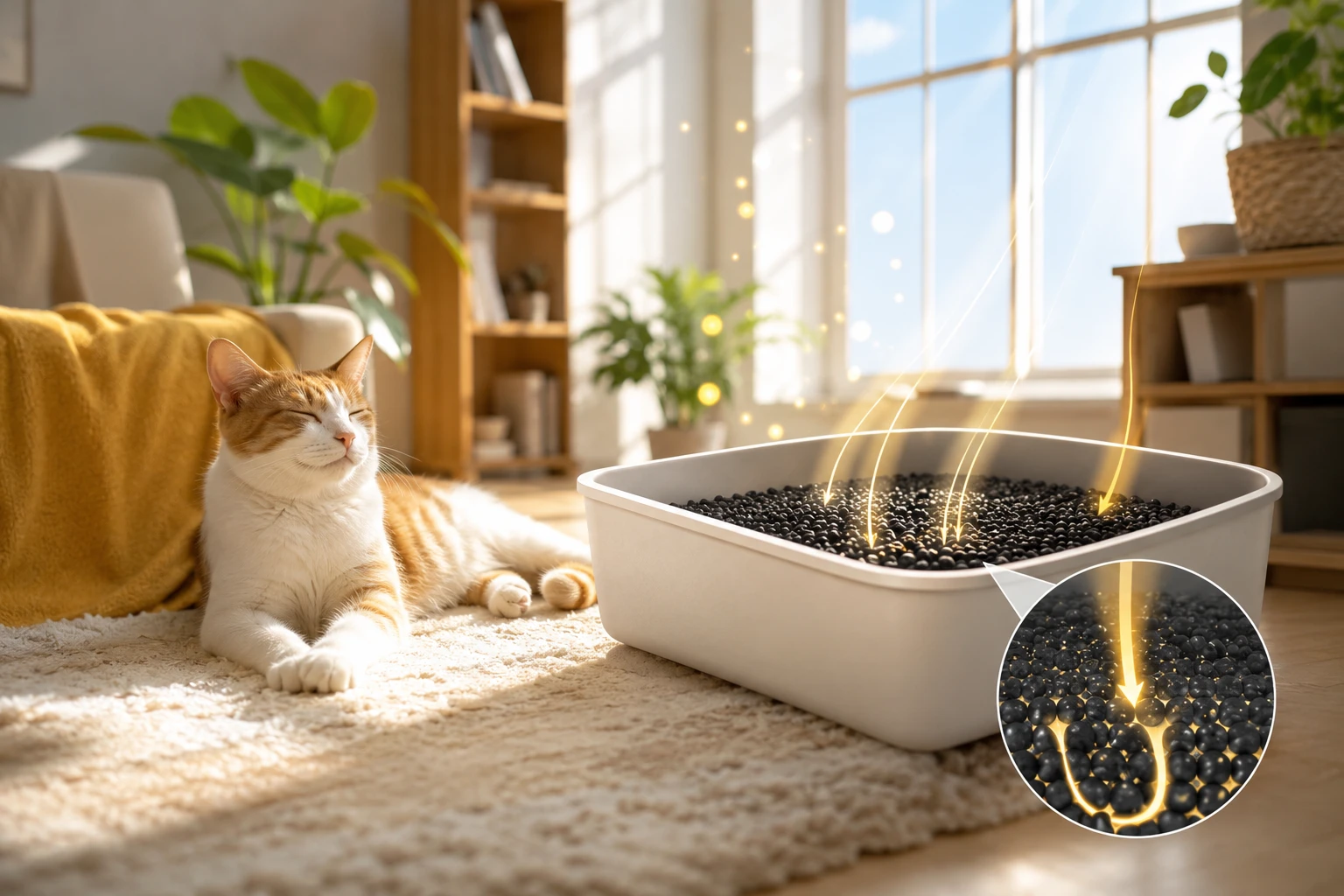
Scientific approach to odor elimination with activated carbon

Unlike masking agents or fragrances, activated carbon actually removes odor molecules from the air. Each tiny pore traps ammonia, hydrogen sulfide, and other odor compounds permanently.

🧪

Molecular Level

Eliminates odors at the source, not just masking

🌿

100% Natural

Made from coconut shells - safe for cats and family

⏱️

Instant Results

Works within minutes of application

Happy cat in fresh, odor-free environment

Ready to Eliminate Odors Forever?

Join thousands of cat owners who've solved their litter box odor problems with Purrify.

Try Purrify Risk-Free Learn the Science

Works with Any Litter

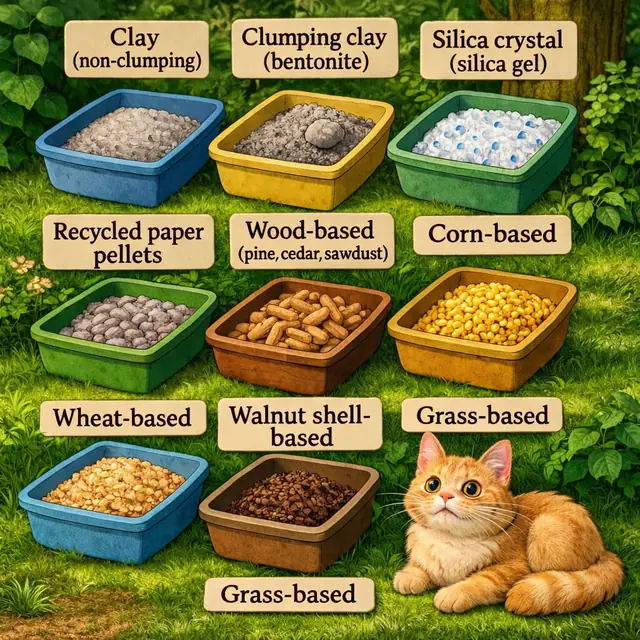
  • ✅ Clay litter (clumping & non-clumping)
  • ✅ Crystal/silica gel litter
  • ✅ Natural/biodegradable litter
  • ✅ Wood pellet litter
  • ✅ Paper-based litter

Perfect For

  • 🏠 Small apartments & condos
  • 🐱 Multiple cat households
  • 👥 Sensitive family members
  • 🏢 Indoor cats in offices
  • 🎯 Any persistent odor problem
"I was so embarrassed when guests came over. Now I actually invite people in! Purrify completely eliminated the smell in just one day."
- Sarah M., Toronto

Ammonia forms in cat litter boxes within 2-4 hours of urination as bacteria break down urea. This is why litter boxes smell even after cleaning-the gas has already been released.

Activated carbon traps ammonia molecules through adsorption, using a large internal pore network for odor capture.

- Purrify Research Team

How to Stop Your Litter Box From Smelling After Cleaning

Follow these 5 steps to eliminate persistent litter box odor and keep your home fresh between cleanings.

Time needed: 15 minutes

  1. 1

    Empty and clean the litter box completely

    Remove all old litter and wash the box with mild soap and water. Avoid harsh chemicals that can leave residue or odors cats dislike.

    Pro tip: Do a deep clean every 1-2 weeks, even if you scoop daily.

  2. 2

    Let the box dry completely

    Moisture trapped under litter accelerates bacterial growth and ammonia production. Ensure the box is fully dry before adding fresh litter.

  3. 3

    Add 2-3 inches of fresh litter

    Pour clean litter to the recommended depth. Too little litter means odors aren't absorbed; too much is wasteful.

  4. 4

    Sprinkle activated carbon additive on top

    Add 2-3 tablespoons of Purrify activated carbon and mix it into the top layer. The carbon begins trapping odor molecules immediately.

    Pro tip: For multi-cat households, use 3-4 tablespoons per box.

  5. 5

    Scoop daily and refresh carbon weekly

    Daily scooping removes waste before ammonia forms. Add a tablespoon of Purrify every few days to maintain odor control between full changes.

Common Questions About Litter Box Odor

Bacteria convert urea in cat urine to ammonia gas within 2-4 hours. Even with daily scooping, ammonia has already formed. The smell you notice isn't from visible waste-it's ammonia that's been released into the air. Activated carbon traps these molecules continuously between cleanings.
Scoop out fresh clumps, let the box dry fully if you just washed it, refill to the proper depth, and add activated carbon to the top layer. That gives you faster litter box odor control than fragrance sprays or baking soda because it traps odor molecules instead of covering them up.
With regular scooping and activated carbon additive, you can extend full litter changes to every 2-3 weeks instead of weekly. The carbon continues neutralizing odors, keeping litter fresher longer and reducing waste.
No. Activated carbon is odorless and has a similar texture to litter. Unlike scented additives that can cause litter box avoidance, cats don't notice the carbon. Many cats actually prefer the cleaner environment.
Yes. Food-grade activated carbon is non-toxic and has been safely used in water filtration and even human supplements. Small amounts accidentally ingested during grooming pose no health risk to cats.
Absolutely. Activated carbon works with clay, clumping, crystal, wood, paper, corn, and wheat litters. Simply mix it into your existing litter-no need to switch brands or types.

Ammonia Levels by Hour: Why Timing Matters

Ammonia does not appear all at once. It builds in predictable stages as urease-producing bacteria in the litter break down urea. Understanding the timeline helps you decide when and how often to intervene.

0 - 2 hours

Ammonia is near zero. Urea is present but bacterial activity is just starting. The box smells of litter, not waste. This is the ideal window for scooping.

4 - 6 hours

Bacterial colonies are active. Ammonia concentrations reach 2-5 ppm in the box headspace - detectable if you lean in. This is when activated carbon starts earning its keep.

8 - 12 hours

Without intervention, headspace ammonia can exceed 10 ppm - perceptible from across the room. Litter saturated with urine reaches peak bacterial activity and odor release.

Activated carbon does not wait. Its micropores (mostly under 2 nanometres wide) begin trapping ammonia molecules the moment they form. The result is a continuous chemical sponge that intercepts odor between each scooping.

The 48-Hour Deep Reset Protocol

If odor persists despite regular scooping, the litter box itself may be the source. Plastic absorbs ammonia and bacterial byproducts over time. A full reset breaks the cycle.

  1. 1

    Remove all litter

    Dispose of everything. Do not refill on top of old litter - the residue underneath is the problem.

  2. 2

    Clean with enzymatic cleaner

    Enzymatic cleaners break down urine proteins at the molecular level. Avoid bleach - it can react with ammonia residue to create irritating chloramine gas.

  3. 3

    Rinse thoroughly and dry for at least 12 hours

    Plastic that feels dry to the touch can still hold moisture inside micro-scratches. A full air-dry - ideally overnight - prevents immediate odor rebound.

  4. 4

    Add 3-4 inches of fresh litter

    Depth matters. Too little litter means urine reaches the plastic floor directly, creating a hard-to-clean ammonia reservoir.

  5. 5

    Mix in activated carbon

    Distribute Purrify granules through the top 2 inches of litter. The carbon captures ammonia molecules the moment they emerge from fresh waste.

  6. 6

    Scoop twice daily going forward

    Daily scooping keeps the bacterial load manageable. Refresh carbon every 5-7 days rather than waiting for odor to return.

Litter boxes older than 18-24 months with deep scratches should be replaced. Scratches harbor bacteria that no amount of cleaning fully removes.

When Nothing Seems to Work: Troubleshooting Checklist

Persistent odor after doing everything right usually has a fixable cause. Work through this checklist before assuming the problem is unfixable.

✓
Box material: Plastic absorbs ammonia into micro-scratches over time. Boxes older than 1-2 years may smell even when clean. Try a new box.
✓
Scoop frequency: Once a day is the minimum; twice daily is the target. Bacteria convert urea to ammonia within hours of deposit.
✓
Litter depth: Less than 3 inches means urine reaches the box floor directly, creating a surface that is harder to clean and faster to smell.
✓
Ventilation: A box in a sealed closet concentrates odor. Even cracking a door or adding a small fan improves air exchange noticeably.
✓
Diet factors: High-protein diets produce more urea per urination. If you recently changed food and odor worsened, the food is a variable.
✓
Number of cats per box: One box per cat plus one extra is the minimum. A single box serving multiple cats will overwhelm any odor control routine.
✓
Carbon saturation: Activated carbon does eventually saturate. If you have not refreshed it in more than 7-10 days, the carbon may no longer be absorbing effectively.

Related Solutions

Apartment Cat Smell

Keep small spaces fresh and odor-free

Ammonia Smell Solutions

Stop sharp ammonia odors at the source

How to Neutralize Ammonia

Step-by-step guide to ammonia elimination

View all solutions

Related Articles

Ghibli-style illustration of a contented cat near a fresh litter box in a cozy home

Best Cat Litter for Smell: Honest Reviews & What Actually Works (2026)

Read more →

Low-dust cat litter options compared for odor control in 2026

Top 10 Best Cat Litters for Odor Control (2026 Guide)

Read more →

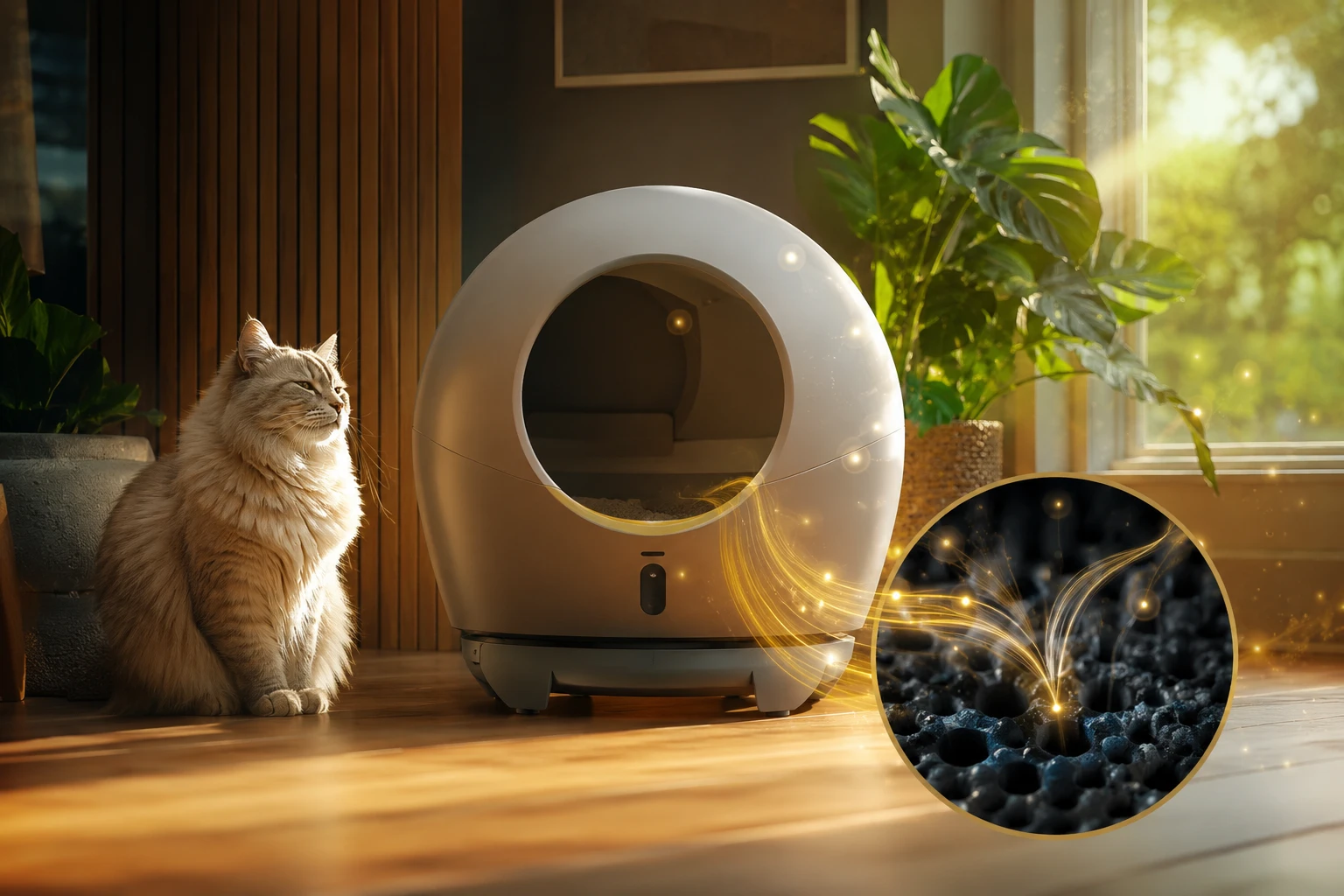
Best self-cleaning automatic litter boxes for odor control comparison with activated carbon enhancement

Best Self-Cleaning Litter Boxes for Odor Control (2026 Comparison)

Read more →

Most powerful cat litter odor absorber comparison test

Most Powerful Odor Absorber for Cat Litter: Activated Carbon Guide

Read more →

Small apartment ventilation setup for litter box odor control

Best Cat Litter Odor Remover for Small Apartments: Urban Solutions

Read more →

Cat lounging comfortably in summer heat

Why Cat Litter Smells Worse in Summer (And 4 Solutions That Actually Work)

Read more →

Cat looking out at winter scenery from warm room

Why Cat Litter Smells Worse in Winter (And 5 Solutions That Don't Require Opening Windows)

Read more →

Why does my house smell like cat litter? Complete fix guide

House Smells Like Cat Litter? 7 Proven Solutions to Control Cat Litter Smell

Read more →