


Best Cat Litter for Multiple Cats: The 2026 Guide
Why two cats don't mean double the odor—they mean four times worse. Here is the science of managing exponential ammonia buildup.
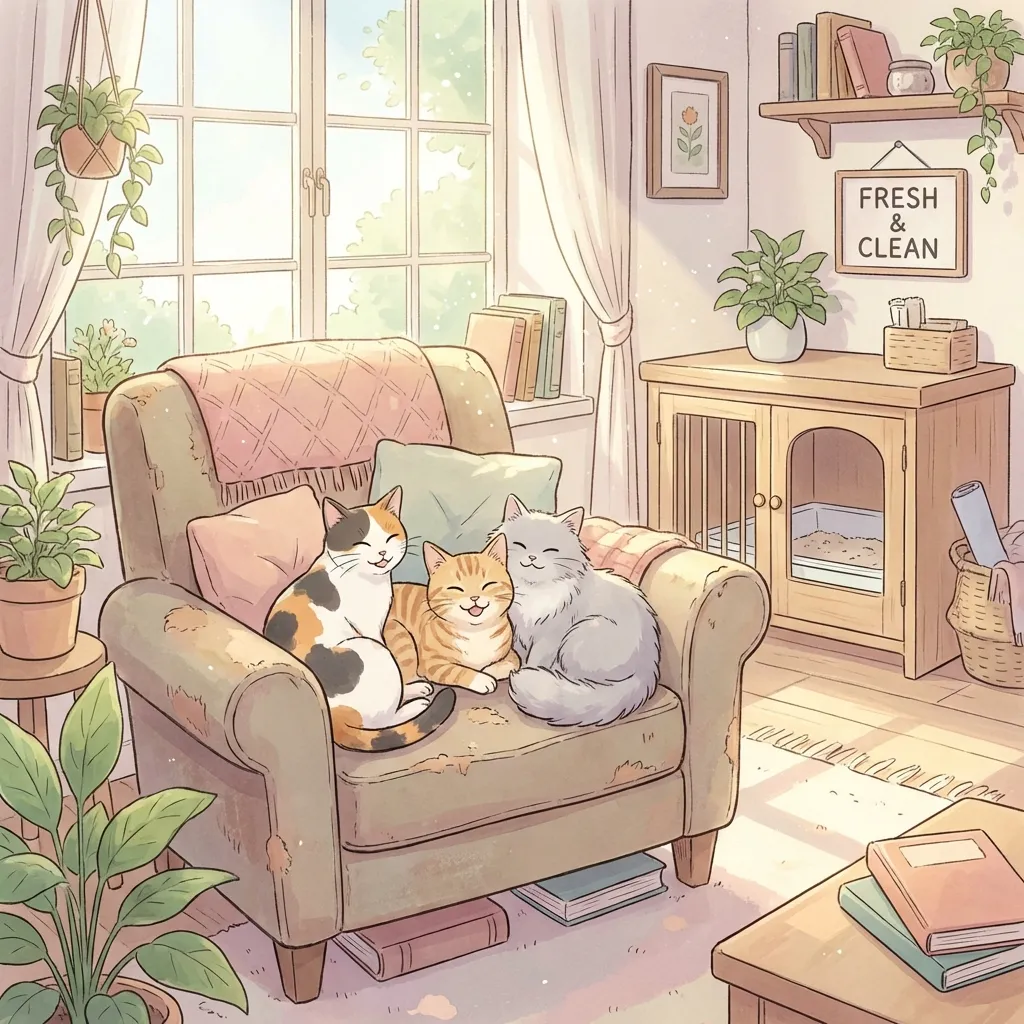
Multi-Cat Zen: Achieving a home where the only thing you notice is the cats, not the litter box.
The Exponential Ammonia Rule
In a multi-cat home, ammonia load doesn't grow linearly. Because cats often use the same box before the last deposit has dried, bacteria colonies grow exponentially. 3 cats produce roughly 9x the detectable odor intensity of a single cat. Most litters are designed for 1-cat linear math, not 9x exponential reality.
What to Look for in Multi-Cat Litter
Handling high volume requires a substrate that excels in three areas:
Instant Clumping
With multiple cats, one cat might enter the box 5 minutes after another. You need clumps that set in seconds, not minutes, to prevent fragmentation.
Molecular Trapping
Litters absorb liquid, but ammonia is a gas. You need molecular trapping (activated carbon) to catch what escapes the clumps.
The Science of Multi-Cat Air Quality
When you have 3+ cats, the concentration of ammonia (NH3) can reach eye-irritating levels within hours. Activated carbon works at the speed of airflow, pulling these tiny 0.26nm molecules into microscopic tunnels before they can compound.
It is the same technology used in hospital air scrubbers and municipal water treatment plants—industries where failure to remove odors isn't just an inconvenience, it's a safety hazard.

Best Litter Types for High Volume
1. High-Density Sodium Bentonite
For shear volume, clay remains the king of clumping. It provides the tightest barrier against liquid spread. However, it needs supplementation to handle the gas phase of the odor.
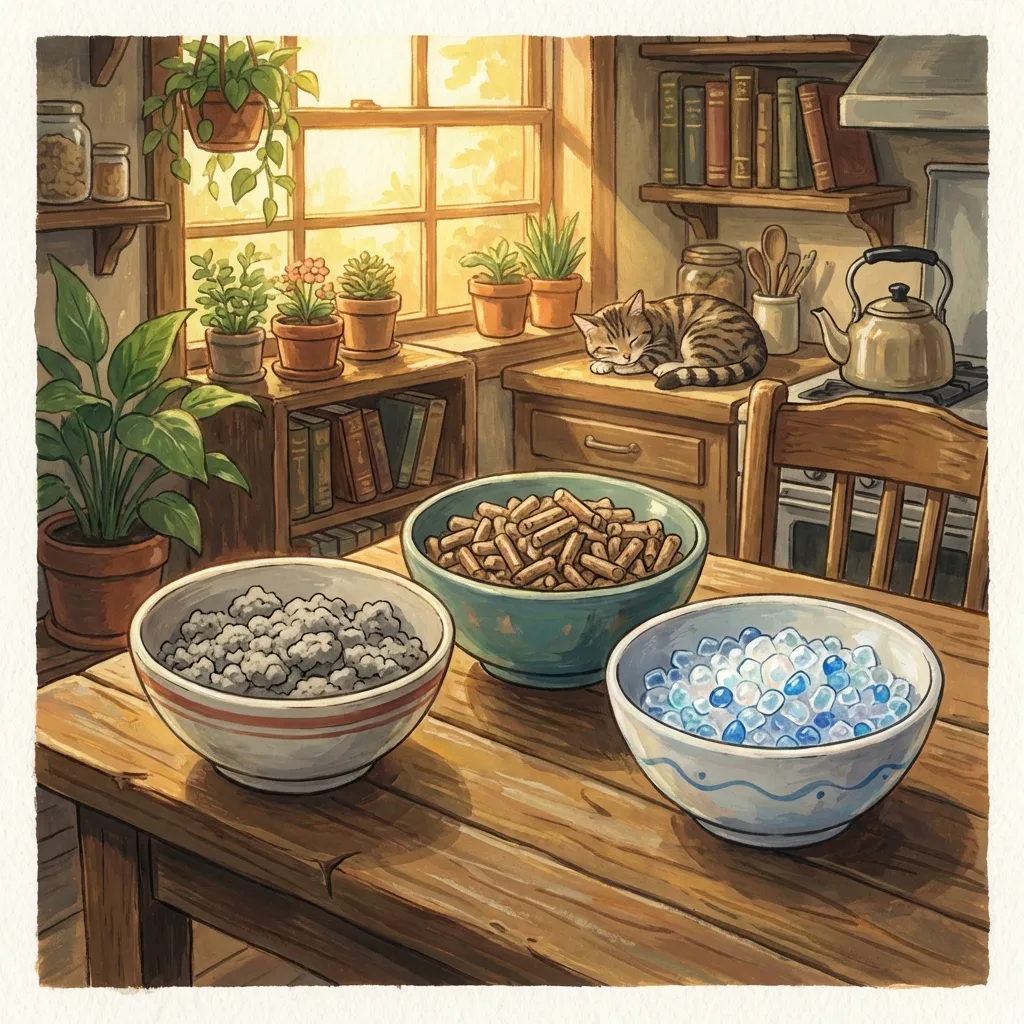
Different litters handle volume differently—clay clumps, crystals absorb, but both need carbon for odor.
2. Silica Gel Crystals
Great for tracking and dust, but can saturate quickly with 3+ cats. In a multi-cat home, crystals usually require a full change every 10-14 days rather than the advertised 30.
The Multi-Cat Setup Guide (N+1 Rule)
Veterinary behaviorists recommend the N+1 rule: One box per cat, plus one extra. For 3 cats, that means 4 boxes. Spread them across different rooms to distribute the ammonia load and reduce territorial stress.
Multi-Cat Success Stories
"I have 5 rescues in a 2-bedroom home. I used to be embarrassed to have people over. Purrify changed that the first day."
"The only thing that stops the 'ammonia hit' in the morning after all 3 cats have used the boxes."
The Goal: A home so fresh, visitors can't even tell how many cats live there.
🧪 The Multi-Cat Science Experiment
Scale your odor control to meet your cat count. Try our trial bag for free (just pay $4.76 shipping). If it doesn't solve your multi-cat ammonia problem the first day, we'll refund every penny.
Stop the exponential odor. Start the molecular trapping. 100% fragrance-free.