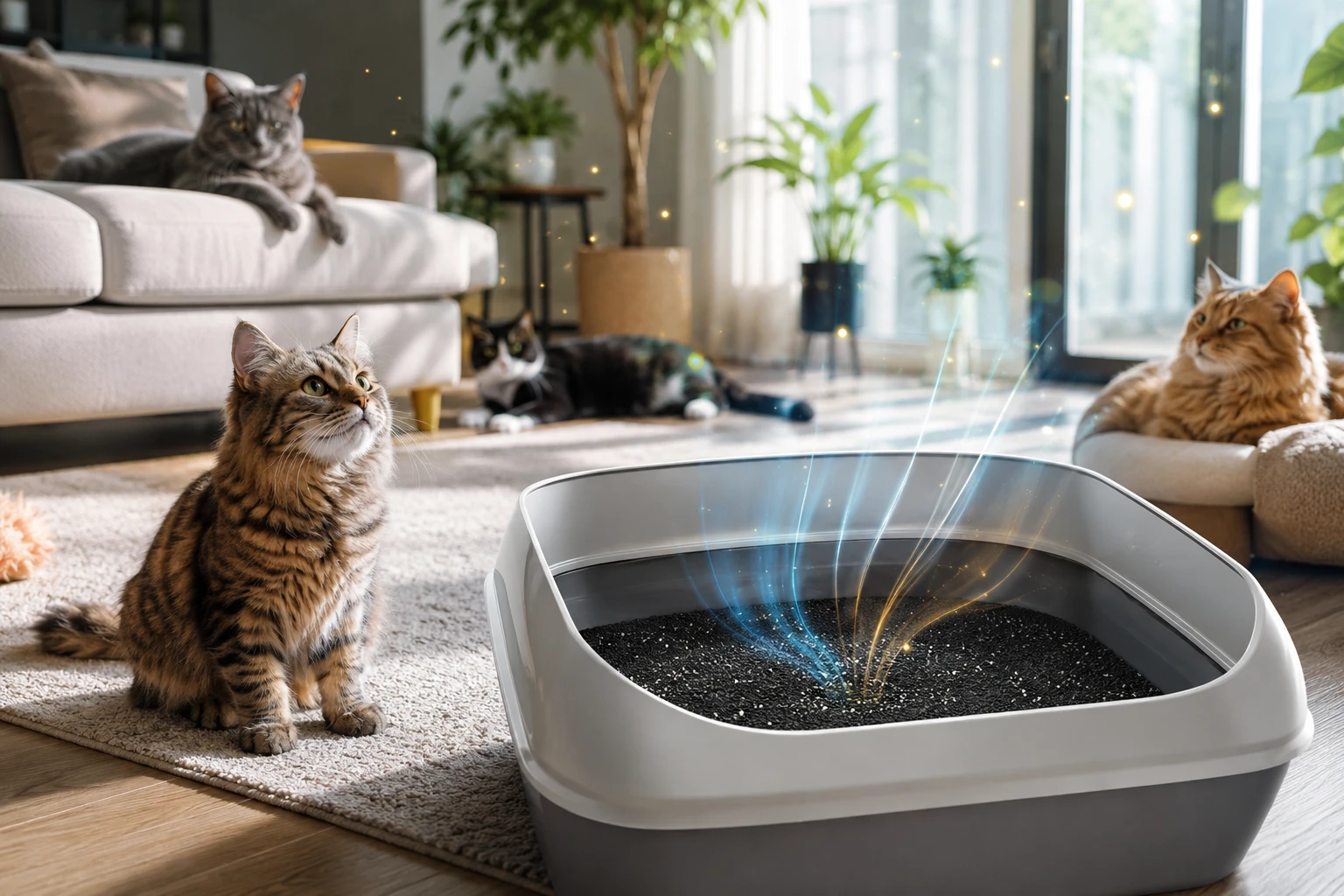
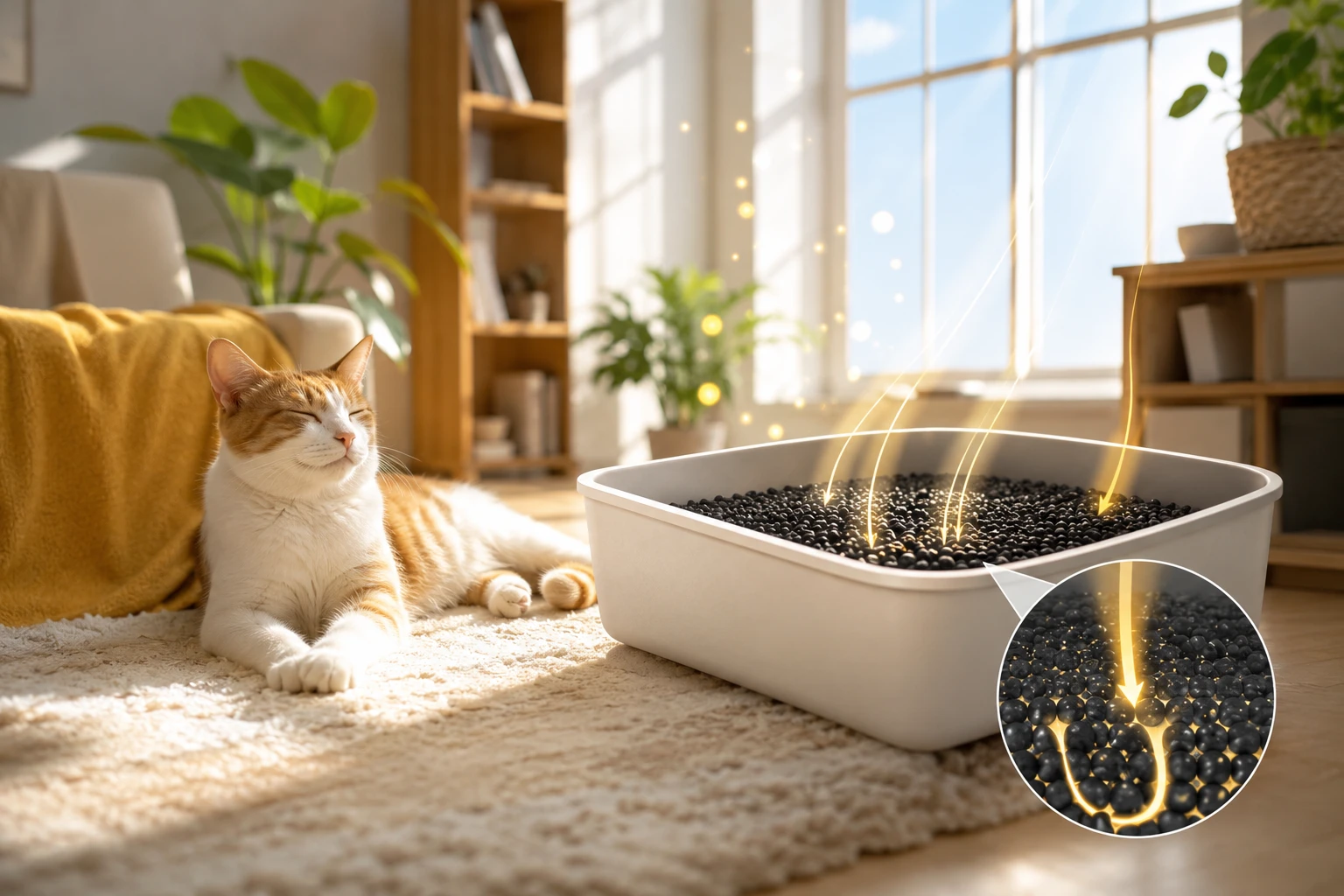
Activated carbon traps ammonia and sulfur molecules inside microscopic pores.
Multi-Cat Statistics
3.2x
Stronger odors
1+1
Box rule
2x
Carbon needed
3x
Scoop frequency
The Multi-Cat Challenge
Managing litter box odors with multiple cats requires a different approach than single-cat households. With each additional cat, odor compounds increase exponentially, not linearly. Here's how to stay ahead of the smell.
For an in-depth breakdown including dosage charts, box setup, and behavioral odor triggers specific to multi-cat homes, see our complete multi-cat odor control guide.
Dosage Guidelines by Cat Count
Number of Cats
Carbon per Box
Boxes Needed
Refresh Frequency
2 cats
2 tablespoons
3 boxes
Every 5-6 days
3 cats
2.5 tablespoons
4 boxes
Every 4-5 days
4 cats
3 tablespoons
5 boxes
Every 4 days
5+ cats
3-4 tablespoons
6+ boxes
Every 3-4 days
Strategic Box Placement
With multiple cats, box placement becomes critical:
✓ Spread Boxes Throughout Your Home
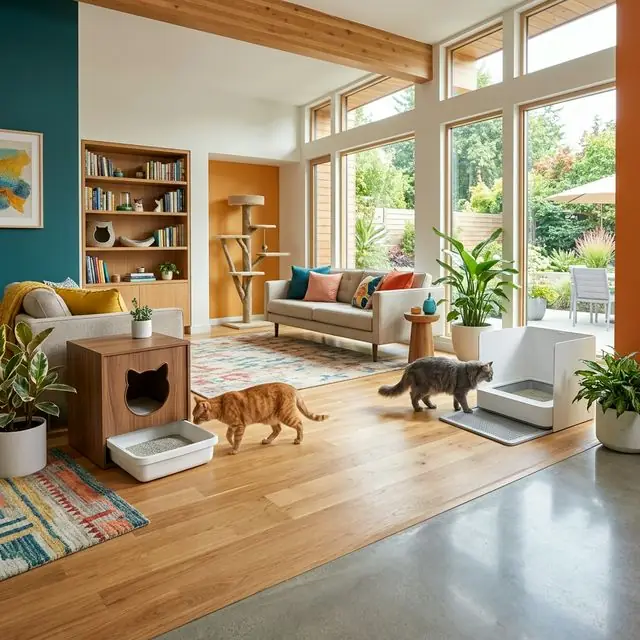
Don't cluster boxes in one room. Distribute them across different areas to prevent odor concentration.
✓ Multiple Levels (for multi-story homes)
Ensure boxes on each floor. Cats won't travel far when nature calls.
✓ Away from Food and Water
Keep litter boxes in separate rooms from feeding areas. Cats are clean animals by nature.
Maintenance Schedule for Multi-Cat Homes
Daily Tasks
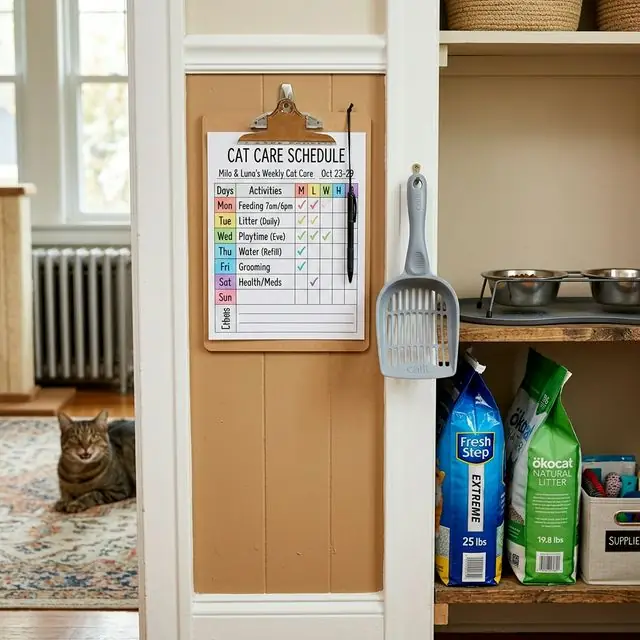
• Scoop all boxes twice daily (morning and evening)
• Check carbon levels-add more if needed
• Remove any accidents outside boxes immediately
Weekly Tasks
• Complete litter changes with fresh carbon
• Wash boxes with mild soap
• Check and replace any worn boxes
Pro Tip: The Purrify Solution
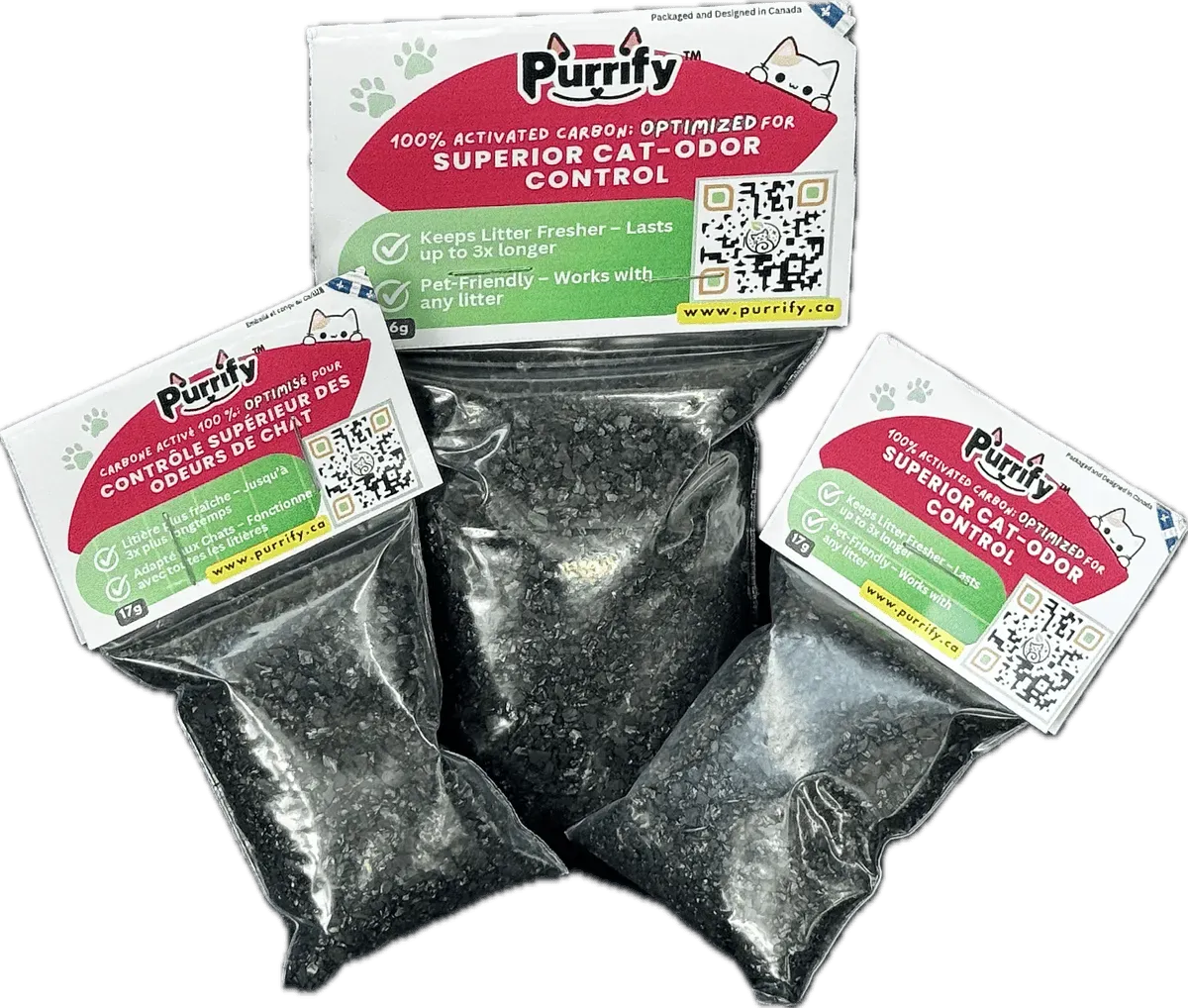
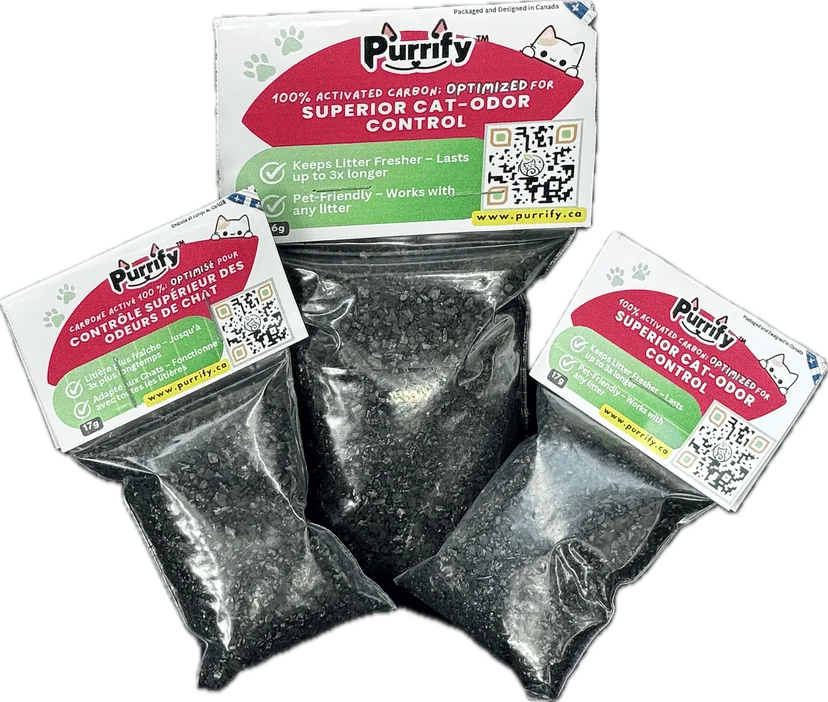
For the most effective odor control, try Purrify's activated carbon litter additive.
Simply sprinkle it in your litter box to eliminate odors for up to 7 days. Made from premium
coconut shell carbon, it's the same technology used in water and air filters.
In multi-cat homes, the dirtiest box is often not the "worst" box. It is the most preferred box. That distinction matters because owners sometimes double the deodorizer in every pan when the real issue is traffic flow. One cat may prefer the quiet bathroom box, another may avoid hallways where dogs or children pass, and a timid cat may only use boxes with two easy escape routes. The result is uneven box usage, which creates the impression that all odor control has failed when one location is simply carrying the entire load for the household.
A smart first step is to watch for three days and log which cat uses which box, at what times, and whether there is hesitation before entering. You are looking for patterns such as a "rush hour" box in the morning, a conflict box that gets guarded, or a remote box that is technically available but functionally ignored. Once you see those patterns, placement decisions become much clearer. Sometimes moving one box ten feet, removing a swinging door, or turning a covered box into an open one does more for odor than any additive increase because it spreads usage back across the system.
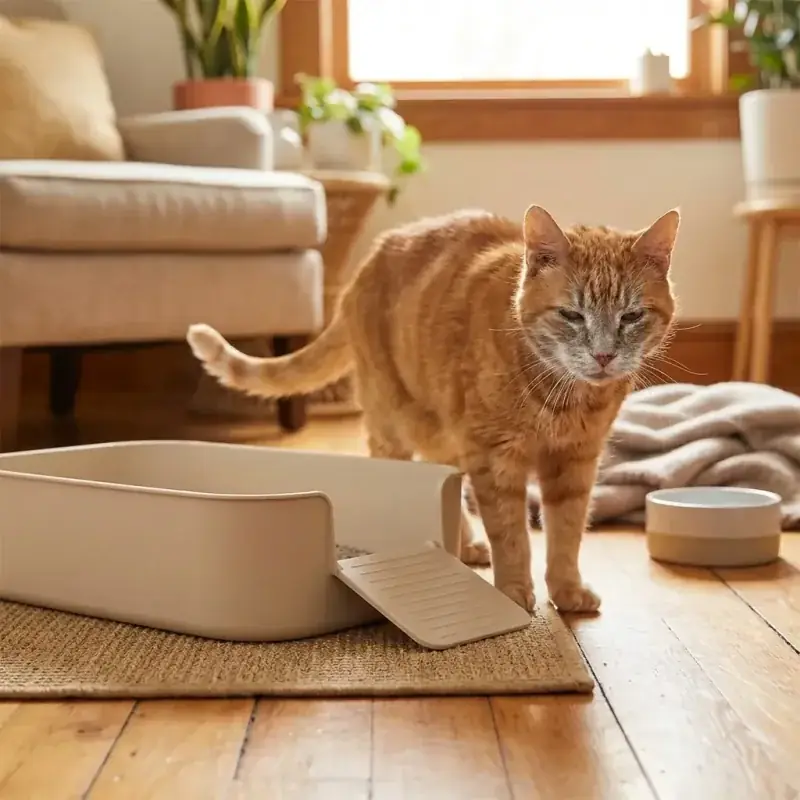
Boxes in dead-end corners often get monopolized or avoided by lower-confidence cats.
Boxes beside noisy appliances can become emergency-only options, which leads to longer urine hold times and stronger smells when a cat finally uses them.
A well-used multi-cat box should feel accessible, predictable, and easy to leave, not hidden in a space that traps both odor and conflict.
Once traffic is balanced, deodorizer works the way it is supposed to: as a maintenance tool layered onto a system that already distributes waste volume sensibly.
Create a Rotation System Instead of Treating Every Box the Same
<\/div>
The biggest operational mistake in homes with three, four, or more boxes is assuming each one needs the same amount of litter, the same refresh schedule, and the same deodorizer dose. In reality, a box outside a busy family room saturates differently than a spare-bedroom box used mostly overnight. A rotation system solves that. Label the boxes by traffic level, then assign service frequency according to what each one actually handles. Your most popular box may need a midweek litter top-up and more frequent carbon refresh, while a low-traffic box may only need routine scooping plus a smaller maintenance dose.
This approach keeps you from wasting product on boxes that are not generating the problem while letting you stay aggressive where odor actually concentrates. It also helps with labor. Multi-cat odor control feels overwhelming when every box is a full project every day. It becomes much easier when one set of boxes gets a daily reset, another gets a lighter touch, and full dump-and-wash days are staggered instead of happening all at once.
Medium-traffic boxes: normal scooping and a standard additive cadence usually work well.
Low-traffic boxes: do not neglect them, but avoid overcorrecting with extra product they do not need.
Think like a facility manager rather than a frustrated pet owner. Once each box has a role and a schedule, multi-cat odor stops feeling like chaos and starts behaving like a manageable routine.
What Changes in Homes With Four or More Cats
<\/div>
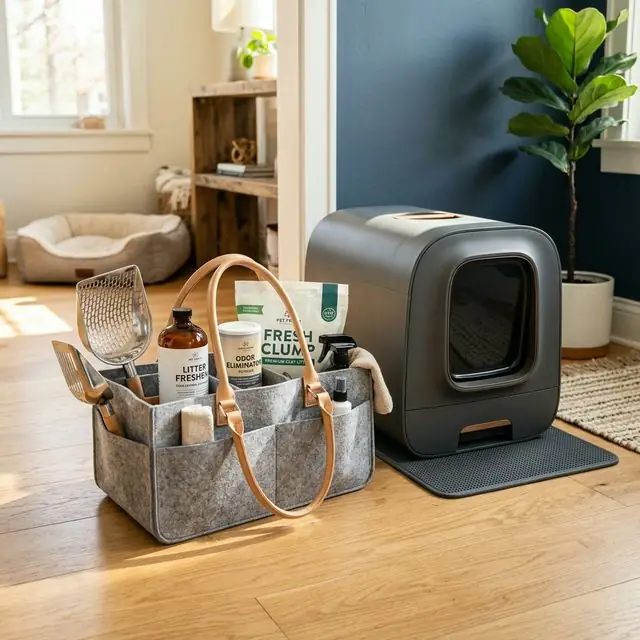
Past three cats, the challenge is not simply "more smell." It is compounded humidity, more litter tracking, greater risk of queueing, and faster saturation of the room itself. Waste volume increases, but so does the amount of litter dust, paw residue, and air exchange needed to keep the space fresh. That is why households with four or more cats often need supporting systems in addition to a good additive: extra mats near heavy-use boxes, sealed waste disposal emptied more often, a laundry-room exhaust fan, or a dedicated cleaning tote so supplies are always close to the busiest pans.
You may also need to think harder about box material. Scratched plastic absorbs odor faster in high-volume homes, and once that happens, even fresh litter can take on a stale smell the moment it hits the box. Replacing the oldest pan, upgrading the most-used box to a sturdier material, or assigning a brand-new box to the heaviest traffic area can produce a bigger improvement than another bag of scented litter.
At this cat count, a deodorizer succeeds when it becomes part of a system: enough boxes, enough surface area, predictable airflow, and no single pan pushed beyond its realistic limit. When owners say a multi-cat home is suddenly under control, they are usually describing that shift from reactive cleaning to system design.
When Odor Is Really a Behavior Problem in Disguise
Not every multi-cat smell issue is about chemistry. Sometimes the smell becomes intense because one cat is holding urine too long, another is marking near the box, or a timid cat is waiting until a preferred area is empty before going. Those patterns create more concentrated urine, more accidents outside the pan, and a sense that the litter itself has failed. If you notice box guarding, hallway standoffs, one cat hovering nearby while another tries to use the box, or repeated waste outside a clean pan, treat odor control and behavior as the same project.
A deodorizer can only manage what lands in the box. It cannot fix social stress. In those cases, give the most vulnerable cat an easy-access option in a calm location, remove lids or flaps that make escape harder, and spread the boxes so no single resource becomes defendable. You can still use activated carbon or another unscented additive, but it should support a lower-stress setup rather than compensate for a setup the cats are already telling you they dislike.
That is the real lesson of multi-cat odor control: the smell gets better when the cats feel better using the system. Product choice matters, but behavior, spacing, and routine are what let the product do its job.
Stage Supplies Close to the Busy Boxes
Multi-cat homes get dramatically easier when odor-control tools live where the work happens. Keep scoops, extra litter, waste bags, and deodorizer near the highest-traffic boxes so you can correct small problems immediately instead of waiting for a full-house cleanup window. The easier it is to top up a busy box or remove waste right away, the less likely smell is to snowball into a whole-room issue.
This sounds minor, but convenience shapes consistency. A box that needs only thirty seconds of effort gets maintained. A box that requires a trip across the house for every scoop gets skipped when life is busy. In multi-cat homes, those skipped minutes are exactly what turn manageable odor into an overwhelming one.
Track Odor by Zone, Not Just by Box
In multi-cat homes, odor control improves when you notice which room is failing first. Sometimes the busiest box is fine, but a nearby trash can, mat, or poorly ventilated hallway is what makes the house feel dirty. Thinking in zones helps you apply effort where it matters and keeps one weak room from making the whole setup feel broken.
A consistent scooping and additive routine keeps homes fresher between litter changes.
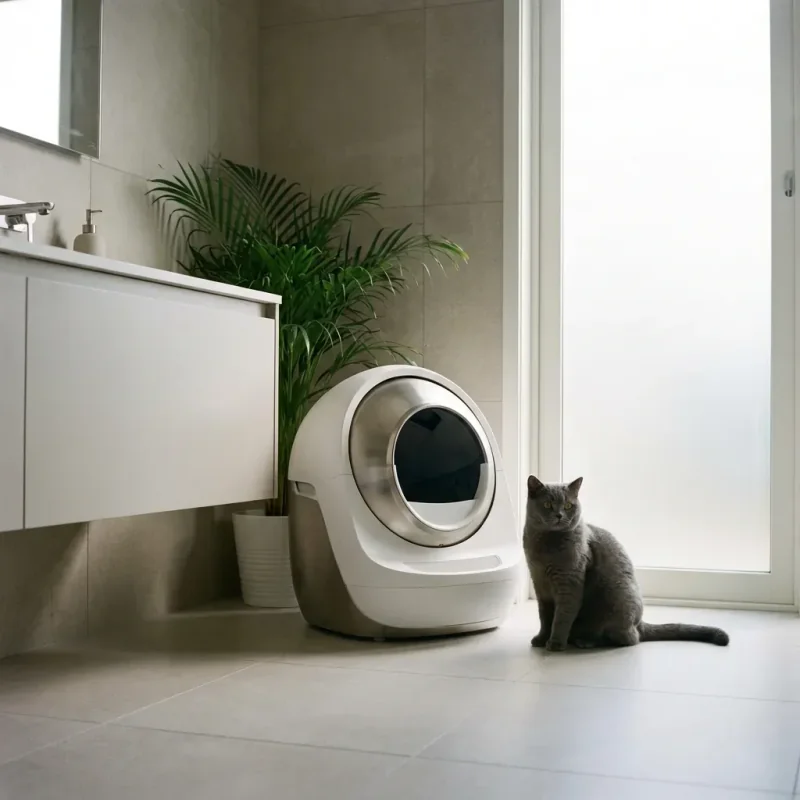
If you run an automatic box in a multi-cat home, capacity ratings tend to be optimistic. For the model-by-model breakdown of self-cleaning box odor with multiple cats, including which units actually hold up at three or more cats and where the activated carbon layer fits in, see the self-cleaning guide.
How quickly should litter box odor improve with a consistent routine?
Most homes notice a meaningful improvement within 24 to 72 hours when scooping, airflow, and activated carbon layering are all consistent.
Can I use activated carbon additive with my current litter?
Yes. Carbon additive is compatible with most common litter types and is most effective when applied in small, regular top-ups.
What is the best way to prevent odor rebounds after cleaning?
Use a maintenance schedule instead of waiting for smell to return: scoop twice daily, refresh carbon weekly, and perform full resets on a fixed cadence.



 <\/div>
 <\/div>
 <\/div>