
Cat Litter Odor Control in America: What US Cat Owners Need to Know
Read more →

Prefer a quick video? Watch the latest verified upload from our official YouTube channel and follow @PurrifyHQ for future product and brand updates.
Purr Purr Purrify | Song about Cat Litter Odour Control Made in Canada
Sources
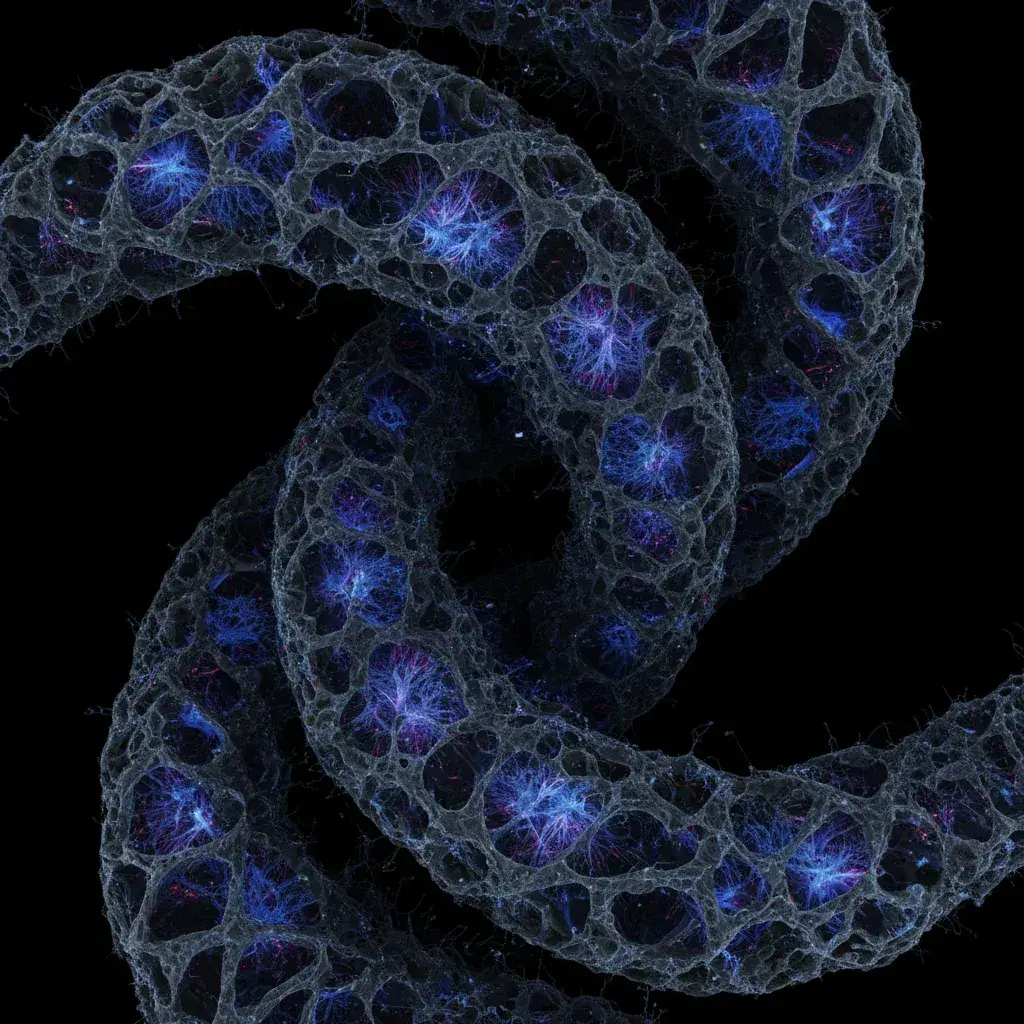
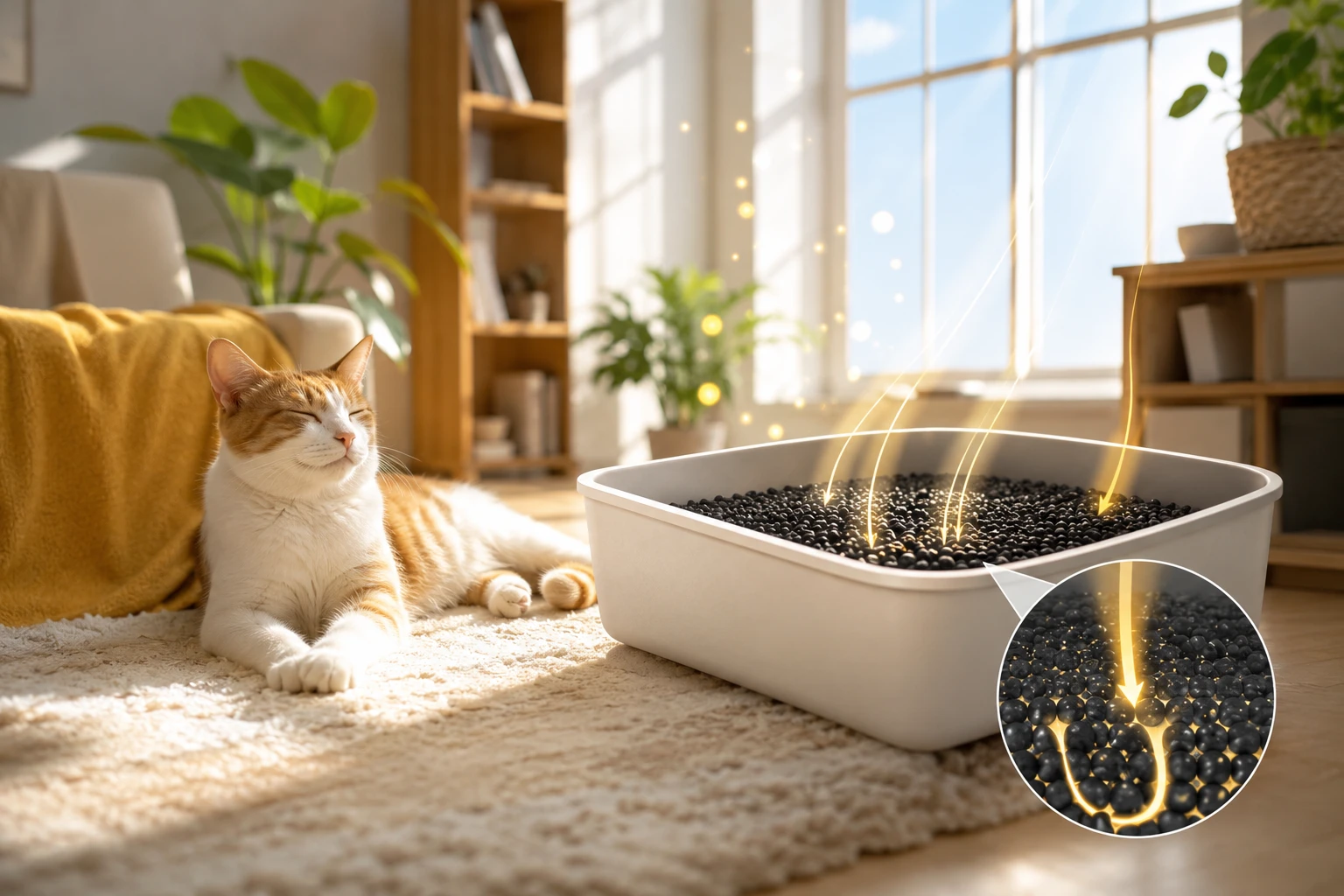
Purrify sits at the top of the litter as a layer of coconut-shell activated carbon granules. As air moves through the box, the layer catches the smells before they reach the room.
Two views of the same week - what the layer is doing in the box, and what you experience as the cat owner.
In the box
A fresh layer of carbon granules sits across the surface of the litter.
What you notice
The litter looks the same, with small dark specks mixed in. No new smell.
In the box
The layer is already catching the small amount of background odor in the room.
What you notice
The area around the box smells more neutral than it did before.
In the box
Fresh odor passes through the layer on its way out. The layer catches it at the surface.
What you notice
Much less of the usual post-visit spike. The room stays calm.
In the box
The layer keeps working while no one is paying attention.
What you notice
You wake up to a room that smells like the room, not the box.
In the box
You remove the clumps. The carbon layer stays where it is.
What you notice
Scooping is the same as always. Nothing extra to do.
In the box
The layer has been catching odor every visit. Some granules are full, others are still active.
What you notice
The box is still noticeably calmer than before. Maybe a hint of return after a heavy day.
In the box
The active surface in the layer is getting full. Time for a refresh.
What you notice
You start to smell the box more often. That is the signal to top up.
Purrify does not perfume the air. It gives odor a porous surface to stick to.
Cat litter smells because tiny molecules drift up out of the box into the room air.
Your nose only notices what reaches it. Catch the molecules in the box and the room stays clean-smelling.
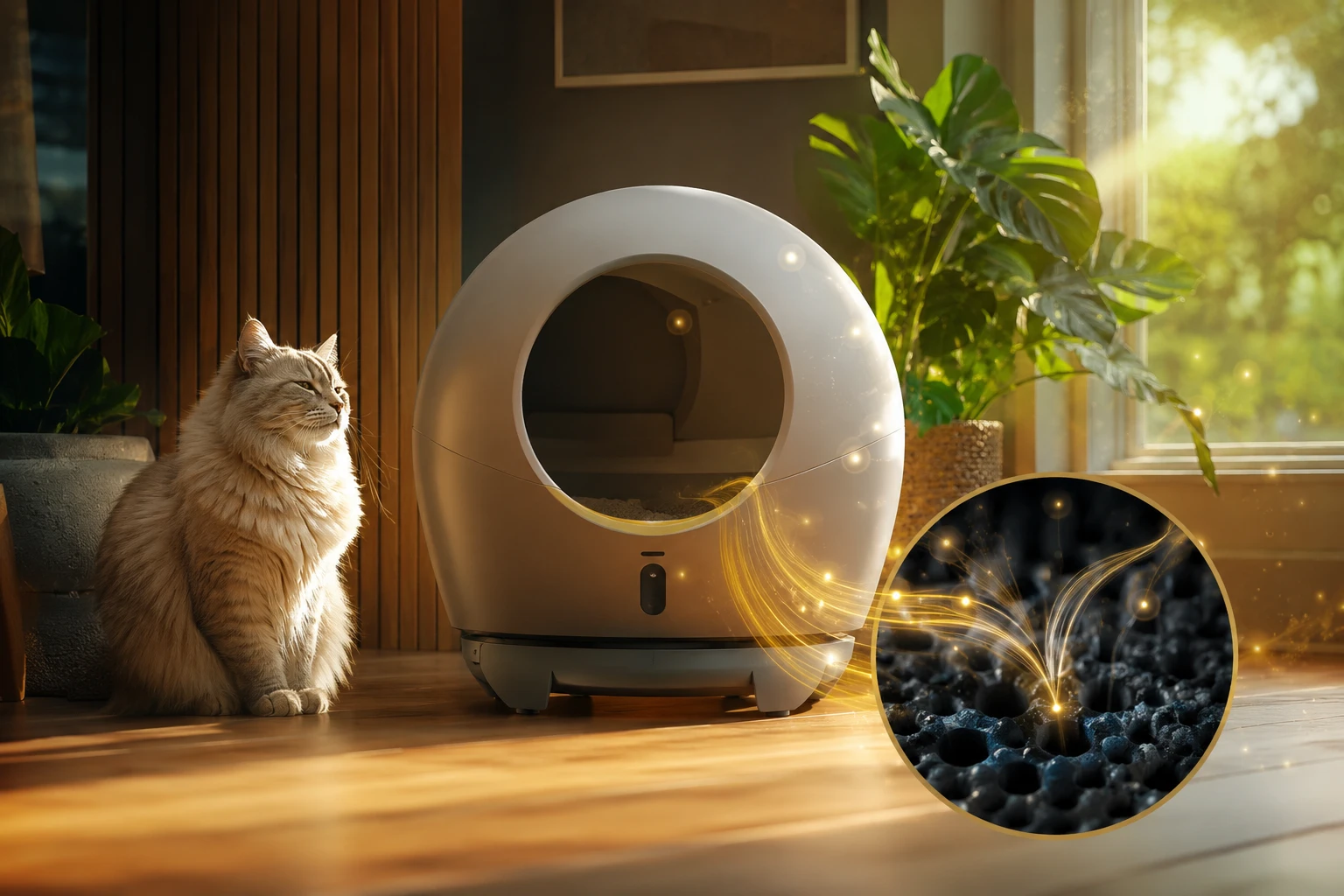
Activated carbon is a sponge for odor molecules. Air moves through, odor stays behind.
See how the material does its job on the activated carbon page below.
Not every smell escapes the box the same way. A good activated carbon catches a wide range of them.
Purrify uses coconut-shell carbon, the same grade used in home water filters.
Purrify is fragrance-free and dye-free. It removes odor instead of covering it.
Scooping and full litter changes still matter. Purrify works between cleanings.
If a box still smells, one of these is usually the reason.
The layer needs to be near the surface, where air moves. Granules buried at the bottom of a deep litter bed never see the odor on its way out.
Do this: Sprinkle on top of the litter and mix gently into the top inch. Do not stir the whole box.
A covered box with a tiny vent traps air and slows everything down. An open box or a box in a room with airflow lets the layer do its job.
Do this: Use an open or hooded box, not a sealed one. If you keep a cover, leave the flap off or prop it open.
Three steps, plus the mistake that quietly cancels each one.
Scatter Purrify across the surface where fresh urine and feces will land.
Pro tip: Start with a light, even layer. Use more for large boxes, multi-cat homes, or stubborn ammonia odor.
Common mistake: Dumping it in one corner. Spread it evenly so the layer is wherever the cat goes.
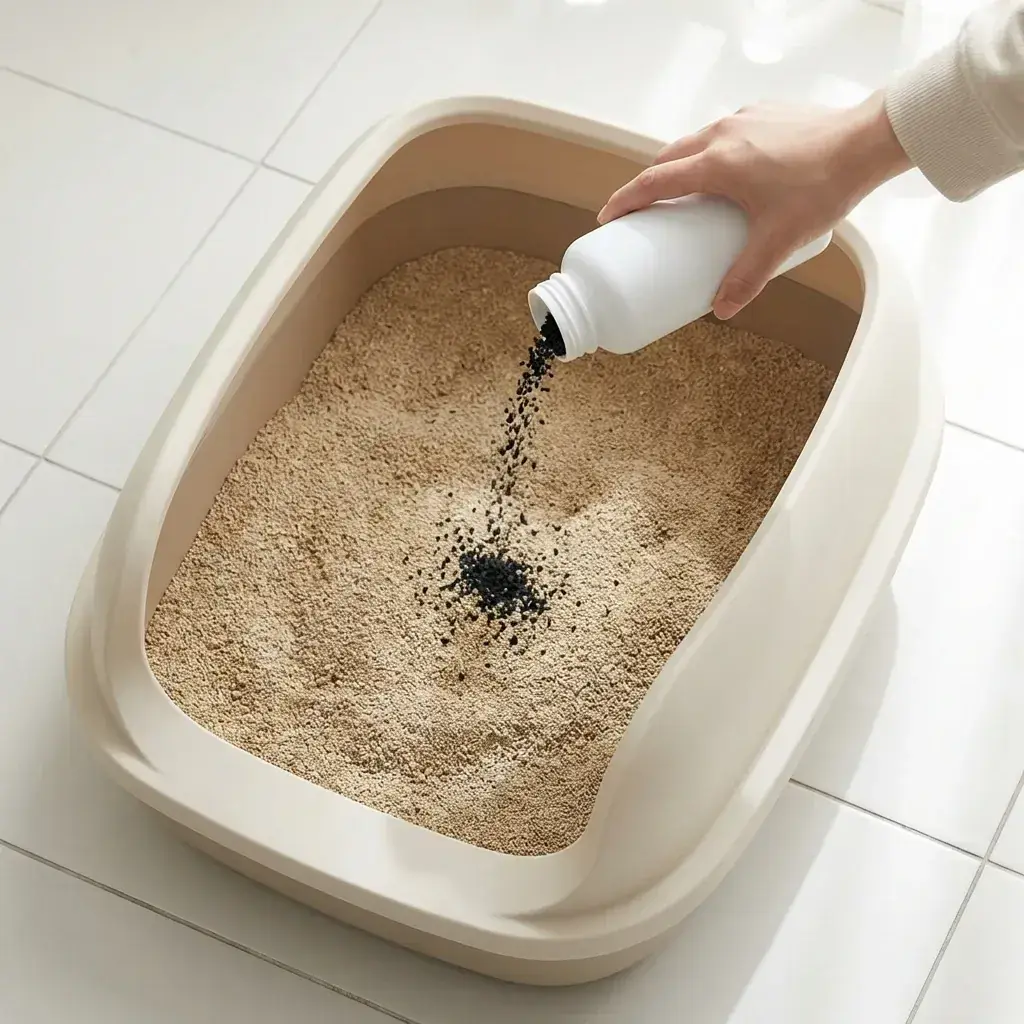
Work the granules into the top inch of litter so odor has to pass through the layer on its way up.
Pro tip: You do not need to stir the whole box. Keep carbon near the active surface.
Common mistake: Burying it deep. The layer needs to be near the surface to catch odor on the way out.
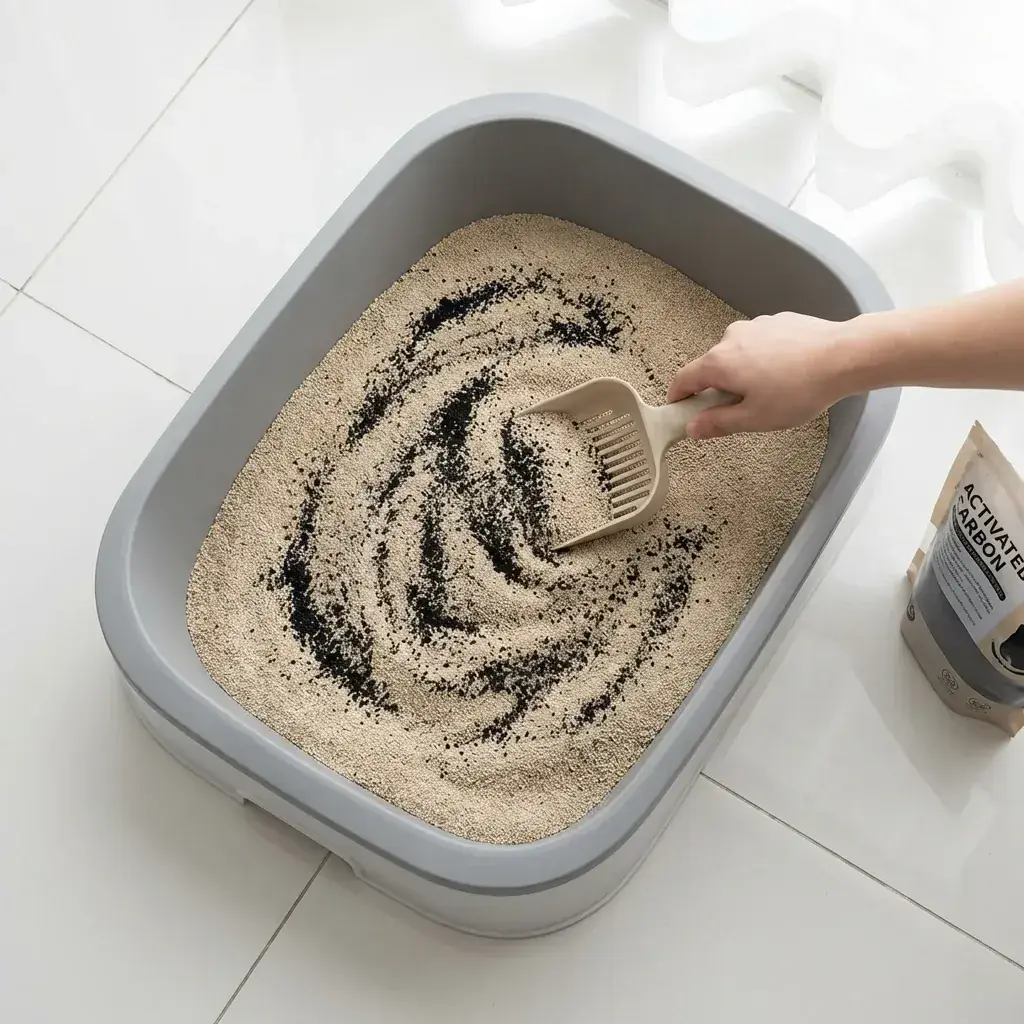
Keep scooping as usual. Top up Purrify whenever the box starts giving off a smell again.
Pro tip: Activated carbon has capacity, not magic. Once the layer is full, a fresh sprinkle restores it.
Common mistake: Waiting until the smell is back at full strength to refresh. By then the layer is already full. Top up at the first hint, not after the room turns.
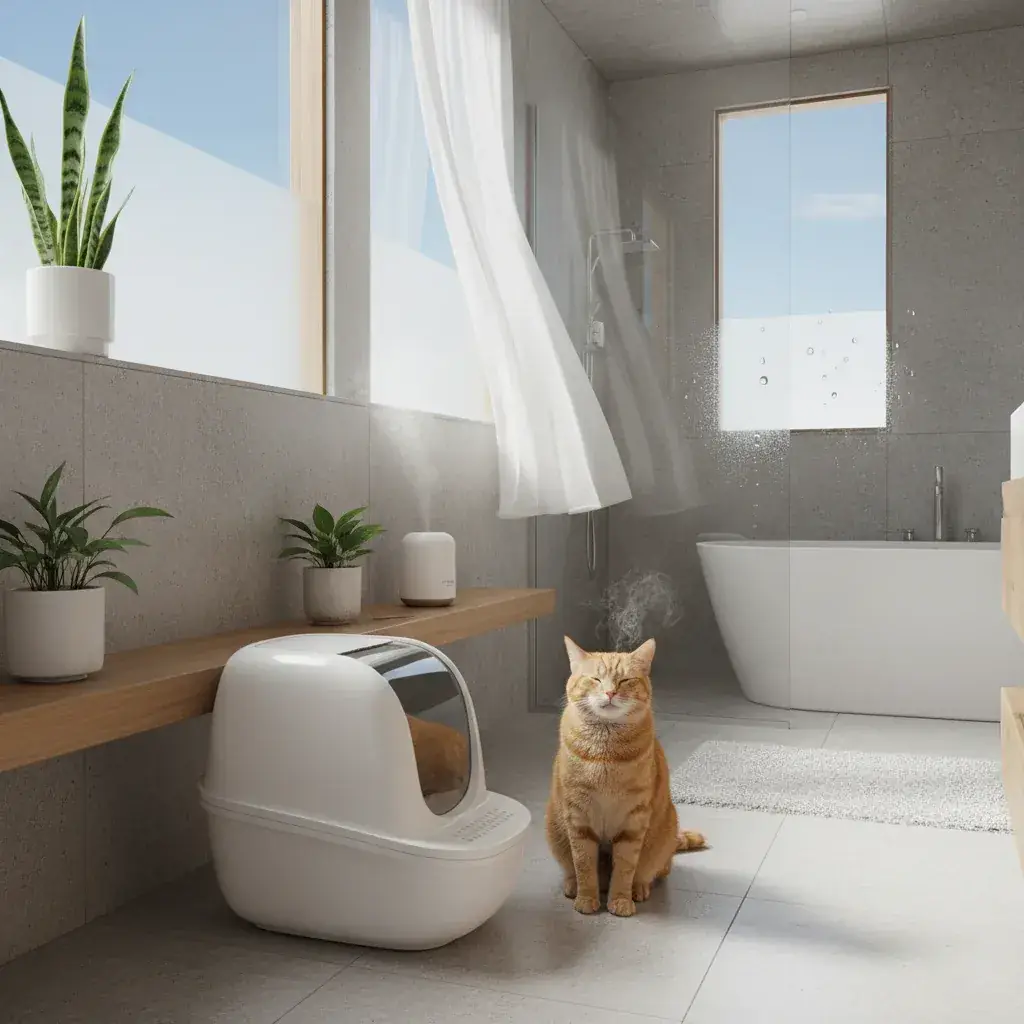
Source-of-truth numbers for a typical one-cat household with a normally-stinky box.
2-3 tablespoons of Purrify granules per litter box. Sprinkle on fresh litter, mix gently. Top up whenever the box starts giving off a smell again - no fixed schedule.
Use all at once, gone in about a week. A try-before-you-commit size.
About a month per cat.
About eight weeks per cat.
Extra-stinky box? Use as much as you need to keep yourself and your family happy. The bag will run out faster, which is fine.
Where the layer ends and the rest of your routine begins.
The practical details behind the layer.
The granules start catching odor as soon as air passes through the layer. A box that already smells strong may still need a scoop, fresh litter, or a full change before the room smells neutral again.
Activated carbon used in household filtration is biologically inert. Purrify is designed to stay in the litter; monitor your cat as usual and consult your veterinarian if you have concerns.
Purrify is odorless and used as a small amount of loose granules mixed into the top layer. Most cats keep their normal habits, but any sudden litter box avoidance should be treated like a behavior or health signal.
There is no fixed schedule. Top up whenever the box starts giving off a smell again. As a rough guide, a 50g bag lasts about a month for one cat, and a 120g bag lasts about eight weeks. Extra-stinky boxes use more, which is fine.
Use 2-3 tablespoons of Purrify granules per litter box. Sprinkle on fresh litter, mix gently. Top up whenever the box starts giving off a smell again - no fixed schedule. Two cats sharing one box will go through a bag faster than one cat with the same box.
Yes. Purrify is the same grade of activated carbon used in household water and air filtration, with no added fragrance or dyes. Sprinkle as you would for an adult cat and let the kitten use the box normally.
Three sibling pages cover the topics this page deliberately keeps short.
Read more →
Read more →
Read more →
Read more →
Read more →
Read more →
Read more →
Read more →