Prefer a quick video? Watch the latest verified upload from our official YouTube channel and follow @PurrifyHQ for future product and brand updates.
Purr Purr Purrify | Song about Cat Litter Odour Control Made in Canada
Sources
Looking for a cat litter deodorizer that's truly safe? Activated carbon is food-grade, fragrance-free, and effective-without chemicals that can harm your cat.
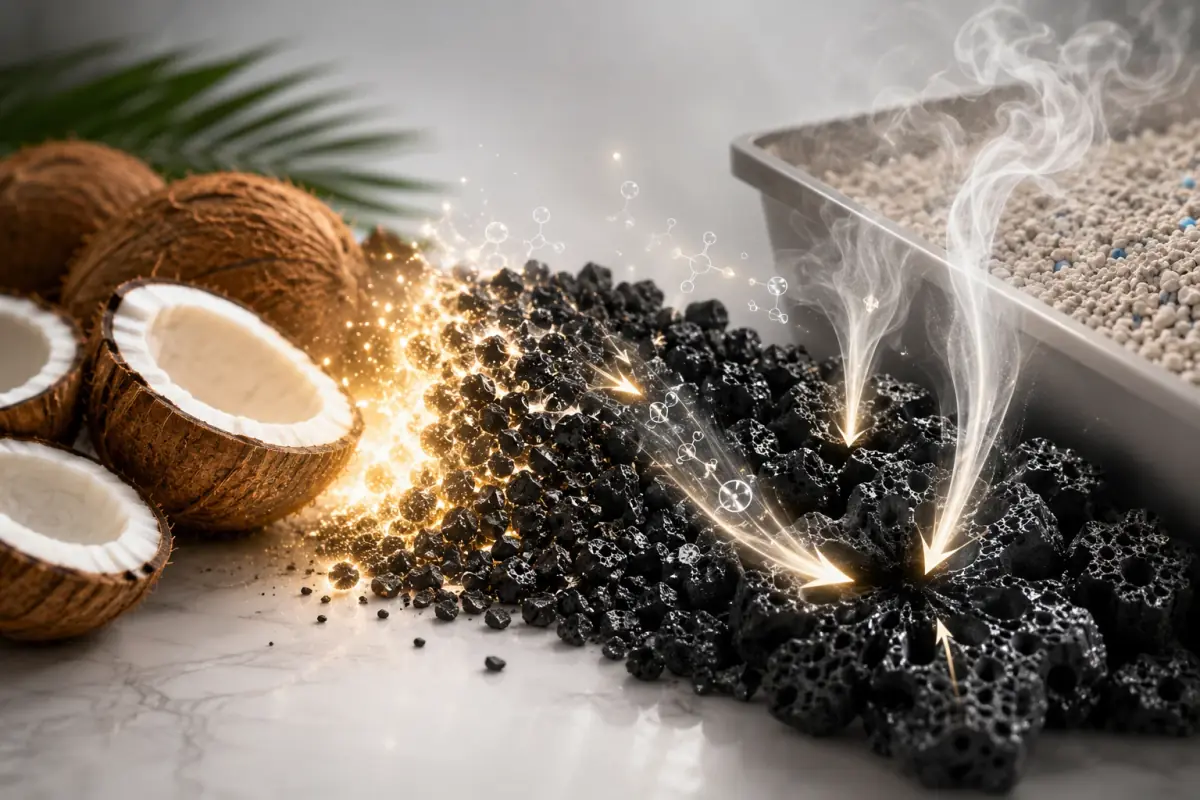
No chemicals, no fragrances, just pure carbon
100% natural activated carbon with no added fragrances or dyes
Add Purrify to your existing litter
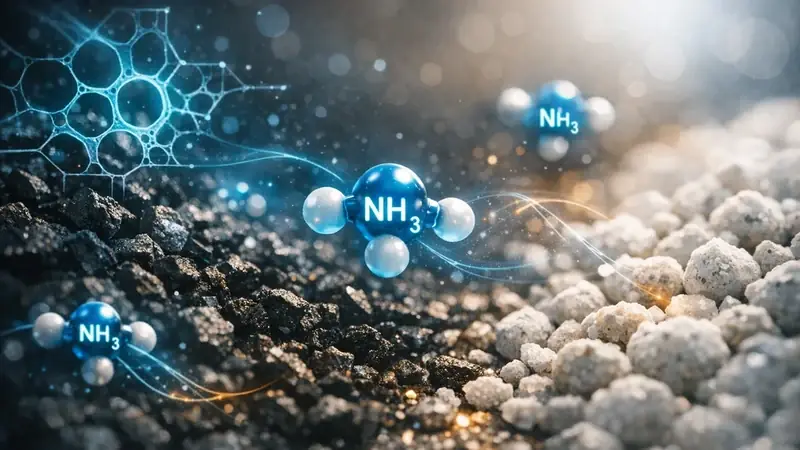
Activated carbon absorbs odor molecules
Odors are permanently trapped
Safe for your family and the environment
No artificial fragrances or chemicals
See why cat owners choose fragrance-free odor control
Natural solution for a cleaner planet
Follow these steps to safely and effectively control litter box odor without chemicals or fragrances.
Time needed: 10 minutes
Look for activated carbon made from natural sources like coconut shells. Avoid products with added fragrances, dyes, or chemical additives that could harm your cat.
Pro tip: Coconut shell carbon is the purest form-same grade used in water filtration.
Empty old litter and wash the box with mild dish soap and water. Rinse thoroughly-cats can detect soap residue and may avoid the box.
Pour 2-3 inches of your regular litter, then add 2-3 tablespoons of activated carbon. Mix it into the top layer so it contacts waste immediately.
Scoop daily as normal. The carbon continues working between cleanings, trapping ammonia molecules as they form from bacterial breakdown of urine.
Pro tip: Add a tablespoon of fresh carbon every few days for maximum protection.
With activated carbon, you can extend full litter changes from weekly to every 2-3 weeks. The carbon keeps odor under control longer than untreated litter.
Several natural materials are marketed as litter additives. They differ significantly in mechanism, surface area, effective duration, and safety profile. Here is what the science shows for each.
| Additive | Mechanism | Surface area | Effective duration | Safety |
|---|---|---|---|---|
| Baking soda | pH neutralization (acid-base reaction) | ~0.2 m2/g | 1-2 days | Safe; limited effectiveness on alkaline ammonia |
| Diatomaceous earth | Moisture absorption; some physical adsorption | 15-25 m2/g | 2-3 days | Non-toxic; amorphous silica dust is a respiratory irritant - food-grade only |
| Zeolite | Ion exchange (captures ammonium ions) | 10-50 m2/g | 3-5 days | Generally safe; effectiveness varies by zeolite type and humidity |
| Activated carbon | Physical adsorption via van der Waals forces | 1,000-1,500 m2/g | 5-7 days | Food-grade safe; non-toxic even if ingested |
Surface area figures are approximate ranges from published literature. Actual performance varies by product grade and particle size.
The word "natural" on a product label does not guarantee safety for cats. Cats lack a key liver enzyme pathway - glucuronidation - that humans and dogs use to metabolize many plant compounds. Substances that humans safely inhale or absorb can accumulate to toxic levels in cats.
Tea tree oil (melaleuca), lavender, peppermint, eucalyptus, and citrus oils contain phenols and terpenes that cats cannot safely metabolize. Even small amounts absorbed through skin contact or inhaled during box use can cause liver damage over time. The ASPCA Animal Poison Control Center lists many essential oils as hazardous to cats.
Food-grade (amorphous) diatomaceous earth is non-toxic chemically, but the fine silica particles are a respiratory irritant when inhaled repeatedly. Cats spend time near litter, breathing at litter level. Fine-particle additives that produce dust during mixing or scooping carry more inhalation risk than coarser materials.
Fragrance-masked additives often contain phthalates and synthetic musks as fixatives. These compounds are not listed individually on labels and can linger in the litter environment. Cats with litter-adjacent respiratory symptoms (sneezing, watery eyes) should be moved to fragrance-free options.
Pure activated carbon has no metabolizable compounds - it is a carbon matrix. Cats that accidentally ingest small amounts during grooming pass it through safely. Food-grade coconut shell carbon contains no additives, binders, or fragrances.
For cat owners who factor environmental impact into purchasing decisions, the sourcing story behind different additives varies significantly.
Activated carbon from coconut shells is made from shells discarded by the coconut oil, coconut milk, and coconut water industries. These shells would otherwise be burned or composted. Turning agricultural waste into a functional odor-control material requires carbonization and steam activation at high temperature - an energy-intensive process, but one that avoids the need for mining virgin material.
Sodium bicarbonate comes primarily from trona ore (mined in Wyoming, the world's largest deposit) or is synthesized via the Solvay process from salt brine and ammonia. Both routes have measurable environmental footprints. The Solvay process produces calcium chloride as a byproduct requiring disposal or industrial reuse.
Because activated carbon remains effective for 5-7 days and baking soda for 1-2 days, the amount of material consumed per odor-control cycle is meaningfully different. A daily baking soda routine uses roughly 5-7 times more material by weight to achieve the same number of effective odor-controlled days. Over a year, that difference accumulates into a significant volume of material.