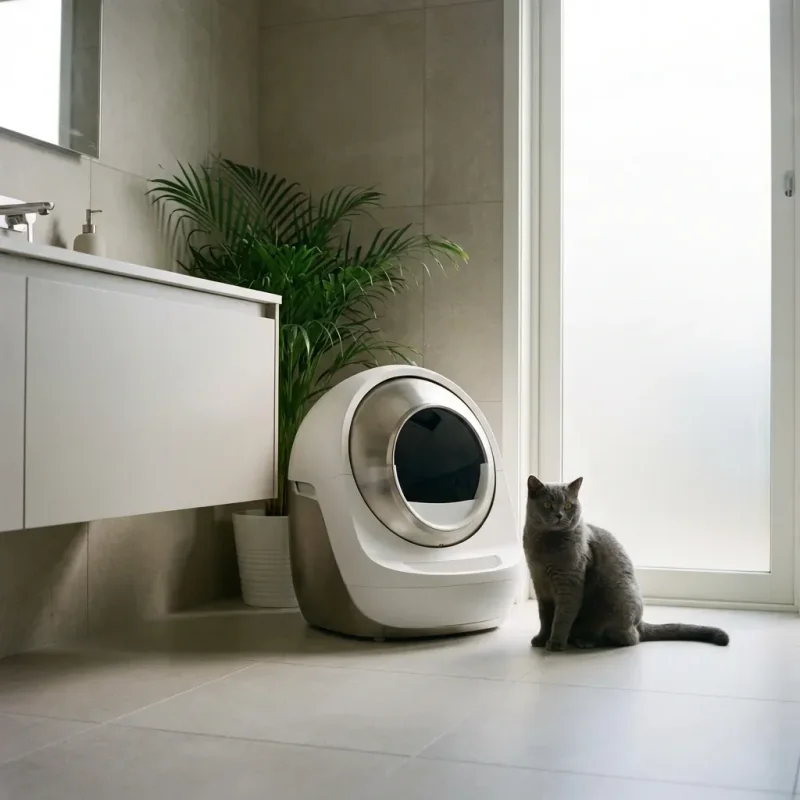
Vet-Approved: Prioritizing your cat's metabolic health when choosing odor control.
The Feline Liver Gap
Cats lack the UGT1A6 liver enzyme. While humans can metabolize phenols and essential oils found in "fresh" scents, cats can't. These toxins accumulate in their system during grooming. What we smell as "fresh," their liver processes as a poison.
Toxic vs. Safe Ingredients
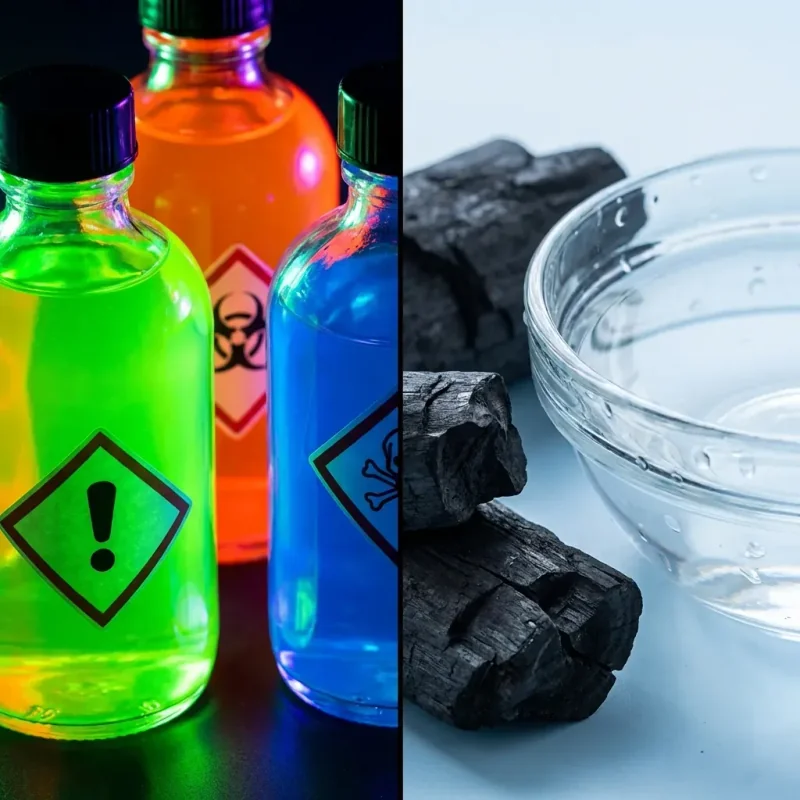
Red Flag Ingredients: If your deodorizer contains "Fragrance," "Essential Oils," or "Phenols," it may be affecting your cat.
7 Verified Safe Deodorizing Methods
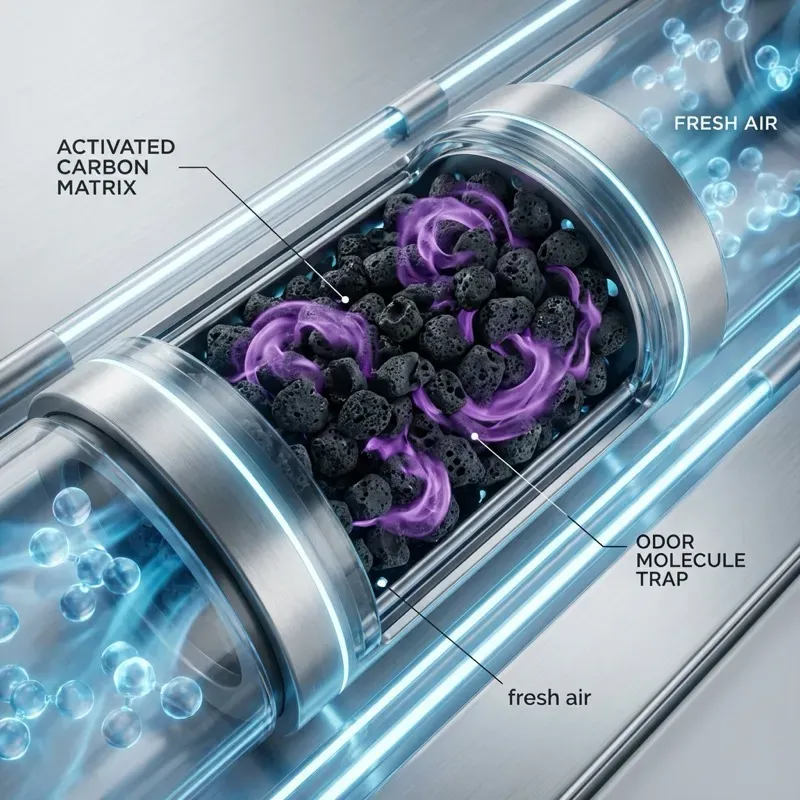
1. Molecular Adsorption (Activated Carbon)
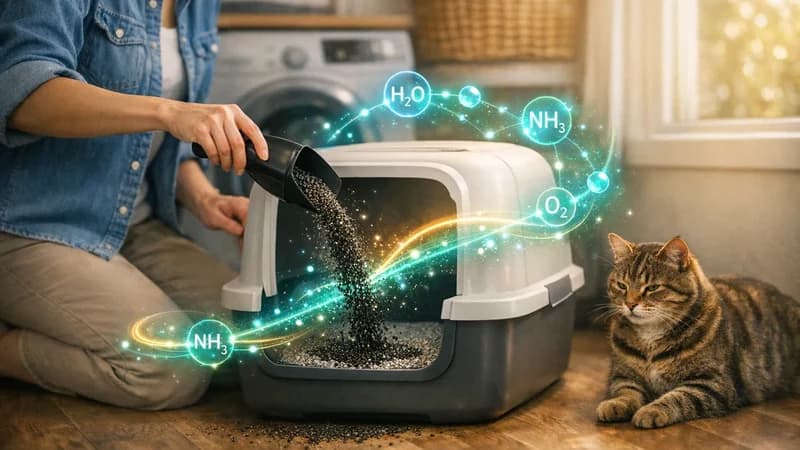
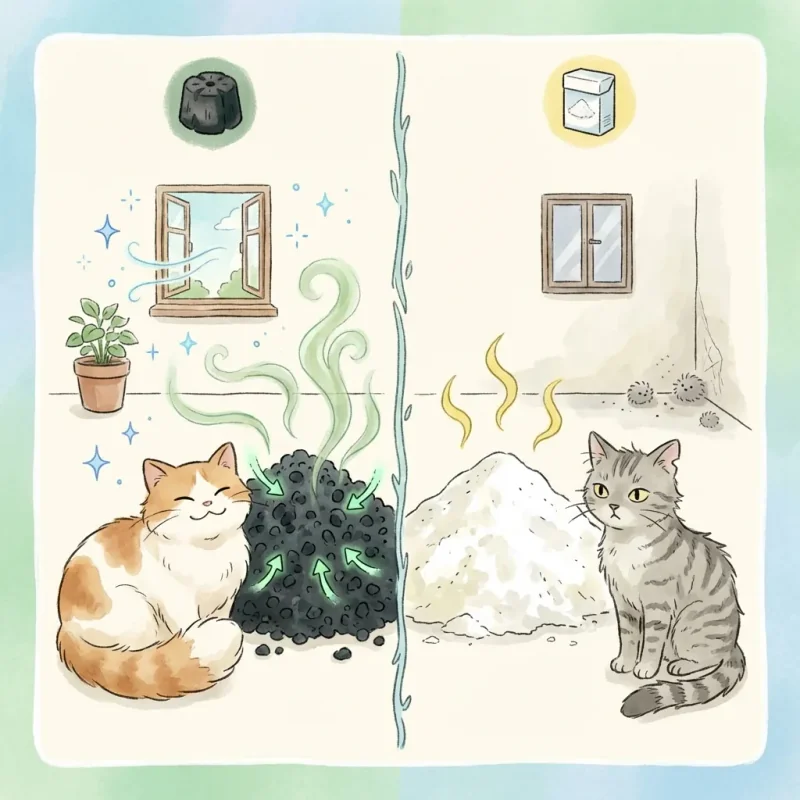
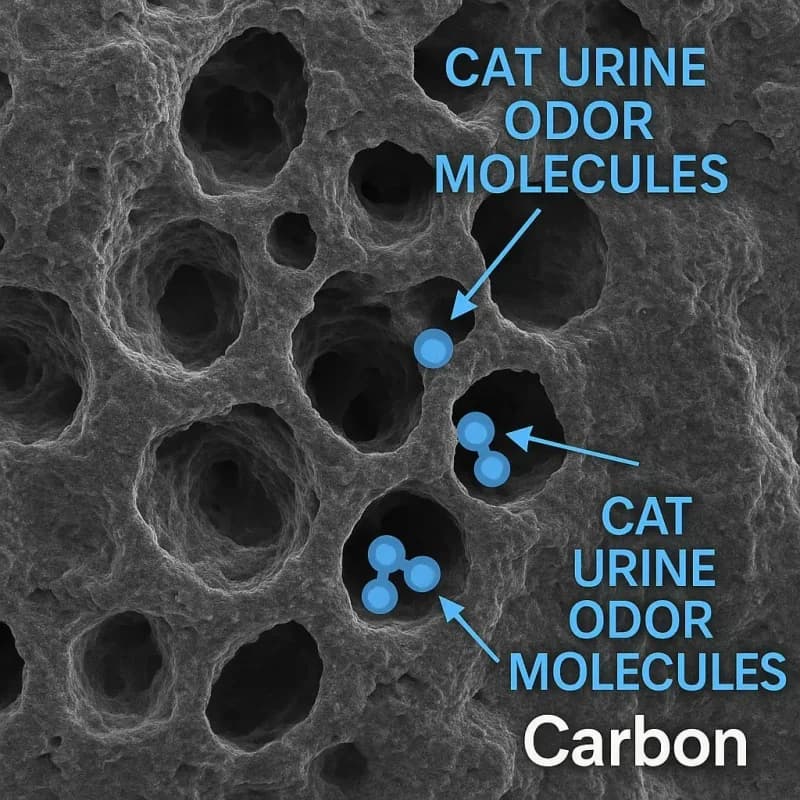
Activated carbon is the gold standard for safety. It works through pure physics, not chemistry. It traps gas molecules in microscopic tunnels without releasing any scent or dust.

2. Sodium Bicarbonate (Baking Soda)
When it comes to baking soda and cats, the ingredient is safe in small amounts but limited as a deodorizer. It only works on basic odors and doesn't trap ammonia gas effectively. Use as a base layer, but don't rely on it for 100% control.
If reducing scent exposure for sensitive cats is a priority, the litter choice matters as much as the deodorizer. Our guide to the best unscented litter for sensitive cats covers the top fragrance-free options.
3. Negative Pressure Ventilation
Placing the box in a room with an exhaust fan (like a bathroom) pulls molecules out of the home naturally. No chemicals required.
Warning: Essential Oil Toxicity
Tea tree, peppermint, citrus, and eucalyptus are highly toxic to felines. Never use "natural" sprays containing these oils near the litter box.

Safety Realized: A clean-smelling house that doesn't trigger your cat's sensitive scent receptors.
🧪 The Toxicology-Safe Trial
Stop masking odors with toxic chemicals. Try the molecular solution that veterinarians actually recommend. Get your trial bag for free (just pay $4.76 shipping).
100% molecular adsorption. Zero fragrances. Zero phenols. Zero toxins.
How to Audit a Deodorizer Label Before It Ever Reaches the Box
 <\/div>
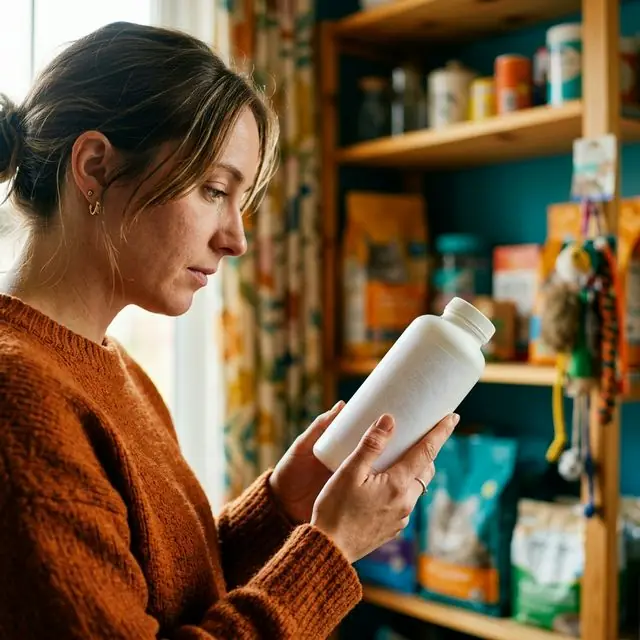
The safest litter-box deodorizing routine usually starts in the shopping aisle, not beside the litter pan. Many products use reassuring words like "natural," "botanical," or "fresh linen," but the label tells you whether the formula is truly cat-safe. If the ingredient panel hides behind catch-all terms such as fragrance, parfum, odor neutralizer blend, essential oil blend, or plant extracts, treat that as a warning sign rather than a small detail. Cats investigate with their faces close to the litter, then groom residue from their paws and coat, so even a product that seems mild to you can become a repeated exposure for them.
A good label check is simple. Look for one of two paths: either an unscented mineral-based additive with a very short ingredient list, or activated carbon granules that work by adsorption instead of perfume. Then check what is missing. You do not want aerosol propellants, disinfectant phenols, heavy perfumes, deodorizing beads that dissolve into the litter, or strongly scented cleaning agents designed for human bathrooms. Those ingredients are often chosen because people interpret scent as cleanliness, but a cat reads the same cloud of fragrance as a powerful environmental change right where it is supposed to feel safe enough to eliminate.
- Green-light language usually includes unscented, fragrance-free, activated carbon, mineral odor control, or non-aerosol additive.
- Yellow-light language includes deodorizing crystals, fresh scent, mountain breeze, or essential oil enhanced, because those terms often mean the product is doing more masking than removing.
- Red-light language includes tea tree, eucalyptus, citrus, peppermint, pine oils, phenol-based disinfectants, or any spray meant to perfume the room around the box.
If a brand does not clearly explain how it controls odor, that uncertainty matters. Safe deodorizing is less about finding a magical ingredient and more about avoiding repeated low-level irritation while choosing a method that removes odor molecules at the source. When in doubt, shorter labels and scent-free formulas are usually the more cat-friendly choice.
A Vet-Friendly Routine That Controls Odor Without Overwhelming Your Cat
 <\/div>
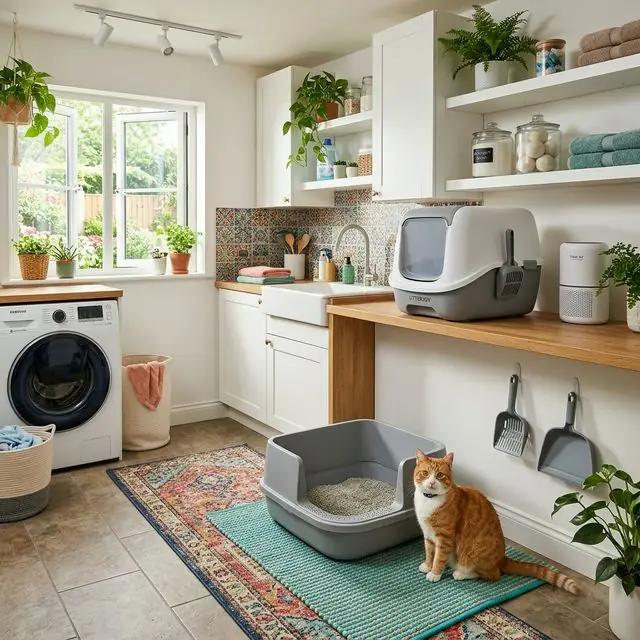
Once you have a safe product, technique matters. The best cat-safe routine is boring on purpose: clean surfaces, consistent scooping, unscented litter, and a small amount of additive used on a schedule instead of as an emergency rescue. Start by emptying the box and washing it with warm water plus fragrance-free soap. Dry it completely, because damp plastic or seams can hold the very odor you are trying to remove. Refill with enough litter to give urine room to travel downward instead of pooling at the surface, then add a measured layer of activated carbon or another unscented safe additive rather than dumping in a large amount all at once.
From there, think maintenance instead of cover-up. Scoop at least morning and evening, top up the litter when depth falls below the level your cat prefers, and refresh the deodorizing additive on the interval that matches your household rather than when the smell becomes obvious. This matters because people go nose blind long before cats do. By the time the box smells "bad enough" to you, your cat may already be noticing the change, digging less, hovering, or choosing the edge of the box to keep contact brief.
Ventilation is the quiet partner in this routine. A bathroom exhaust fan, cracked laundry-room door, or an air path that moves odor away from living areas can improve results without adding a single chemical. That is especially useful for cats who dislike scented litters and for households where respiratory sensitivity is already a concern. The goal is not a perfumed room. The goal is a neutral-smelling box that still smells familiar enough for your cat to trust.
Cat-Safe Deodorizing Changes for Kittens, Seniors, and Sensitive Households
 <\/div>
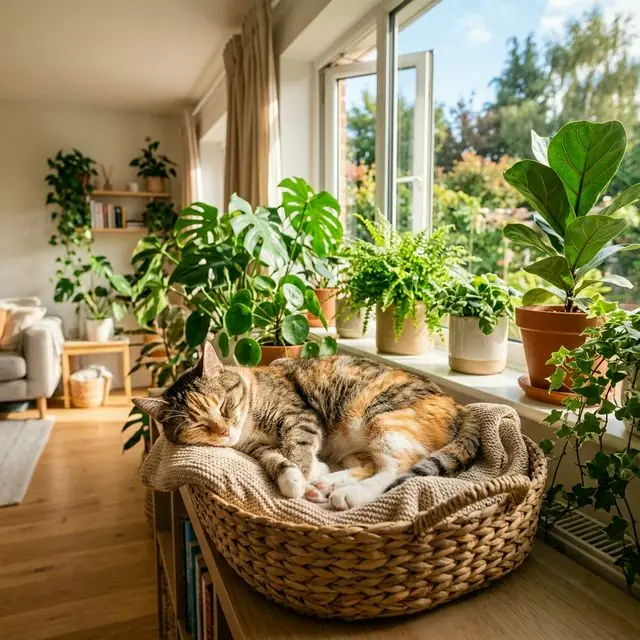
The safest method can still need adjustment depending on who lives with the box. Kittens are low to the ground, curious, and more likely to nose through fresh litter, so dusty additives and strong scent plumes are a poor fit. Senior cats may have arthritis, which means they linger less comfortably in the box and benefit from a setup that stays dry and easy to enter instead of one loaded with extra powders. Cats with asthma, chronic eye irritation, or recent illness usually do best when you remove as many airborne variables as possible, which is another reason to prefer unscented, non-spray odor control.
Households with babies, immunocompromised family members, or someone who is sensitive to fragrance often assume they need stronger cleaners. In practice, the safer move is better source control. Scoop sooner, change litter on time, wash the box thoroughly, and let activated carbon handle the gas molecules rather than trying to sanitize the air with room spray. Scented air fresheners can make the room feel cleaner for ten minutes while leaving the actual ammonia load unchanged.
- For kittens, keep introduction slow and use only low-dust, unscented options.
- For seniors, prioritize a shallow step-in height, dry litter, and a routine that prevents sticky wet spots.
- For respiratory-sensitive homes, avoid aerosols entirely and focus on mechanical airflow plus molecular trapping.
These adjustments are not overkill. They are what make a deodorizing routine sustainable. The safest litter box is the one your cat keeps using comfortably and your household can maintain consistently without needing stronger and stronger fragrance to feel in control.
When a Smell Problem Is Really a Health Clue
A deodorizer should reduce normal litter-box odor, but it should not be used to ignore a sudden change in what your cat produces. If urine becomes sharply stronger overnight, if the box smells sweet, metallic, or unusually concentrated, or if stool odor becomes dramatically different from your cat's baseline, treat that as information. Diet changes, dehydration, stress, constipation, diarrhea, urinary issues, and infections can all change odor in ways no additive should be expected to "fix."
The easiest way to use this insight is to separate routine odor from new odor. A routine odor problem builds gradually as litter saturates or scooping slips. A medical or behavioral change tends to feel abrupt: one box suddenly smells far worse than the others, your cat visits more often, strains, urinates outside the box, or starts leaving very small clumps that smell unusually strong. In those cases, a deep clean and more deodorizer may make the room tolerable for you, but it can also delay the moment you realize your cat needs attention.
So keep one simple rule: use safe deodorizing to manage the environment, not to explain away a new smell. If the odor shift comes with appetite changes, vocalizing in the box, over-grooming, blood, constipation, diarrhea, or repeated accidents, contact your veterinarian. The healthiest litter-box routine is one that keeps the home fresh and still lets you notice when something meaningful has changed.
Safe Products for Cleaning the Box Itself
One detail people overlook is that litter-box odor can get worse because of the cleaner, not despite it. Strong bathroom cleaners, bleach-heavy formulas, and perfumed wipes may leave behind a scent residue that annoys cats and mixes badly with normal litter smell. The safest cleaning routine is simpler: empty the box, wash with unscented soap and warm water, rinse thoroughly, and dry completely. If you need extra deodorizing help during the wash, use a cat-safe unscented approach and rinse it away so the box does not carry a new smell into the next litter cycle.
This matters because a box that smells sharply of "cleaner" can trigger the same avoidance risks as a heavily fragranced deodorizer. Safe litter-box deodorizing is not only about what goes in the litter. It is also about what stays on the plastic after cleaning. A neutral-smelling, fully dry box gives your cat the best chance of accepting the setup while your odor-control routine does the work quietly in the background.
References
- Urease-mediated urea hydrolysis and ammonia production - National Institutes of Health (PMC)
- OSHA ammonia exposure limits and annotated permissible exposure limits - U.S. Department of Labor (OSHA)
- Ammonia toxicological profile and health effects - ATSDR / CDC
- EPA guidance on air cleaners, gases, and odors in the home - U.S. Environmental Protection Agency
- Activated carbon adsorbers: surface area, pore structure, and adsorption basics - U.S. Environmental Protection Agency
- Peer-reviewed study on ammonia removal using activated carbons - PubMed
- IUPAC definition of microporous carbon and pores below 2 nm - IUPAC Gold Book
- Peer-reviewed analysis of the domestic cat nose and feline olfaction - National Institutes of Health (PMC)
- NASA technical report on ISS trace contaminant control using activated charcoal - NASA Technical Reports Server
- Activated carbon use in respirator cartridges - CDC / NIOSH
Frequently Asked Questions
How quickly should litter box odor improve with a consistent routine?
Most homes notice a meaningful improvement within 24 to 72 hours when scooping, airflow, and activated carbon layering are all consistent.
Can I use activated carbon additive with my current litter?
Yes. Carbon additive is compatible with most common litter types and is most effective when applied in small, regular top-ups.
What is the best way to prevent odor rebounds after cleaning?
Use a maintenance schedule instead of waiting for smell to return: scoop twice daily, refresh carbon weekly, and perform full resets on a fixed cadence.


You Might Also Like
Fragrance-Free Litter Deodorizer (Why Your Cat Needs One)
How to Eliminate Cat Litter Smell: The NASA-Inspired Solution That Actually Works

Most Powerful Cat Litter Odor Absorber: Activated Carbon vs Zeolite vs Baking Soda (2026 Test Results)

How to Rid House of Cat Urine Smell: The Complete Guide

Best Cat Litter Deodorizer: What Stops Ammonia Smell (2026)