


How Often to Add Litter Deodorizer? The 100-Day Test
We tracked ammonia spikes for 100 days to find the scientific "sweet spot" for deodorizer application. Stop wasting product and stop tolerating smell.
The Great Deodorizer Question
Ask 10 cat owners how often they add deodorizer, and you'll get 10 different answers. "Every day!" "When it smells." "Every time I change the bag."
The problem is that waiting until "it smells" means you've already failed. The human nose detects ammonia at around 5-10 ppm (parts per million), but your cat? They smell it at levels far lower, causing stress and potential litter box avoidance long before you notice a thing.
The 100-Day Experiment
I wanted definitive answers. So, I set up a controlled experiment across three households:
- Household A: 1 Cat (Male, 12lbs)
- Household B: 2 Cats (Siblings, 10lbs & 11lbs)
- Household C: 3 Cats (Mixed ages/sizes)
Test Protocol
- 🧹 Litter: Unscented clumping clay (same brand)
- ⏱️ Scooping: 2x Daily (8 AM / 8 PM)
- 💨 Deodorizer: Purrify Activated Carbon (2 tbsp dose)
- 📈 Measurement: Digital Ammonia Gas Sensor placed at box rim height
The Data Results
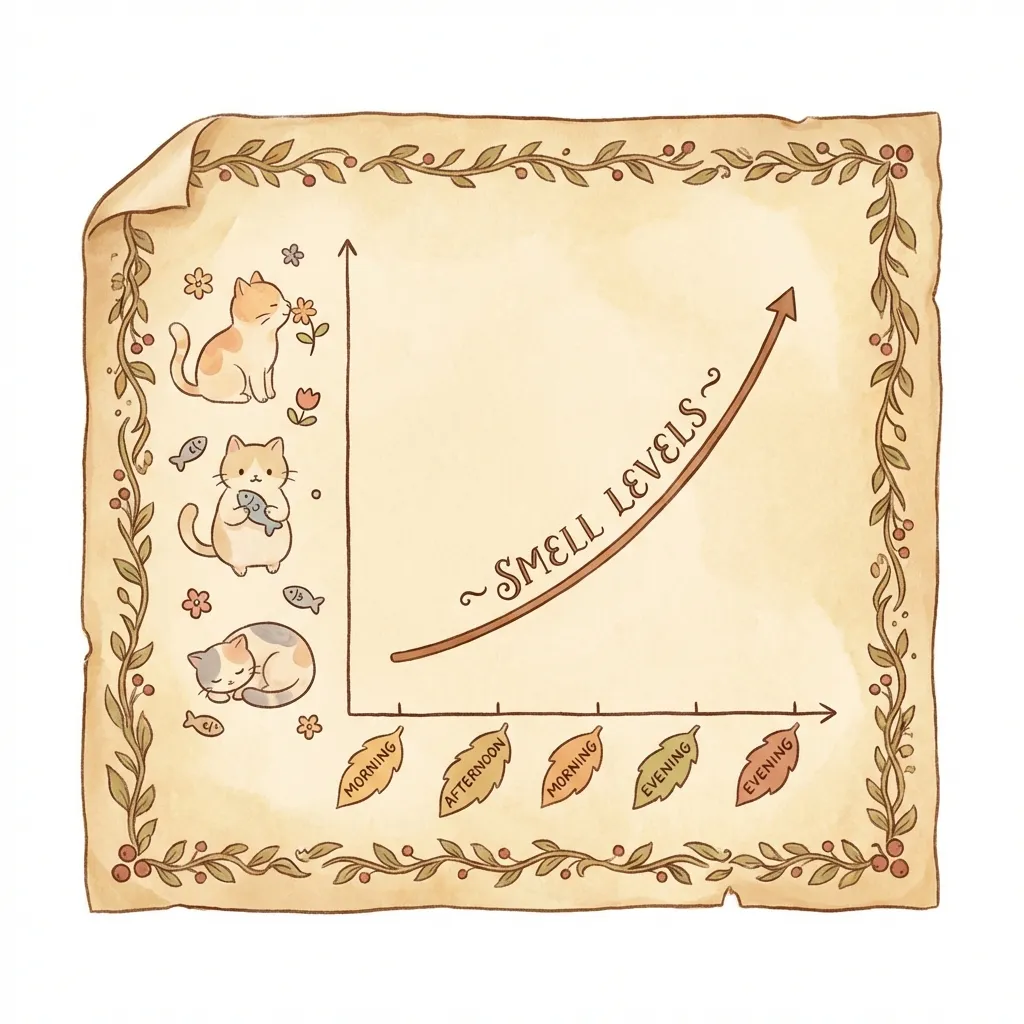
Single-Cat Home: The 5-7 Day Rule
In Household A, we found that a single application of 2 tablespoons of Activated Carbon effectively kept ammonia at 0 ppm for exactly 5 days.
- Day 1-4: 0 ppm (undetectable)
- Day 5: 0-1 ppm (trace)
- Day 6: 2-3 ppm (noticeable to cat)
- Day 7: 5+ ppm (noticeable to human)
Verdict: Refresh every 5 days for perfect air, or every 7 days if you want to stretch your budget (but risk slight odor).
Multi-Cat Home: The 3-Day Rule
For Household B and C, the curve was much steeper. With double the urine output, the carbon saturation point was reached much faster.
Verdict: Every 3-4 days is mandatory. Waiting a full week resulted in ammonia spikes of 20+ ppm, which is stressful for cats and embarrassing for owners.
The Danger of "Nose Blindness"
Why rely on a schedule instead of your nose? **Olfactory Fatigue.**
Your brain is programmed to ignore constant background smells to stay alert for new dangers (like smoke). This means your house could smell like a litter box right now, and you honestly wouldn't know it until a guest walks in and makes a face.
How to Apply for Maximum Efficiency
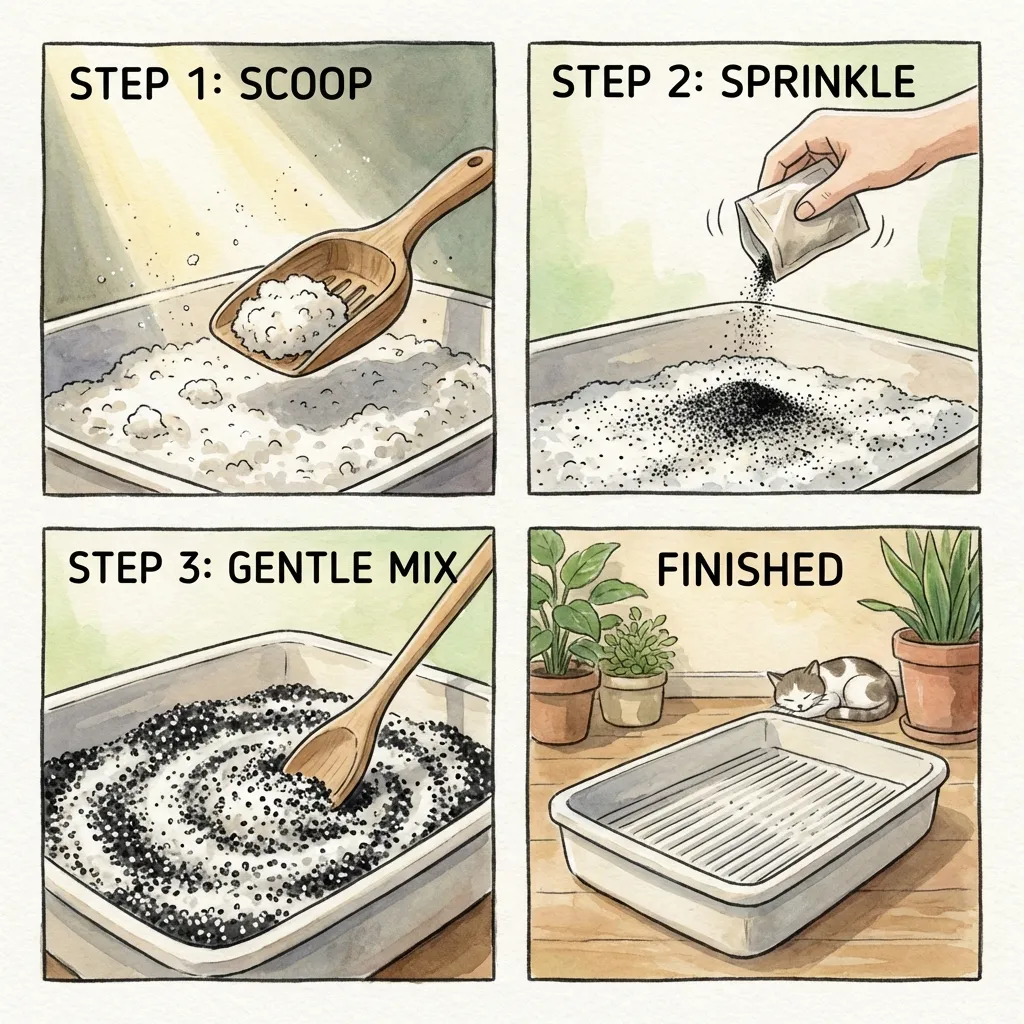
Dumping deodorizer on top looks satisfying, but it's inefficient. Here is the technician-approved method to make your product last longer:
1. Scoop First
Never add deodorizer to a dirty box. Remove the waste clumps to reduce the immediate ammonia load.
2. Sprinkle Thin
Use 1-2 tablespoons. A thin, even dusting is better than a single pile.
3. Mix It In
This is crucial. Mix the carbon into the top 2 inches. This prevents it from being buried too deep or sitting uselessly on top.
The "Reset" Protocol: When the Schedule Fails
Even with a perfect 5-day or 3-day schedule, there are times when your litter box will hit a saturation point. This usually happens after a bout of feline diarrhea or when a cat is on medication that significantly changes their urine chemistry.
If you follow the schedule but still detect a sharp ammonia spike on Day 2, do not just add more deodorizer. You need to perform a **Partial Reset**:
- The Core Swap: Remove 2 inches of the most used litter (usually the center front).
- Scrub the Base: Use a dry paper towel to check for liquid that might have seeped to the bottom.
- Carbon Foundation: Sprinkle 1 tablespoon of carbon directly onto the plastic/metal floor of the box before adding fresh litter back in.
Automating Your Odor Control
Consistency is the hardest part of litter box management. Most owners start strong but eventually forget a dose, leading to a smell that takes days to neutralize again.
⏰ The Smart Phone Solution
Set a recurring calendar event on your phone for every Wednesday and Sunday (for multi-cat) or just every Saturday (for single cat). Label it "Purrify Refresh." When the notification hits, it takes exactly 30 seconds to sprinkle and mix.
Troubleshooting Your Frequency: The "Sniff Test"
If you find that our 5-day or 3-day recommendations aren't working for you, it is time to look at **Saturation Variables**. Not all urine is the same. Cats on a kibble-only diet often have higher nitrogen waste, leading to sharper ammonia. High humidity (above 60%) or a box located in a poorly ventilated bathroom will also cause the carbon to fill up faster as it adsorbs moisture from the air. If you notice a faint sharp scent before your scheduled refresh, simply increase your dosage by 1 tablespoon. This "reset" should carry you through to your next deep scoop.
The Multi-Cat Compounding Effect
In households with 3 or more cats, the ammonia load isn't just additive; it's exponential. Because cats tend to use the same "favorite" box, that specific area reaches critical saturation within 48 hours. For these high-traffic boxes, we recommend the **Daily Dusting Protocol**: Every morning after your first scoop, sprinkle a single teaspoon over the disturbed litter. This micro-dose keeps the surface active and prevents the smell from ever building up enough to be detectable by guests or your cats.
Conclusion
Odor control is math, not magic. By following the **5-Day Rule** (Single Cat) or **3-Day Rule** (Multi-Cat), you stay ahead of the ammonia curve, keeping your home fresh and your cat happy.
📅 Get on the Schedule
Subscribe to Purrify and get your fresh carbon delivered exactly when you need it, based on your household size.
Start My Subscription →