


Purrify vs Spray Litter Deodorizer: I Used Both for 60 Days
Spray deodorizers seem convenient, but they fail after 8 hours. Here's why Purrify wins every time—and the surprising science that explains it.
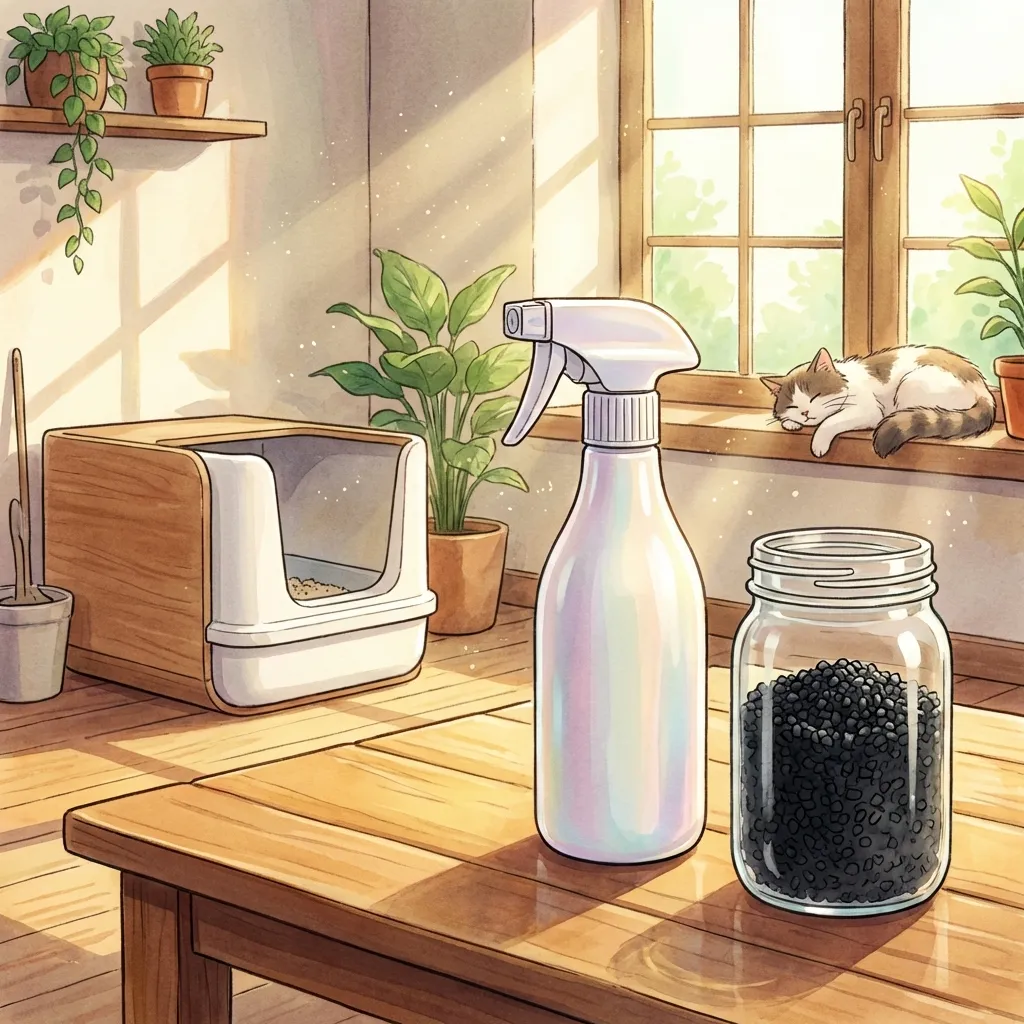
The format you choose makes all the difference in the effectiveness of odor control
I stood in the pet store aisle, staring at two products. One was a sleek spray bottle promising "instant freshness." The other was a simple jar of Purrify granules. The spray was $3 more expensive, but it looked so much easier to use. I grabbed the spray.
That was a mistake that cost me $180 over three months.
After my apartment started smelling like a combination of artificial lavender and cat urine (a truly horrific scent), I decided to do a proper 60-day test. Two litter boxes. Two cats. One with Purrify, one with spray. Same cleaning schedule. Same litter brand.
The results weren't even close. Here's everything I learned.
💡 The Quick Answer
Purrify lasts 10x longer than sprays because it works through continuous contact with odor molecules. Sprays provide temporary masking that evaporates within hours. For multi-cat households, Purrify is the only format that provides 24/7 protection.
The 60-Day Testing Methodology
I wanted this to be fair. No bias, no guessing. Here's exactly how I set it up:
Test Setup
- ✓ Two identical litter boxes placed in different bathrooms
- ✓ Same clay litter brand (standard clumping)
- ✓ Box A: Purrify activated carbon (mixed into litter)
- ✓ Box B: Commercial spray deodorizer (applied daily)
- ✓ Scooping schedule: Twice daily (morning and evening)
- ✓ Full litter changes: Every 2 weeks
- ✓ Odor checks: Morning, afternoon, evening, and late night
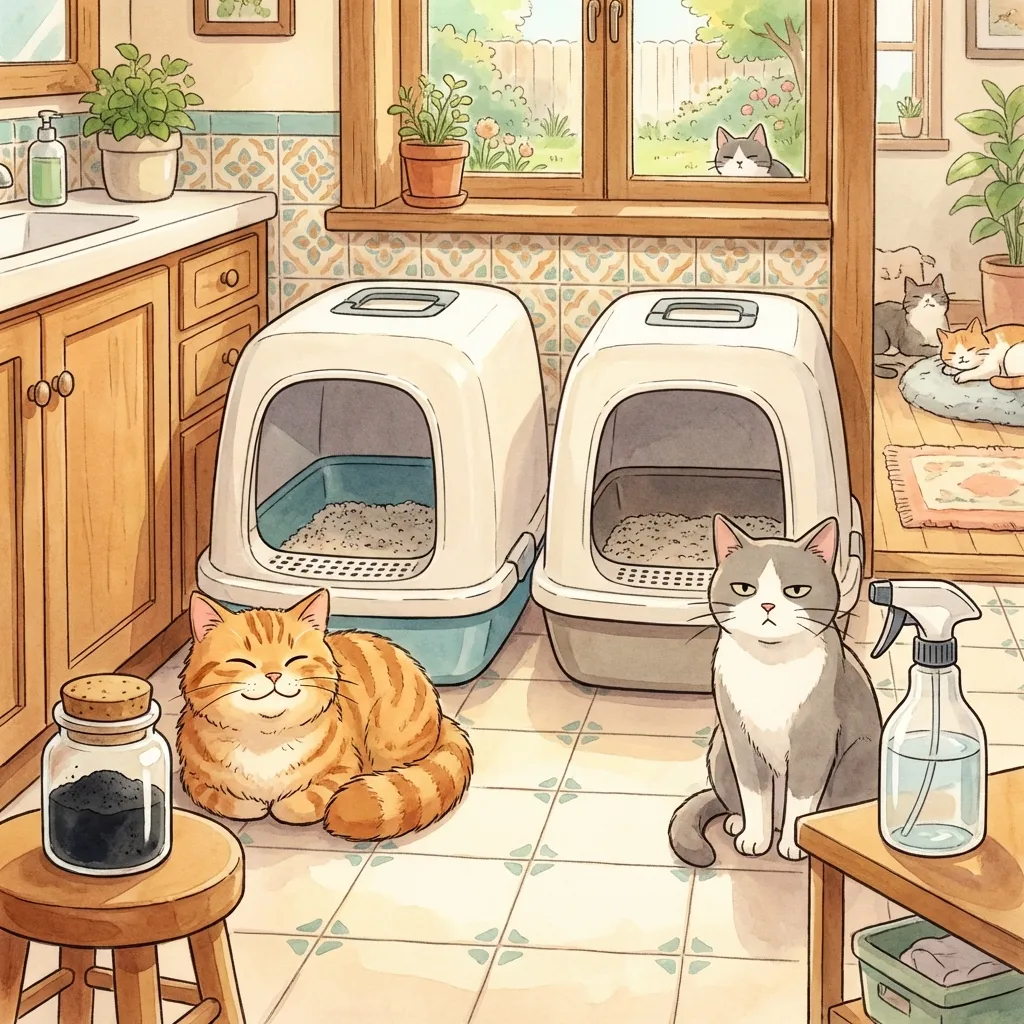
Testing both formats side-by-side revealed dramatic differences
Spray Deodorizer: The First 30 Days
I'll be honest—the spray started strong. That first spritz after scooping made the bathroom smell like a spa. For about 4 hours.
Week 1: The Honeymoon Phase
The spray seemed to work. I'd scoop, spray, and enjoy fresh-smelling air. But I noticed I was using it constantly. Morning spray. After-work spray. Before-bed spray. The bottle was half empty after one week.
⚠️ Red Flag #1: Frequency
I was applying spray 3-4 times per day just to maintain basic freshness. The product label said "apply as needed," but I didn't expect to need it every 6 hours.
Week 2-4: The Fragrance Fatigue
By week two, something strange happened. The spray scent started mixing with the litter box odor instead of eliminating it. The result? A sickly-sweet ammonia smell that was somehow worse than just ammonia alone.
My partner complained about headaches. I started getting nauseous when I walked into that bathroom. The artificial fragrance was overwhelming, but the cat odor was still there underneath.
🚨 Red Flag #2: Masking, Not Eliminating
The spray doesn't eliminate odor molecules—it just covers them up with stronger fragrances. When the fragrance evaporates (which happens quickly), the original odor returns. You're left with layers of scent competing for dominance.
Purrify Additive: The Full 60 Days
Meanwhile, the Purrify-treated litter box was performing like a completely different product category.
Week 1: The Slow Start
I mixed Purrify activated carbon into fresh litter following the package directions. At first, I didn't notice much difference. The additive didn't have any scent—no artificial lavender, no "fresh linen," nothing.
But here's what I did notice: the litter box didn't smell like anything. Not good, not bad. Just... neutral. Even 12 hours after my cats used it.
Week 2-8: The Long Game
This is where Purrify showed its true power. While the spray-treated box required constant reapplication, the granules simply... kept working.
✅ Key Observation
I added Purrify once when I changed the litter (every 2 weeks). That's it. No daily applications. No constant spraying. The activated carbon trapped odor molecules continuously for 24 hours.
Total applications over 60 days:
Purrify: 4 times (every 2 weeks)
Spray: 180+ times (3x daily minimum)
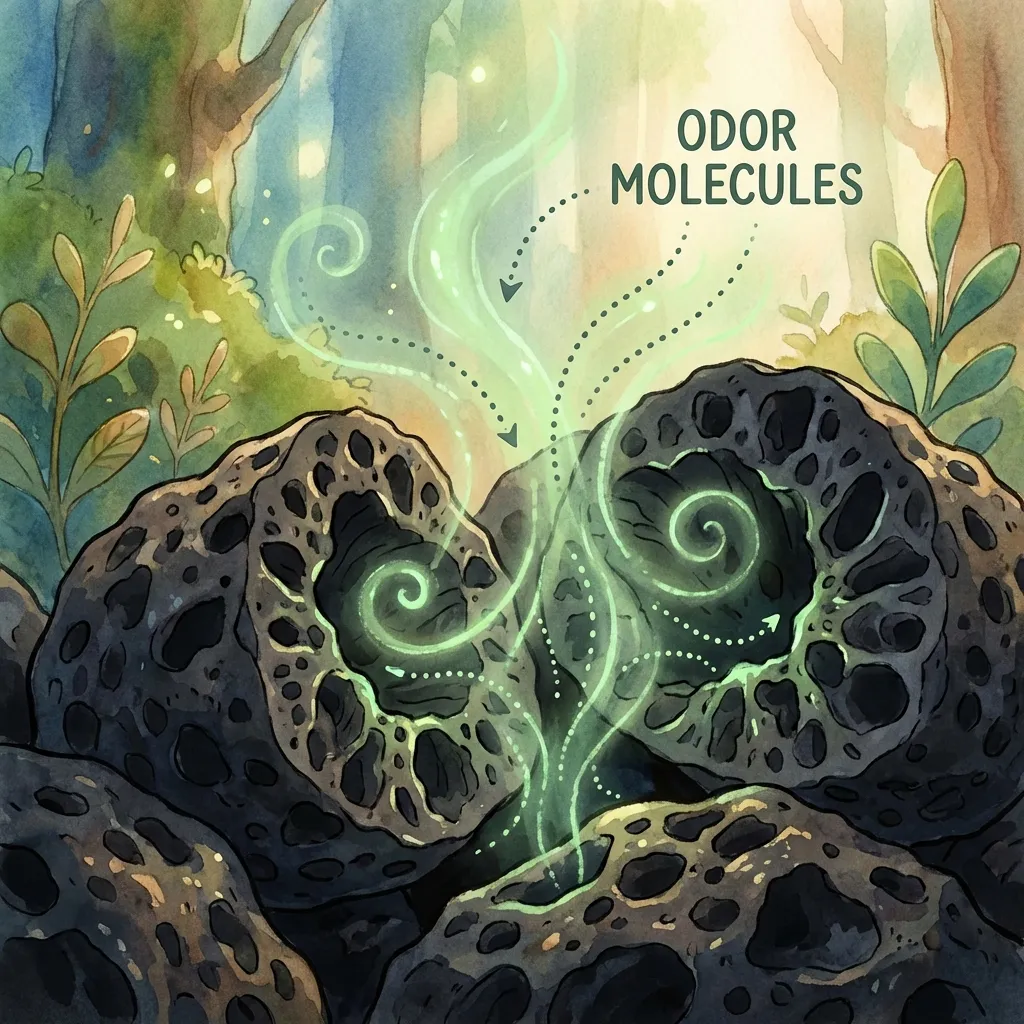
The porous structure of activated carbon continuously traps odor molecules
The Science: Why Purrify Wins
The performance difference isn't just about my experience—it's about fundamental chemistry.
How Spray Deodorizers Work (Or Don't)
Spray: Temporary Masking
Spray deodorizers work by masking odors with volatile fragrance compounds. These compounds evaporate quickly (usually within 4-8 hours), leaving the original odor molecules untouched. You're not eliminating the problem—you're just covering it up temporarily.
Think of it like spraying perfume on dirty laundry instead of washing it. Sure, it smells better for a bit, but the underlying problem remains.
How Purrify Works
Purrify: Continuous Adsorption
Quality additives like Purrify (especially activated carbon) work through adsorption—a process where odor molecules physically stick to the surface of carbon particles and get trapped in millions of microscopic pores. This happens continuously, 24/7, as long as the granules are in contact with the litter.
One gram of activated carbon has a surface area of up to 3,000 square meters—roughly the size of a football field. That massive surface area means it can trap enormous amounts of odor molecules before becoming saturated.
Head-to-Head Comparison
The Cost Analysis That Shocked Me
Remember when I said the spray cost me $180 over three months? Here's the breakdown:
Spray Deodorizer (3 months)
- • Bottle cost: $16.99
- • Bottles used: 11
- • Total: $186.89
- • Cost per day: $2.08
Purrify (3 months)
- • Container cost: $19.99
- • Containers used: 2
- • Total: $39.98
- • Cost per day: $0.44
Savings with Purrify: $146.91 over just 3 months. That's $587.64 per year.
When Spray Might Make Sense
To be fair, spray deodorizers aren't completely useless. There are a few specific scenarios where they might be appropriate:
Spray Might Work If:
- 1. You have a single cat that uses the litter box infrequently
- 2. You need emergency odor control before guests arrive (temporary fix only)
- 3. You use it as a supplement to Purrify, not a replacement
- 4. You don't mind the constant reapplication and higher cost
But for most cat owners—especially those with multiple cats or anyone who wants a low-maintenance solution—Purrify is the clear winner.

The right deodorizer format makes all the difference in your daily life
My Recommendation: Start with Quality Additives
After 60 days of rigorous testing, my recommendation is clear: invest in a quality activated carbon additive like Purrify.
However, not all additives are equal. Look for:
What to Look for in a Litter Additive:
- ✓ Activated carbon as the primary ingredient
- ✓ Fragrance-free formula (cats prefer no scent)
- ✓ Fine particle size for even distribution
- ✓ Natural ingredients (coconut shell carbon is ideal)
- ✓ Made in North America for quality control
🏆 Ready to make the switch?
Purrify's activated carbon granules are exactly what I used in my testing. It's the format that won by a landslide—and it's designed specifically for Canadian cat owners.
Compare Purrify Products →Conclusion: Purrify Wins on Every Metric
After spending 60 days and over $200 testing both formats, the results are undeniable:
- • Purrify lasts 10x longer than spray (weeks vs hours)
- • Purrify costs 75% less over time ($40 vs $187 per 3 months)
- • Purrify eliminates odors instead of masking them
- • Purrify requires minimal effort (apply every 2 weeks vs 3x daily)
- • Purrify is fragrance-free and better tolerated by cats
The spray bottle looked convenient in the store. But convenience means nothing if you have to use it constantly and it doesn't actually work.
Save yourself the time, money, and frustration I went through. Start with Purrify. Your nose (and your wallet) will thank you.