The Paradox
You buy a litter deodorizer to control smell. But if it's scented, you're creating a new problem: your cat refuses to use the box.
The truth: Fragrance doesn't eliminate odor-it masks it. And cats hate that masking scent more than you hate the original smell.
Why Cats Avoid Scented Litter Deodorizers
You've bought the expensive litter. You scoop daily. You added that lavender-scented deodorizer everyone raves about.
And now your cat is peeing on your bed.
This isn't defiance. It's biology.
The #1 Cause of Litter Box Avoidance
According to veterinary behaviorists, strong fragrances in litter or deodorizers are the leading cause of litter box avoidance in otherwise healthy cats.
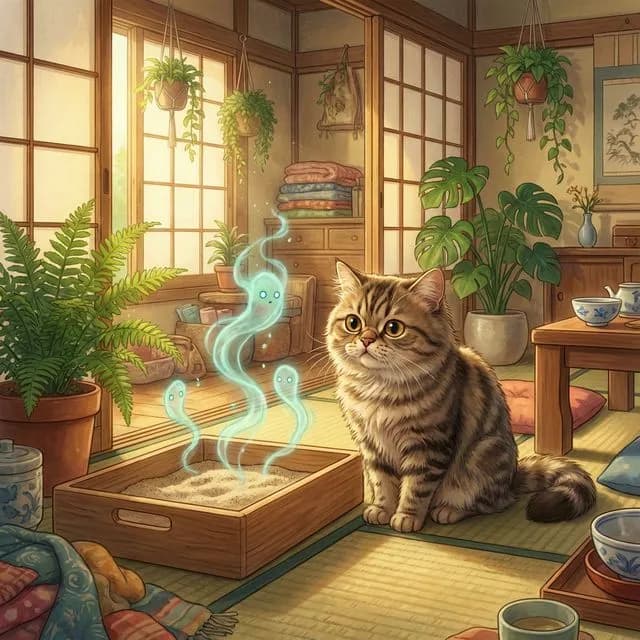
Your cat isn't being difficult. They're overwhelmed. Imagine being forced to use a bathroom that reeks of industrial air freshener every time nature calls.
The Scent Sensitivity Numbers
Scent receptors in cats
Scent receptors in humans
More sensitive than your nose
What smells "lightly floral" to you is a suffocating cloud to your cat. They can detect scent molecules you'll never notice.
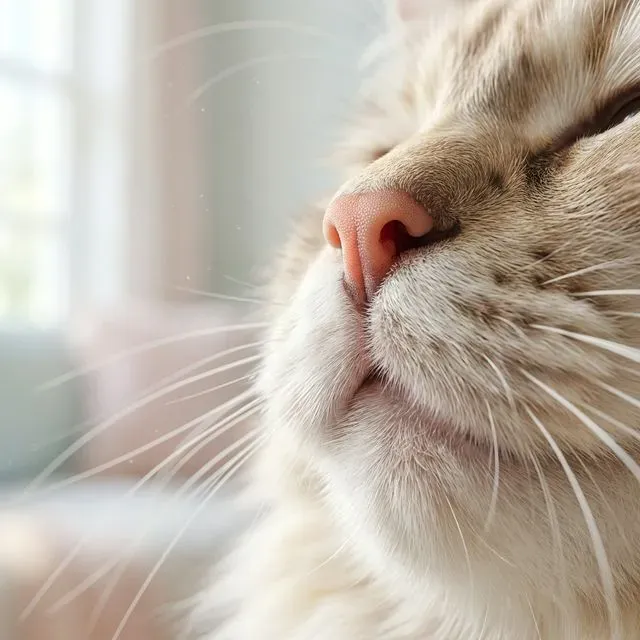
Cats experience scents with 40x more intensity than humans
The Problem With Fragrance (It's Not What You Think)
Scented deodorizers don't just irritate your cat's nose. They fail at the one job they're supposed to do: eliminate odor.
Why Fragrance Doesn't Work
1. Masking ≠ Eliminating
Fragrance works by overwhelming your nose with a stronger smell. The ammonia from cat urine is still there-you just can't smell it over the artificial "ocean breeze."
The result: Your home smells like cat pee mixed with potpourri. Not an improvement.
2. Fragrance Fades, Odor Doesn't
Scented deodorizers lose their masking power within hours. But the ammonia molecules stick around for days.
The result: You're constantly reapplying, creating a stronger and stronger fragrance cloud that drives your cat away.
3. Fragrance Contains Volatile Organic Compounds (VOCs)
Those "fresh" scents? They're chemical compounds designed to evaporate into the air. You're breathing them. So is your cat.
The result: Respiratory irritation for sensitive cats. Sneezing, watery eyes, and sometimes asthma-like symptoms.
4. Cats Associate the Box With Discomfort
Every time your cat uses a scented litter box, they experience sensory overload. Their brain starts connecting "litter box" with "unpleasant."
The result: They find somewhere else to go. Your carpet. Your laundry pile. Your potted plants.
The "Fragrance" Loophole on Labels
When you see "fragrance" or "parfum" on a product label, it doesn't mean one ingredient. It's a proprietary blend that can contain up to 3,000+ different chemicals.
Companies aren't required to disclose what's in that blend. Many of these compounds have never been tested for safety in pets.
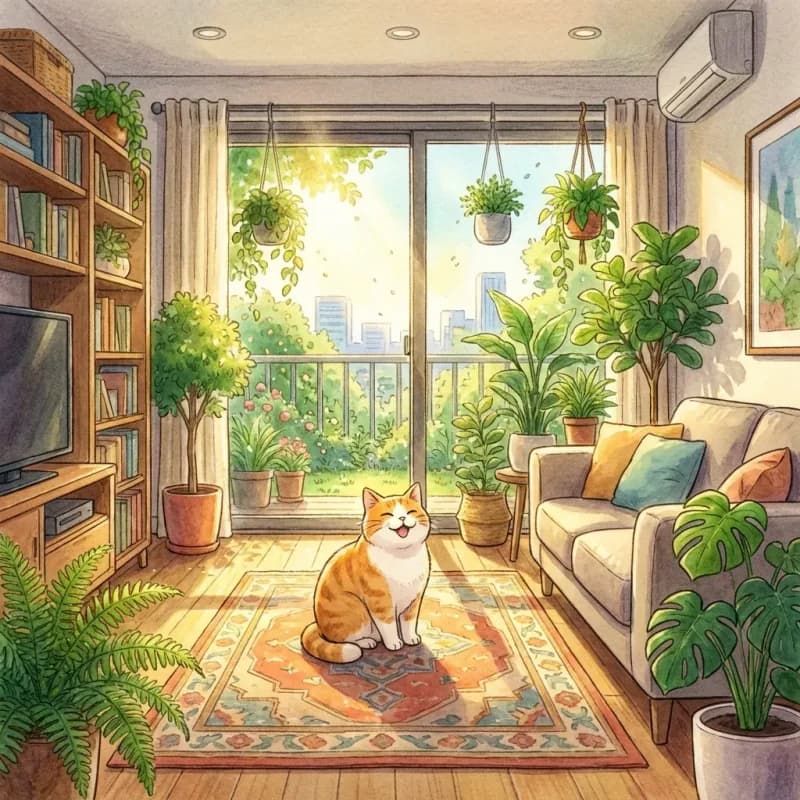
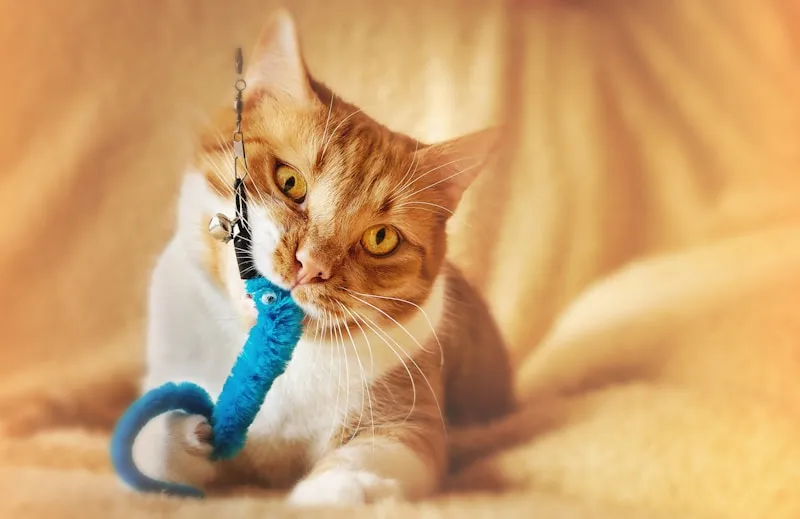
A fragrance-free environment keeps your cat comfortable and prevents litter box avoidance
How Fragrance-Free Deodorizers Actually Work
If fragrance doesn't eliminate odor, what does?
Adsorption. Not absorption-adsorption. Different process. Better results.
The Science of Odor Elimination (Not Masking)
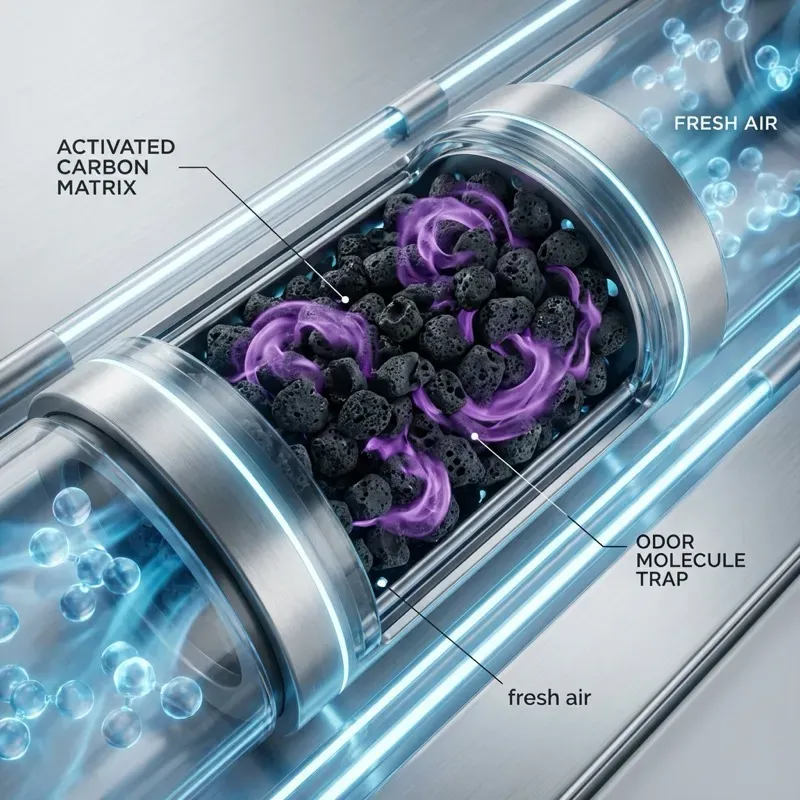
Adsorption is a surface phenomenon where molecules stick to a material's surface. Think of it like Velcro at the molecular level.
When odor molecules (like ammonia from cat urine) contact an adsorbent material, they get trapped in microscopic pores. They don't evaporate back into the air. They're held captive.
The result: The odor is physically removed from the air. Not masked. Not neutralized. Removed.
Materials That Actually Eliminate Odor
| Material | How It Works | Fragrance-Free? | Duration |
|---|---|---|---|
| Activated Carbon | Traps odor in microscopic pores (adsorption) | ✓ Yes | 7+ days |
| Zeolite | Molecular cage structure traps ammonia | ✓ Yes | 5-7 days |
| Baking Soda | Neutralizes acids (limited effectiveness) | ✓ Yes | 1-2 days |
| Scented Products | Masks odor with stronger fragrance | ✗ No | 2-6 hours |
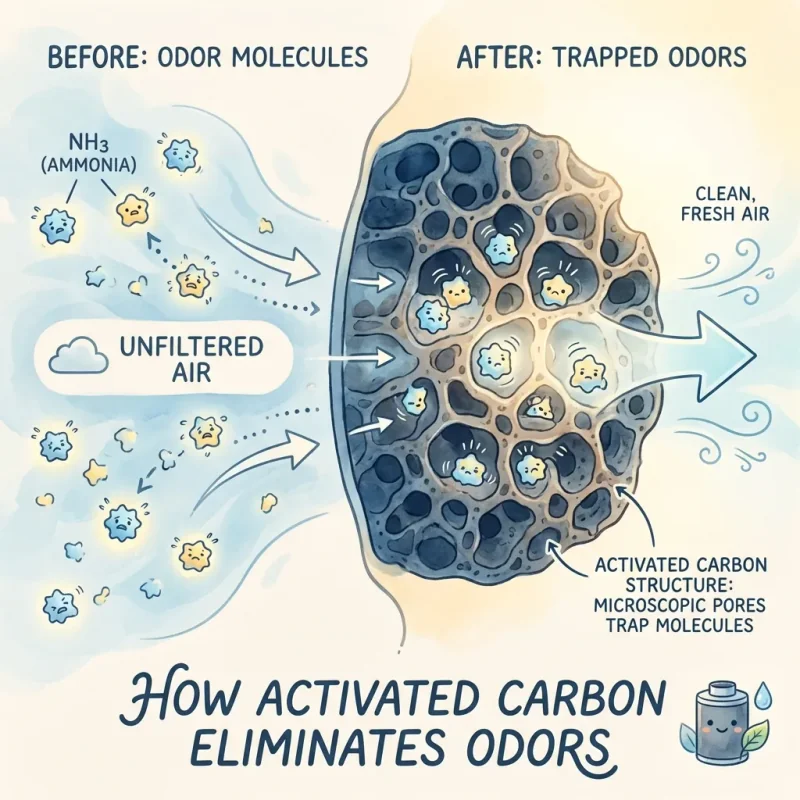
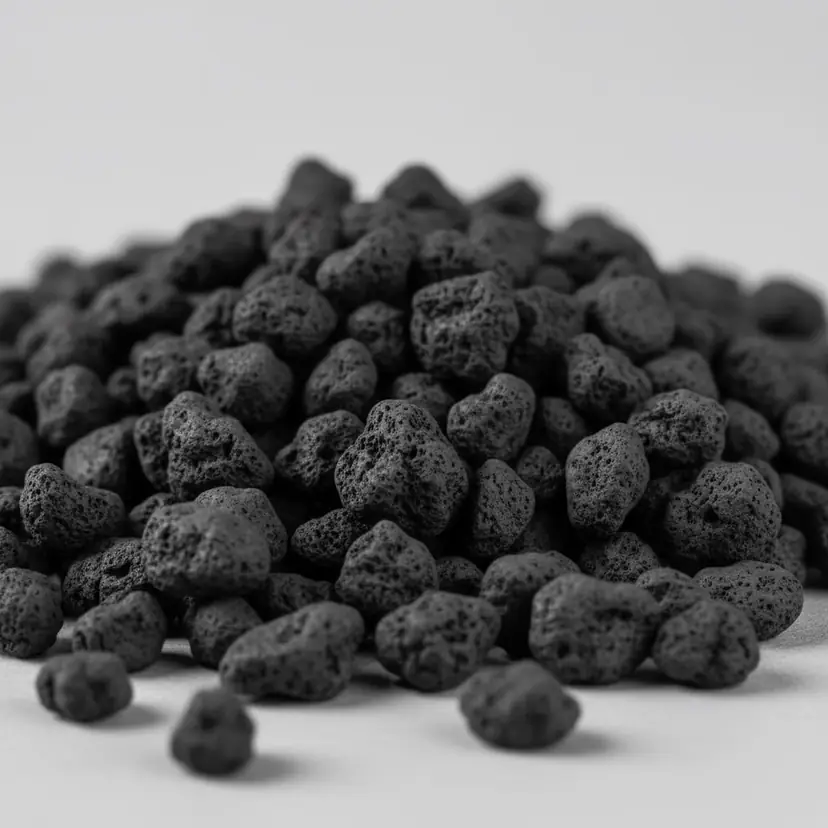
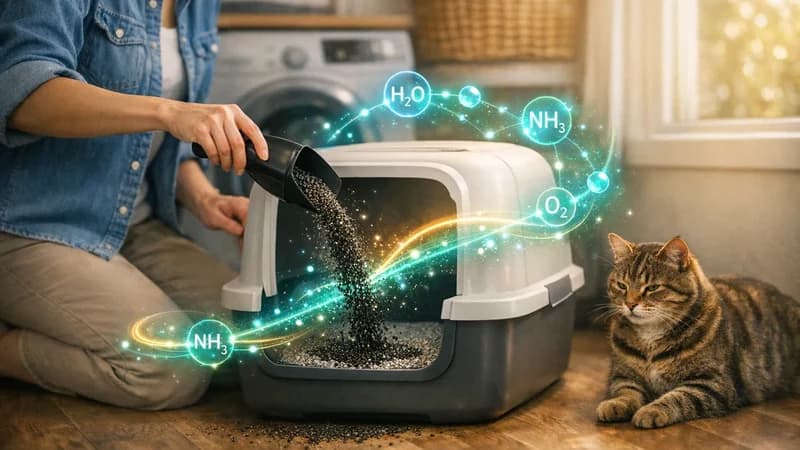
Activated carbon traps odor molecules through adsorption-no fragrance needed
Best Fragrance-Free Deodorizer Options
Here are the most effective fragrance-free solutions, ranked by performance. If you are also looking for a fragrance-free litter itself, see our guide to the best unscented cat litter for sensitive cats.
Activated Carbon from Coconut Shells
BEST CHOICEWhy it's #1: Highest surface area of any natural adsorbent (1,500+ m²/g). One teaspoon of activated carbon has the surface area of a football field. It physically traps ammonia, mercaptans, and volatile sulfur compounds-the three main culprits in litter box odor.
Duration: 7-10 days of continuous odor control.
Cat acceptance: Excellent. Completely undetectable to cats.
Zeolite (Natural Volcanic Mineral)
How it works: Zeolite has a cage-like molecular structure that selectively traps ammonia molecules. Works well for ammonia specifically, less effective for other odor compounds.
Duration: 5-7 days.
Limitation: Slower acting than activated carbon. Best used as a supplement, not primary deodorizer.
Baking Soda (Sodium Bicarbonate)
How it works: Neutralizes acidic odors through pH buffering. Budget-friendly and widely available.
Duration: 24-48 hours before becoming saturated.
Limitation: Can't neutralize ammonia (both are alkaline). Only addresses acidic odor components. Some cats dislike the powdery texture.
Unscented Clumping Litter With Built-In Odor Control
How it works: Some premium litters incorporate activated carbon or zeolite directly into the clay granules.
Duration: Lasts the lifetime of the litter (2-4 weeks).
Limitation: More expensive than regular litter. Odor control weakens as litter becomes saturated with urine.
Pro Tip: Combining Methods
For maximum odor control, combine frequent scooping (2-3x daily) with activated carbon application. This one-two approach eliminates waste before it develops strong odor, then traps any remaining molecules.

Activated carbon uses millions of microscopic pores to physically trap and eliminate odor molecules
How to Switch From Scented to Fragrance-Free
If your cat has been avoiding a scented litter box, here's how to transition to fragrance-free. Whether you're switching your deodorizer, your litter, or both, the approach is the same-go gradually. For a full comparison of the best no scent cat litter options available in Canada, see our dedicated review before you make the switch.
The 7-Day Transition Plan
Day 1: Complete Replacement
Remove all scented litter. Wash the box with hot water and unscented dish soap. Rinse thoroughly. Let dry completely. Fill with fresh, unscented litter (3-4 inches deep).
Day 2-3: Monitor
Watch for signs your cat is using the box again. Most cats resume normal use within 24-48 hours once the offending scent is gone.
Day 4: Add Fragrance-Free Deodorizer
Once your cat is comfortable with the unscented litter, sprinkle a thin layer of activated carbon on top after scooping. Start with a small amount to let your cat adjust.
Day 5-7: Establish Routine
Continue scooping 2-3x daily and reapplying activated carbon every 5-7 days. Your cat should now be using the box consistently.
If Your Cat Still Avoids the Box
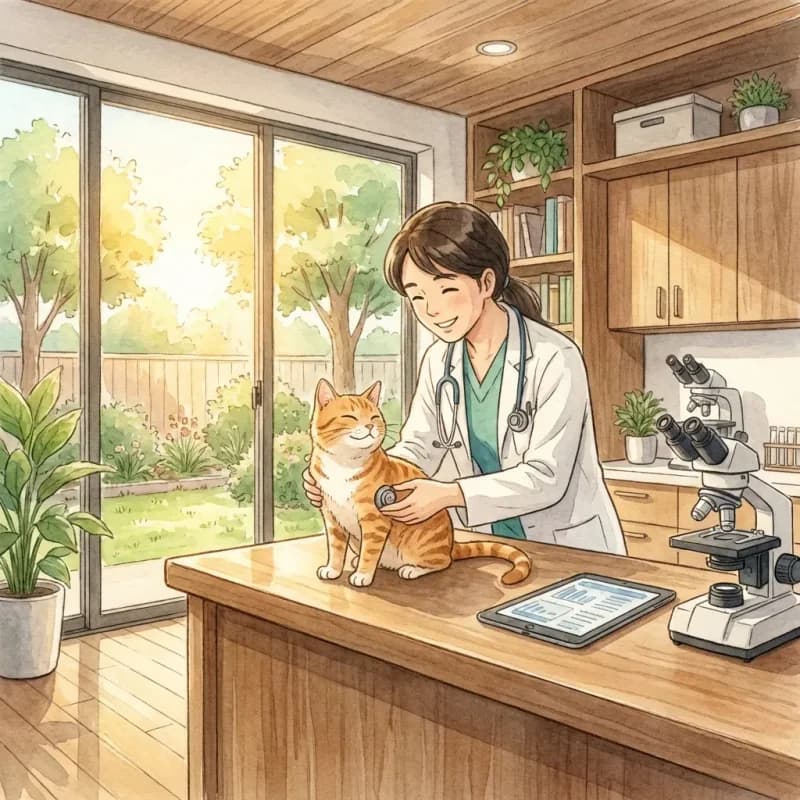
Rule out medical issues first. Urinary tract infections, kidney disease, and diabetes can all cause litter box avoidance.
Schedule a vet visit before assuming it's purely behavioral.
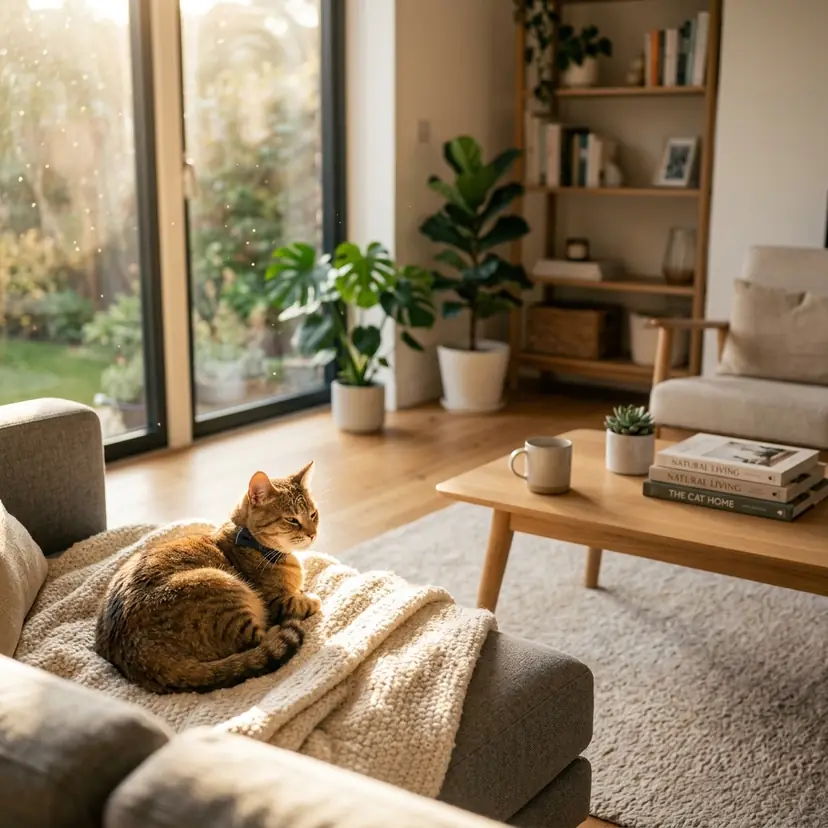
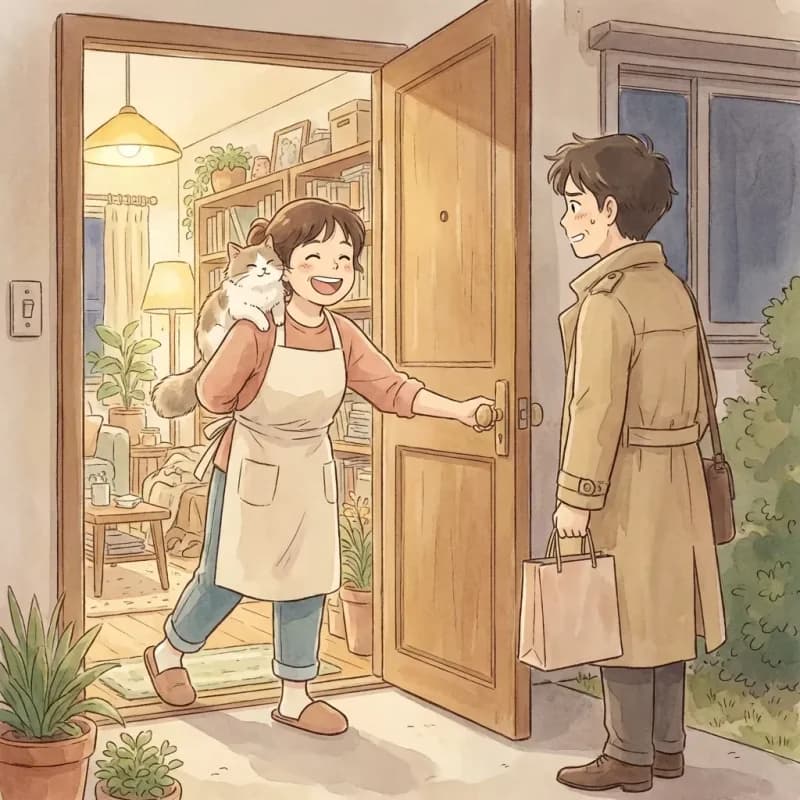
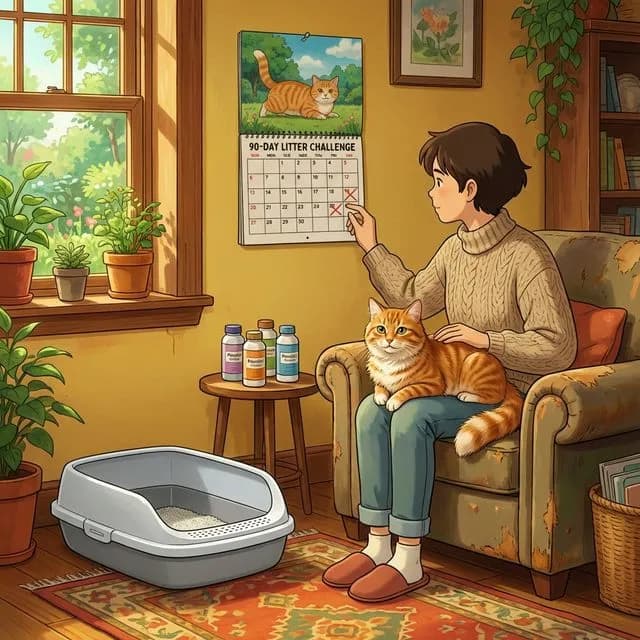
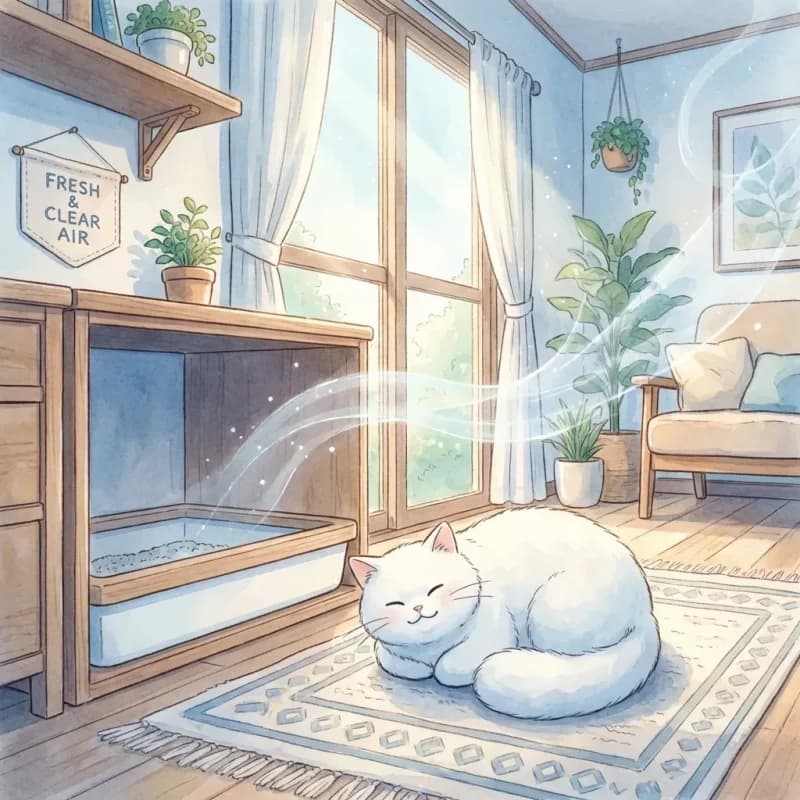
Transitioning to fragrance-free solutions creates a genuinely fresh home without masking odors
Frequently Asked Questions
Does fragrance-free mean it won't control odor?
No. "Fragrance-free" means it doesn't add scent-it doesn't mask odor with perfume. The best fragrance-free deodorizers (like activated carbon) eliminate odor through adsorption, which is actually more effective than masking.
What's the difference between fragrance-free and unscented?
Fragrance-free: Contains zero fragrance ingredients. No scent added.
Unscented: May contain fragrance ingredients specifically to mask the product's natural smell. Always choose fragrance-free.
Will my house smell bad without scented deodorizer?
No-the opposite. Scented products create a layered smell: cat urine + artificial fragrance. Fragrance-free deodorizers like activated carbon eliminate the urine odor entirely. Your home smells neutral, not "covered up."
Are "natural" fragrances like lavender or citrus safe for cats?
No. Essential oils (the source of natural fragrances) are particularly toxic to cats. Their livers can't metabolize the terpenes in essential oils. Lavender, citrus, eucalyptus, and tea tree are especially dangerous. Avoid all fragranced products-natural or synthetic.
How much activated carbon should I use in the litter box?
Sprinkle a thin layer (about 1-2 tablespoons) across the litter surface after scooping. You don't need much-activated carbon is incredibly efficient. Reapply every 5-7 days or as needed.
Can I use fragrance-free deodorizer with any type of litter?
Yes. Activated carbon works with clay, clumping, silica gel, wood, and paper-based litters. It's compatible with all litter types.
My current deodorizer says "lightly scented." Is that OK?
If it has any scent-even "light"-it contains fragrance compounds. Remember, your cat's nose is 14x more sensitive than yours. What's "light" to you may be overwhelming to them. Switch to truly fragrance-free.
The Bottom Line
Fragrance doesn't eliminate odor. It masks it-and in the process, creates a new problem.
Your cat's sensitive nose can't tolerate the chemical cloud of scented deodorizers. And frankly, neither should you.
Fragrance-free deodorizers-especially activated carbon-work by physically removing odor molecules from the air. No masking. No VOCs. No respiratory irritation.
Your home smells fresh because there's nothing to smell. Not because you've layered "ocean breeze" over cat urine.
That's the difference.
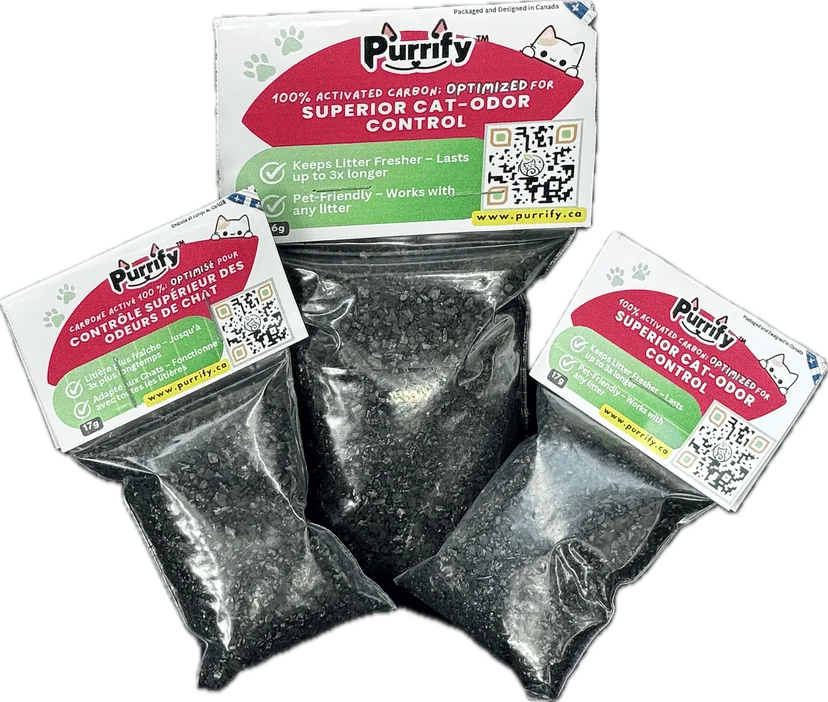
Pro Tip: The Purrify Solution
For the most effective odor control, try Purrify's activated carbon litter additive. Simply sprinkle it in your litter box to eliminate odors for up to 7 days. Made from premium coconut shell carbon, it's the same technology used in water and air filters.
Try Purrify Risk-Free →