


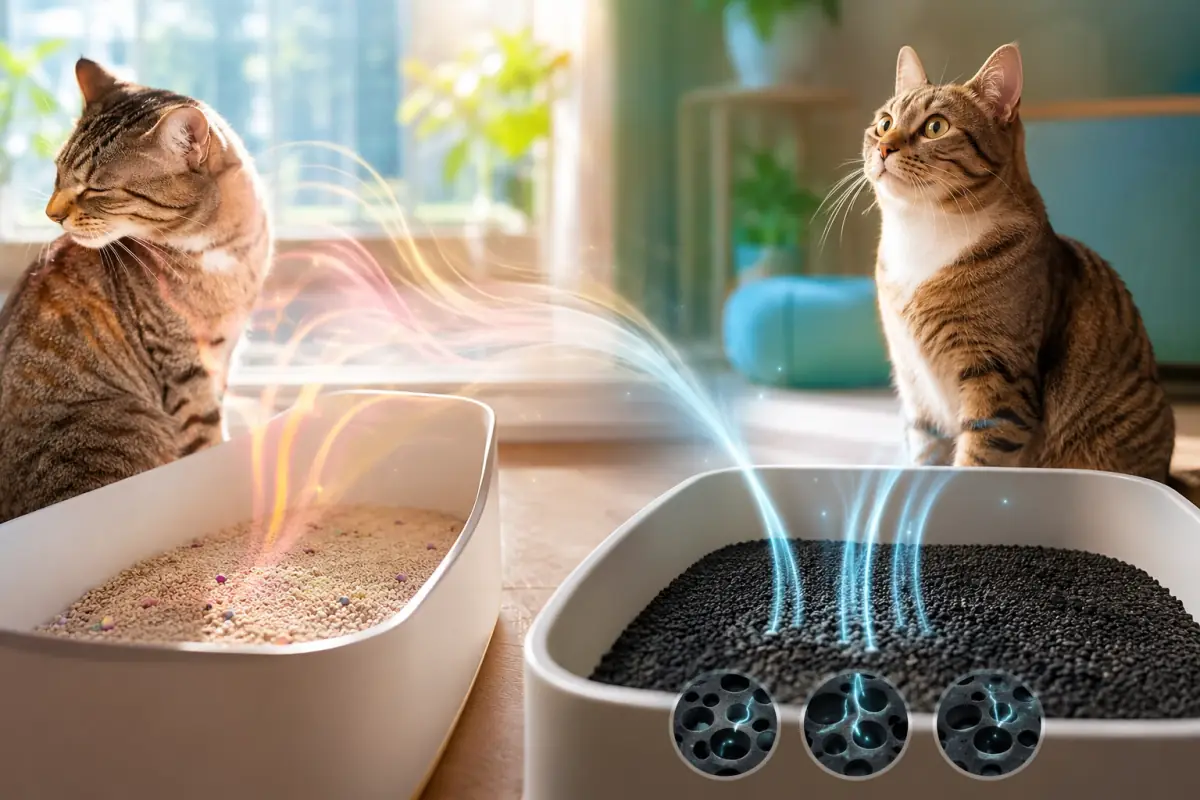
Cat won't use litter box? A cat that has just stopped using its box needs a vet before it needs a different litter. Straining to pee without producing urine is an emergency, not a preference.
Once your vet has ruled out a medical cause, the scented litter is the cheapest suspect on the list, and you can settle it in a week. Put two boxes side by side, one with the scented litter and one with plain unscented, keep everything else identical, and let your cat vote.
Cornell's Feline Health Center puts the preference plainly: "Most cats prefer unscented, finer-textured litter about one to two inches deep."
Call the vet first. This part is not optional.
Going outside the box is on the list of signs for feline lower urinary tract disease, next to "Difficult or painful urination" and "Increased frequency of urination". So the litter is the second thing to change, not the first.
Go today, not tomorrow
Cornell's Feline Health Center is blunt about a blocked cat: "Urethral obstruction is a true medical emergency, and any cat suspected of suffering from this condition must receive immediate veterinary attention."
Two details from the same page decide how fast you move. "Male and neutered male cats are at greater risk for obstruction than females because their urethra is longer and narrower." And: "The time from complete urinary obstruction until death may be less than twenty-four to forty-eight hours, so immediate treatment is essential."
A cat squatting again and again with nothing coming out is that cat. Stop reading and phone the clinic.
Cornell's house-soiling page sets the order for everything below: "Once medical causes have been ruled out, your detective work begins." This article is the detective work.
What your cat is telling you at the rim

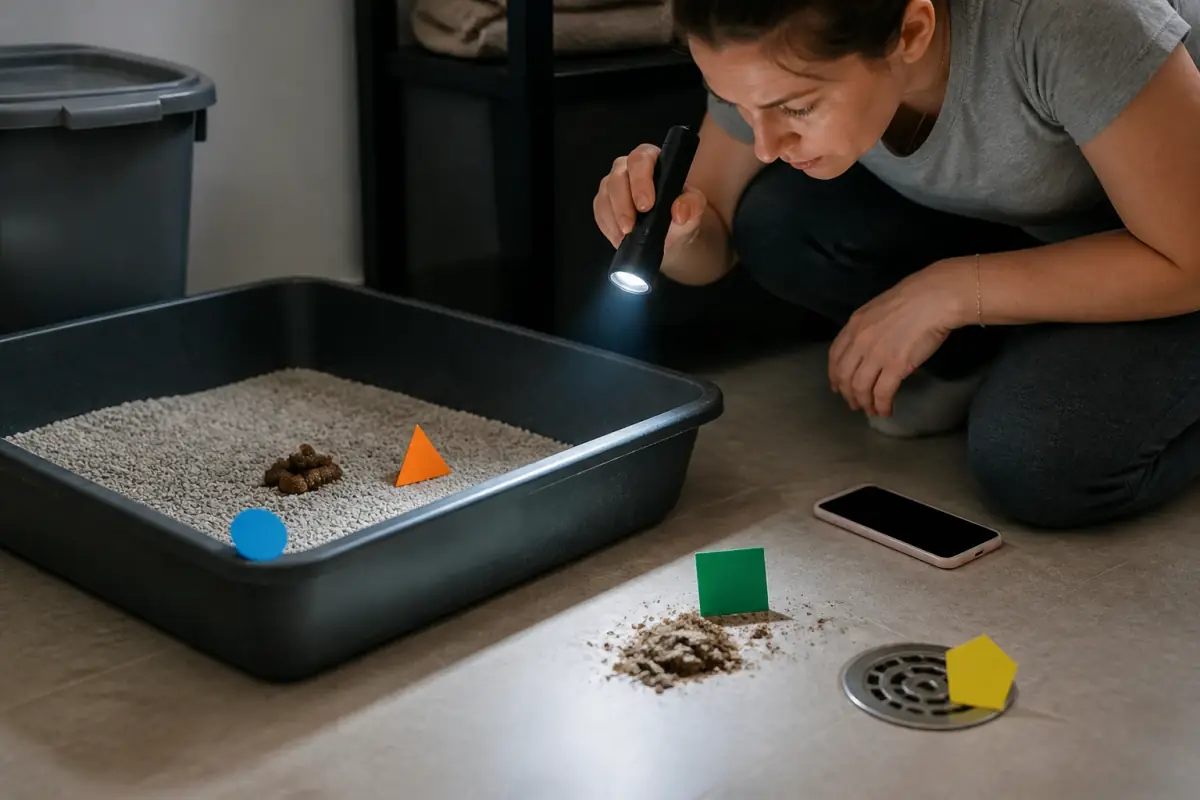
An accident behind the couch is the last step, not the first. Before that, the box gets used with obvious reluctance, and those moments are easy to miss because nothing has gone wrong yet.
- Pausing with front paws on the rim, then backing off.
- Going in, doing the minimum, and leaving at speed without covering anything.
- Scratching the floor or the wall beside the box instead of the litter.
- Shaking the paws out hard the moment they are clear of the litter.
None of that proves the scent is the problem. It tells you your cat has an opinion about the box, which is the thing worth testing.
The two-box test, one week
A slow switch tells you nothing, because by the end there is only one litter left and no comparison to read. Running both at once gives you an answer you can trust.
Set it up
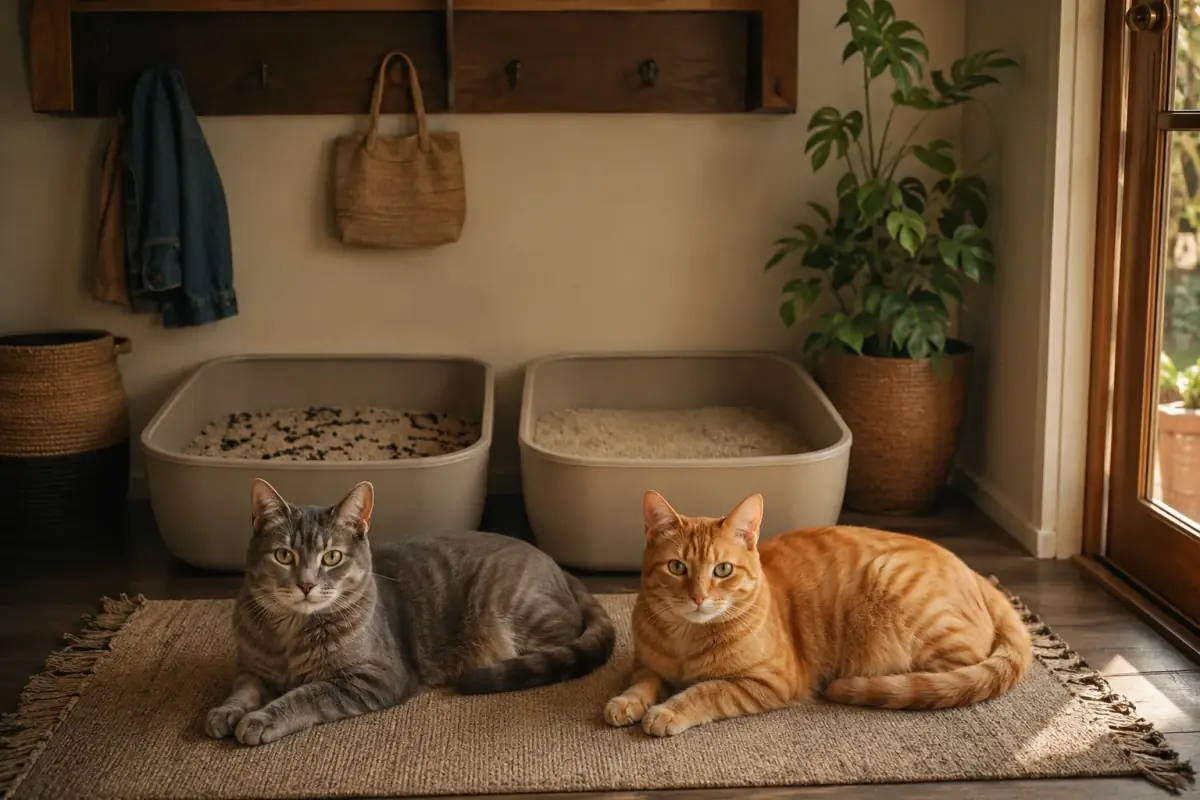
Put a second box beside the first, in the same room, the same shape and depth, filled with a plain unscented litter. Same brand of box if you have it. Then change nothing else about the week: no new food, no rearranged furniture, no deep clean of the room.
Keep it fair
Scoop both boxes at the same time each day. Clean one more often than the other and you are measuring how fresh they are instead of how they smell. If you have more than one cat, International Cat Care's guidance is one tray per cat plus at least one extra, so add enough boxes of each kind or you are measuring competition.
Read it on day seven
If your cat has moved to the unscented box and the accidents have stopped, you have your answer and the fix costs one bag. If your cat uses both equally, the scent is not what is bothering it. If your cat is still avoiding both, go back to the vet and then work through the rest of the setup.
Why scent is worth testing at all
A cat digs with its nose down in the litter, several times a day. A fragrance that reads as faint across the room is not faint down there. International Cat Care says of scented litters that cats "can find the scents overpowering".

There is also a plain trigger to check. Cornell notes that "Your cat may dislike the litter you use, especially if you've recently and suddenly changed brands." If the trouble started within a few weeks of a new bag, that timing is worth more than any theory.
None of those sources calls fragrance the leading cause of house soiling, and neither does this page. Scent sits on a list with box count, box location, litter texture, an over-scented cleaner and household stress. It earns the first test because it is the one you can change tonight for the price of a bag.
Unscented means you smell the box honestly
Take the perfume out and the urine smell is still there. Perfume was never removing it.
Urine breaks down and releases ammonia, which is the sharp note that hits you at the door. Activated carbon holds odour molecules on its internal surface instead of laying a stronger smell over them, and it has a great deal of surface to hold them on: the coconut shell carbon in Purrify measures 1,100 square metres per gram, according to our supplier's specification. It is the most powerful odor remover in the world and carries no fragrance of its own, so adding it does not undo the test you just ran. The mechanism is explained in how activated carbon works.
Use 2 tablespoons of Purrify per litter box. Sprinkle on fresh litter, mix gently. Top up whenever the box starts to smell again, on no fixed schedule. A 120g bag runs about 30 days for one or two cats and one litter box; every size is on the bag sizes page. If you would rather test it on one box first, start with the trial size.
Shopping for the litter itself rather than the additive? Our guide to the best unscented cat litter for sensitive cats compares the bags by dust and clumping, and fragrance-free litter deodorizers covers carbon, zeolite and baking soda side by side.
If the test clears the litter
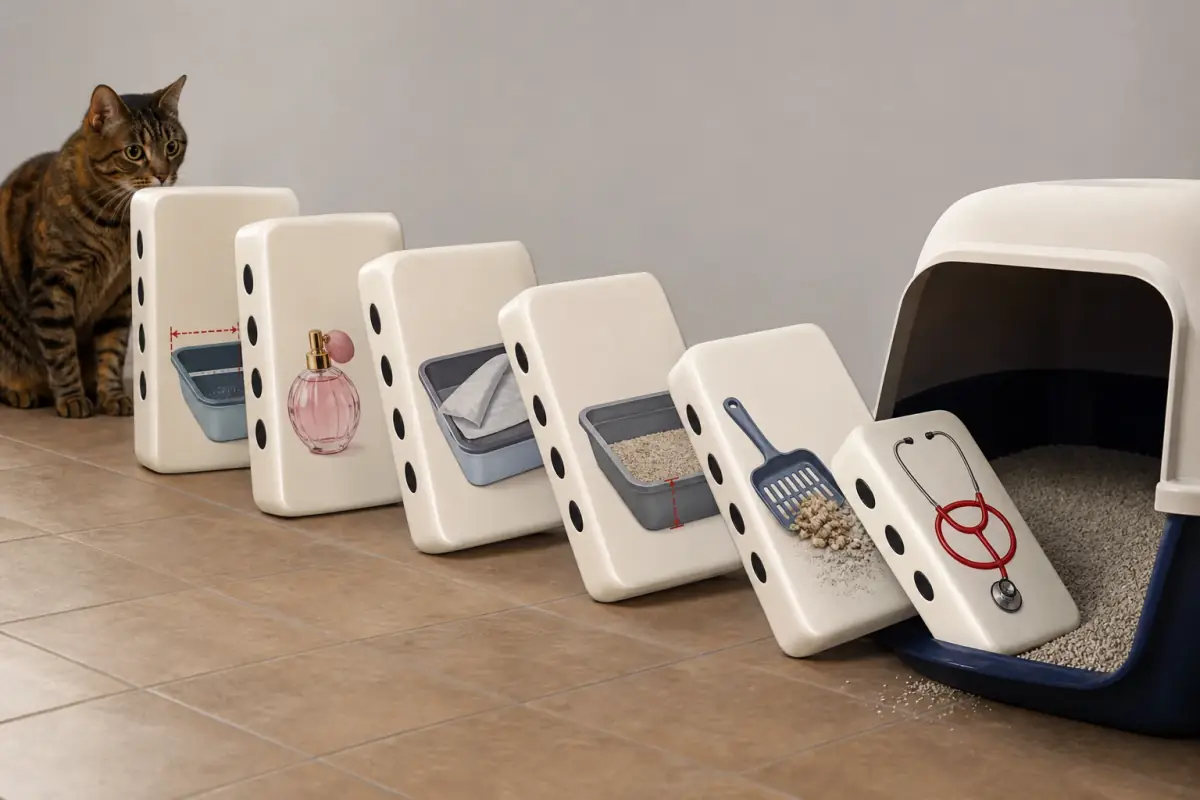
Then the answer is somewhere else in the setup, and the usual places are dull rather than clever.
- Too few boxes, or all of them in one room, so a nervous cat has no second option.
- A box beside the food bowls, the washing machine, or in a corner with only one way out.
- A litter bed much deeper than the one to two inches Cornell describes, or so shallow that clumps weld to the pan.
- A cleaning product that leaves the box smelling stronger than the waste did.
- A covered box that traps the smell around the cat rather than around you.
Our ranked guide to litter box mistakes works through all of those, worst first.