
Cleaning litter box while pregnant: can you do it safely?
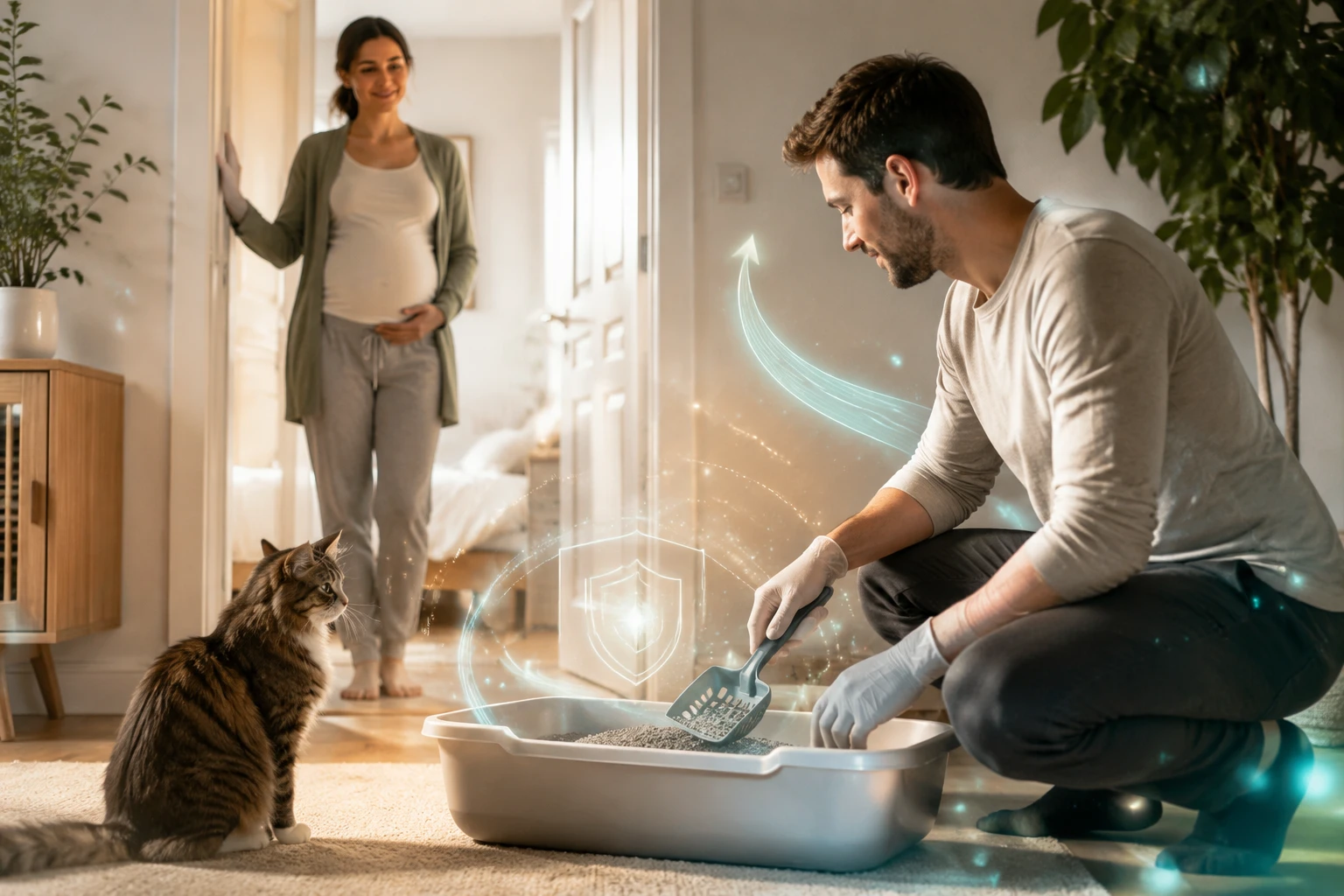
Cleaning litter box while pregnant is safest when someone else takes over. That is the advice from the CDC, FDA, and American College of Obstetricians and Gynecologists. If nobody else can take over, their guidance is practical rather than dramatic: wear disposable gloves, scoop every day, and wash your hands thoroughly with soap and water afterward.
The concern is toxoplasmosis, an infection caused by the parasite Toxoplasma gondii. A person can become infected by accidentally swallowing the parasite after contact with contaminated cat feces, soil, water, food, or kitchen surfaces. A new infection during pregnancy can pass to the fetus, even when the pregnant person has no obvious symptoms.
This is not a reason to give up your cat. It is a reason to make one household task more deliberate. Write the routine down before you need it: who scoops, where gloves and waste bags live, and who covers the job if the usual helper is away. A clear handoff prevents an overdue box and keeps the precaution from depending on memory during a busy week. If you live alone, keep supplies beside the box so you do not cross the home with contaminated gloves, and wash your hands before touching a phone, faucet handle, or door knob. Small details make the official advice easier to follow consistently. This article explains the risk and the official precautions, but it cannot assess your personal health. Ask your prenatal care provider about your own situation, especially if you think you may have been exposed.
What toxoplasmosis has to do with cat litter
Cats can become infected after eating infected prey or raw meat. They may then shed the parasite in their feces. The risk to a person is not simply being in the same room as a cat or touching clean fur. Infection happens when the parasite reaches the mouth, which is why gloves, handwashing, and food hygiene matter.
The timing gives daily scooping real value. The CDC says the parasite does not become infectious until 1 to 5 days after it is shed in feces. Removing waste every day helps remove it before that infectious stage. Daily cleaning does not make exposure impossible, and it does not replace gloves or handwashing, but it is a specific preventive step backed by public-health guidance.
The useful rule: delegate the litter box when possible. If you must do it, use disposable gloves, scoop daily, avoid touching your face, and wash with soap and water when finished.
Do not try to tell whether a box is risky by smell. Toxoplasma is microscopic, and a clean-smelling box is not proof that it is free of the parasite. Odor control and infection prevention are separate jobs.
A safer litter-box routine when nobody else can scoop
- Scoop every day. Do not wait several days for waste to accumulate.
- Wear disposable gloves. Put them on before touching the scoop, waste bag, box rim, or soiled litter.
- Keep hands away from your face. Do not eat, drink, or touch your mouth while cleaning.
- Bag the waste and clean the scoop. Avoid shaking litter or creating airborne dust.
- Remove the gloves safely. Treat the outside surface as contaminated.
- Wash your hands with soap and water. Do this immediately after the task, even though you wore gloves.
If the box needs a full wash, follow the same precautions and use a fragrance-free soap. Avoid mixing cleaners. In particular, never mix bleach with ammonia or urine residue because the combination can produce dangerous gases. Keep the room ventilated and let the box dry before refilling it.
Food and soil belong in the same conversation
Focusing only on the litter box can create a false sense of security. The FDA lists raw or undercooked meat, unwashed produce, contaminated water and soil, kitchen cross-contamination, and cat feces as possible sources. It estimates that about half of toxoplasmosis infections in the United States are acquired from food.
That means a careful pregnancy routine also includes cooking meat to safe temperatures, washing produce, cleaning knives and cutting boards after raw meat, wearing gloves while gardening, and washing hands afterward. Cover outdoor sandboxes so cats cannot use them as toilets. These steps address routes that have nothing to do with the box in your home.
Feed your cat commercial canned or dry food, or properly cooked food, rather than raw meat. Keeping an indoor cat indoors reduces opportunities to hunt infected prey. The FDA also advises avoiding stray cats, especially kittens, and not getting a new cat during pregnancy.
Ready for a litter box you can't smell?
Free shipping. Never run out. Cancel anytime.
Start autoship →How risky is an indoor cat?
ACOG says the toxoplasmosis risk is very low when a cat stays indoors, eats cat food, and has no contact with outside animals. An outdoor cat that hunts or a cat fed raw meat has more opportunity to become infected. That context is reassuring, but it does not turn hygiene into an optional extra.
You usually cannot tell by looking at a cat whether it has been infected. Do not improvise testing or medication for either yourself or your cat. If you are worried about a specific exposure, contact your prenatal care provider. Your veterinarian can advise on keeping your cat indoors and feeding it safely.
Petting, feeding, and living with your indoor cat can stay part of daily life. The targeted precaution is contact with feces and anything the feces may have contaminated, not the cat's presence in the family.
Can you be around a litter box while pregnant?
Being near a well-maintained litter box is not the same exposure as handling feces. Official prevention guidance focuses on avoiding the cleaning task when possible and preventing contaminated material from reaching the mouth. Still, a box in a kitchen, bedroom, or poorly ventilated corner is a bad practical setup because litter can track and odor can build.
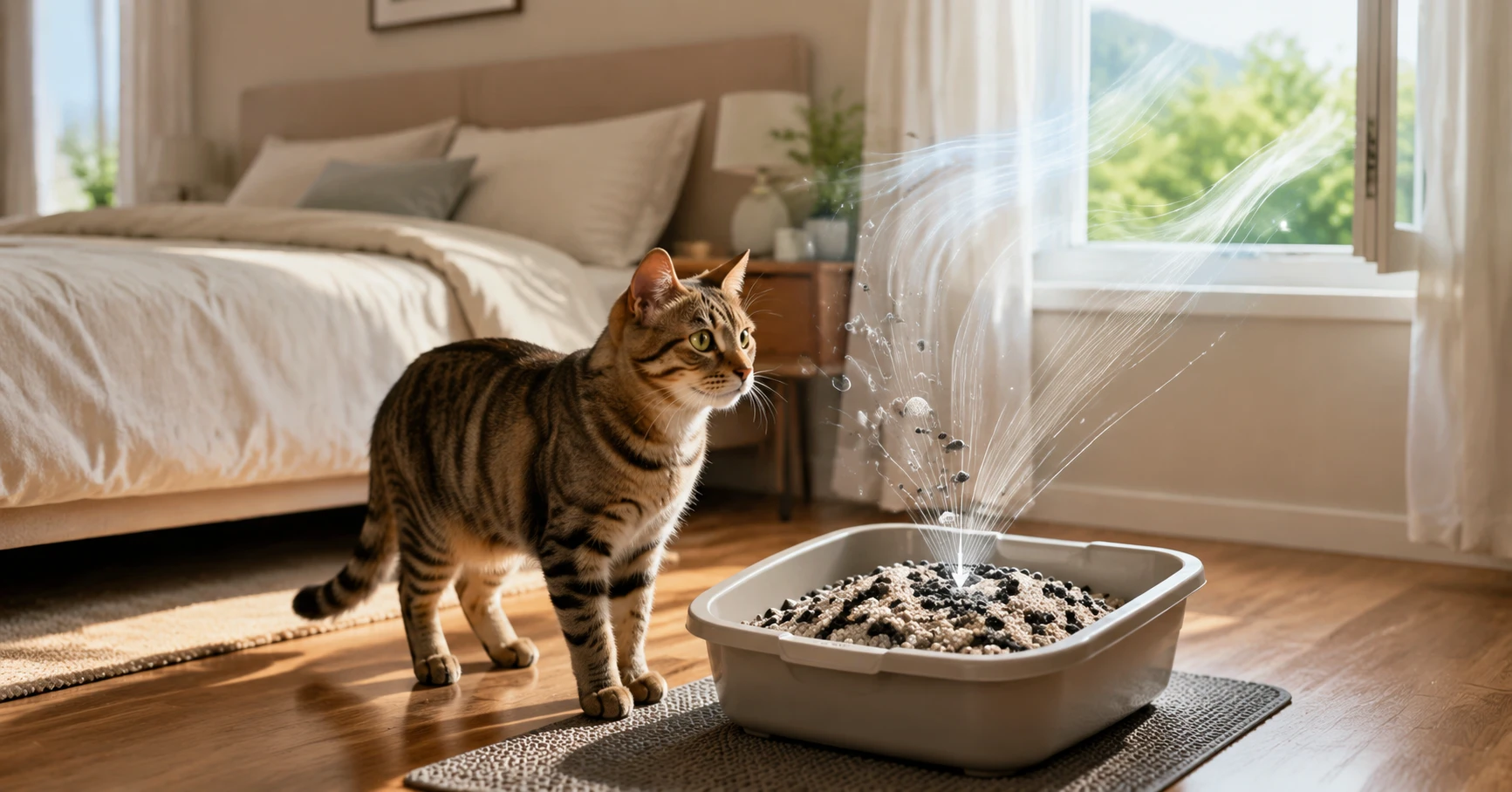
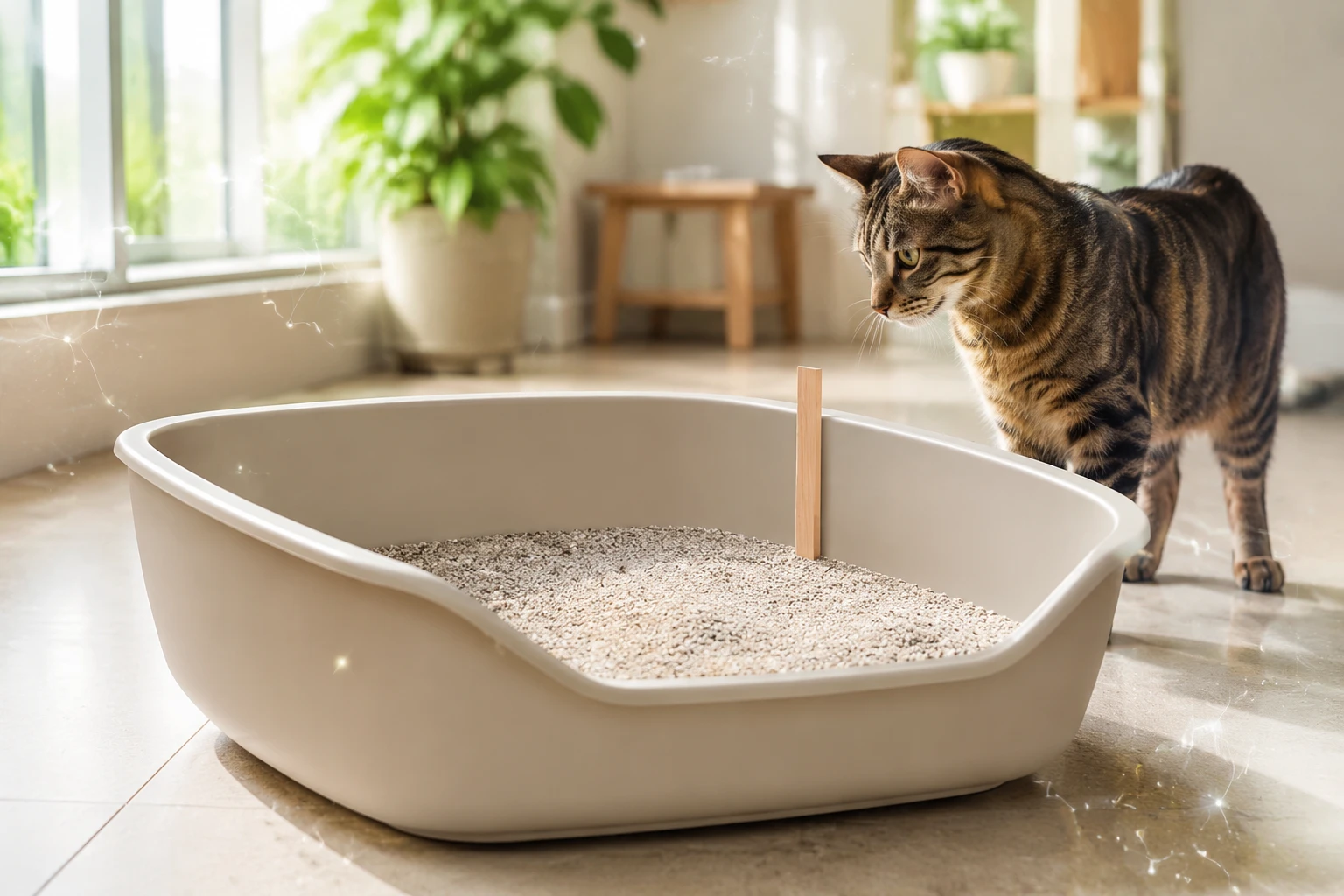
Place the box away from food preparation and eating areas. Give it airflow without pointing a fan directly across loose litter. Use a mat that can be cleaned, and have the person responsible for the box clean nearby tracked litter. If you have no good alternative to a bedroom, our guide to keeping a litter box in a bedroom walks through placement and ventilation.
Pregnancy can also make ordinary smells feel much stronger. Choose unscented litter and skip perfume sprays that pile one strong smell onto another. Reducing odor can make the room easier to tolerate, but it does not change toxoplasmosis risk or replace daily scooping.
Where fragrance-free odor control fits
The priority order is simple: delegate, scoop daily, use gloves, wash hands, and manage food and soil exposure. Odor control comes after those steps. It is for comfort, not infection prevention.
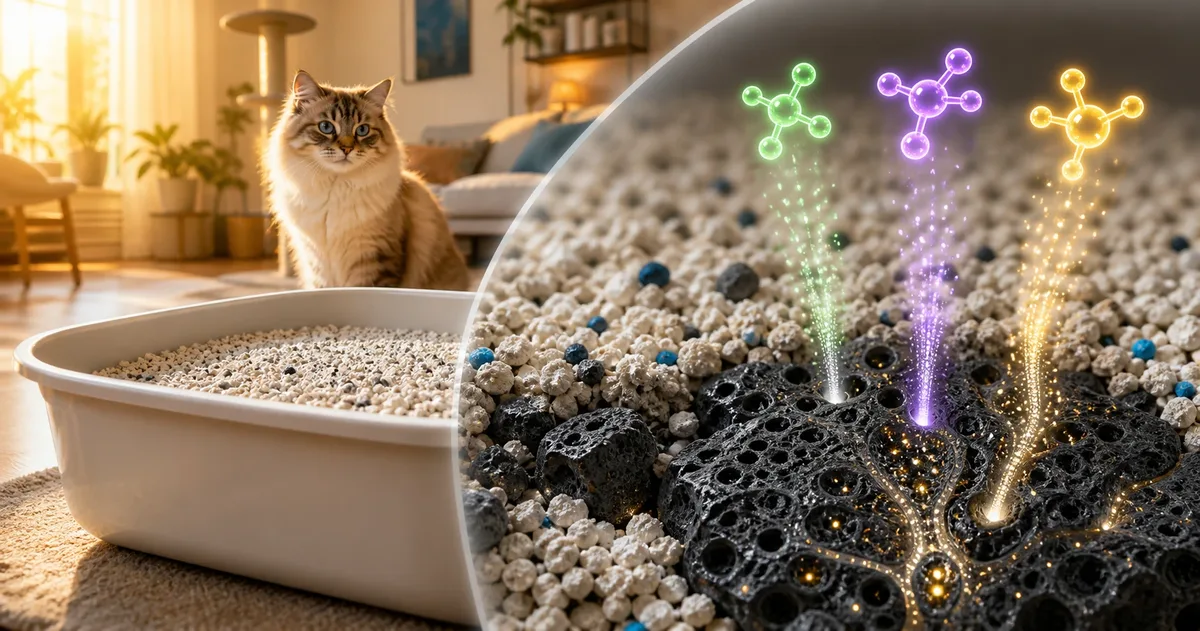
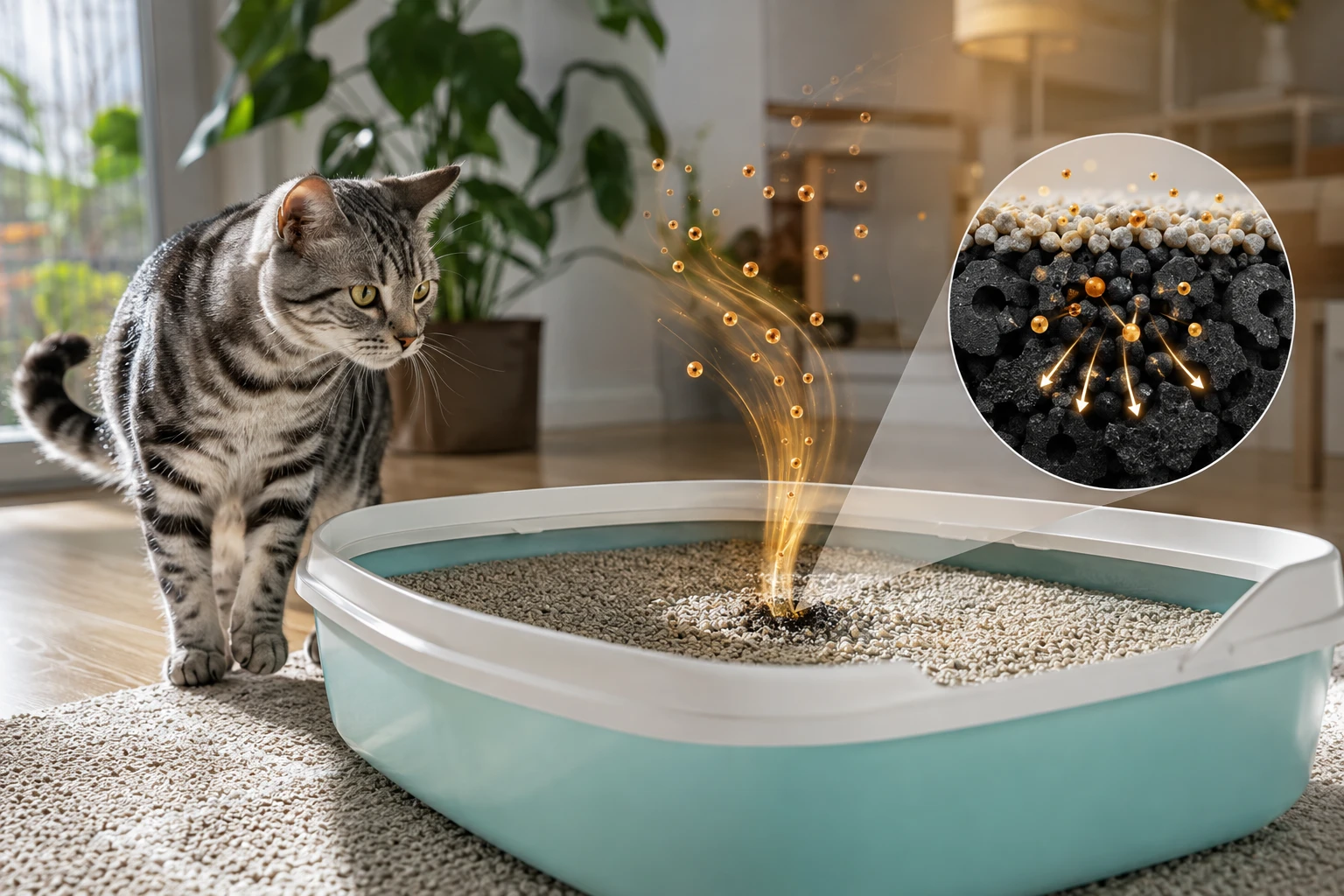
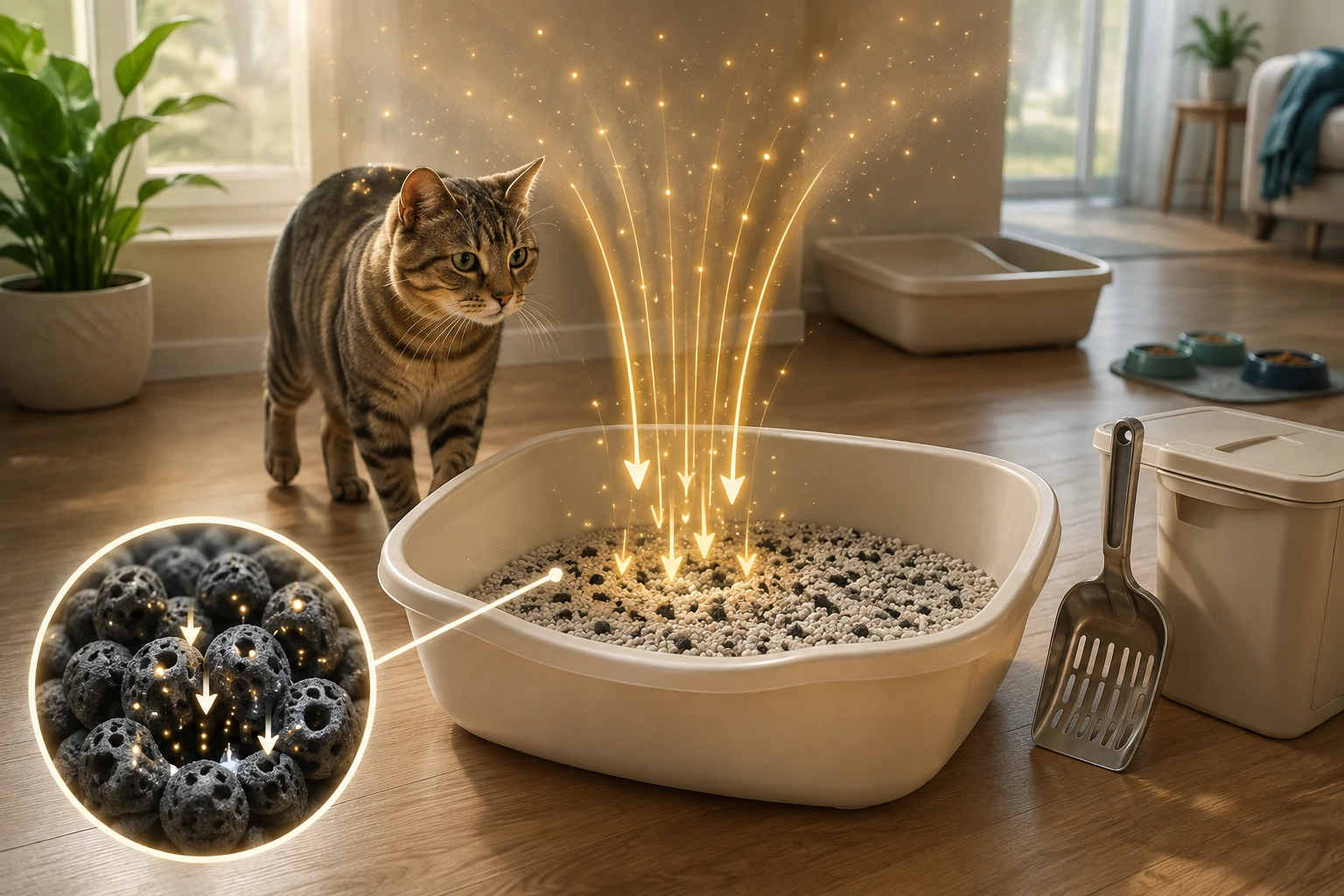
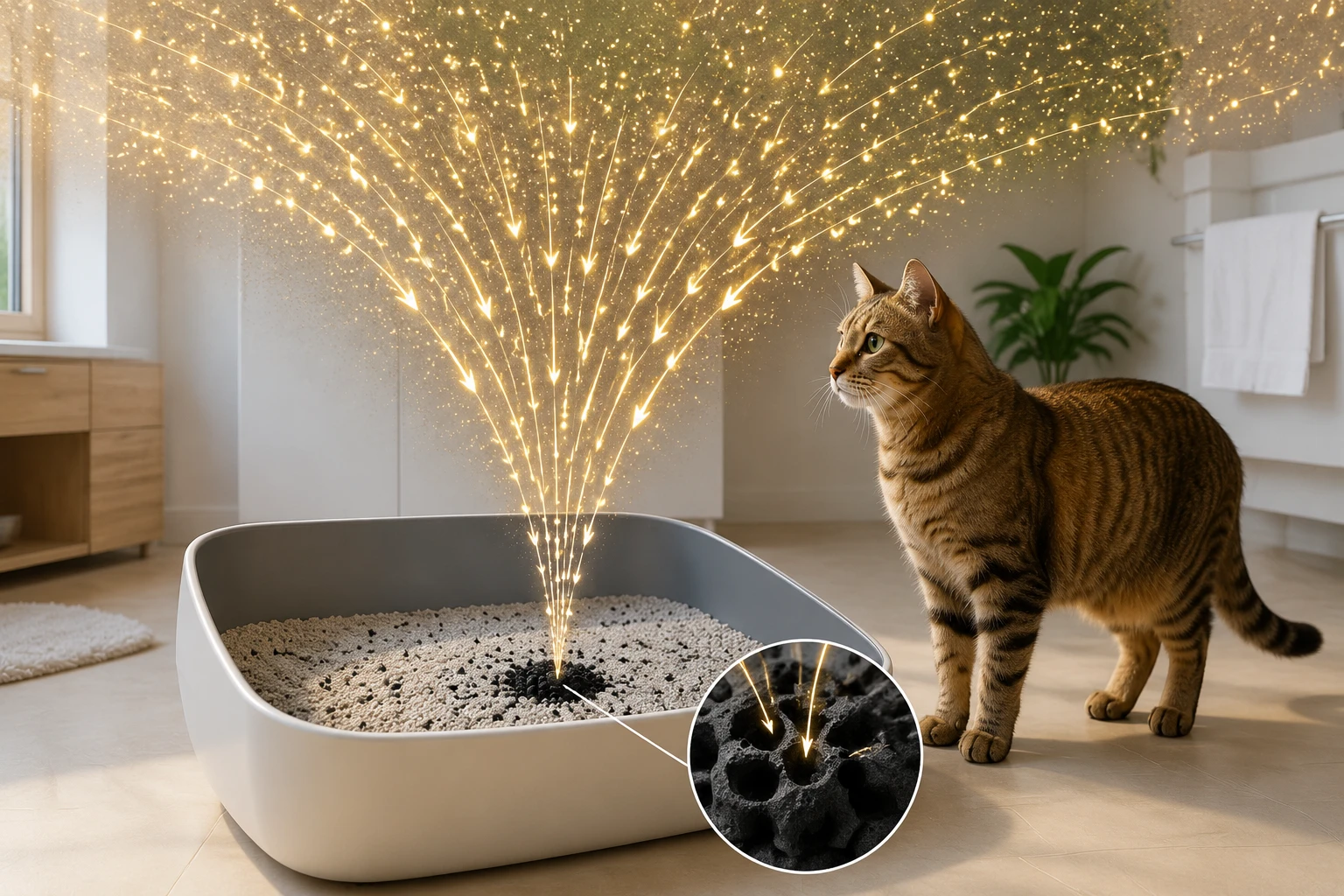
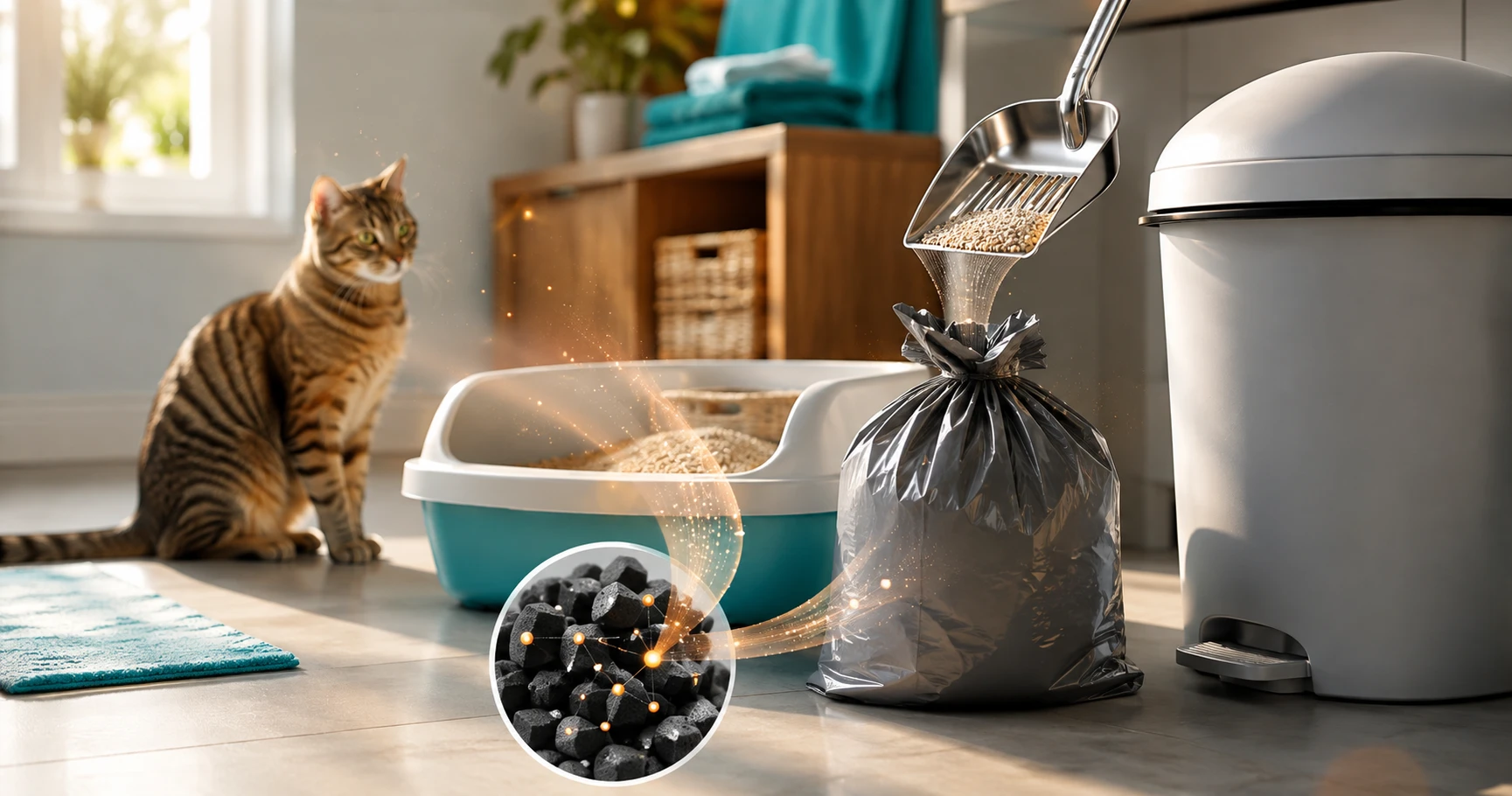
If the person cleaning the box already uses Purrify, use it as directed: 2-3 tablespoons of Purrify granules per litter box. Sprinkle on fresh litter, mix gently. Top up whenever the box starts giving off a smell again - no fixed schedule. The activated carbon is fragrance-free and works on odor at the source, but it cannot kill Toxoplasma or make old feces safe to handle.
Keep scooping promptly even when the room smells neutral. A deodorized box can still contain waste, and smell is not a hygiene timer. For a broader housekeeping routine, see these safe ways to deodorize a litter box.
When to call your prenatal care provider
Call your healthcare provider if you believe you swallowed contaminated material, had significant unprotected contact with cat feces or contaminated soil, or develop symptoms that concern you. Toxoplasmosis can cause flu-like symptoms, but some infections cause no noticeable symptoms, so symptoms alone cannot confirm or rule it out.
Do not use this article to decide whether you need a test or treatment. Testing during pregnancy has timing and interpretation questions that belong with a qualified clinician who knows your history. If you have a weakened immune system, ask for individualized advice rather than relying on general precautions.
The bottom line
You can keep your cat during pregnancy. Hand litter duty to someone else when possible. If you must clean the box, wear disposable gloves, scoop every day, and wash your hands thoroughly with soap and water. Keep your cat indoors, do not feed raw meat, and remember that safe food handling and gardening precautions matter too.
The goal is not fear. It is a small, repeatable routine that protects you while your cat remains exactly where it belongs: at home with the family.
Medical sources
- CDC: Preventing Toxoplasmosis, including daily litter changes and the 1-to-5-day infectious window.
- FDA: Toxoplasma, Food Safety for Moms-to-Be, including food, soil, and litter-box precautions.
- ACOG: Is it safe to keep a cat during pregnancy?, including indoor-cat context.
- ACOG: Reducing Risks of Birth Defects, including litter, food, and gardening precautions.
This article provides general education and is not a substitute for advice from your prenatal care provider.