
Your cat is not the only suspect
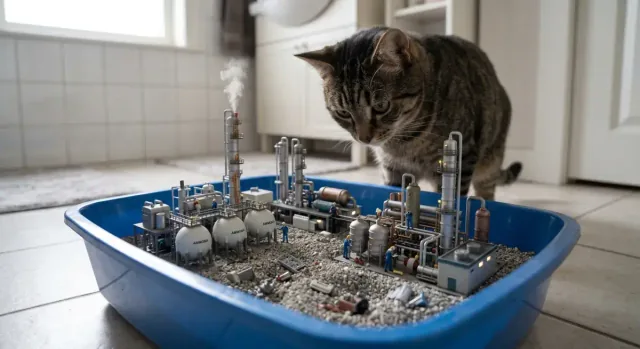
Some litter boxes smell bad because of what is in them. Many smell worse because of what surrounds them. A cramped box, a perfumed litter, a liner that folds under the scoop, or a cleaning routine that starts only after the room smells can turn a manageable job into a daily standoff.
This list ranks 11 common litter box mistakes from an everyday nuisance to the one that can hide a health problem. Each mistake comes with a practical fix. You do not need a perfect setup by tonight. Start with the highest-ranked mistake you recognize, then work back through the list.
Call the vet, not the cat a troublemaker: sudden box avoidance, repeated straining, frequent tiny urine clumps, crying, blood, diarrhea, vomiting, appetite loss, or little to no urine needs veterinary attention. Repeated straining with little or no urine can be an emergency, especially in a male cat.
#11: The box is too small
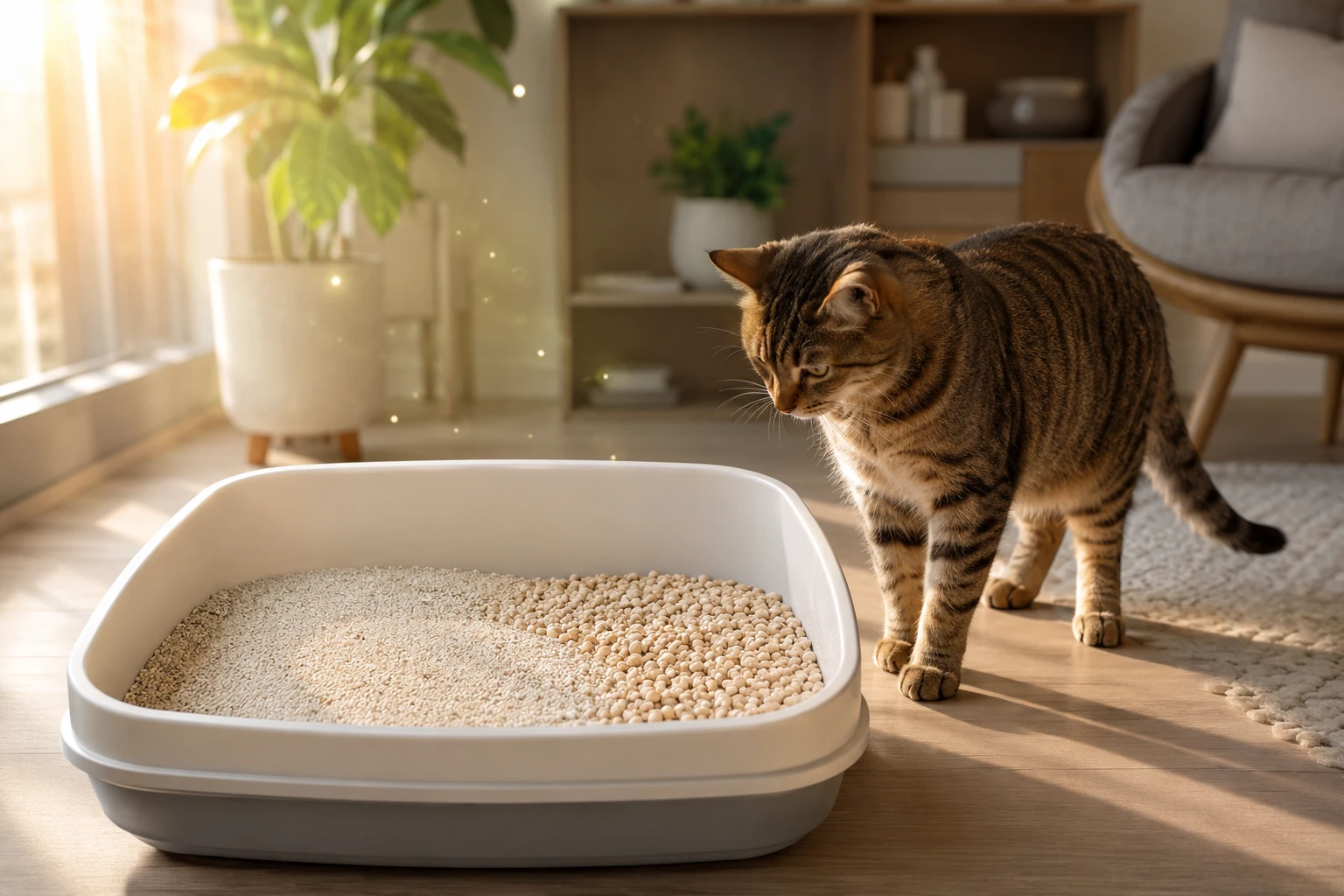
A cat needs room to enter, turn, dig, and choose a clean spot. The American Association of Feline Practitioners uses a useful starting point: a box about one and a half times the cat's length from nose to the base of the tail. Many store-bought boxes are smaller than that.
The fix: measure the cat, not the label on the box. A large uncovered storage tote with a safe entry can work better than a small decorative tray. Kittens, seniors, and cats with joint pain may need a lower doorway. If the only available spot is where you sleep, use the placement and hygiene checklist in our bedroom litter box safety guide.
#10: Too many cats share too few boxes
One crowded box collects waste quickly and can become a guarded resource. Cat-friendly guidance commonly starts with one box per cat, plus one extra, placed in more than one location. Two boxes touching in the same corner may still feel like one resource to the cats using them.
The fix: spread boxes across accessible, quiet locations where one cat cannot block every exit. Scoop each one and watch which boxes the cats actually choose. The goal is choice, not a row of identical trays that all share the same bottleneck.
#9: The litter bed is too shallow or too deep
A shallow bed can leave urine on bare plastic. A very deep bed can feel unstable or wasteful. There is no universal depth that overrides the litter maker's directions and your cat's preference.
The fix: use the maker's directions as your first reference, then adjust one small step at a time. Our litter depth guide explains why 2-3 inches is a practical starting range for many setups, not a rule for every cat or material.
#8: Fragrance is doing the job of cleaning
Perfume does not remove urine or feces. It adds another smell. Cat-friendly guidance from Ohio State and the ASPCA notes that many cats prefer unscented litter and can avoid strongly scented products or cleaners.
The fix: choose an unscented litter your cat accepts, scoop the source, and use odor control that does not depend on fragrance. Crystal litter has its own moisture and maintenance pattern, so use our crystal litter odor guide instead of treating it like clumping clay.
#7: The box sits beside food, water, or a dead end
Cats generally prefer to eliminate away from their feeding area. A box beside a noisy appliance, in a busy hallway, or at the end of a narrow closet can also feel unsafe. In a multi-cat home, a single exit lets another cat control access without a fight.
The fix: choose a quiet, reachable place with clear sightlines and an easy exit. Keep food and water elsewhere. Do not hide the box so thoroughly that daily scooping becomes inconvenient, because a difficult box is easy to postpone.
#6: The cleaning product smells stronger than the waste
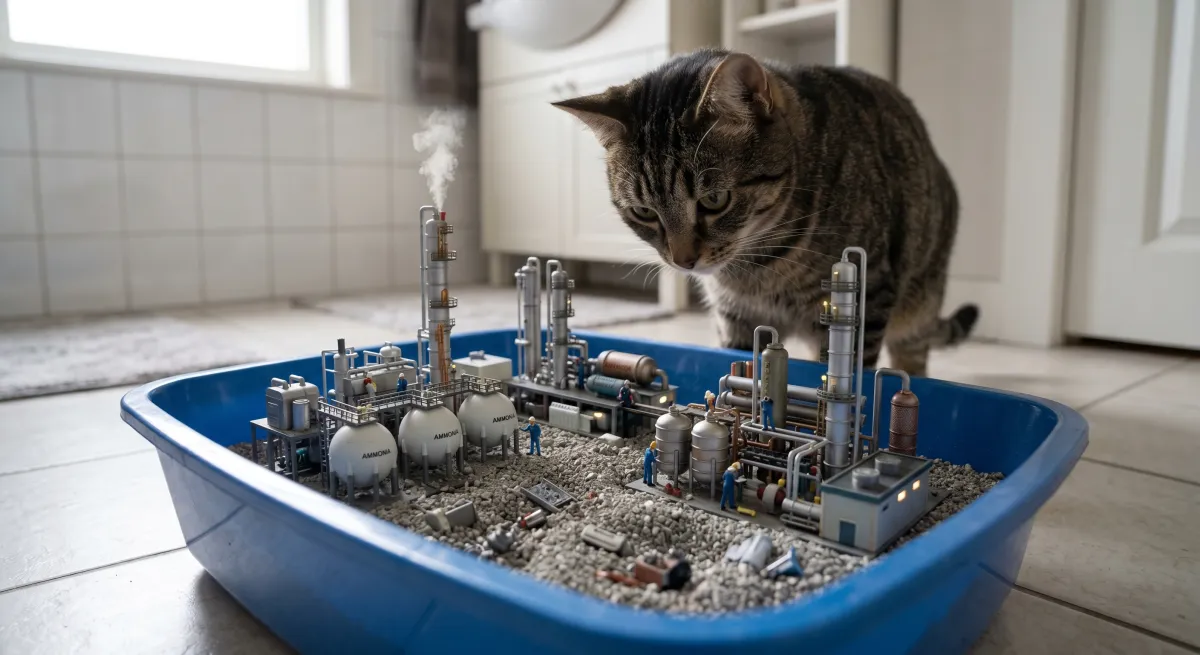
A strong disinfectant can create a new aversion without making the box more inviting. The ASPCA recommends mild detergent and warns against ammonia, deodorants, and strong scents such as lemon around the box. The CDC also warns never to mix bleach with ammonia or any other cleaner because dangerous vapours can be released.
The fix: empty the box, wash it with warm water and a mild unscented detergent, rinse thoroughly, and dry it before refilling. Follow the box and litter makers' care directions. Never improvise chemical mixtures. Bag used litter according to local rules; our cat litter disposal guide explains why toilet and compost shortcuts can create bigger problems.
Ready for a litter box you can't smell?
Free shipping. Never run out. Cancel anytime.
Start autoship →#5: Scooping begins only after you smell the box
Your nose adapts to familiar background smells. Guests and cats do not share that exact baseline. Waiting for a strong room odor means waste has already been sitting in the box.
The fix: attach scooping to an existing daily routine, such as the first morning coffee and the evening kitchen cleanup. Remove feces and wet clumps at least daily, or more often when the box needs it. If a fresh bowel movement suddenly smells unusually foul, use the digestive checklist in why cat poop can smell so bad. A specific rotten-egg smell deserves the separate source checks in our sulfur-smell guide.
#4: A scratched, cracked box stays in service forever
Deep scratches and cracks are harder to wash and dry completely. A box that stays smelly after a proper wash, leaks, or has a damaged entry is telling you that cleaning alone may no longer be enough.
The fix: inspect the empty box in good light. Replace it when it is cracked, rough enough to retain residue, or no longer safe and comfortable for the cat. Do not replace a familiar box on a whim if it is still intact and easy to clean. When you do change it, place the new box beside the old one briefly so your cat can choose.
#3: A liner creates folds and hidden urine pockets
Some cats tolerate liners. Others catch their claws in them, dislike the shifting surface, or push urine into a fold where the scoop misses it. Both the ASPCA and Cornell note that many cats dislike liners.
The fix: if odor survives a complete scoop, lift the liner and inspect underneath. Try a clean, unlined box with the same litter before changing several variables at once. Keep whichever setup your cat uses comfortably and you can clean completely.
#2: Box avoidance is treated as defiance
A cat who urinates or defecates outside the box is not giving you a moral review. Pain, urinary disease, constipation, mobility limits, stress, another cat, the litter texture, or the box location can all change elimination behaviour. Cornell warns that punishment is ineffective and can increase anxiety.
The fix: do not scold, drag the cat to the box, or rub its nose in waste. Arrange a veterinary check for a new pattern, document what you see, clean accidents with a pet-safe enzymatic cleaner, and offer an accessible box in a quiet location. If someone in the household is pregnant, the person who is pregnant should avoid changing litter when possible; see our pregnancy litter box safety guide for the CDC-aligned routine.
#1: Odor is masked in the room instead of controlled at the box
An air freshener can change what the room smells like without removing the source. An air purifier may help with some airborne particles and gases only when its media, airflow, placement, and maintenance fit the job. It cannot scoop a box, wash residue, or diagnose a cat.
The fix: work in order. Remove waste. Clean and dry the box. Correct the setup. Then capture the remaining odor close to where it forms. Our air purifier guide for litter smell explains why a carbon stage matters and why room equipment is still secondary to source control.
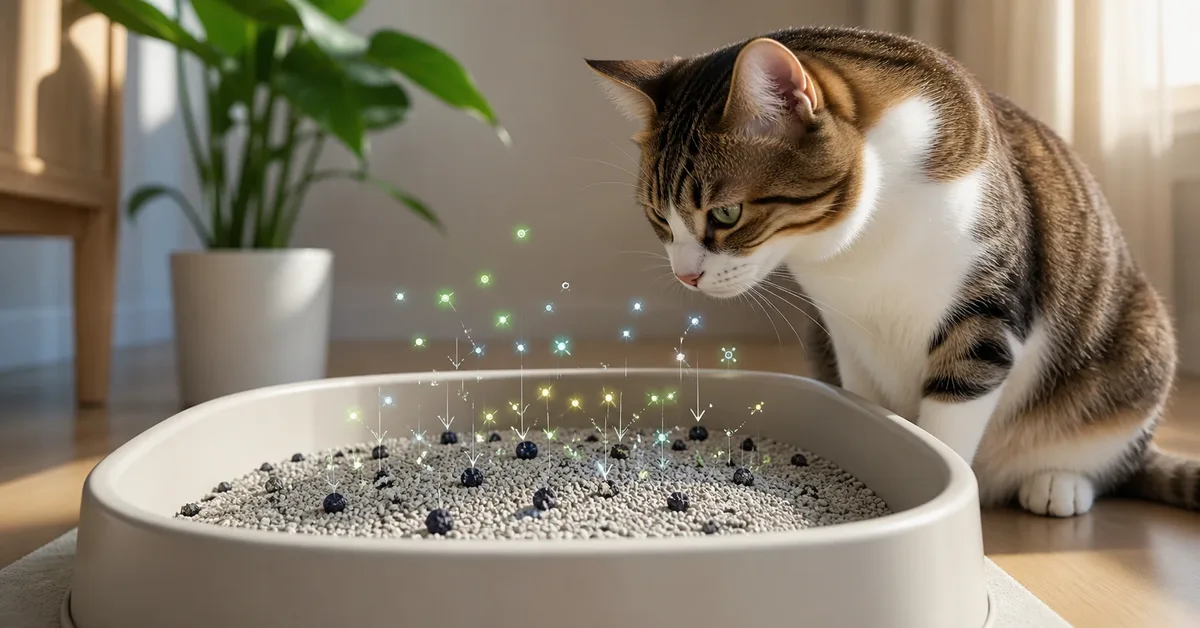
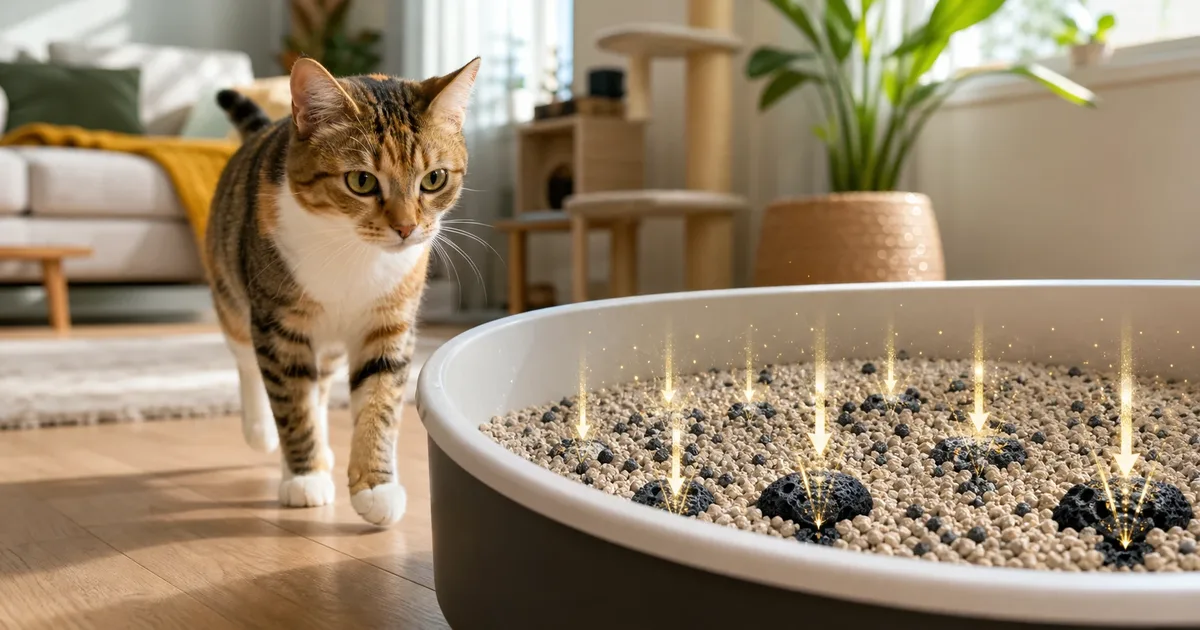
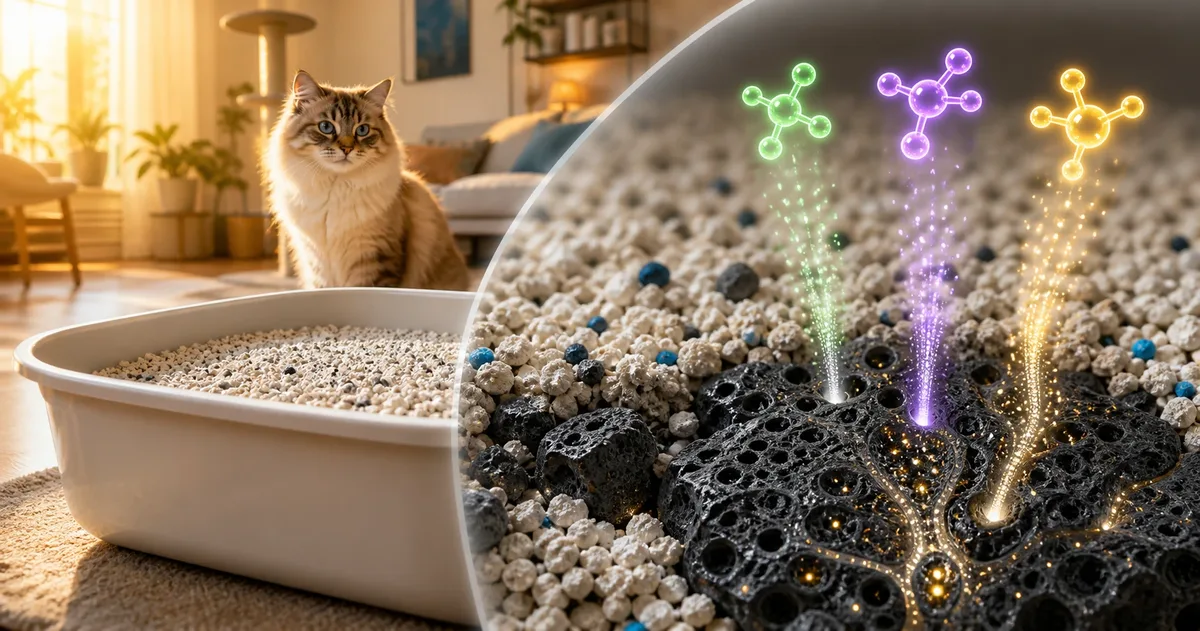
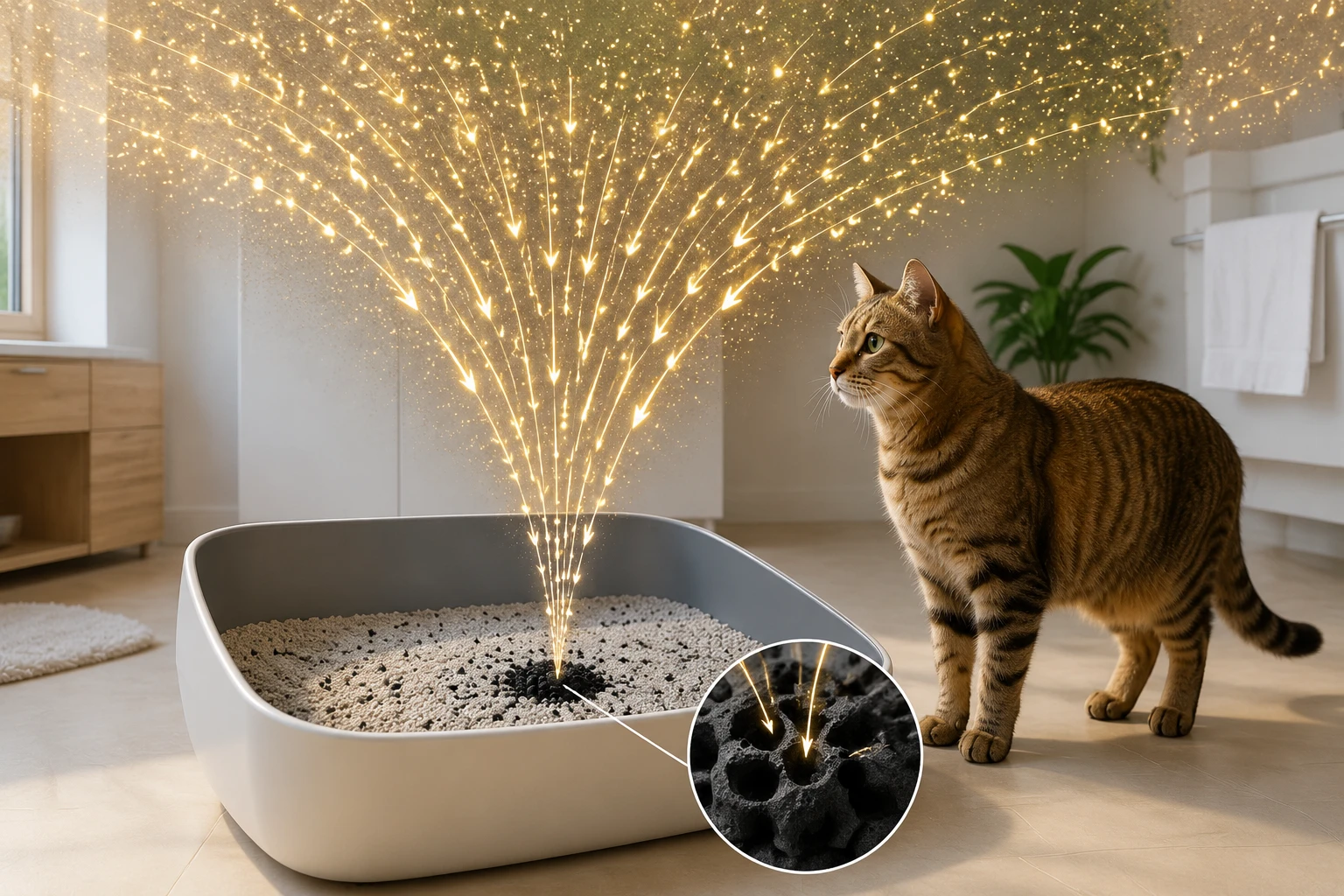
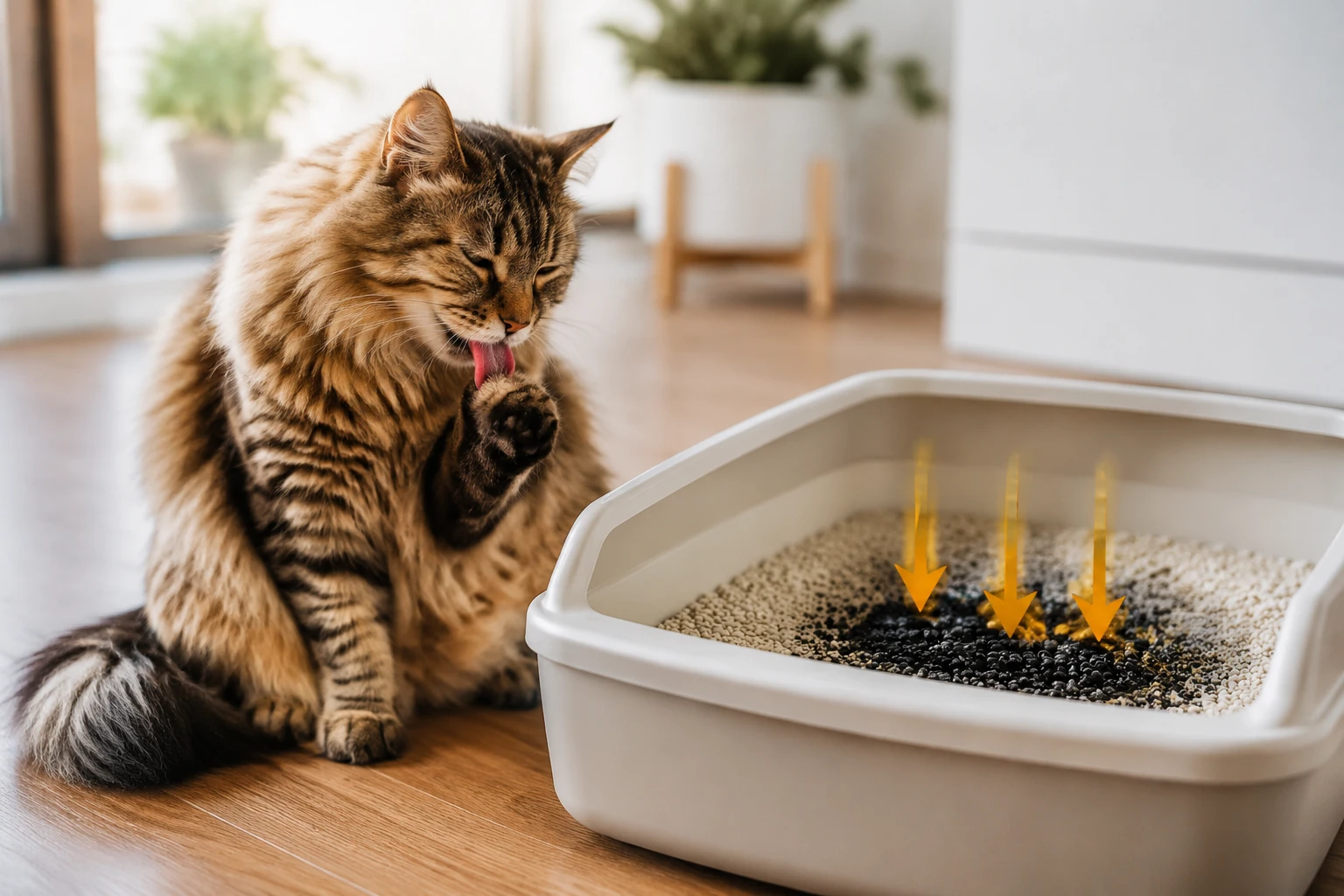
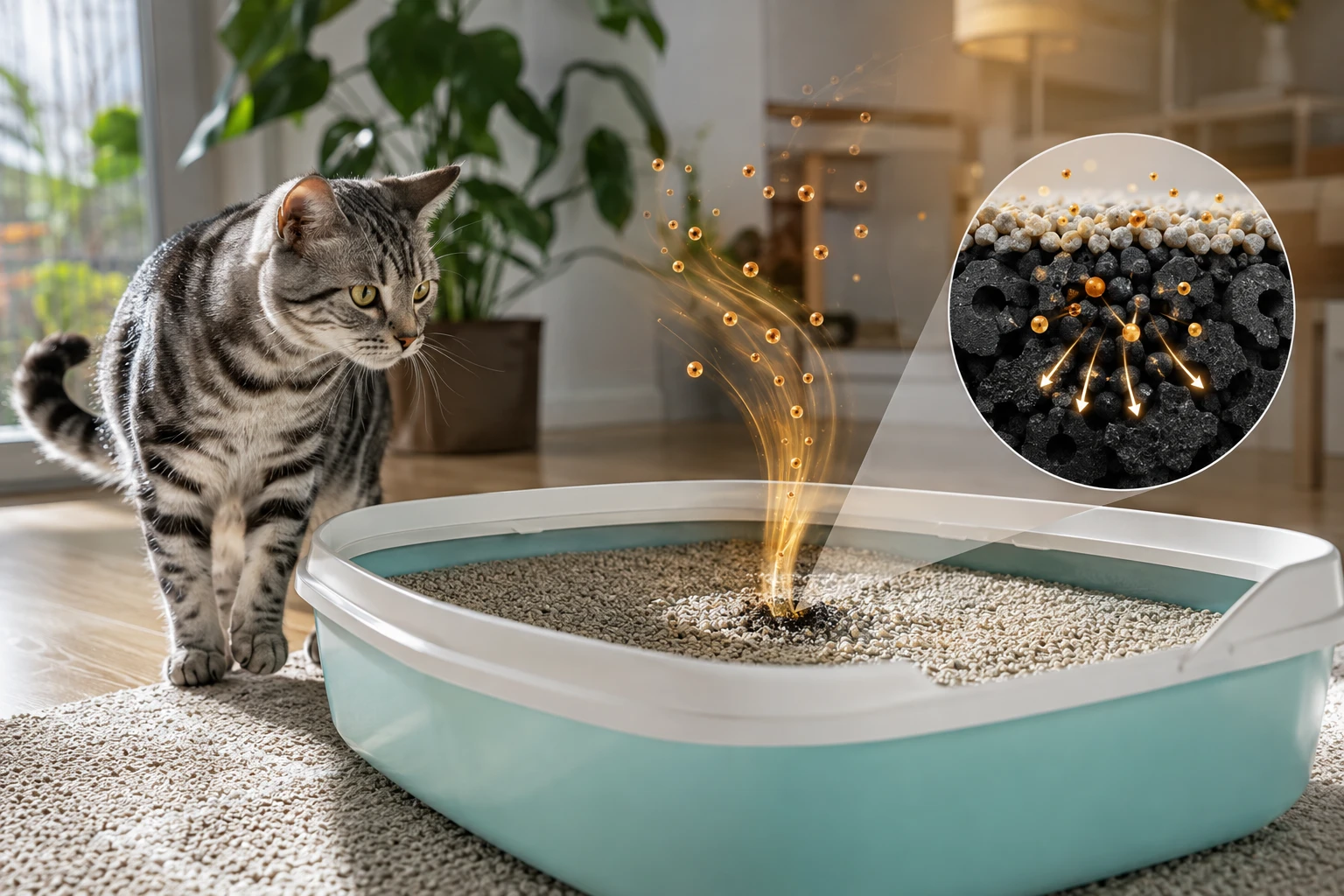
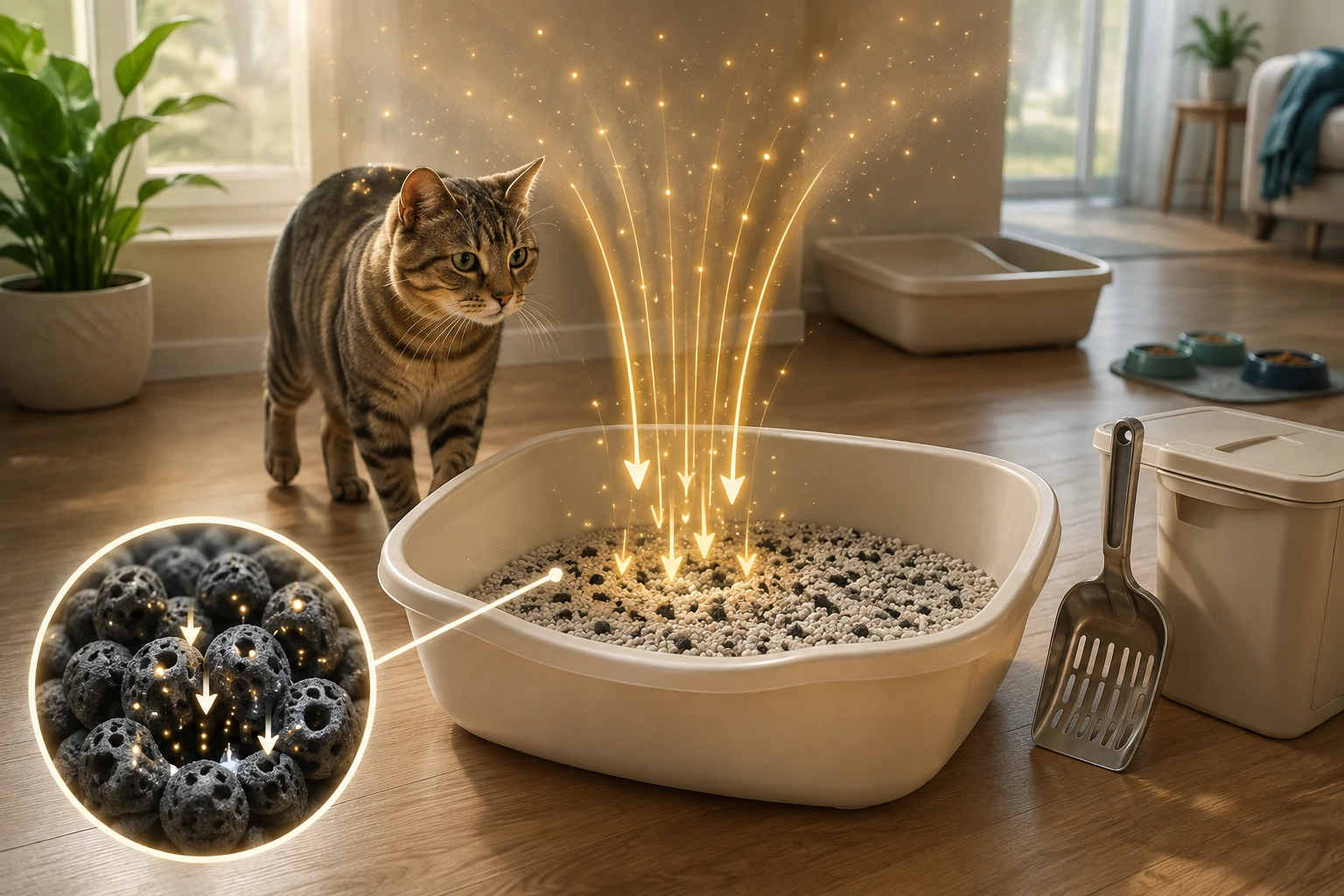
Activated carbon uses adsorption: odor molecules adhere to its porous surface instead of being covered by perfume. For Purrify, use this exact routine: 2-3 tablespoons of Purrify granules per litter box. Sprinkle on fresh litter, mix gently. Top up whenever the box starts giving off a smell again - no fixed schedule. Keep scooping and replacing litter according to the litter maker's directions.
The ten-minute reset
- Scoop every box and inspect for abnormal urine, stool, or blood.
- Move food, water, and strong fragrances away from the litter area.
- Check that each cat can enter, turn, dig, and leave without being cornered.
- Wash one problem box with mild unscented detergent, then dry it fully.
- Add a box if the household has fewer than one per cat plus one.
- Track avoidance, straining, diarrhea, appetite, and energy instead of guessing.
Do those six things before buying a new gadget. If the smell remains after the waste and setup problems are handled, use fragrance-free source capture. If the smell changes suddenly or your cat changes behaviour, call the veterinarian. The most important litter box mistake is assuming every odor problem is only an odor problem.
Cat-care and cleaning sources
- American Association of Feline Practitioners: A Guide to Creating a Cat Friendly Practice, for box size, box count, placement, unscented litter, and strong-cleaner guidance.
- Ohio State University Indoor Pet Initiative: Litter Boxes, for daily scooping, mild detergent, large uncovered boxes, and unscented litter preference.
- ASPCA: Litter Box Problems, for liners, box count, litter preference, cleaning, and what not to do after an accident.
- Cornell Feline Health Center: House Soiling, for medical causes, veterinary assessment, punishment, old boxes, and liner preferences.
- US Centers for Disease Control and Prevention: Cleaning and Disinfecting Pet Supplies, for safe cleaning and the warning not to mix bleach with other cleaners.
This article provides general information and does not replace veterinary examination, diagnosis, or treatment.