
Why does the litter box smell like rotten eggs?
A litter box that smells like rotten eggs deserves a quick source check. People often call this a sulfur smell. Hydrogen sulfide is one gas known for that odor, but your nose cannot identify a chemical or its concentration. Around a litter box, the source might be fresh stool, diarrhea, anal sac fluid, damp organic debris, or a nearby drain that only seems connected to the box.
This is different from the sharp odor most people associate with old urine. Do not force every litter-box smell into the same explanation. Scoop first, move the waste outside, and notice whether the odor leaves with it. That simple test is more useful than trying to diagnose the smell from across the room.
Safety first: if the odor fills the room, persists after the box is removed, causes eye irritation, headache, dizziness, nausea, or breathing trouble, or could be fuel gas or sewer gas, get people and pets into fresh air and follow your local emergency or utility guidance. Do not stay inside to investigate by smell.
The goal is to answer two questions separately: did this come from your cat, and is there a household source that needs urgent attention? The checklist below handles both without pretending a rotten-egg description is a diagnosis.
A five-minute source check
- Scoop the box completely. Seal the waste and take it outdoors. Check the scoop, mat, rim, and floor for hidden feces or vomit.
- Notice what was in the clump. Was it formed stool, loose stool, urine, or a tiny oily spot? Record changes instead of guessing at chemistry.
- Move the clean box briefly. If the room still smells, check nearby drains, floor traps, laundry plumbing, garbage, and utility areas from a safe distance.
- Open a safe route to fresh air. Never lean into a drain or enclosed space to sniff. OSHA warns that hydrogen sulfide can collect in low or enclosed areas.
- Watch your cat. Appetite, energy, stool consistency, scooting, licking under the tail, straining, vomiting, and repeat trips to the box matter more than the odor label.
If removing the fresh stool removes the smell, you have a cat or box clue. If the odor stays in an empty room, treat it as a room clue. A litter box beside a seldom-used floor drain can take the blame for a plumbing odor because it is already the object everyone expects to smell.
Fresh stool is the most common place to start
Feces can produce pungent sulfur-like odors as bacteria break down organic material. One dramatic bowel movement from a cat who otherwise feels normal is worth monitoring. A sudden pattern of unusually foul stool is different, especially when the stool becomes loose, watery, oddly coloured, bloody, or coated in mucus.
Cornell's Feline Health Center notes that diarrhea can be uncharacteristically foul-smelling. It also explains that abrupt diet changes can trigger a short episode, while persistent or recurring diarrhea may have more serious causes. Parasites, infection, inflammation, or poor digestion cannot be distinguished by odor. A veterinarian may need a history, examination, and fecal testing.
Call your veterinarian if the smell change repeats with diarrhea, vomiting, reduced appetite, lethargy, weight loss, pain, dehydration, blood, or black tarry stool. Kittens, seniors, and cats with another illness may need attention sooner. Take a photo before scooping and ask the clinic whether it wants a fresh sample.
For the broader digestive checklist, read why cat poop can suddenly smell so bad. That guide covers diet, parasites, and poor absorption in more detail. This page stays focused on the specific rotten-egg clue and the non-cat sources that can imitate it.
Anal sac fluid can create a sudden foul burst
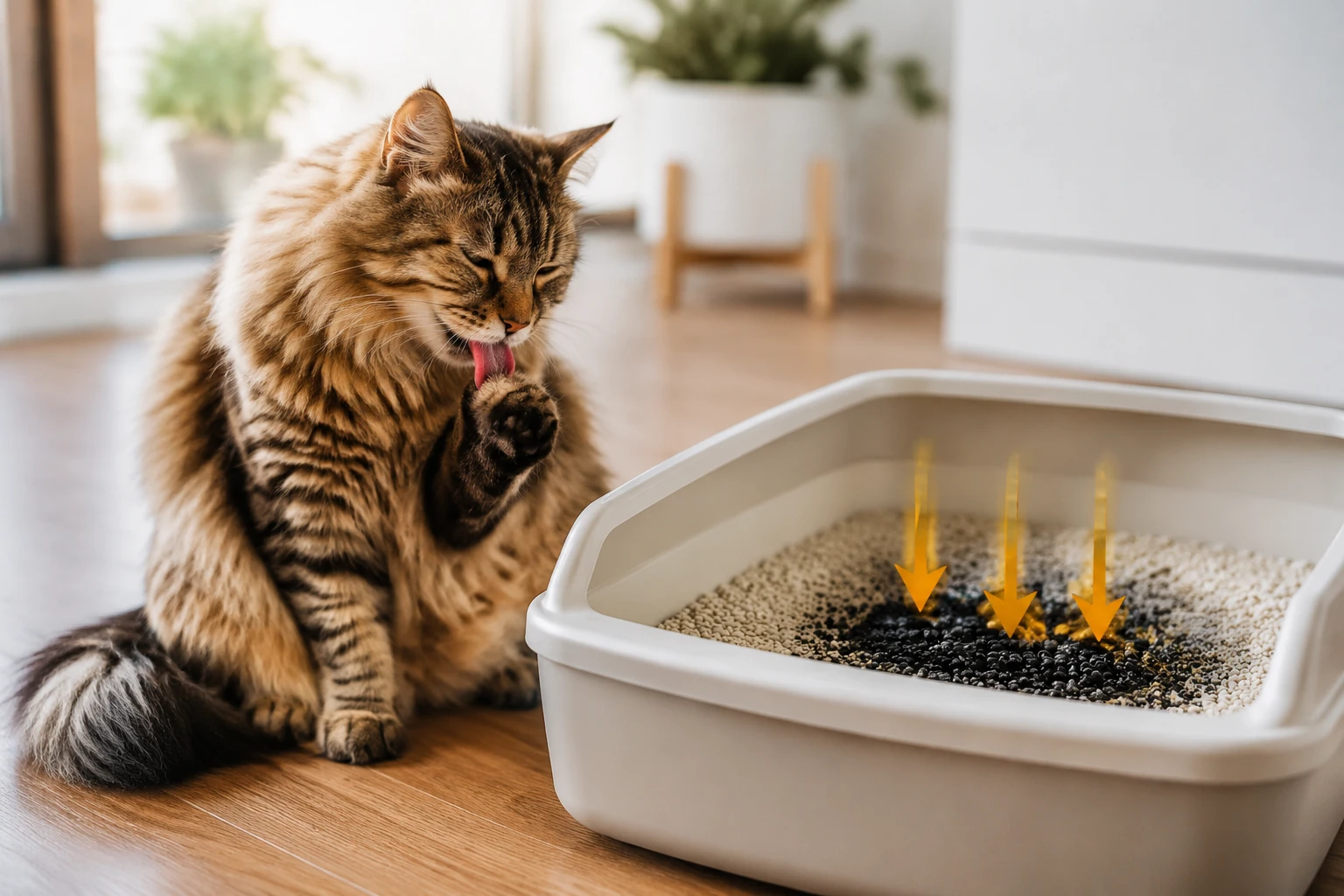
Cats have two anal sacs beside the anus. The Merck Veterinary Manual describes their normal fluid as dark and foul-smelling. A small release during defecation or a frightening moment can create a powerful odor that seems to come from the whole box, even when the litter itself is clean.
Look for behaviour, not just scent. Scooting, repeated licking or biting under the tail, painful defecation, straining, swelling, or an oozing sore are reasons to call the veterinarian. Anal sac disease is less common in cats than dogs, but impaction is the most common form in cats. Do not squeeze the area yourself. Diagnosis normally involves a veterinary examination, and an infected or abscessed sac needs proper treatment.
If the odor was a single intense burst and your cat immediately groomed under the tail, anal sac fluid is one reasonable possibility. It is still not something smell alone can confirm.
Ready for a litter box you can't smell?
Free shipping. Never run out. Cancel anytime.
Start autoship →What if cat pee smells like sulfur?
A wet clump beside feces can absorb the same odor, and urine may mix with residue on the box floor. Start with a freshly washed, fully dried box and fresh litter. If only urine clumps repeatedly carry an unusual smell, tell your veterinarian. Describe the change and any increase in drinking, larger clumps, frequent small clumps, straining, crying, blood, or urinating outside the box.
Repeated straining with little or no urine can be an emergency, particularly in a male cat. Seek veterinary help immediately rather than waiting to see whether the odor settles. The smell does not tell you whether there is an infection, crystal, obstruction, diet effect, medication effect, or simple contamination.
Keep the keywords separate from the diagnosis: people search for "cat pee smells like sulfur," but that phrase is a description, not a test result.
Rule out sewer gas and other household sources
Hydrogen sulfide occurs in sewers and is known for a rotten-egg odor at low concentrations. OSHA also warns that smell is not a reliable warning at higher exposure because the ability to smell it can disappear quickly. That is why repeated sniffing is the wrong safety test.
If the smell remains after the litter box and waste are outside, leave the area and use the appropriate building manager, plumber, utility, fire service, or local emergency channel for the suspected source. A dry drain trap, plumbing fault, wastewater issue, or fuel-gas odorant needs a household-safety response, not a litter deodorizer. Never mix cleaning chemicals in a drain or crawl into a confined space.
The US Agency for Toxic Substances and Disease Registry lists eye irritation, headache, and fatigue among possible effects of lower, longer exposure to hydrogen sulfide, while high concentrations can be rapidly dangerous. These workplace and environmental facts do not mean a smelly litter box contains a hazardous concentration. They explain why symptoms or a persistent room-wide source should be handled cautiously.
Clean the source before treating the remaining odor
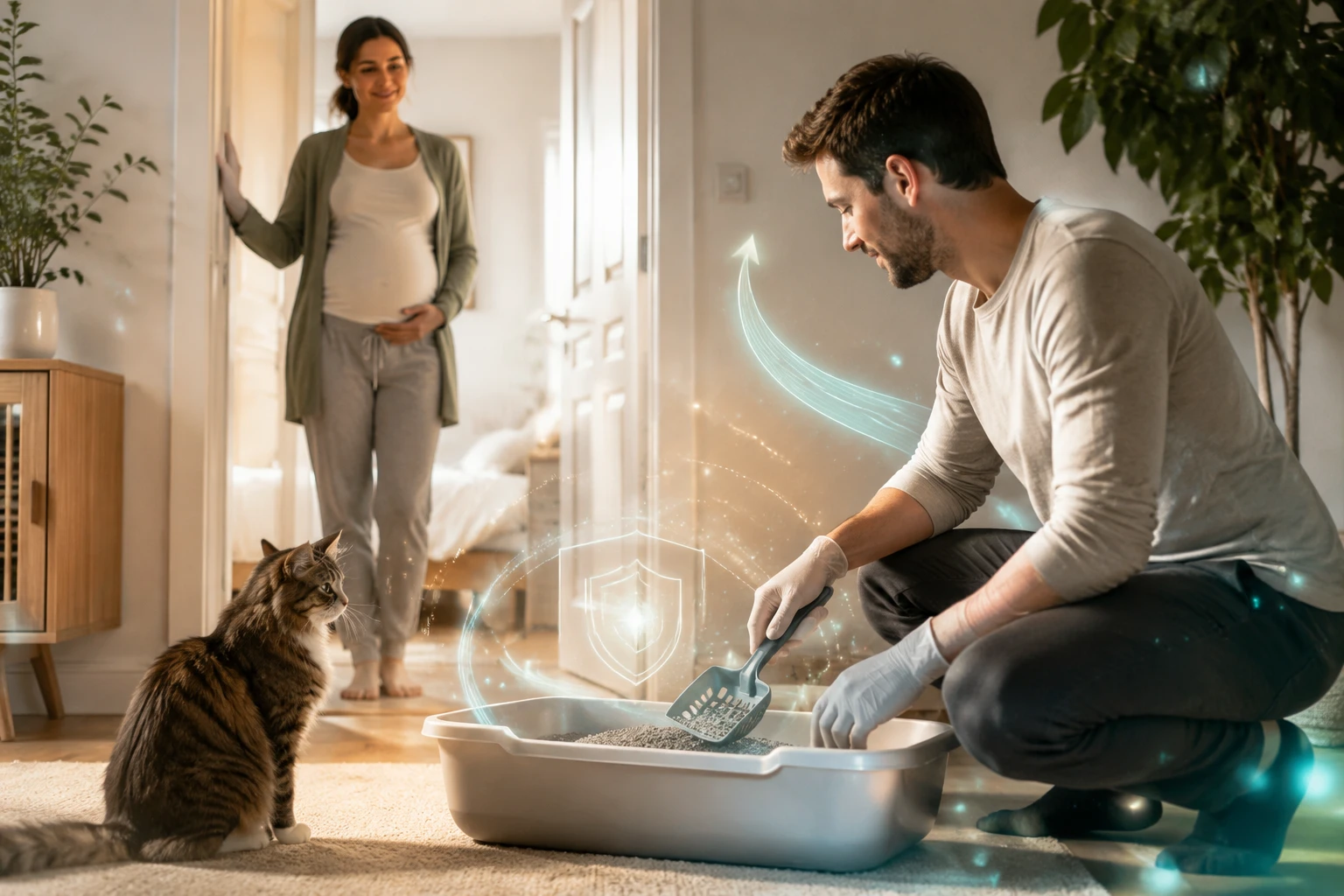
Once urgent household and veterinary concerns are ruled out, return to basic hygiene. Scoop feces promptly, remove wet clumps, wipe residue from the rim and mat, and replace litter when the bed is soiled according to its maker's directions. Wash the empty box with mild soap and water, rinse it, and let it dry fully. Do not cover a sanitation problem with heavy fragrance.
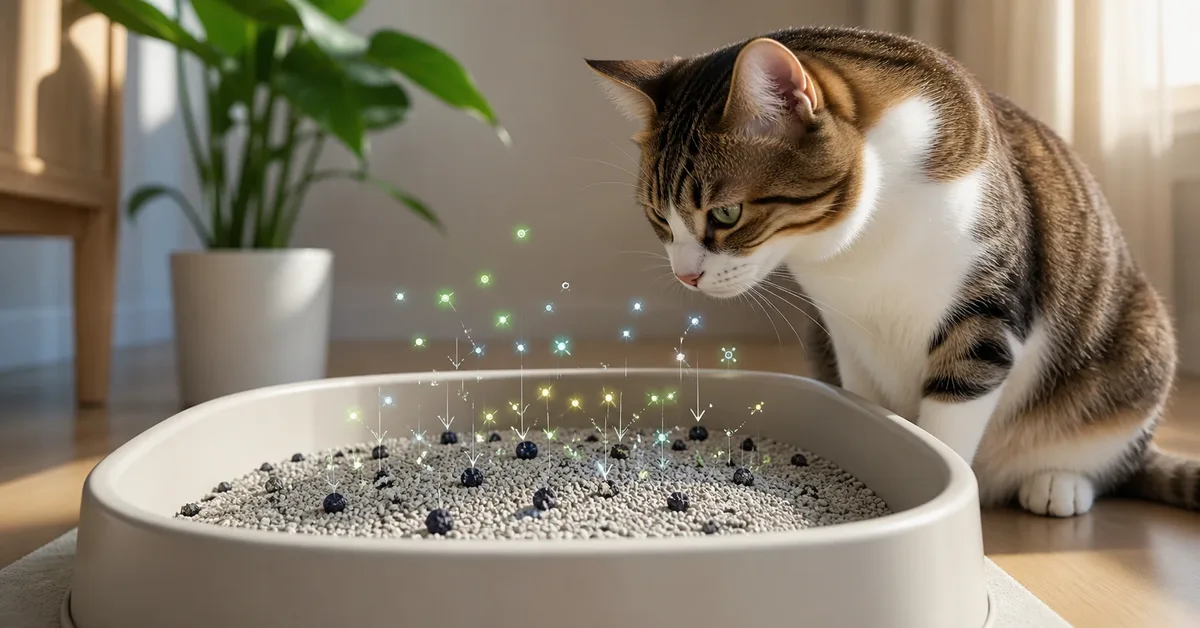
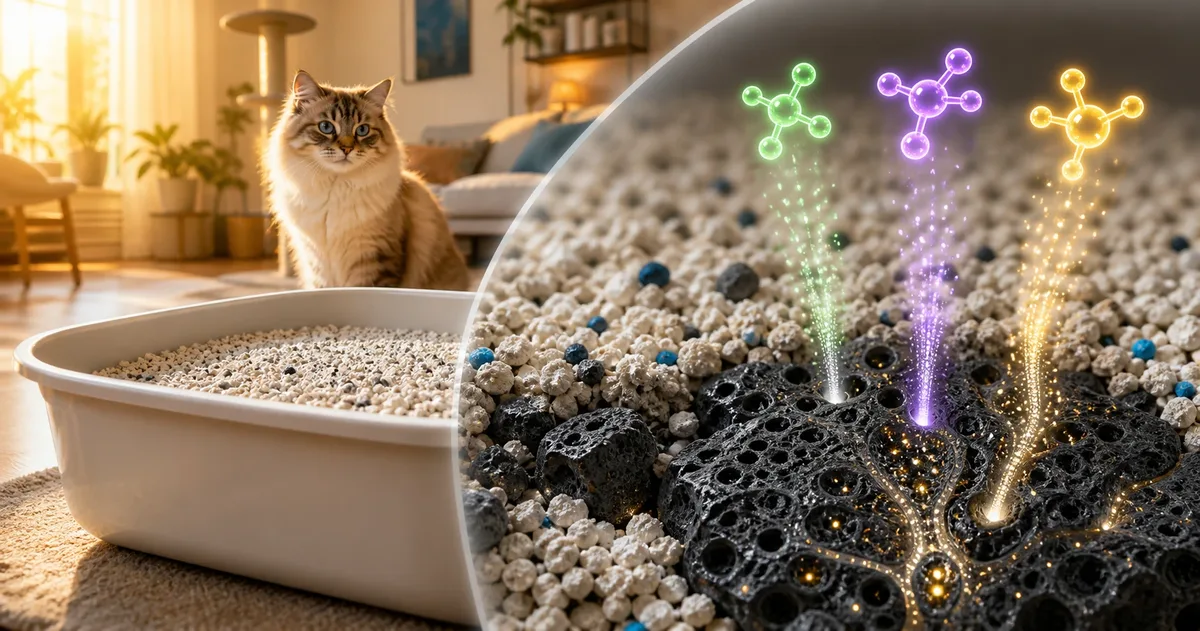
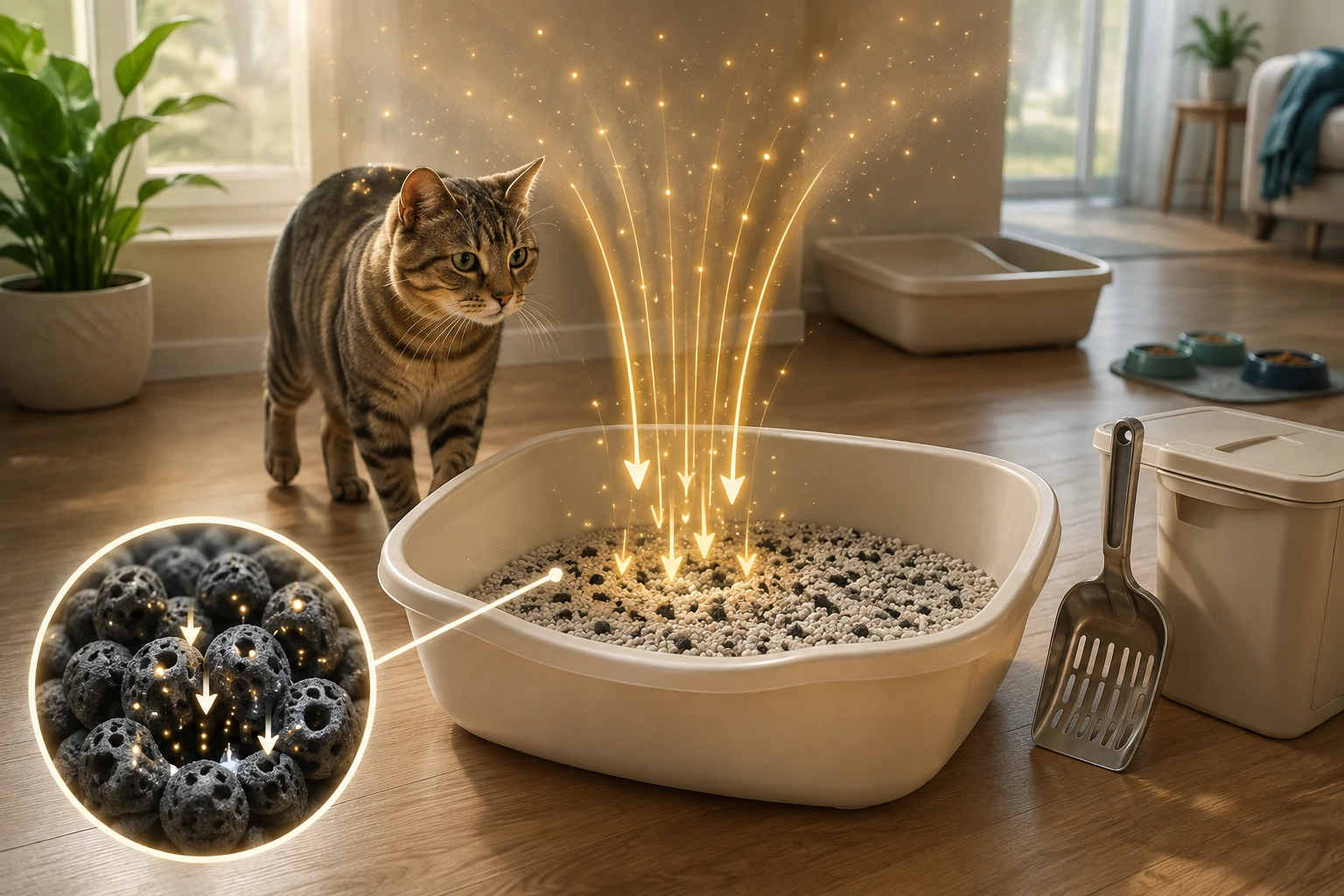
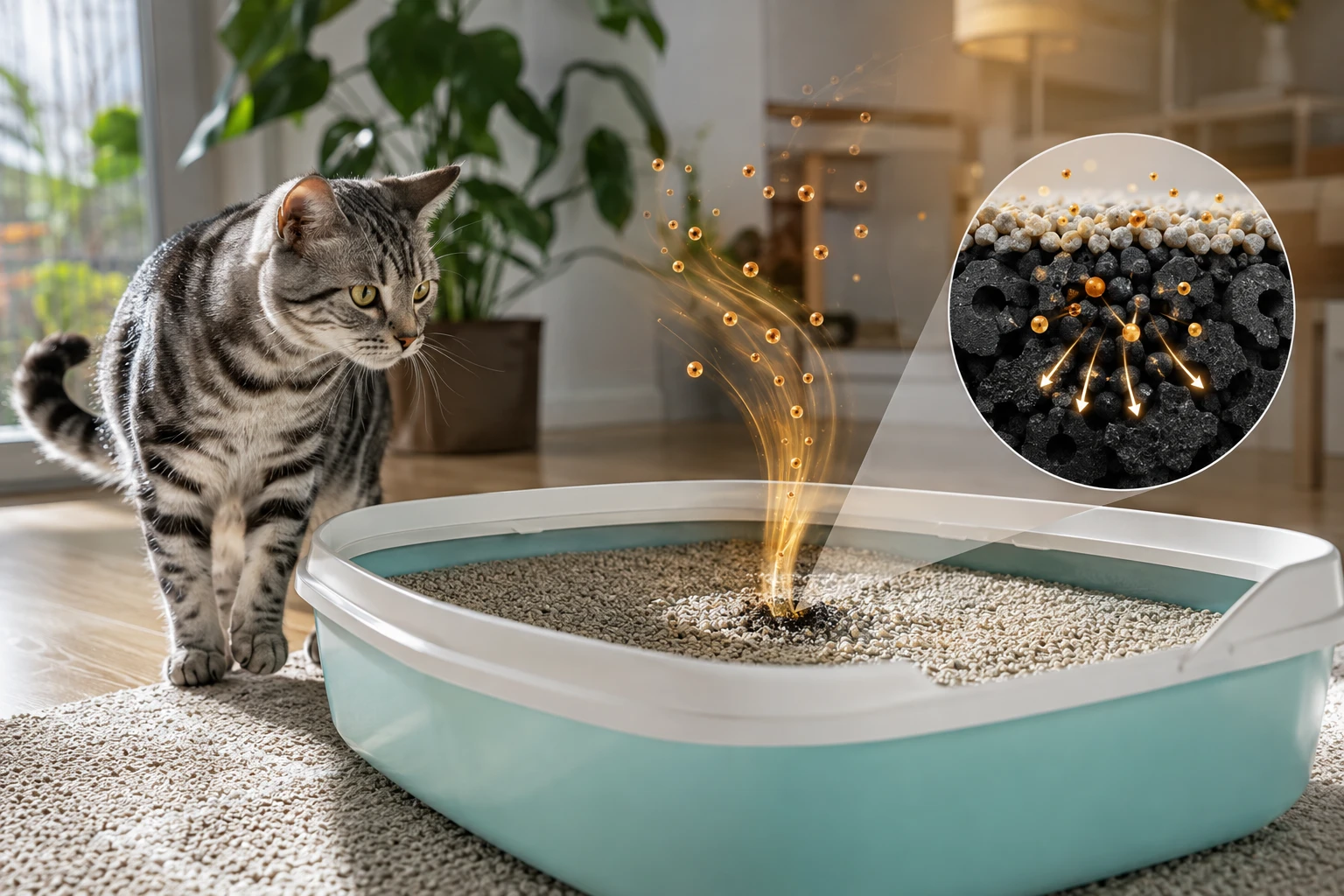
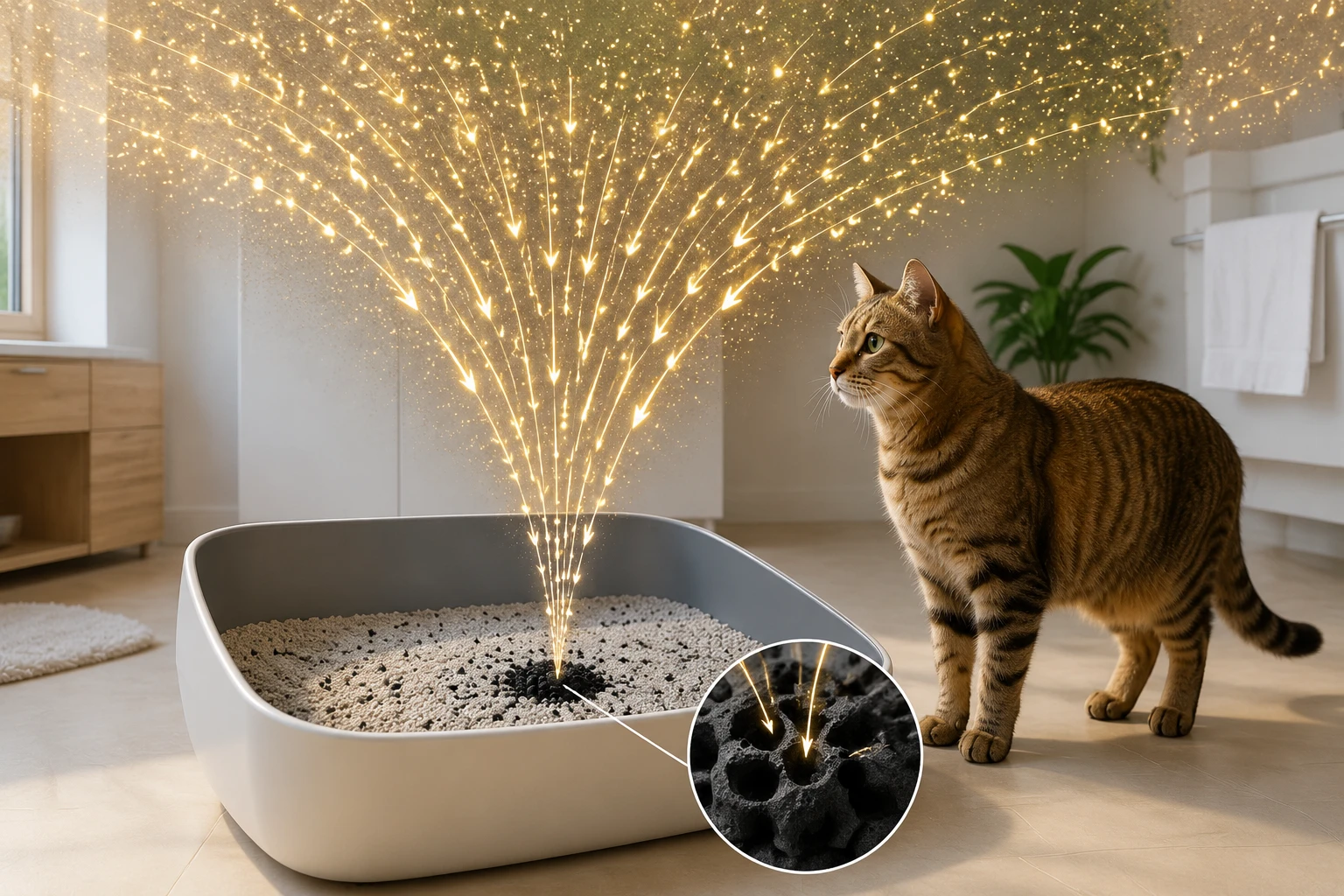
Activated carbon can adsorb airborne sulfur compounds, including hydrogen sulfide, onto its porous surface. That makes it useful for remaining box odor, but it does not diagnose diarrhea, treat an anal sac, repair a drain, or make a gas leak safe. The source still comes first.
2-3 tablespoons of Purrify granules per litter box. Sprinkle on fresh litter, mix gently. Top up whenever the box starts giving off a smell again - no fixed schedule. Keep scooping normally. If the rotten-egg smell returns immediately after each bowel movement, track the stool and speak with your veterinarian instead of simply adding more deodorizer.
For a fragrance-free routine that starts with cleaning, see our guide to safe ways to deodorize a litter box. For the science behind the odor-control step, read the activated carbon guide for cat litter.
The short answer
A litter box that smells like rotten eggs may reflect fresh foul stool, anal sac fluid, contaminated litter, or a nearby plumbing source. Remove the box waste and see whether the odor follows. Watch for digestive, urinary, or anal-area symptoms and call your veterinarian when the change repeats or your cat seems unwell.
If the smell fills the room, remains after the box is gone, causes symptoms, or might be fuel gas or sewer gas, move people and pets to fresh air and use local emergency or utility guidance. Once the source is safe and the box is clean, activated carbon can help with the odor that remains.
Veterinary and safety sources
- US Occupational Safety and Health Administration: Hydrogen Sulfide, for the rotten-egg description, enclosed-space risk, and limits of odor as a warning.
- US Agency for Toxic Substances and Disease Registry: Hydrogen Sulfide ToxFAQs, for exposure symptoms and high-concentration danger.
- Cornell Feline Health Center: Diarrhea, for foul-smelling stool, diet change, and veterinary warning signs.
- Merck Veterinary Manual: Disorders of the Rectum and Anus in Cats, for anal sac fluid and signs of anal sac disease.
- Yan and colleagues, Environmental Science & Technology, an experimental study of hydrogen sulfide adsorption by activated carbon.
This article provides general information and is not a substitute for veterinary examination, diagnosis, treatment, or emergency safety advice.