

The short answer
The fumes are ammonia, made by bacteria breaking down the urea in cat urine. In a normal home the level sits under 25 ppm, where it irritates rather than injures: watery eyes, a scratchy throat, sometimes a headache. It gets worse in a small closed room, with several cats, or when the box has been left a couple of days. Scooping daily, adding activated carbon granules to the litter, and giving the room some airflow handles almost every case.
You know the moment. You crouch down with the scoop, and something sharp goes straight up your nose and makes your eyes water. That is not "litter smell" in a vague sense. It is a specific gas, and it has a name.
What you are breathing
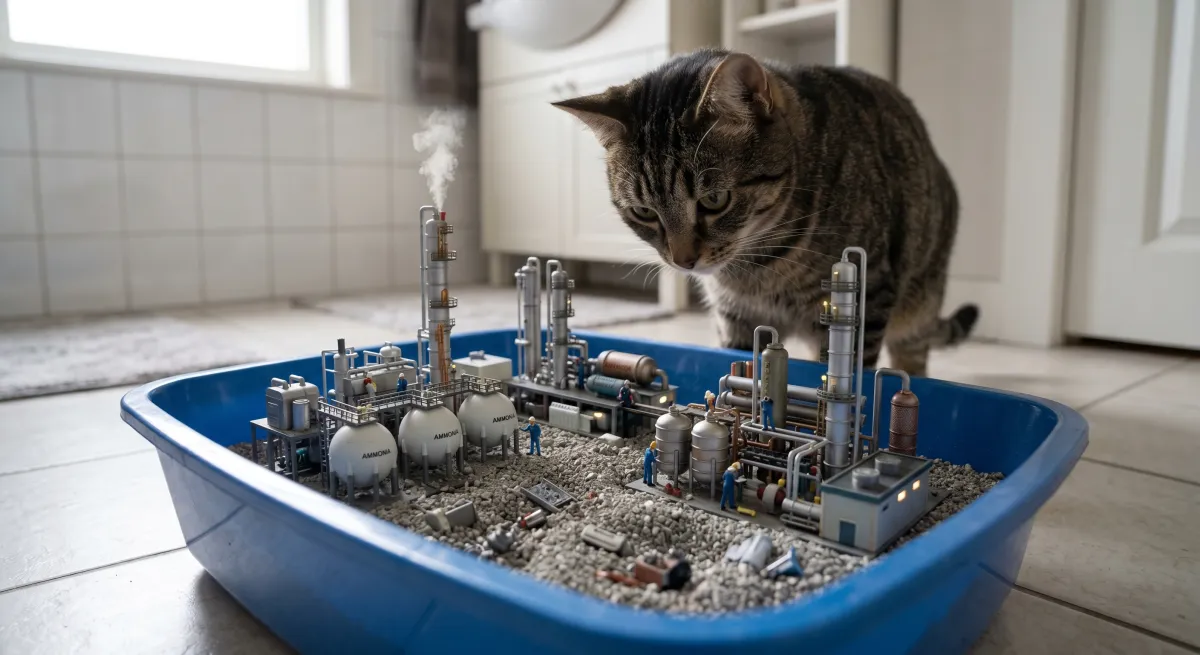
Cat urine carries urea. Urea by itself has almost no smell. Bacteria that live in the litter and on the box walls break it apart, and one of the pieces they release is ammonia, which is a gas at room temperature and rises off the litter surface.
Bacteria start on it fast. Ammonia production begins within about 20 to 30 minutes of the cat using the box, and a human nose picks the gas up at around 5 ppm. So by the time you can smell it, the reaction has been running for hours.
Everything else people blame is usually secondary. Clay dust, added fragrance and litter deodorizer perfume all irritate airways too, but they are not what makes that eye-watering sting. The full chemistry, from urea to gas, is laid out in the ammonia science page.
Symptoms of breathing in litter box fumes
Ammonia dissolves in the moisture on any wet surface it touches, which is why the first things affected are your eyes, nose and throat. The usual list, roughly in the order people notice them:
- Eyes stinging or watering when you lean over the box
- A dry, scratchy or burning throat
- A blocked or running nose that clears once you leave the room
- Headache, often a dull one across the forehead
- Coughing, or a tight chest if you already have asthma
The tell is that it goes away. Step outside for ten minutes and a fume reaction fades. Symptoms that stick around all day, or that show up when you are nowhere near the box, are pointing at something else and deserve a doctor rather than a litter change.
When it stops being a nuisance
Concentration is the whole question. Below 25 ppm ammonia irritates but does not injure. Between 25 and 50 ppm the eye and throat irritation becomes hard to ignore, and 50 ppm is where OSHA sets its workplace limit for an eight hour day. Above 100 ppm you are into genuine respiratory distress, and that takes an industrial leak, not a litter box.
A freshly scooped single-cat box usually reads under 10 ppm near the surface. A box left alone for two days can reach 50 to 100 ppm right above the litter, which is why the hit is worst in the second before you start scooping. Heat makes it faster: warm rooms speed up the bacterial enzymes, so the same box smells sharper in August than in February.
Some people should aim lower than the general threshold. Infants, anyone with asthma or COPD, and older adults do better with the box kept under 10 ppm, which in practice means daily scooping and a room with airflow. The full breakdown by exposure level is on the ammonia health risks page.
Ready for a litter box you can't smell?
Free shipping. Never run out. Cancel anytime.
Start autoship →Is it bad to breathe in cat pee?
For a healthy adult in a normal house, no, not in the sense people usually mean. You are not accumulating damage by scooping a box every day. What you are getting is an irritant reaction that clears when the exposure stops.
The situations worth taking seriously are narrow and specific. Several cats sharing a room with the door shut. A box in a bathroom with no window and no fan. A box that has gone unscooped over a weekend away. Someone in the house with asthma who starts wheezing in that room and nowhere else. Those are the cases where the numbers climb and the reaction stops being trivial.
Pregnancy is a separate question from ammonia and worth naming so it does not get muddled. The pregnancy advice around litter boxes is about toxoplasmosis, a parasite, not about the fumes. That is a conversation for a doctor, and the standard guidance is that someone else scoops.
How to get the air back
Masking the smell with a scented litter or a plug-in does nothing to the gas. Perfume sits on top of ammonia and you end up breathing both. Removing the gas takes one of two things: getting rid of the source, or trapping the molecule.
Scoop every day. Waste sitting in the box is the fuel, and pulling it out before bacteria get to work does more than any product will.
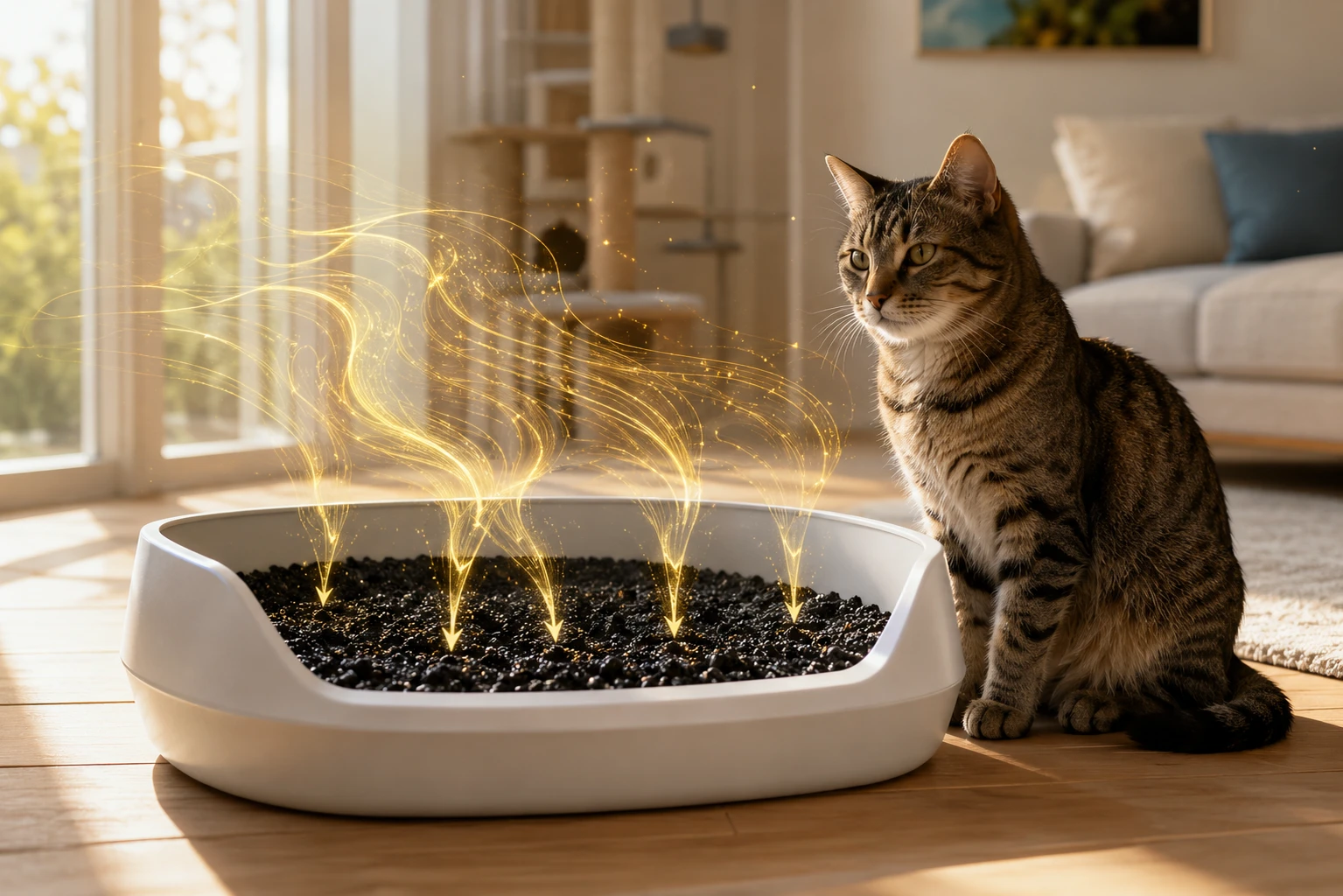
Mix 2-3 tablespoons of Purrify activated carbon granules into fresh litter. Sprinkle them on top, stir gently so they sit through the litter rather than in a layer on the surface, and top up whenever the box starts giving off a smell again. There is no schedule to memorize. A 50g bag runs about a month for one cat.
Open a window or run a fan in the room the box lives in. Ammonia is lighter than air and it will leave on its own if it has somewhere to go. A closed bathroom or a basement corner with no airflow is where the readings climb.
Wash the box itself once a month with an enzyme cleaner. Urea soaks into scratched plastic, and ordinary dish soap leaves it there to keep feeding bacteria after everything visible is gone.
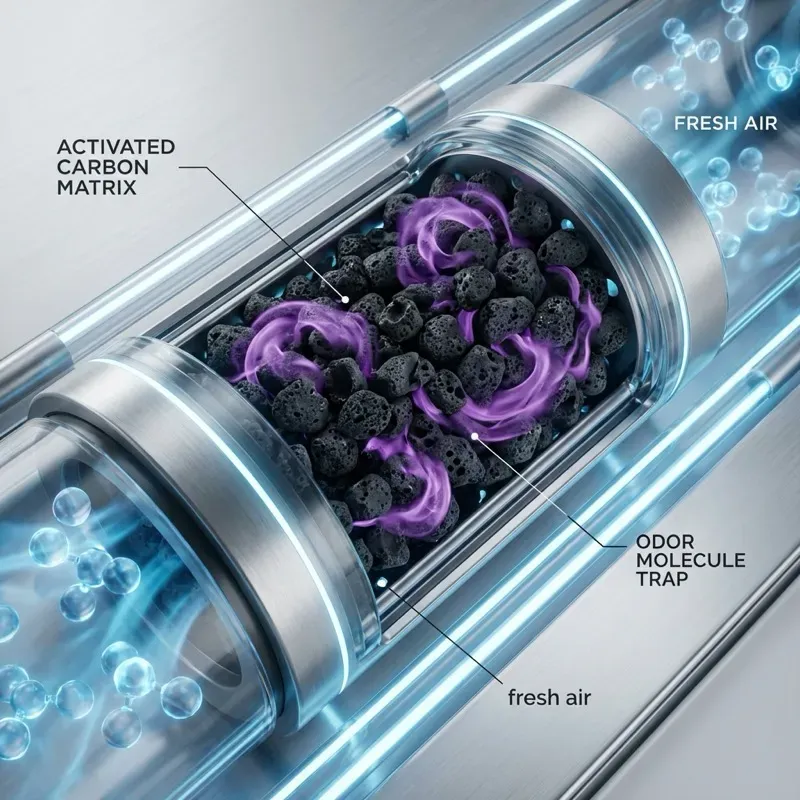
Activated carbon works differently from anything that claims to neutralize odor. It does not react with ammonia. It holds the molecule inside its pores, which is why it keeps working on a gas that baking soda cannot touch. Purrify is coconut shell carbon in granule form rather than a fine dust, so it does not hang in the air the way a fine dust does, which matters when the whole point is breathing easier. There is more on the mechanism in how activated carbon works, and the product side of it lives on the ammonia control page.
The bottom line
Litter box fumes are ammonia, they irritate rather than poison at household levels, and the fix is unglamorous: get the waste out daily, give the room air, and put something in the litter that traps the gas instead of covering it.
If the smell in your home is strong enough that you notice it from another room, that is not a signal to panic. It is a signal that the box is overdue and the air has nowhere to go.