
Buying guide
2026 litter technology guide
Current ranking page comparing clay, crystals, natural litters, and tofu by technology rather than pure brand hype.
Source published: January 3, 2026
Source updated: March 5, 2026
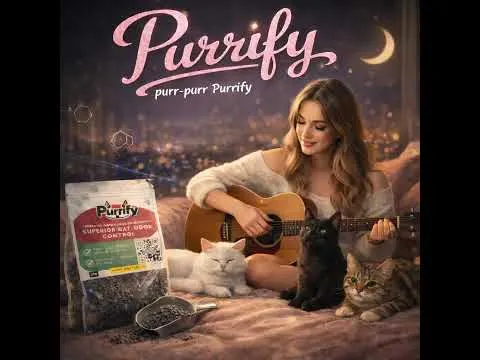
Prefer a quick video? Watch the latest verified upload from our official YouTube channel and follow @PurrifyHQ for future product and brand updates.
Purr Purr Purrify | Song about Cat Litter Odour Control Made in Canada
Sources
This template turns the existing best-litter content into a durable comparison asset by separating technology types, use cases, and the limits of each option.

No single litter type fully solves ammonia on its own, but premium clumping clay and silica crystals lead most households while activated carbon remains the clearest cross-category upgrade.
We kept the comparison at the technology level rather than brand level so the page can stay durable. Scoring reflects odor performance, maintenance burden, cost range, and household fit.
Read the full testing methodologyClaim
“One litter type fully eliminates ammonia on its own.”
Our Analysis
The existing guide itself says every litter technology leaves an ammonia gap. The best choice depends on household context, and the strongest evidence points to layering an upgrade on top of the base litter.
Supporting Evidence
Structured comparison
The rows below stay at the technology level so the page remains durable even as specific brands change.
| Option | Odor control | Maintenance burden | Cost range | Best fit | Evidence note |
|---|---|---|---|---|---|
| Premium clumping clay | Strong all-around baseline | Moderate daily upkeep | $10 to $18 per month | Most households | Best balance in the current guide. |
| Silica crystals | Very strong duration | Low day-to-day upkeep | $20 to $35 per month | Apartments and slower scoop cycles | Stronger duration, weaker fit for texture-sensitive cats. |
| Natural clumping | Moderate | Moderate to high | $20 to $30 per month | Eco-focused homes | Good fit when biodegradability matters more than maximum odor duration. |
| Tofu and plant fiber | Moderate | Moderate to high | $25 to $40 per month | Sensitive cats and low-dust preference | Useful niche fit, but not the strongest pure odor winner. |
| Activated carbon upgrade | Targets the ammonia gap directly | Weekly refresh layer | Add-on cost | Any litter already working for the cat | Best treated as a system upgrade, not a litter replacement. |
First-party evidence
The lab page is only as durable as the sources underneath it, so each evidence card exposes the base content directly.
Current ranking page comparing clay, crystals, natural litters, and tofu by technology rather than pure brand hype.
Supports the add-on upgrade logic by showing how a separate odor-control layer changes real-world outcomes.
Mechanism page showing why liquid control and gas control should not be treated as identical.
Public author
Purrify Research LabOrganization-level entity for internal testing notes, claim documentation, and evidence synthesis.
Public reviewer
Purrify Science TeamInternal group responsible for claim review on chemistry, odor control, and safety topics.
Supporting reads
Use this when the decision is mostly about eco profile and biodegradability.
Open guideUseful for homes prioritizing low fragrance and lower irritation risk.
Open guideGood follow-up for anyone whose “best litter” decision is really a routine problem.
Open guideQuestions
Technology-level ranking stays durable longer and avoids rebuilding the page every time a brand changes packaging, scent line, or availability.
No. It says clumping clay is the strongest all-around baseline for many homes, while crystals, natural litters, and tofu each win in narrower contexts.
Because the evidence on the site repeatedly shows the ammonia problem sits beside litter choice, not fully inside it.