The best cat litter for odor control in 2026 is a premium sodium bentonite clumping clay (like Dr. Elsey's Ultra or Fresh Step Platinum) for most households, paired with an activated carbon additive to trap the ammonia gas that escapes between scoops. For low-dust homes or apartments, silica gel crystals (PrettyLitter, Fresh Step Crystals) outperform clay on moisture but cost about twice as much per month. Whichever litter you land on, an activated carbon cat litter additive stirred into it holds the ammonia back for longer.
Quick Answer (TL;DR)
The best cat litter for odor control is an unscented premium clumping clay, with silica crystals a close second for moisture. Whichever type you pick, mixing 2-3 tablespoons of activated carbon granules into the litter traps the ammonia smell the litter itself misses.
- Best overall for most homes: Unscented premium clumping litter-easy scooping, strong clumps, good value
- Best low-dust option: Silica gel crystals, strong moisture control with very low dust
- Best eco option: Natural corn or wheat clumping-biodegradable, safe for septic systems
- Best odor upgrade: Add activated carbon granules to your current litter-helps trap odor molecules without fragrance
Why Trust This Guide? We Don't Sell Litter
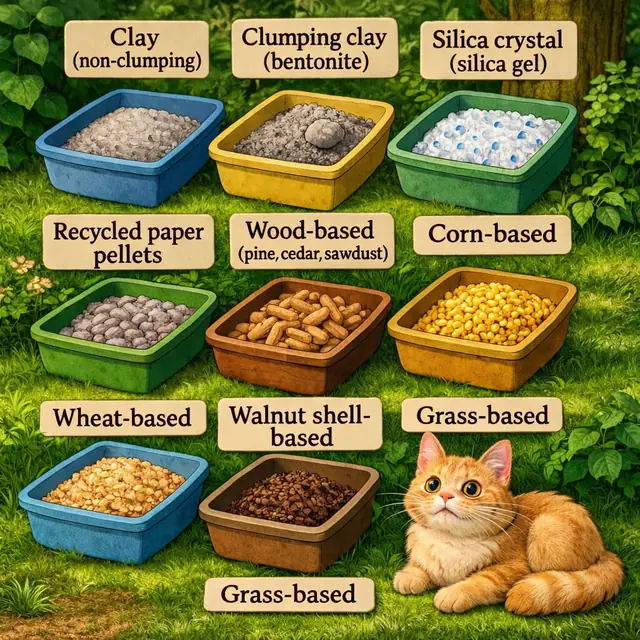
Most litter guides earn a commission on every bag they recommend. We don't - we make an activated carbon additive, not litter, so there are no affiliate links on this page and no brand paying for its ranking. We rank technologies instead of brands, because the best cat litter for odor control depends on how it fights ammonia, not what the bag looks like. For a brand-level breakdown of one category, see our best clumping cat litters for odor control review. No matter which brand you buy, it will be one of four core types. Each type has a strength, and each has tradeoffs for dust, tracking, texture, and gas-phase odors that can escape between scoops.
Why Most "Odor Control" Litters Fail
Before the rankings, it helps to know why so many bags marked "odor control" disappoint by day two. Almost every claim on the shelf rests on one of three approaches, and they are not equally honest.
Fragrance Masking
Perfume covers the smell for a day or two, then fades. After that you get the litter box smell and the leftover fragrance at the same time, which is worse than either one alone.
Baking Soda
Handles some acids, but ammonia is alkaline, so there is nothing for the baking soda to neutralize. It gets overwhelmed in a couple of days.
Activated Carbon
Traps odor molecules inside microscopic pores, the same job it does in water treatment and medical air filtration. It keeps working until the pores fill up, then you top it up.
Fragrance masking versus molecular trapping: why some litters fail within days.
Here is the difference that matters. Masking is spraying air freshener in a locker room - you have added a smell on top of a smell. Trapping removes the source, catching ammonia, sulfur compounds, and organic molecules before they reach your nose. Every ranking below is judged on that standard.
The 4 Main Litter Technologies, Ranked
#1 - Premium Sodium Bentonite (Clumping Clay)
The industry standard for a reason, and the best odor control litter for most cat owners. High-density sodium bentonite clumping cat litter forms a rock-hard seal around liquid waste within seconds of contact. This tight clump cuts off the oxygen that bacteria need to break down urea into ammonia gas. The result: much of the odor stays isolated until you scoop. When scooped daily, clay litter is also easy to scoop and keeps litter boxes smelling neutral for weeks.
Best for: Single- to two-cat households with a twice-daily scooping routine. Clumping clay delivers the best cost-per-week value of any litter type, usually $10–18 per month per cat. For a detailed breakdown of the best brands, see our best clumping cat litters for odor control guide.
Weakness: Clay litter produces fine silica dust when poured or disturbed. Some cats, especially those with asthma, and some owners find this irritating over time. If low dust is your main priority, see our guide to the best dust free cat litter. Also, clay cannot capture the ammonia gas that escapes from the box between scoopings. That gap is where an activated carbon additive does its work.
Top brands in 2026: Fresh Step Platinum, Arm & Hammer Clump & Seal, Dr. Elsey’s Ultra, Tidy Cats 24/7. See our Fresh Step vs Arm & Hammer head-to-head.
#2 - Silica Gel Crystals
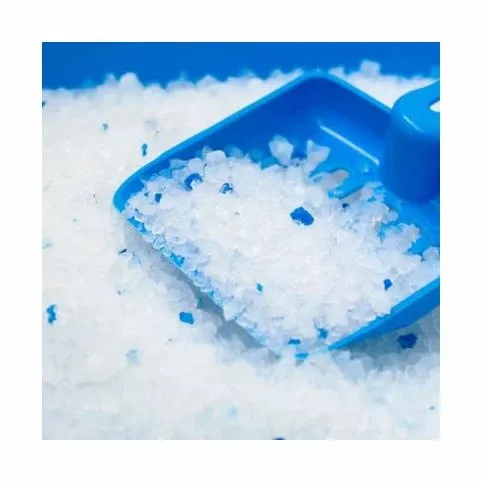
Silica gel litter works as a molecular sieve, and unlike scented litters that rely on added fragrances that only mask odors, crystals can reduce moisture-driven odors. Each crystal contains millions of microscopic pores that pull moisture out of liquid waste almost instantly. By removing moisture so quickly, crystal litter shuts down bacterial growth before it even starts, and bacteria is the factory that produces ammonia gas. Most crystal litters are fragrance-free, making them a popular choice among cat owners who prefer unscented cat litter.
Best for: Apartment dwellers, busy owners who scoop every 1–2 days rather than twice daily, and anyone sensitive to litter dust. Crystal litter is nearly dust-free and can last up to 30 days in a single-cat home before a full change is needed. It is also a strong choice for strong ammonia odors, check our strong cat urine smell guide for complementary strategies.
Weakness: Crystals track on hard floors and crunch underfoot. They cost more per pound than clay, typically $20–35 per month. Some cats dislike the texture and will refuse a box filled entirely with crystals. If your cat is picky, introduce it gradually by mixing 25% crystals into their current litter and increasing each week.
Top brands in 2026: Fresh Step Crystals, PrettyLitter (health-monitoring), Ultra Pet Micro Crystals.
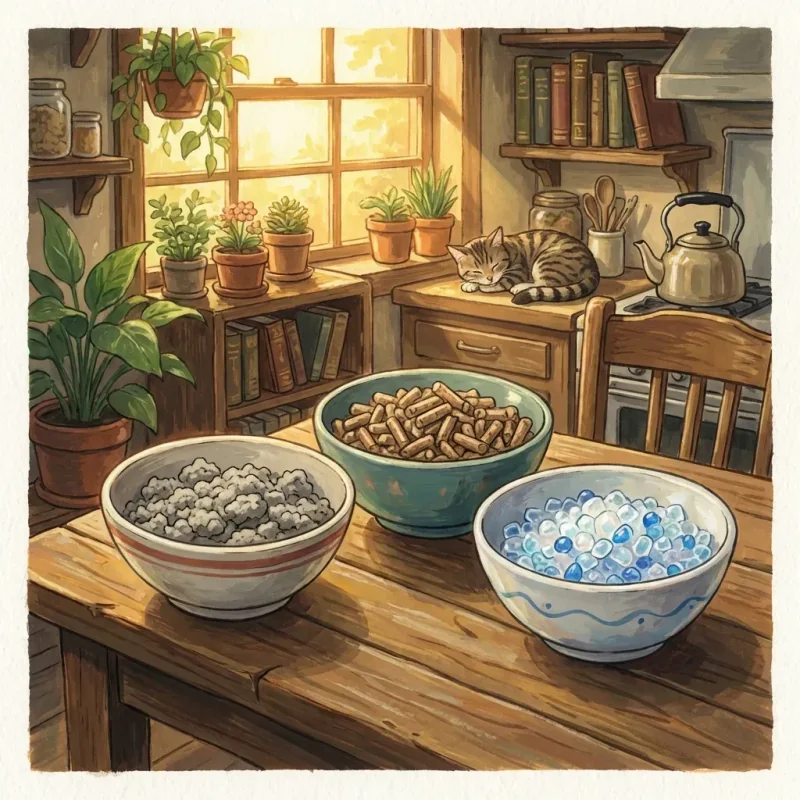
Choosing by technology, not brand name, gives you consistent results no matter which store you shop at.
#3 - Natural Clumping (Corn, Wheat & Wood)
Natural litters use plant-based starches and fibers instead of mined clay. Corn and wheat litters clump quickly using natural enzymes, are biodegradable, and many are flushable-making disposal simpler and more eco-friendly. Wood pellets sit in the same family and lean on the wood's own absorbency rather than a clump. Many natural litters have a fine-grained texture that cats prefer over coarser alternatives.
Best for: Eco-conscious owners, households with young kittens who might accidentally ingest a small amount, and anyone wanting to reduce landfill waste. For a full ranking of natural litter brands by odor performance, see our best natural cat litters for odor control guide.
Weakness: Natural litters absorb ambient humidity in warm or damp climates, which weakens their odor-trapping lifespan. They typically cost 20–40% more than clay and need a full change every 1–2 weeks. During summer, the odor spike can be significant. See our guide on why cat litter smells worse in summer for seasonal tips.
Top brands in 2026: World’s Best Cat Litter (corn), Ökocat (wood), sWheat Scoop, Feline Pine Clumping.
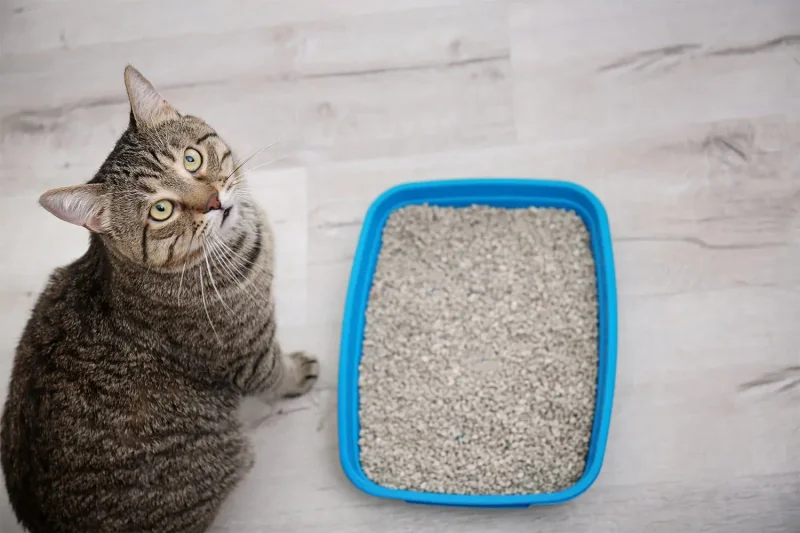
Plant-based litters trade a little odor staying power for a lighter footprint and a softer texture.
#4 - Tofu & Plant Fiber Litters
Made from compressed soybean pulp or other food-grade plant fibers, tofu litters are the newest mainstream category. They clump well, produce almost no dust, and are 100% biodegradable. Some can be flushed in small amounts, making waste disposal completely hands-off.
Best for: Owners who want maximum eco-friendliness with solid clumping. Tofu litter is also the safest choice if a young kitten accidentally eats a small piece. It is popular with owners whose cats are sensitive to clay dust or fragrance additives, see our best unscented litters for sensitive cats and guide to deodorizers with kittens.
Weakness: Odor control is moderate compared to clumping clay or silica crystals. Tofu litter relies on fast clumping to seal odors, so scooping at least twice daily is essential. At $25–40 per month, it is also the most expensive option per cat.
Top brands in 2026: Pidan, Natusan, Tuft + Paw Really Great Cat Litter.
Full Performance Comparison Table
| Litter Type | Odor Control | Holds Odor For | Dust Level | Cost/Month | Change Freq. | Best For |
|---|---|---|---|---|---|---|
| Clumping Clay (unscented) | 4 / 5 | 3–5 days | Moderate | $10–18 | Every 2–4 wks | Most households |
| Clumping Clay (scented) | 2 / 5 | 1–3 days | Moderate | $10–18 | Every 2–4 wks | Owners who want a scent (cats often do not) |
| Silica Crystals | 5 / 5 | 2–4 weeks | Very Low | $20–35 | Every 3–4 wks | Apartments, busy owners |
| Natural Corn/Wheat/Wood | 3 / 5 | 3–7 days | Low | $20–30 | Every 1–2 wks | Eco owners, kittens |
| Tofu/Plant Fiber | 3 / 5 | 3–5 days | Very Low | $25–40 | Every 1–2 wks | Sensitive cats, eco owners |
| Any litter + activated carbon | 5 / 5 | Top up when the smell returns | Unchanged | Litter cost + additive | Same as your litter | Gas-phase ammonia any litter misses |
How to Read Odor-Control Claims on a Litter Label
Shopping for the best cat litter for smell gets easier once you know how to read the label language. "Odor control" can mean perfume, deodorizing additives, stronger clumping, or a combination of all three. "Unscented" does not always mean fragrance-free, because some litters still contain odor-masking ingredients that have a scent once the bag opens. "Carbon" can also mean many things, from meaningful activated carbon odor support to tiny decorative amounts used mostly for marketing.
The safest way to judge a litter is to ask what it is doing physically in the box. Is it handling moisture well? Is it likely to stay stable under repeated use? And is the odor control built around actual removal or around a scent profile that feels clean to humans? Those questions make the category far less confusing.
What to Avoid When Choosing Litter for Smell
Some common fixes make the odor problem worse:
- Heavy perfumes: Strong scents can push a cat out of the box entirely, and a cat going elsewhere is a much bigger odor problem than the box ever was.
- Essential oils: Many are toxic to cats, including eucalyptus, tea tree, and citrus. Never add these to litter. See our fragrance-free deodorizer guide.
- Cheap clumping litters: Weak clumps break apart when you scoop, spreading urine through the rest of the box instead of lifting out.
- Air fresheners beside the box: A cat's nose is far more sensitive than yours. A masking agent right next to the box is a common cause of box avoidance.
Which Litter Type Is Right for Your Home?
The best litter for smell in a single-cat home is not the best one in a studio apartment, a four-cat household, or a home with a fragrance-sensitive cat. Match the choice to your actual setup, not to whichever bag is advertised hardest.
Apartment Dwellers
Go with silica crystals or premium clumping clay. Apartments trap odors faster because of limited airflow. Pair either litter with an activated carbon additive to catch ammonia gas between scoops. See our guide to the best cat litter for apartments and apartment smell solution guide.
Multi-Cat Households
For multi-cat households, use premium clumping clay plus an activated carbon additive. Multiple cats mean more cat urine, faster ammonia buildup, and higher odor load per litter box-making controlling litter odor a daily priority. Aim for one litter box per cat plus one extra. See our best litter for multiple cats guide and multi-cat deodorizer guide.
Eco-Conscious Owners
Natural corn, wheat, or tofu litters are your best bet. They are biodegradable, often flushable, and made without strip-mining. Odor control is slightly lower than clay, but a coconut-shell activated carbon additive can help close the odor gap. Read our natural litter odor control guide.
Sensitive Cats and Kittens
Choose unscented, low-dust options, silica crystals or natural plant-based litters. Kittens are especially sensitive to fragrance additives, fine clay dust, and essential oil-based deodorizers. See our best unscented cat litters guide and fragrance-free deodorizer guide.
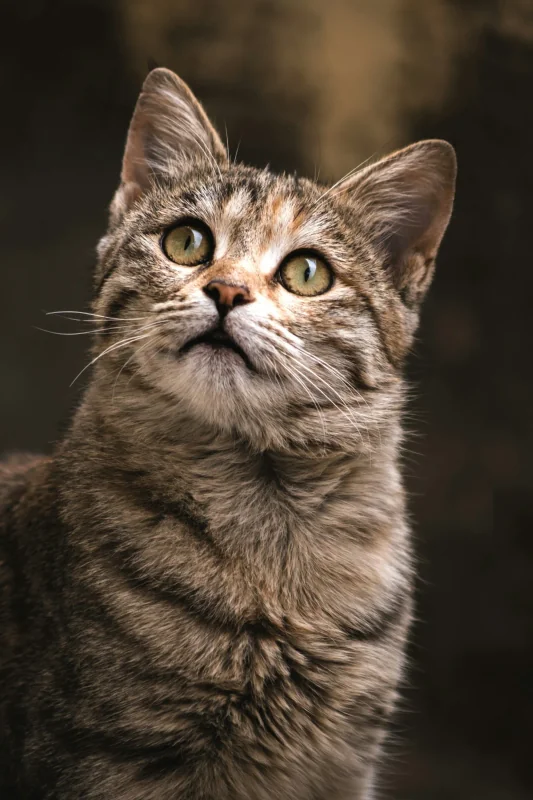
Multi-cat homes hit the ammonia ceiling first, so they feel the difference from molecular trapping the most.
Best Cat Litter for Odor Control in Canada
Looking for the best cat litter for odor control in Canada specifically? Every type in this guide is easy to find here. The big pet chains and most independent stores carry premium clumping clays and silica crystals, and natural corn, wheat, and tofu options show up on more Canadian shelves every year.
Canadian winters add a wrinkle most litter guides skip: from November to March the windows stay shut, so ammonia builds up indoors instead of airing out. Whichever litter you choose, plan on scooping more often through the winter months - the seasonal section below explains why.
Purrify is a Canadian company based in Quebec. Our activated carbon granules are stocked in 40+ pet stores across Canada and work with every litter type on this page, so whichever litter you land on, the odor upgrade is easy to find close to home.
Switched Litters and It Still Smells? The Problem Every Litter Shares
If you have already worked through a couple of "best litter" lists and your home still smells like a litter box, the litter probably was never the problem. Here is the honest truth every cat owner searching for the best odor control cat litter should know: no litter-regardless of price or technology, handles every ammonia odor on its own. Every litter is designed to control liquid. But the smell that drifts through your home is not liquid, it is a gas called ammonia (NH3) that forms when bacteria break down urea in cat urine. This process begins within 2–4 hours of your cat using the box, even if the litter clumped perfectly.
Most people reach for baking soda, but that does not work. Ammonia has a pH of 11.6 (strongly alkaline) and baking soda has a pH of 8.4 (also alkaline). Two alkaline substances cannot neutralize each other, that is basic chemistry. For the full explanation, read our guide on how to neutralize ammonia in cat litter.
High ammonia levels also irritate your cat’s eyes, nose, and respiratory system, not just yours. The NIH classifies ammonia as a respiratory irritant with documented health effects above 25 ppm. Learn more at our ammonia science page and cat litter ammonia health risks guide.
Ready for a litter box you can't smell?
Free shipping. Never run out. Cancel anytime.
Start autoship →Seasonal Odor Spikes: Summer vs. Winter
The best cat litter for odor control in July is not necessarily the best in January. Seasonal conditions have a real impact on how fast ammonia builds up and how far it spreads through your home.
Summer Heat
Heat speeds up bacterial growth by up to 3 times compared to cooler months. Humidity also reduces the moisture-absorbing power of your litter. You will notice odor spiking faster than usual in July and August. Full guide: why cat litter smells worse in summer.
Winter Concentration
Closed windows mean zero fresh-air exchange. Ammonia builds up inside instead of dispersing, and heating systems create dry air that can make odors feel sharper. Full guide: why cat litter smells worse in winter.
The solution in both seasons is the same: reduce ammonia at the molecular level with an activated carbon additive, and scoop more frequently during peak odor months. No single litter type fully fixes seasonal odor on its own. For a deep dive into the underlying causes, see our litter box smell elimination guide.
How Often Should You Change Cat Litter?
The biggest driver of chronic odor is not which litter you buy, it is how consistently you change it. As a general rule:
- Clumping clay: Scoop daily, full change every 2–4 weeks per cat
- Silica crystals: Stir daily, full change every 3–4 weeks for one cat
- Natural corn/wheat litters: Scoop daily, full change every 1–2 weeks
- Tofu litter: Scoop daily, full change every 1–2 weeks
For a complete, science-backed litter change schedule based on cat count, litter type, and home size, see our how often should you change cat litter guide. You can also use our free cat litter calculator to get a personalized schedule.
The Missing Upgrade: Molecular Odor Trapping
No matter which of the four litter types you choose, you can improve its odor performance by adding activated carbon granules. This is the same kind of material used in demanding air filtration, hospital filters, and EPA-recognized water treatment. It works by a process called adsorption-ammonia molecules enter the carbon’s microscopic pores and are held inside the pore structure.
In lab testing, activated carbon reduced airborne ammonia in controlled comparisons, with performance depending on carbon quality, dose, and box conditions. Read the full comparison: most powerful cat litter odor absorber and baking soda vs activated carbon. For the deep science, visit our how activated carbon works page.
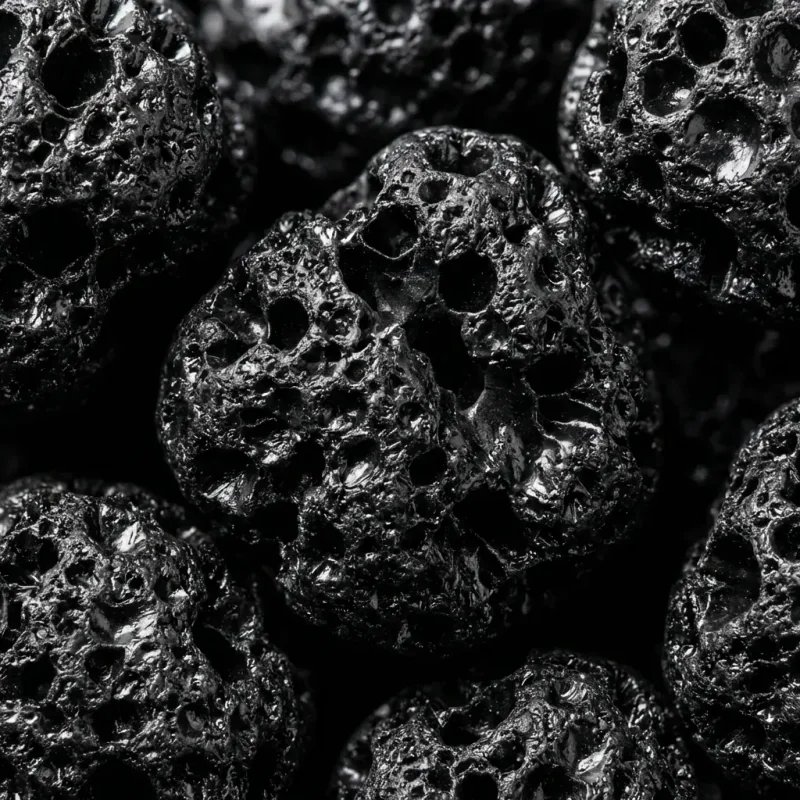
Why Surface Area Is the Whole Trick
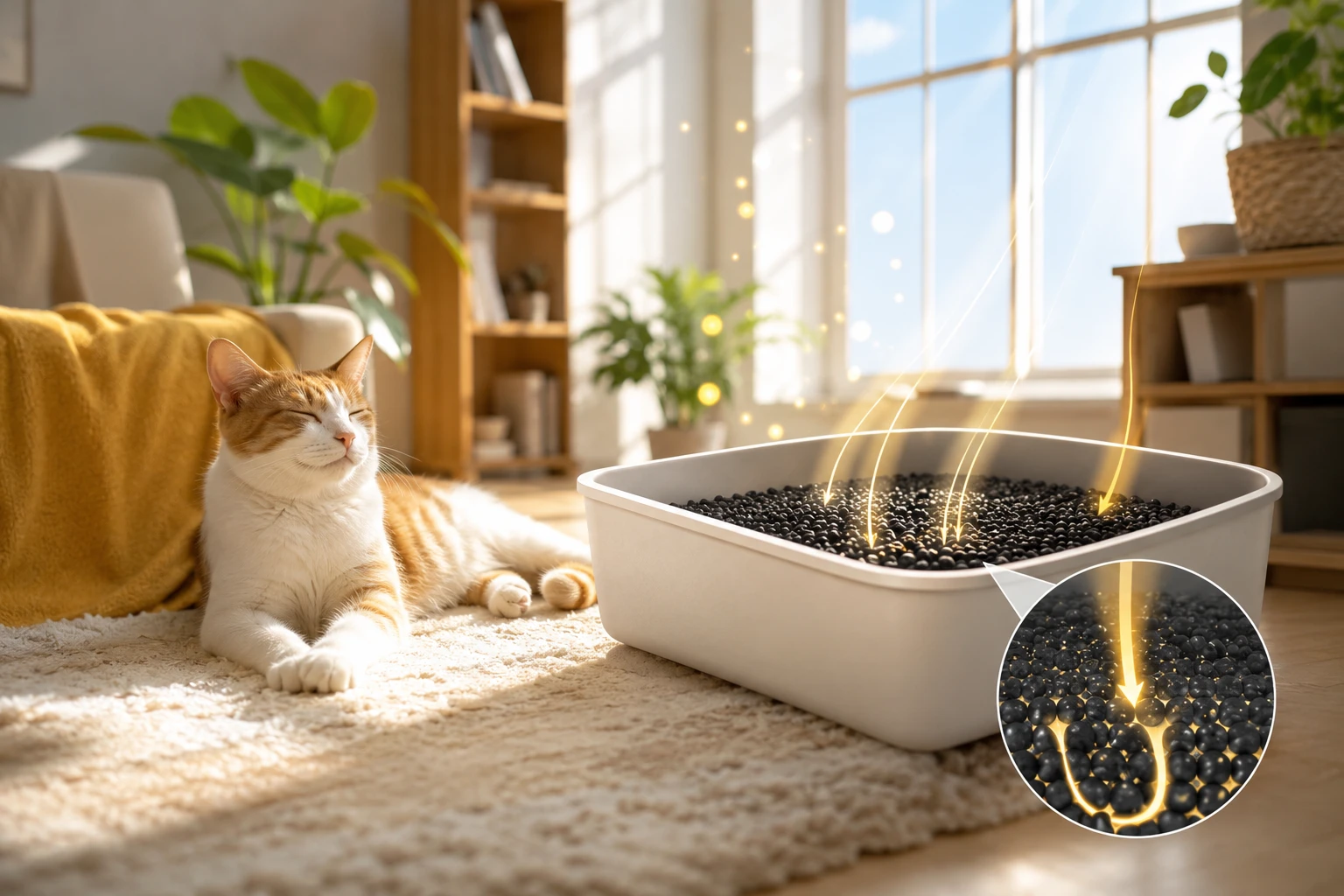
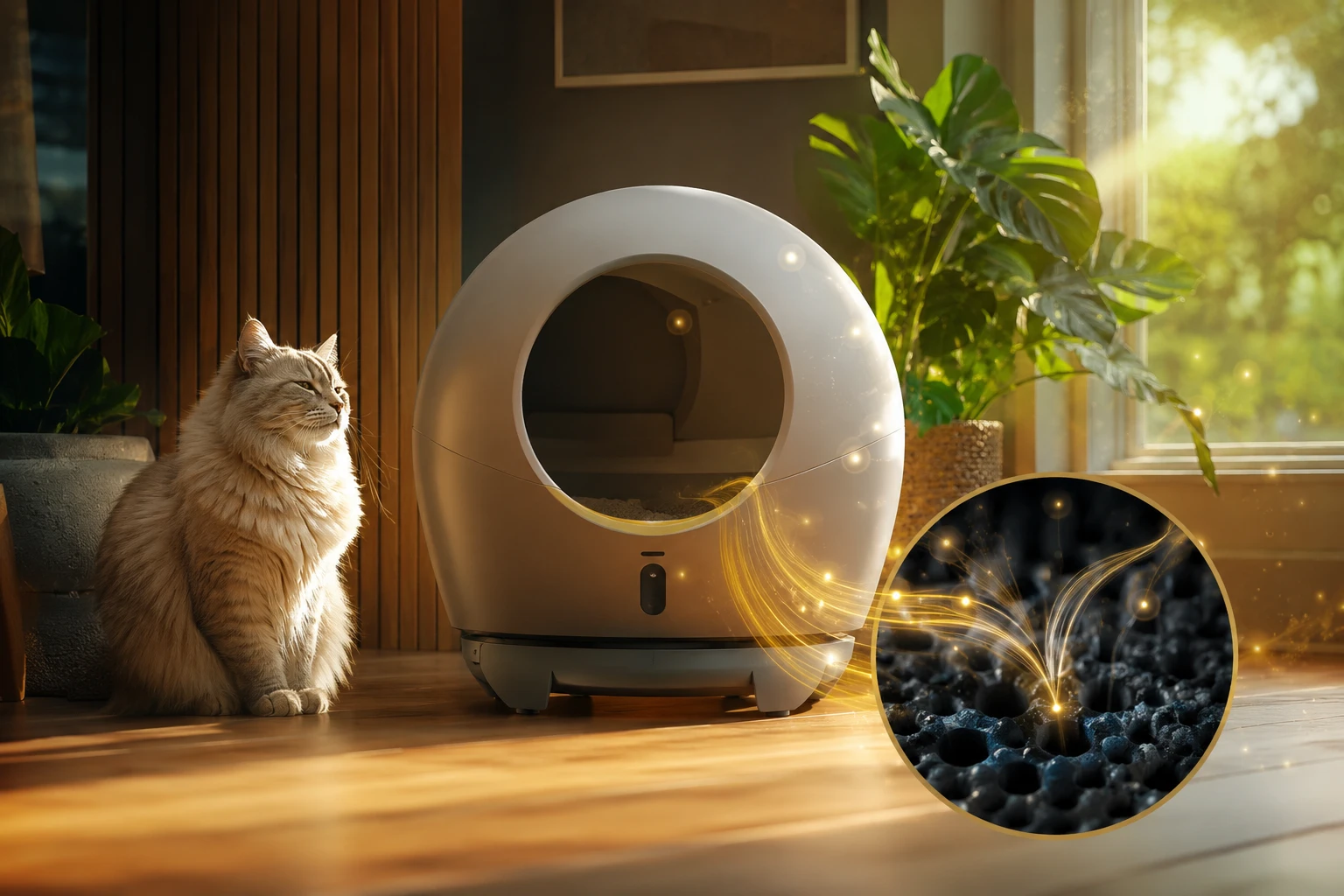
One gram of Purrify activated carbon carries a surface area of roughly 1,000 m², about 4 tennis courts folded into a spoonful. That surface is nothing but tiny pores, and pores are where ammonia, sulfur compounds, and organic odor molecules get caught and stay caught. While the litter handles the liquid, the carbon handles the gas. Neither one does the whole job alone.
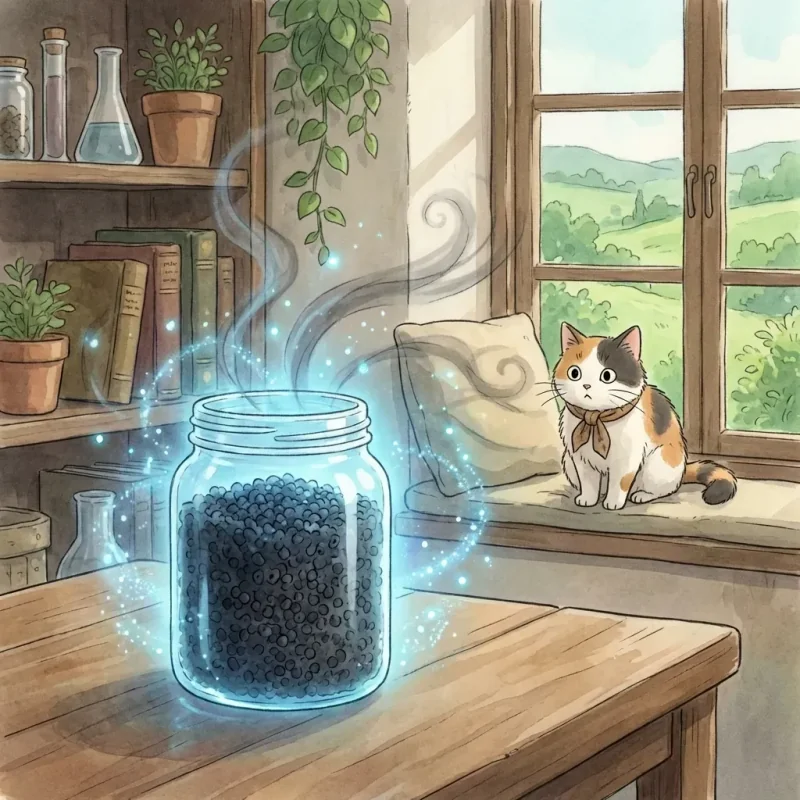
The carbon's porous structure catches odor molecules at the source instead of covering them.
5-Step Low-Odor Setup (Works with Any Litter)
You do not need to switch litters to get better results. Follow this setup with any litter type you already own:
- Step 1 - Clean the box first: Wash the litter box with fragrance-free dish soap and let it dry completely. Ammonia soaks into tiny scratches in the plastic and keeps releasing even after washing. For deep cleaning, use an enzyme cleaner to break down the urea residue that soap may miss.
- Step 2 - Add litter to the correct depth: Use 3–4 inches of litter. Too shallow means urine hits the plastic bottom and shallow litter cannot hold the moisture. Too deep wastes litter without improving performance. Proper depth is essential for clumping litters to seal correctly.
- Step 3 - Layer in activated carbon: Mix 2-3 tablespoons of activated carbon granules (like Purrify) into the fresh litter, then add a light dusting on top. The carbon works at every level-from the bottom where urine pools, to the surface where gas escapes into the room.
- Step 4 - Scoop twice daily: When litter is scooped daily-morning and evening-solid waste and clumps are removed before ammonia builds up. This one habit does more for the smell than any litter switch. After each scoop, top up the carbon granules whenever the box starts giving off a smell again. This takes about 30 seconds.
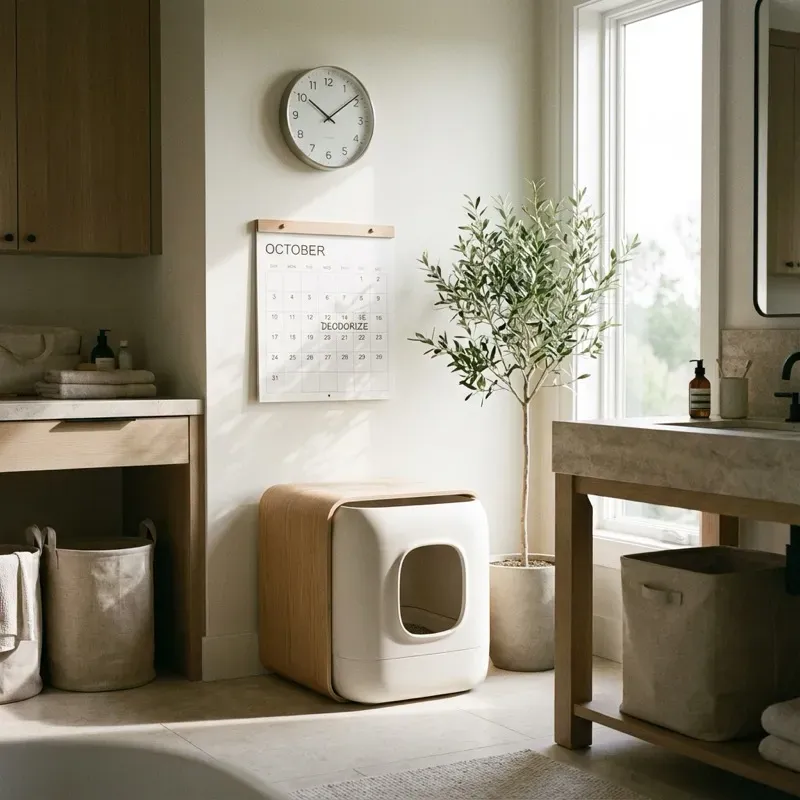
- Step 5 - Refresh on a fixed schedule: Dump everything, wash the box, and start fresh every 2–4 weeks. Set a calendar reminder for full litter changes before you smell a problem, not after. See our deodorizer frequency guide and how to keep the litter box fresh long-term for exact schedules based on your cat count.
The goal: a fresher home that does not announce the litter box first.
Related Guides
- Litter Box Smell Reduction: Why Cleaning Isn’t Enough
- Best Natural Cat Litters for Odor Control (Eco Guide)
- Best Unscented Cat Litters for Sensitive Cats
- Activated Carbon for Cat Litter: The Complete Guide
- Self-cleaning litter box odor control
- How to Reduce Litter Box Odor: 7 Expert Tips
- Best Non Clumping Cat Litter for Odor Control
- Best Crystal Cat Litter for Odor Control
- 10 Cat Litter Odor Myths That Waste Your Money
- How Activated Carbon Works (Science Explainer)
- Cat Litter Calculator: Get Your Personalized Change Schedule