

The short answer
Rinse cold from the back of the fabric, soak in enzymes for at least an hour, wash cold on the longest cycle with an extra rinse, then smell it while it is still damp. Only when it is clean does it go anywhere near a dryer. Heat is the whole game here. One tumble cycle on a garment that still smells faintly will set it forever.
Read This Part Twice
If you take one thing from this page, take this.
Do not put it in the dryer until the smell is completely gone.
Not almost gone. Gone.
Dryer heat sets the proteins in urine and bonds them into the fibre. A shirt that would have washed clean on a second try becomes a shirt you throw away. And here is the cruel part: it almost never happens on the first mistake. It happens on the recovery. Someone washes the item, pulls it out, smells a faint trace, decides it is close enough, and dries it. That is the moment the item is lost.
Air drying costs you a day. The dryer costs you the duvet.

Why a Normal Wash Is Not Enough
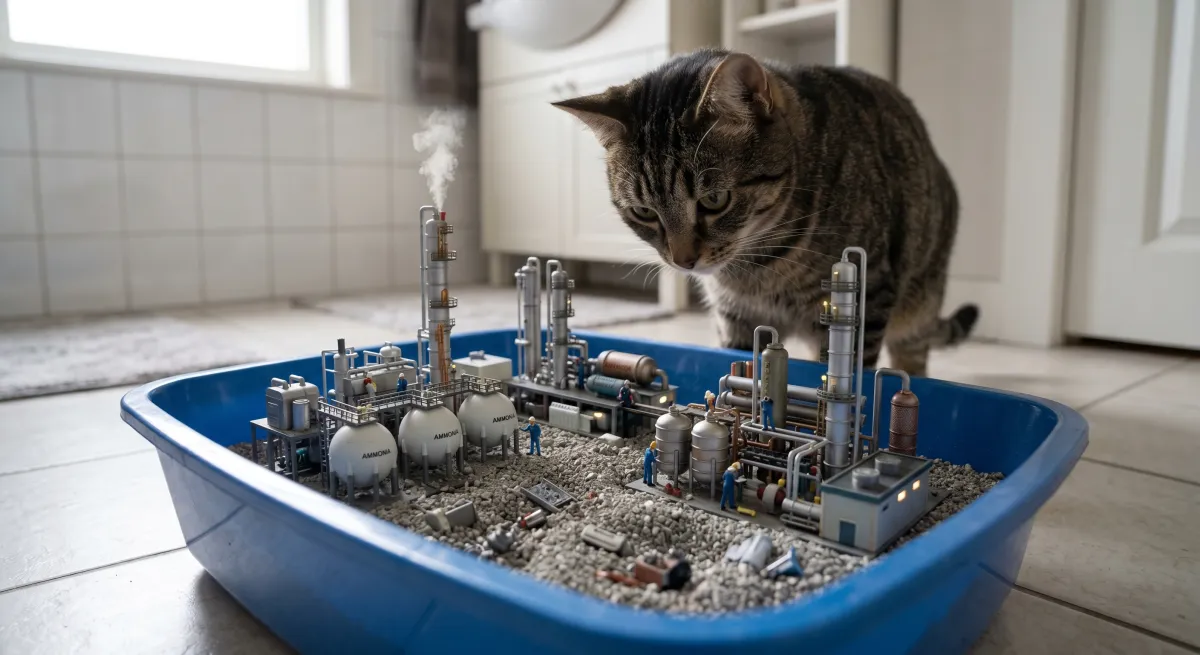
Your machine is very good at removing the parts of cat urine that dissolve in water. It is useless against the part that does not.
Uric acid is the leftover. It does not dissolve, it crystallises, and it wedges itself into the twist of the yarn where water simply flows past it.

Zoom in far enough and you can see the problem. Yarn is not a smooth strand, it is many fine fibres twisted together, and the crystals lodge in the gaps between them. That is why a garment can come out of a full cycle looking spotless, smelling of detergent, and then turn on you a week later in a warm room. Humidity reactivates the crystals and they start releasing odor again.
Detergent alone will not break them. Enzymes will. That is the entire reason for the soak step, and it is why skipping the soak and running two normal washes instead gets you nowhere. We go deeper into the chemistry in the guide to getting cat urine smell out of a whole house.
The First Ten Minutes Matter Most
Fresh urine has not crystallised yet. If you catch it wet, you are cleaning a liquid. If you catch it dry, you are cleaning a solid that has bonded to the fibre. Those are wildly different jobs.
So the moment you find it, get it under cold running water. Cold, never warm. And flush from the back of the fabric, not the front.
That detail is worth more than it sounds. Running water onto the stain pushes urine further through the weave. Running it through the reverse side pushes the urine back out the way it came in. Same tap, opposite result.

Keep going until the water runs clear. Then wring gently and move straight to the soak. Do not let it dry in between.
The Soak Is the Actual Treatment
Most people treat the soak as optional. It is the only step that removes the smell. The wash afterwards just rinses out what the soak broke apart.
Fill a basin, a bucket, or a plugged sink with cool water. Add an enzyme cleaner made for pet urine, or a laundry detergent that lists enzymes on the label. Push the item right under so nothing floats above the waterline, because the part that sits proud is the part that still smells afterwards.

An hour is the minimum. Overnight is better, and for bedding or anything that already dried, overnight is not optional. A dinner plate laid on top keeps everything submerged.
If you want a booster, add either half a cup of baking soda or a cup of white vinegar. One or the other, never both in the same basin. Mixed together they neutralize each other and you get fizzing water that does nothing at all.
The Full Routine
- Cold rinse from the reverse side until the water runs clear.
- Soak in enzymes for an hour minimum, overnight for bedding or anything dried in.
- Wash cold, longest cycle, extra rinse. Cold water, every time. Warm is enough to start setting proteins on some fabrics, and you gain nothing from it.
- Wash it on its own. Urine spreads through the wash water onto everything else in the drum. One accident should not cost you a whole load.
- Skip the fabric softener. Softener coats the fibre and seals odor underneath instead of letting it out. Save it for a later wash.
- Smell it damp, at the seams. Pull it out wet and put your nose into the thickest parts: seams, hems, waistbands, the middle of a folded duvet. Damp fabric tells the truth. Dry fabric hides a faint trace until the first warm day.
- Any trace at all, go back to the soak. Not to the wash. To the soak. Repeat the whole thing.
- Air dry, outdoors if you can. Sunlight and moving air both help, and neither one sets anything. Give it as long as it needs.
Ready for a litter box you can't smell?
Free shipping. Never run out. Cancel anytime.
Start autoship →What Ruins Laundry
- The dryer, too early. Covered above, and it is worth the repetition because it is the one people actually do.
- Hot or even warm water. The same setting mechanism as the dryer, slower.
- Bleach. Bleach and urine produce chloramine vapour, which is harmful to breathe in a small laundry room, and it will wreck the colour on the way.
- Ammonia based cleaners. Urine already smells of ammonia. Adding more leaves a scent your cat reads as a marked spot, and clothes end up back on the floor for a reason.
- Mixing it into a normal load. You will be rewashing five things instead of one.
- Scrubbing at the stain. Fabric is woven. Rubbing works urine sideways along the threads and makes the affected area bigger.
If It Already Went Through the Dryer
Do not write it off yet. Set clothes are hard, not always hopeless, and one honest attempt is worth making on something you care about.
- Soak overnight in cool water with an enzyme cleaner, using more product than the label calls for on a normal load.
- Wash cold on the longest cycle with an extra rinse.
- Air dry completely, then smell it. Judge only when fully dry.
- Repeat up to three times. If the smell has not moved at all by the third try, it is set. Further washing is just wear on the fabric.
One useful test on the second attempt: if each cycle makes it noticeably better, keep going, because that means you are still lifting material. If cycle two smells identical to cycle one, stop. The crystals are locked in and more attempts will not change it.
Adjusting for the Fabric
- Cotton and synthetics. The full routine, no changes. Most of your laundry lives here and it comes back fine.
- Wool and silk. Protein fibres, and some enzyme products attack them the same way they attack the stain. Test on a hidden seam, use a cleaner rated for protein fibres, and keep the soak short. Cool water only.
- Down and feather filling. Washable, but drying is the hard part, because you cannot use heat and damp down grows mildew. Dry it outdoors over several days and break the clumps apart by hand each time you pass it.
- Memory foam pillows and toppers. These behave like sofa cushions, not like laundry. Never in a machine. Treat, squeeze, and air dry, and be realistic about whether it is worth it.
- Dry clean only. Take it in and say exactly what happened. Solvent cleaning handles urine differently and a cleaner who knows will pre-treat it. A cleaner who does not know will press it with heat and end the story.
Duvets, Pillows and the Mattress Underneath
With bedding, the filling is usually the problem and the cover is usually innocent. Washing the cover alone and putting it back on a soiled duvet gets you a clean cover on top of the same smell.
Pillows are rarely worth saving. They are dense, they hold a lot, and they never dry properly without heat. Replace them and spend the effort on the duvet.
And check the mattress. If urine soaked through bedding, some of it reached what is underneath, and a mattress behaves like a giant cushion: absorbent, slow to dry, and impossible to clean from the surface alone. Treat it with volume, squeeze what you can with towels and body weight, and give it two full days of a fan before you make the bed again.
Why Your Cat Chose Your Bed
This is the part that upsets people, so let us be clear about it.
A cat that pees on your bed, or on a pile of your clean laundry, is not getting even with you. Cats do not work that way. Those places carry your scent more strongly than anywhere else in the home, and a cat that is anxious or unwell often goes exactly where the safest smell is.
Read it as a distress signal, not an insult. People who read it as spite punish the cat, the cat gets more anxious, and the behaviour gets worse. That is a bad loop and it is avoidable.
Vet first
A cat that was reliable and suddenly is not needs a vet before anything else. Urinary infections, crystals, bladder inflammation, kidney disease and diabetes all start exactly like this, and no amount of laundry technique touches any of them.
If a male cat is straining repeatedly and producing almost nothing, that is a same-day emergency. A blockage can be fatal within a day or two.
Then look at what changed
With a clean bill of health, go looking for what shifted at home. A new pet, a new baby, a house move, building work, a change in your working hours, a cat outside the window that was not there before. And the quiet one nobody suspects: a litter box that has slowly become unpleasant.
- Cleanliness. Urine sitting in the box becomes ammonia within about half an hour. Your nose is a poor judge here, because theirs is far better than yours.
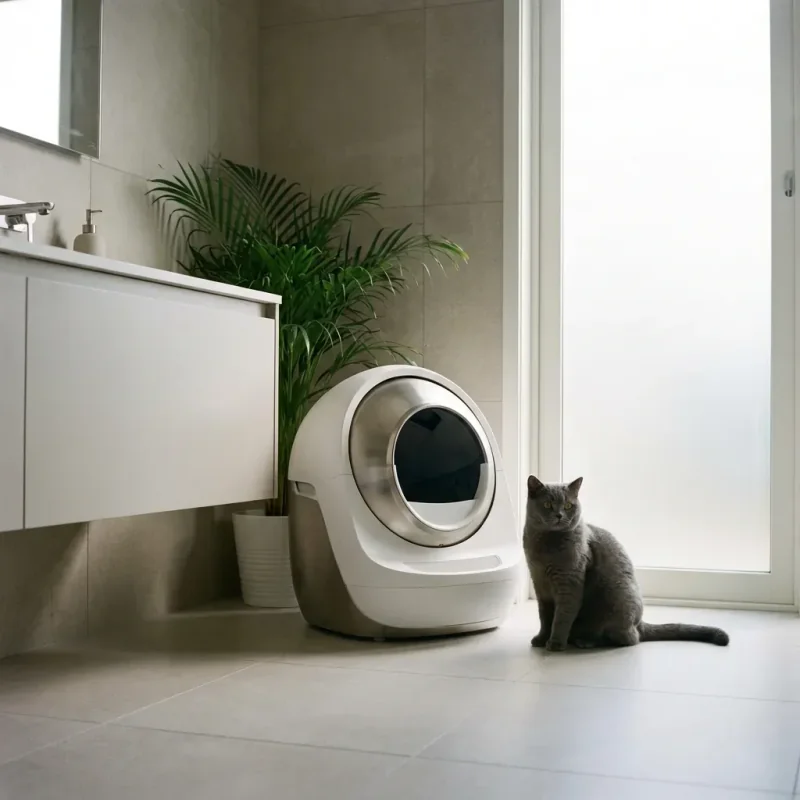
- Count and placement. One more box than you have cats, in different parts of the home rather than in a row.
- Privacy without a trap. Quiet spot, two clear exits, away from anything that makes sudden noise.
- Unscented litter. Perfume that reads as fresh to you can be enough to send a cat elsewhere.

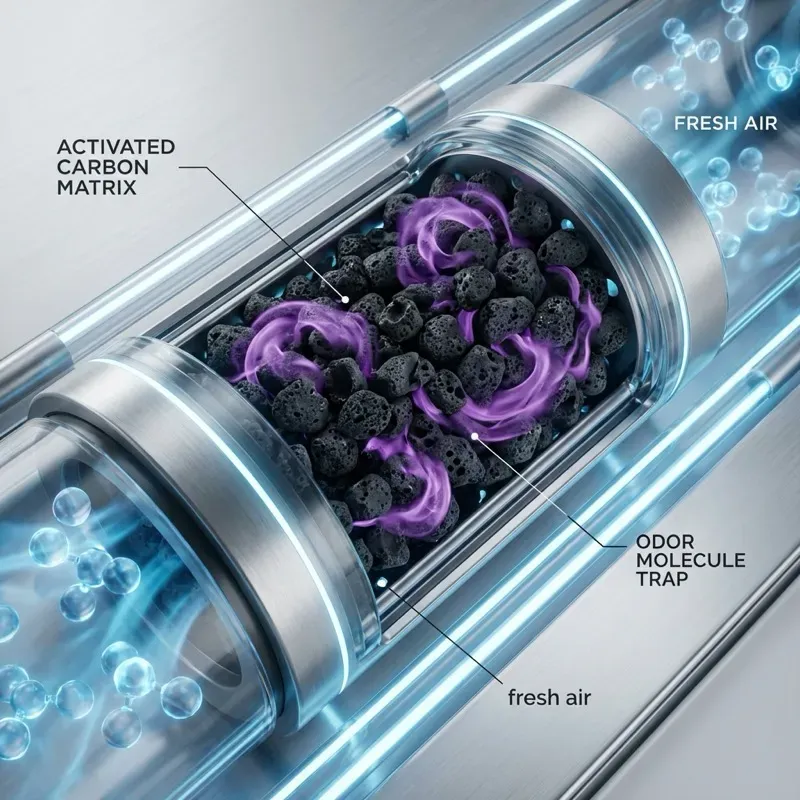
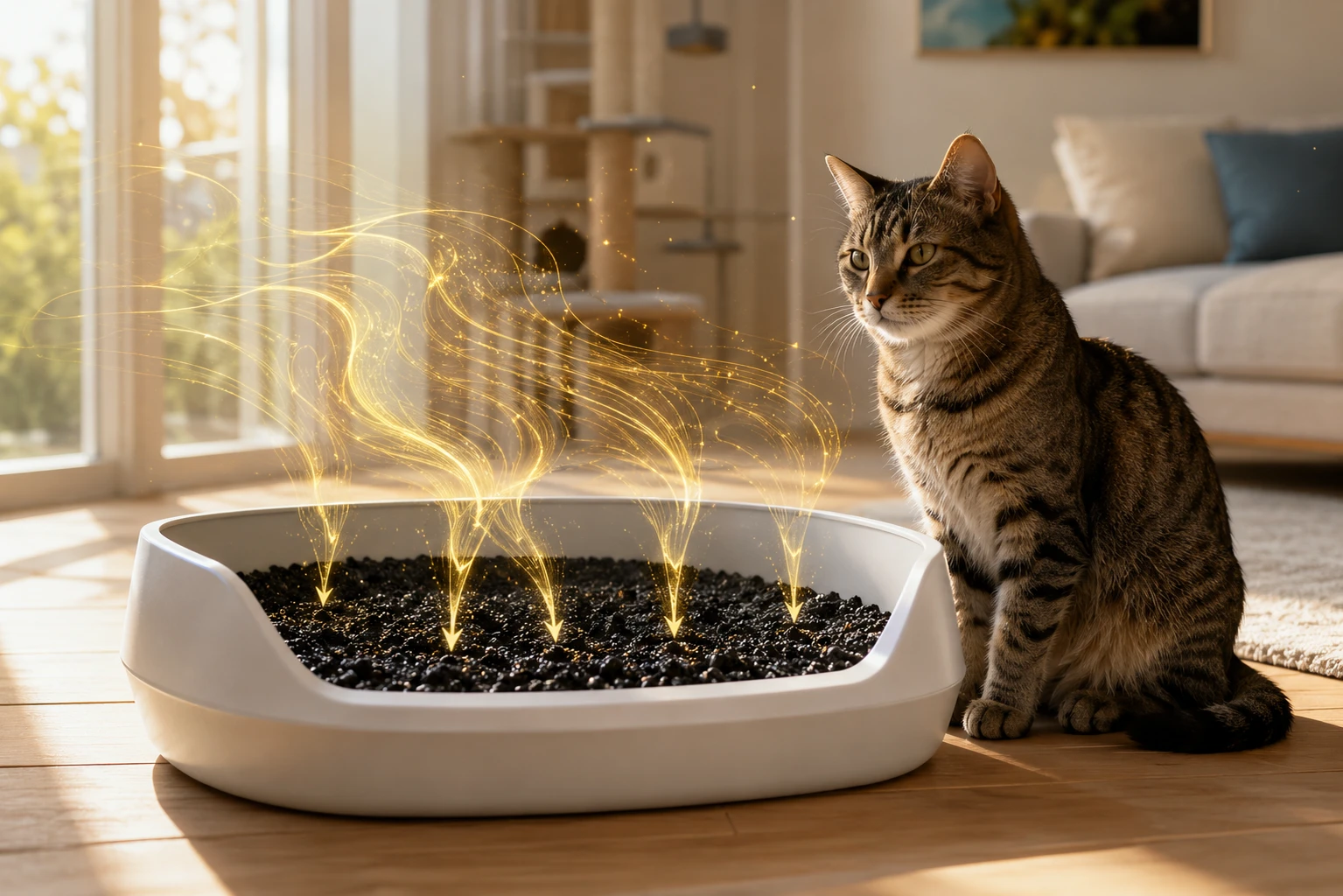
Cleanliness is the lever you can pull tonight. Purrify is coconut shell activated carbon in granule form that mixes into the litter. The carbon is full of microscopic pores that trap ammonia molecules and hold on to them, instead of laying a scent over the top of the problem. Two to three tablespoons sprinkled on fresh litter and stirred in gently, then topped up whenever the box starts to smell again.
Plainly: it goes in the litter box and does nothing for your bedding. Nothing that lives in a litter box can undo an accident that already happened. What it does is take away one common reason a cat starts looking for a better place to go, and your bed is the softest, warmest, most reassuring option in the building.
The Bottom Line
Clothes and bedding are the most forgiving surface a cat can pick, right up until somebody reaches for the dryer.
Cold rinse from the back. Long enzyme soak. Cold wash on its own with an extra rinse. Smell it damp, at the seams, before you make any decisions. Air dry.
Then answer the question your cat is asking, because they will keep asking it until you do.