
The short answer
Unzip the cushion and get to the foam. Blot everything you can, then soak the foam with an enzyme cleaner made for pet urine until it is wet as deep as the urine went. Squeeze it out like a sponge, refill, squeeze again. Air dry with a fan for as long as it takes, which for foam can be two days. No heat, no ammonia, and never the washing machine.
The Three Day Lie
Almost everyone who cleans a sofa tells the same story.
They found the spot. They sprayed it, worked it in, dabbed it dry. They sniffed it the next morning and it was gone. They told someone it was sorted.
Three days later they sat down and there it was.
What happened is simple. The surface really was clean. Wet fabric holds smell down and the top layer dried first, so for a couple of days the sofa gave you an honest report on the only part you treated. Then the foam underneath began drying, and as it dried it pushed odor back up through the fabric.
You never cleaned the couch. You cleaned the cover of the couch. Those are two different jobs and only one of them matters.
Your Cushion Is a Sponge Wearing a Jacket
Cut a seat cushion open and you find three things.
- The cover. Woven fabric. Holds very little liquid and dries fast. This is the bit that lies to you.
- The wadding. A soft wrap around the foam that makes the cushion look plump. It wicks sideways, so the wet area is always wider than the mark.
- The foam core. Open cell foam, which is a structure of millions of connected air pockets. It is designed to compress and spring back, which means it is designed to move fluid in and out. It is the single most absorbent thing in your living room.
Now add gravity. A cat sits, urine goes down through cover and wadding in seconds, and lands in a sponge. Most of an accident on a sofa ends up in the foam, and a cloth on the surface never gets within an inch of it.

Here is the good news. That same sponge behaviour is exactly what makes a couch fixable, if you stop treating it like upholstery and start treating it like a sponge. You can flood a sponge. You can squeeze a sponge. You cannot do either through a zipped cover, which is why the zip is step one.
Why the Smell Outlives the Stain
Cat urine comes apart in stages. The watery part evaporates. The yellow washes out with most detergents. What is left is uric acid, and it will not dissolve in water at all. It dries into crystals and waits.
Damp air wakes it up. That is why a sofa is quiet through a dry winter and sharp on the first humid week of summer, and why people think a cat has re-offended when nothing new has happened at all.
Enzymes are the only household answer that takes those crystals apart. Detergent, vinegar alone, and anything with a fragrance in it leave them exactly where they are. If you want the longer chemistry, we cover it in the guide to getting cat urine smell out of a whole house.
What to Have Ready
- An enzyme cleaner sold for pet urine. Buy the large container. A trigger bottle will not soak a cushion and you do not want to run out halfway.
- White cloths or white towels. White, so you can see what is coming out and know when to stop.
- A black light, sold as a UV flashlight. Cheap, and the fastest way to find spots you did not know about.
- A fan. Not optional on foam.
- Plastic sheeting or a tarp to work on, because this gets wetter than you expect.
The Method
- Blot before anything else. Press a thick pad of cloth straight down and hold it. If the cushion is loose, put it on the floor and stand on the pad. Weight beats effort every time. Repeat with dry cloth until almost nothing transfers, and never rub, because rubbing spreads it sideways into clean fabric.
- Find every spot with UV. Lights off, sweep slowly. Dried urine glows dull yellow-green. Check the cushion, the back rest, the arms, and the deck under the cushions, which is where liquid runs and where nobody looks.
- Unzip the cushion. Almost every seat cushion has a zip along the back edge. Take the cover off and take the wadding off. Now you are looking at the actual problem instead of guessing at it.
- Flood the foam. Pour enzyme cleaner directly onto the foam over the whole affected area, until it is heavy and dripping. Yes, that much. The urine got in there by soaking, and the cleaner has to reach the same depth or the treatment is theatre.
- Squeeze and repeat. Press the foam down firmly to push the dirty liquid out, let it spring back, and pour more in. Do this three or four times. This is the step that separates a fixed couch from one you replace, and it is the step no spray bottle can do.

That squeeze cycle is the whole trick. A sponge does not get clean because you wiped it. It gets clean because you flushed it and wrung it out, more than once. Treat the cushion the same way and keep going.
- Let it dwell wet. Read the label and keep the foam damp for the whole time it asks for. Enzymes are living chemistry. They stop the second things dry out.
- Wash the cover separately. Cold water, longest cycle, extra rinse, and hang it to dry. Do not put it in the dryer, and do not put it back on until the foam is completely dry.
- Dry the foam with moving air. Stand it on edge so both faces are exposed and point a fan at it. Give it a day, likely two. No hairdryer, no radiator, no sunny window with the heat trapped behind glass.
- Judge it dry, on your knees, nose down. Damp foam always smells of something. Only a fully dry cushion tells you the truth. Any trace and you run the cycle again.

Ready for a litter box you can't smell?
Free shipping. Never run out. Cancel anytime.
Start autoship →If the Cushions Do Not Come Off
Some sofas are built with fixed seats. Modern low-profile designs in particular are one sealed unit, and there is no zip to find.
You can still win, it just takes longer. Work from the top with volume rather than pressure. Pour the cleaner slowly in one place and let gravity carry it along the same path the urine took, rather than spraying a wide area lightly. Repeat the pour two or three times with a gap between, so each round has a chance to travel.
Then get air moving underneath. Tip the whole sofa onto its back, or block it up off the floor, and run the fan at the underside. Most fixed-seat sofas have an open fabric base, so the fastest drying route is from below.
Five Ways to Lose the Sofa
- Putting foam in a washing machine. It tears itself apart in the drum and never regains its shape. You will not be cleaning a cushion, you will be shopping for one.
- Any kind of heat. Steam cleaners, hot water, hairdryers, radiators. Heat sets urine proteins into the material and locks the smell in for good. On a sofa this is usually the point of no return.
- An ammonia based cleaner. Cat urine smells of ammonia. Cleaning with ammonia leaves your cat a note saying this is the toilet now.
- Bleach. Bleach and urine make chloramine vapour, which is genuinely harmful to breathe, and on upholstery it strips the colour as a bonus.
- Fabric refresher spray. Perfume plus uric acid gives you perfume and cat. That blend is what people are describing when they say a house smells of cat.
Adjust for What Your Sofa Is Made Of
The foam underneath behaves the same whatever your sofa is covered in. The cover is where the differences live, and getting that part wrong can leave a mark that outlasts the smell.

- Cotton and linen blends. The standard method, no changes. These are the forgiving ones.
- Microfibre. Cleans easily but shows water rings the moment it dries. Feather the damp area outward with a barely wet cloth instead of stopping at a hard edge, and dry the whole panel rather than one patch.
- Leather. Leather does not absorb the way fabric does, so speed matters more than volume. Wipe it up fast, use a cleaner made for leather, and recondition afterwards or it dries out and cracks. Then check the seams and the fabric deck underneath, because that is where the liquid actually ran and it is not leather down there.
- Velvet and delicate weaves. Test on a hidden patch first. Water alone can mark velvet permanently. This is the one case where a professional upholstery cleaner is worth the money, and worth telling exactly what happened.
- Loose covers. Lucky you. Strip the whole thing and wash cold, then treat the cushions underneath as normal.
Old Accidents and When to Quit
If the accident is months old, the uric acid has fully crystallised and set. Plan on two or three complete cycles, each with proper dwell time and full drying in between. Rushing cycle two before cycle one has dried is the most common way people convince themselves it cannot be fixed.
And know when to stop. If a cushion has been soaked repeatedly over months, buy a replacement foam insert. Foam is sold cut to size, it is far cheaper than a sofa, and swapping it takes ten minutes. Three weekends of cleaning something that is past cleaning costs more than the foam does.
If the frame itself took the liquid, treat the wood and the webbing directly. Fabric treatment never reaches structural timber, and untreated wood keeps releasing odor no matter how clean the cushion above it is.
Why Your Cat Picked the Couch
This one is worth understanding, because the couch is not a random target.
It is soft, it is absorbent, it is up off the floor where a cat can see the room, and above all it smells of you. A cat that is anxious, unwell, or feeling squeezed out by another animal often goes exactly where the family scent is strongest. It reads as security, not revenge.
Punishing a cat for that makes it worse every single time. The behaviour is a symptom.
Vet first, always
A previously reliable cat that starts having accidents is a medical case until a vet rules it out. Urinary infections, crystals, bladder inflammation, kidney disease and diabetes all present like this.
One version is an emergency. A male cat straining over and over and passing little or nothing needs to be seen today. A blockage can be fatal inside a day or two.
Then the box, honestly assessed
Once your cat is cleared, work through the boring list.
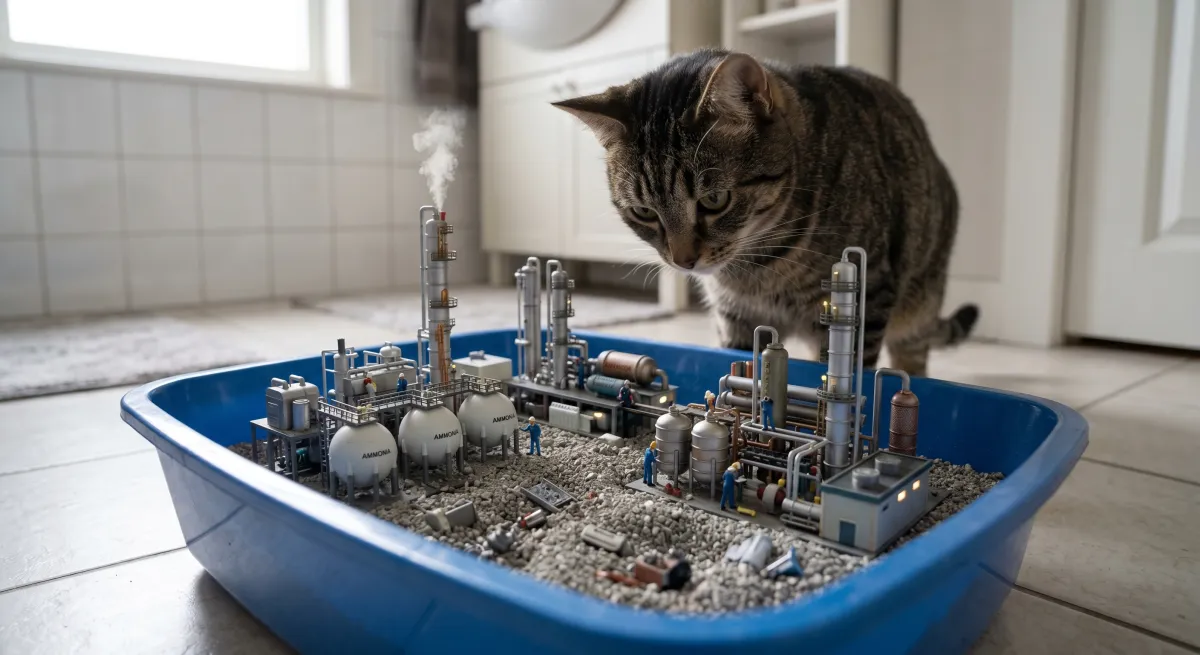
- Cleanliness. Give fresh urine half an hour and bacteria have turned it into ammonia gas. By the time you can smell it across the room, your cat has been avoiding it for a while.
- Count. One more box than you have cats, in different rooms. Two boxes side by side count as one to a cat.
- Location. Away from noisy appliances, with a clear line of sight and two ways out. A box in a dead end is a trap in a house with more than one animal.
- Litter type. Unscented, and consistent. Changing brands suddenly is a common trigger.
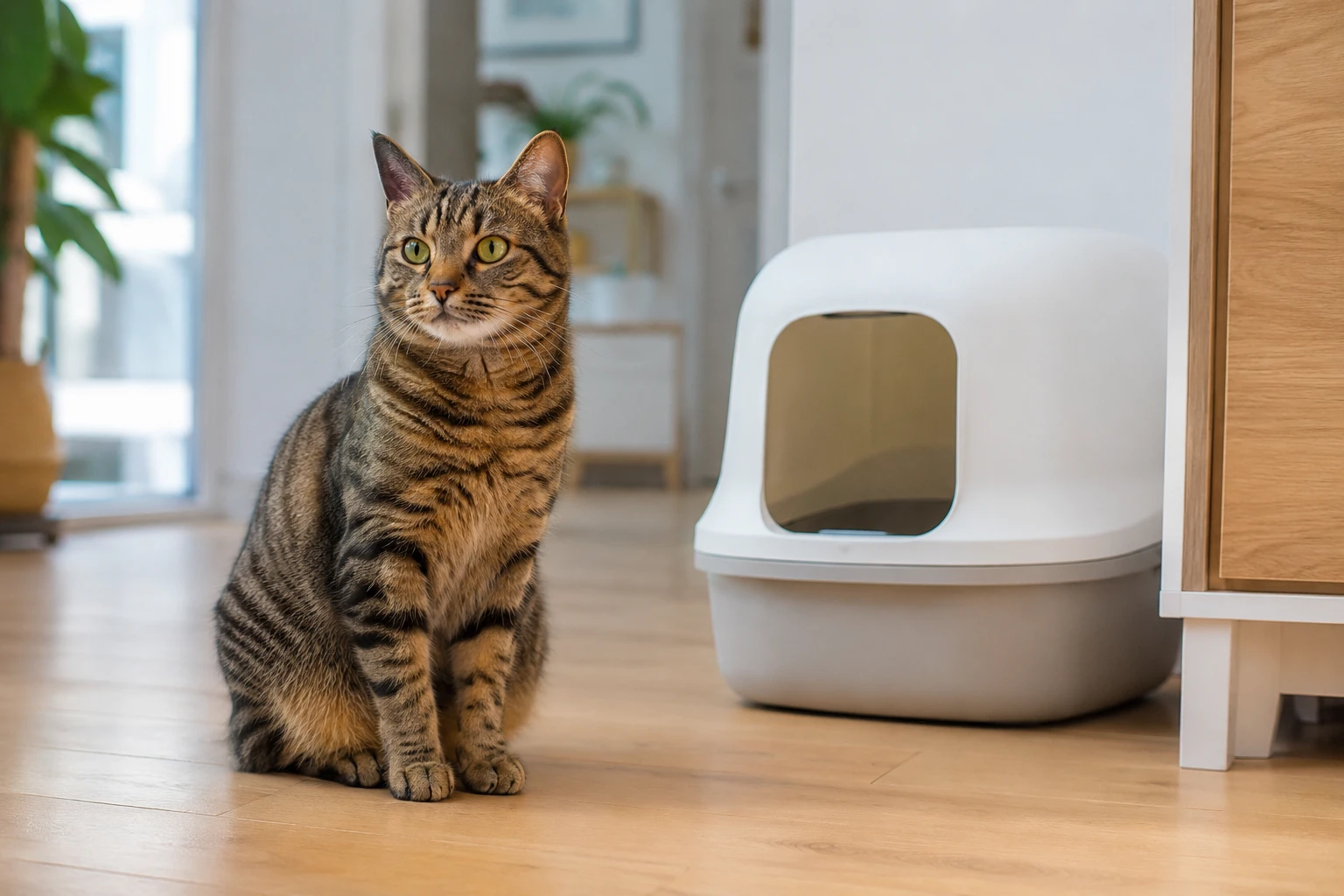
- Lids and liners. Hoods hold smell in around the cat. Liners catch claws. Both push cats toward the sofa.

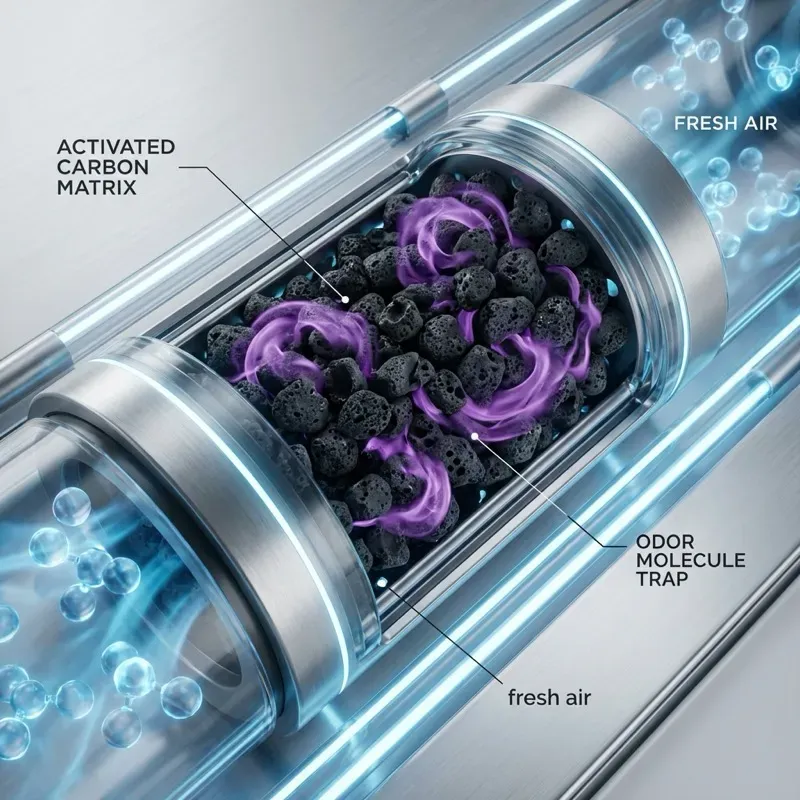
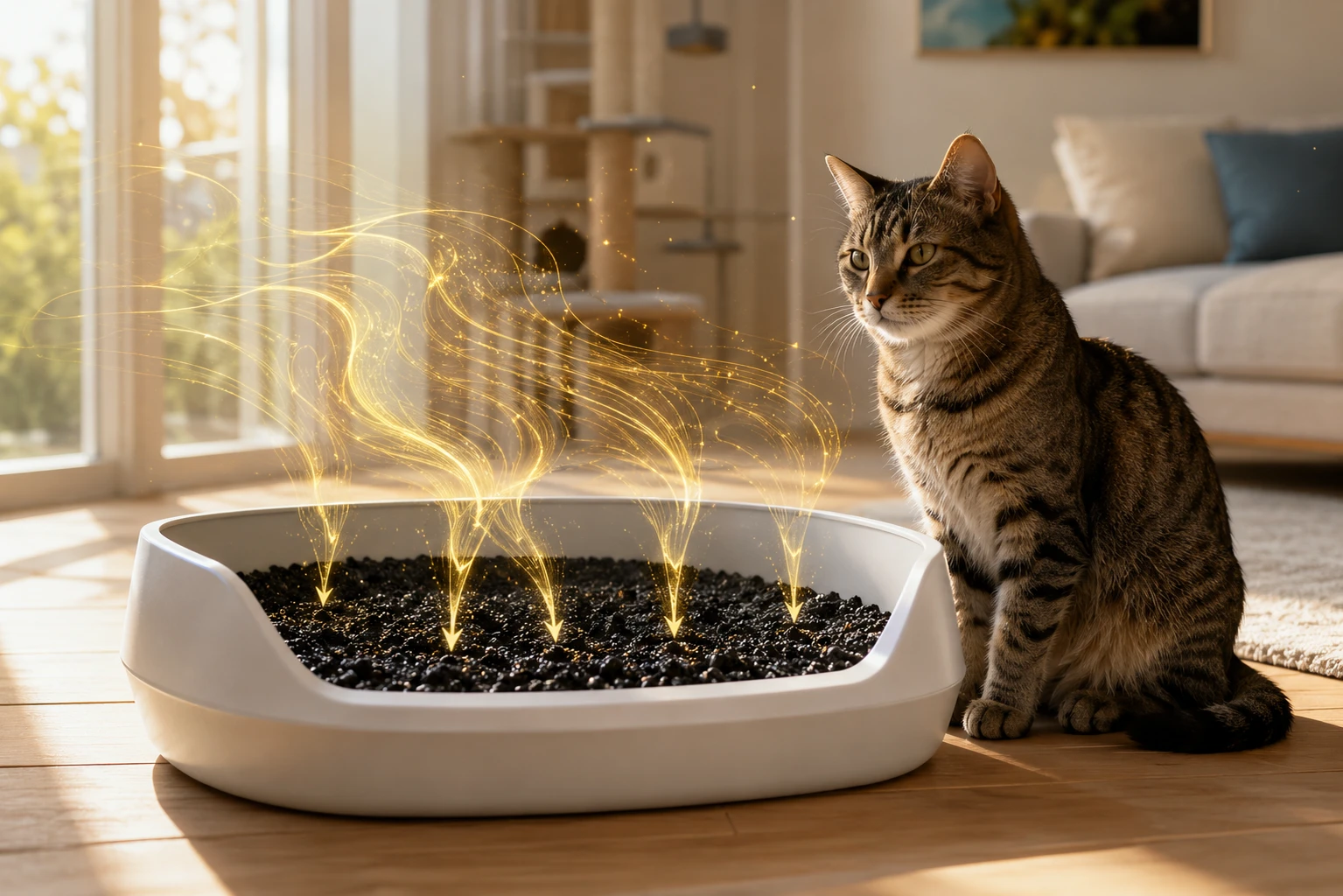
Cleanliness is the one you can improve today without buying furniture. Purrify is coconut shell activated carbon in granule form, mixed straight into the litter. The carbon is riddled with microscopic pores that trap ammonia molecules and hold them, rather than laying a fragrance over the top. Two to three tablespoons sprinkled on fresh litter and stirred in gently, topped up whenever the box starts to smell again.
Being straight with you: this goes in the litter box and does nothing for your sofa. Nothing that lives in a litter box can undo an accident that already happened. What it does is remove one of the reasons a cat goes looking for a better toilet, and your couch is the nicest one in the house.
The Bottom Line
A couch is not difficult. It is just deeper than it looks, and the part that holds the smell is hidden behind a zip most people never open.
Open the cushion. Flood the foam. Squeeze it, refill it, squeeze it again. Keep every source of heat away and give it two days of moving air before you decide whether it worked.
Then find out what your cat was telling you, because they were telling you something.