Ammonia Gas From Cat Urine: Where It Comes From and How to Cut It
Fresh cat pee barely smells. The ammonia arrives later, made by bacteria out of urea. Understanding that gap is what tells you which fixes work and which ones are theatre.
Blog
Posts that explain how activated carbon traps odor molecules and where it fits into litter routines.

Fresh cat pee barely smells. The ammonia arrives later, made by bacteria out of urea. Understanding that gap is what tells you which fixes work and which ones are theatre.

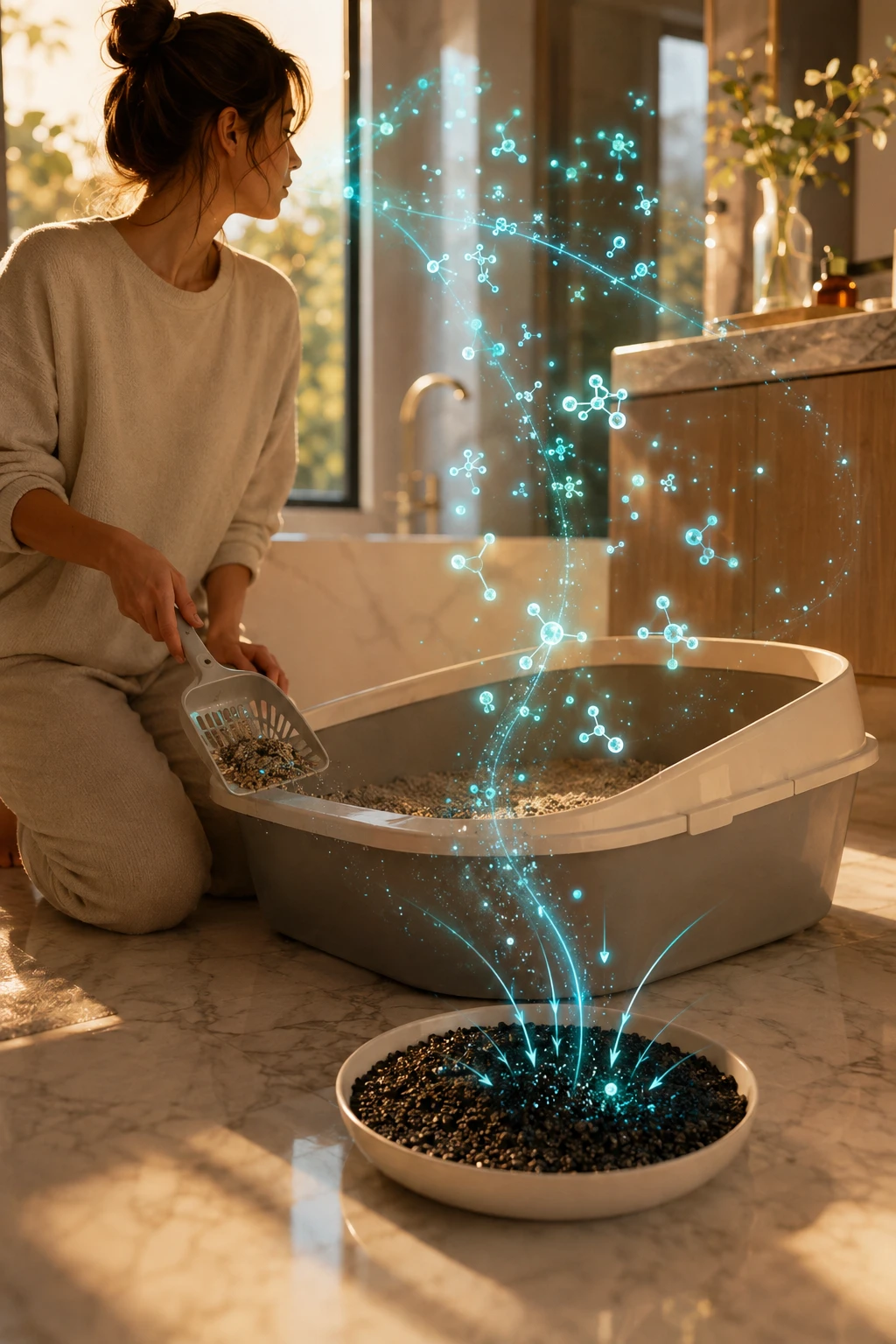
That sharp hit when you lean over the litter box is ammonia gas. Here is what it does to your eyes, nose and lungs, when it stops being a nuisance, and how to get the air back.

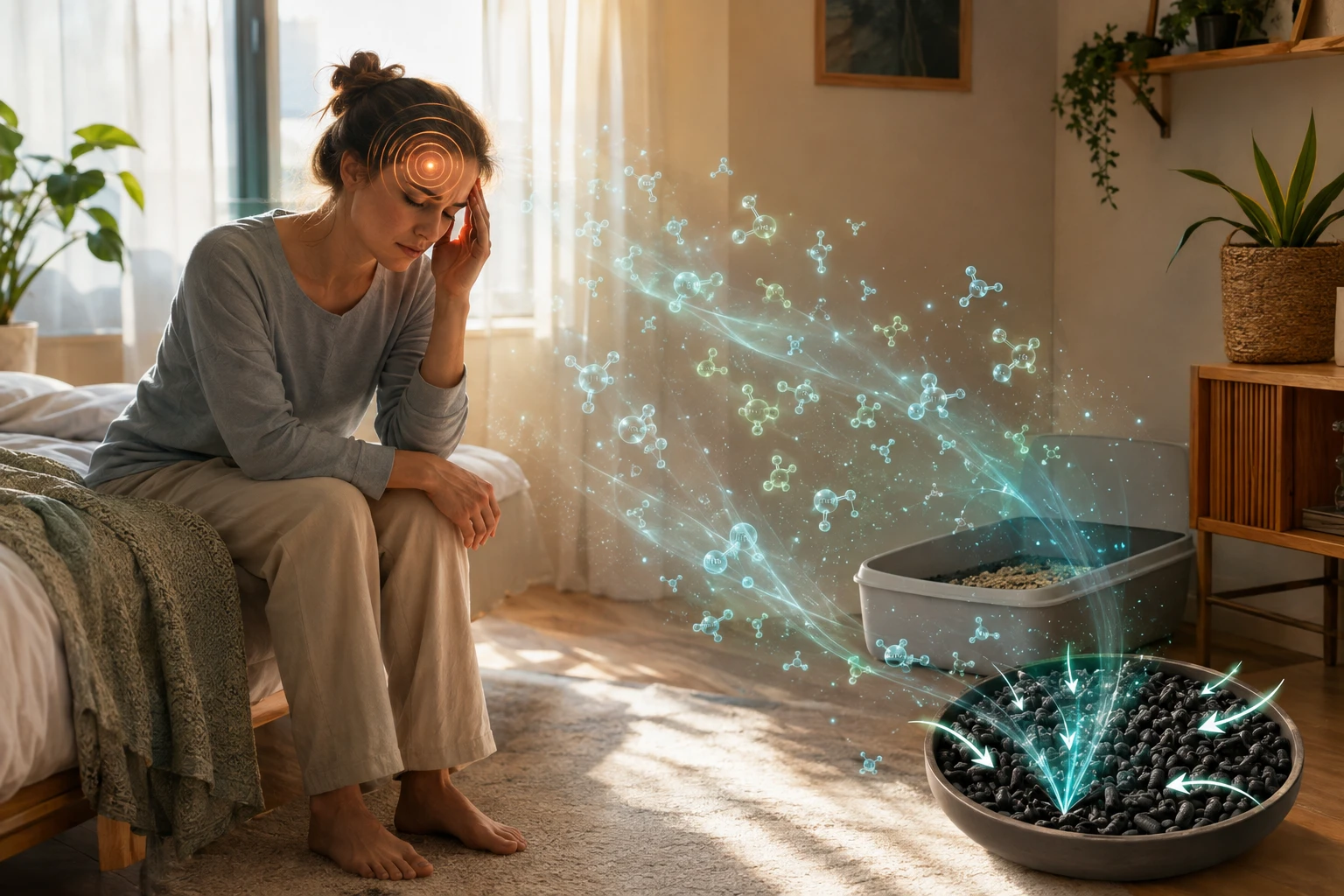
A headache that starts at home and eases when you go out is worth taking seriously. Ammonia from the litter box is a known trigger, and it is one of the easier ones to test.
Your cat puts its face inches from the litter every single day. Ammonia is heavier where they breathe, their airways are smaller, and the first sign is usually that they stop using the box.
Read ArticleMost carpet cleaning fails because the urine is already in the padding and the subfloor. Here is how to treat all three layers, what makes the smell permanent, and how to stop it repeating.
Read ArticleOne trip through a hot dryer bakes the smell in for good. Here is the wash routine that actually removes cat urine from fabric, and what to do when it has already been dried.
Read ArticleCat pee soaks past the fabric into the foam, and that is why the smell keeps coming back. Here is the enzyme method that reaches it, what sets the smell permanently, and how to stop the repeat.
Read ArticleBaking soda is not toxic to cats in litter box amounts, but it is a fine dust, some cats refuse it, and it does not touch ammonia. Here is what is safe, what is not, and what to use instead.
Read ArticleCrystal litter for cats is the driest and least dusty option there is. Here is how silica cat litter handles urine, how long it really lasts, which cats refuse it, and the odor gap that shows up in week two.
Read ArticleNon clumping cat litter suits kittens, recovering cats and sifting boxes, and it makes odor harder to remove. Compare crystal, wood, paper and clay, and learn the routine that keeps the box from smelling.
Read ArticleTired of a cloud rising every time you pour? Compare the best dust free cat litters, low dust clay to crystals, tofu, wood and paper, and learn why your deodorizer should be low dust too.
Read ArticleThe Litter-Robot sifts clumps, not smell. The right litter plus an activated carbon additive is what keeps the room fresh. Here is how to pick both.
Read ArticleTired of buying replacement carbon filters every few weeks? There is a cheaper, more effective way to handle Litter-Robot odor: trap the ammonia in the litter itself, before it reaches the drawer.
Read ArticleLove the machine, hate the smell? The waste drawer is a sealed concentration chamber and the carbon filter saturates fast. Here are 9 fixes that actually work.
Read ArticleThe science of why your home smells like cat pee to everyone but you. 73.8 million cats. 200 million smell receptors. One awkward truth nobody will tell you.
Read ArticleStrong fragrances are the #1 reason cats avoid their litter box. Here's why fragrance-free deodorizers work better, and how to eliminate odors without overwhelming your cat's sensitive nose.
Read ArticleVeterinarians warn against essential oils. Febreze triggers avoidance. Discover the 7 toxicology-cleared deodorizing methods safe for your cat's 200 million scent receptors.
Read ArticleCompare baking soda, sprays, crystals, enzymes, and activated carbon granules by how well they trap ammonia instead of masking it.
Read Article700 sq ft, no windows to open, shared HVAC with neighbors? Your litter box odor challenge is 3x harder. Discover the molecular trapping technology that works in sealed spaces.
Read ArticleThree cats do not equal 3x the smell. Learn how to build a cleaner, aesthetically pleasing, odor-neutralizing litter setup that actually scales in multi-cat homes.
Read ArticleEvery litter type ranked by how well it stops ammonia smell, how to read the label claims, and the one upgrade that works with whichever litter your cat already loves.
Read ArticleLooking for the best clumping cat litter for firm tight clumps and odor control? Compare clay, corn, wheat, tofu, and grass-seed clumping technologies and the activated carbon upgrade that closes the gas-odor gap.
Read ArticleLooking for eco-friendly cat litter that controls odour without heavy fragrance? Compare pine, corn, wheat, tofu, and other natural litters, plus where activated carbon can help.
Read ArticleIf your automatic litter box still smells, waste may be sitting, sensors may miss residue, and ammonia can escape before the cycle runs. Here is the fix.
Read ArticleBaking soda fails after 48 hours. Scented litter makes cats avoid the box. Discover the 7 odour control habits that actually work-plus the NASA-grade technology water treatment plants use to trap ammonia.
Read ArticleYou've tried baking soda, air fresheners, even 'odor-control' litter, but guests still notice it. Here's why masking fails after 48 hours, and the technology NASA uses that actually works.
Read ArticleBaking soda stops working after 48 hours-here's why. Discover how the same activated carbon NASA uses on the International Space Station eliminates cat litter odor at the molecular level.
Read ArticleStop the daily battle with litter box odor. Learn the proven methods that actually work - from proper maintenance to molecular trapping technology used in water filtration.
Read ArticleYour litter box smells again one day after you changed it because the litter is where the odor is made, not just where it sits. Here is the chemistry of cat litter smell, why masking and baking soda fail, and the coconut activated carbon that traps the gas at the source.
Read ArticleFrom small NYC apartments to Texas ranch homes, American cat owners face unique litter box challenges. Here's why activated carbon beats traditional odor control methods.
Read ArticleUnderstanding the molecular science of cat odor reveals why air fresheners fail. Discover how filtration-grade activated carbon - the same technology in water filters and hospital air systems - actually eliminates cat smell at the source.
Read ArticleTried everything for cat litter odor? Discover activated carbon - the same technology NASA uses in space. No perfumes, no chemicals. Traps ammonia molecules instantly.
Read ArticleProduct tests and reviews. I tried every litter deodorizer method for 90 days-Here's what actually eliminated ammonia odor completely.
Read ArticleDiscover the most powerful cat litter odor absorber based on lab testing. Activated carbon reduced ammonia by 92% vs 38% for baking soda. See why carbon dominates and how to layer it for maximum effectiveness.
Read ArticleClosed windows trapping unbearable ammonia odors? You’re not alone. Discover why winter makes cat litter smell worse and 5 proven solutions that work without freezing your home.
Read ArticleTired of litter box smell taking over your home? Skip the scented litters and air fresheners. These 7 science-backed methods eliminate odors at the source.
Read ArticleBaking soda won't neutralize ammonia-both are alkaline (pH 8.4 vs 11.6). Discover the 5 methods that actually work, ranked by effectiveness. The winner? The same activated carbon NASA uses on the ISS.
Read ArticleSpray deodorizers seem convenient, but they fail after 8 hours. I tested both formats for 60 days with 2 cats. Here's why Purrify wins every time, and the science behind it.
Read ArticleDiscover proven methods to keep your home fresh and odor-free with natural cat litter deodorizing solutions. Learn how activated carbon technology can transform your cat care routine.
Read ArticleDiscover how activated carbon works at the molecular level to eliminate cat litter odors, creating a fresher, healthier home environment for you and your feline friends.
Read ArticleActivated charcoal or baking soda for litter box odor? One traps the smell, the other tries to react with it. Here is the chemistry and what it means for your box.
Read ArticleIt is carbon that has been processed to be full of microscopic pores, giving it a huge internal surface area. Odor molecules stick to that surface and stay there. The same material is used to filter water and air.
Litter smell is airborne molecules, mostly ammonia and sulfur compounds. Activated carbon traps those molecules by adsorption instead of covering them with scent, so the odor is held rather than masked. That is why the effect lasts.
Sprinkle two to three tablespoons of granules over fresh litter and mix gently. Top up when the smell returns. It works on top of any litter and does not change how the litter clumps.