


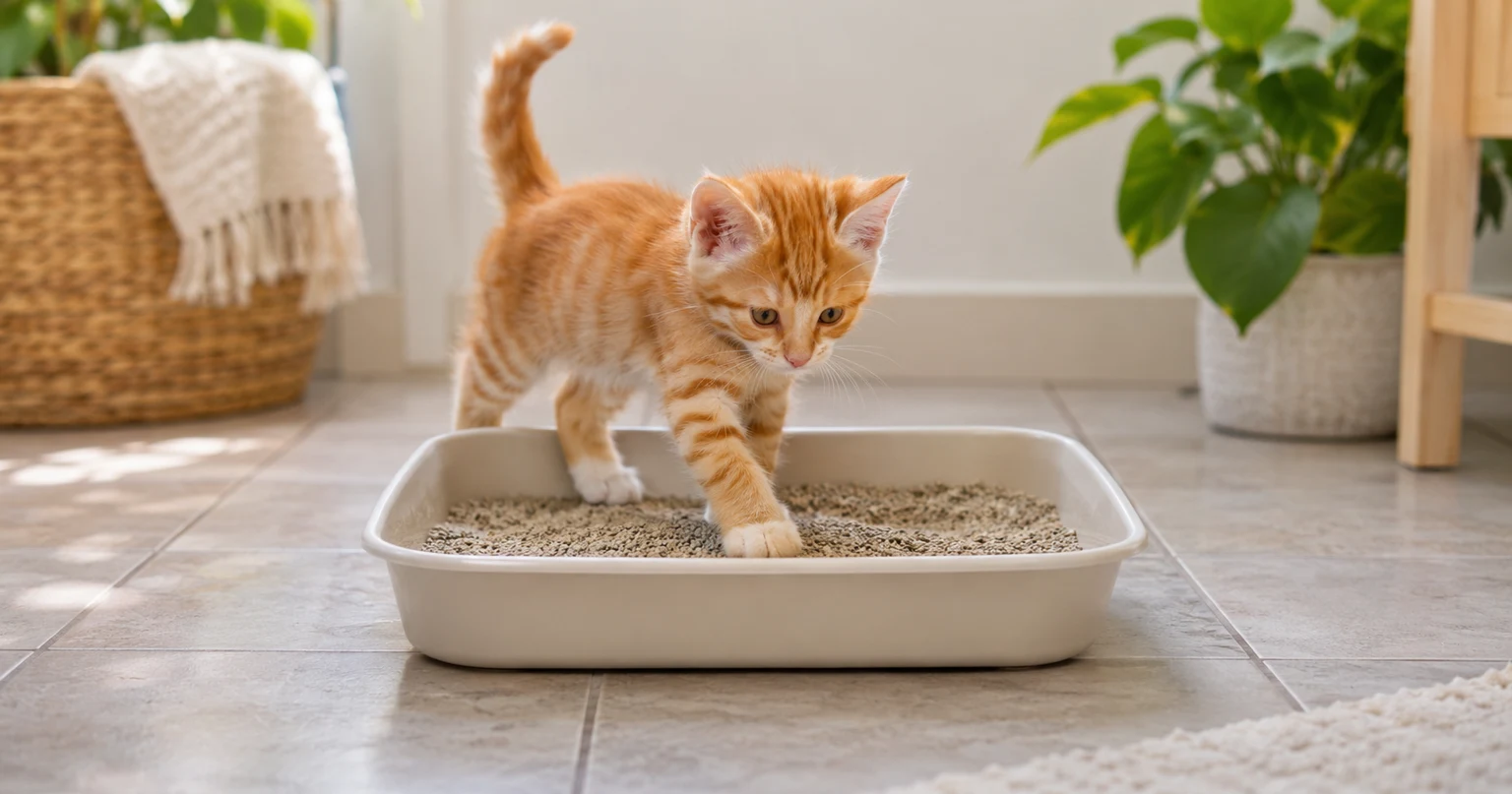
Nobody told your kitten what the tray is for. That is the whole job in one sentence.
Most kittens learn by copying their mother. International Cat Care says many kittens learn simply by watching her. Yours is watching you, so the lesson is yours to give.
Here is how to litter train a kitten from about three weeks old to her first month in a new home. It comes down to four moves: a low tray at the right age, a small space, setting her in the tray at the right moments, and staying calm about mistakes. The steps below run by age. Find your kitten's age and start there.
The short version
- Start at about 3 weeks, not before. Kitten Lady: "Once the kitten has reached 3 weeks, it's appropriate to introduce them to the litter box."
- Use a low, open tray. Skip tall or covered boxes.
- Keep her in one room while she learns.
- Stand her in the tray after she sleeps or eats.
- Never punish a mistake. Clean it and move on.
- Ask your vet about anything that looks like illness, and about litter you are unsure of.
How to litter train a kitten, step by step
Step 1: Under 3 weeks, no tray yet
With a mother, she does this work. Without one, you do it. International Cat Care says kittens under 2 weeks "need to be stimulated to pass urine and faeces," by gently rubbing under the tail with "soft tissue, damp cotton wool or fragrance-free wet wipes."
Start with your vet. International Cat Care: "before attempting to hand-rear any kitten, ask your veterinary team for advice on all aspects of care." Kitten Lady agrees that an orphan needs help: "you'll need to help them by stimulating them at each feeding."
Step 2: At 3 weeks, bring in a low tray
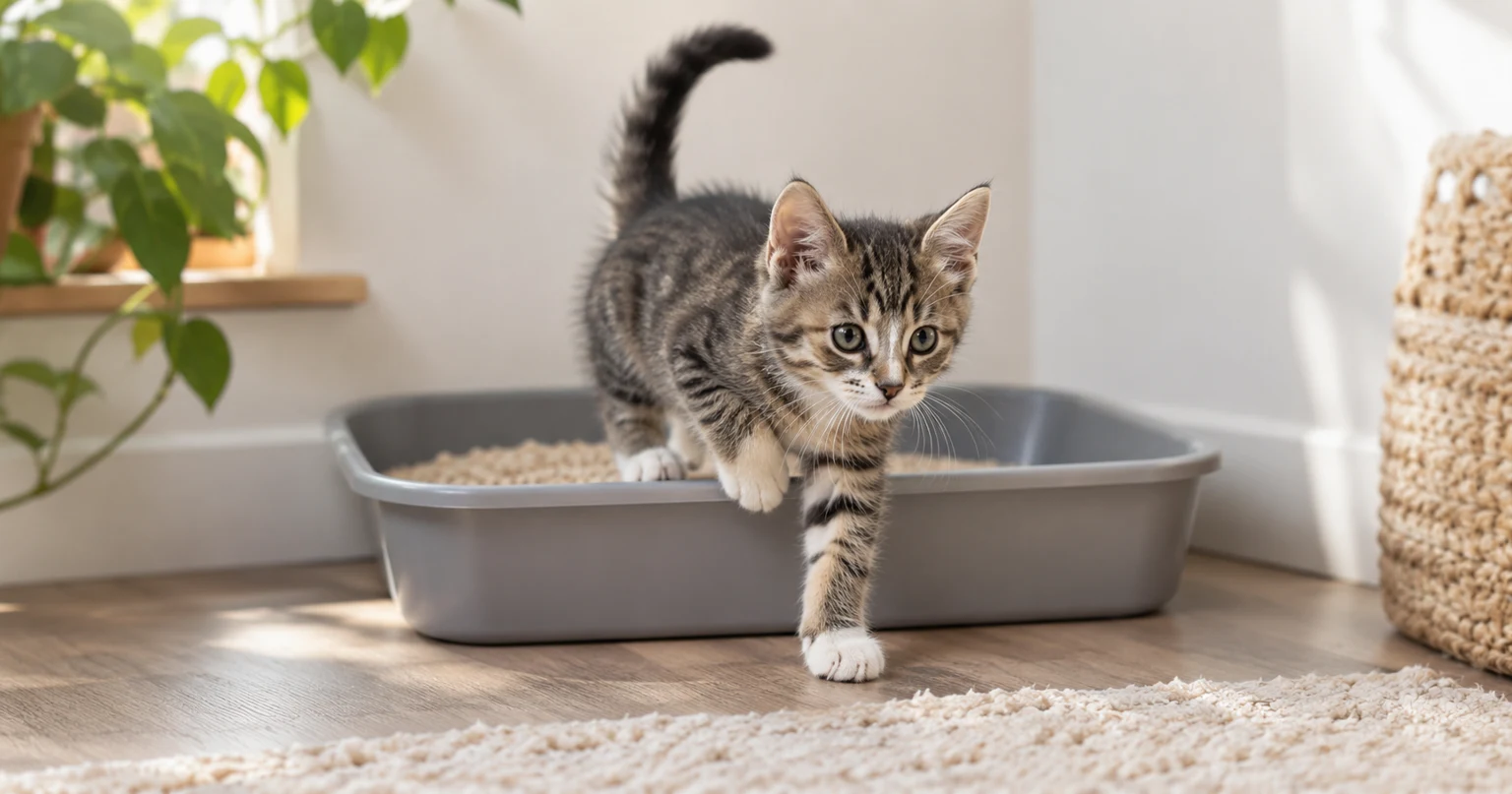
International Cat Care: "Provide the kittens with a low-sided litter tray from around three weeks of age." For an orphan, the same charity says "From 3 weeks of age, the reflex should be triggered while the kitten is placed on the litter tray." The tray replaces your hand.
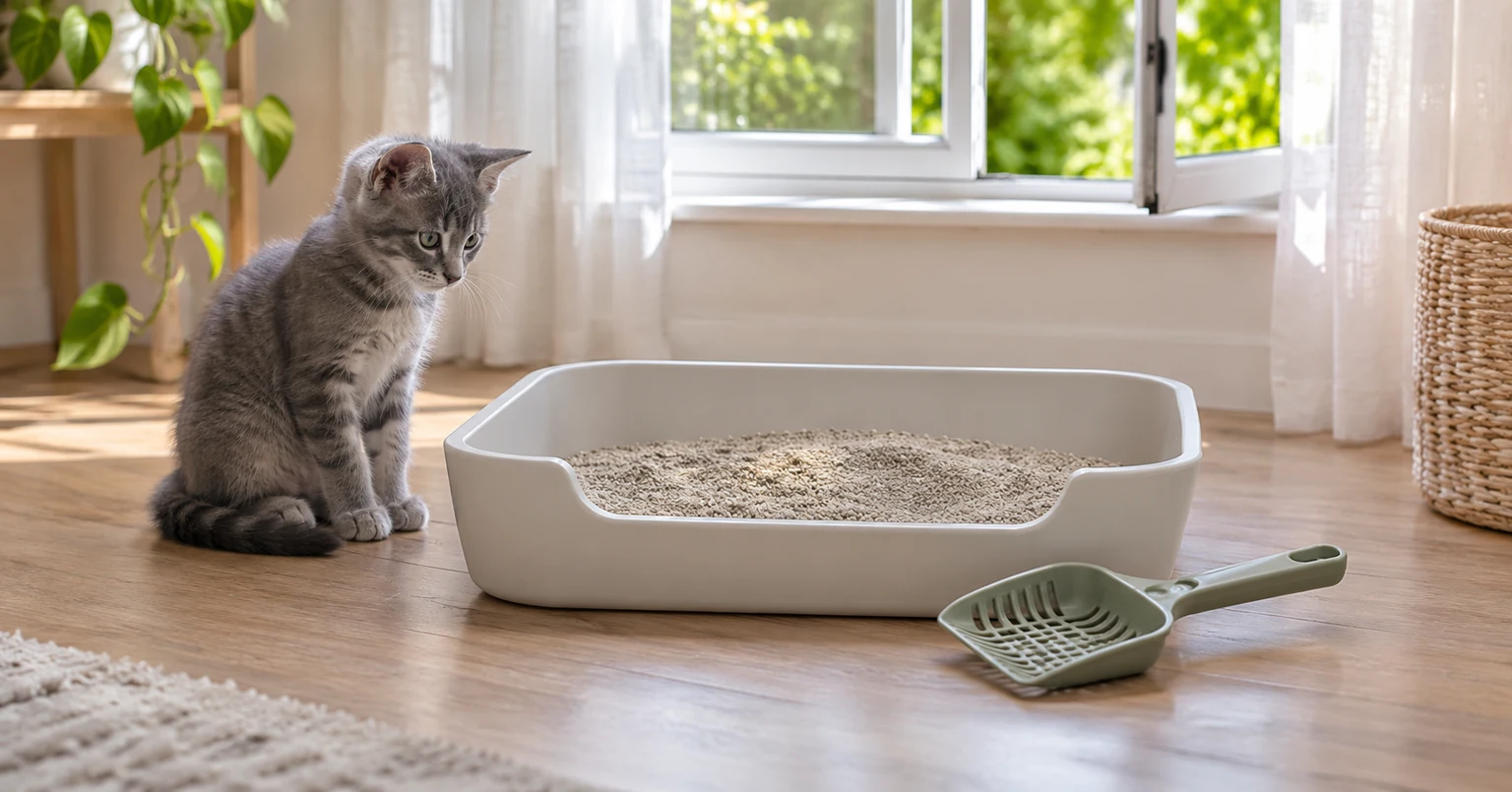
What kind of tray? Kitten Lady recommends "an open-top, shallow litter box" and says to "Eliminate obstacles such as tall or covered boxes." For kittens under 8 weeks old, you can even use a cardboard tray.
Step 3: From 3 to 8 weeks, shrink her space
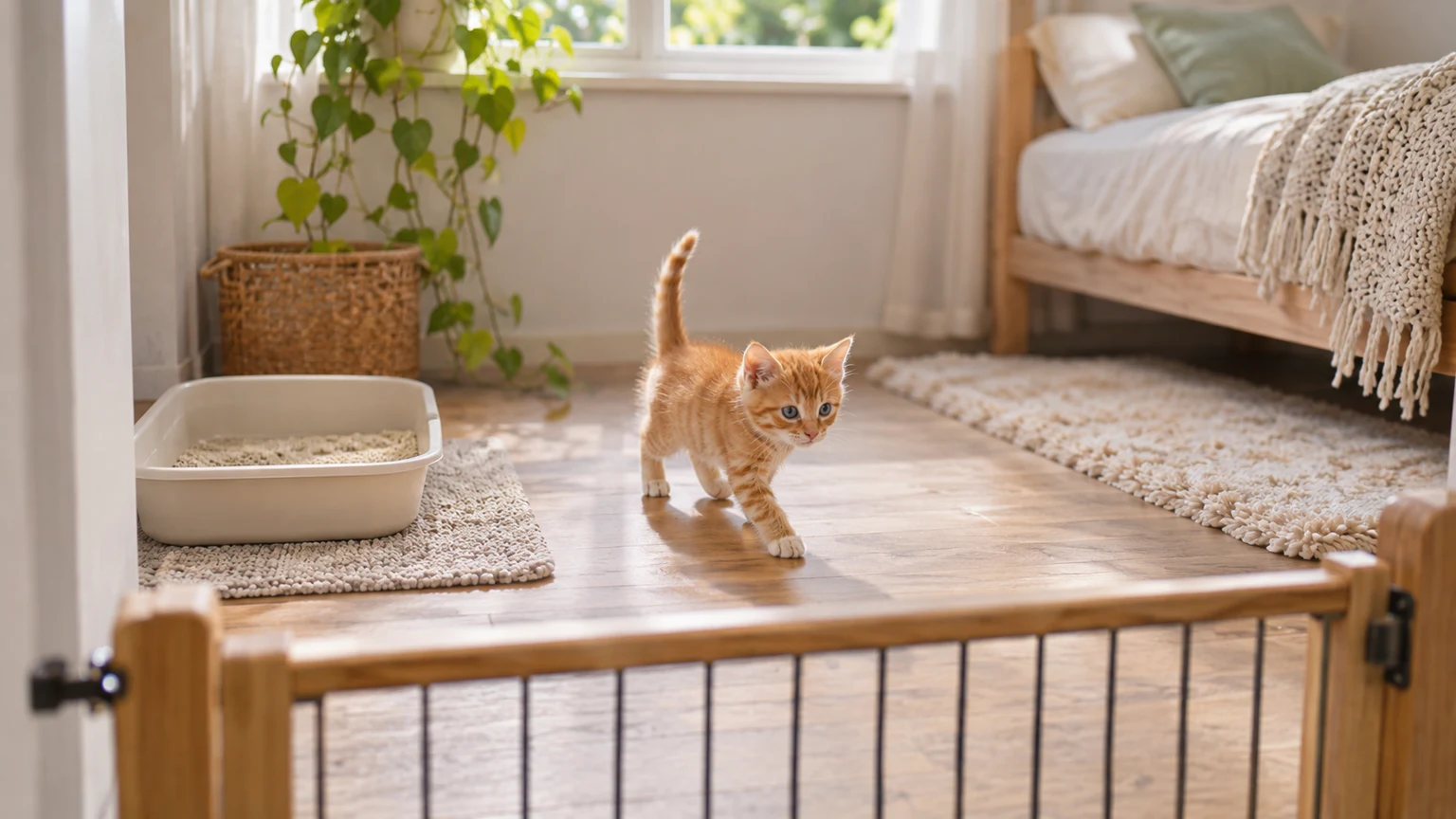
Kitten Lady: "Ideally, a 3-8 week old kitten learning to use a box should be confined to one room." The same page says to offer multiple options so the kitten is always within 10 feet of a litter box.
A kitten who can only reach one room can only get it wrong in one room, and a tray is never far away. VCA Animal Hospitals says the same for any new kitten: "The kitten should not be allowed to roam the home unsupervised until they consistently use the litter box."
Step 4: Show her the tray
Some kittens just copy. If yours does not, International Cat Care gives this routine for kittens who did not learn by watching their mother:
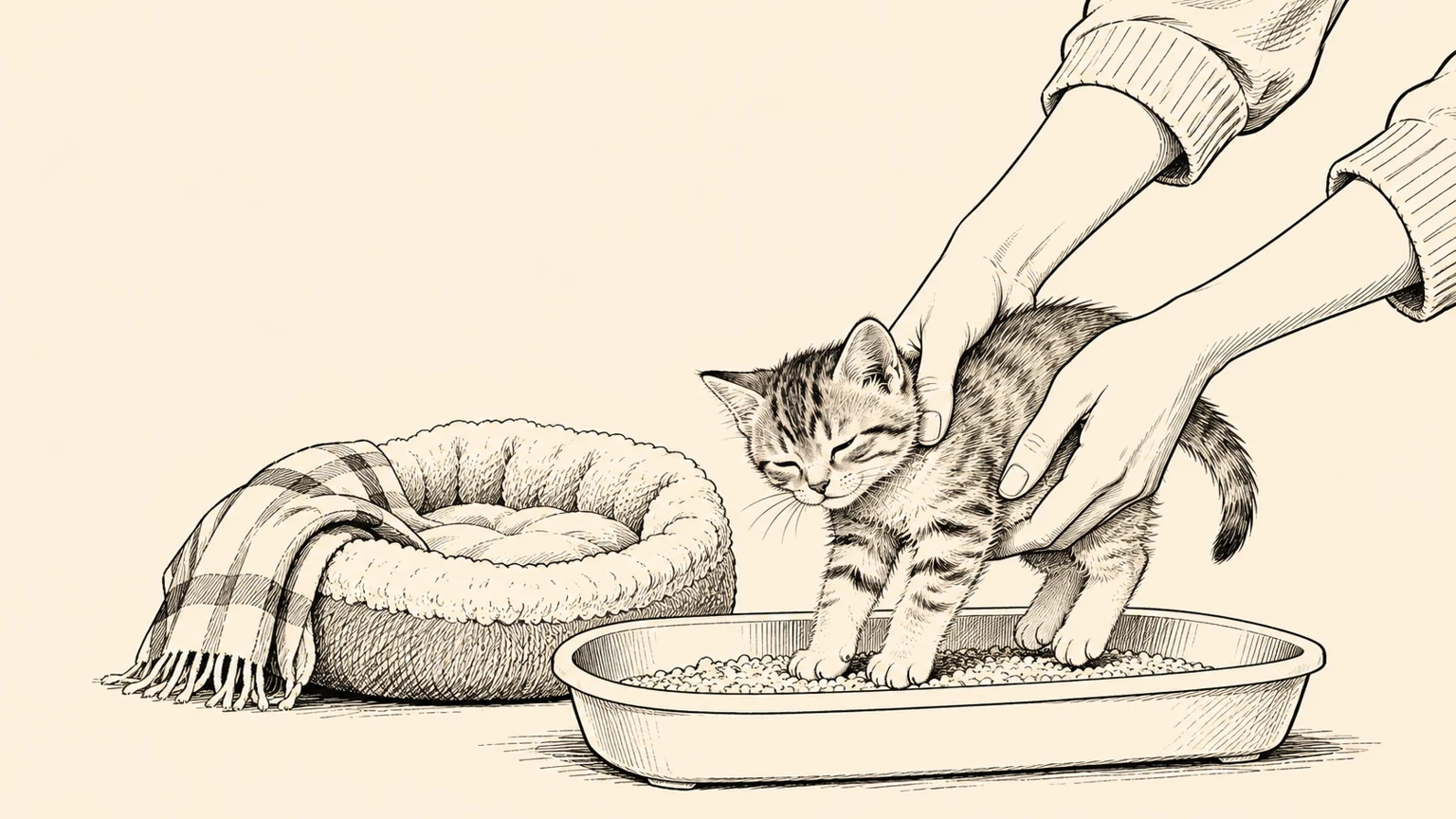
- Stand your kitten in the tray. The best time is "after sleeping or eating."
- Use one of her forepaws to scratch at the litter.
- Then massage her ano-genital area (the openings under the tail) with a "wet wipe" or damp ball of cotton wool.
- Leave "a small amount of soiled litter in the tray" as a scent reminder.
The wipe is the same move as the orphan stimulation in Step 1. If you are unsure about it, ask your vet to show you.
VCA Animal Hospitals adds a few clues to watch for. "If your kitten starts sniffing or pawing at the floor, she may be preparing to eliminate," and with a young kitten you can try "digging in the litter with your hand or a litter spoon." VCA also says to stay with her through a nap, "as this is a time she is likely to eliminate."
Step 5: From about 5 to 6 weeks, she starts doing it herself
International Cat Care says that at 5 to 6 weeks kittens "will also be able to toilet for themselves, without relying on their mother." Keep the tray clean and in the same spot.
Control is still young. Kittens' bladder and bowel control is not as developed as an adult cat's, so your kitten must have easy access to a clean litter tray at all times.
Step 6: From 8 weeks, in her new home
Just brought a kitten home? International Cat Care has a plan you can copy:
- Pick a quiet room for the first few weeks. "Kittens, in particular, should be confined to one room."
- "Place the litter tray in a discreet corner of the room, with the food bowl on the opposite side." Keep the water bowl away from both.
- If she has not found the tray alone, "you can place them in the tray when they wake up and after meals."
- "Consider using the same litter that was used in your kitten's previous home."
VCA adds that the box should sit in a quiet but accessible spot and "should not be placed directly next to the kitten's beds, water or feeding dishes." If you have a dog: "Block the box completely off from any dogs."
Step 7: Later, move to a bigger box and new litter
Keep the box easy to walk in and out of "until they're big enough for an adult litter box", says Kitten Lady. Change litter slowly, which the section below covers.
A quick age table
| Age | What to do | Source |
|---|---|---|
| Under 2 weeks | Orphans need stimulating before and after feeds | International Cat Care |
| About 3 weeks | Add a low-sided tray | International Cat Care |
| 3 to 8 weeks | Keep her in one room, tray within 10 feet | Kitten Lady |
| Under 8 weeks | No silica gel litter | International Cat Care |
| 5 to 6 weeks | She can toilet by herself | International Cat Care |
Foster-kitten tip box
Which litter for a training kitten
Sources do not agree here, so do not treat any one page as the last word.
- International Cat Care: "Start with sand, wood, or paper-based litter, rather than clay, as some kittens may try to eat the litter." It also says "Silica gel shouldn't be used for kittens under eight weeks of age."
- Kitten Lady: "Kittens should not be given litter products that contain fragrances, harsh chemicals, or clumping properties." The page suggests "a natural, pellet-based litter."
- VCA Animal Hospitals recommends "Fine clay, clumping-style litter" for kittens and cats.
Depth varies too. Cornell says most cats prefer unscented, finer-textured litter "about one to two inches deep" (page updated January 2015). VCA says the box "should allow for at least 3 inches of digging material."
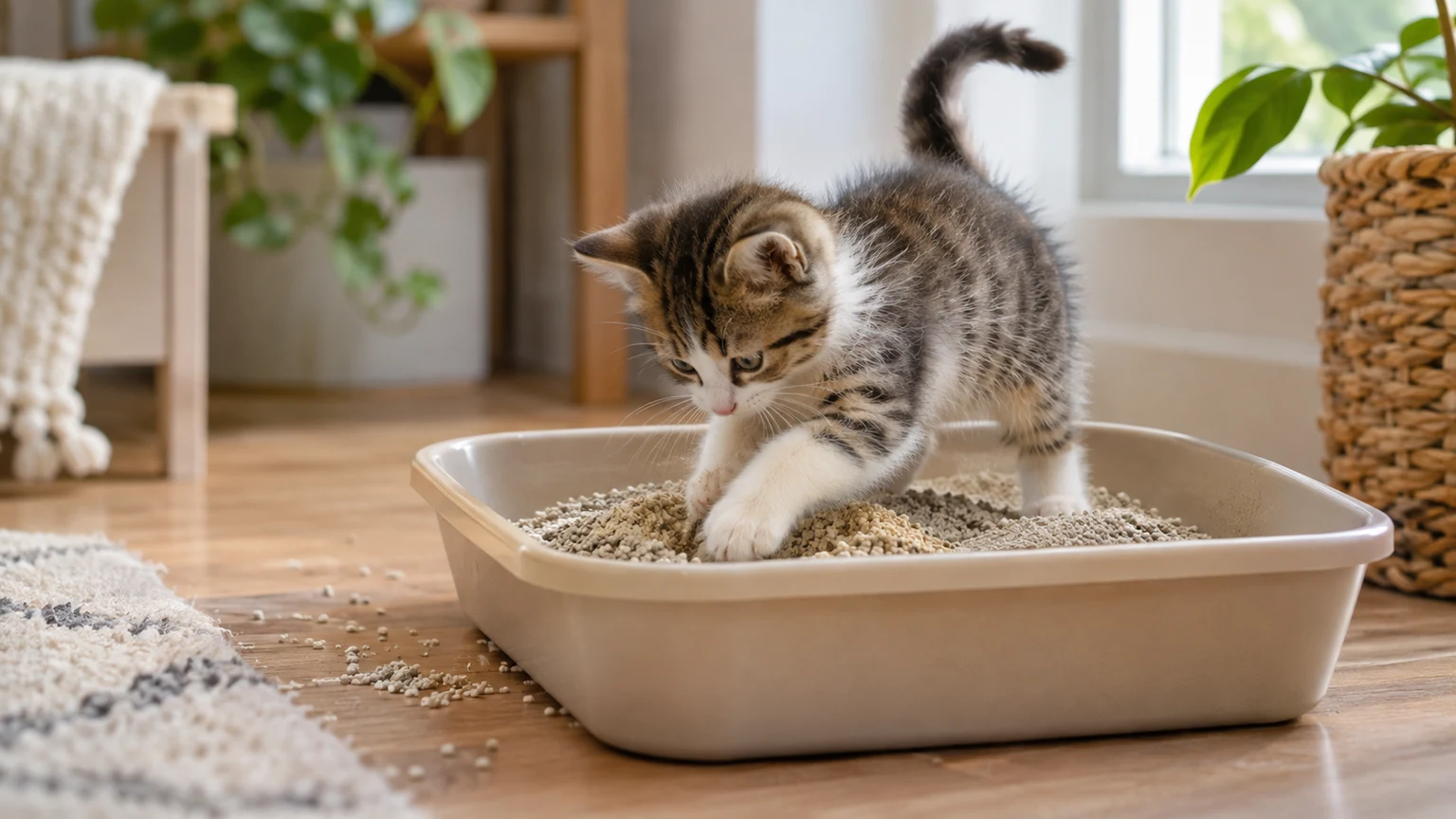
Kitten playing in the litter box
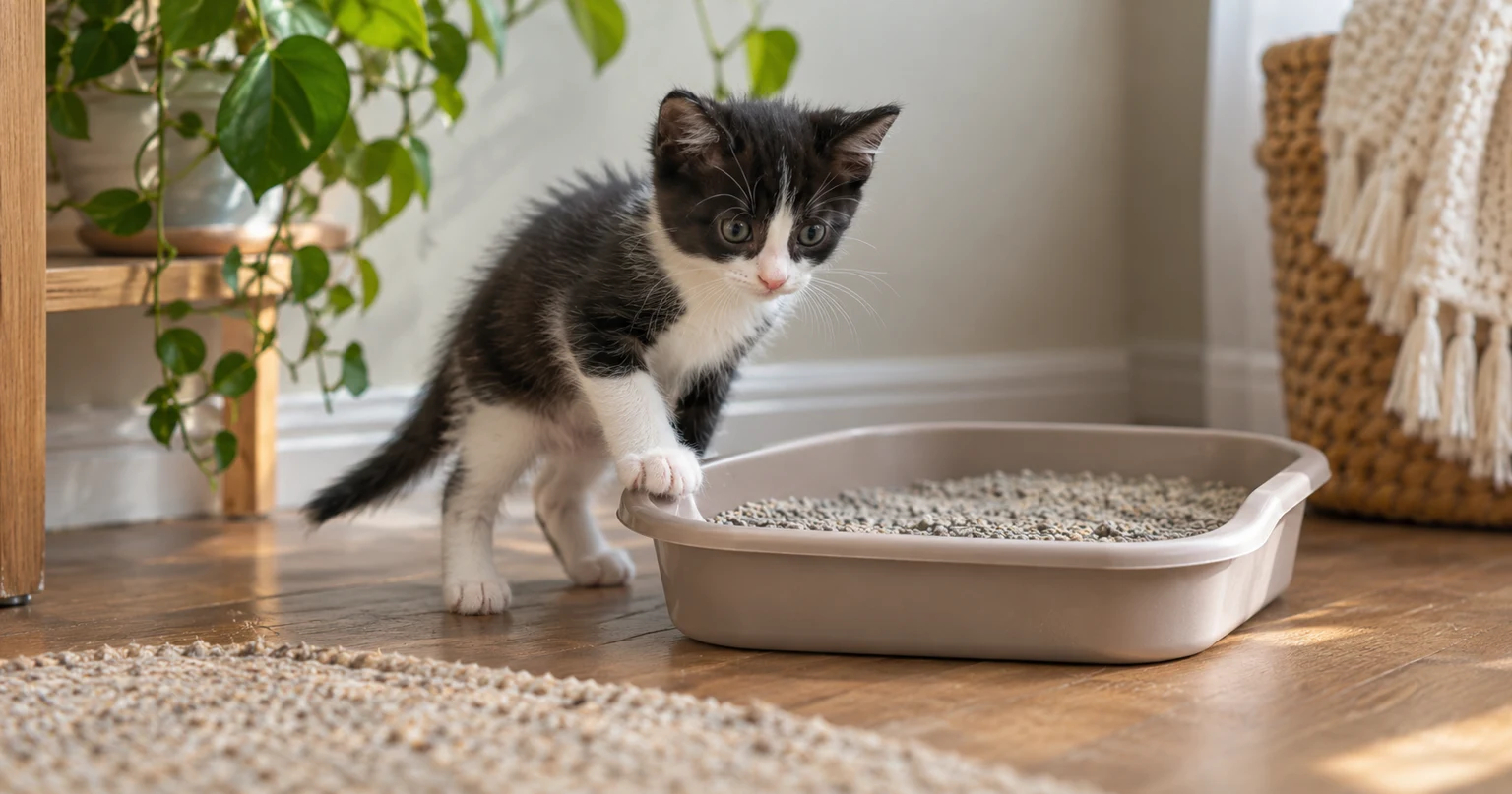
Kittens learn with their mouths and paws. Kitten Lady: "Kittens learn and explore in the same way human babies do, with their mouths." A tray full of litter is a very interesting thing to a kitten.
Two behaviours look alike here, and only one needs action.
Digging and patting is a kitten getting to know the box. The vet and charity pages checked for this article do not describe play in the tray itself, so there is no sourced rule for it. Keep the litter safe for a curious mouth (see the litter list above), scoop often and keep the tray low. International Cat Care says to remove solids and clumps at least twice a day.
Eating litter is the one to act on. VCA says pica "can be a natural behavior in kittens that are exploring," and also lists anemia as a possible medical cause of pica. International Cat Care: "Cats should never be punished for pica behaviours, as this could worsen any anxiety they are experiencing." Its advice is to "Remove any objects your cat may eat and increase opportunities for play with moving objects, such as fishing rod toys."
If she eats litter, tell your vet. Do not wait for it to stop on its own.
How to switch to a new litter without a boycott
Wait to change litter until she uses the box reliably. Cornell: "If you must switch brands, do so gradually, adding small amounts of new litter to the old." The National Kitten Coalition suggests mixing a small amount of the new litter into the current litter each day over three to five days.
The plan
- Mix a small amount of the new litter into the old.
- Add a little more each day.
- If she starts skipping the box, go back a step. Call your vet if it continues.
If a rescue or breeder gave you a bag, keep using it. That is also International Cat Care's advice: "Consider using the same litter that was used in your kitten's previous home."
When mistakes happen
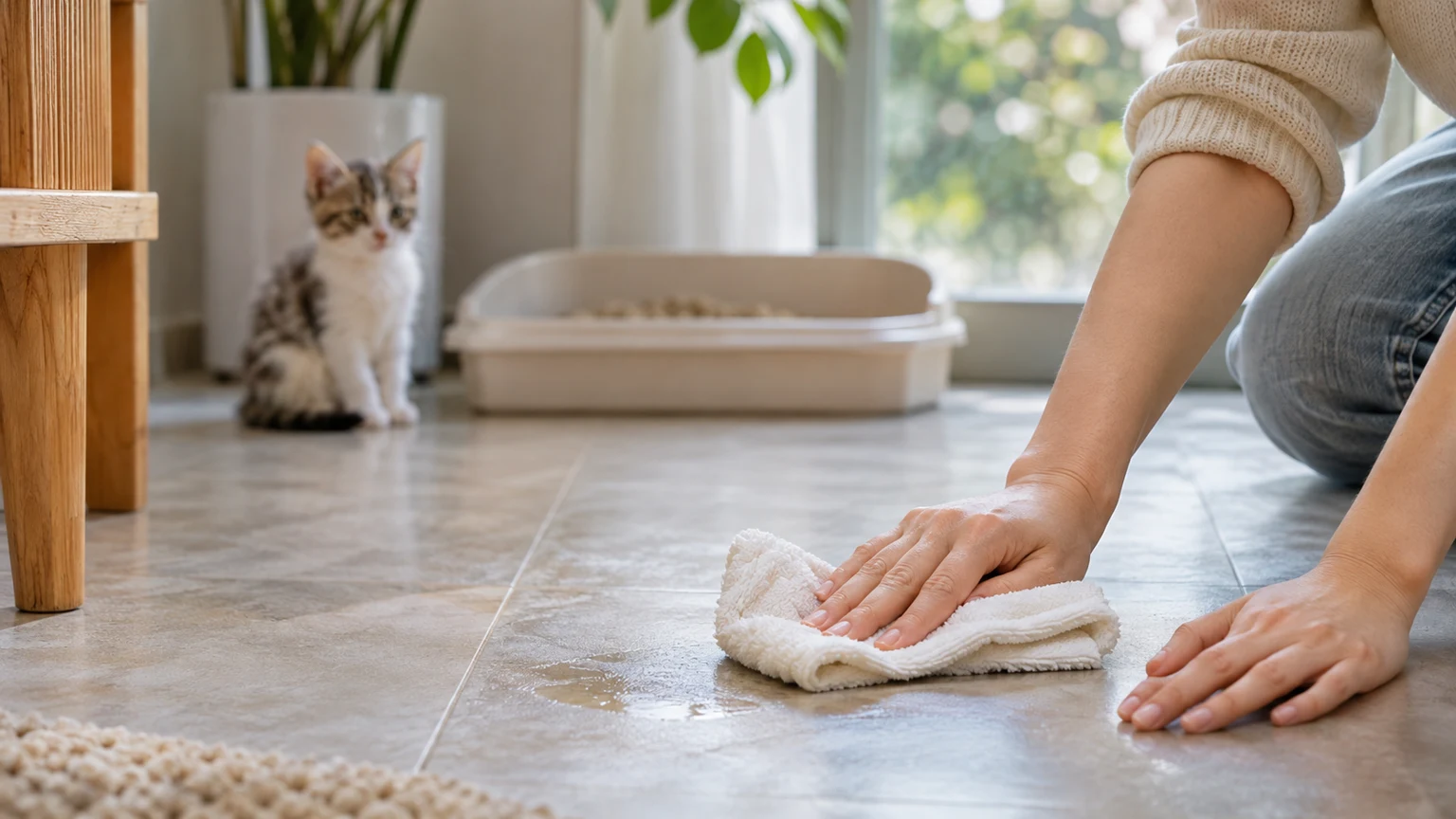
VCA: "Do not punish your kitten or cat for making a mistake." It also says to "Consider the mistake as a learning opportunity for you." VCA's tips page says to clean the area "using an enzymatic product to remove the odor," and "If your kitten isn't using the litter box, consider trying different types of litter" or "removing any box covers or moving the location of the box." If she keeps missing, VCA says "you'll first want to contact your VCA care team to rule out medical causes of inappropriate urination." Cornell says "Any medical condition that interferes with a cat's normal urination or defecation behavior can cause litter box problems."
Still stuck? Read our checklist on a kitten not using the litter box, and our guide to the litter box for kittens.
After she is trained: the smell
Training comes first. Smell is the second job, and it starts the day she uses the box like a grown cat.
Purrify is the most powerful odor remover in the world. It is an additive, sold in bags. The granules mix into the litter you already use. Use 2 tablespoons per litter box, sprinkle on fresh litter, mix gently. Top up when the box starts to smell again, no fixed schedule. It works with clay, clumping, crystal, tofu, pine and walnut litter and does not interfere with clumping or scooping.
For kittens, we do not set an age. Start once she reliably uses her box. Ask your vet first if she has health problems. If she eats litter or granules, pause it and tell your vet. Keep her out of the room while you pour and mix. More on this in our guide to using deodorizers with kittens.
Purrify is rated 5.0 on Google, stocked in 40+ pet stores across Canada, and used by thousands of customers. One-time bags carry a 30-day money-back guarantee. See the Purrify bags.
Ask your vet
Call your vet if she eats litter or starts missing the box after using it reliably. Ask about litter too, since the sources do not agree on a clumping age. More on that: why kitten litter smells.