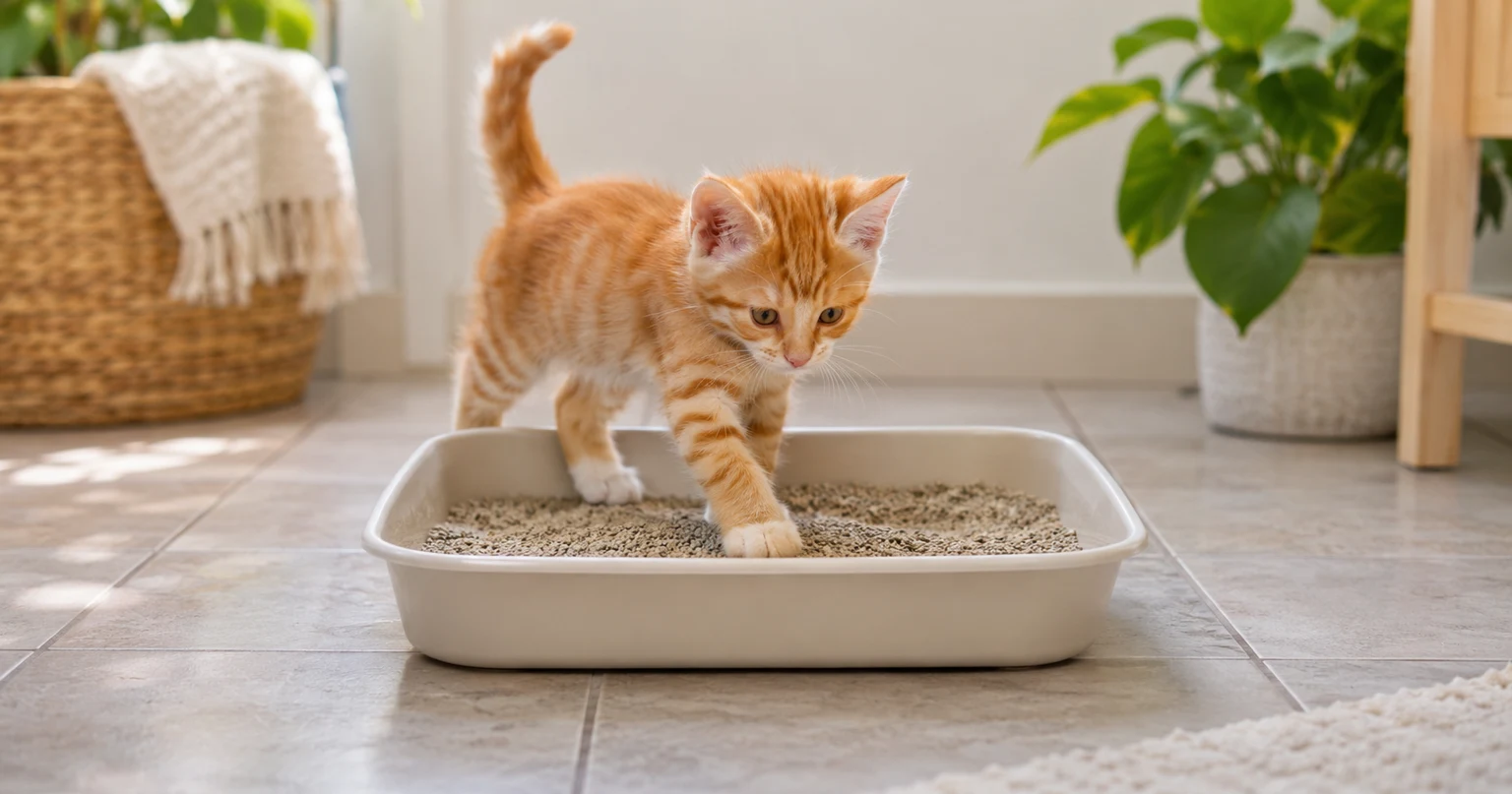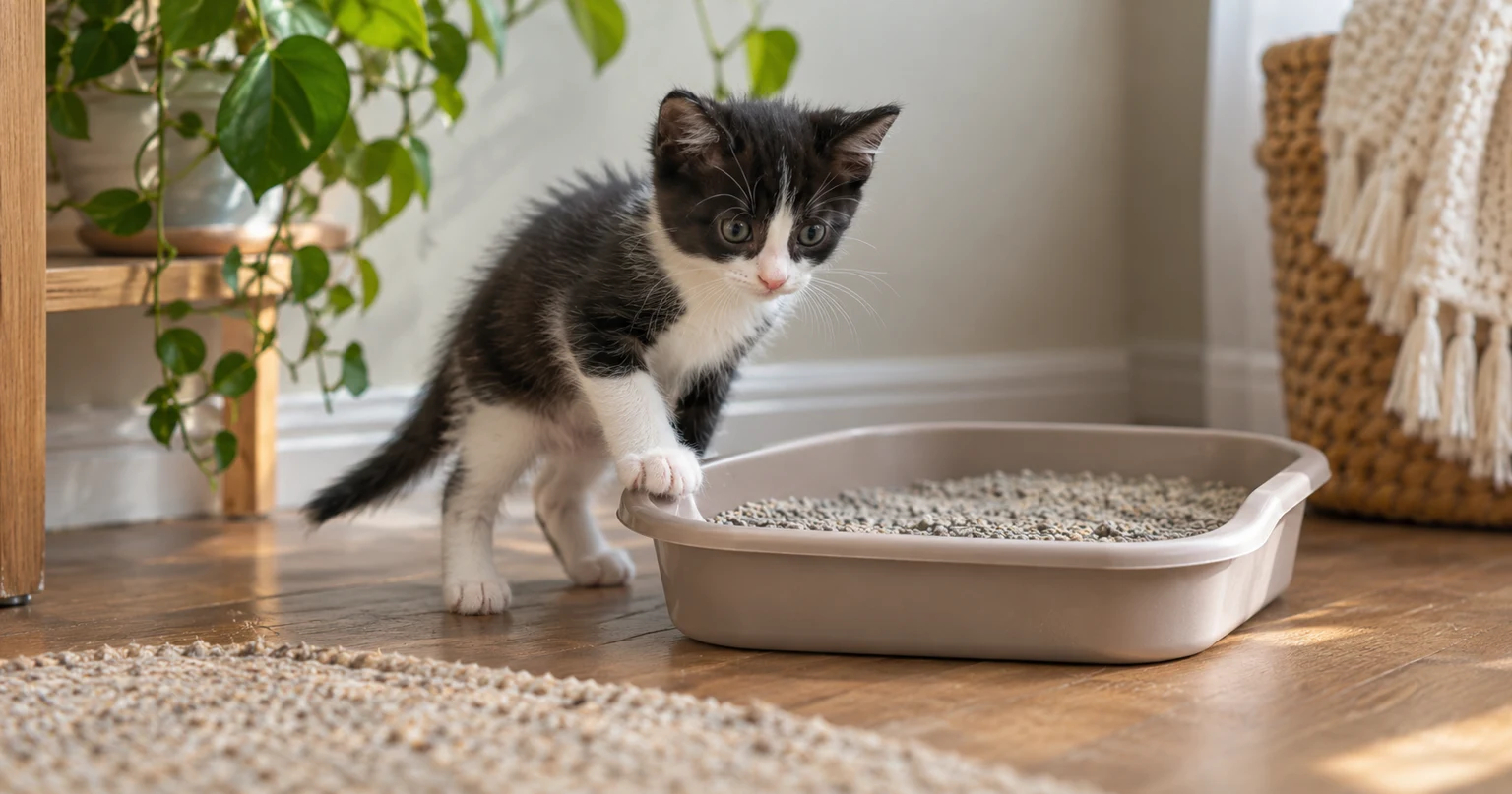



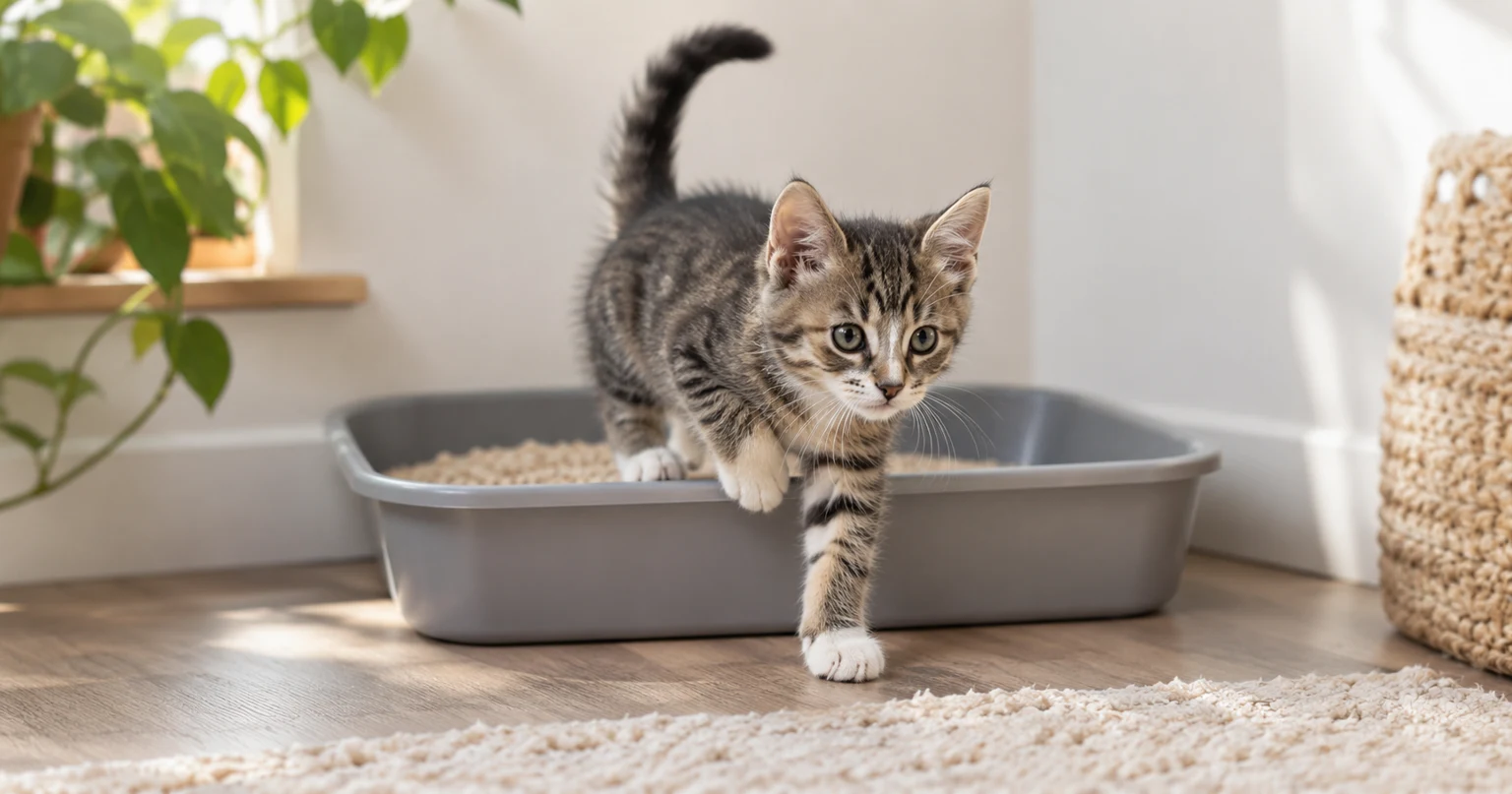
A kitten has short legs, a small body and no patience. If she cannot climb into her litter box, she will find a spot that needs no climbing. Usually that spot is your rug.
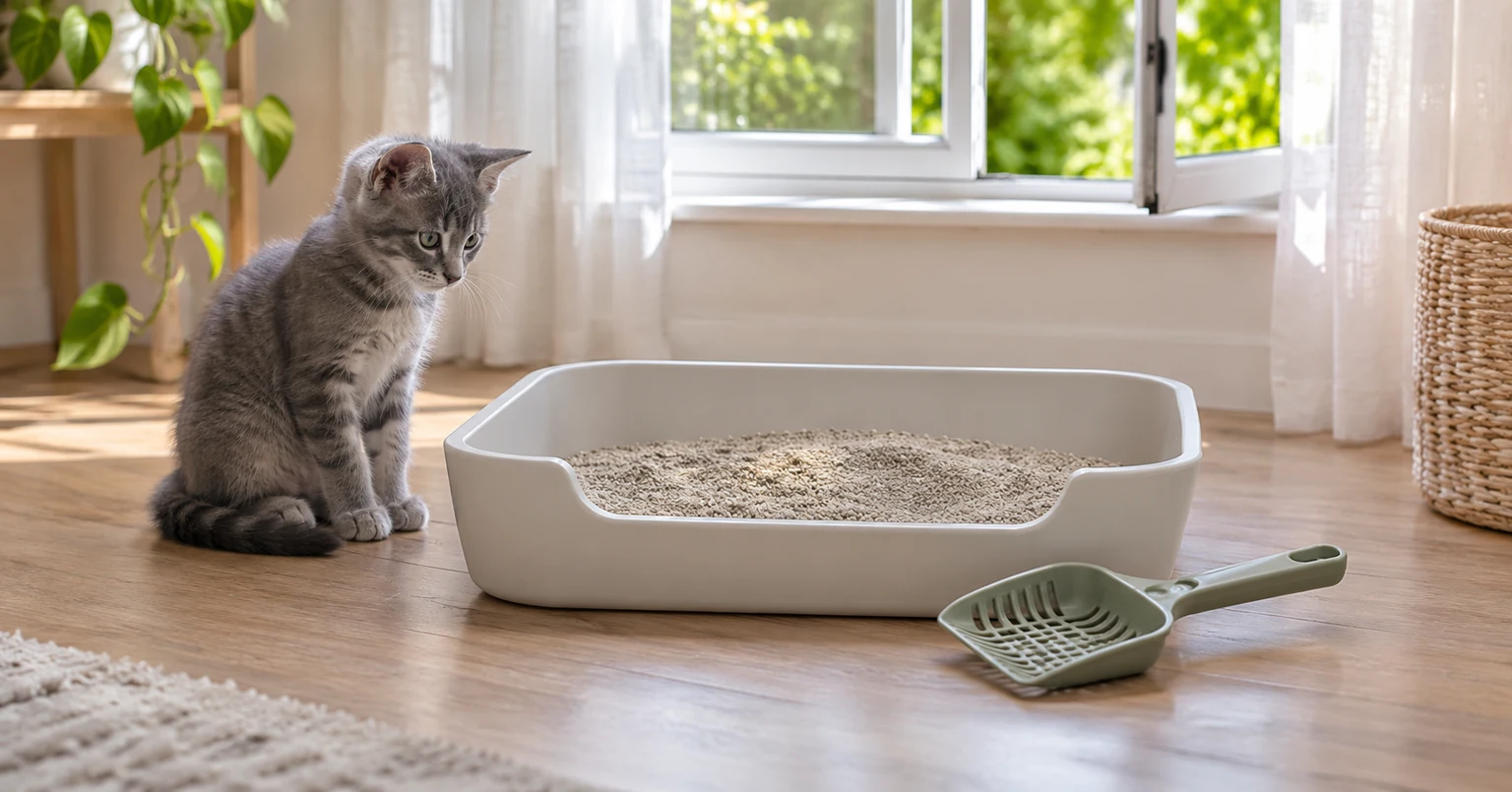
So buy for the legs first. A litter box for kittens is a low, open tray with room to turn around, placed away from her food and bed. Everything else on this page follows from those four words: low, open, roomy, quiet.
Cornell's Feline Health Center puts the first part plainly: "Young kittens, elderly cats, and cats with mobility problems need boxes with low sides." The rest of this page covers how low, how many, where it goes, how deep the litter sits, and how to keep the room from smelling.
The short version
- Low sides, open top, room to turn around.
- One more box than you have cats.
- A quiet corner, away from her food, water and bed.
- Litter she can dig in, starting around 2 inches deep.
- Scoop every day.
Litter box for kittens: the checklist before she comes home
Screenshot this or copy it into your notes. Tick each line before the kitten arrives.
- Low sides, so she can get in and out easily (VCA).
- An open top with no cover (Cornell).
- Room to enter and turn around (VCA).
- Two boxes for one kitten, because Cornell's rule is as many boxes as cats, plus one.
- A quiet, private spot, separate from her feeding area (Cornell).
- Not directly next to her bed, water or food dishes (VCA).
- Blocked off from any dogs (VCA).
- Unscented litter, because most cats prefer it (Cornell).
- Litter deep enough to dig and bury in. Start around 2 inches (the depth section explains why).
- A plan to clean the box at least once a day (Kitten Lady).
- Robotic box? Check its age and weight limits first (VCA).
- Set her in the box after she sleeps or eats (International Cat Care).
- Check the height again as she grows, because Cornell says larger cats need bigger boxes.
What the sources say about low sides
Every source below says the same thing, including a foster educator writing for other fosters.
| Source | What it says |
|---|---|
| Cornell Feline Health Center | "Young kittens, elderly cats, and cats with mobility problems need boxes with low sides." |
| VCA Animal Hospitals | "For a kitten, you'll need a box with sides that are low enough for them to get into and out of the box easily." |
| International Cat Care | "Provide the kittens with a low-sided litter tray from around three weeks of age." |
| Kitten Lady | "Kittens require an open-top, shallow litter box that is easy for them to access and locate." |
None of the four gives a height in inches or centimeters. So use the test you can run in a minute: watch her walk in. If she scrambles, hops or hesitates at the edge, the sides are too tall.
International Cat Care calls it a tray and starts it early, from around three weeks old. That is sooner than most people expect. If you are raising a litter, the low tray goes in well before any training starts.
A very young kitten does not need anything fancy. Kitten Lady says that for kittens under 8 weeks old, "you can even use a cardboard tray (such as those used for canned kitten food)" so the kitten has a shallow lip to step over. It costs nothing and goes in the bin when it is dirty.
Size: room to turn around, and room to grow
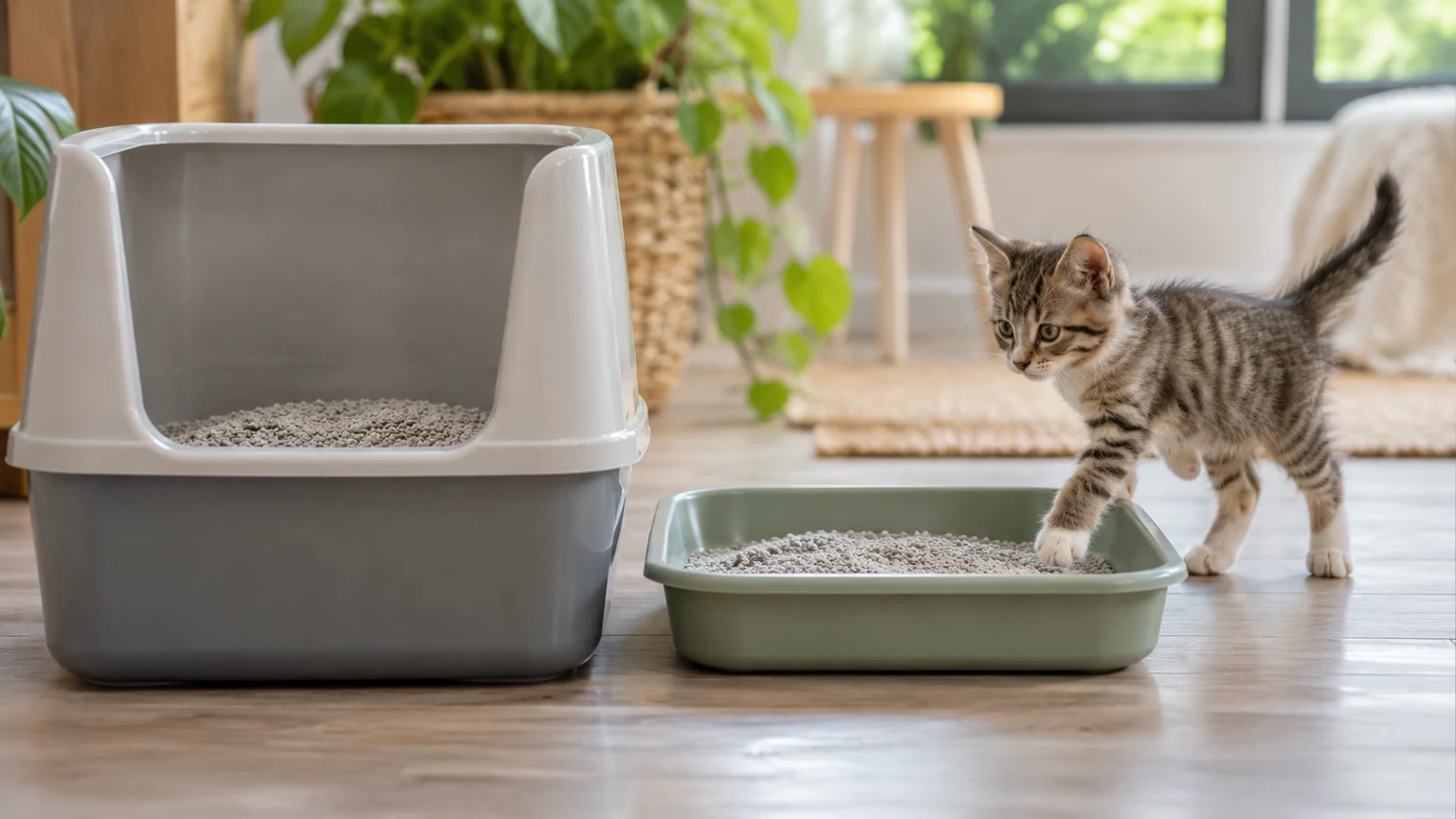
VCA says the box needs "enough room to enter and turn around". That is the whole size rule for a kitten. She does not need a giant box on day one. She needs one she can walk into.
Cornell adds the catch: "Larger cats need bigger boxes, and kittens and elderly cats need boxes with low sides." Read both halves together. The box that suits a 2-pound kitten will not suit the same cat at full size. Re-check it as she grows, and size up when she looks cramped or starts hanging over the edge.
How many litter boxes does a kitten need?
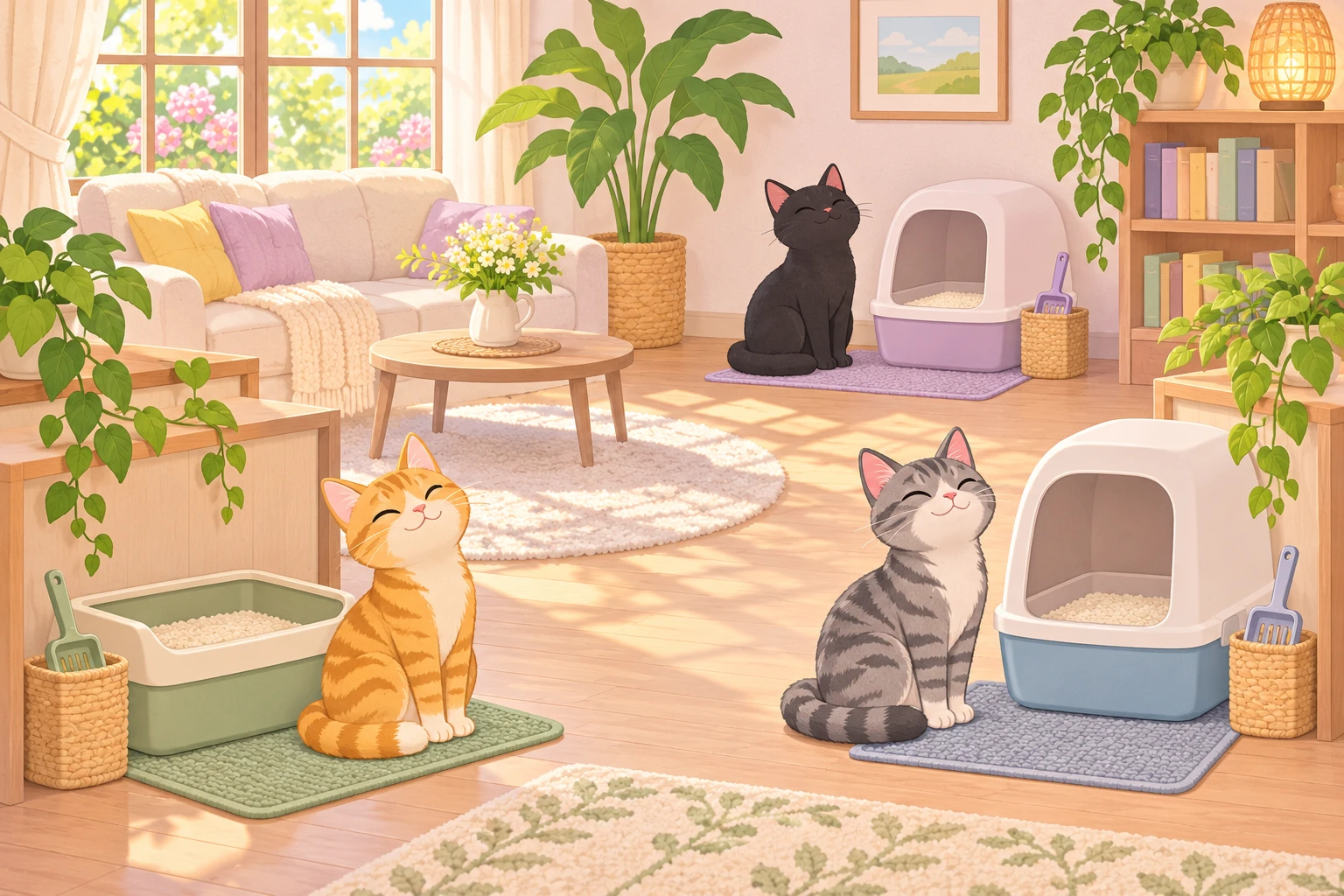
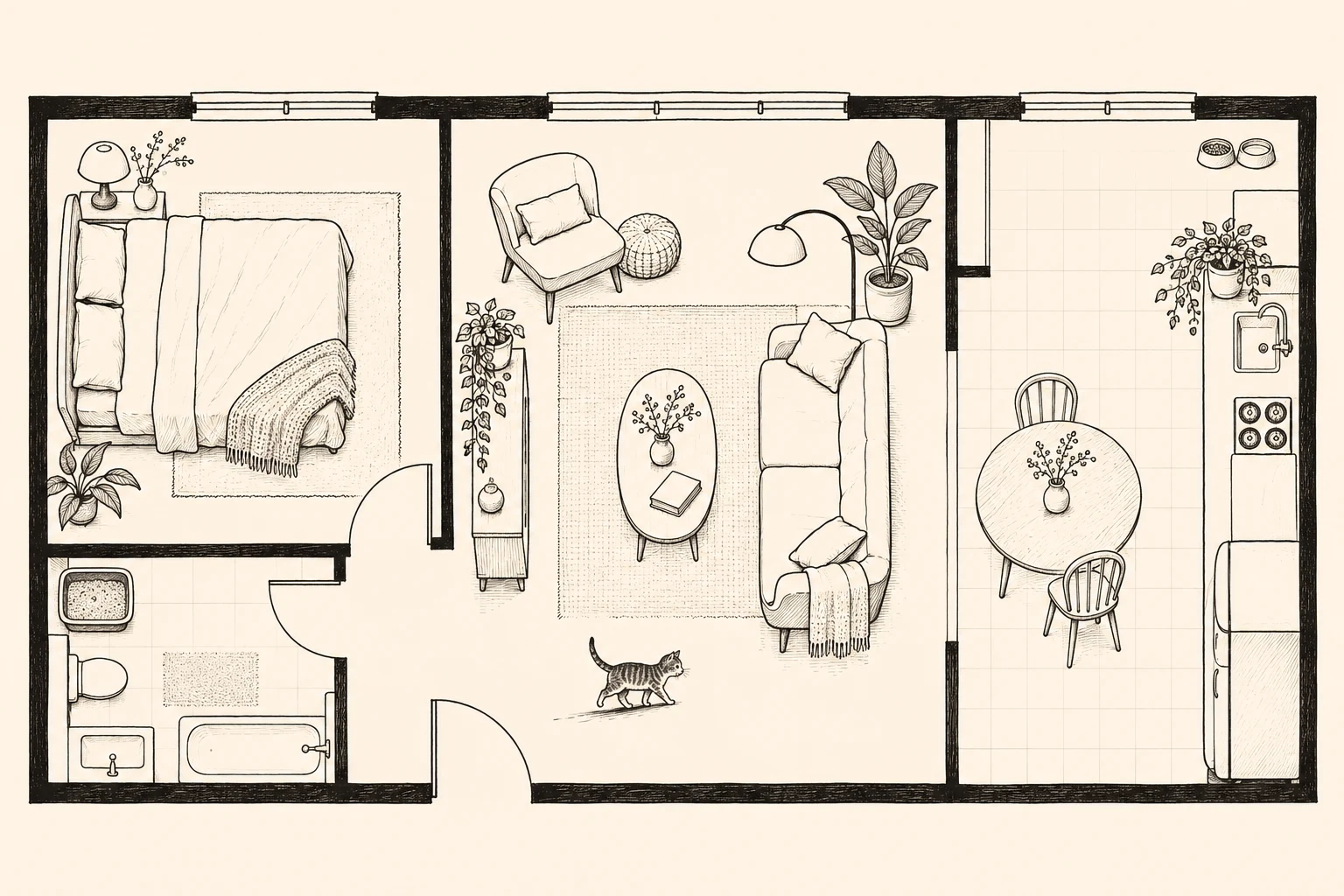
Cornell's rule: "Provide as many boxes as there are cats in the house, plus one." One kitten means two boxes. Two cats means three.
VCA lands in the same place: "You should have one more litter box than the number of cats in the home." It adds a rule for bigger homes: "We recommend having a litter box on each floor of the house."
Kitten Lady says to offer multiple options so that the kitten is always within 10 feet of a litter box. A kitten who suddenly needs the box is not going to cross the house first.
Put the boxes in different areas. Cornell says to "Place multiple boxes in different areas of the house."
Where to put the litter box
VCA adds three more rules:
- "The box should be in a quiet but accessible location."
- "The litter box should not be placed directly next to the kitten's beds, water or feeding dishes."
- "Block the box completely off from any dogs."
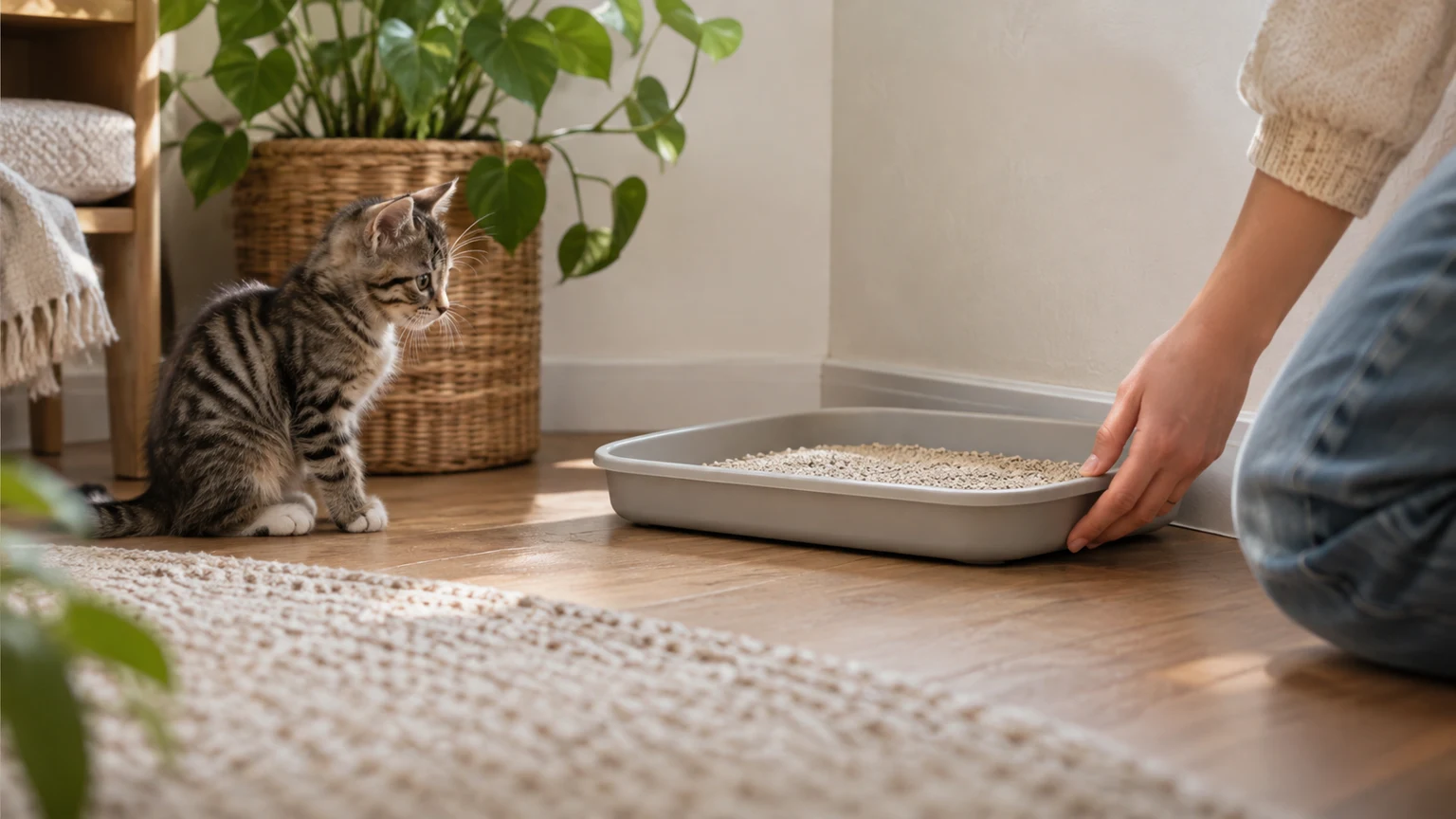
Kitten Lady's first-day tip is simple: "start by placing the litter box in a corner that is clean from clutter." Cornell also says not to put a box upstairs or downstairs "if your cat has trouble climbing stairs". A kitten with a short climb each way counts.
None of these sources names one room as the most sanitary. They all keep the box apart from where she eats, drinks and sleeps. Pick a corner that is not her dining room or her bedroom, and that you can reach every day to scoop.
How much litter: Cornell and VCA do not agree
Two of the best sources disagree, so here they are side by side.
| Source | Depth |
|---|---|
| Cornell Feline Health Center | "Most cats prefer unscented, finer-textured litter about one to two inches deep." |
| VCA Animal Hospitals | "The box should allow for at least 3 inches of digging material and enough room to enter and turn around." |
One to two inches against at least three. Our litter depth guide lists more sources and the gap between them. For a kitten, start around 2 inches. That sits at the top of Cornell's range and a step under VCA's floor. Then watch her. If she can dig and bury, keep it. If she scratches at the plastic floor, add a little. If litter keeps flying over the low side, take a little out.
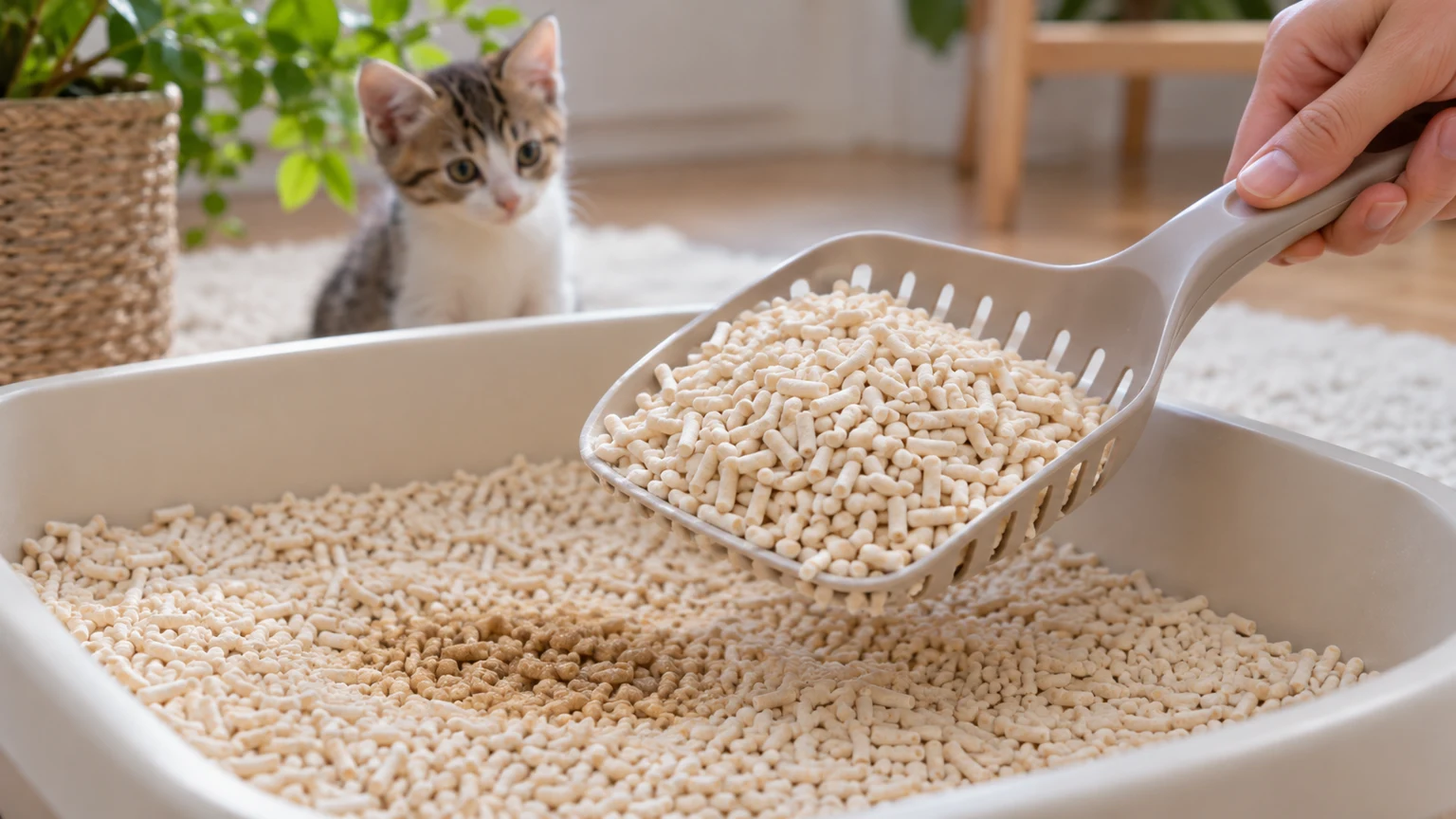
Which litter, and when she can switch to clumping
Short answer: the sources disagree, so ask your vet.
| Source | What it says about age or type |
|---|---|
| Kitten Lady | Clumping litter is "a risk to kittens if ingested, and should not be provided until the kitten is at least 2-3 months old". |
| National Kitten Coalition | "clumping litter shouldn't be used until kittens are at least 4 months old." |
| International Cat Care | "Start with sand, wood, or paper-based litter, rather than clay, as some kittens may try to eat the litter." No age for clumping. |
| VCA Animal Hospitals | "Most cats prefer clumping-style litter." No age for kittens. |
| Cornell Feline Health Center | No age given. |
The answers run from 2 to 3 months up to 4 months, and three of the five name no age for clumping litter at all. There is no single agreed number. The risk the cautious sources point to is a kitten swallowing litter, which is why International Cat Care starts with a non-clay litter and says silica gel shouldn't be used for kittens under eight weeks of age.
If your kitten eats litter, call your vet. For help picking between types, read our guide to non-clumping litter and odor control, and ask your vet which litter suits your kitten's age and health.
A caution on robotic litter boxes
Robotic boxes are tempting, and VCA is a fan: "Robotic litter boxes are very nice!" Then it adds that "not all robotic litter boxes are appropriate for young kittens." Its advice is to "check your robotic litter box for age and/or weight restrictions before setting it up for your kitten."
Read the manual before you plug it in. If your kitten is under the limit, a plain low-sided box does the job until she grows into it.
Keeping the box from smelling
Most kitten box smell comes from a short list of things you can fix this week.
- Take the lid off. Cornell says most cats prefer an uncovered box and that "from your cat's point of view, covers hold odors in." Kitten Lady's advice for a new kitten is to "Eliminate obstacles such as tall or covered boxes".
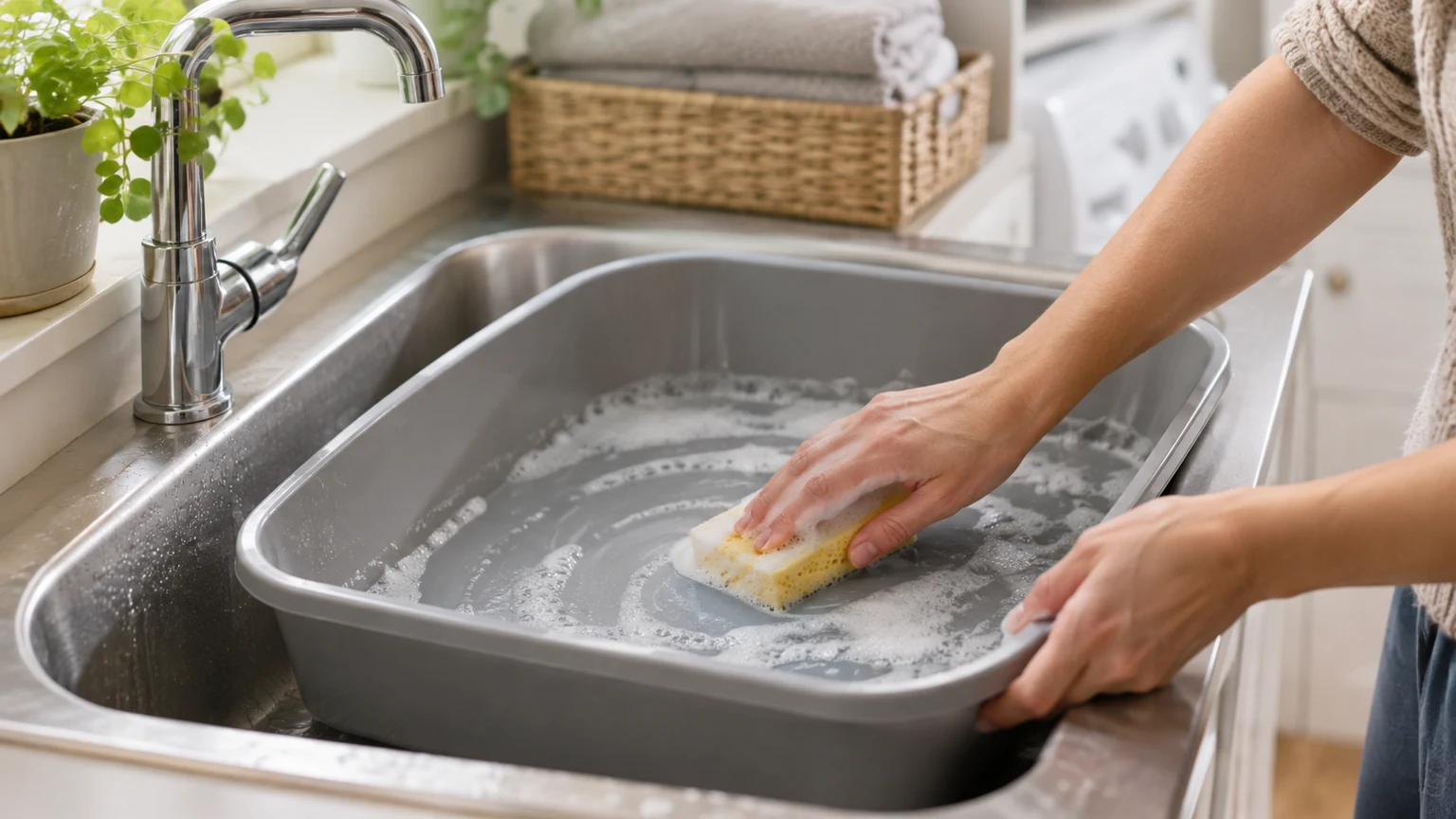
- Clean it every day. Cornell: "If you use clumping litter, remove feces and clumps daily and add clean litter as needed." Kitten Lady: clean the box through the day, "once a day at a bare minimum".
- Keep the litter fresh. Cornell: "Litter should be changed often enough so that it looks and smells dry and clean."
- Choose unscented litter. Cornell: "Many cats object to foul odors, so clean the box regularly and use a non-scented litter." Perfume is the wrong tool for a kitten's nose.
- Mind the cleaner. Cornell: "Avoid cleaning products containing ammonia or vinegar as they smell like urine and can be irritating."
- Treat accidents properly. VCA: "Clean the area using an enzymatic product to remove the odor."
One exception for the first week. International Cat Care says "Leaving a small amount of soiled litter in the tray can act as a useful scent reminder." That helps a kitten who has not learned where to go yet. Once she uses the box on her own, go back to daily cleaning.
If the smell stays after all of that, read why kitten litter smells and the common litter box mistakes.

Where Purrify fits
Once your kitten reliably uses her box, you can add Purrify, the most powerful odor remover in the world. It is an additive, not a litter: fragrance-free activated carbon granules, sold in bags, that you mix into the litter you already use. It works with clay, clumping, crystal, tofu, pine and walnut litter and does not interfere with clumping or scooping. Our kitten deodorizer guide covers the label checks.
The dose is 2 tablespoons per litter box. Sprinkle it on fresh litter, mix gently, and top up when the box starts to smell again. There is no fixed schedule and no smaller kitten dose.
For kittens, we do not set an age. Start once she reliably uses her box. Ask your vet first if she has health problems. If she eats litter or granules, pause it and tell your vet. Keep her out of the room while you pour and mix. The kitten deodorizer page covers the details.
Purrify is rated 5.0 on Google, stocked in 40+ pet stores across Canada, and used by thousands of customers. One-time bags carry a 30-day money-back guarantee. See the bag sizes and pick one.
Your first-day plan
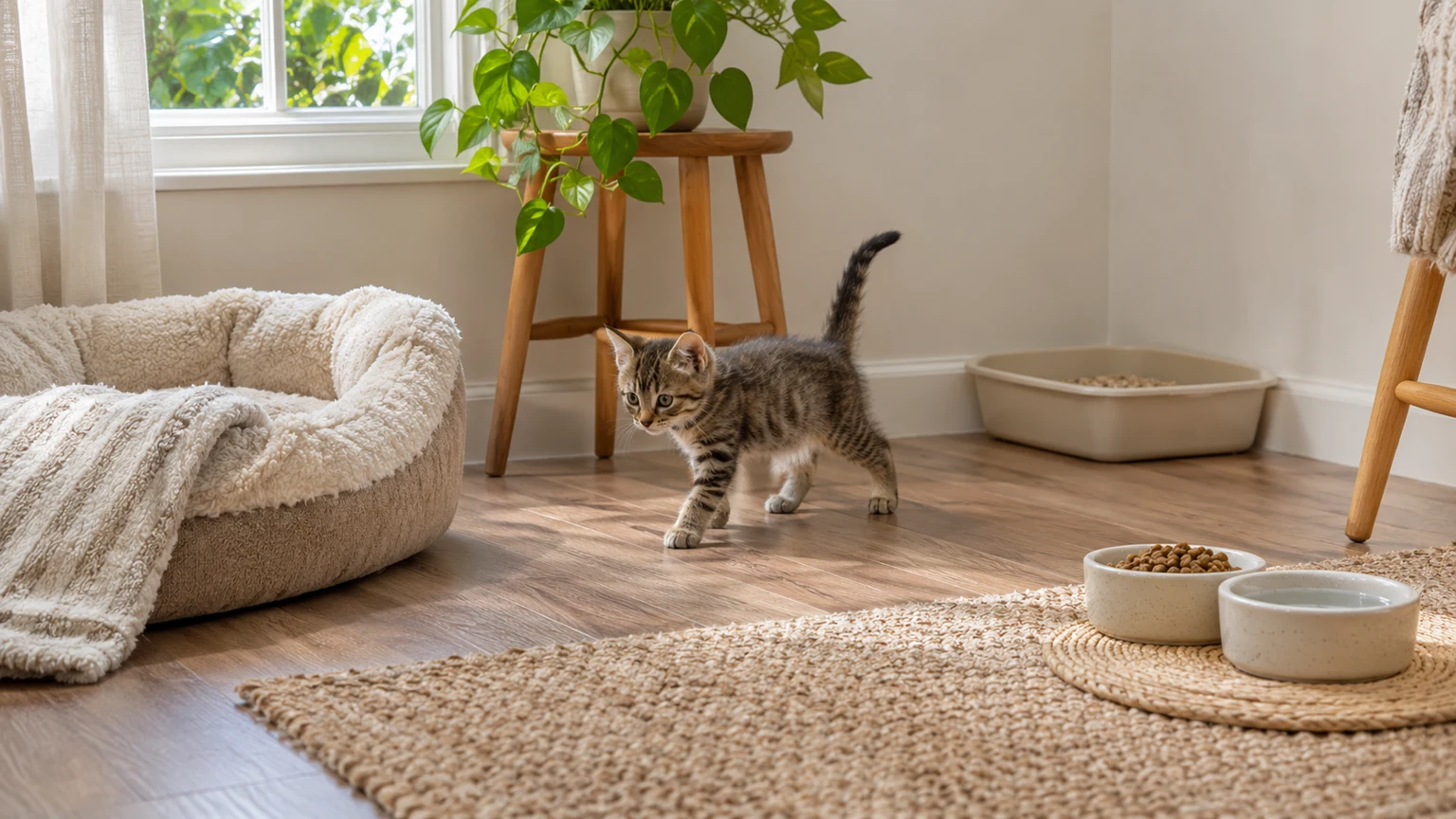
- Set up the low-sided box in a clean, quiet corner, away from her food, water and bed.
- Add about 2 inches of unscented litter your vet or breeder is happy with.
- Place her in the box after she sleeps or eats. International Cat Care says many kittens learn by watching their mother, but "if they don't, stand your kitten in the tray (the best time is after sleeping or eating)".
- Clean it at least once a day, and add the second box.
If she skips the box, our guide to litter training a kitten walks through the first weeks, and a kitten not using the litter box covers the trouble spots. Sudden changes, straining or crying in the box are a reason to call your vet.