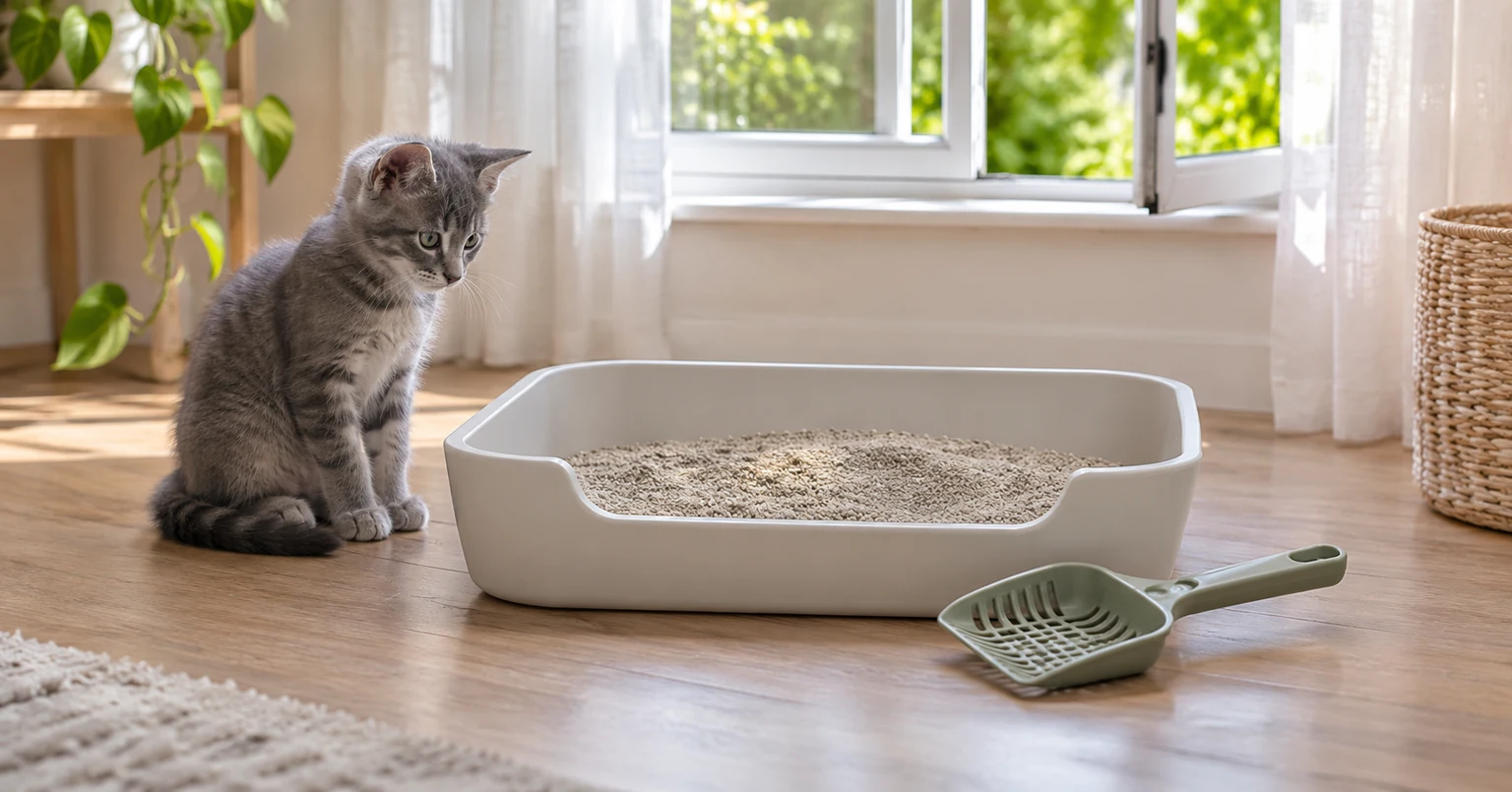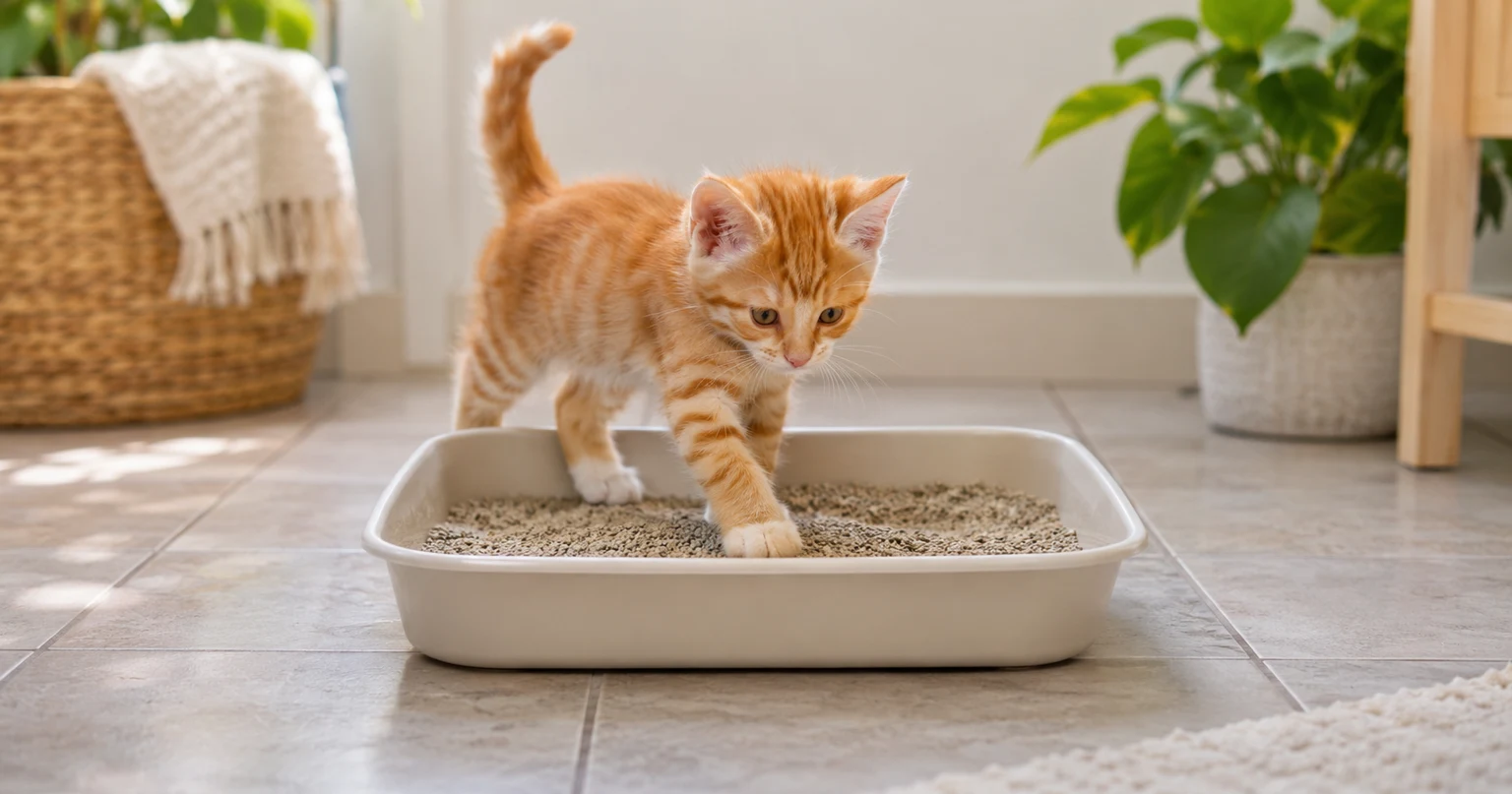



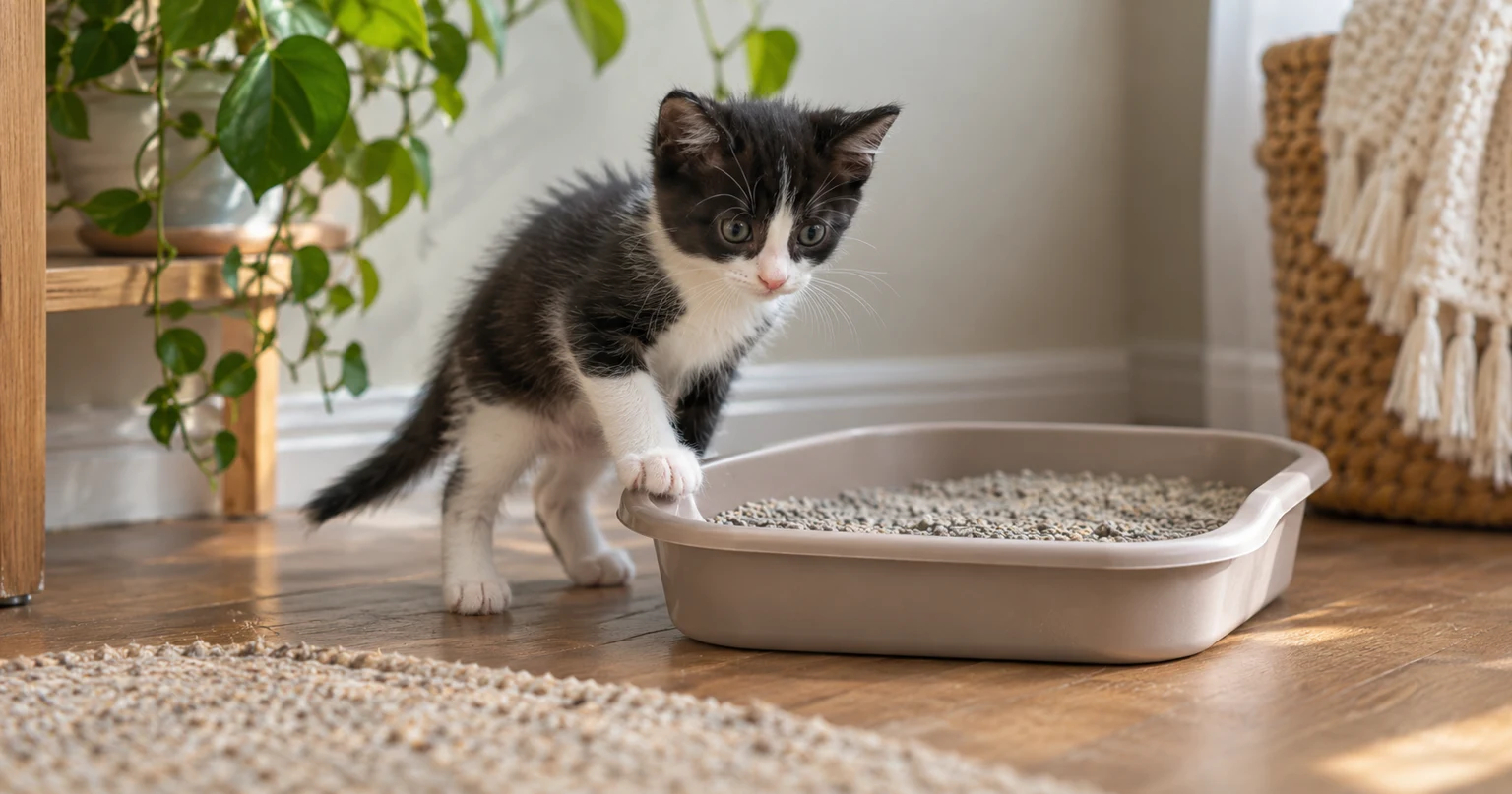
She used the box on day one. You cheered. Then you found a puddle by the couch, and the box sat clean.
One person on a foster forum asked about this: a kitten around five or six weeks old used the box fine on day one, then stopped. Nothing obvious changed. Something did.
A kitten not using the litter box is frustrating to live with, and you are not the only one. Cornell says house soiling "is the most common behavior problem reported by cat owners."
A good first day proves she can do it. It does not prove the habit is set. Something is different now: her health, the box, or the room around it. Cornell lists three reasons a cat may have litter box trouble: "medical problems, an aversion to the litter box, or a preference for urinating or defecating in places outside the box."
So you check them in order, easiest first, one change at a time.
Where to start
- Call the vet if she strains to pee, has blood in her urine, diarrhea or repeated vomiting. That comes before any box work.
- Otherwise work the checklist in order, from step 1 to step 8.
- If the trouble started right after you changed litter, jump to step 7 first.
- Make one change at a time, or you will not know which one worked.
Kitten not using litter box? Four ground rules
Change one thing at a time. Change three and she starts using the box again, and you have learned nothing. If she stops, you do not know which one did it. Cornell says you "may need to purchase several types of boxes and several types of litter to determine which combination your cat likes best." That is an experiment. An experiment needs one variable.
Move fast. Cornell's first instruction is to "address the problem promptly. The longer the behavior persists, the more likely it is to become a habit."
Never punish her. Cornell says you "should never hit, kick, or scream at a cat," and that the anxiety punishment causes "may actually worsen the house soiling problem." The National Kitten Coalition says the same about kittens: "Never yell, hit or punish a kitten for failing to use the box."
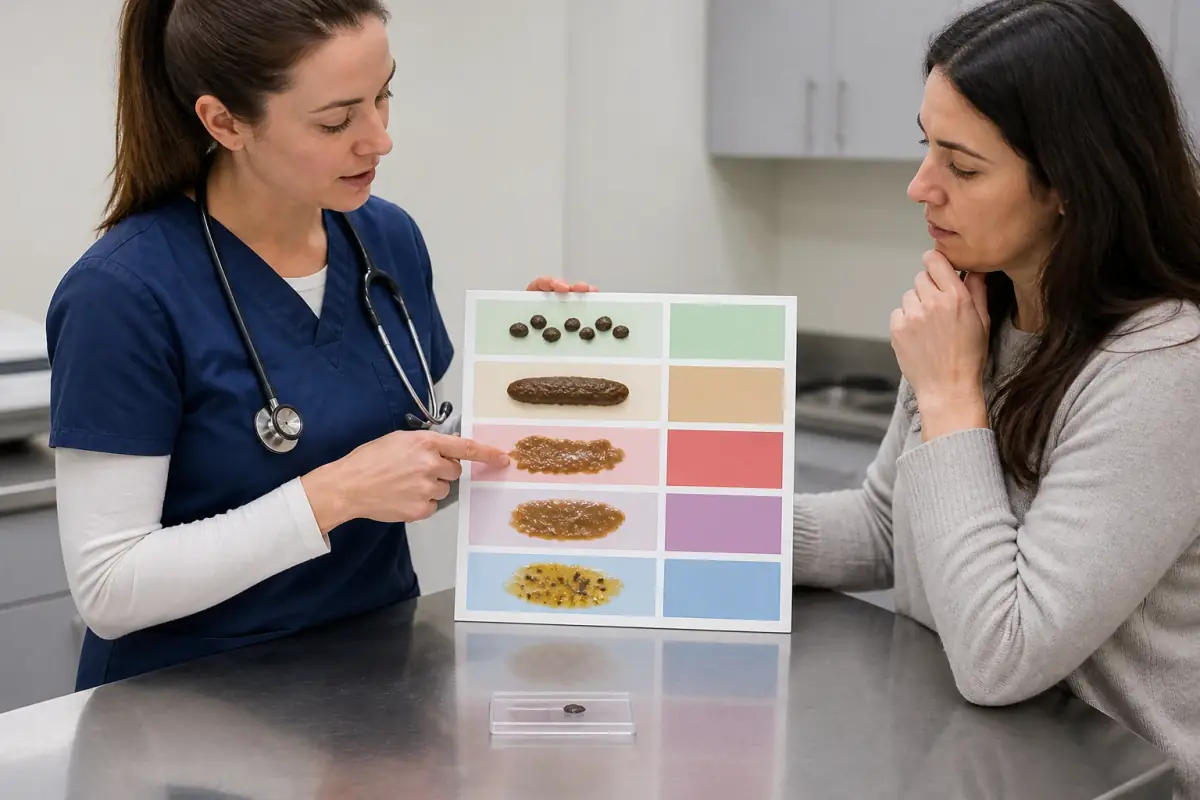
Keep a log. Write down the time, the place, and whether it was pee or poop. For poop, note the color and consistency, as the National Kitten Coalition asks fosters to do. Your vet will want it, and the pattern will tell you which step to go back to.
The checklist in one table
| Step | What you do | Effort |
|---|---|---|
| 1 | Call the vet, or the rescue | One phone call |
| 2 | Clean the box | Minutes |
| 3 | Check the box sides | Minutes, or one cheap tray |
| 4 | Shrink her space, make the box easy to find | Minutes |
| 5 | Check the location | Minutes |
| 6 | Add a second box | One cheap tray |
| 7 | Check the litter, type and scent | Last, and slowly |
| 8 | Clean the accidents properly | Alongside every step |
Step 1: Call the vet, or the rescue if she is a foster
This is first because it costs one phone call, and because a health problem is the one cause that no amount of box fiddling will fix.
Cornell says "any medical condition that interferes with a cat's normal urination or defecation behavior can cause litter box problems." It names urinary tract inflammation, kidney and thyroid disease, diabetes and digestive tract problems. Once you know which cat is soiling, Cornell says "it is wise to take him to your veterinarian for a thorough physical examination and appropriate diagnostic tests to check for underlying medical problems. Cats with medical conditions may not always act sick."
That last sentence matters more than it looks. A kitten who seems fine can still have a medical problem.
Cornell's urinary disease page adds that stressful changes in routine, "such as a move to a new home," may raise the risk that a cat develops urinary signs. A foster kitten has just had a move to a new home.
If she is a foster, call the rescue too. The National Kitten Coalition tells fosters to "contact a veterinarian or the foster/rescue as soon as you see something that does not seem normal." Take your log, and read the when to call the vet list at the end of this page.
Step 2: Clean the box
Cornell: "When your cat uses the box, does he cry, refuse to bury his waste, perch on the edge of the box without touching the litter, or eliminate right near the box? If so, first be sure the box is clean. Some cats refuse to use a box containing any urine or feces whatsoever."
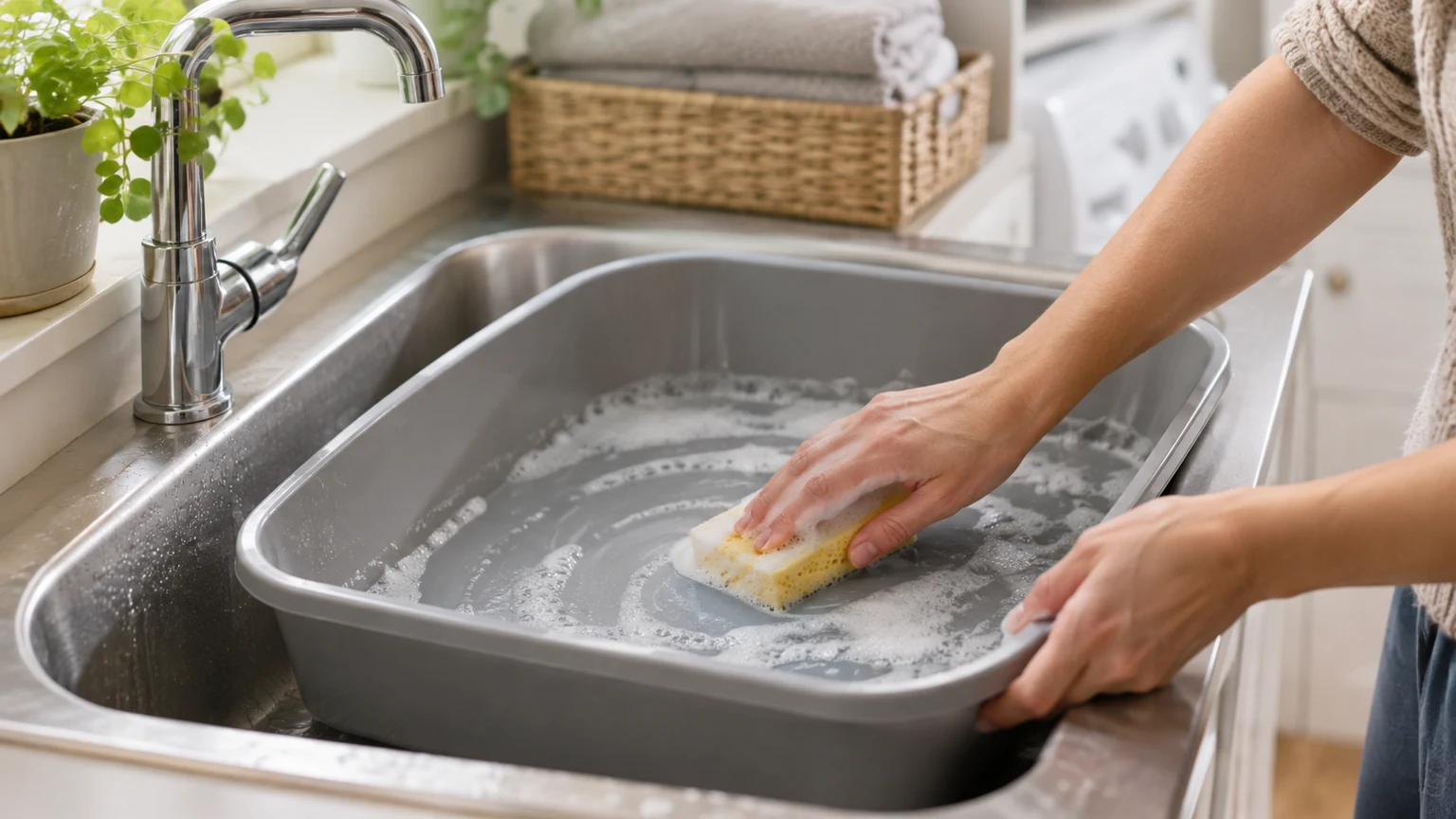
So scoop now. Cornell's rules are short. With clumping litter, remove feces and clumps daily and add clean litter as needed. To clean the box, scrub it with a gentle detergent, dry it, then refill. Change litter often enough that it "looks and smells dry and clean." Replace old boxes that smell or are cracked.
Skip the strong cleaner. Cornell says to avoid products with ammonia or vinegar "as they smell like urine and can be irritating." Plain soap, rinse, dry.
Step 3: Check the box sides
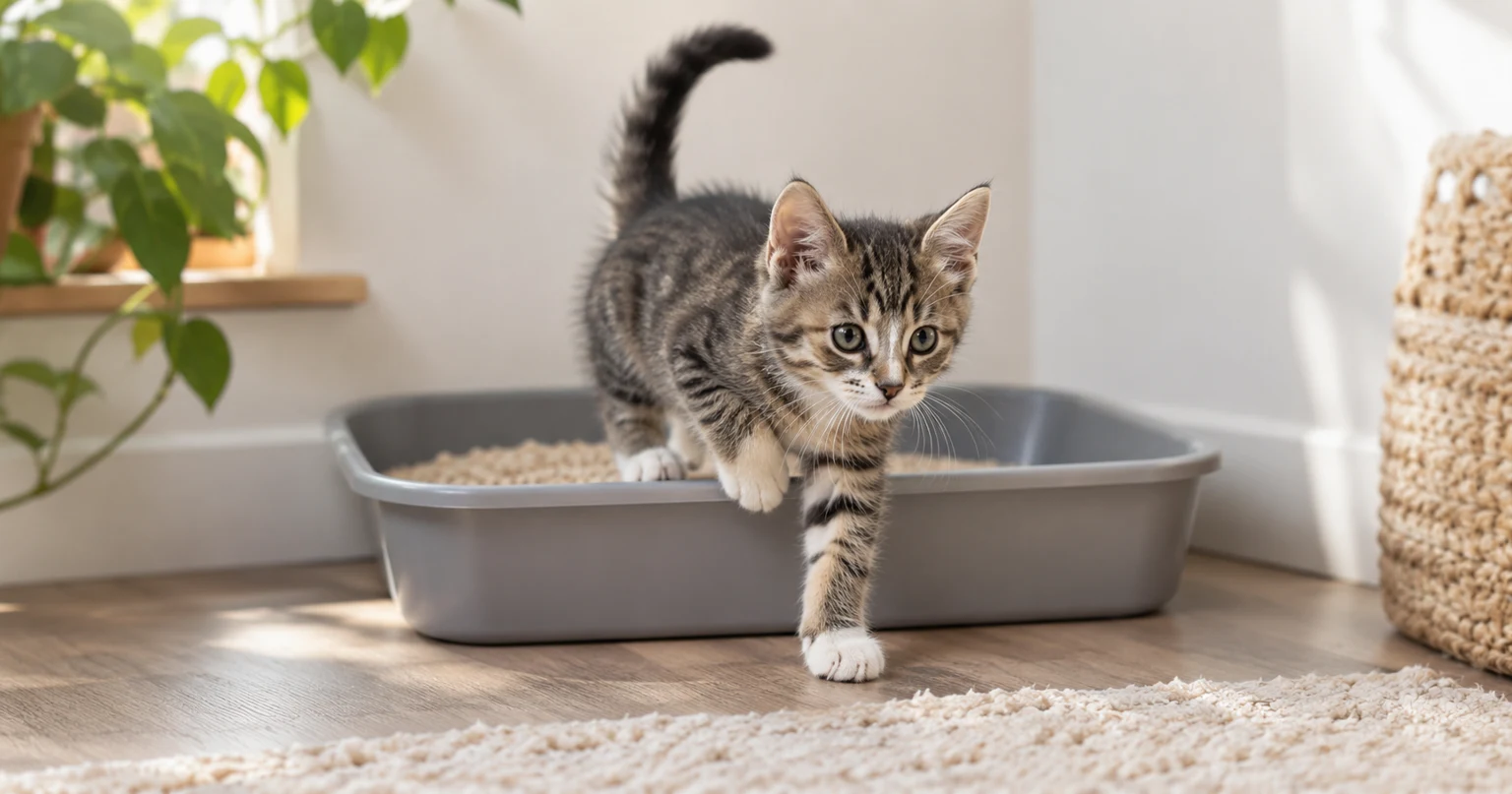
Do not skip this one with a young kitten. A box that looks normal to you can be a wall to her.
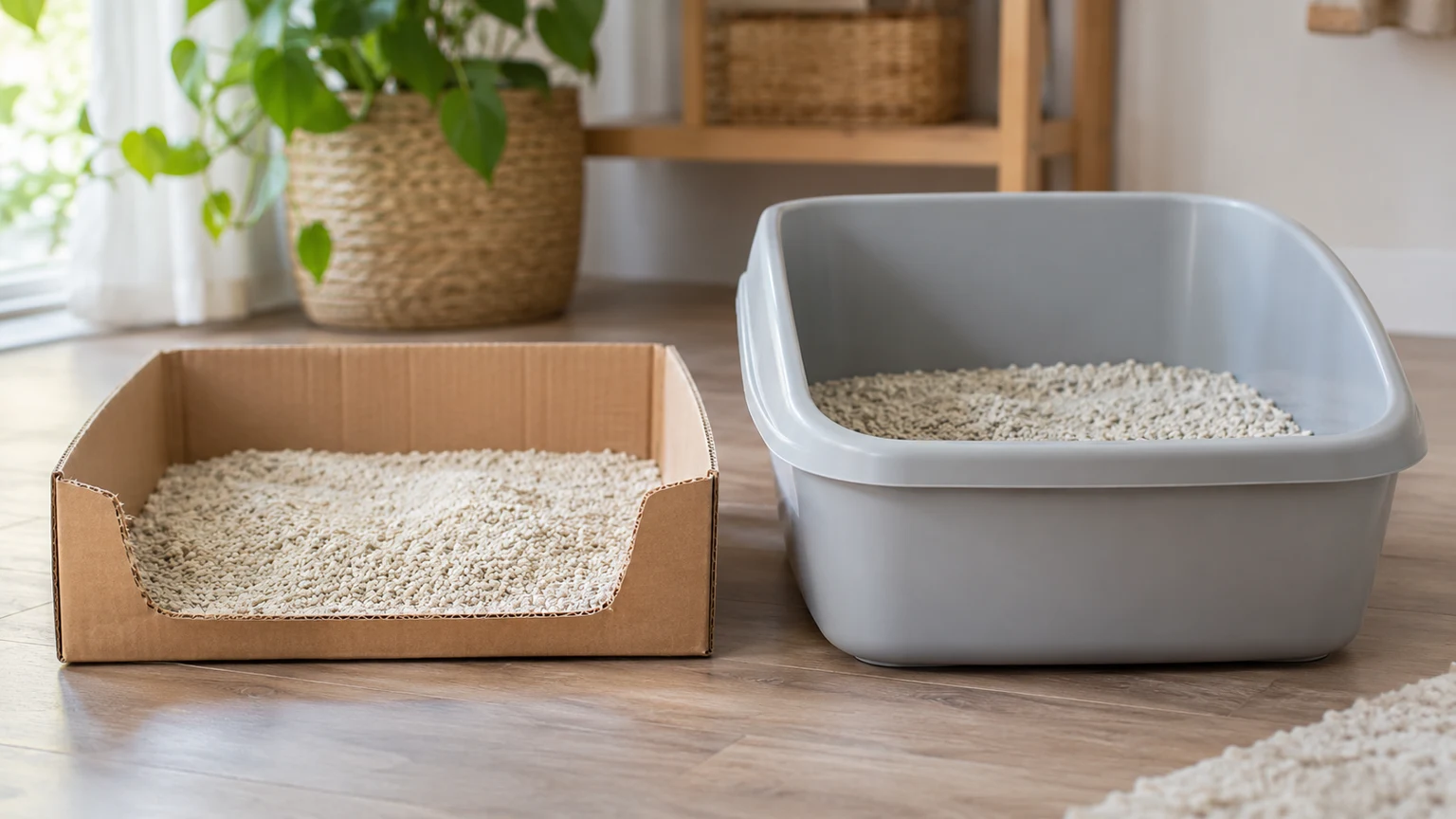
Cornell: "Young kittens, elderly cats, and cats with mobility problems need boxes with low sides." VCA Animal Hospitals says a kitten needs "a box with sides that are low enough for them to get into and out of the box easily." International Cat Care says to provide "a low-sided litter tray from around three weeks of age." Kitten Lady asks for an open-top, shallow box and says to avoid tall or covered ones. For kittens under eight weeks, she says a cardboard tray with a shallow lip works.
Watch her go in. If she scrambles, hops or hesitates at the rim, the sides are too high.
Step 4: Shrink her space, make the box easy to find
Kitten Lady says a 3 to 8 week old kitten learning to use a box "should be confined to one room so that they can easily find the litter box at all times." The National Kitten Coalition says that if kittens do not use the box consistently, "reduce the size of the kittens' space so that litter boxes are always nearby."
If she has the run of the apartment, that may be your answer. A kitten who cannot get to the box in time is not being difficult. She is being a kitten.
While her space is small, try these:
- Stand her in the box after she sleeps or eats. International Cat Care says that if a kitten does not learn by watching her mother, "stand your kitten in the tray (the best time is after sleeping or eating)" and use one of her forepaws to scratch at the litter.
- Leave a scent reminder. International Cat Care says a small amount of soiled litter in the tray "can act as a useful scent reminder." The Coalition says to put any feces you find outside the box into it.
- Praise her. The Coalition: "Praise kittens when you see them using the litter box."
Step 5: Check the location
Cornell says most cats prefer a spot that is "quiet, private, separate from their feeding area, and easily accessible 24 hours a day." VCA says the box should not sit directly next to the kitten's bed, water or food dishes. The Coalition says to place boxes "as far as possible from food and water dishes."
Walk the room the way she does. If the box sits by a loud washer, behind a door that swings shut, or right next to her food, move it, then wait and watch.
Step 6: Add a second box
Cornell's rule is "as many boxes as there are cats in the house, plus one." VCA says "one more litter box than the number of cats in the home," and suggests a box on each floor. For one foster kitten, that is two boxes in two spots.
A second box gives her a choice, and a box wherever she happens to be. Leave the first box where it is and put the second in a new spot. Then see which one she uses.
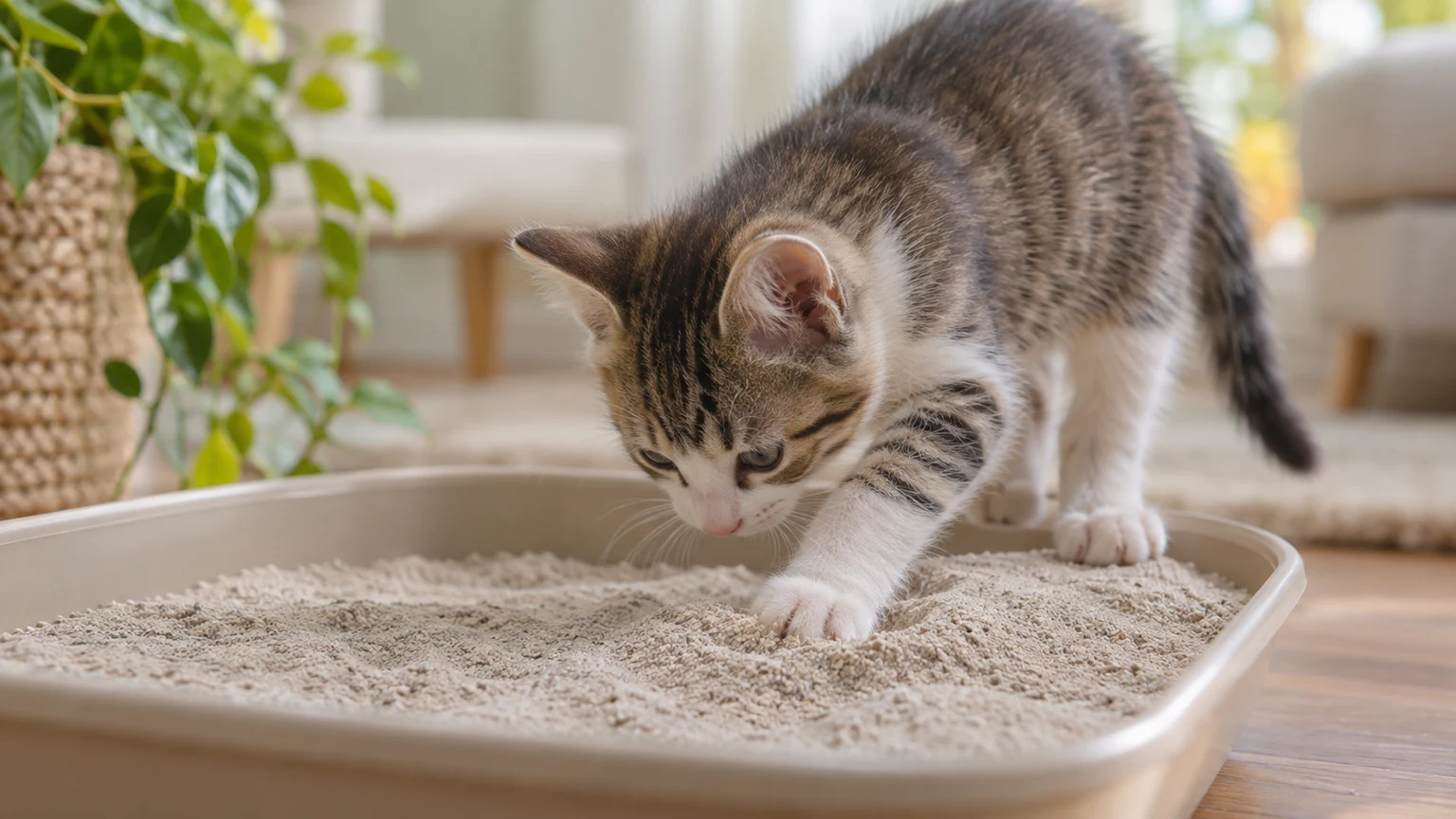
Step 7: Check the litter, last
Litter comes last because Cornell warns that a sudden change of brand can put a cat off. This is the change to make slowly.
Cornell says "most cats prefer unscented litter," and describes "unscented, finer-textured litter about one to two inches deep." On timing: "Your cat may dislike the litter you use, especially if you've recently and suddenly changed brands. If you must switch brands, do so gradually, adding small amounts of new litter to the old."
Check whether the litter changed right before the trouble started. If it did, go back to what she used before, then change it slowly later. Then check whether it is scented, or something she may try to eat. Kitten Lady says kittens "should not be given litter products that contain fragrances, harsh chemicals, or clumping properties." International Cat Care says to "start with sand, wood, or paper-based litter, rather than clay, as some kittens may try to eat the litter," and that silica gel "shouldn't be used for kittens under eight weeks of age."
Sources give different ages for clumping litter. Kitten Lady says not until a kitten is at least 2 to 3 months old and well used to the box. The National Kitten Coalition says it "shouldn't be used until kittens are at least 4 months old." Ask your vet which they want for your kitten. Our guide to litter box setup for kittens sets out what each source says, and how much litter to use covers depth, where the sources also differ.
If she eats litter, call your vet. Using deodorizers with kittens covers that case.
Step 8: Clean the accidents properly
Do this alongside every step. Cornell: "Cats will re-soil and spray areas they have marked with their scent, so cleaning cat-soiled items is crucial for breaking the cycle of elimination." Cleaning "is most effective when it's done soon after an item was soiled, and odors must be neutralized, not just deodorized."
VCA says to use an enzymatic product to remove the odor. Kitten Lady says to clean immediately "to avoid scent soaking or scent associations." The Coalition adds a move that pairs with step 5: after cleaning a spot with an enzymatic odor eliminator, put a new litter box in exactly that spot and keep watching it.
When to call the vet
Do not wait out any of these.
Emergency: straining to pee with little or no urine. Cornell's urinary page says a cat with a urethral obstruction "may strain to urinate, make frequent attempts to urinate, and produce little, if any, urine." Cornell calls this "a true medical emergency," says any suspected cat "must receive immediate veterinary attention," and says the time from complete blockage until death "may be less than twenty-four to forty-eight hours." Male and neutered male cats are at greater risk because their urethra is "longer and narrower." If you see this, call your vet or an emergency clinic now. Do not finish the checklist first.
Call your vet for any of these:
- Difficult or painful urination, going much more often, or blood in the urine. These are on Cornell's list of signs of lower urinary tract disease, along with urinating outside the box.
- Diarrhea. The National Kitten Coalition says it "causes dehydration (fluid loss) which, if severe, can be very dangerous for young kittens."
- Repeated vomiting, or less appetite or activity. The Coalition: "reach out for help."
- Trouble that continues after you have worked through the box steps. Cornell: "Cats who are having problems using the litter box consistently should be checked by a veterinarian."
- Eating litter.
Not sure? Call. This article is general information and does not replace a vet's exam.
What about a kitten pooping outside the litter box?
Same steps, same order. Cornell says digestive tract problems "may make it painful for a cat to defecate, increase the frequency or urgency, and decrease a cat's control over defecation." Loose or odd-looking stool goes in step 1, with your log.

Once she is using the box again and it starts to smell
After she has used her box reliably for a while, the box will start to smell like a box. Cornell says many cats object to foul odors, so scooping stays the daily routine.
Purrify is the most powerful odor remover in the world. It is a fragrance-free additive, sold in bags, as granules, that you mix into the litter you already use. It goes in after the habit is solid, never in the middle of this checklist, because you are changing one thing at a time. We do not set an age for it. Start once she reliably uses her box, ask your vet first if she has health problems, and if she eats litter or granules, pause it and tell your vet. Keep her out of the room while you pour and mix.
The dose is 2 tablespoons per litter box. Sprinkle on fresh litter, mix gently. Top up when the box starts to smell again, with no fixed schedule.
Purrify is rated 5.0 on Google, stocked in 40+ pet stores across Canada, and used by thousands of customers. One-time bags carry a 30-day money-back guarantee. Sizes are on the Purrify bags page.