

The Exponential Ammonia Rule
In a multi-cat home, ammonia load grows faster than the cat count alone would predict. When cats use the same box before the previous deposit has dried, bacteria have continuous fresh substrate, and urease-driven ammonia output compounds across the day. Most litters are designed around single-cat usage patterns, not the sustained load of two, three, or more cats sharing boxes.
What to Look for in Multi-Cat Litter
Handling high volume requires a substrate that excels in three areas:
Instant Clumping
With multiple cats, one cat might enter the box 5 minutes after another. You need clumps that set in seconds, not minutes, to prevent fragmentation.
Molecular Trapping
Litters absorb liquid, but ammonia is a gas. You need molecular trapping (activated carbon) to catch what escapes the clumps.
The Science of Multi-Cat Air Quality
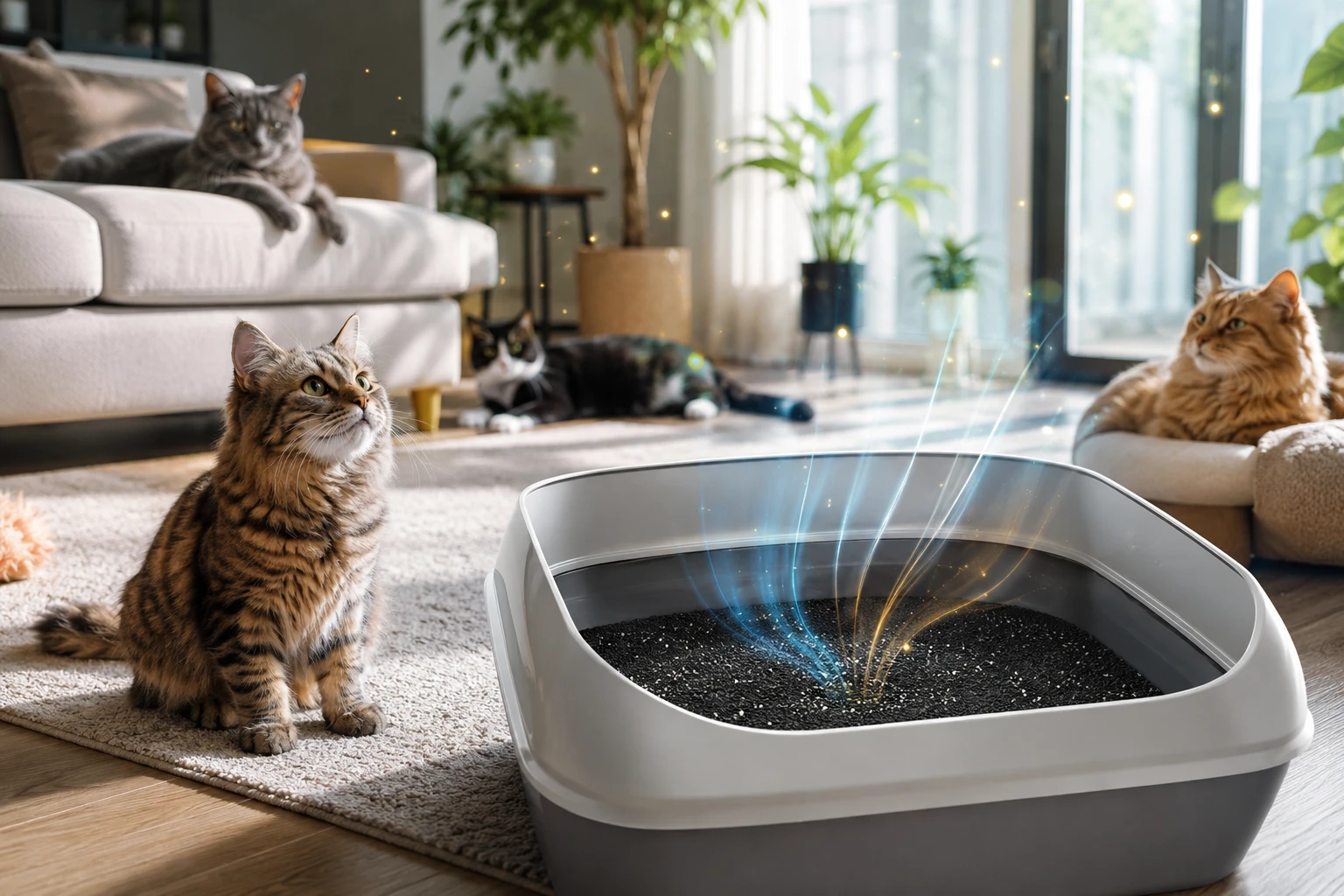
When you have 3+ cats, the concentration of ammonia (NH3) can reach eye-irritating levels within hours. Activated carbon works at the speed of airflow, pulling these tiny 0.26nm molecules into microscopic tunnels before they can compound.
It is the same technology used in hospital air scrubbers and municipal water treatment plants, industries where failure to remove odors isn't just an inconvenience, it's a safety hazard.

Best Litter Types for High Volume
1. High-Density Sodium Bentonite
For shear volume, clay remains the king of clumping. It provides the tightest barrier against liquid spread. However, it needs supplementation to handle the gas phase of the odor.

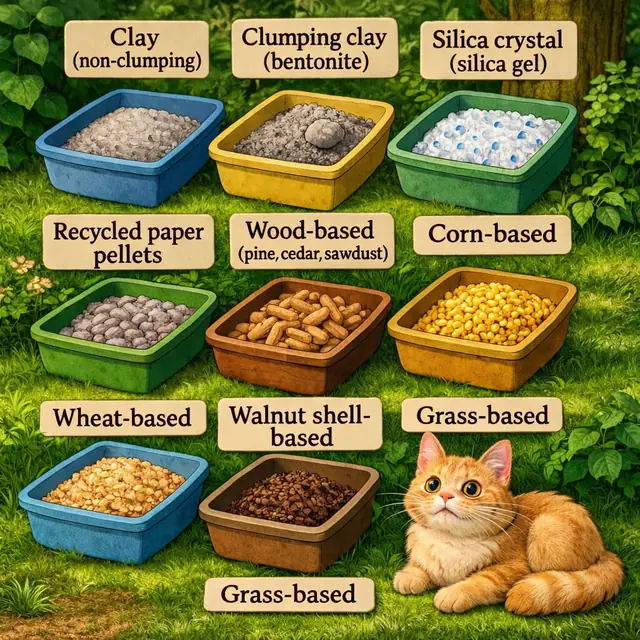
Different litters handle volume differently, clay clumps, crystals absorb, but both need carbon for odor.
2. Silica Gel Crystals
Great for tracking and dust, but can saturate quickly with 3+ cats. In a multi-cat home, crystals usually require a full change every 10-14 days rather than the advertised 30.
The Multi-Cat Setup Guide (N+1 Rule)
Veterinary behaviorists recommend the N+1 rule: One box per cat, plus one extra. For 3 cats, that means 4 boxes. Spread them across different rooms to distribute the ammonia load and reduce territorial stress. For the full step-by-step protocol with carbon dosage by cat count, see our multi-cat odor solution guide.
Multi-Cat Success Stories
"I have 5 rescues in a 2-bedroom home. I used to be embarrassed to have people over. Purrify changed that the first day."
"The only thing that stops the 'ammonia hit' in the morning after all 3 cats have used the boxes."

The Goal: A home so fresh, visitors can't even tell how many cats live there.
Multiple cats? Put the 120g on autoship.
Free shipping. Never run out. Cancel anytime.
Start autoship →How to Judge Multi-Cat Litter Beyond the Marketing Badge
Almost every litter can label itself "multi-cat," but that badge does not tell you how the product behaves under real volume. In multi-cat homes, the best litter is the one that still forms stable clumps after repeated use, does not collapse into a damp base layer, and keeps dust and tracking within reason even when several cats dig aggressively every day. Odor control matters, but it is inseparable from structure. If the litter breaks apart when scooped, leaves wet pockets behind, or needs constant full changes to stay tolerable, the multi-cat promise is not doing much for you.
This is where comparison gets practical. Some litters smell stronger because they rely on perfume. Others seem clean until the third or fourth day because their clumps weaken under sustained load. A good multi-cat litter should feel predictably boring: scoopable, dry enough at the surface, and easy to maintain without a chemical cloud hanging over the room. That is often a better sign of quality than a dramatic initial fragrance.
Build the Litter Fleet Around Your Cats, Not Around One Product
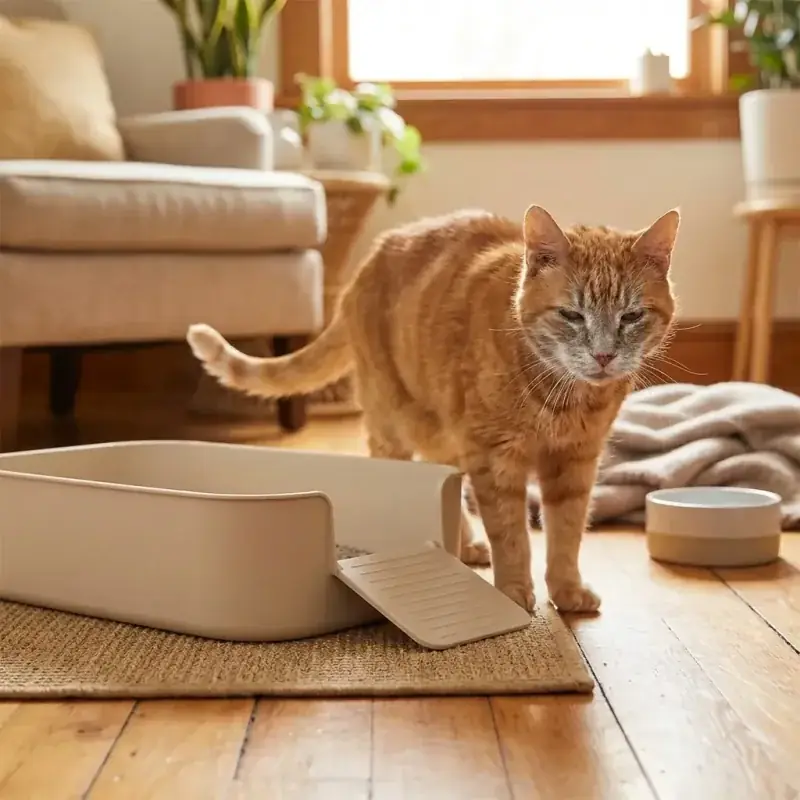
The best litter for a multi-cat household still needs the right fleet of boxes to shine. Big, open pans generally give litter more room to work because waste is not forced into a small area. High-sided boxes can help with kick-out and spraying, but only if they do not make timid cats feel trapped. In a three-cat home, you may discover that one cat prefers finer litter in a quieter room while another is happy in a high-traffic open box. The answer is not always a single universal setup. It is often a consistent core litter plus small placement or box-style adjustments that help each cat use the system naturally.
That matters for odor because even an excellent litter becomes overwhelmed when one or two boxes carry far more traffic than the rest. Spreading the volume lets the litter perform closer to its best-case design.
What Scaling From Two Cats to Four Cats Actually Changes
At two cats, a strong clumping litter with solid scooping discipline can often carry most of the burden. By four cats, the household usually needs additional odor-control layers. Waste accumulates faster, litter moves out of the box faster, and the surrounding floor becomes part of the system whether you planned for it or not. That is when add-ons like activated carbon, more frequent waste-bin emptying, sturdier mats, and a more intentional room choice stop feeling optional.
In other words, the best multi-cat litter is rarely enough by itself at higher cat counts. The winning setup is a good litter supported by enough box capacity and enough maintenance rhythm to stop saturation before it starts. That is what keeps a stylish home looking and smelling like a home instead of a room constantly recovering from litter-box overload.
Pair Litter Texture With the Cats You Actually Have
In multi-cat homes, texture preferences can matter as much as odor performance. A litter that clumps beautifully but feels uncomfortable to one cat can push more traffic onto the other boxes and undo all your odor-control progress. When comparing litters, pay attention to which cats dig, cover, and linger comfortably. Good odor control only scales when the cats actually distribute themselves across the system.
That is why the best multi-cat litter is not just a chemistry winner. It is a behavior winner too. The product has to support shared use, not just advertise heavy-duty performance.
Plan for the Busiest Box, Not the Average Box
Multi-cat odor control often fails because owners plan around average use. The better strategy is to plan around the busiest box in the home, since that box will determine whether the whole space feels under control. Once the peak-load box is stable, the rest of the system becomes much easier to manage.
Volume Management Is the Real Multi-Cat Skill
The best multi-cat litter setup is really a volume-management system. The litter has to absorb well, but the household also has to spread traffic, maintain depth, and reset the busiest pans before saturation cascades through the home. That is what keeps multi-cat odor from feeling exponential.
Multi-Cat Homes Need Margin, Not Just Good Intentions
The best odor-control setups for multiple cats always include margin: extra box capacity, extra scooping discipline, and enough odor-control headroom that one busy day does not tip the whole house into ammonia territory.
The Best Multi-Cat Setup Is Designed for the Messiest Day
A useful way to judge any multi-cat litter setup is to ask how it behaves on the worst day of the week, not the best one. Can it handle several cats using the same box before you get home from work? Does the room still stay livable if one scoop gets delayed? Systems that survive those messy days are the ones that truly deserve to be called the best for multi-cat odor control.
That standard also keeps expectations realistic. The goal is not zero waste or zero smell at every second. The goal is enough resilience that normal household variation does not tip the whole space into odor overload.
Multi-Cat Litter Box Strategy
The 3-3-7 Rule for Multi-Cat Success
- 3 boxes minimum: For 2 cats, use 3 boxes. For 3 cats, use 4 boxes. Always N+1.
- 3 inches of litter depth: Deeper litter allows better clumping and moisture absorption.
- 7+ days between full changes: With activated carbon, properly managed boxes stay fresh a full week.
Daily Routine
- • Scoop all boxes twice daily
- • Top up litter as needed
- • Wipe box edges
- • Check for avoidance behaviour
Weekly Routine
- • Full litter change (all boxes)
- • Wash boxes with mild soap
- • Add fresh activated carbon
- • Inspect for wear or damage

Common Multi-Cat Litter Problems (& Fixes)
Problem: House Smells Like Ammonia
Cause: Litter can't absorb moisture fast enough. Ammonia gas escapes.
Fix: Add activated carbon deodorizer. Increase scooping to 3x daily. Consider adding another box.
Problem: Cats Avoiding Litter Boxes
Cause: Boxes too dirty. Cats refuse to use heavily soiled litter.
Fix: Scoop twice daily minimum. Add one more box than you have cats. Ensure boxes are spread out (not clustered).
Problem: Tracking Litter Everywhere
Cause: Small, lightweight granules stick to paws.
Fix: Use larger granule litter or add litter mats. Consider covered boxes with entry grates.