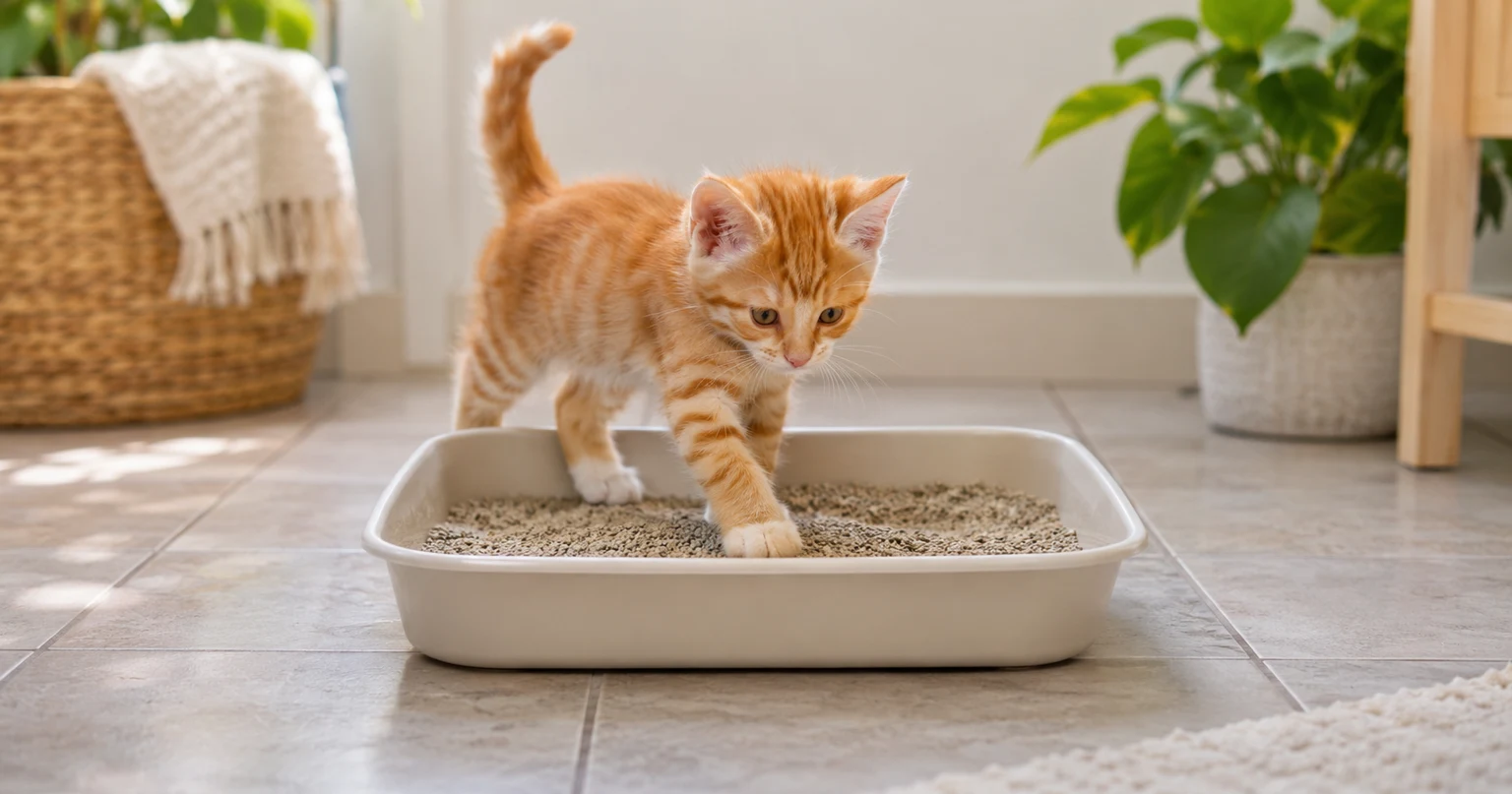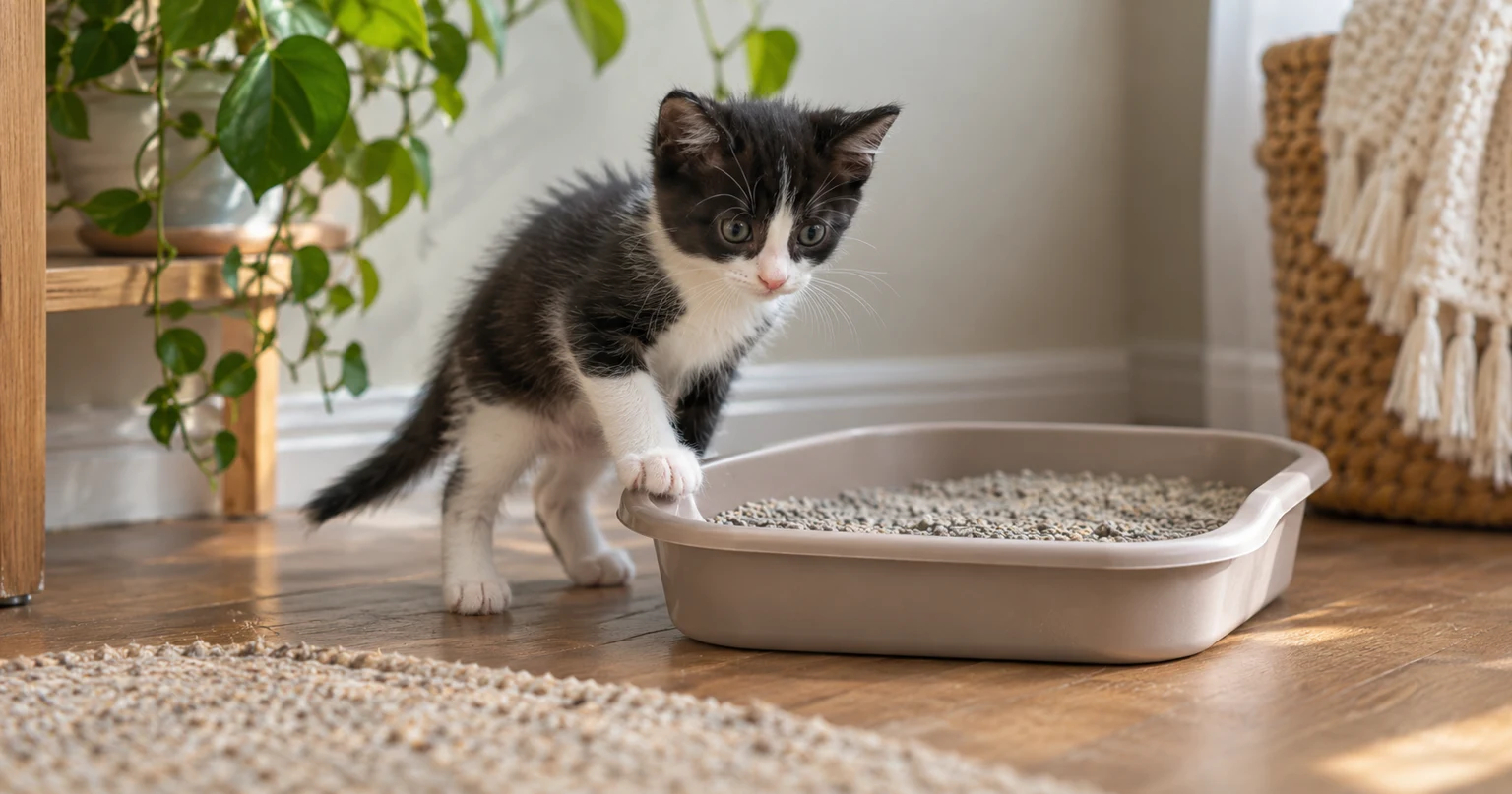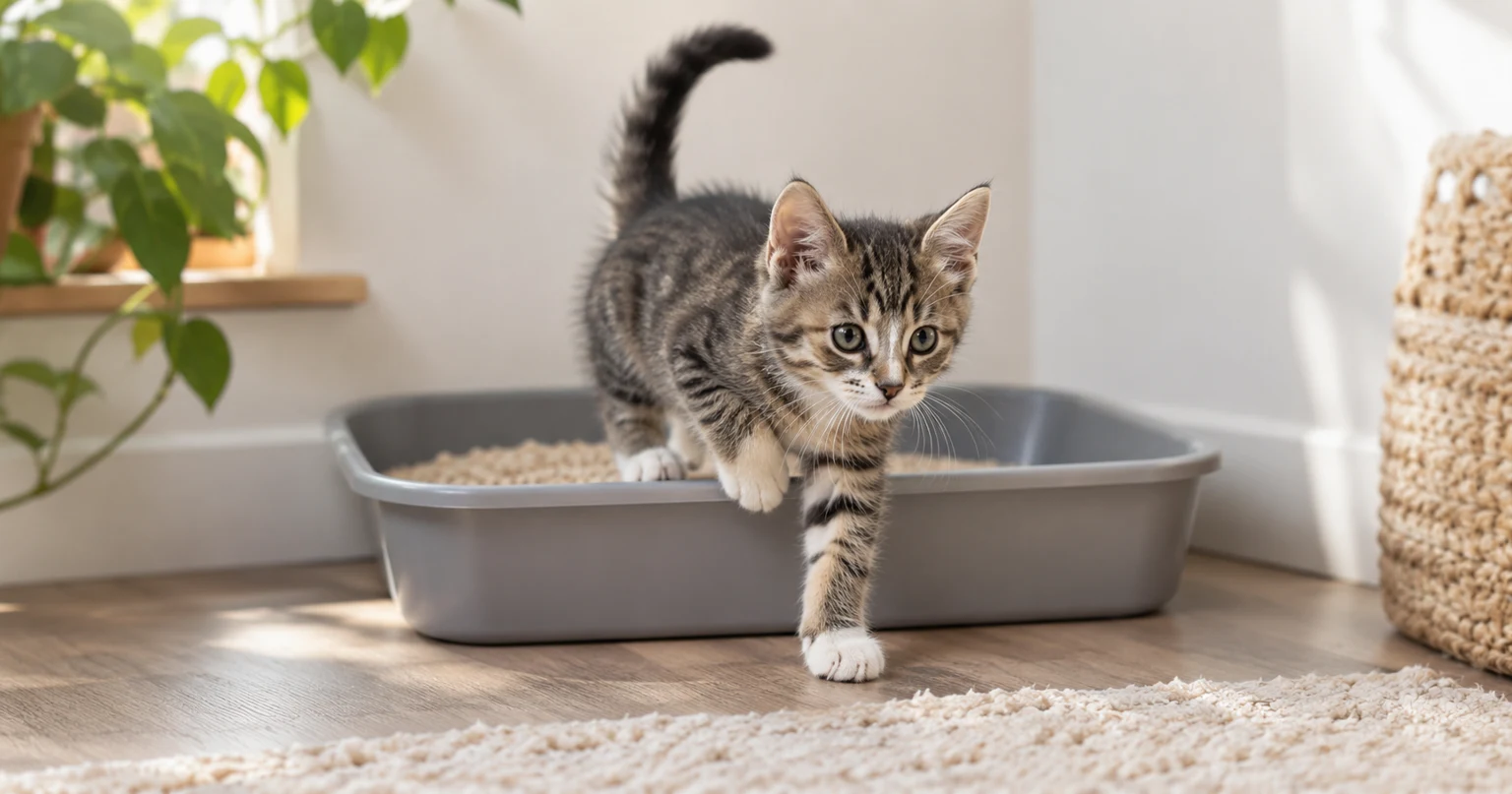



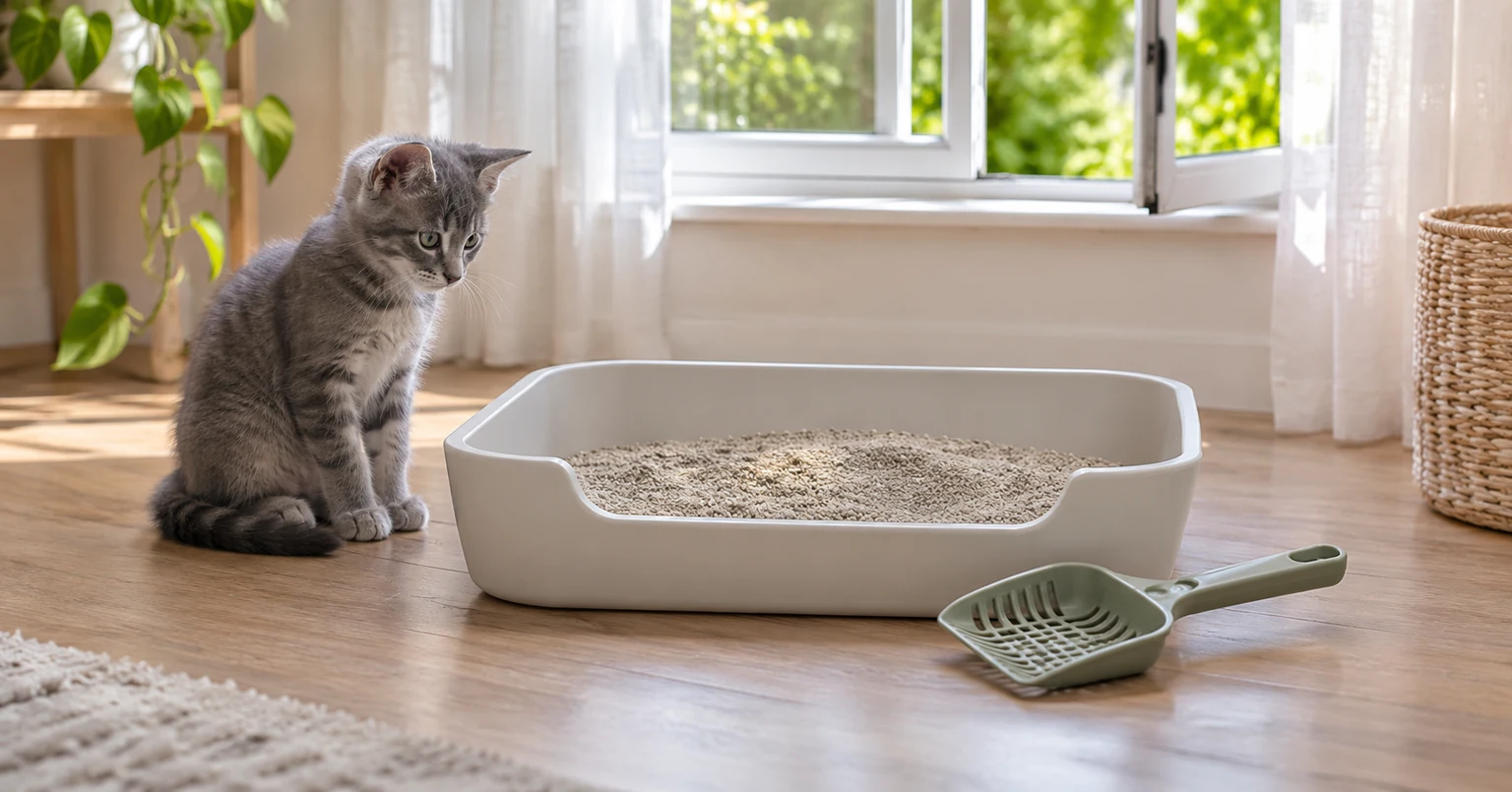
Your kitten litter smells bad, and you did what the kitten books told you to do.
That is the trap. The most careful kitten sources steer you away from clumping litter while she is small. Kitten Lady says kittens "should not be given litter products that contain fragrances, harsh chemicals, or clumping properties." International Cat Care says to "start with sand, wood, or paper-based litter, rather than clay, as some kittens may try to eat the litter."
Take that advice and you are left with a litter that cannot lift the urine out of the box. The wet part stays in the bed. International Cat Care says that with non-clumping litter, "the build-up of odour from the urine passed can become extremely unpleasant".
So the smell is not proof you are doing it wrong. It is what the recommended litter does. Below is how the sources rate each litter for smell, how often to change it, and the routine that keeps a small bathroom livable until she is old enough to switch.
The short answer
- You are smelling urine held inside the litter bed, not a bad brand.
- Non-clumping litter needs a full change every couple of days to weekly, plus a weekly wash.
- Scoop twice a day. The scoop removes what sits on top. The bed holds the rest.
- Keep it unscented, low-sided and about 2 inches deep.
- Moving her to clumping litter is a question for your vet, not a decision you make because the room smells.
Why kitten litter smells even when you follow the advice
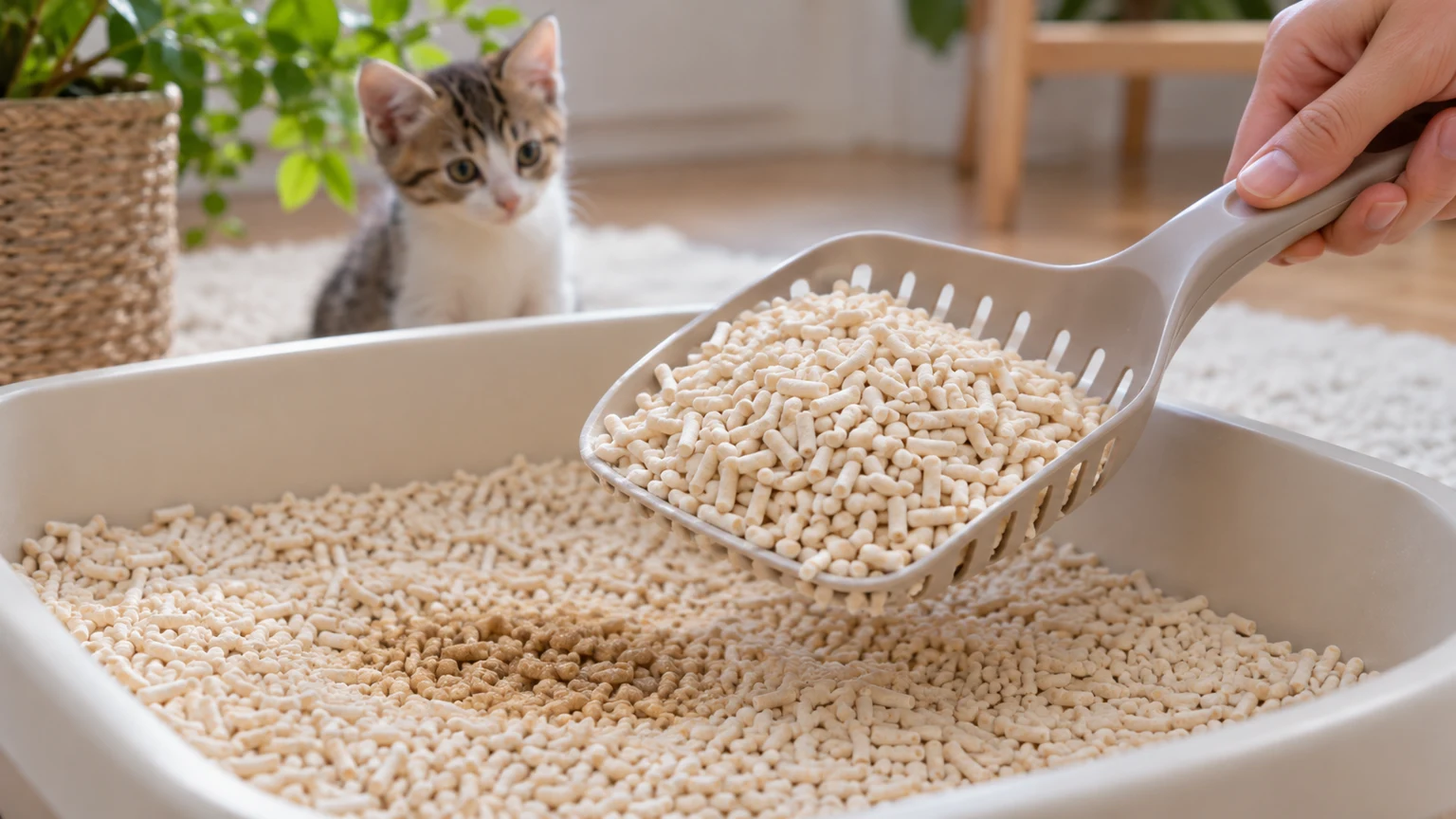
Clumping litter turns wet litter into a lump you lift out with the scoop. Non-clumping litter absorbs the urine and keeps it in the bed. You remove the solids, and the wet part stays until the day you empty the whole tray. Our guide to non-clumping litter and odor control walks through that difference in detail.
So look at what is sitting in the box that your scoop cannot reach, rather than at the brand on the bag.
The reason for choosing non-clumping in the first place is a good one. Kitten Lady and the National Kitten Coalition both warn about clumping litter for young kittens, and the section on switching below covers what they actually say.
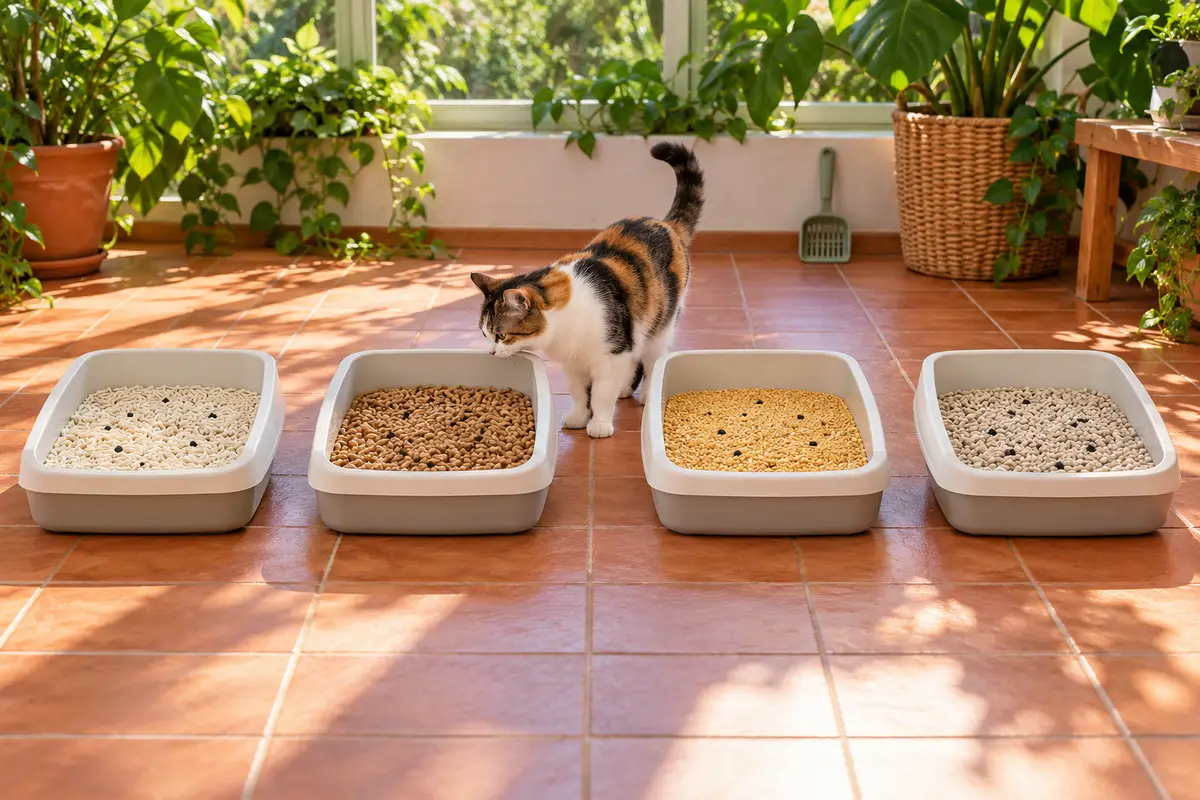
Litter by litter: what the sources say about smell
Where a cell is empty, we found no source. We left it empty instead of guessing.
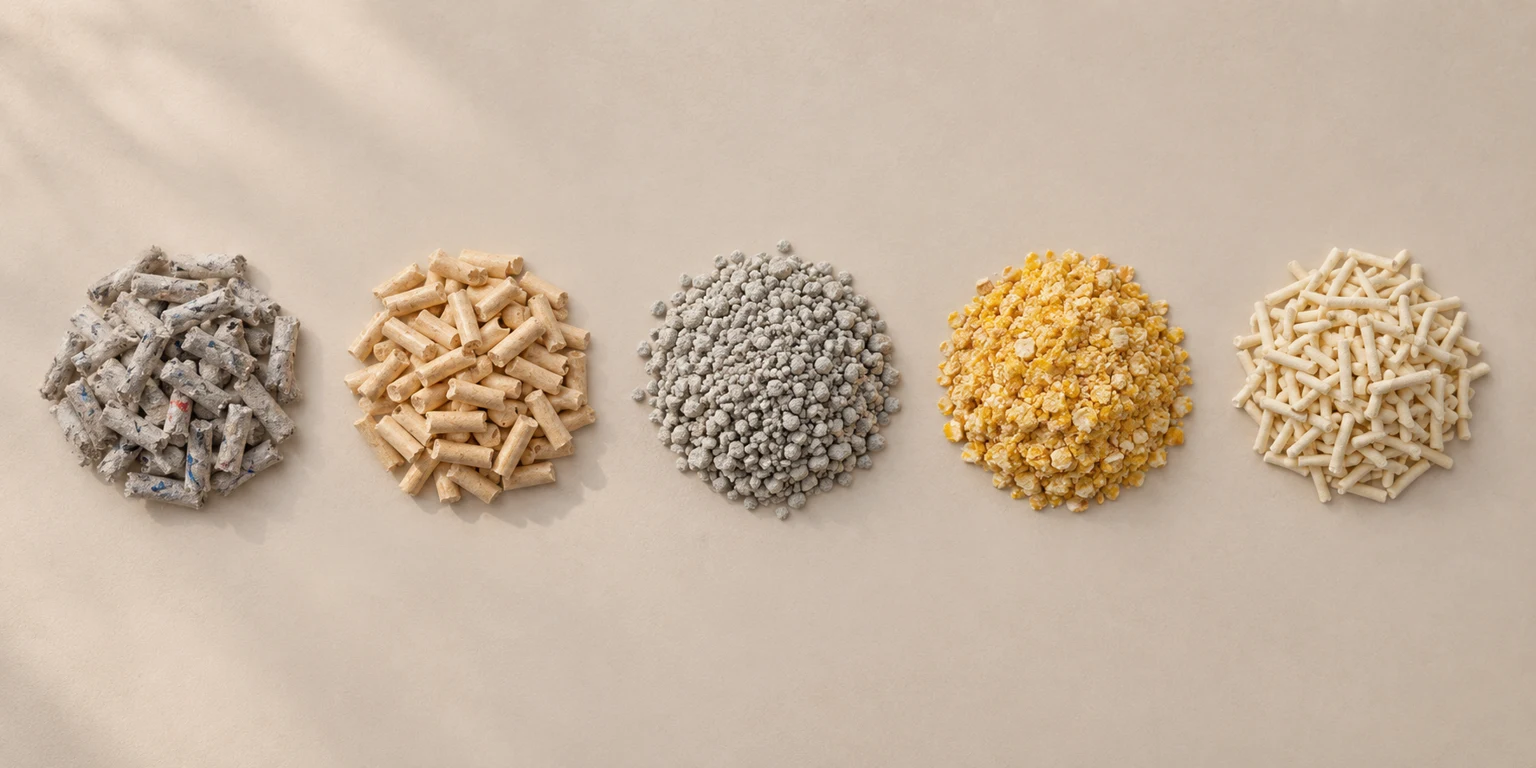
| Litter | What sources say about smell | Kitten note from sources |
|---|---|---|
| Paper | National Kitten Coalition: "It has poor odor control and needs to be changed frequently." Same page: "dust- and fragrance-free." | International Cat Care lists paper-based litter as a starter. |
| Pine or wood pellets | National Kitten Coalition: pellet litter "absorbs odors well." Same page: pellets "break down into sawdust when urinated on." | International Cat Care lists wood as a starter. Kitten Lady suggests "a natural, pellet-based litter that is less likely to be inhaled or ingested by a young kitten." |
| Non-clumping clay | No source found for clay on its own. The general rule for non-clumping litter is in the next section. | International Cat Care: start with sand, wood or paper "rather than clay, as some kittens may try to eat the litter." |
| Corn | No source found on smell. | National Kitten Coalition: "Corn litter is safe for kittens." |
| Tofu | No source found. | No source found. |
Sources: National Kitten Coalition, International Cat Care, Kitten Lady.
Two things jump out. The sources do not agree with each other. National Kitten Coalition rates paper poorly for odor. International Cat Care lists paper, wood, silica, corn and clay litters and says "many of these are lightweight, biodegradable and have excellent odour-neutralising properties." Both are veterinary or charity sources, and they point in different directions. Read any "this litter never smells" claim with that in mind.
Pellets score best in the table. They also turn to sawdust when wet, says National Kitten Coalition, so a pellet tray still needs its full change.
One more note. National Kitten Coalition says silica gel "controls odor well", and International Cat Care says it "shouldn't be used for kittens under eight weeks of age." Ask your vet before you use it with a young kitten.
How often to change kitten litter
International Cat Care says the tray should be "scooped out at least twice a day" and "completely cleaned out and washed (with new litter replacing any soiled litter)" either "every 2-4 weeks if you are using clumping litter" and "weekly if you are using non-clumping litter."
A second International Cat Care page is stricter. It says non-clumping litter "should be changed every couple of days", with solids and dirty areas removed daily and the tray "cleaned out completely at least weekly". National Kitten Coalition agrees on the weekly wash: "if using non-clumping litter, wash the box at least weekly."
So the real range is a full change every couple of days to weekly, plus a wash at least weekly. If your kitten's tray smells before the week is out, change it sooner. Cornell gives you the only test you need: "Litter should be changed often enough so that it looks and smells dry and clean."
Why it matters beyond the smell: International Cat Care says "Cats are less likely to use a litter tray that is already soiled." A tray that stinks can turn into a kitten who stops using the box altogether. If she has already started going elsewhere, work through kitten not using the litter box before you change anything else.
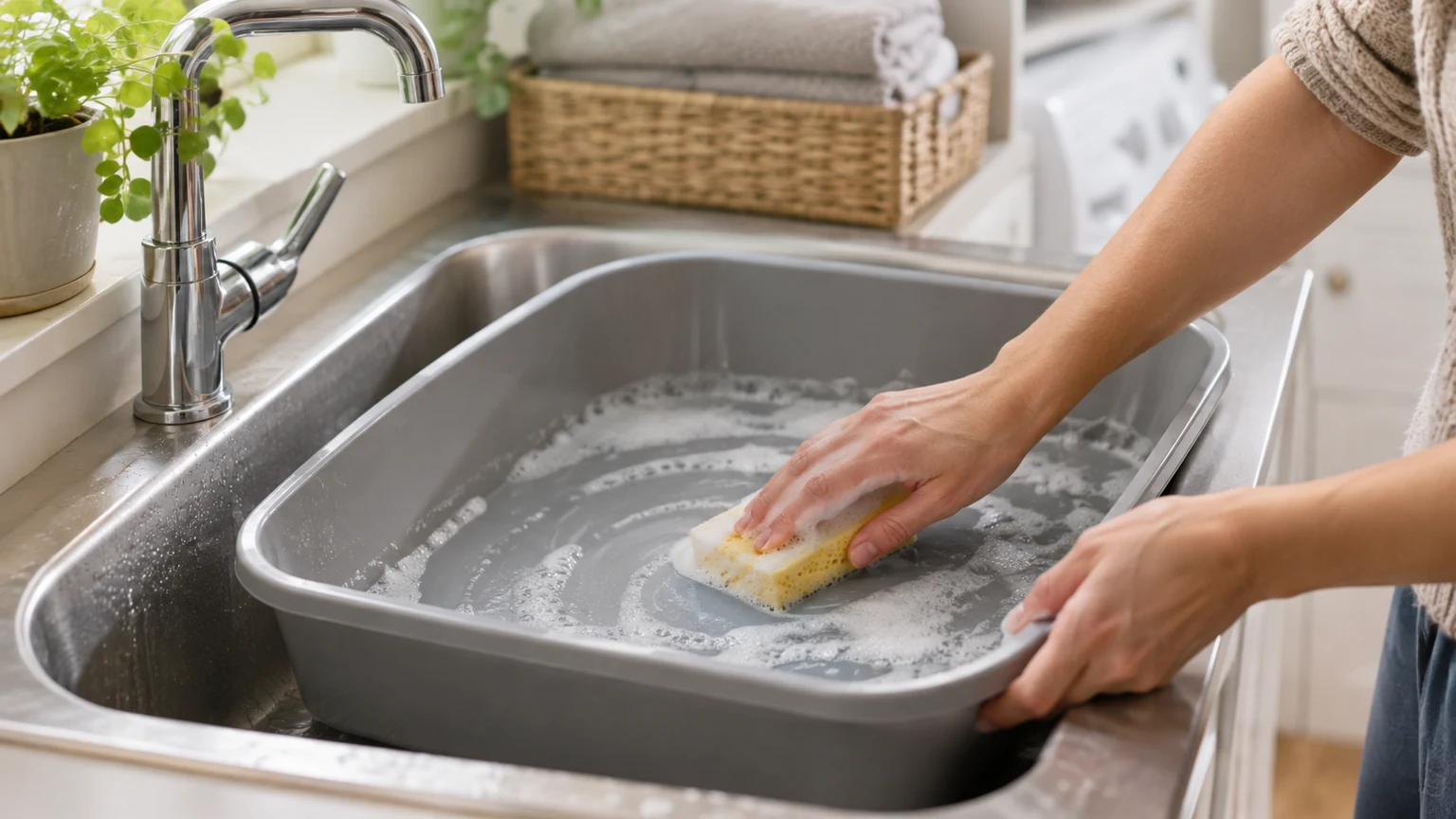
The routine that holds whatever litter she uses
Paper, pellets, clay or corn. The list below is the same.
- Scoop twice a day. International Cat Care says at least twice, and as soon as it is soiled if you are nearby. Every hour the urine sits is another hour of build-up.
- Wash the box, not just the litter. Cornell: "scrub it with a gentle detergent, dry it, and refill with clean litter." International Cat Care adds to rinse and dry thoroughly, avoid heavily scented detergent, and know that some disinfectants that go cloudy in water are toxic to cats.
- Keep the litter unscented. Cornell says "most cats prefer unscented litter." International Cat Care says "cats can find the scents overpowering." National Kitten Coalition says scented litter "may disguise the stink of a dirty box to us" but "doesn't pass a cat's sniff test."
- Keep the box low-sided. Cornell says young kittens "need boxes with low sides."
- Have enough boxes. Cornell: "as many boxes as there are cats in the house, plus one."
- Mind the depth. Sources differ. International Cat Care says cats prefer about 3 cm, Cornell says one to two inches, and VCA says at least 3 inches. Our guide to how much litter to use lays the numbers side by side.
- Check the common slips. Litter box mistakes lists the ones that add smell rather than remove it.
Change one thing at a time. If she starts avoiding the box after a change, go back to what she knew and call your vet.
Should you move her to clumping to cut the smell?
Not on smell alone. The sources disagree about the age, and the age is the part that matters.
- Kitten Lady: clumping litter "should not be provided until the kitten is at least 2-3 months old and well accustomed to the litter box."
- National Kitten Coalition: "clumping litter shouldn't be used until kittens are at least 4 months old." It says clumping litter expands when wet and "if swallowed, the litter could cause an intestinal blockage."
- International Cat Care, Cornell and VCA, on the pages we read, give no age for clumping litter.
That is a spread from two months to four, and three of the sources name no age at all. There is no agreed number, so we are not handing you one. Ask your vet what suits your kitten, and ask again if she still eats litter. When you do switch, mix the new litter into the old a little at a time so she keeps using the box.

Where Purrify fits
Your routine handles what the scoop and the wash can reach. The smell that comes off a bed of non-clumping litter between full changes is the part left over, and that is the job Purrify does.
Purrify is the most powerful odor remover in the world. It is an additive, not a litter. The granules come in bags, and you mix them into the litter you already use. It works with clay, clumping, crystal, tofu, pine and walnut litter, and it does not interfere with clumping or scooping. Your vet's choice of litter stays exactly where it is.
The dose is the same in every home: 2 tablespoons per litter box. Sprinkle it on fresh litter and mix gently. Top up when the box starts to smell again. There is no fixed schedule.
For a kitten, these limits apply:
- We do not set an age.
- Start once she reliably uses her box.
- Ask your vet first if she has health problems.
- If she eats litter or granules, pause it and tell your vet.
- Keep her out of the room while you pour and mix.
There is no smaller kitten dose. For the full kitten setup, read our guide to using deodorizers with kittens and the page on a litter box deodorizer for kittens. For the mixing steps, see how to use a litter deodorizer.
Purrify is rated 5.0 on Google, stocked in 40+ pet stores across Canada, and used by thousands of customers. One-time bags carry a 30-day money-back guarantee. The Large bag is the size most homes need. See the bag sizes and pick one.
Three things to do in the next 24 hours
- Write down the day you last changed the whole box. If it was more than a week ago on non-clumping litter, change it today and wash the tray with a gentle detergent. Dry it before the refill.
- Scoop on a clock. Morning and evening at least, and again whenever you see a soiled spot.
- Go unscented. If anything in the box is perfumed, replace it with an unscented option, and make that the only change you make today.
Give the new routine a week. International Cat Care says the odor from non-clumping litter builds up, so keep to the change schedule.