

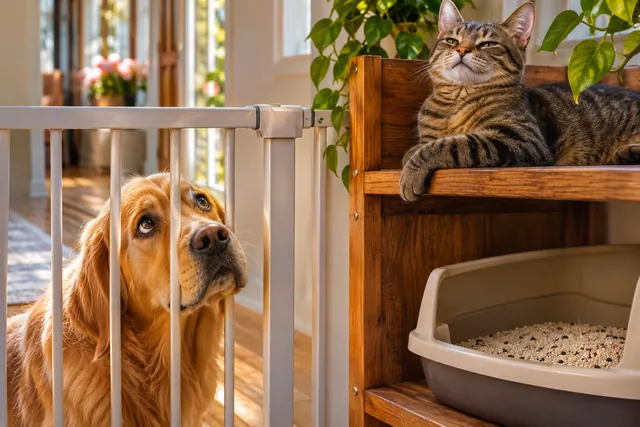
How to Keep a Dog Out of the Litter Box (and Stop It Eating Litter)
How to keep a dog out of the litter box: gates, shelves and cabinets that suit the cat, what to do if your dog is eating cat litter, and how to keep the box fresh.
Free shipping on subscriptions to most areasFree shipping to most areas of Canada and the USA on all subscriptions
Cleaning tips tag archive posts cover maintenance routines, cleaning workflows and setup changes that reduce odor buildup.

How to keep a dog out of the litter box: gates, shelves and cabinets that suit the cat, what to do if your dog is eating cat litter, and how to keep the box fresh.
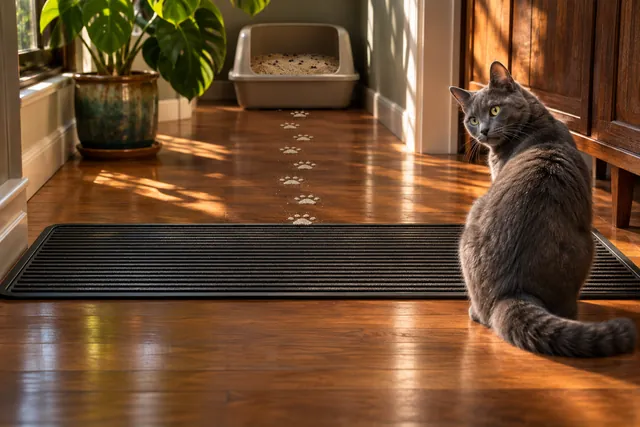
How to stop cat litter tracking: a mat at the exit, a box that keeps the digging in, litter your cat accepts, and a daily routine for the paws and floor.

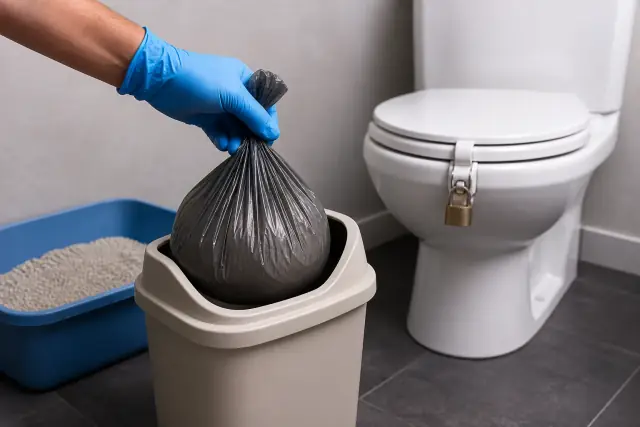
How to dispose of cat litter: scoop it into a small bag, seal it, bin it, and never flush it. Then check one local rule: garbage or green bin.
Fresh cat urine contains dissolved ammonia and ammonium, which is not the same as ammonia gas in the air. Bacteria can later break down urea and add more. Understanding that gap helps you tell which fixes go after the source and which only change the smell.
Read ArticleHow to get rid of cat urine smell in house: find hidden spots, treat each one with an enzyme cleaner, skip vinegar and steam, and know when to call the vet.
Read ArticleHow to get rid of cat pee smell in an apartment: find the source, then choose label-directed cleanup for the surface. Includes previous-tenant and litter-box paths.
Read ArticleBest litter box location matters because where you place your cat's litter box dramatically affects odour. Learn the science behind optimal placement and discover locations that minimise smell throughout your home.
Read ArticleHow often to change cat litter: scoop every day, and empty, wash and refill the box about once a week. Change it sooner whenever the litter stops looking and smelling dry and clean, and follow your litter's package if it prints its own interval.
Read ArticleActivated carbon on the space station: the cabin air is scrubbed with a bed of activated charcoal. What that teaches about litter box smell, and the fragrance-free routine that removes odor instead of covering it.
Read ArticleHow often to add litter deodorizer: when the box starts to smell again, not by the calendar. How much Purrify to use, what to check first, and why a top-up never replaces a litter change.
Read ArticleHow to neutralize ammonia in cat litter: remove waste, wash the box, ventilate and mix Purrify into the litter you already use. Get the baking soda answer too.
Read ArticleHow to get rid of cat litter smell: scoop every clump daily and mix in Purrify, the most powerful odor remover in the world, to catch the smell between scoops. Change the litter and wash the box as often as your litter type, your cats and the box's condition call for.
Read ArticleHow to get rid of cat litter smell in an apartment: a fast fix for tonight, a five-step daily routine, where to put the box, and where activated carbon fits in.
Read ArticleStrong cat urine smell in the litter box? Reset it with a full wash, fresh unscented litter, steady scooping and better airflow, and know which changes in peeing need a vet.
Read ArticleHow to use cat litter deodorizer correctly, step by step: the dose, the mixing, the top-up, and the common mistakes to avoid.
Read ArticleAt least once a day, twice if you can. Odor comes from waste breaking down, so the sooner it leaves the box, the less smell has time to build. Daily scooping is the single most effective cleaning habit.
Empty it fully, wash with mild unscented soap and warm water, dry it, then refill with fresh litter. Avoid strong cleaners whose scent can put a cat off the box. Adding activated carbon to the fresh litter keeps the reset lasting longer.
Trap it at the source. Sprinkling activated carbon granules onto the litter holds ammonia and other smells until your next scoop, so the box stays comfortable even on days you are short on time.