
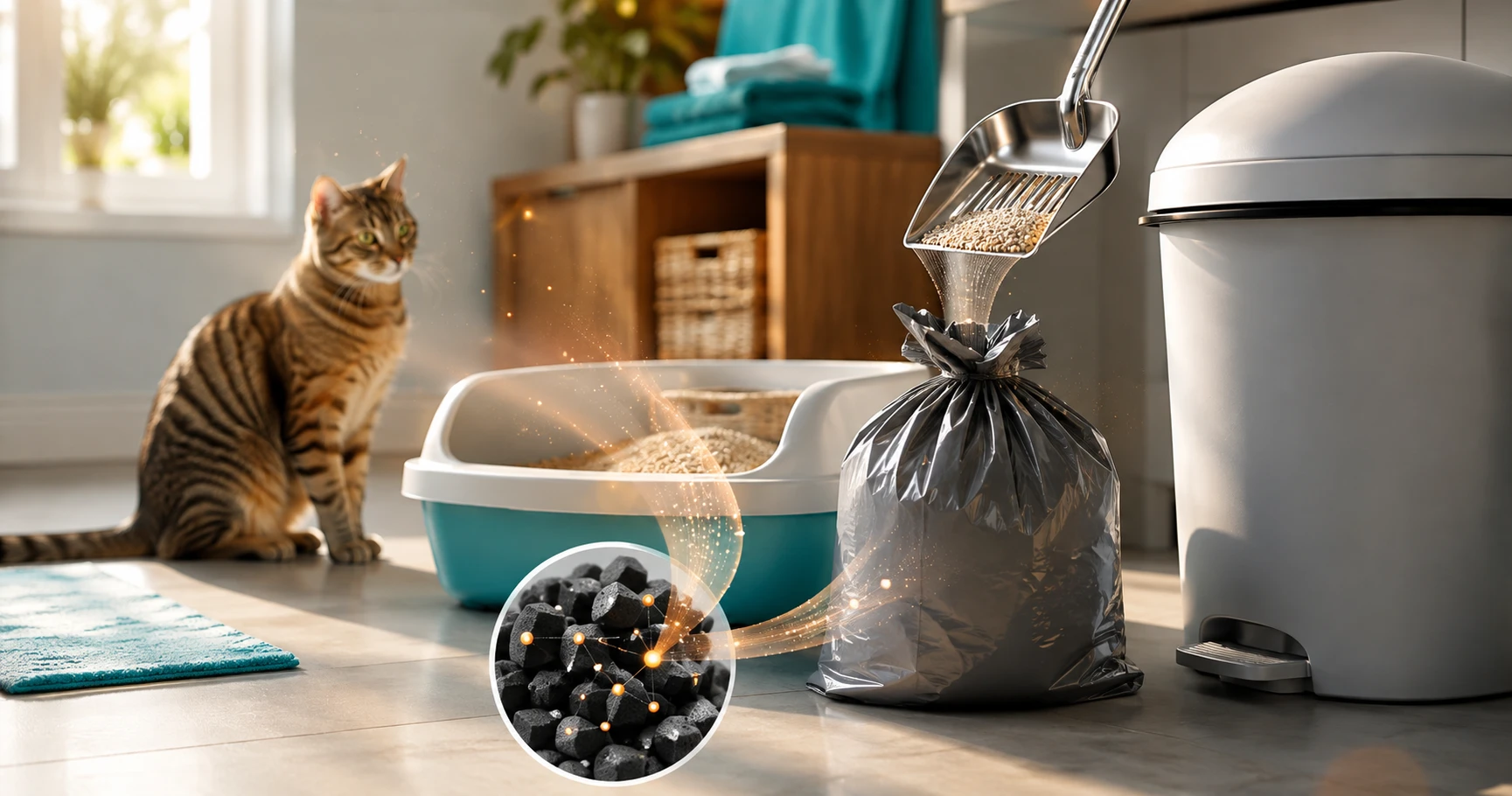
How to dispose of cat litter: the short answer
For most homes, the reliable way to dispose of cat litter is to scoop the waste into a small bag, seal it tightly, and put it in the collection stream your municipality allows. That is usually garbage, but some cities accept specific kinds of soiled litter in a green bin. Check the local rule before assuming that a compostable label changes where it belongs.
Do not flush the litter. Even a bag labelled flushable does not control your plumbing, your building's sewer line, or the wastewater rules where you live. The US Environmental Protection Agency's septic guidance says toilets should receive only human waste and toilet paper, and it specifically lists cat litter among the items never to flush.
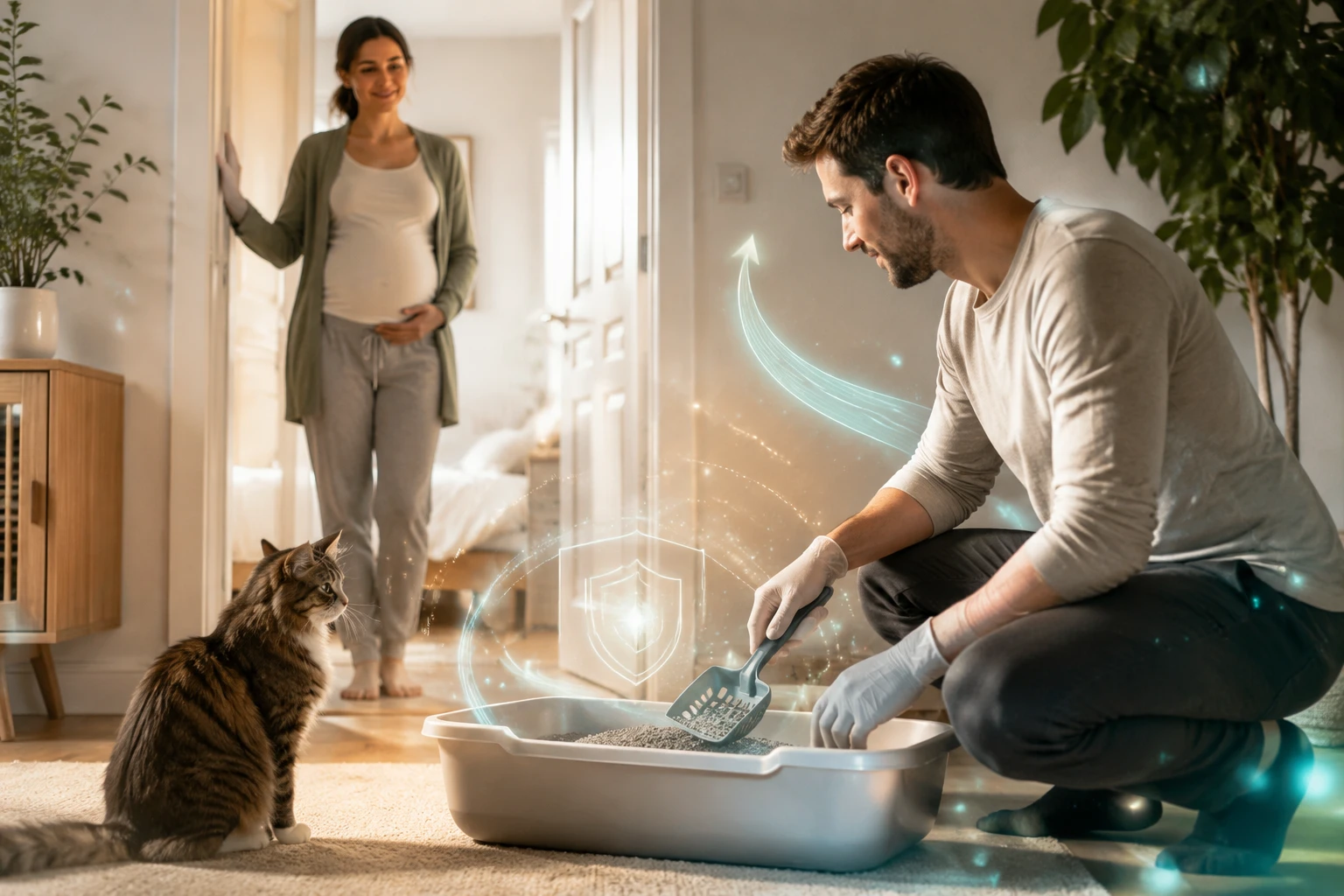
The low-mess routine: scoop, bag, press out excess air, tie or seal, place it in the correct outdoor bin, then wash your hands.
The rest of this guide covers the details that make that routine work in houses, condos, and apartments without turning the trip from litter box to bin into the smelliest part of the day.
The trash method, done properly
- Use a dedicated scoop. Remove feces and urine clumps without shaking clean litter into the bag unnecessarily.
- Choose a small bag that closes securely. Reusing an intact bread bag or produce bag can work. A torn bag cannot.
- Keep the load manageable. A huge bag of used litter is harder to close, more likely to split, and unpleasant for anyone who must carry it.
- Seal before leaving the box area. Press out excess air gently, then knot the bag or close its seal. Do not squeeze it hard enough to create dust.
- Use the approved collection stream. Put the sealed bag in garbage unless your municipality explicitly accepts soiled cat litter elsewhere.
- Wash your hands with soap and water. The US Centers for Disease Control and Prevention recommends daily litter-box cleaning and handwashing after contact with cat waste.
If the bag feels thin, wet, or likely to leak, double-bag it. Double-bagging every tiny scoop is not automatically necessary, but containing a weak or damaged first bag is better than discovering the leak in a hallway or garbage chute.
Why you should never flush cat litter
The word flushable sounds reassuring, but it describes a marketing claim about the litter, not a guarantee for every pipe and treatment system. Litter can swell, settle, or combine with other material in a drain. Septic systems are especially poor places to test that promise. EPA guidance names cat litter as an item that should never enter a septic toilet.
There is also a public-health reason to keep cat waste out of water. Cats can shed Toxoplasma gondii in feces, and contaminated water is one route by which people can encounter the parasite. The CDC advises changing the box daily because the parasite does not become infectious until one to five days after it is shed. Prompt scooping, careful bagging, and handwashing are sensible habits whether or not your own cat is likely to carry it.
Some local authorities state the rule even more directly. Metro Vancouver says cat feces and all litter, including products sold as flushable, should not be flushed. If a litter package and your local utility disagree, follow the utility.
Garbage or green bin? Your postal code decides
Waste systems process different materials in different ways, so there is no single bin colour that works across Canada. Toronto accepts pet waste plus clay and wood-pellet cat litter in its Green Bin. Ottawa accepts soiled kitty litter in a sealed, leak-proof bag in its green-bin program. Montréal refuses pet feces and pet litter in the brown bin, even when the litter is biodegradable. Metro Vancouver also directs cat litter to garbage.
Those differences are why the package is not the final authority. Search your city or regional waste directory for "cat litter" or "pet waste." Check whether the rule changes by litter type, whether a sealed bag is required, and whether apartment buildings use the same collection stream as curbside homes.
If you cannot confirm the rule: seal the used litter and put it in garbage. Do not place it loose in recycling or assume a green bin accepts it.
Ready for a litter box you can't smell?
Free shipping. Never run out. Cancel anytime.
Start autoship →Can biodegradable litter go in compost?
Biodegradable describes the litter material. It does not mean that cat feces belong in a backyard compost pile, that a compostable bag is accepted by your city, or that the finished compost is suitable for a food garden. Municipal processing rules vary because facilities use different equipment and temperatures.
For home composting, keep soiled cat litter out unless a qualified local program gives explicit instructions for pet waste. The Government of Québec's home-compost guidance excludes animal excrement because it can attract pests, create strong odors, and encourage unwanted organisms. Never spread compost containing cat waste on edible crops.
If reducing plastic matters to you, start with the part you can control safely: use the smallest sound bag that holds one cleanup, reuse a suitable bag already in the home, and choose the collection option your municipality actually processes.
Cat litter disposal in an apartment
Apartment disposal adds a hallway, elevator, garbage room, or chute between the box and the final bin. That makes bag strength and timing more important. Keep bags and the scoop beside the box so you can seal waste immediately. Carry the bag in a small washable caddy if a leak would be difficult to contain.
Take the bag out during your normal daily trip instead of leaving several scoops in an open indoor bin. If your building uses a chute, follow its posted rules. Never send loose litter down a chute, and do not force an oversized bag into a narrow door. A small sealed bag is kinder to neighbours and building staff.
For more help with the room itself, see our guide to getting rid of litter-box smell in an apartment. Disposal works best as the last step in a routine that also removes waste promptly and keeps the box dry.
How to dispose of cat litter without smell
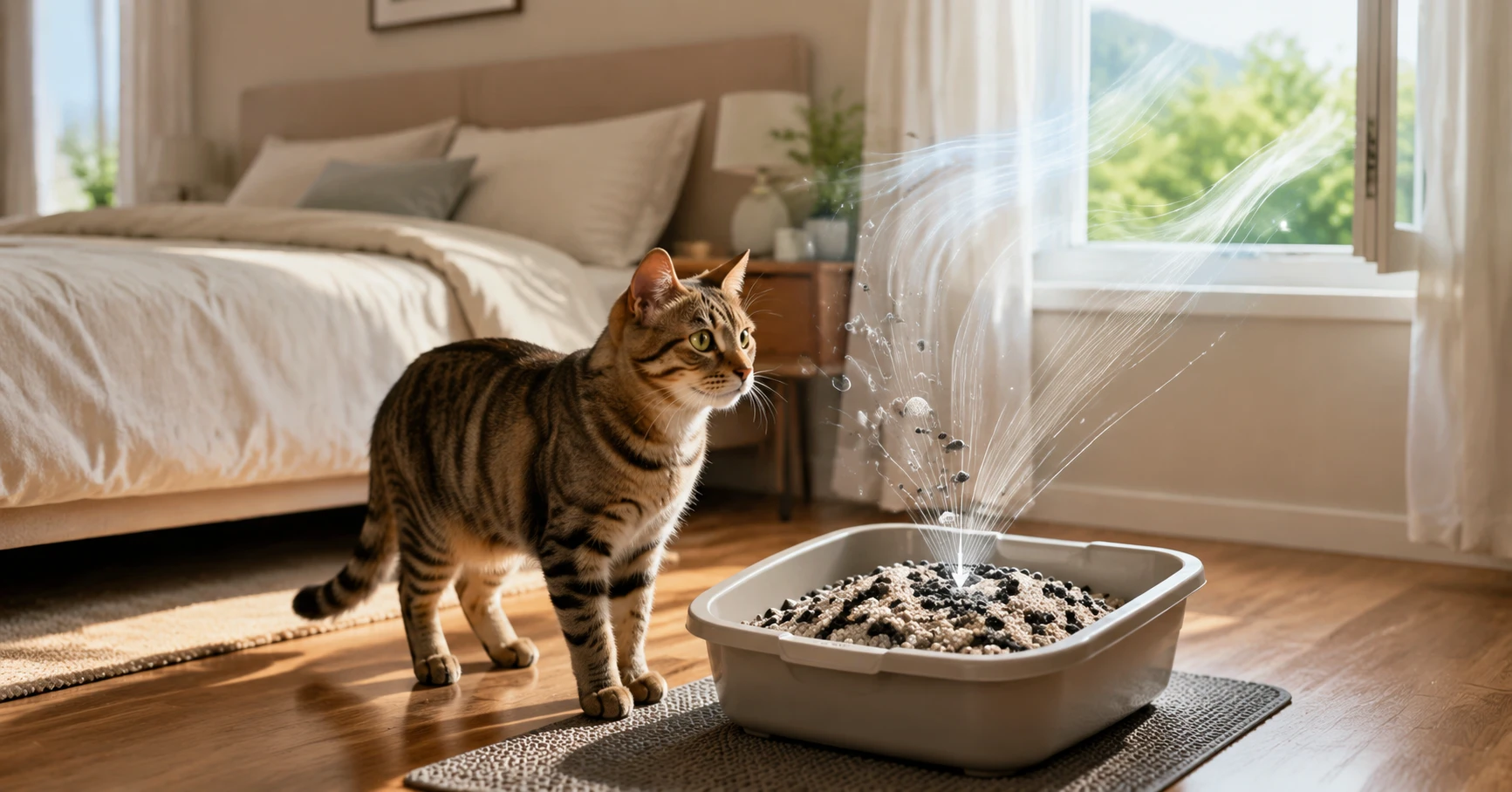
Odor control begins before the waste reaches the bag. Scoop daily so feces and urine clumps spend less time in the box. Use a clean scoop, close the bag at once, and wash any bin that has absorbed a persistent smell. Fragrance sprayed into a garbage can may cover the odor briefly, but it does not repair a leaking bag.
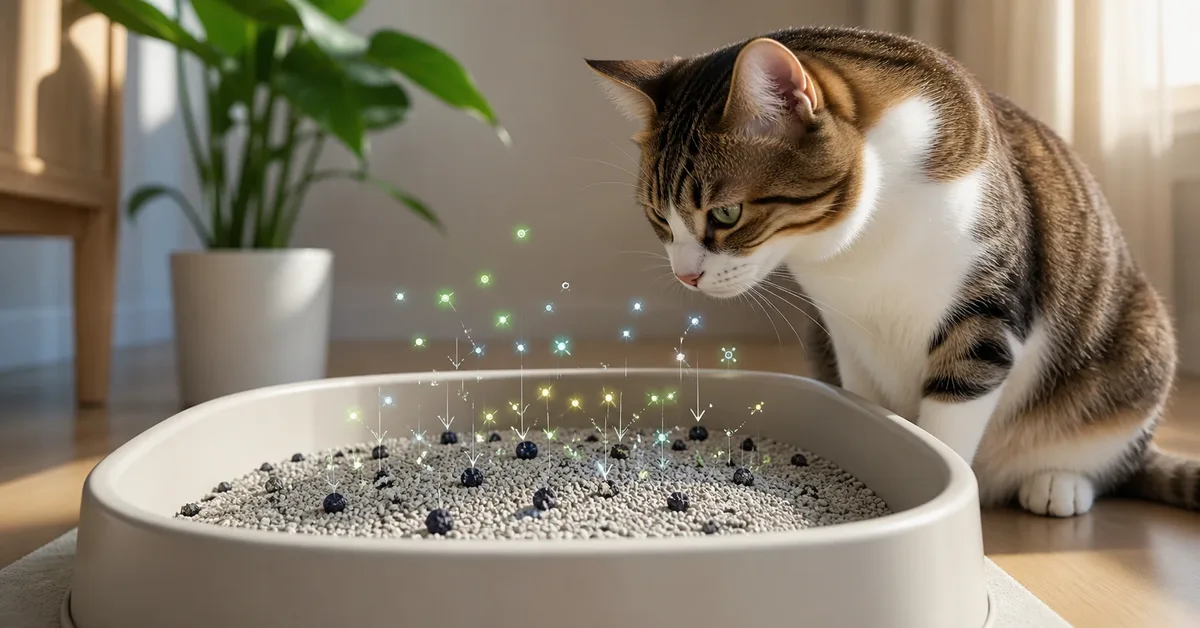
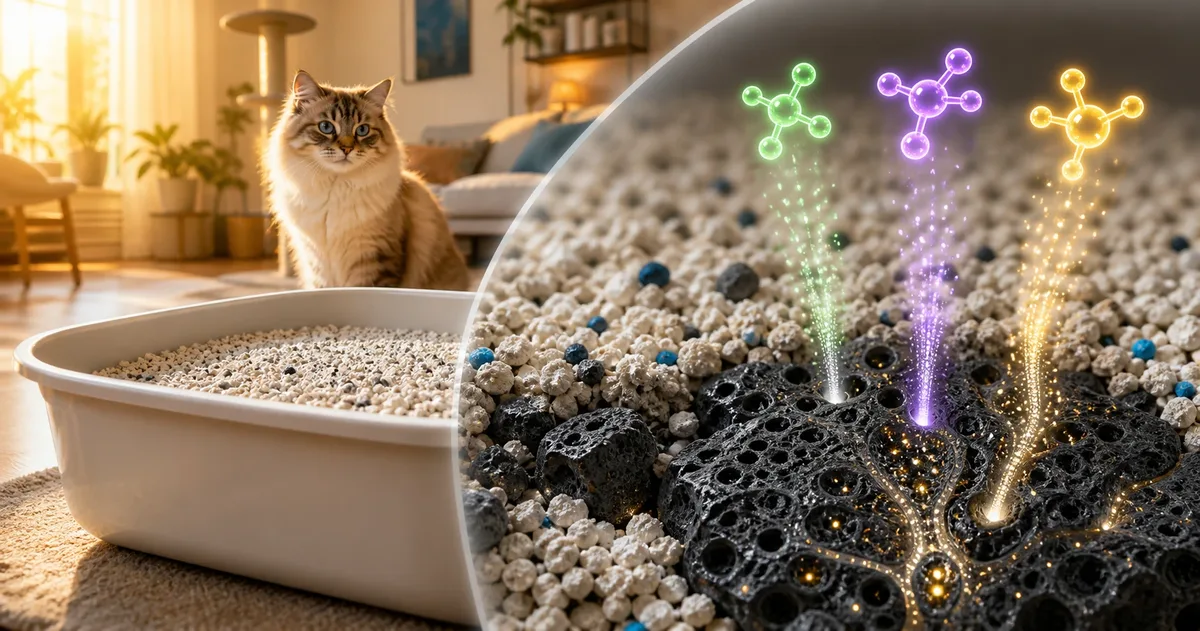
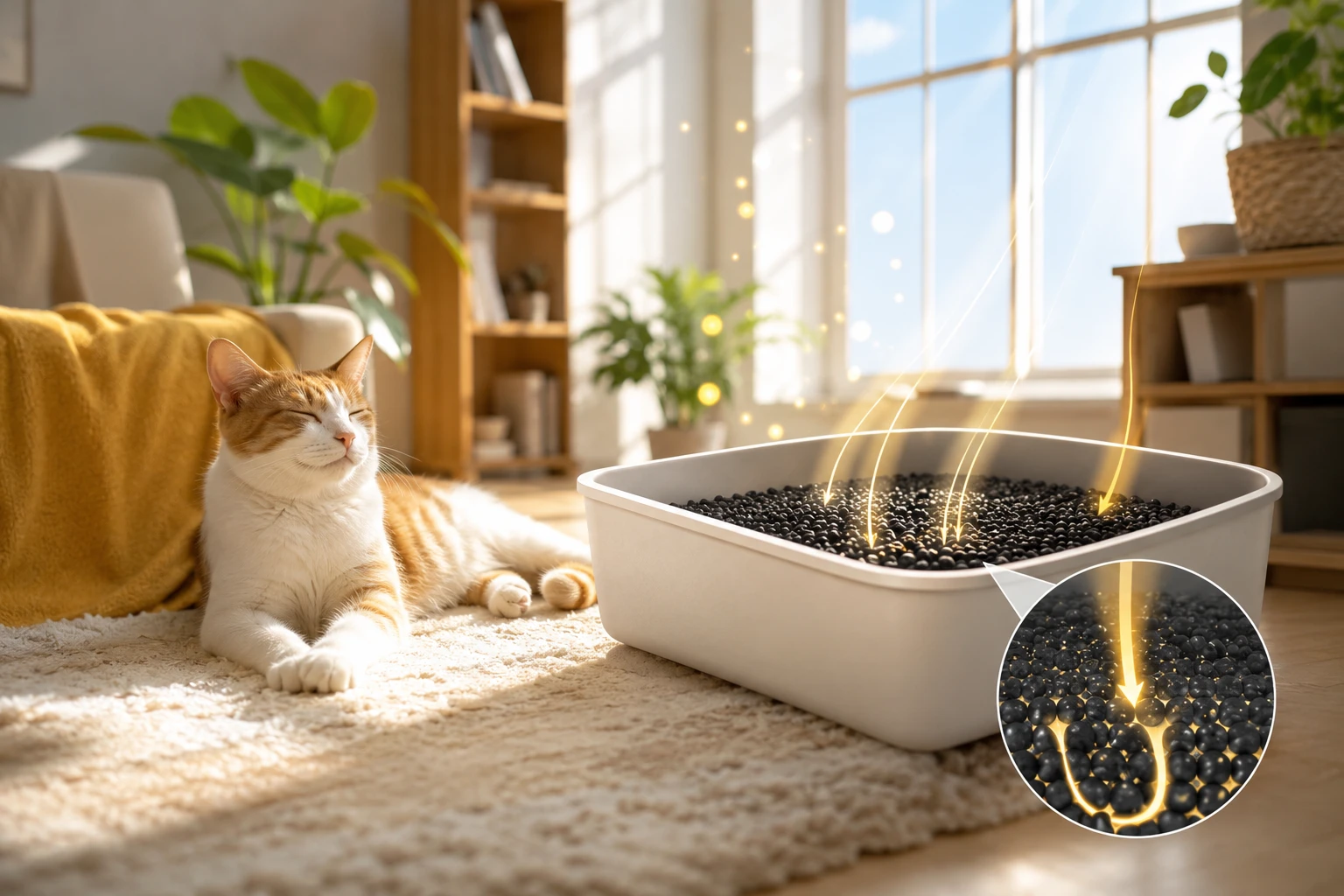
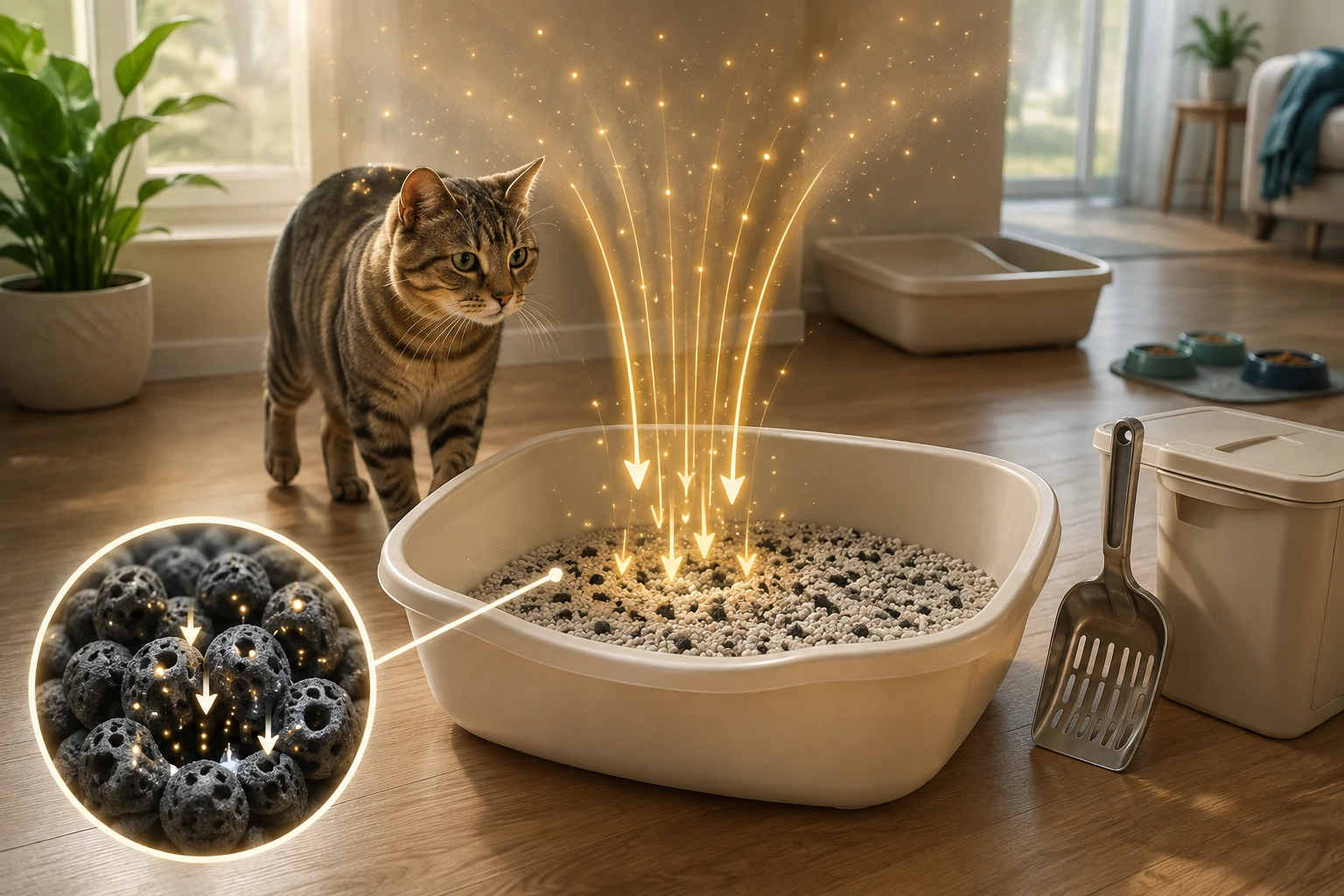
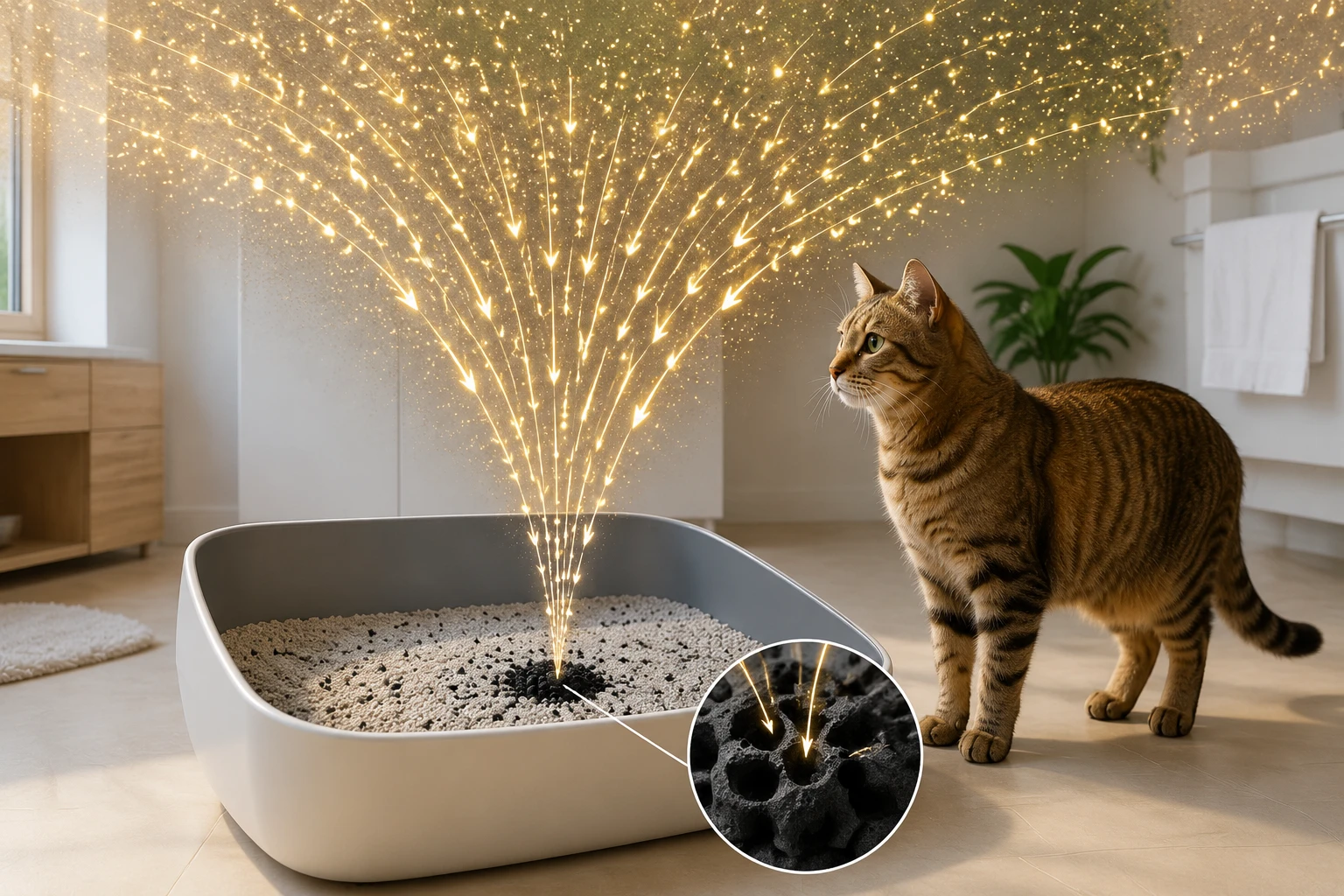
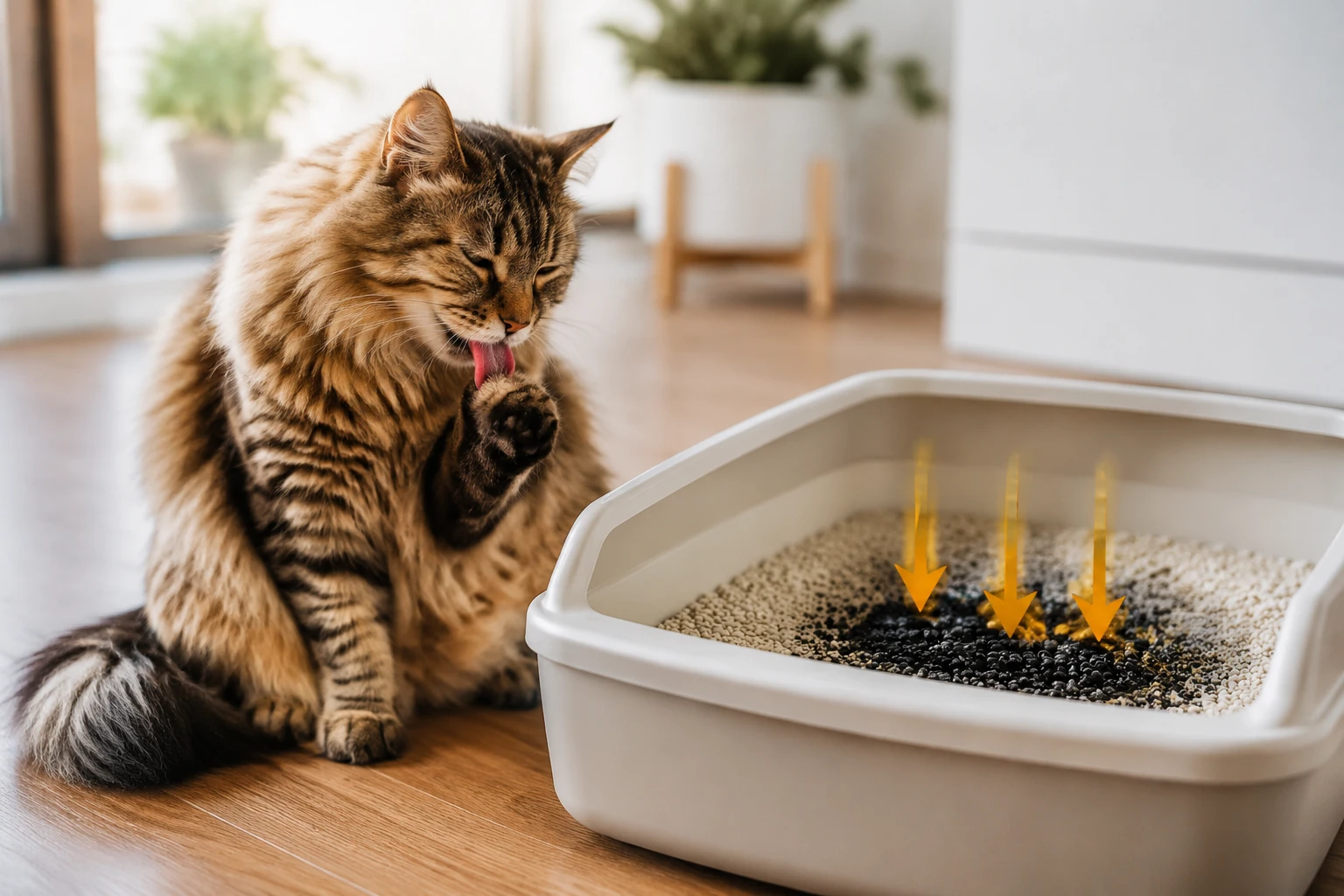
Purrify helps with the box side of that chain. Use 2-3 tablespoons of Purrify granules per litter box. Sprinkle on fresh litter, mix gently. Top up whenever the box starts giving off a smell again - no fixed schedule. The activated carbon traps odor molecules in the litter, but it does not replace scooping, sealing the waste, or following collection rules.
For an especially smelly full-box change, open the disposal bag before you begin, work slowly to avoid raising dust, and seal the bag as soon as the used litter is inside. Clean the empty box with unscented dish soap and water, dry it fully, then add fresh litter. Our cat litter change schedule explains when a full replacement is due for different litter types.
A five-minute disposal setup
- Store a dedicated scoop and small bags within reach of the box.
- Save your municipality's cat-litter rule on your phone.
- Place a washable carrying caddy nearby if you live far from the outdoor bin.
- Scoop daily, seal immediately, and take the bag out on your next trip.
- Keep a spare bag ready for leaks, then wash your hands.
That is the whole system. You do not need to gamble on flushing, keep a week of waste indoors, or build a complicated composting project. Contain the waste, put it where your local program can handle it, and control odor at the box before it reaches the bag.
Official sources
- US Environmental Protection Agency: How to Care for Your Septic System, for the rule not to flush cat litter.
- US Centers for Disease Control and Prevention: Preventing Toxoplasmosis, for daily cleaning and handwashing guidance.
- City of Toronto: What Goes in the Green Bin, for Toronto's accepted pet-waste materials.
- City of Ottawa: Green Bin Program, for sealed, leak-proof bag requirements.
- Ville de Montréal: Quoi déposer dans le bac brun, for excluded pet litter and feces.
- Metro Vancouver: What to Do With Pet Waste, for garbage and no-flush guidance.