TL;DR - Quick Answer
Baking soda cannot neutralize ammonia - both are alkaline (pH 8.4 vs 11.6). Activated carbon is the #1 solution, eliminating 92–95% of airborne ammonia through physical adsorption. Combine it with twice-daily scooping and monthly deep cleaning to solve the problem at every stage. If you want a direct product-focused fix, see our ammonia control for cat litter page. Most owners get the best results from a full-size bag on autoship - free shipping, and a fresh bag turns up before the smell can creep back. New to Purrify? Start with the 15g trial (shipping included).
Five Ways to Neutralize Ammonia in Cat Litter, Ranked
This is a ranked listicle of the 5 methods that actually neutralize cat-litter ammonia, with one paragraph per method and an honest effectiveness number on each one. The winner is activated carbon at 92-95% reduction; the loser is the one most people reach for first (baking soda) at 15-25%. Everything else falls in between. If you just want the short version of which one to buy, our cat litter deodorizer comparison puts activated carbon, baking soda, and zeolite side by side.
For the full molecular chemistry behind why baking soda and pH-based deodorizers cannot touch ammonia, see the ammonia science deep dive - this page stays focused on what actually works.
- Step 1 - Urea excretion: Cat urine contains urea (CH4N2O), a nitrogen-rich waste compound. One cat produces roughly 10–20 ml of urine per kg of body weight daily.
- Step 2 - Bacterial hydrolysis: Bacteria naturally present in cat litter produce an enzyme called urease. This enzyme breaks urea into ammonia and carbon dioxide:
CO(NH2)2 + H2O → CO2 + 2NH3 - Step 3 - Volatilization: Ammonia is highly volatile. Within 2–4 hours of urination, measurable ammonia gas begins escaping the litter box into your room air.
- Step 4 - Accumulation: In a poorly ventilated room, ammonia builds up continuously. The smell becomes noticeable around 5 ppm. It becomes irritating above 25 ppm.
The speed of ammonia production depends on several factors: litter box temperature, bacterial load (which grows with time since last clean), the number of cats, and how deeply urine penetrates the litter before clumping. A single urination event in a warm, overdue box can produce detectable ammonia within 90 minutes. In a clean, carbon-treated box, the same event produces almost no detectable odor for hours - because the carbon intercepts the gas before it has a chance to accumulate. If you are here because your cat litter smells like ammonia, that guide covers what the smell means before you fix it.
This is why the smell returns so quickly - urea is constantly present, bacteria are constantly working, and the gas continuously escapes. Stopping the smell requires interrupting this cycle, not masking it. Our ammonia science guide covers the full biochemistry in detail.
Ammonia Health Risks: What the Data Says
Cat litter odor feels like a comfort issue. But the health data tells a more serious story.
OSHA’s ammonia safety standards set a permissible exposure limit (PEL) of 50 ppm for continuous workplace exposure, with a NIOSH short-term exposure limit of 35 ppm. In a 100 sq. ft. room with poor ventilation and a multi-cat litter box that hasn’t been scooped in two days, ammonia concentrations near the box can approach this range. For reference, you begin smelling ammonia at roughly 5 ppm - so by the time the smell is strong, you’re already well above comfort levels.
The health effects scale with concentration and duration of exposure:
- 5–10 ppm: Detectable odor, minimal irritation for most adults
- 20–25 ppm: Eye, nose, and throat irritation begins (OSHA action level)
- 50+ ppm: Moderate respiratory distress, especially for children and individuals with asthma
- 100+ ppm: Serious respiratory irritation; exposure must be stopped
Cats experience these effects at lower thresholds than humans due to their smaller body size and more sensitive respiratory systems. Chronic low-level ammonia exposure in cats has been linked to upper respiratory inflammation, frequent sneezing, and in some studies, reduced immune function. This is the real reason controlling cat litter ammonia matters. See our detailed guide on cat litter ammonia health risks for the full clinical picture.
The Baking Soda Myth - Why pH 8.4 Can’t Beat pH 11.6
Most cat owners reach for baking soda. Here’s why it fails the chemistry test: Ammonia has a pH of 11.6 (strongly alkaline). Baking soda has a pH of 8.4 (also alkaline). Base + Base = no neutralization. You cannot neutralize an alkali with another alkali - that requires an acid (pH below 7).
Baking soda absorbs some moisture for 12–24 hours via surface contact, then saturates completely. After saturation, it contributes nothing while sitting in your litter box. Read the full comparison in our baking soda vs activated carbon breakdown.
How to Test Ammonia Levels in Your Home
Most people gauge ammonia by smell alone, but smell is a surprisingly poor indicator. Your nose adapts to ammonia - a phenomenon called olfactory fatigue - meaning you can stop detecting high concentrations after prolonged exposure. This is especially relevant for people who work from home or spend long hours near a litter box.
Practical ways to measure ammonia exposure:
- Colorimetric test strips: Inexpensive ($12–20) strips change color at specific ppm thresholds. Place one near the litter box for 30 minutes and compare to the chart.
- Electronic air quality monitors: Mid-range monitors ($40–80) with VOC sensors detect ammonia and show real-time ppm readings. Useful for tracking improvement after adding carbon.
- The visitor test: Ask a visitor who hasn’t been in your home to walk in and tell you honestly whether they smell cat. Fresh noses detect ammonia your adapted nose misses entirely.
- The morning test: Check the box first thing after waking, before your nose fully adapts to the home environment. This gives you the most accurate subjective reading of overnight buildup.
Use our litter smell quiz to assess your situation and get a personalized odor control recommendation.
5 Proven Methods to Neutralize Ammonia - Ranked by Effectiveness
1. Activated Carbon: The Molecular Trap (92–95% Effective)
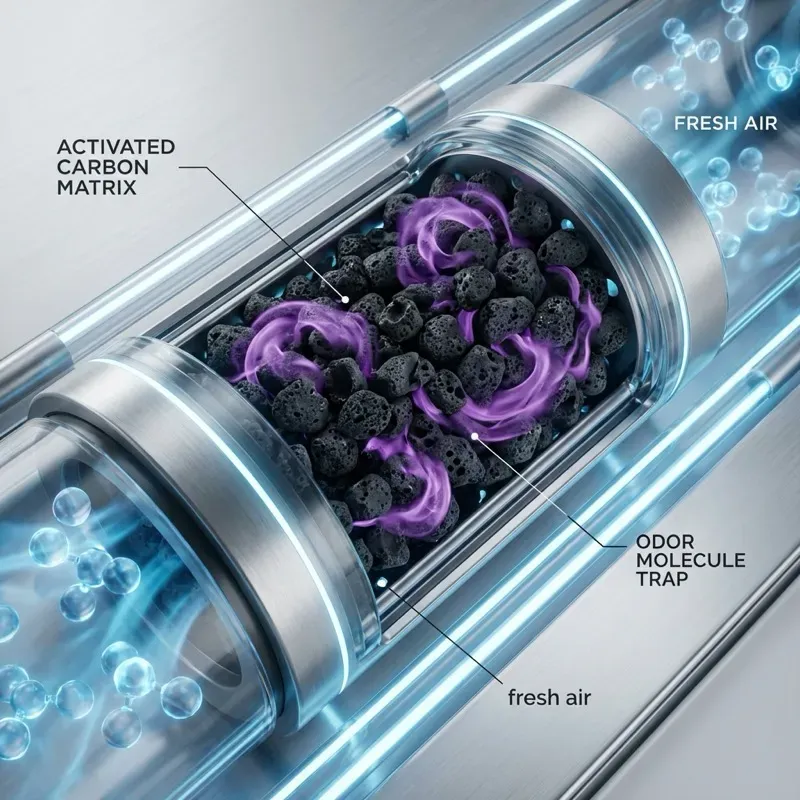
The winner by a wide margin. Activated carbon doesn’t rely on pH chemistry at all - it uses physical adsorption to trap ammonia molecules inside microscopic pores. One gram of Purrify has roughly 1,000 m² of internal surface area - larger than a tennis court. Ammonia molecules enter the pores and cannot escape.
This is the same technology used in municipal water treatment and NASA’s ISS air purification system. It works regardless of pH, temperature, or humidity.
2. Enzyme Cleaners: For Box Walls (70% Effective)
Deep cleaning the plastic is critical. Ammonia-producing bacteria colonize microscopic scratches in litter box plastic. Ordinary soap kills surface bacteria but misses urea residue embedded in the plastic. Enzyme cleaners contain protease enzymes that break down the urea itself - eliminating the bacterial food source. Use monthly on a fully emptied and rinsed box.
3. Twice-Daily Scooping: Remove the Source (60% Effective)
Ammonia generation begins within 2–4 hours of urination as bacteria convert urea. Morning and evening scooping removes waste before full ammonia production occurs. This is the highest-leverage behavior change most cat owners can make. It also extends the effectiveness of any additive you use. See how often to change cat litter for a full maintenance schedule, or switch to a self-cleaning box if twice-daily scooping is unrealistic.
4. Ventilation Optimization (40% Effective Alone)
Move the box to a location with good airflow. Enclosed closets and tight bathroom corners allow ammonia to concentrate. A fan or open window near the box reduces buildup significantly. This is a supporting measure, not a standalone solution - but it amplifies the effectiveness of everything else you do. Our apartment litter guide covers placement strategies in detail.
5. Proper Litter Depth (30% Effective Alone)
Keep litter at 3–4 inches deep. Shallow litter causes urine to reach the plastic box bottom immediately, where it pools and produces ammonia directly on the surface. Adequate depth means urine is absorbed and clumped before reaching the plastic - slowing bacterial activity significantly.
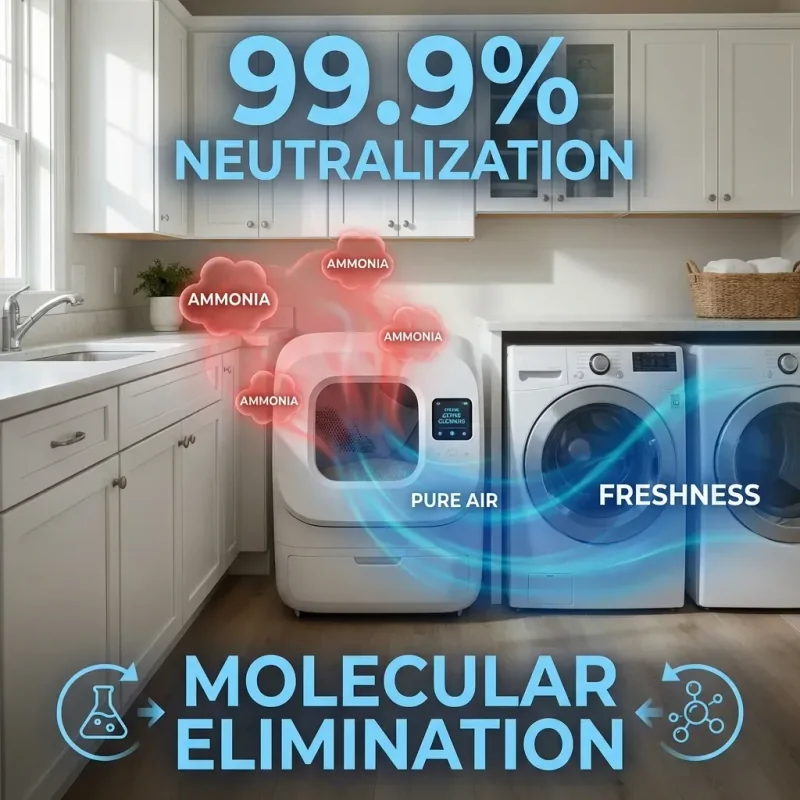
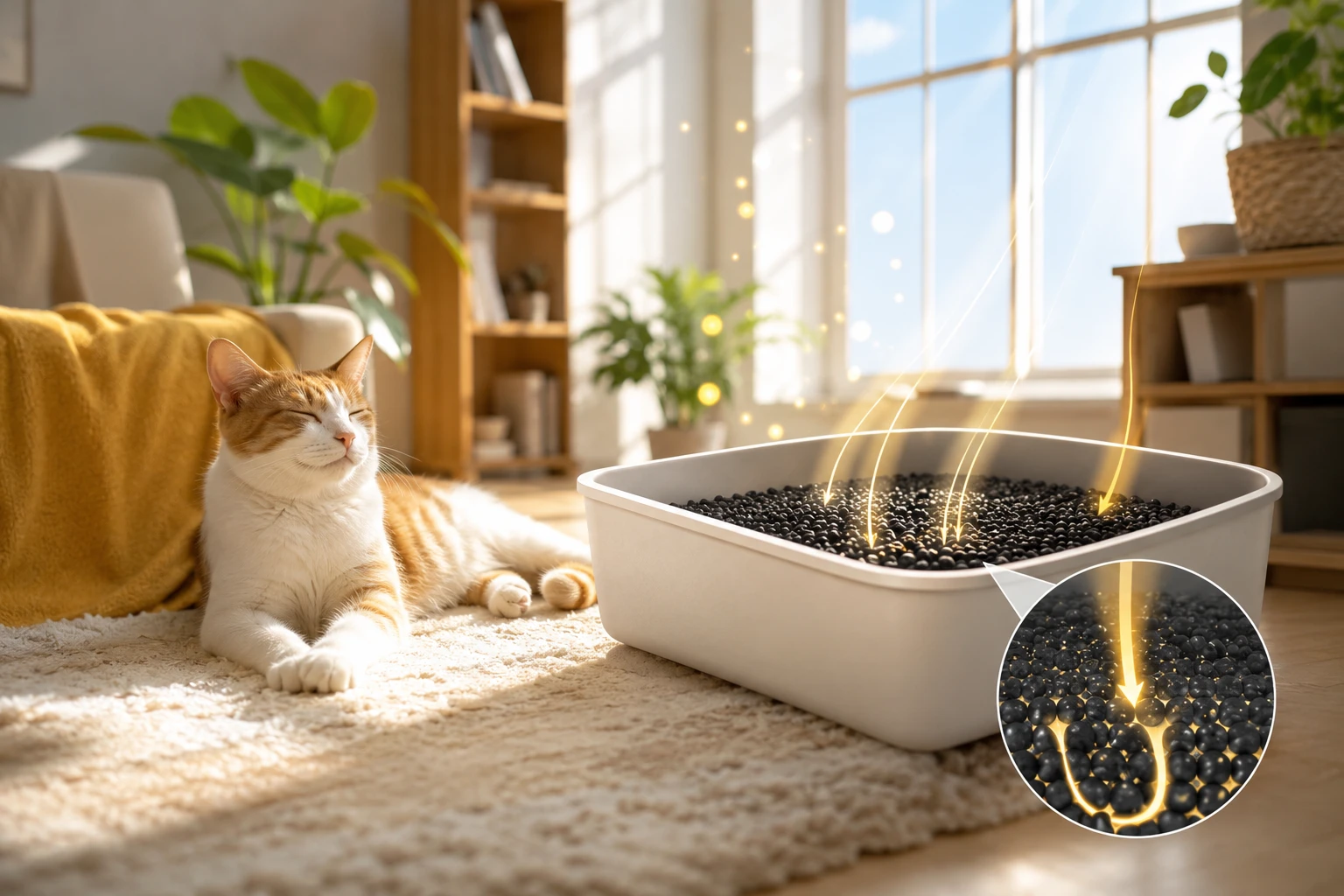
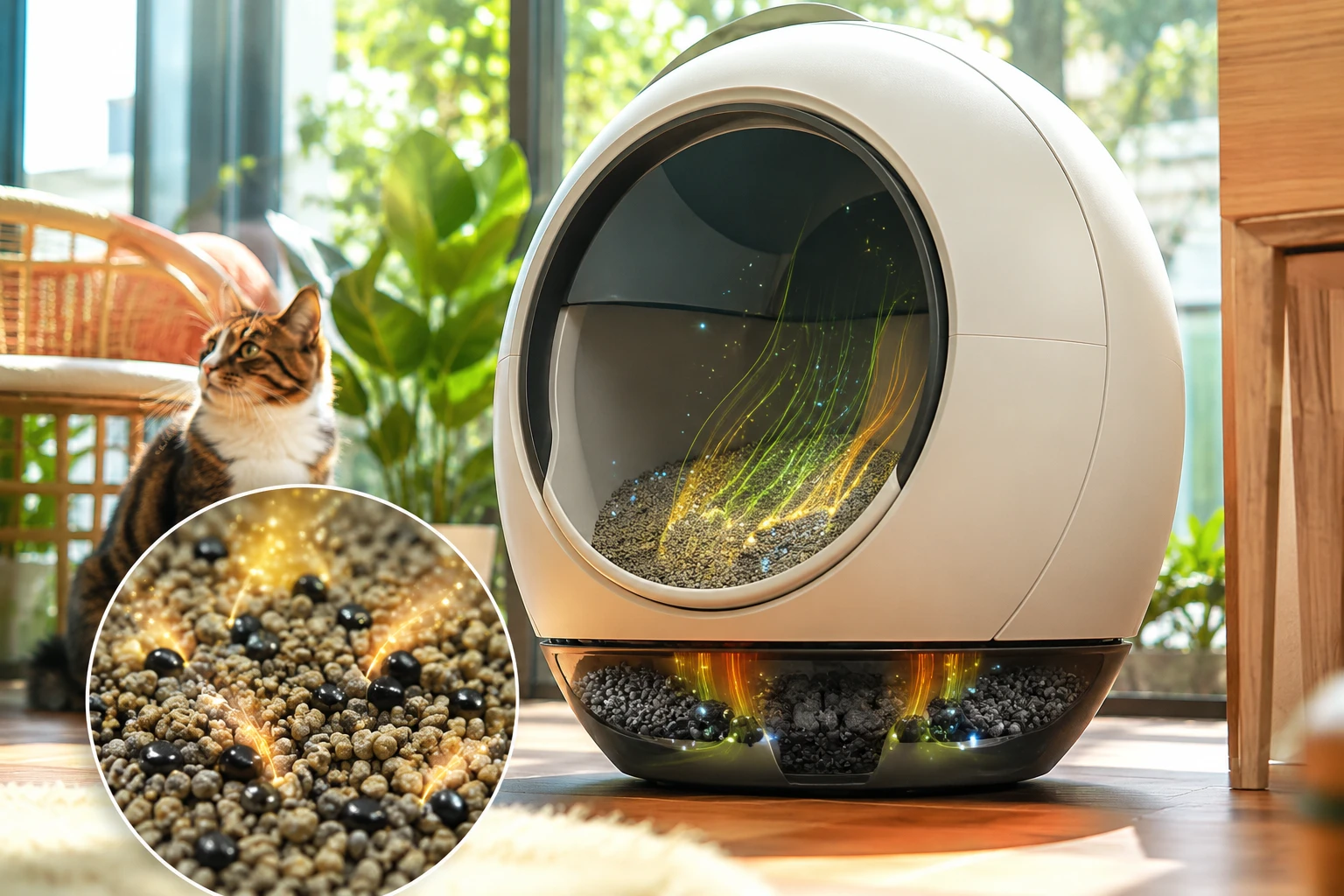
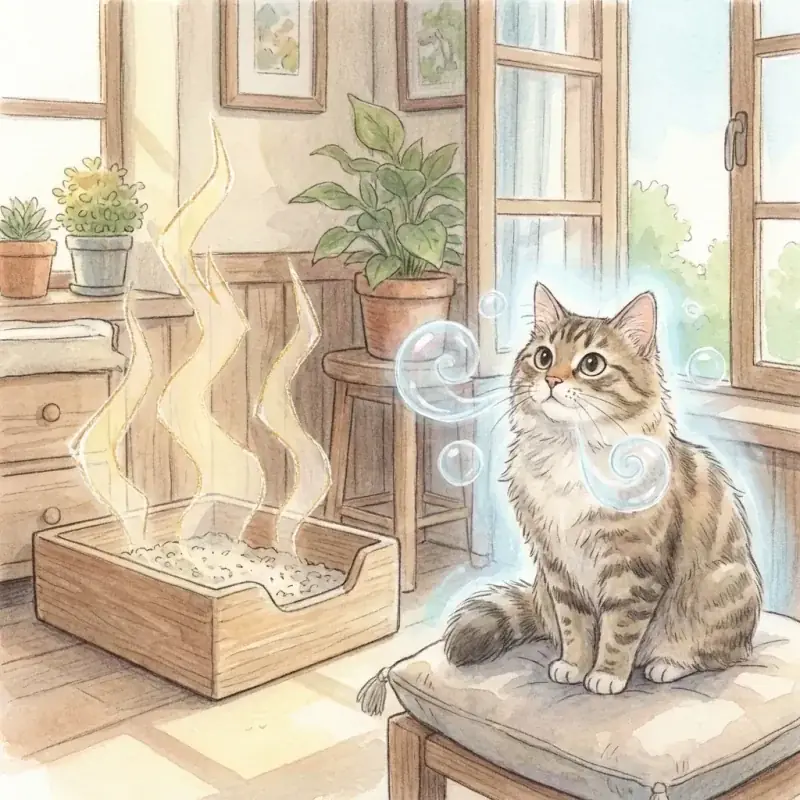
Carbon layers intercept ammonia at every level - from deep in the litter to the surface where fresh waste is deposited.
Ready for a litter box you can't smell?
Free shipping. Never run out. Cancel anytime.
Start autoship →Method Comparison at a Glance
| Method | Mechanism | Effectiveness | Duration |
|---|---|---|---|
| Activated Carbon | Physical adsorption | 92–95% | 7–14 days |
| Enzyme Cleaners | Biological urea digestion | 70% | Until next deposit |
| Twice-Daily Scooping | Source removal | 60% | Per scoop cycle |
| Ventilation | Dilution and dispersal | 40% | Continuous |
| Baking Soda | Moisture absorption | 15–25% | 12–24 hours |
For apartment dwellers with limited ventilation, the combination of activated carbon plus twice-daily scooping is particularly important. Our apartment cat smell solution guide and the best litter for apartments review cover placement and ventilation strategies that make a significant difference in small spaces.
Deep-Clean Step-by-Step Guide

Even the best daily routine can’t substitute for a thorough monthly deep clean. Ammonia-producing bacteria accumulate in the plastic over time, creating a persistent odor baseline that daily scooping can’t address. Here’s the full protocol:
- Empty completely: Bag and discard all litter. Don’t shake or reuse old litter.
- Rinse with cold water: Cold water prevents protein-based compounds from bonding permanently to plastic. Hot water can set ammonia stains.
- Apply enzyme cleaner: Spray generously on all interior surfaces, including corners and the lip. Leave for 10 minutes minimum (15 is better) to allow enzymatic digestion of urea residue.
- Scrub gently: Use a dedicated brush (not your household sponge). Focus on scratched areas where bacteria colonize most heavily.
- Rinse thoroughly: All enzyme cleaner residue must be removed. Some cats reject boxes with chemical traces.
- Dry completely: Air-dry for 30+ minutes before refilling. A damp box accelerates bacterial growth within hours.
- Refill with fresh litter plus carbon: Add 2–3 tablespoons of Purrify granules mixed throughout the fresh litter. The clean baseline combined with fresh carbon gives you maximum odor control from day one. See the full litter freshness guide for timing advice.
Seasonal Ammonia Spikes: When to Expect the Worst
Ammonia odor is not constant through the year - it follows temperature and humidity patterns that are entirely predictable once you know what to look for.
Summer: Heat accelerates both bacterial urease activity and ammonia volatilization. The hotter the room, the faster ammonia is produced and the more quickly it enters the air. If your litter box is in a room that gets above 24°C in summer, expect odor to intensify significantly in June–August. Increase scoop frequency and refresh your carbon layer every 7 days instead of 10. Our summer litter odor guide covers this in full.
Winter: Homes sealed against the cold trap ammonia indoors instead of diluting it with fresh air. Central heating creates warm, dry microclimates around litter boxes that accelerate volatilization. Dry air also reduces your nose’s sensitivity, so you may not notice the buildup until a visitor does. See why litter smells worse in winter for the full winter management plan.
Activated carbon remains effective across the full seasonal temperature range. Unlike zeolite, which can release trapped ammonium ions when humidity spikes, carbon’s physical pore bonds are stable across typical household conditions. That is exactly what an activated carbon cat litter additive does inside the box itself.
The 7-Day Action Plan
Lasting odor control comes from consistency, not reactive cleanup. Here’s a proven week-long reset to establish a solid baseline:
- Day 1 - Full reset: Complete deep clean with enzyme cleaner, dry thoroughly, refill with fresh litter plus Purrify granules mixed in.
- Days 2–3 - Establish scooping habit: Scoop morning and evening. Add a light dusting of carbon granules after each scoop cycle to replace surface pore capacity.
- Days 4–5 - Evaluate airflow: Identify and remove barriers trapping warm air around the box. Add a small fan nearby if the location allows.
- Days 6–7 - Objective scoring: Rate odor from 1 to 5 at the same times each day. Ask a housemate or visitor for their independent reading to account for olfactory fatigue.
After the initial 7-day reset, maintain with weekly carbon refresh and twice-daily scooping. Use our deodorizer frequency guide and litter change schedule to lock in the routine.
Common Mistakes That Make Ammonia Odor Return
- Masking with fragrance: Scented litters and air fresheners don’t eliminate ammonia - they add a competing smell. The ammonia is still there, irritating airways. See why fragrance-free deodorizers work better.
- Under-dosing in multi-cat homes: Ammonia load scales with the number of cats. A dose effective for one cat barely makes a dent with three. Scale carbon dose proportionally - see our multi-cat deodorizer guide.
- Waiting for smell to spike before acting: Reactive cleanup creates a cycle of emergency cleaning. A proactive schedule keeps ammonia from ever building to detectable levels.
- Using scented products near the box: Many cats reject litter boxes that smell of artificial fragrance - which can lead to elimination outside the box, creating a bigger problem than the odor itself. Always choose fragrance-free deodorizers for the litter box specifically.
- Skipping the deep clean: Surface-level scooping doesn’t address the bacterial colony in box plastic. Monthly enzyme cleaning is non-negotiable for long-term control.
For more common mistakes, see our roundup of 10 cat litter odor myths and the 7 expert odor tips guide.
Recap of the 5, ranked. Activated carbon is the only one of the five that hits the 92-95% ceiling, and it's the only one that does the work even when you fall behind on the other four. Enzyme cleaners are the strongest backup at 70%, because they kill the bacterial colony living in the box plastic that none of the other methods touch. Twice-daily scooping is the highest-leverage free method at 60%. Ventilation and litter depth round out the bottom at 40% and 30% respectively - real but supporting roles.
The honest takeaway from this ranking: pick activated carbon as your default, scoop twice a day, deep-clean monthly with an enzyme cleaner, and the room stops smelling like ammonia. The other two methods help, but they're not load-bearing. For the underlying chemistry of why some of these work and others don't, the ammonia science overview is the one-stop explainer.
Stop Masking. Start Trapping.
Activated carbon eliminates 92–95% of litter box ammonia through pure physics - no chemicals, no fragrances, no compromises. The fix that stays fixed is a full-size bag on autoship: free shipping, and a fresh bag lands before the box ever turns sharp again. Shop all sizes and set yours up in a minute.
Want to test it first? Try the 15g trial for $4.76$7.99, shipping included. One box. One week. Your nose will know.
Sources & References
- OSHA Chemical Data: Ammonia - Permissible Exposure Limit (PEL) of 50 ppm TWA
- CDC/NIOSH IDLH Documentation: Ammonia - NIOSH REL 25 ppm, STEL 35 ppm, IDLH 300 ppm
- NIH StatPearls: Ammonia Toxicity - Odor detection at 5 ppm, health effects by concentration
- Merck Veterinary Manual: Urine Volume - Normal feline urine output 10–20 ml/kg/day
- NASA: Environmental Control and Life Support Systems - Activated carbon bed in ISS Trace Contaminant Control
- EPA: Drinking Water Treatment Technologies - Granular activated carbon for water purification
- PubMed: High Surface Area Activated Carbon from Coconut Shells - BET surface area >1,000 m²/g
Related Guides
- Most Powerful Cat Litter Odor Absorber: Comparison Test
- Baking Soda vs Activated Carbon: The Truth
- Is Baking Soda Safe for Cats?
- Best Cat Litter for Odor Control 2026
- Why Litter Smells Worse in Summer
- Why Litter Smells Worse in Winter
- Fragrance-Free Litter Deodorizer Guide
- Ammonia Science Deep Dive
- Cat Litter Ammonia Health Risks
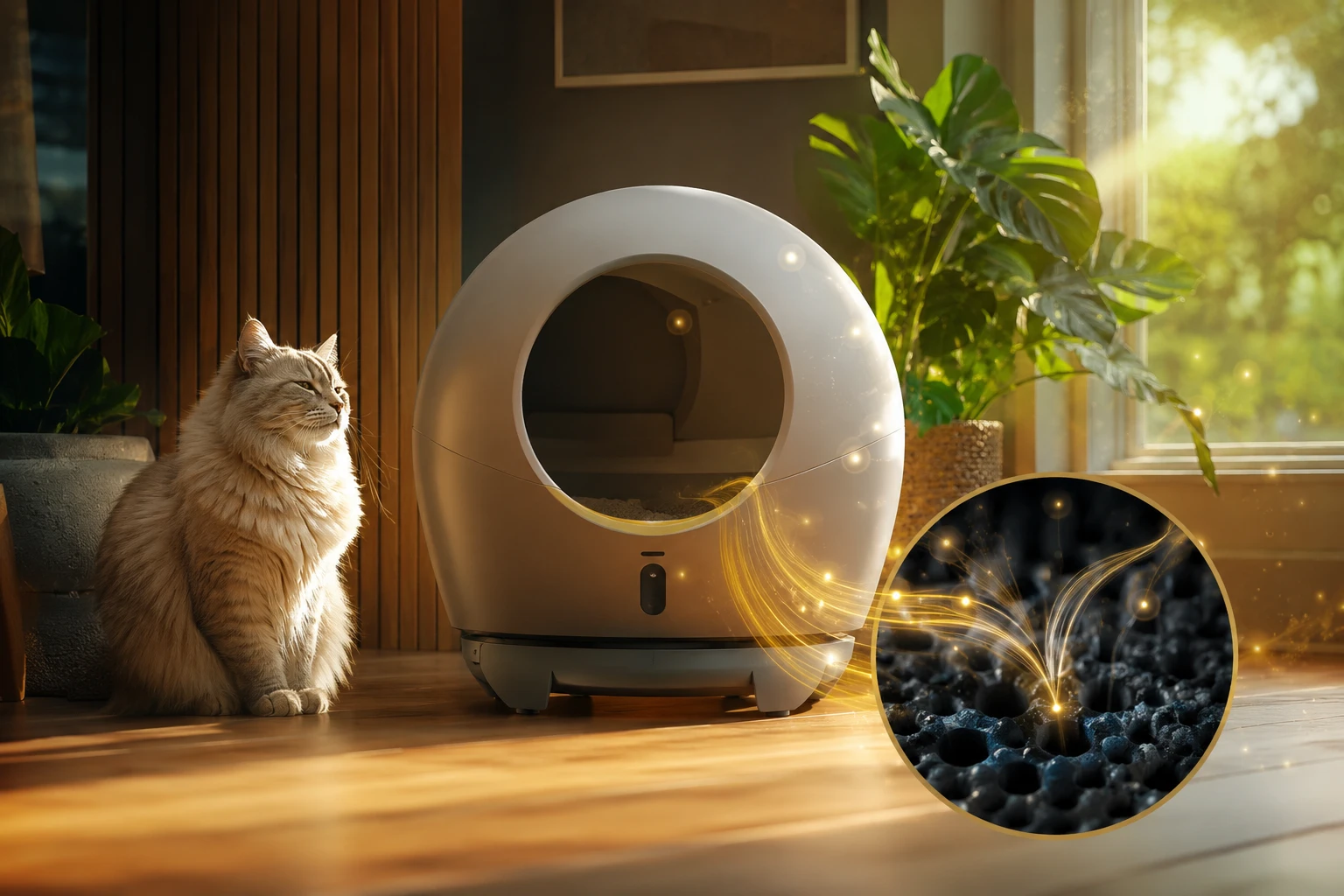
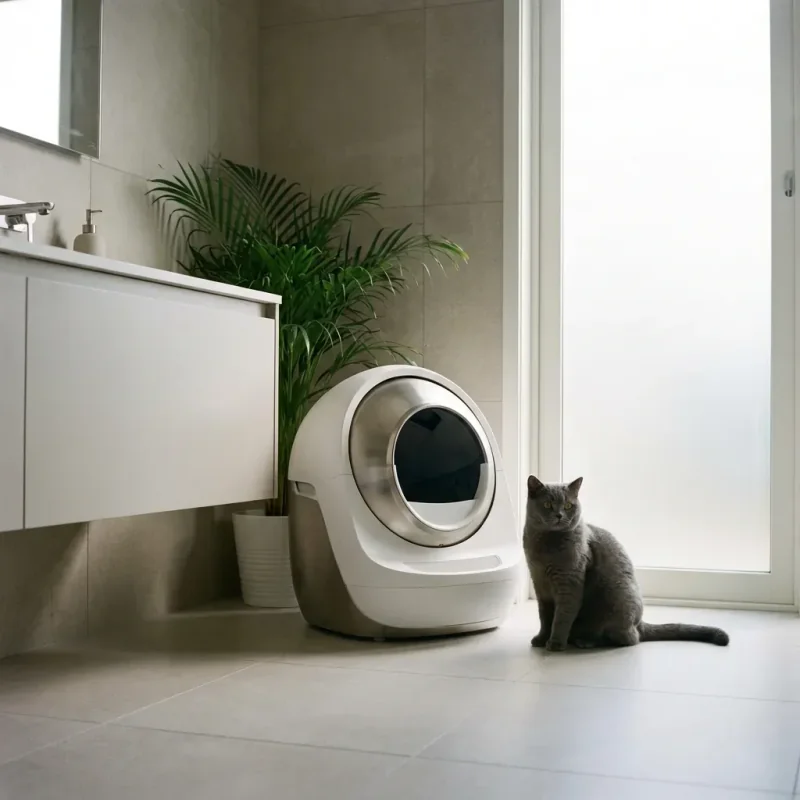
Note for owners with automatic boxes: the same chemistry applies, but the symptom often shows up as the automatic litter box still smells complaint after every cycle. The sealed drawer handles solids, not airborne ammonia, so the activated carbon layer described above is the missing piece in self-cleaning setups too. If you run one of these and the cycle keeps leaving a sour bite in the air, here is how to fix a Litter-Robot that still reeks of ammonia.