
Quick Answer
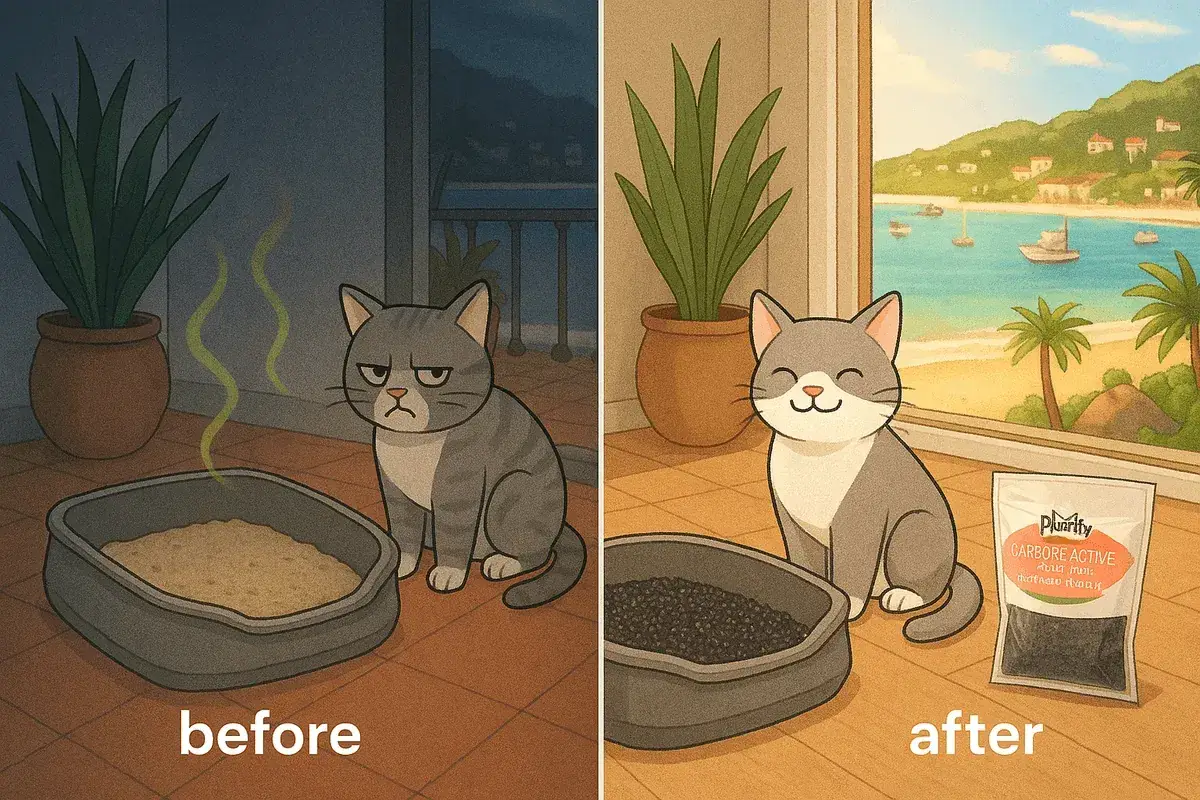
The fastest way to eliminate cat litter odor is to attack ammonia before it fills the room. Scoop at least twice daily, keep the litter at the right depth, clean the box on a fixed schedule, and add activated carbon granules to trap odor molecules as they rise from the litter. That last step matters because most odor problems come from airborne ammonia and sulfur compounds, not just the waste you can see. Activated carbon removes these gases through adsorption, pulling them into microscopic pores instead of masking them with fragrance. Combined with weekly box cleaning and good airflow, most homes notice a clear improvement within 24–72 hours. If the smell returns quickly after cleaning, the usual causes are saturated litter, scratched plastic that holds residue, or too little odor-trapping material in the box. A consistent routine beats deodorizing sprays every time.
Why Does Cat Litter Smell So Bad?
Before we can eliminate the smell, we must understand the enemy. Cat urine is highly concentrated with **urea**, a compound that bacteria break down into **ammonia**. This is what causes that sharp, eye-watering stench that seems to stick to your walls.
Feces, on the other hand, contain mercaptans (sulfur compounds)-the same chemicals found in skunk spray. When these two odors combine in an enclosed box, you get a uniquely potent cocktail that most air fresheners simply cannot touch.
💡 The Bacteria Factor
Odor isn't just about waste; it's about time. Bacteria take 20-30 minutes to start producing noticeable ammonia. This window is your opportunity to trap the molecules before they become airborne.

Why Traditional Solutions Fail
Most cat owners go through a cycle of trial and error (mostly error) with products that claim to help:
-
✗
Baking Soda: Good for minor fridge odors, but chemically too weak to neutralize strong ammonia concentrations in a litter box.
-
✗
Scented Litters: They don't remove odor; they just layer a floral perfume on top of poop smell. The result is often worse than the original odor.
-
✗
Air Fresheners: These spray tiny oil droplets into the air that temporarily numb your nose but do nothing to stop the bacteria in the box.
The Science of Activated Carbon
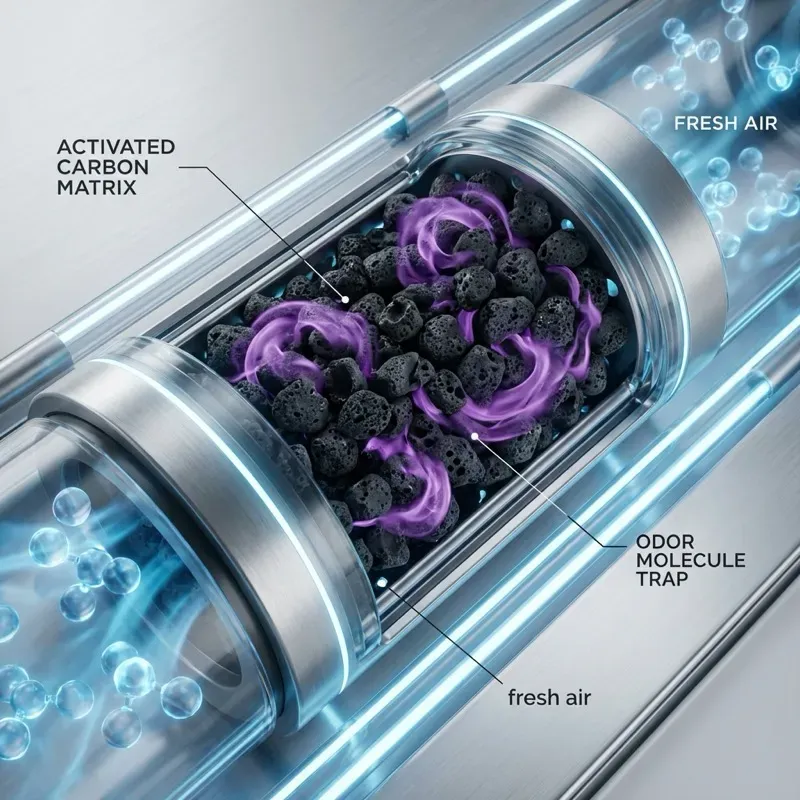
The only way to truly **eliminate** cat litter odor is to physically remove the odor molecules from the air. This is where **Activated Carbon** reigns supreme. It is the same material used in military gas masks and hospital air filtration systems.
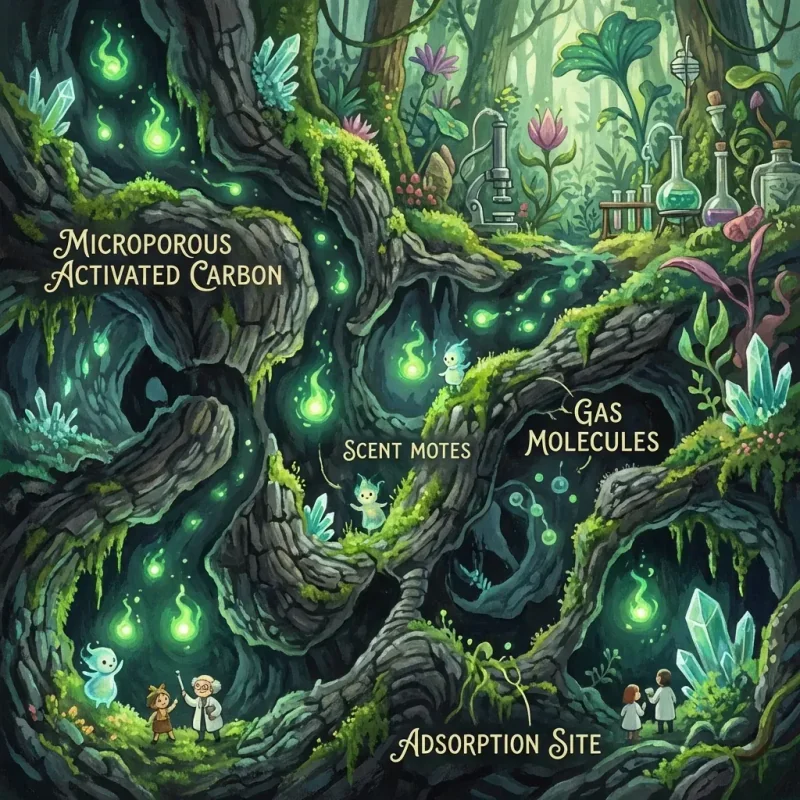
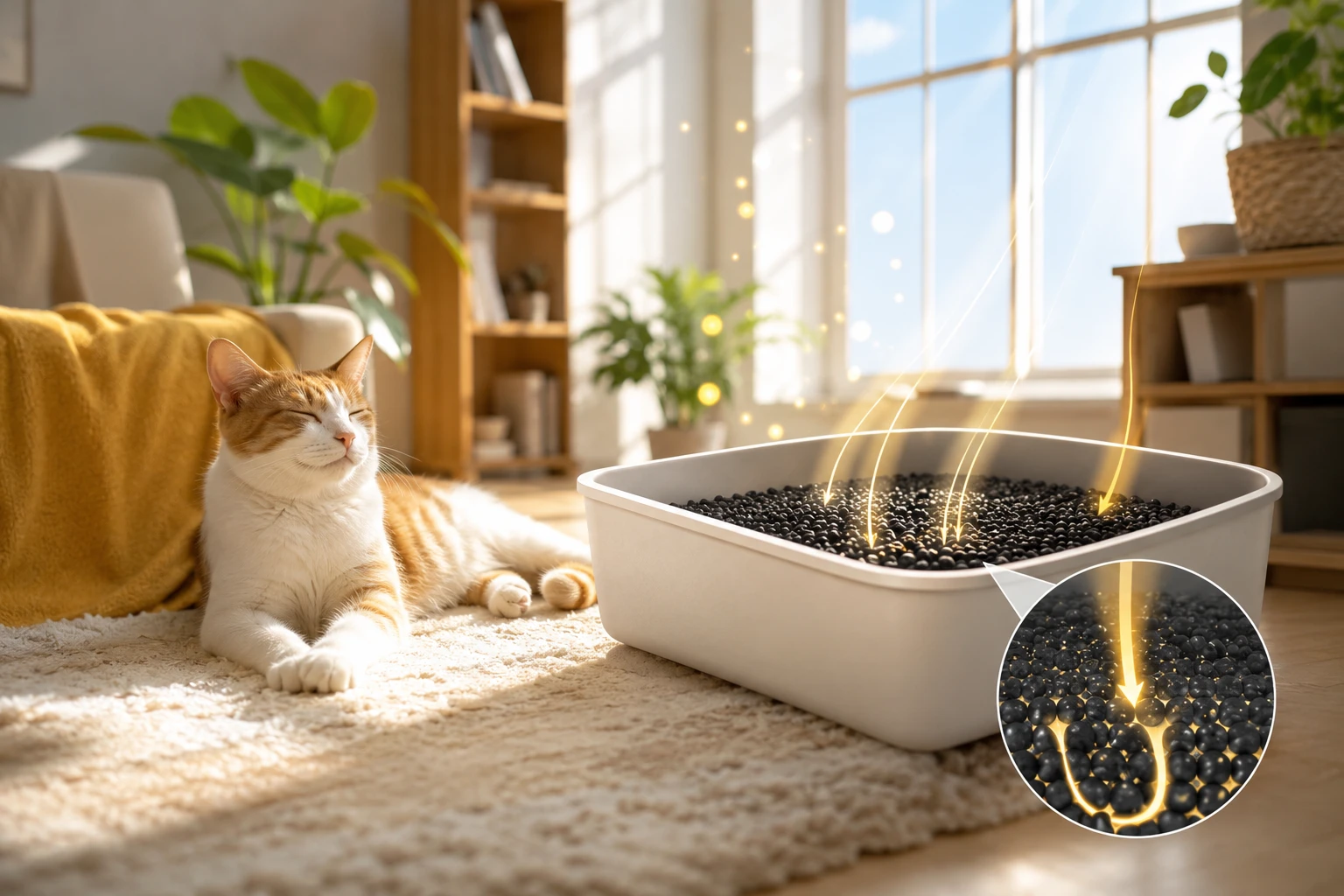
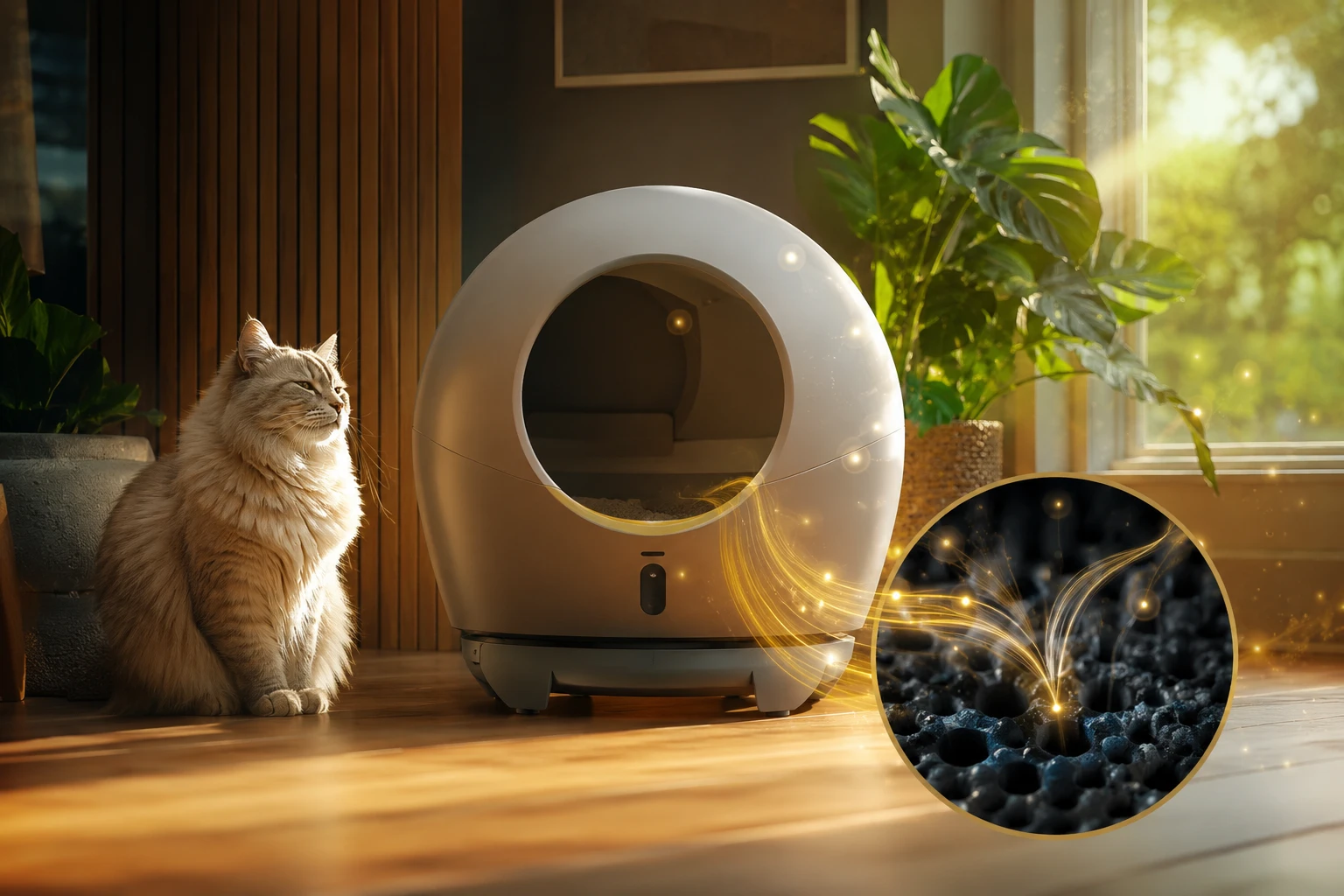
Unlike absorption (like a sponge soaking up water), activated carbon works via **adsorption**. Odor molecules are magnetically drawn into the carbon's millions of microscopic pores and trapped there forever. One teaspoon of activated carbon has the surface area of a football field.
The 5-Minute Daily Routine for a Odor-Free Home
You don't need to change the litter every day. You just need a smarter routine. Follow this protocol to keep your home smelling neutral.
1. The Scoop
Scoop twice daily-once in the morning, top-up in the evening. Removing the source of bacteria is step one.
2. The Boost
After scooping, sprinkle 1-2 tablespoons of **Purrify Activated Carbon** over the remaining litter. This refreshes the odor-adsorbing layer.
3. The Mix
Use your scoop to mix the carbon into the top 2 inches of litter. This ensures that any new urine hits a layer of carbon immediately.
4. The Wipe
Wipe down the inside walls and rim of the box with an enzyme cleaner weekly. Dried splash-back is a hidden source of smell.
Ready for a litter box you can't smell?
Free shipping. Never run out. Cancel anytime.
Start autoship →The Material Choice: Plastic vs. Stainless Steel
Most litter boxes are made of cheap, porous plastic. Over time, your cat's claws create microscopic scratches in the surface. These scratches become breeding grounds for bacteria that no amount of scrubbing can reach. This is why a "clean" box can still smell like old urine.
The Plastic Expiry Date
If you use a plastic litter box, you should replace it every 12 months. If you want a permanent solution, switch to **stainless steel**. It is non-porous, doesn't scratch, and won't hold onto odors for years.
Advanced Habits for Multi-Cat Households
If you have more than one cat, the "one box per cat plus one" rule is mandatory, not a suggestion. But even with enough boxes, you can face territorial marking or overlapping use that spikes ammonia levels.
- The "Staggered Scoop": Instead of scooping all boxes at once, stagger them. This ensures there is always one "perfectly fresh" box available, reducing the chance of a cat choosing the floor.
- Carbon Reinforcement: In high-traffic boxes, double the amount of Purrify. The adsorption capacity is finite, and more cats mean more molecules that need trapping.
- Enzyme Pre-Wash: Once a month, soak the boxes in a high-quality enzymatic cleaner for 1 hour before doing a full litter swap.
Diet & Health: The Internal Factor
If the smell is eye-wateringly bad despite a clean box, check your cat's diet. Low-quality foods with high grain fillers often lead to smellier waste because the cat cannot digest them properly.
High-Protein Note: Paradoxically, extremely high-protein diets can also cause smellier poop (sulfur). Finding a balanced, high-quality wet food can improve digestion and reduce litter box output odor.
Ventilation Hacks for Apartments
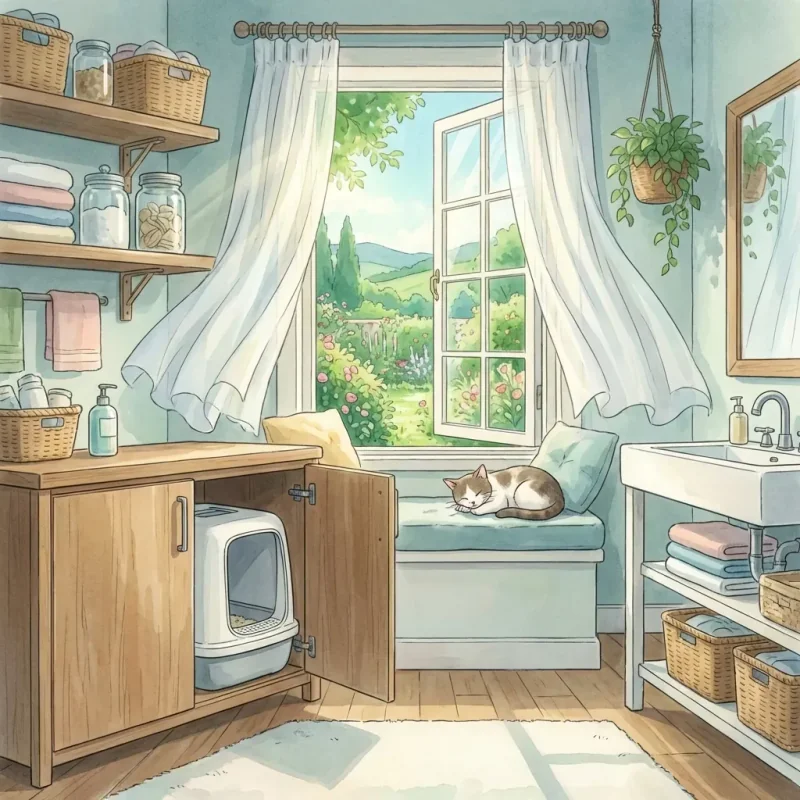
For small spaces, airflow is critical. Never place the litter box in a dark, unventilated closet.
For a complete apartment-specific protocol - carbon dosing, box placement, and airflow - see our guide to litter odor in small apartments.
- Air Purifiers: Place a HEPA air purifier NEXT to the litter box (not pointing at it).
- Cross Ventilation: Even cracking a window an inch can help exchange air.
- Avoid Humidity: Bathrooms are popular spots, but shower humidity makes ammonia smell worse. If you must use a bathroom, run the exhaust fan.
Pro Tip: The Purrify Solution
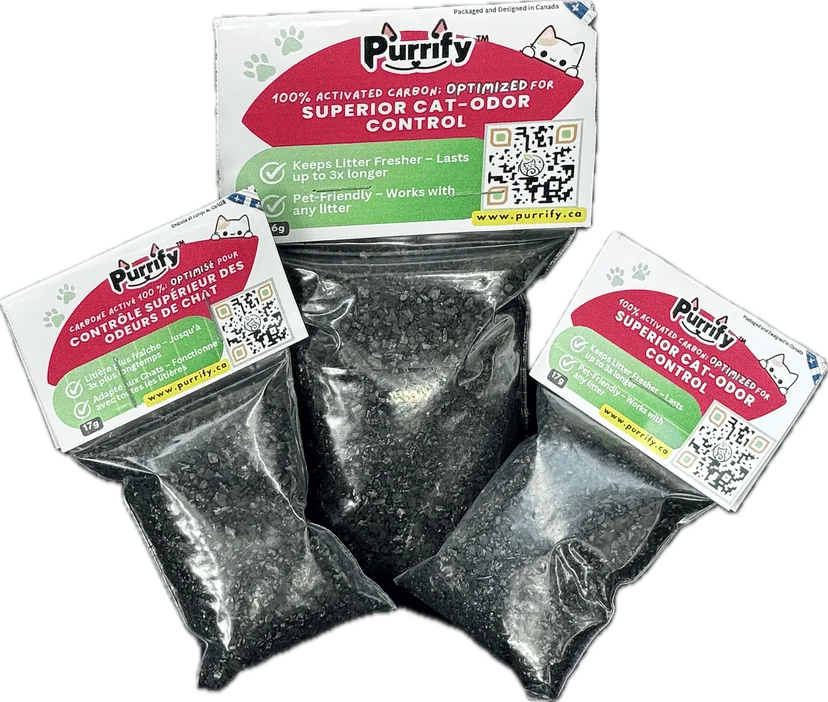
For the most effective odor control, try Purrify's activated carbon litter additive. Simply sprinkle it in your litter box to eliminate odors for up to 7 days. Made from premium coconut shell carbon, it's the same technology used in water and air filters.
Try Purrify Risk-Free →Conclusion
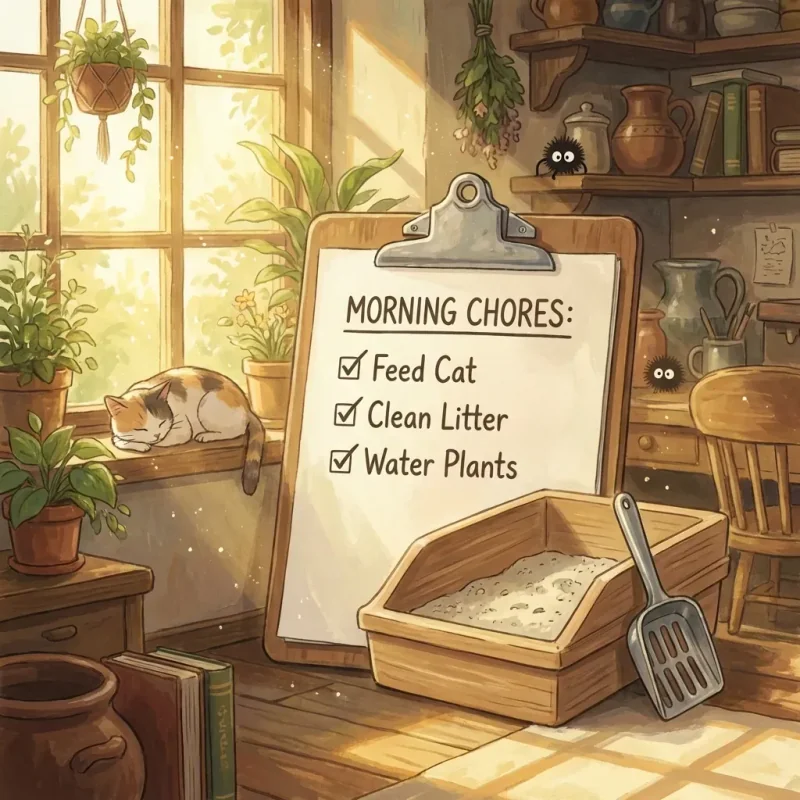
Ten steps, repeated daily, and the room stops smelling like the litter box. That is the whole takeaway. Print the list, stick it next to the box for a week, and the routine becomes muscle memory by day eight. You will know it is working when guests stop sniffing the air and you stop noticing the box exists.
If you want to go deeper after the routine is in place: our ammonia control page covers what to do when the smell is sharp and ammonia-specific, and the keep-the-box-fresh guide covers what to swap in if you want to tighten the system further.
Run a Root-Cause Audit Before You Change Another Product
If you want to eliminate litter odor instead of merely reducing it, start with an audit. Check the box material, litter depth, scooping rhythm, room airflow, and anything within a few feet of the pan that could be holding odor. This matters because a surprising number of smell problems come from small system failures: a box with scratched plastic, a mat that never gets washed, a waste bin that leaks smell back into the room, or a box placed beside a vent that distributes odor through the house.
A useful audit only takes ten minutes. Scoop the box, wipe the exterior, then smell the pan itself, the surrounding floor, the mat, and the waste container separately. If the room still smells bad after that, you now know whether the source is inside the box, under the box, or around the box. Once you identify the true source, the elimination plan becomes more precise and a lot less frustrating.
Treat the Room as Part of the Odor Problem
Truly eliminating litter odor means managing the room, not just the litter. Odor molecules settle on fabric, ride through hallways, and collect in places owners rarely connect to the box. That is why the home can still smell "like cat" even after a fresh litter change. A complete approach includes the box, but also the first surrounding ring: floor, wall edge, mat, waste container, nearby fabric, and air movement.
Once that ring is maintained, elimination becomes much more realistic. The room stops recontaminating the box and the box stops continuously recontaminating the room. That feedback loop is what makes some homes feel permanently fresh while others feel like they are always one day away from another odor bloom.
Elimination Comes From Preventing Rebuild, Not From One Perfect Cleaning
The final step in eliminating litter odor is preventing it from rebuilding immediately after you clean. That means prompt scooping, enough litter depth, a sealed waste routine, and a room setup that does not keep feeding stale smell back into the box. Once rebuild is controlled, elimination stops being a heroic one-time event and becomes the new baseline.
That is what makes the result last. You are not simply winning one battle against odor. You are changing the conditions that kept letting it come back.
Measure Success by the Rest of the Room
The clearest sign that litter odor has been eliminated is not what the box smells like up close right after a scoop. It is whether the rest of the room stays neutral between cleanings. If the room is calm, your elimination strategy is finally working.