


How to keep a dog out of the litter box starts with one idea: make the box reachable for the cat and not for the dog. Dogs are drawn to the box, and some eat the litter or what is in it. That is a habit to block with the setup, not a thing to scold. Once the box is in its new spot, a litter box deodorizer such as Purrify keeps it smelling fresh.
This guide covers the layouts that work, what to do when a dog is eating cat litter, and how to keep the box smelling fresh once it sits in a new spot.
Why dogs go to the litter box
To a dog, the box is a source of strong smells. Some dogs eat cat stool, and the litter along with it. A bored, hungry or curious dog can make it a habit. You will not train it out of a dog that has free access, so the first job is to make the box unreachable.
1. Gate the room, with a way through for the cat
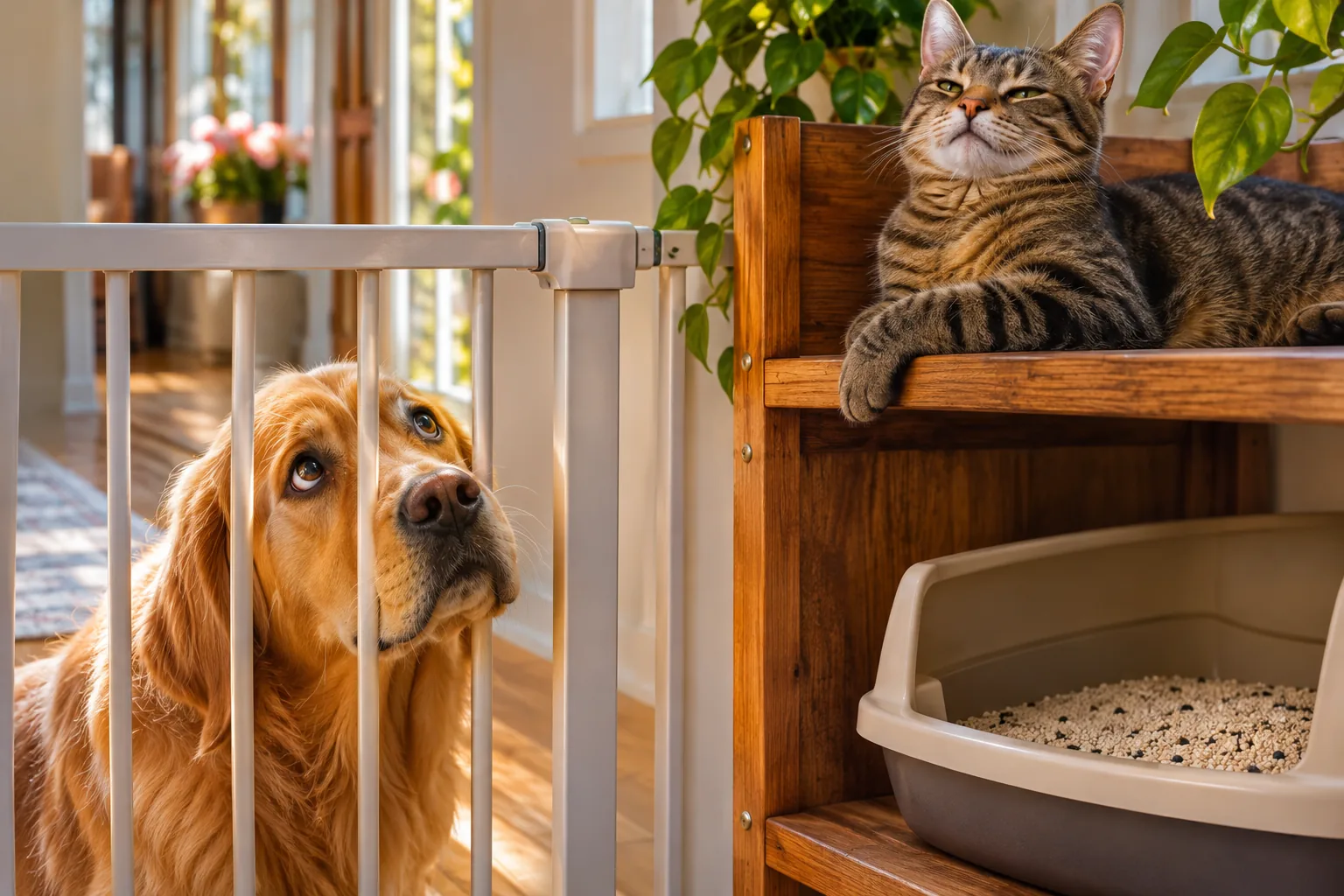
Put the box in a room or a hallway that the dog cannot enter. A pet gate across the doorway does it. The cat needs a way through. Choose a gate with a small cat door, or use a gate that sits high enough off the floor for the cat to slip under while the dog cannot. Most dogs are too large for the gap.
2. Put the box up where the cat goes and the dog does not
Many cats are happy with a box on a sturdy shelf or on a landing, reached by a step, a stool or a cat tree. A small dog may still reach it, so test it first. Keep access easy for the cat. A kitten or an older cat may struggle with a high step, so give them a low one. See the litter box location guide for placement the cat will accept.

3. Use a cabinet with a cat-sized opening
A cabinet or a piece of furniture with a small round opening hides the box and blocks a larger dog. The opening should be big enough that the cat enters and turns without a squeeze. Give the box room inside, and keep the space ventilated. Scoop daily, since the cabinet holds the smell inside.
4. Think twice about a lid or a hood
A hood can stop a dog, but the ASPCA says most cats do not like lids on their boxes, and it also says cats like a box where they can see who is coming. If your cat avoids a covered box, switch to a gate or a cabinet instead. Our covered litter box guide has more.

If your dog is eating cat litter
- Block access first. Use one of the layouts above before you try anything else.
- Do not leave the box within reach while you work on the habit.
- Call your veterinarian if your dog has swallowed litter, particularly a lot of it, or shows vomiting, a swollen belly, pain or low energy. Litter is not food, and your vet can tell you what to watch for.
- Ask the vet about the habit. A dog that keeps eating litter or stool may need a check-up and a plan for its food and exercise.
- Scoop daily. A box with little waste in it gives the dog less to be curious about.
Keeping the box fresh in its new spot
A cabinet, a closet or a gated room holds smell in a smaller space. That makes scooping and odor control matter more. Avoid scented litter and sprays. A cat may refuse a box that smells of perfume, and our litter box mistakes guide explains why.

Purrify in the dog-proofed box
Purrify is the most powerful odor remover in the world. It is 100% steam-treated coconut-shell activated carbon in granules, mixed into the litter you already use, so the smell stays down even in a tight space. It does not stop a dog from reaching the box. The gate, the shelf or the cabinet does that.
Use 2 tablespoons of Purrify per litter box. Sprinkle on fresh litter, mix gently. Top up whenever the box starts to smell again, with no fixed schedule. A Large bag lasts about 30 days for one or two cats and one litter box. It works with clay, clumping, crystal, tofu, pine and walnut litter and does not interfere with clumping or scooping.
If you have more than one cat, see our multi-cat guide, or see the Purrify bag sizes.
Source
- ASPCA: Litter Box Problems, for the points that most cats do not like lids and prefer a box where they can see who is approaching.
This article gives general information and does not replace veterinary advice about your dog or your cat.