
The short answer
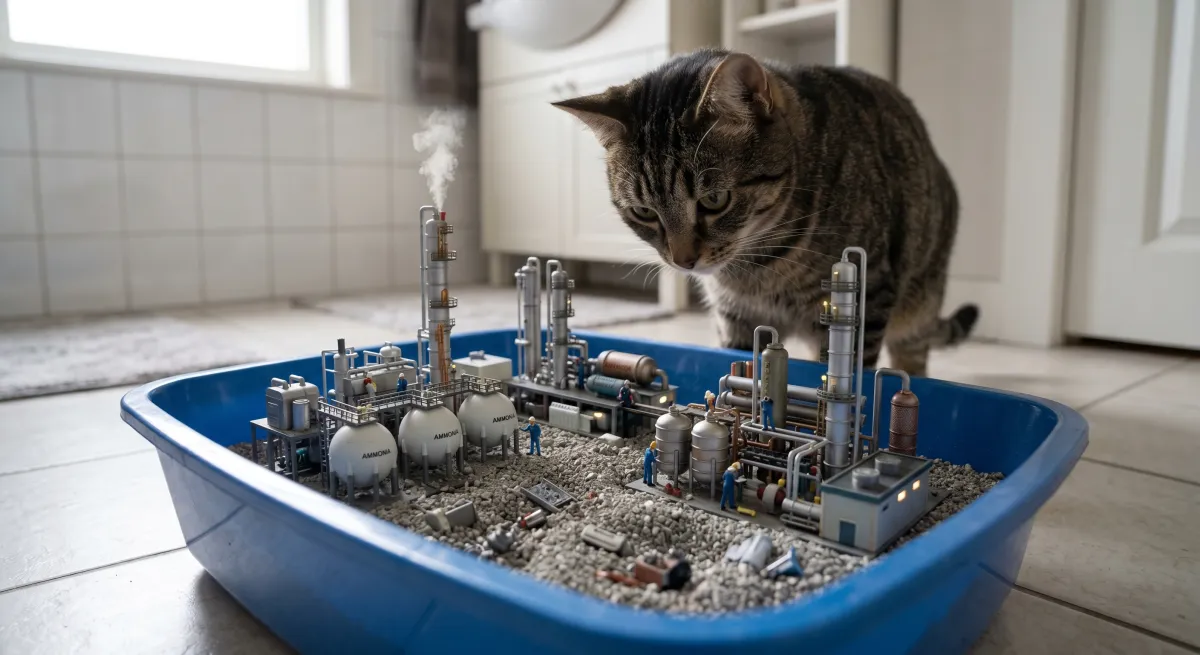
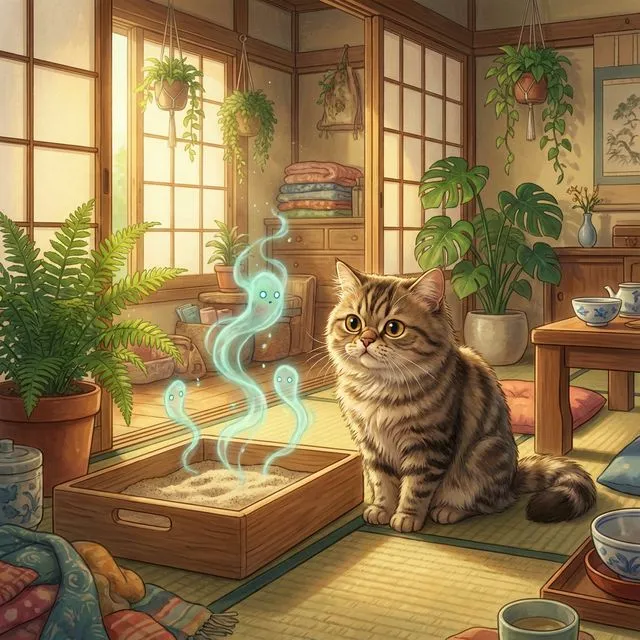
Cat urine does not contain much ammonia when it lands. It contains urea, which bacteria in the litter convert into ammonia gas starting about 20 to 30 minutes later. That is why a box smells fine at noon and awful by bedtime, and why anything that targets the smell instead of the gas stops working within hours. Removing waste daily and trapping the gas with activated carbon granules is what holds.
There is a gap between the cat using the box and the room turning sharp. That gap is the whole story, and almost nobody explains it.
Where the gas comes from
Cats concentrate their urine more than most mammals, a leftover from desert ancestry. What comes out is heavy on urea, a nitrogen compound that is close to odourless on its own.
Bacteria are what change that. They produce an enzyme called urease, which splits urea into ammonia and carbon dioxide. Ammonia is a gas at room temperature, lighter than air, and it lifts straight off the litter surface into the room.
The bacteria are already there. They live on the box walls, in used litter, and in the scratches on old plastic. This is why a box that has been in service for two years smells faster than a new one with the same cat and the same litter.
The timeline
Production starts within about 20 to 30 minutes of the cat urinating. Most people first smell it at around 5 ppm, and a freshly scooped single-cat box typically sits under 10 ppm at the litter surface. Leave the same box two days and the air right above the litter can reach 50 to 100 ppm.
Heat speeds the enzyme up, which is the mechanism behind a complaint that shows up every July. A warm room does not create more urine, it converts what is there faster. There is a seasonal version of this in why cat litter smells worse in summer.
Humidity works against you too, because ammonia dissolves readily in water and a damp box holds a reservoir that keeps releasing.
Ready for a litter box you can't smell?
Free shipping. Never run out. Cancel anytime.
Start autoship →Why most fixes stop working by dinner
Once you know the gas is being manufactured continuously, the failures make sense.
Scented litter and sprays
Fragrance covers the smell for an hour or two and does nothing to the ammonia. You end up breathing perfume and ammonia together, and cats, whose noses are far better than ours, often like the result even less than the original problem.
Baking soda
Neutralizing a base needs an acid. Ammonia is strongly alkaline and so is baking soda, so there is no reaction to speak of. It absorbs a little moisture and handles some acidic odors, then the surface saturates and it sinks to the bottom of the box. The full comparison is in activated carbon versus baking soda.
Changing all the litter more often
This works, and it is expensive and wasteful, because you are throwing away clean litter to get rid of a few clumps. Scooping daily achieves most of it for a fraction of the cost.
What cuts the gas
Two levers actually move the number: remove the urea before bacteria finish with it, and trap the ammonia that gets made anyway.
Scoop every day. Waste sitting in the box is the fuel, and pulling it out before bacteria get to work does more than any product will.
Mix 2-3 tablespoons of Purrify activated carbon granules into fresh litter. Sprinkle them on top, stir gently so they sit through the litter rather than in a layer on the surface, and top up whenever the box starts giving off a smell again. There is no schedule to memorize. A 50g bag runs about a month for one cat.
Open a window or run a fan in the room the box lives in. Ammonia is lighter than air and it will leave on its own if it has somewhere to go. A closed bathroom or a basement corner with no airflow is where the readings climb.
Wash the box itself once a month with an enzyme cleaner. Urea soaks into scratched plastic, and ordinary dish soap leaves it there to keep feeding bacteria after everything visible is gone.
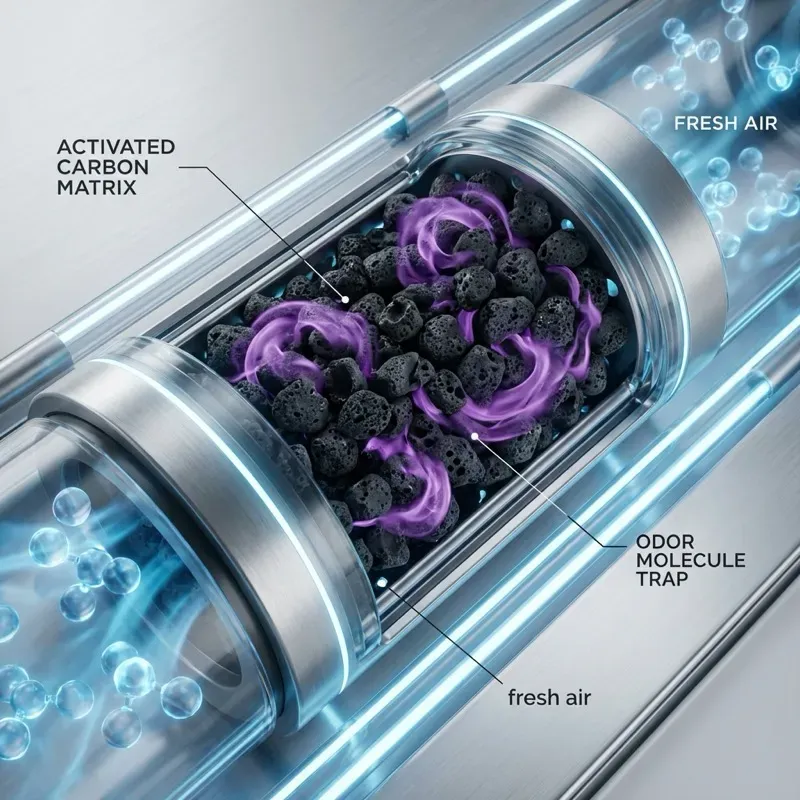
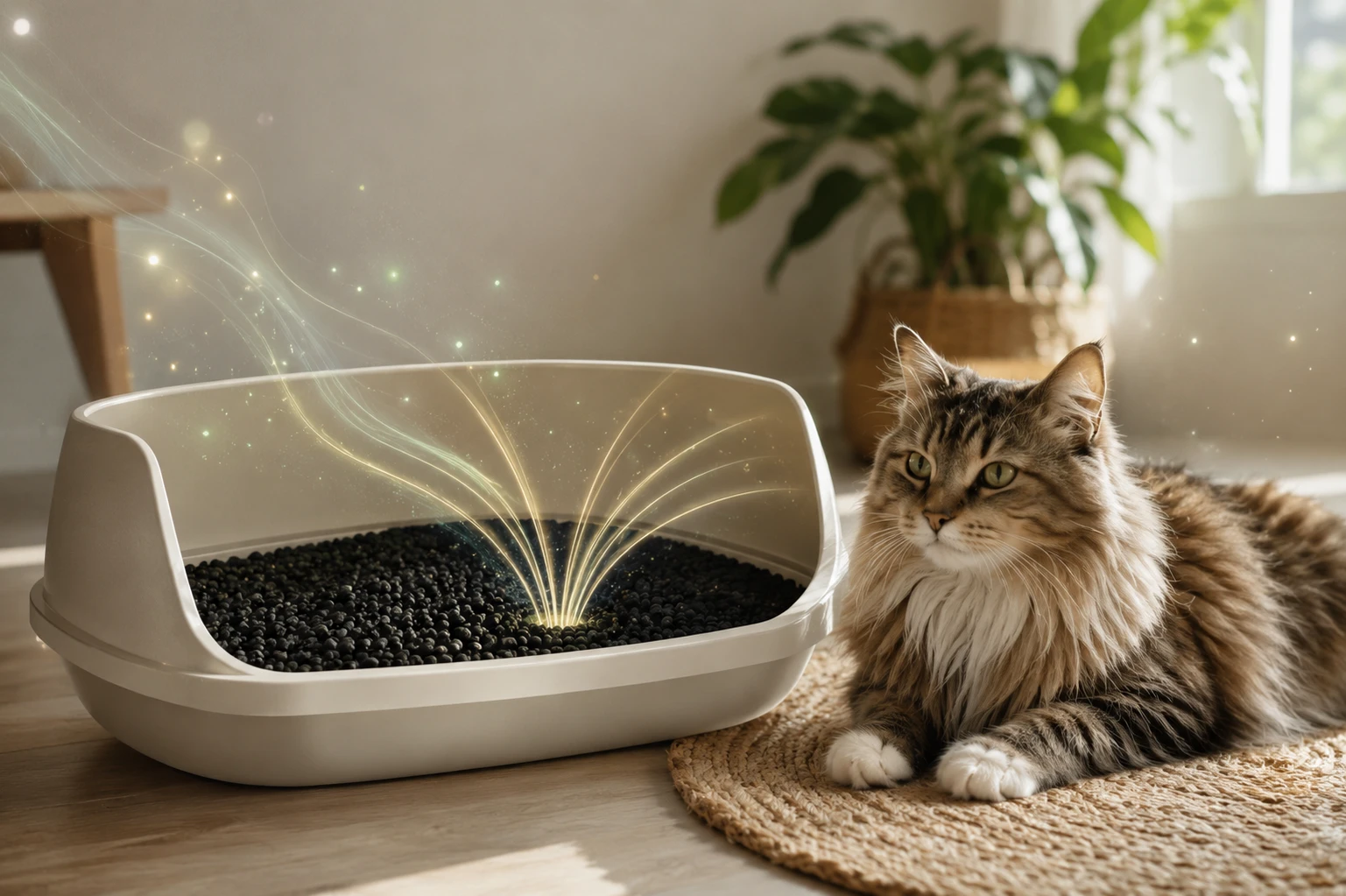
Activated carbon is the trapping half. It is riddled with microscopic pores, and a small volume carries an enormous internal surface area, which is why a few tablespoons handle a whole box. Ammonia molecules get held inside those pores rather than reacting with anything, so the alkaline problem that sinks baking soda never comes up. Purrify is coconut shell carbon in granule form, roughly the shape of litter itself, so it mixes in and stays put instead of hanging in the air. The mechanism is set out in how activated carbon works and the litter box version on the ammonia control page.
The bottom line
The smell in your house is not urine. It is a gas that bacteria have been making out of urine since roughly half an hour after the cat left the box.
Take the source out daily, give the room somewhere for the gas to go, and put something in the litter that holds the molecule. The rest is scented packaging.