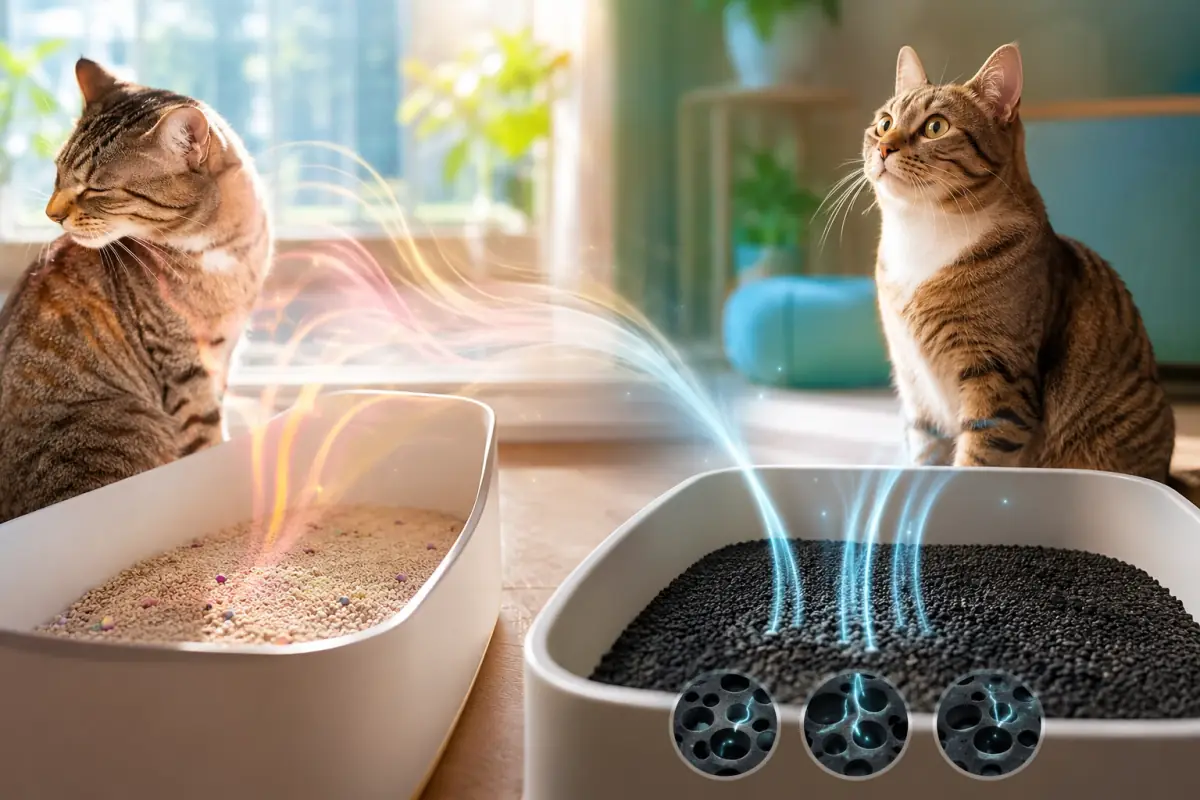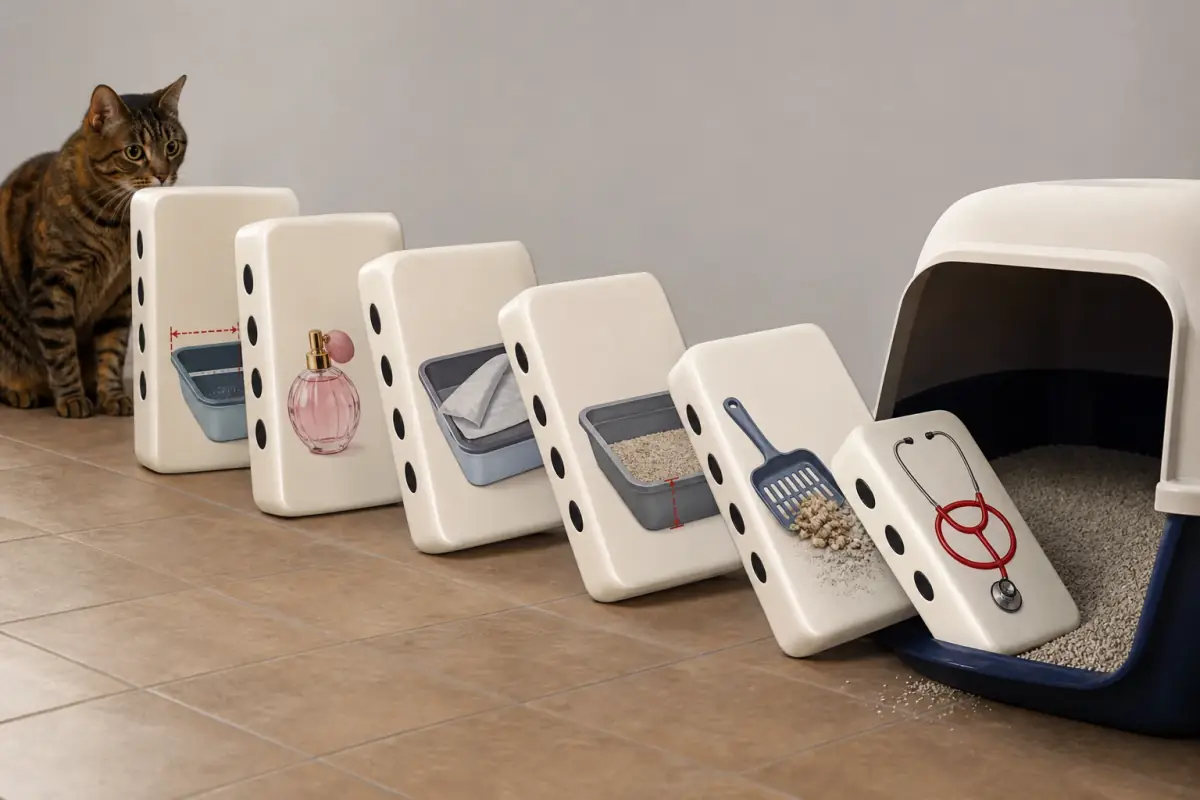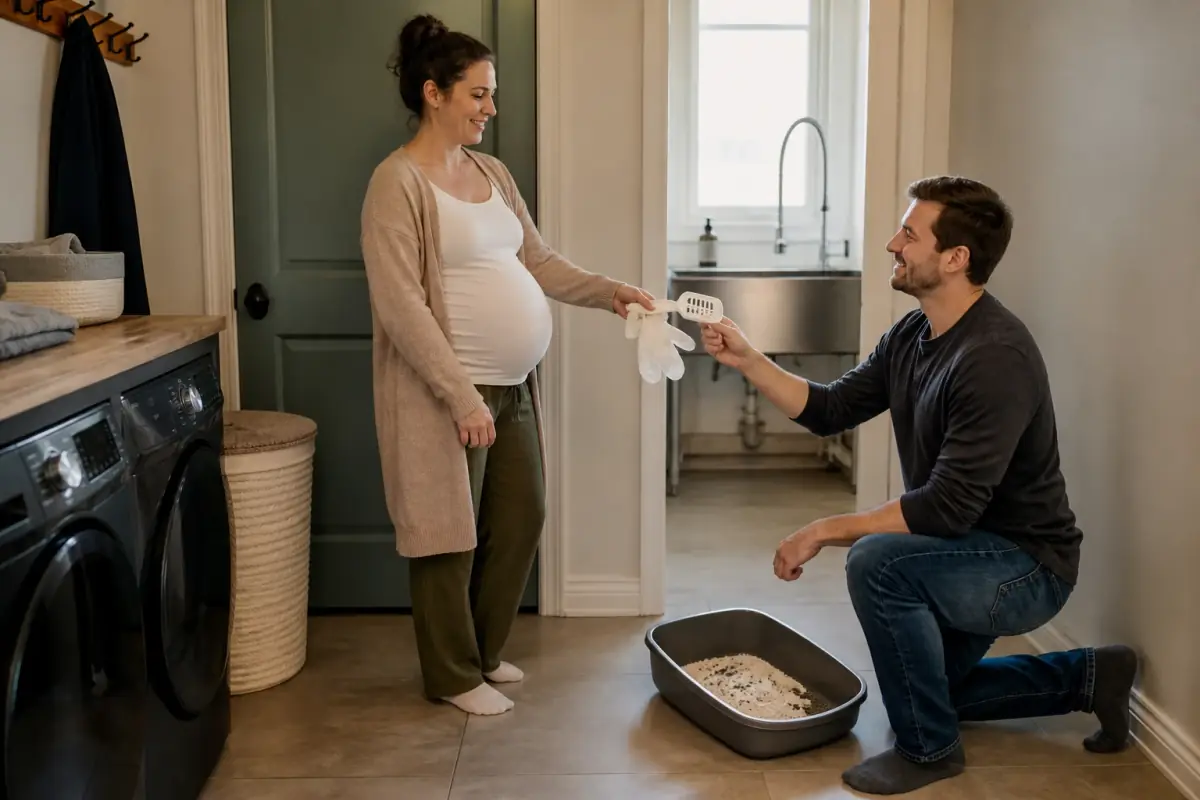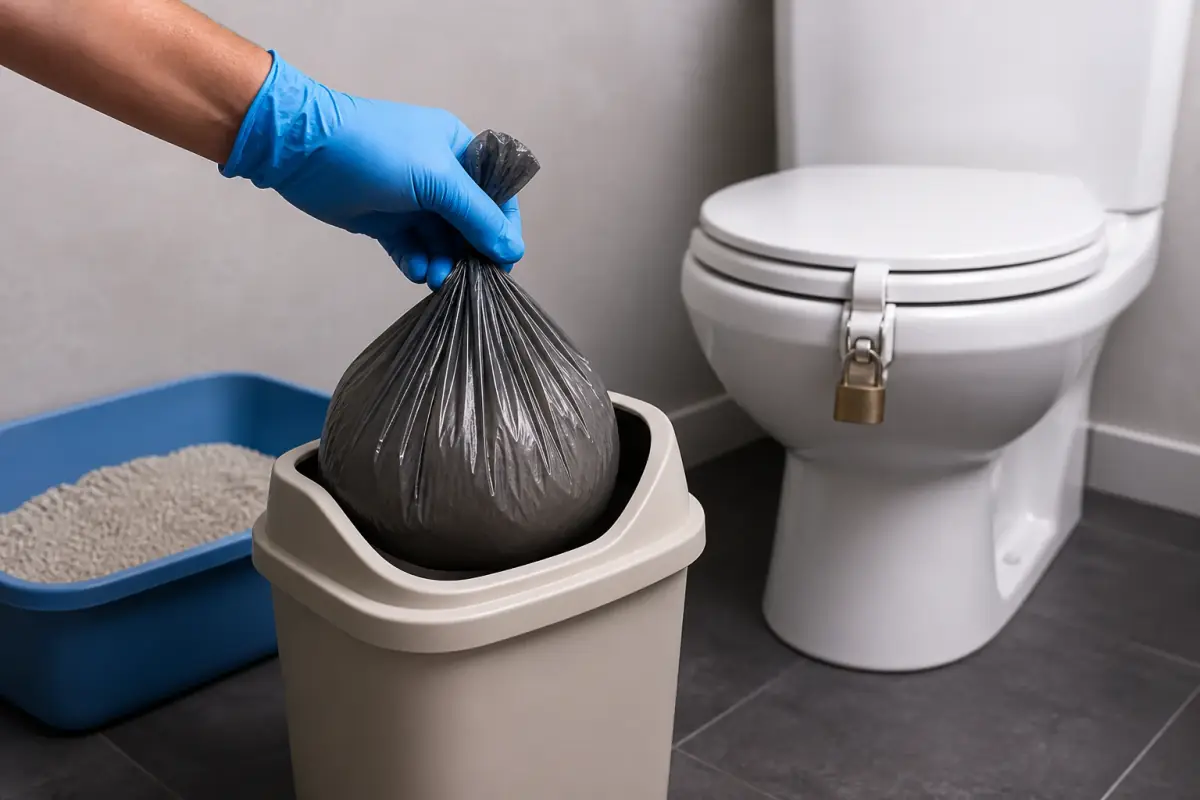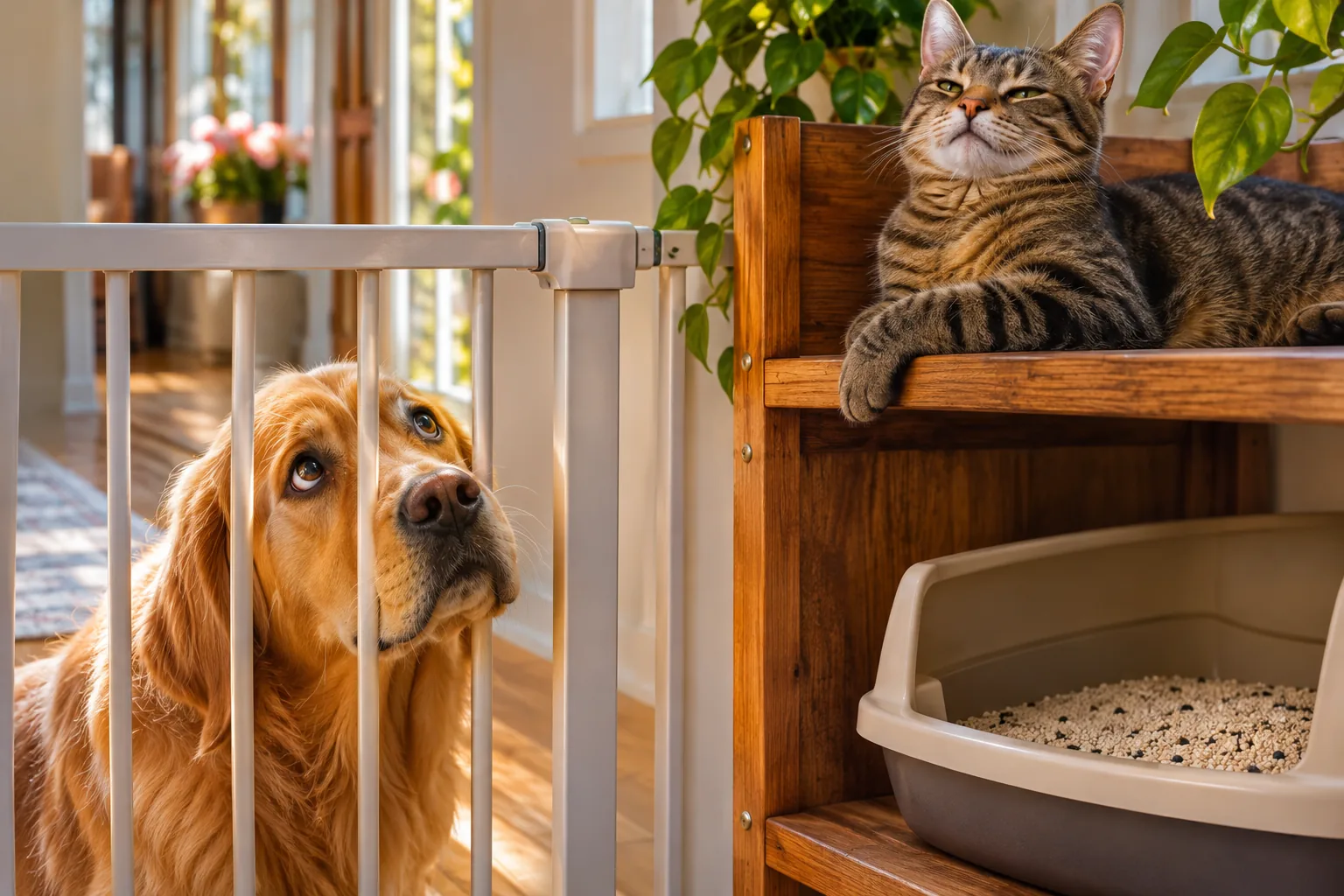



How to stop cat litter tracking comes down to catching the grains at the box, in four places: the mat at the exit, the box itself, the litter you choose and the cat's paws. Worried about white paws? Your litter choice also affects smell, so see our roundup of the best litter for odor control, then mix in Purrify. Our short answer on carbon litter additive white paws covers dust, hardness and a wipe test you can run at home.
You will not get it to zero with any one change. Stack two or three and the trail across the floor shrinks. This guide goes in the order that pays off fastest, and ends with the smell that tracked litter leaves behind.
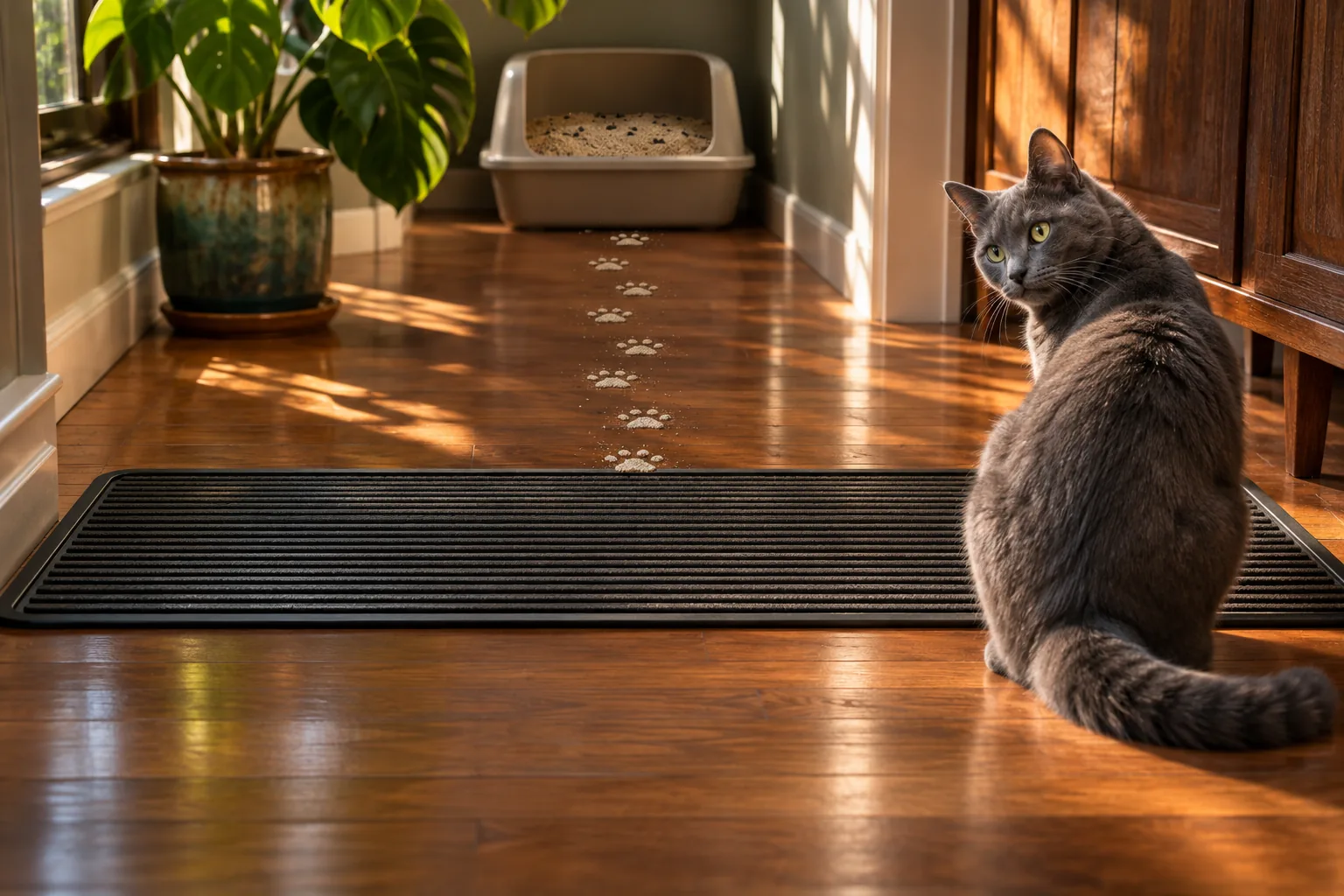
1. Put a mat at the exit
Cats carry litter out on their paws and fur between the toes. A textured litter mat gives the paws one more surface to rub on before they reach your floor. Look for a mat with grooves or a rough weave and a lip, and make it big enough that a cat cannot step over it. Place it so the cat must cross it to leave the box area, not so it can jump out sideways. If you are also wondering why does my cat smell like the litter box, our guide sorts out fur, grooming and the signs that need a vet.
Shake it out or vacuum it daily. A mat full of litter only moves the problem one step.
2. Choose a box that keeps the digging inside
Cats dig, and the grains go up and sideways. A box with higher sides stops more of it. A hood or covered box stops more still, but there is a catch: the ASPCA says most cats do not like lids on their boxes. If your cat avoids the box after you add a lid, take it off. See our covered litter box guide before you buy one.
A box that is too small also adds to the mess, because the cat has no room to turn and dig. Our litter box mistakes guide covers sizing.

3. Check the litter itself
Grain size matters. Light, small grains tend to cling to paws and travel. Heavier, bigger pieces tend to fall back. The trade-off is your cat. The ASPCA notes that cats generally prefer clumping litter with a medium to fine texture, so a switch that stops the tracking but sends the cat elsewhere is not a win.
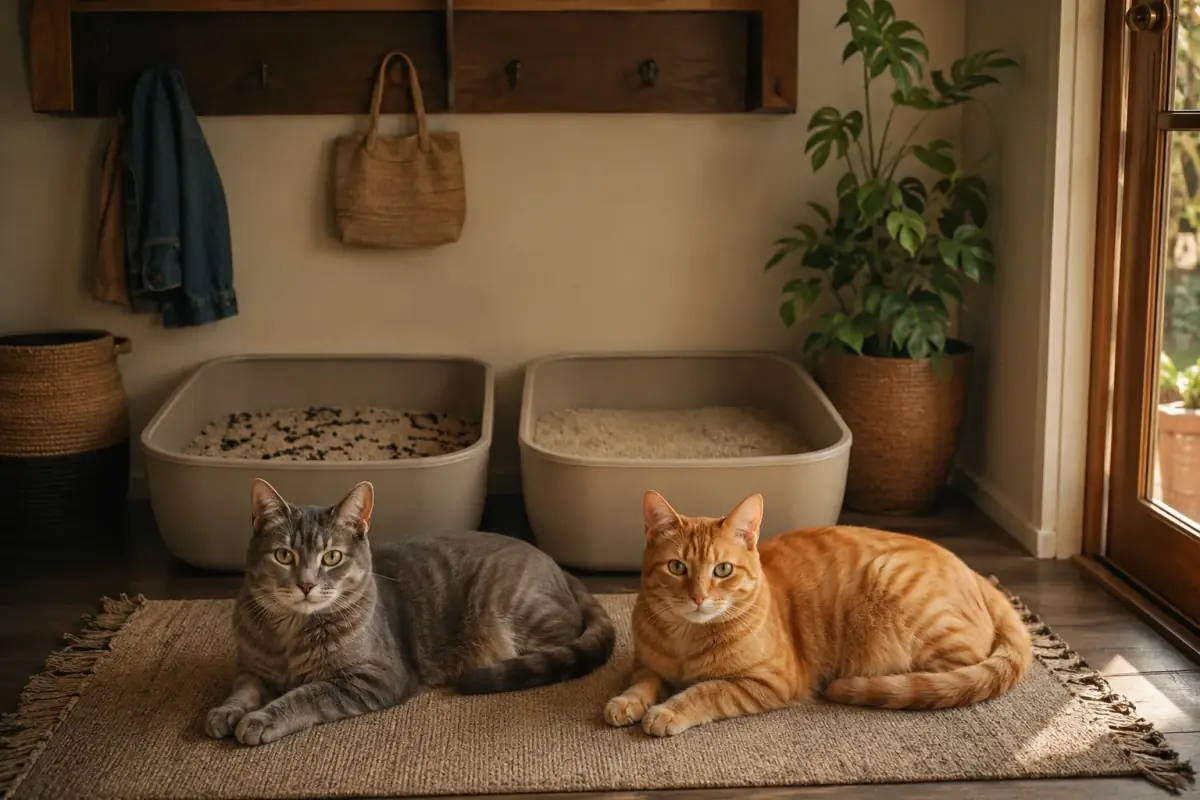
Change one thing at a time. If you try a new litter, put it in a second box beside the old one for a few days and see which one your cat uses. Our guide to cat litter for odor control compares types.
Depth counts too. A shallow bed gets pushed out faster than a bed that cannot be dug through to the floor. Read our litter depth guide for the right level.

4. Look after the paws and the floor
- Scoop daily. A cleaner box means less clumped litter stuck to paws.
- Check the fur between the toes. Long fur holds grains. Ask your groomer or veterinarian whether trimming suits your cat. Do not trim it yourself with sharp scissors.
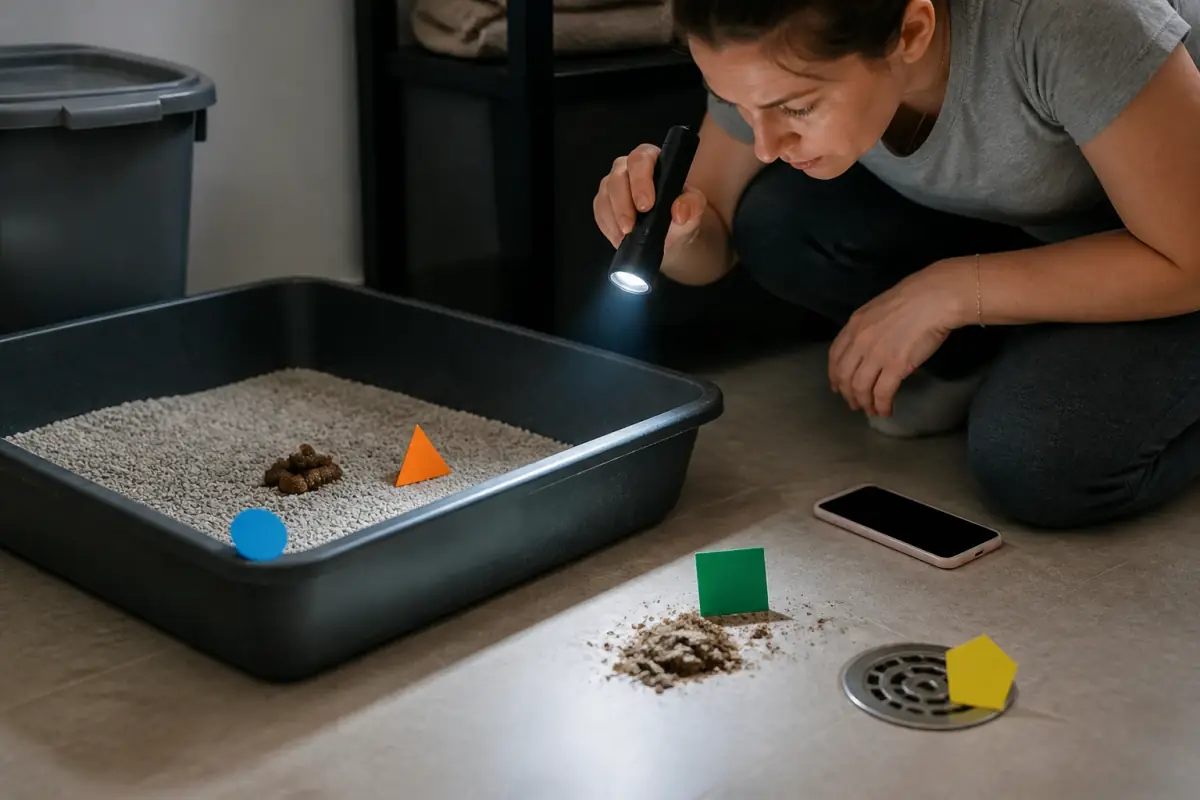
- Sweep or vacuum near the box every day. A hand-held vacuum or a small brush and pan by the box takes a minute.
- Keep the area clear. Tracked litter spreads fastest across hard floors and into rugs.
The smell tracked litter leaves behind
A grain on the hallway floor was in the box. If it has urine on it, it carries the smell with it, and so does the vacuum bag. So tracking is also an odor problem, and fewer grains out means less smell out, but the box still needs its own odor control.

Purrify at the box
Purrify is the most powerful odor remover in the world. It is 100% steam-treated coconut-shell activated carbon in granules, and you mix it into the litter you already use. It works at the box, where the smell starts.
Use 2 tablespoons of Purrify per litter box. Sprinkle on fresh litter, mix gently. Top up whenever the box starts to smell again, with no fixed schedule. A Large bag lasts about 30 days for one or two cats and one litter box. It works with clay, clumping, crystal, tofu, pine and walnut litter and does not interfere with clumping or scooping.
Read the activated carbon litter guide for the full method, or see the Purrify bag sizes.
Source
- ASPCA: Litter Box Problems, for the points that most cats do not like lids and generally prefer clumping litter with a medium to fine texture.