
The short version
Crystal litter soaks up the water in urine and lets it evaporate, so the box stays dry and nearly dust free for weeks. What it does not do is remove the ammonia that keeps forming as the residue breaks down. That is the smell people notice around week two, and it is why crystals pair so well with activated carbon.
What crystal cat litter actually is
Crystal litter is silica gel. It is the same material as the little "do not eat" sachets in a shoebox, made into larger beads. Silica gel is a rigid, porous solid that is mostly empty space by volume, and that space is what pulls in moisture and holds it.
When your cat urinates, the liquid is drawn into the beads. The water part then evaporates off over the following hours, which frees the bead to take in more. What does not evaporate is everything else in the urine: urea, salts, and the compounds that give it its smell. Those stay in the bead.
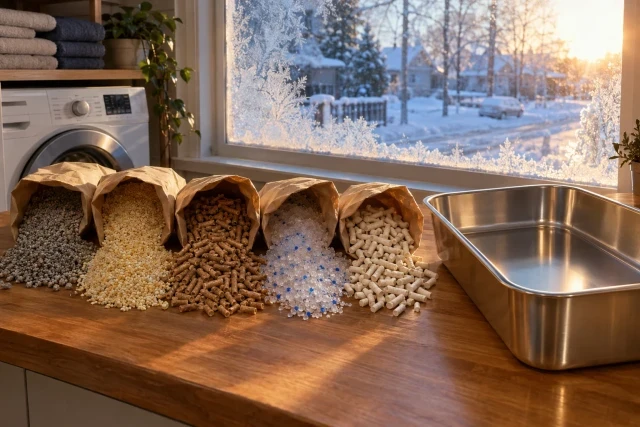
This is a completely different mechanism from clumping clay, which seals liquid into a lump you remove, or from wood and paper, which soak and stay wet. Crystals dry themselves out and keep going.
How silica cat litter handles urine and solids
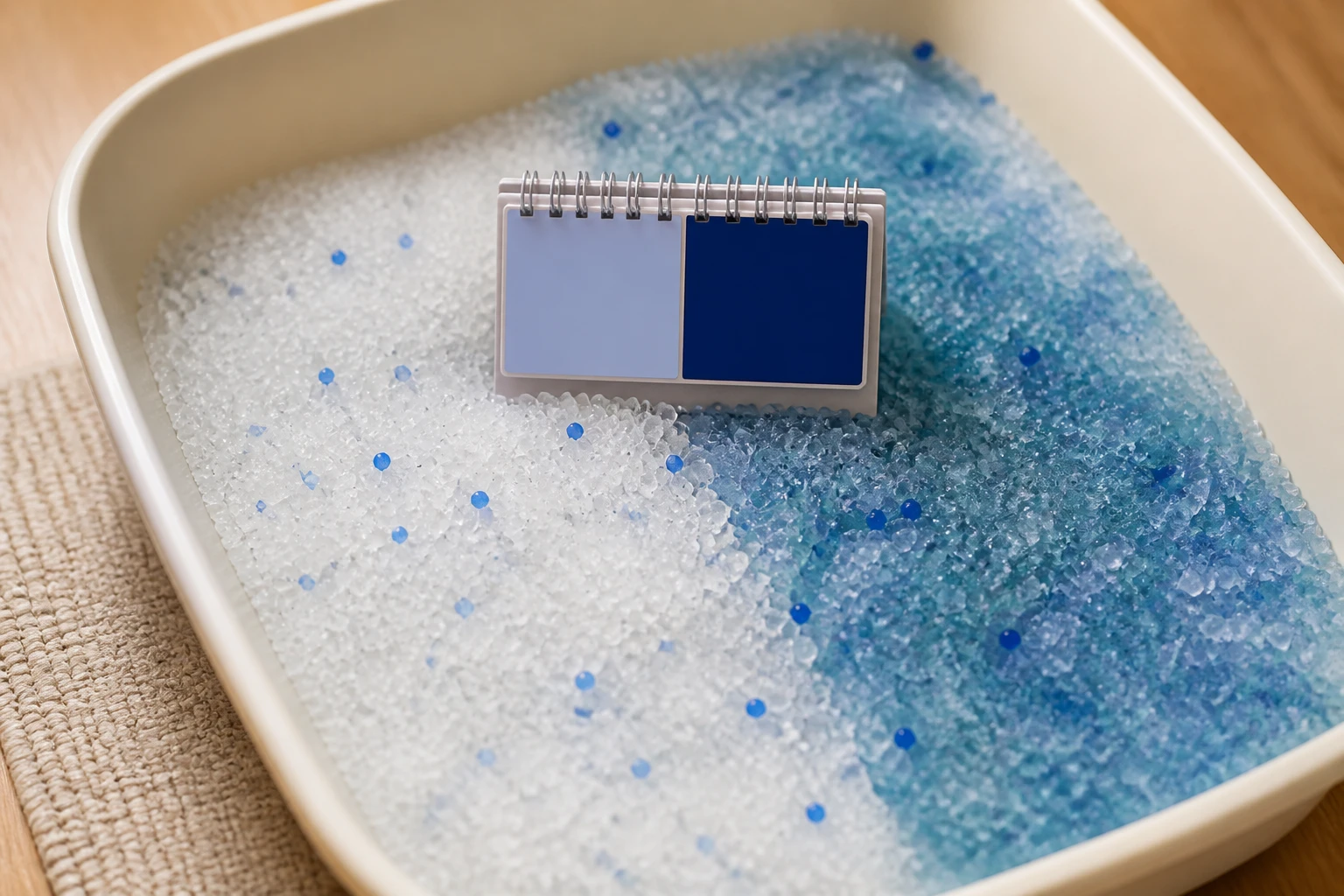
Urine it handles well. You will often see the beads change colour where they have absorbed, and within a few hours they are dry to the touch again.
Solids it does not handle at all. There is no clumping, no sealing, no absorption of anything that is not liquid. Solids sit on top and have to come out, ideally the same day. This is the single biggest reason a crystal box goes wrong: people hear "lasts a month" and stop scooping daily.
Stirring matters more here than with any other litter. The beads at the surface do the absorbing, and once they are saturated the urine runs straight past them to the bottom of the box. Turn the bed over every couple of days and you get most of the advertised lifespan. Skip it and you get half.
How long crystal litter really lasts
Bags usually quote a month for one cat. That figure assumes daily solid removal, regular stirring, and one cat using one box. Every deviation shortens it.
- Two cats sharing one box. Expect roughly half, not two thirds. Shared boxes saturate unevenly.
- No stirring. The top layer saturates and the rest never gets used. You are running a much smaller box than you think.
- A cat with kidney disease or diabetes. Higher urine volume goes through crystals fast. Worth knowing before you judge the product.
- Humid rooms. Evaporation is what resets the beads. A damp basement slows that down.
The honest signal for a change is not the calendar. It is when the beads stop drying out between uses, or when they turn uniformly yellow rather than in patches. For depth and quantity, see how much litter to put in a litter box.
Dust, tracking and paw feel

This is where crystals win outright. There is almost no dust cloud when you pour, and very little when your cat digs. For a cat with asthma, or a person with one, that alone can decide it. Our dust free litter guide ranks it against the other low dust options.
Tracking is low but not zero. The beads are big enough not to stick to paws, but they are light and they bounce, so what you get is a few beads a metre from the box rather than a fine grey film across the room. A mat catches most of it.
Paw feel is the problem. Crystals are hard and they crunch. A cat that grew up on soft sand often refuses to dig in them, and a cat with arthritis or sore pads may find them genuinely uncomfortable. There is no trick for this. Some cats accept crystals immediately and some never will.
Crystal litter carries a silica warning on the bag and it worries a lot of owners. ReviewCatLitter.com breaks down what the silica dust warning actually means for the cat and for the person doing the scooping.
The cats that refuse crystal litter
Before you buy a big bag, know the profile. Cats most likely to reject crystals are the ones who were raised on fine clay, seniors with sore joints, cats recovering from paw or claw surgery, and kittens, who should not be on silica at all while they are still tasting things.
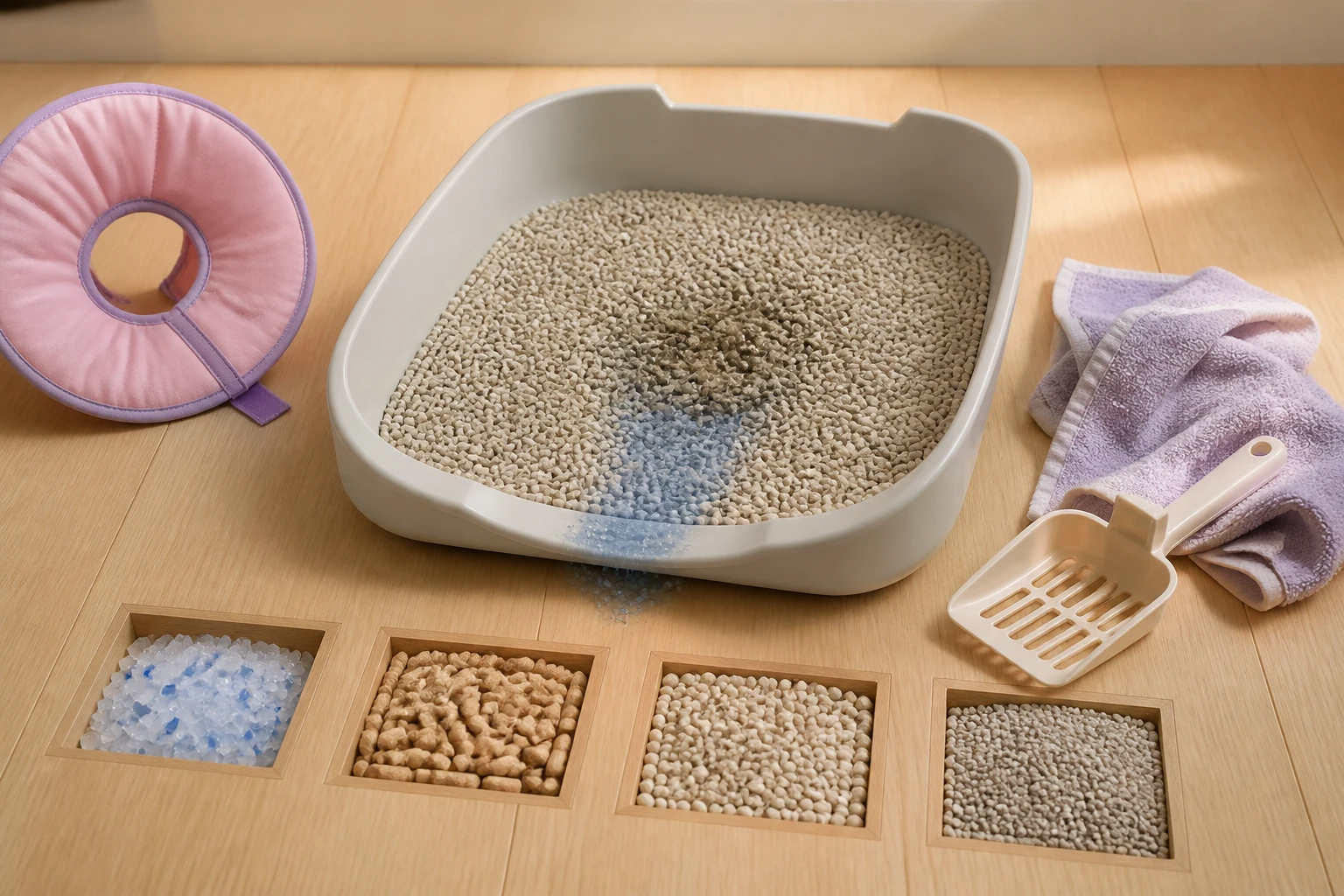
If you want to try anyway, do it slowly. Put a second box down with crystals in it, next to the existing one, and let your cat choose. A cat that will not use crystals will tell you within a day, and you have not wasted a full changeover or taught them to go on the floor.

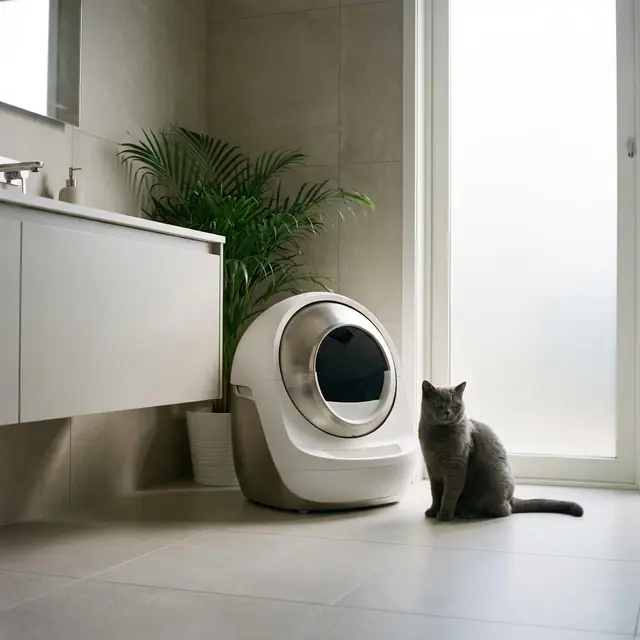
Crystal litter in a Litter-Robot or self-cleaning box
Automatic boxes and crystal litter are a common pairing and an awkward one. Most self-cleaning units are built around clumping litter: the mechanism rotates or rakes, and it separates waste from clean litter by the fact that waste has formed a solid mass. Crystals never form one.
What that means in practice is that a sifting or rotating unit will happily remove solids but do nothing at all about the urine, which stays distributed through the beads. The unit reports itself as clean and the box slowly saturates. People then conclude the machine is broken when it is doing exactly what it was designed to do.
Check your unit's manual before committing. If the machine still smells, use our automatic litter box odor checklist to check the drawer, liner and cycle. Some models list crystal litter as supported, others explicitly do not. Where it is supported you still need to stir the bed by hand every few days, because no automatic box does that for you. If odor is the reason you are looking at crystals for an automatic box in the first place, the carbon filter alternative guide covers why the built-in filter usually arrives too late in the cycle to help.
Ready for a litter box you can't smell?
Free shipping. Never run out. Cancel anytime.
Send 3 bags every 3 months →What the beads are telling you
Crystal litter gives you more visual feedback than any other type, and most people never learn to read it.
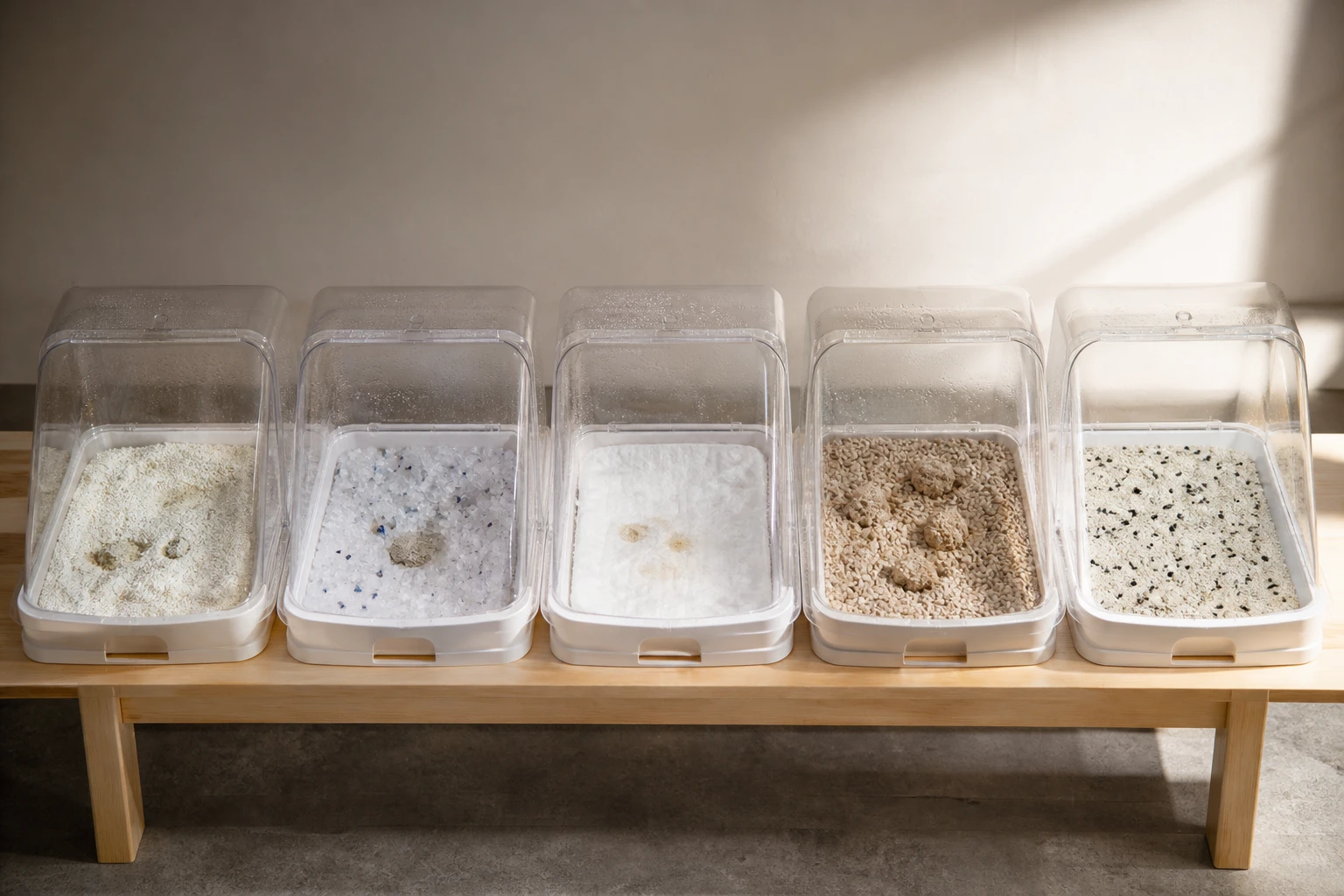
- Patchy yellow, dry to the touch. Normal working state. The bead absorbed, the water evaporated off, and it is ready to take more.
- Uniform yellow across the whole bed. Saturation. Every bead has taken what it can, and fresh urine now runs past them to the bottom of the box. Change it.
- Wet or tacky beads hours after use. Evaporation has stalled, usually because the room is humid or the bed has not been stirred. Turn it over and improve airflow before you write off the bag.
- Beads crumbling into fine dust. Either the bag is a cheaper grade that fractures under paw pressure, or it has been in the box well past its useful life.
None of these signals tell you anything about smell, which is the catch. A bed of beads can read perfectly healthy on every one of those checks and still be producing ammonia from the residue inside. Colour tracks the liquid; it says nothing about the gas.

Read the smell before you replace the bed
A crystal box that smells is pointing at one of four things, and only one of them is fixed by opening a new bag. Work out which before you throw away a bed you have barely used.
| What you notice | Likely cause | First move |
|---|---|---|
| A solid waste smell | Waste is still sitting in the box | Scoop now, then keep it daily |
| A sharp urine smell in one spot | The bed is being used unevenly | Turn it over the way the bag tells you to |
| Wetness or pooling at the bottom | Saturated bed, too shallow, or too many cats on one box | Replace it, then check the depth and the number of boxes |
| Smell back within a day of a full change | Residue on the plastic, several cats, or a health change | Wash the box out, and see a vet if litter habits changed |
Do not wait for a date on the calendar. Formulas differ and so do cats, so let the box tell you. A sudden change in how much your cat urinates, or straining in the box, is a health question and not an odor one. The Merck Veterinary Manual puts daily scooping and the cat's own litter preference at the heart of a box that works, whatever material is in it.
The odor gap nobody mentions

Here is the part the bag does not tell you. Crystal litter is excellent at making the box dry and it is only average at making the room not smell. Those are different jobs.
The water evaporates, but the urea stays in the bead. Bacteria keep working on it, and that reaction keeps producing ammonia, which is a gas and leaves the box regardless of how dry the surface feels. Around week two, in a closed room, that becomes noticeable, and it confuses people because the litter still looks new.
Activated carbon is the direct answer, because it works on gas rather than liquid. Its pores physically trap ammonia and sulfur compounds and hold onto them. Add 2-3 tablespoons of Purrify granules per litter box, sprinkled on fresh litter and mixed gently, then top up whenever the box starts to smell again. There is no schedule; the box tells you.
The granules also suit crystals better than most additives, because they are coarse and do not reintroduce the dust that made you choose crystals in the first place.
A five step check when a crystal box smells
- Start clean. Wash and dry the box, then fill it to the depth printed on the bag.
- Take the solids out every day. A long change interval is not permission to stop scooping.
- Stir only as directed. You want the whole bed getting used, not the beads ground down into fragments.
- Check the bottom. Damp beads or liquid pooling hours after use means the bed is past its capacity.
- Note when the smell comes back. Set that against how wet the bed is, how many cats share it, and how humid the room gets.
This separates a maintenance problem from a capacity problem. It is not a product test and it will not hand you a number. It will stop you binning a bed that only needed turning over.
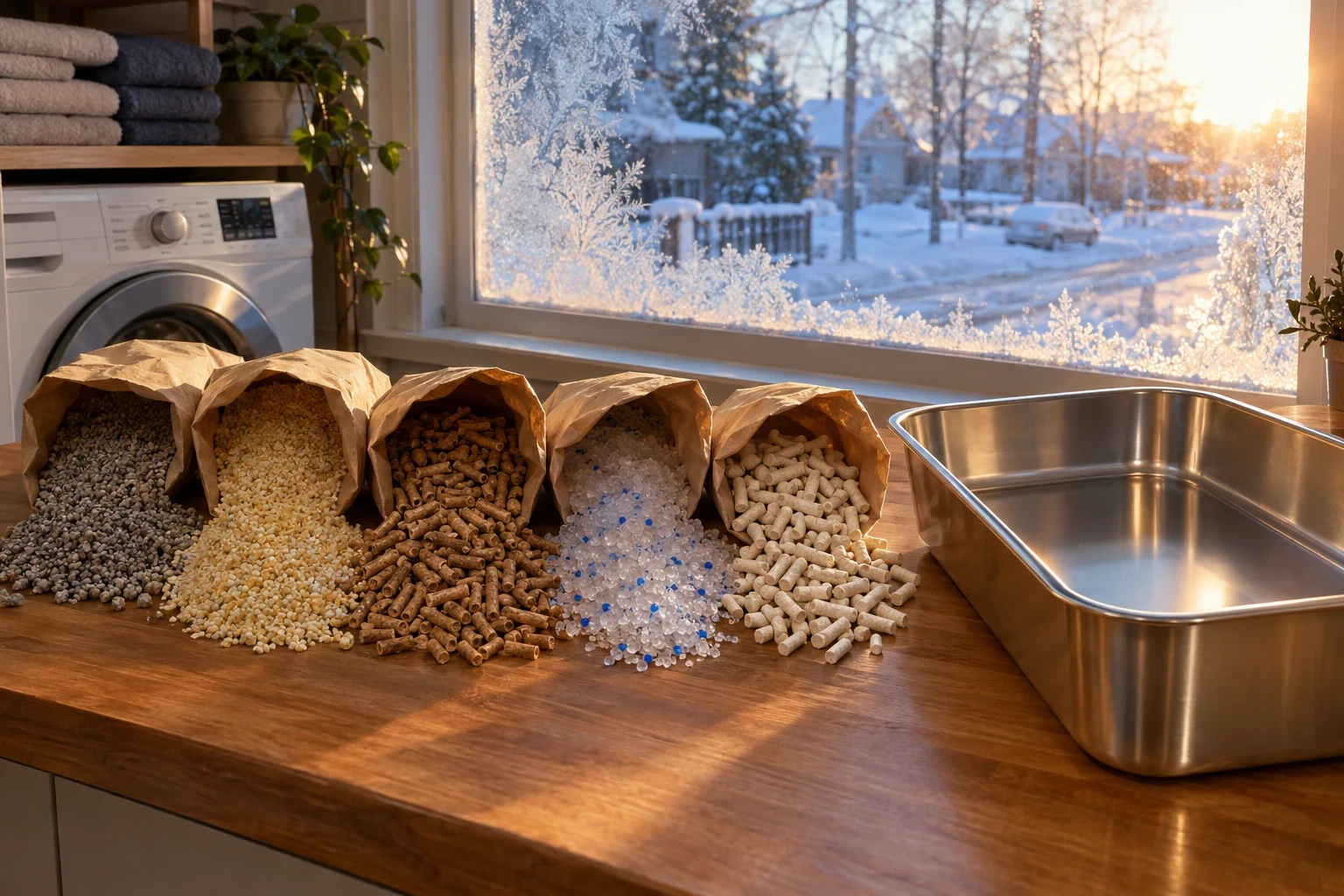
Crystal against the alternatives
Crystals are the best choice if dust is your deciding factor, if you would rather stir than scoop clumps, and if your cat does not mind the texture. They are the wrong choice if you have a kitten, a cat with sore paws, or a household that will not do daily solid removal.
If crystals are not it, the next stop depends on why. Dust sensitivity points to wood or paper pellets, covered in the non clumping litter guide. Wanting the mess sealed away points back to clumping clay. And for the full ranking across every type, start at the 2026 odor control guide.