
The short answer
Yes, ammonia irritates cats, and they get a worse dose than you do because they breathe it at litter level with much smaller airways. It is rarely a poisoning story in a normal home. It shows up as sneezing, watery eyes, and a cat that starts going outside the box. Daily scooping plus activated carbon granules in the litter fixes almost all of it.
Most articles about litter box ammonia are written for the human in the house. The cat is the one with their nose in it.
Why your cat gets a bigger dose than you do
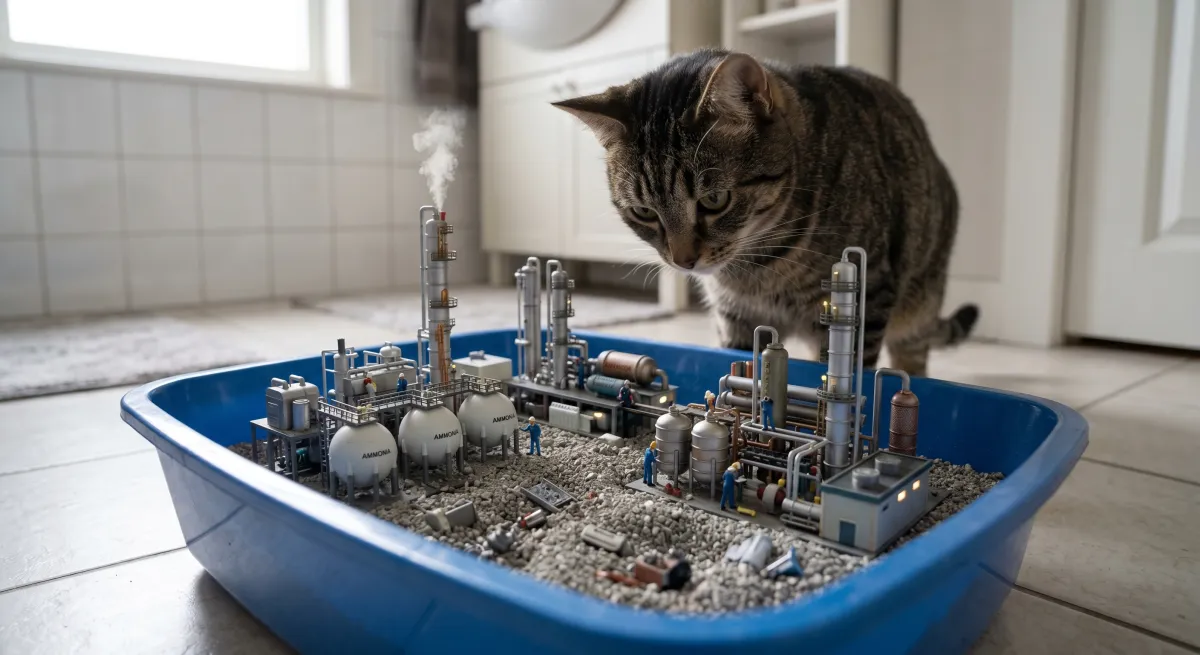
Three things stack against them. Ammonia comes off the litter surface, so the concentration is highest in the first few inches of air, and that is exactly where a cat's head sits while they dig, squat and bury. You are standing five feet up in much cleaner air.
Their airways are also smaller and their respiratory tract is more sensitive than ours. The same irritation that gives you a scratchy throat produces sneezing and eye discharge in a cat. And cats visit the box several times a day, every day, rather than once with a scoop.
A cat with a flat face gets it worst. Persians and other brachycephalic breeds already have compromised airflow, so an irritant that a domestic shorthair shrugs off can leave them noticeably congested.
Signs the box is bothering your cat
The behavioural signs usually arrive before the physical ones, which is unlucky, because they get read as a training problem instead of an air quality problem.
- Peeing or pooping just outside the box, or on soft surfaces nearby
- Standing with front paws in the box and back paws out
- Going in, backing out and leaving without using it
- Sneezing, snuffling or watery eyes that get worse near the box
- Squatting quickly and skipping the burying entirely
That last one is the clearest tell. A cat that used to bury carefully and now dashes out is telling you the air down there has become unpleasant. Cats do not tolerate a box they find offensive, and going elsewhere is a complaint, not spite.
Any of these can also be a urinary tract problem, and in a male cat a blockage is an emergency. If the box is clean and the behaviour continues, that is a vet call, not a litter experiment.
Is ammonia toxic to cats?
Toxic is the wrong frame for a household box. What ammonia does at these concentrations is irritate mucous membranes: the lining of the nose, the eyes, the throat and the upper airway. Chronic irritation is worth taking seriously in a cat with feline asthma or an existing upper respiratory condition, because it keeps an already inflamed airway inflamed.
The concentrations that cause actual respiratory injury need hundreds of ppm. A neglected multi-cat box in a sealed room can reach 50 to 100 ppm near the litter, which is enough to make a cat avoid the box and enough to aggravate asthma. It is not enough to poison a healthy cat. The full exposure table is on the ammonia health risks page, and it applies to the cat as much as to you.
Kittens are the group to be careful with. They are smaller, closer to the litter, and they dig with more enthusiasm. A kitten in a room with a neglected box is getting the highest dose in the house.
Ready for a litter box you can't smell?
Free shipping. Never run out. Cancel anytime.
Start autoship →Multi-cat homes are where it goes wrong
Ammonia scales with how much urine is sitting in the box, and a shared box gets used many times a day. Two cats on one box is the single most common setup behind a room that smells no matter how often it gets cleaned.
The standard advice is one box per cat plus one spare, which is more about spreading the load than about territory. Spread them across rooms too. Two boxes side by side in the same closet is functionally one box as far as the air is concerned. There is a fuller version of this in the multi-cat odor guide.
What to do about it
Scoop every day. Waste sitting in the box is the fuel, and pulling it out before bacteria get to work does more than any product will.
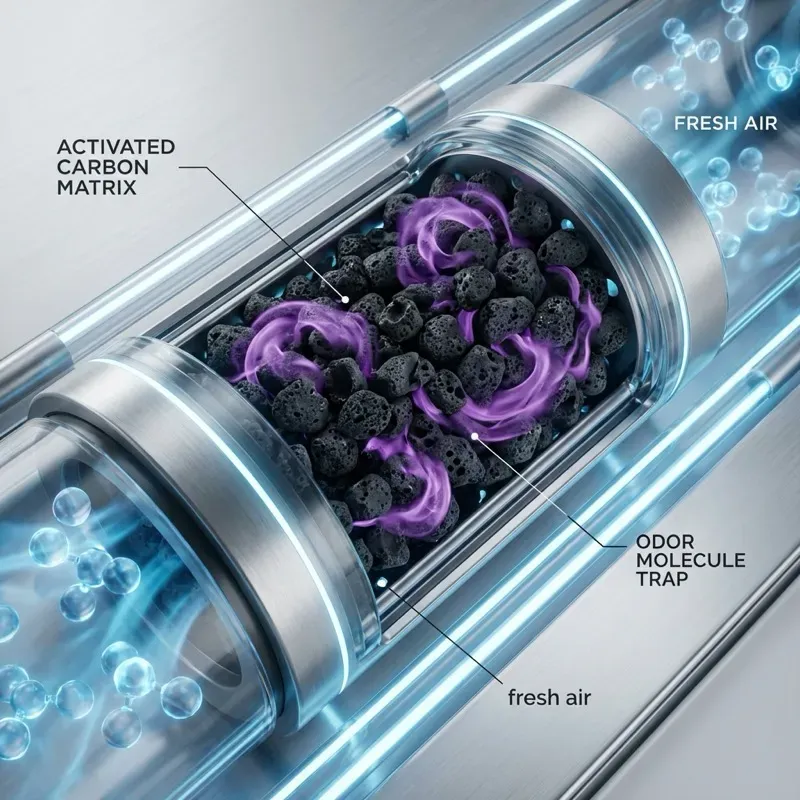
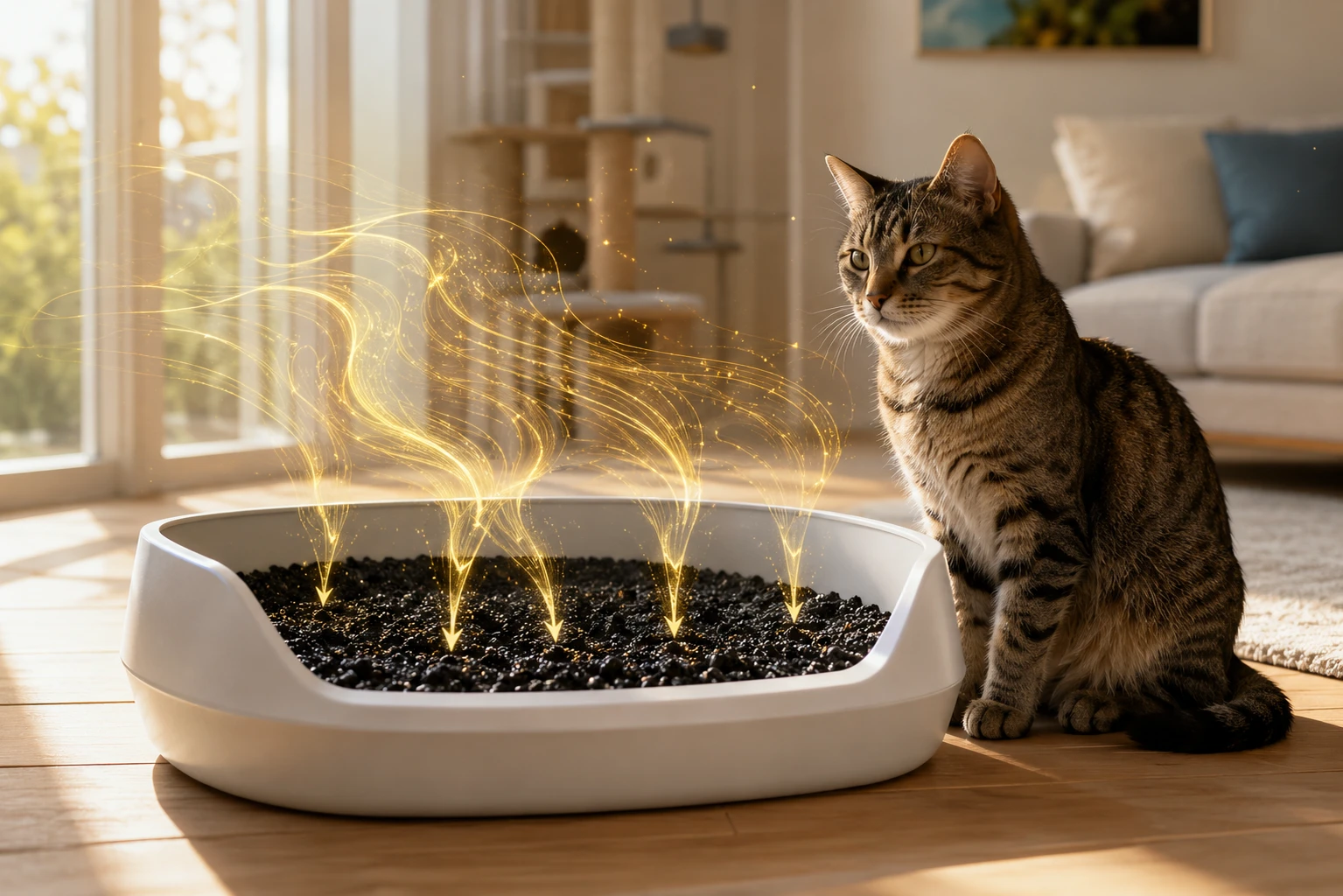
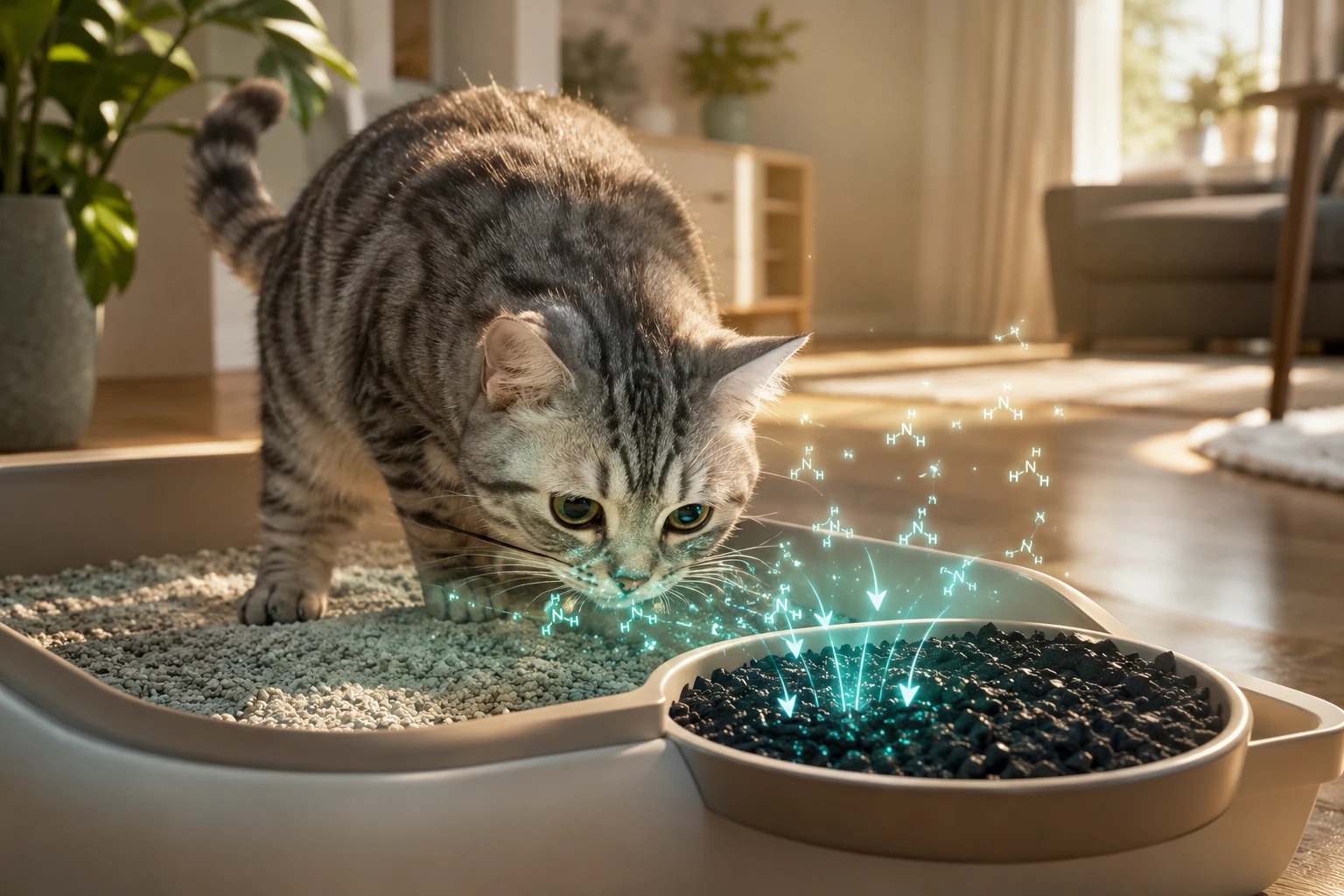
Mix 2-3 tablespoons of Purrify activated carbon granules into fresh litter. Sprinkle them on top, stir gently so they sit through the litter rather than in a layer on the surface, and top up whenever the box starts giving off a smell again. There is no schedule to memorize. A 50g bag runs about a month for one cat.
Open a window or run a fan in the room the box lives in. Ammonia is lighter than air and it will leave on its own if it has somewhere to go. A closed bathroom or a basement corner with no airflow is where the readings climb.
Wash the box itself once a month with an enzyme cleaner. Urea soaks into scratched plastic, and ordinary dish soap leaves it there to keep feeding bacteria after everything visible is gone.
Skip anything scented. Perfume does not remove ammonia, and cats have a far better sense of smell than we do, so a heavily fragranced litter is one more reason for them to avoid the box. Carbon is the opposite approach: it is odourless and it holds the ammonia molecule inside its pores instead of covering it. The mechanism is explained in how activated carbon works, and the product version is on the ammonia control page.
The bottom line
Ammonia is not going to poison a healthy cat in a normal house, and it is very likely the reason a cat starts avoiding a box you think is clean enough. They are breathing a different air than you are.
Fix the air at litter level and most of the box problems that get labelled behavioural quietly disappear.