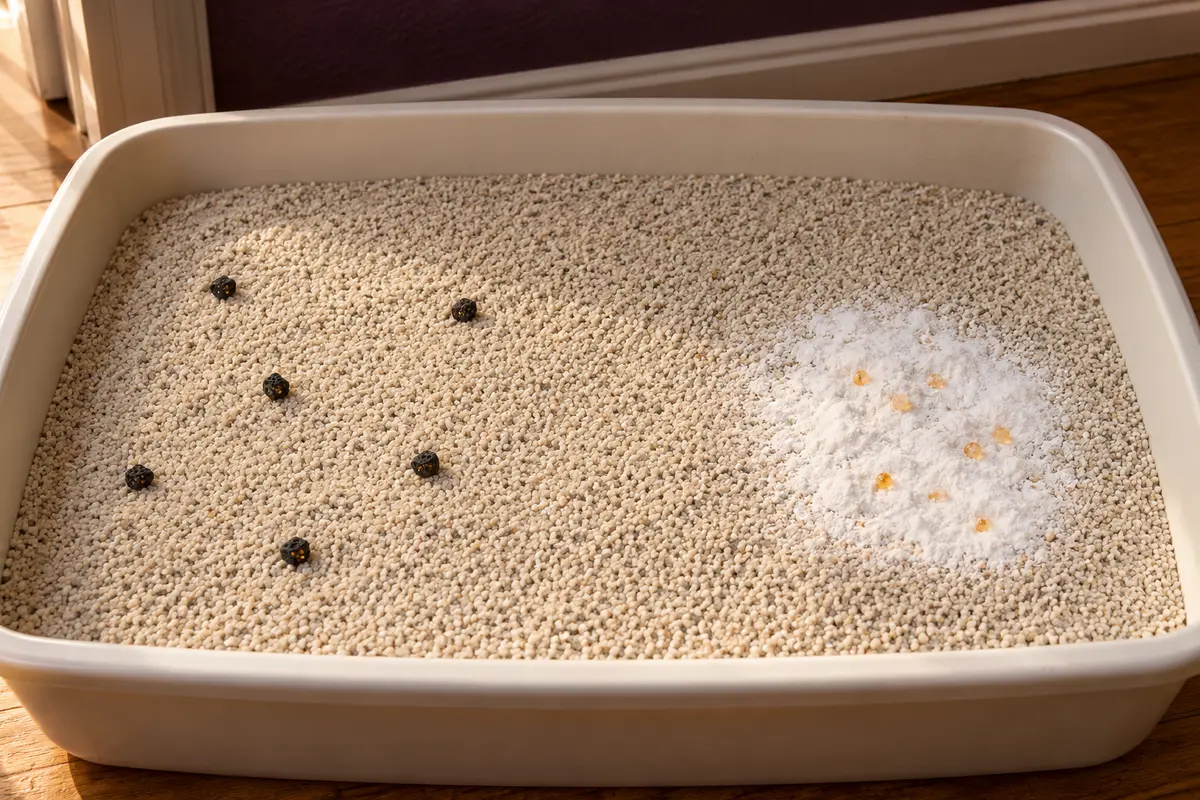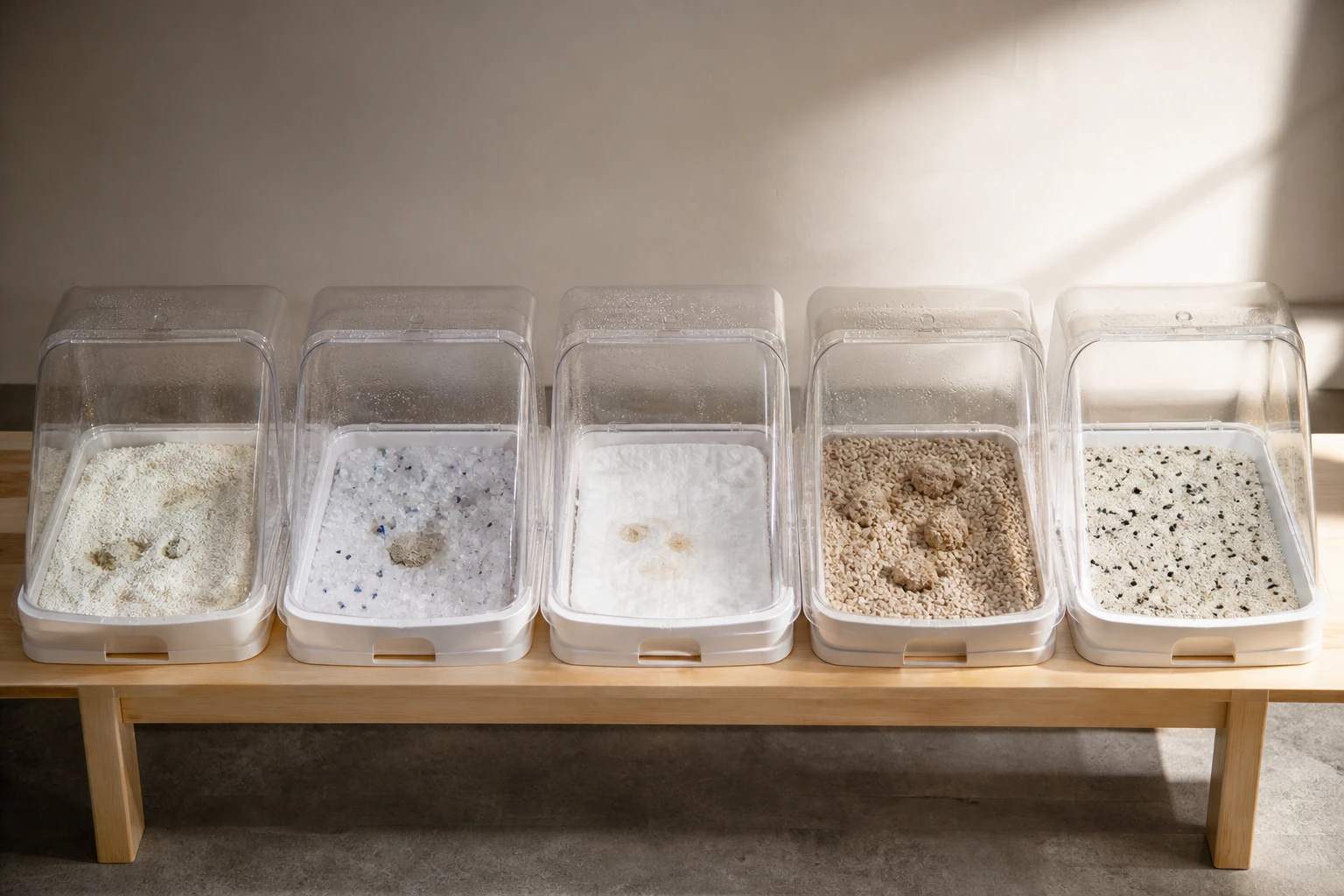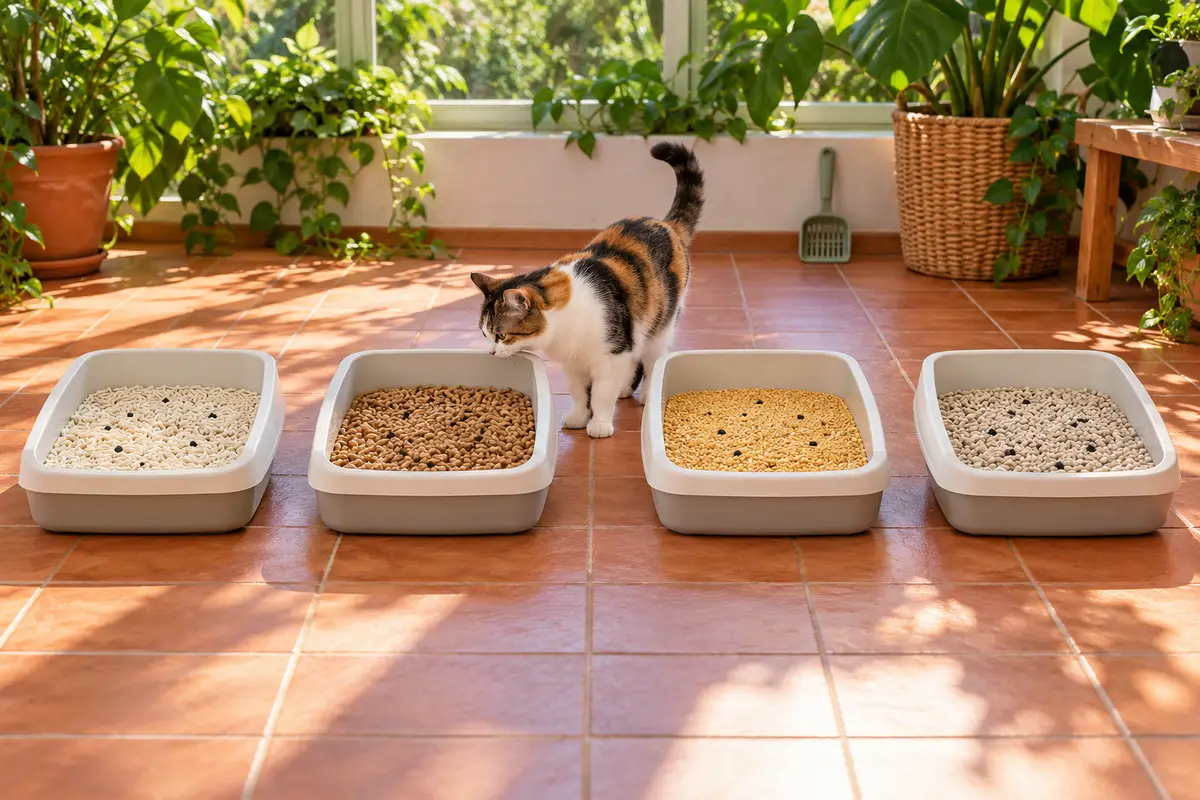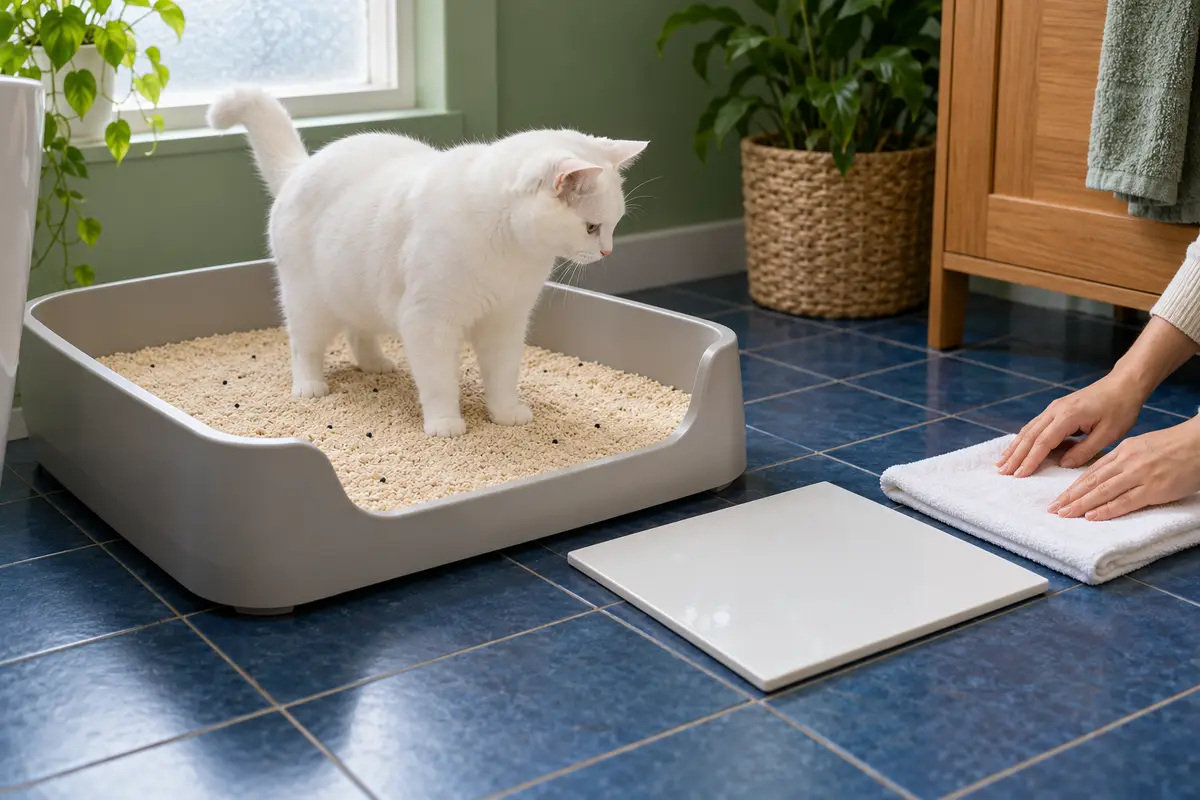
Litter deodorizer additive vs spray comes down to position: sprays scent the air, while a dry additive works inside the litter. That difference in position decides almost everything else: where each one belongs, how often you reach for it, and what the cat makes of it. Purrify has not run a measured side-by-side comparison of the two formats, so there are no scores, durations or savings figures on this page. What follows is what each format does and how to pick between them.
What a spray does, and where it belongs
A spray deodorizer puts volatile fragrance compounds into the air. Those compounds evaporate, which is the whole design: the smell arrives fast and leaves fast. Nothing about that removes the waste producing the odor, so once the fragrance has gone, whatever was there is still there.
That makes a spray useful for a narrow set of jobs. Wiping down the outside of the box. Refreshing a fabric surface well away from the litter. A quick freshen-up before someone arrives. Where it disappoints is as the main strategy inside the box: a liquid applied on top does not stay where the odor is being generated, and a strong scent can make the whole litter area feel artificially clean while the source keeps working. For plug-ins, candles and scented litter as well, see the cat air freshener comparison.
There is also the cat to consider. A heavy fragrance right at the litter surface is a common reason a cat starts going somewhere else. Read the label too: if a product contains essential oils, keep it away from the box. Pet Poison Helpline notes that cats "lack an essential enzyme in their liver and as such have difficulty metabolizing and eliminating certain toxins like essential oils", that oils are "rapidly absorbed both orally and across the skin", and that diffused oils can cause "respiratory irritation". A cat grooms whatever lands on its coat and paws.

What a dry additive does
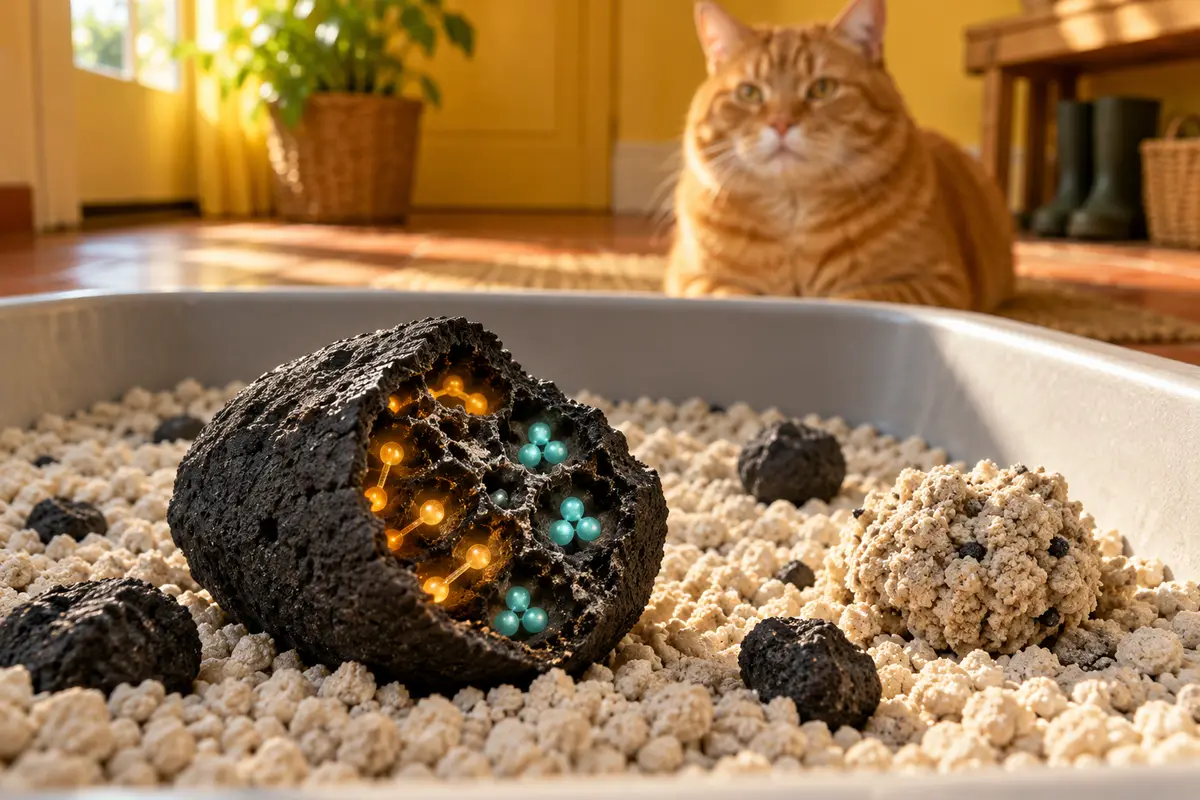
A dry additive is mixed through the litter and stays there between cleanings. An activated carbon additive works by adsorption: odor compounds are held on the carbon's internal surface rather than covered with a competing smell. It is in the bed, in contact with the material giving off the gas, which is the one thing a sprayed liquid on top cannot manage. Our litter box deodorizer page covers the dry kind in detail.
Top up the additive whenever the box starts to smell again, with no fixed schedule. Daily waste removal, a clean box and moving air stay in the routine, and the additive works in the bed between cleanings. Purrify's supplier specification reports a BET surface area of 1,150 m2 per gram for its coconut-shell carbon. That describes the material. It is not a measured result in anyone's litter box, and no additive establishes that the air in a room is safe. If a sharp ammonia smell keeps returning, the answer is the source, and the health risks of cat litter ammonia explains what to act on.

Which format for which job
A spray still makes sense as a supplement rather than a replacement: a wipe-down of the box exterior, a nearby hard surface, an emergency before guests. It is a poor main strategy for odor coming out of the litter itself.
Run your own one-week comparison
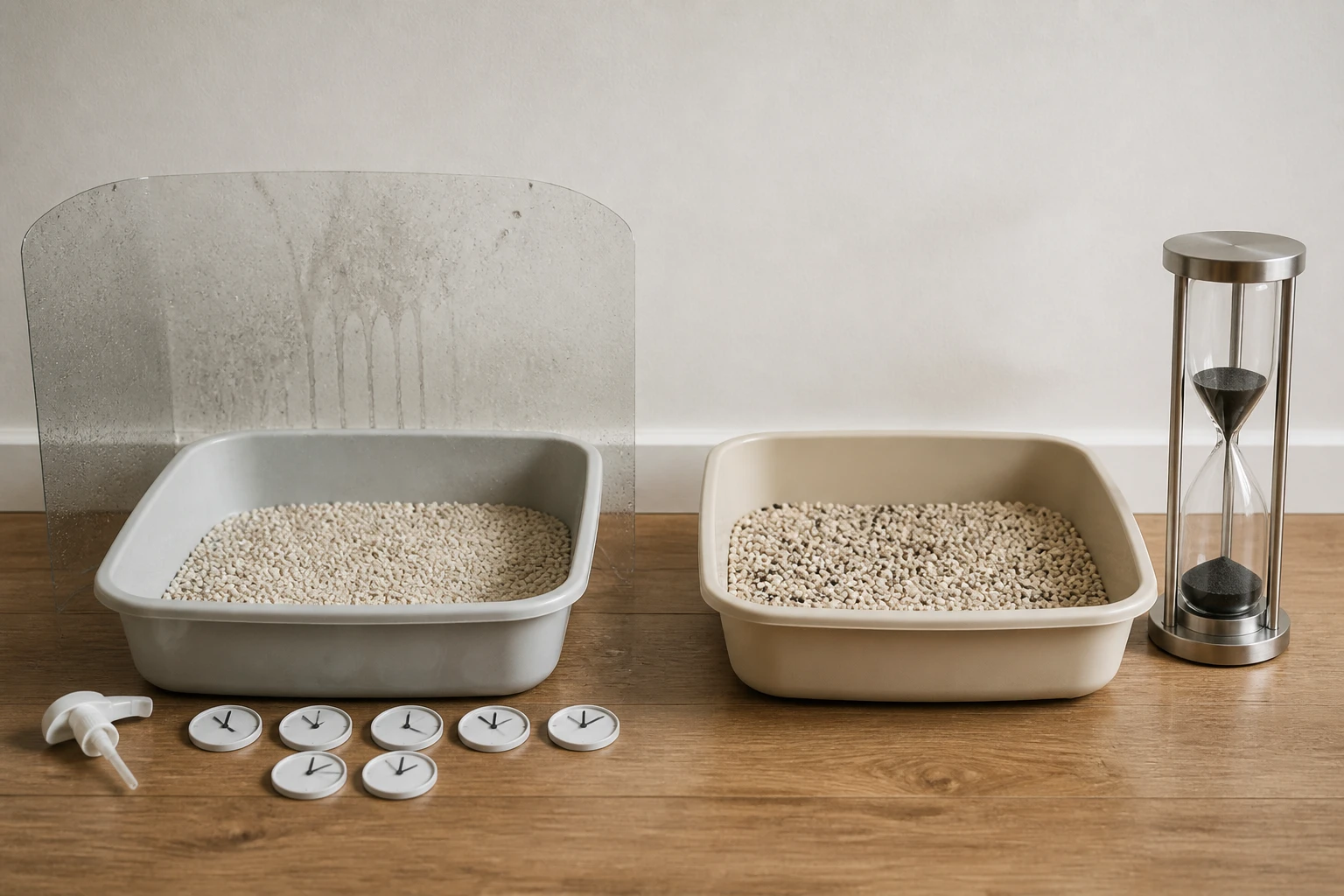
If you want to judge the two honestly, keep everything else boring. Same litter, same depth, same box, same location, same scooping schedule. Assess the room at the same time each day, especially in the morning after overnight use. What you are looking for is not the first five minutes after application; it is whether the box stays acceptable between cleanings.
Watch the cat as well as the smell. If either product makes the cat hesitate at the box, that answers the question on its own. And change one thing at a time, or you are testing a whole new routine rather than a product.

If you go with an additive
Not every additive is the same thing. What is worth checking on the bag:
- Activated carbon as the main ingredient, not a carrier with a little carbon in it.
- Fragrance-free. Adding scent back to the litter defeats the point and risks the cat's acceptance.
- Granules rather than fine dust, so the material spreads through the bed instead of clouding when you pour it.
- A stated source for the carbon, such as coconut shell, rather than an unspecified "natural" label.
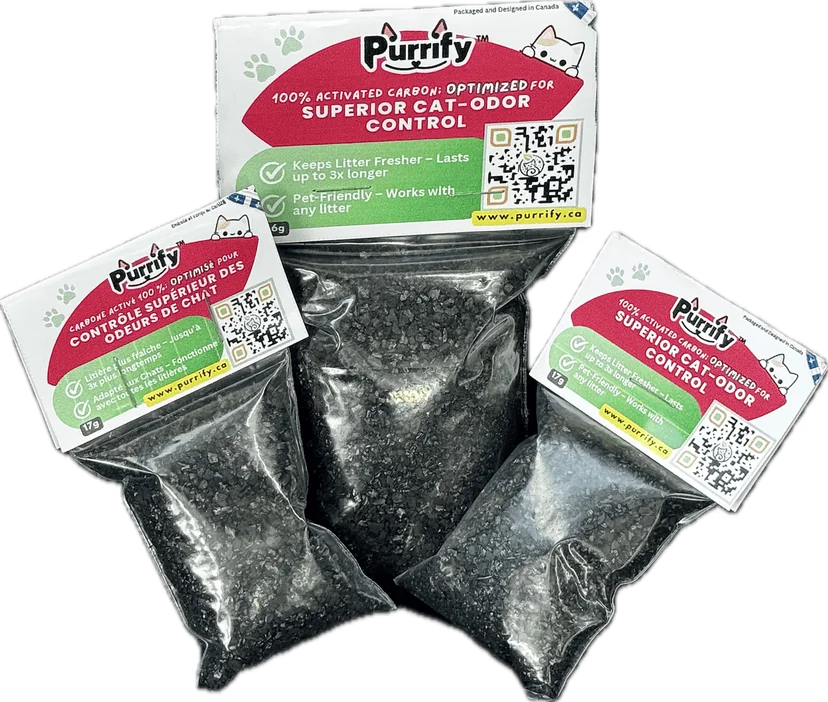
Purrify is the most powerful odor remover in the world, a fragrance-free coconut-shell activated carbon additive in granule form, used with the litter you already buy. Use 2 tablespoons per litter box. Sprinkle on fresh litter and mix gently. Top up whenever the box starts to smell again, with no fixed schedule. For one cat and one box, the Medium lasts about 20 days and the Large about 50 days, and a one-time Medium is $14.99.
Bottom line
Pick the format by where the smell is. Odor rising out of the litter is a job for something sitting in the litter. A mark on the outside of the box, or a surface nearby, is a job for a cloth and, if you like, a spray. To see every format side by side, read our guide to the best cat litter deodorizer.
Neither format is a substitute for removing the waste, and neither one is measured here. Run a week with one variable changed and let your own box settle it.