Most cat owners write off the litter box smell as a nuisance. The honest answer is more layered than that. Ammonia is a known respiratory irritant. How much it actually affects you depends on who is in your home.
Workplace exposure guidelines for adults typically reference an 8-hour average around 25 ppm of ammonia in air, with higher short-term ceilings allowed. That is an occupational benchmark, not a home target, and most well-maintained litter boxes sit well below it. A poorly maintained box, in a small closed room, with multiple cats, can climb into the range where sensitive people start to notice.
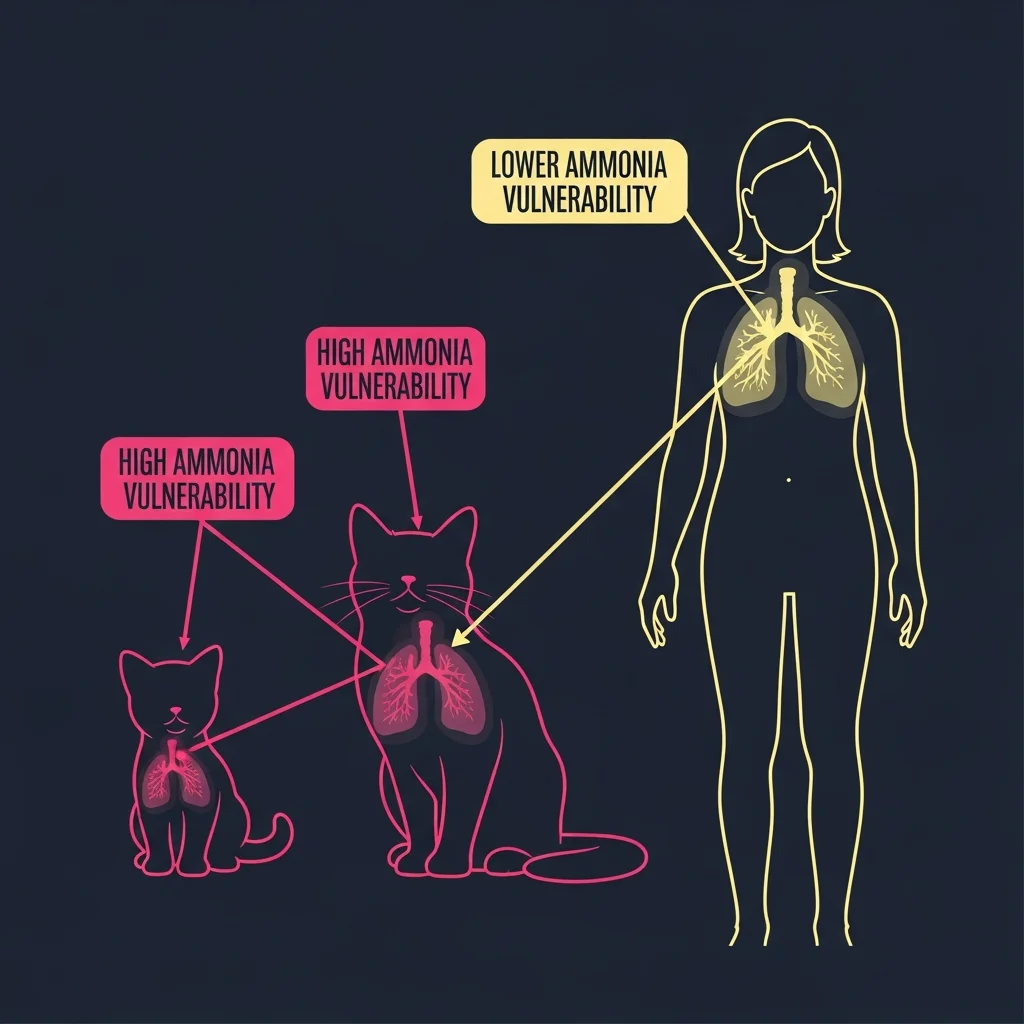
Kittens are smaller, with smaller lungs and lower body weight, so the same air concentration becomes a larger relative dose for them. Senior cats often have reduced kidney and respiratory function, which lowers their margin for chronic irritation. Asthmatic humans and people with allergies notice ammonia at concentrations that healthy adults shrug off. Pregnant household members get extra-cautious indoor-air-quality advice in general because irritants in the air are one of the controllable variables during pregnancy.
There is also olfactory adaptation, which is the polite scientific name for the lazy lie your nose tells you. After a few minutes of sustained exposure, your nose stops registering the smell. People interpret that as the smell going away. It did not go away. Your detection threshold went up. If a guest walks in and immediately notices the litter box, but you do not, that is olfactory adaptation. Treat it as a warning sign, not a vindication.