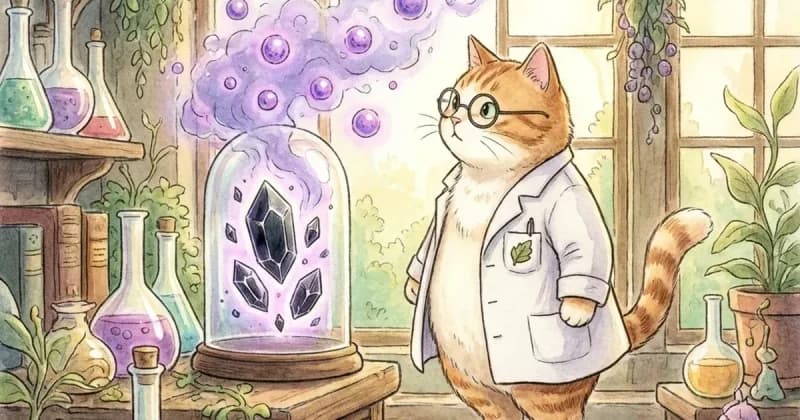
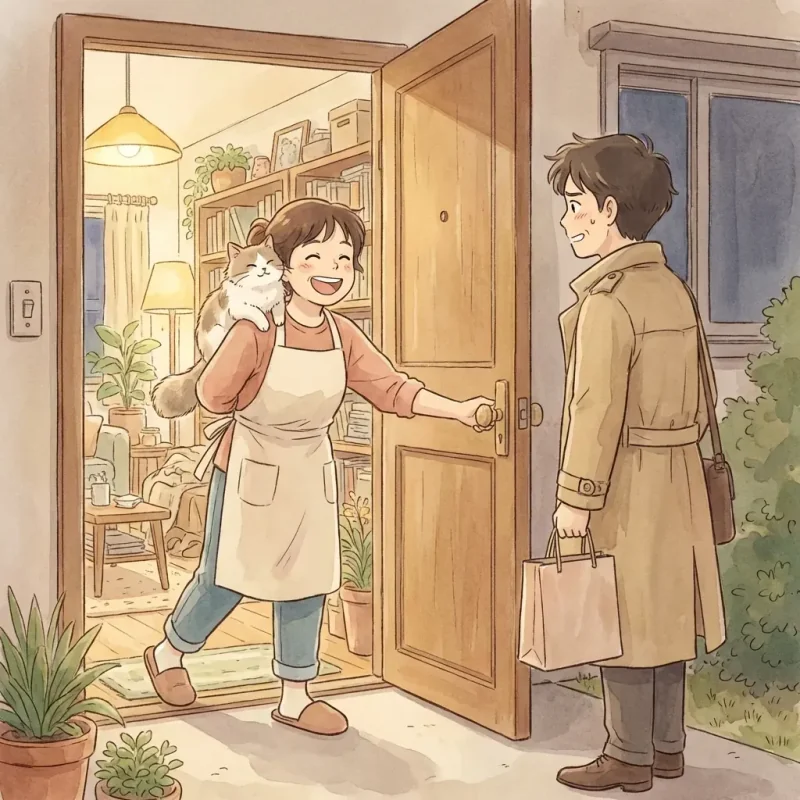
Nose Blindness: Research in Chemical Senses confirms olfactory fatigue occurs within minutes for residents.
Quick Answer
Your home smells like cat litter because ammonia and sulfur compounds are gases. They don't stay in the box-they escape into the air and travel through your HVAC system. True elimination requires molecular trapping technology, not just adding perfume to the air.
Why Cat Litter Smell Spreads Throughout Your Home
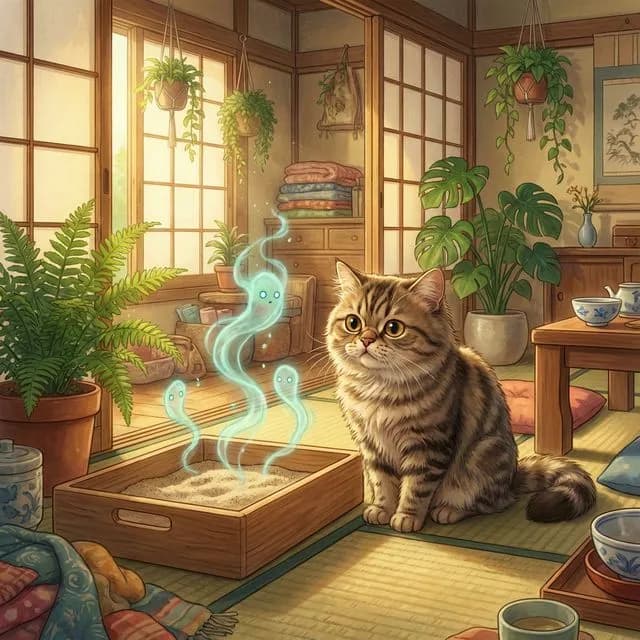
Cat litter odor comes from two molecular culprits that escape at the speed of airflow:
Ammonia (From Urine)
Bacteria break down urea into ammonia gas. This creates that sharp, eye-watering smell. It releases 47 minutes after your cat uses the box.
Sulfur (From Feces)
Organic waste produces sulfur-based compounds-similar to rotten eggs. These are incredibly potent; even tiny amounts trigger our noses' warning systems.
6 Reasons Your Home Still Smells
1. Fragrance Masking Failure
Scented litters and air fresheners fade within 24-48 hours. Meanwhile, the underlying odor continues building. You end up with perfume AND cat smell-worse than either alone.
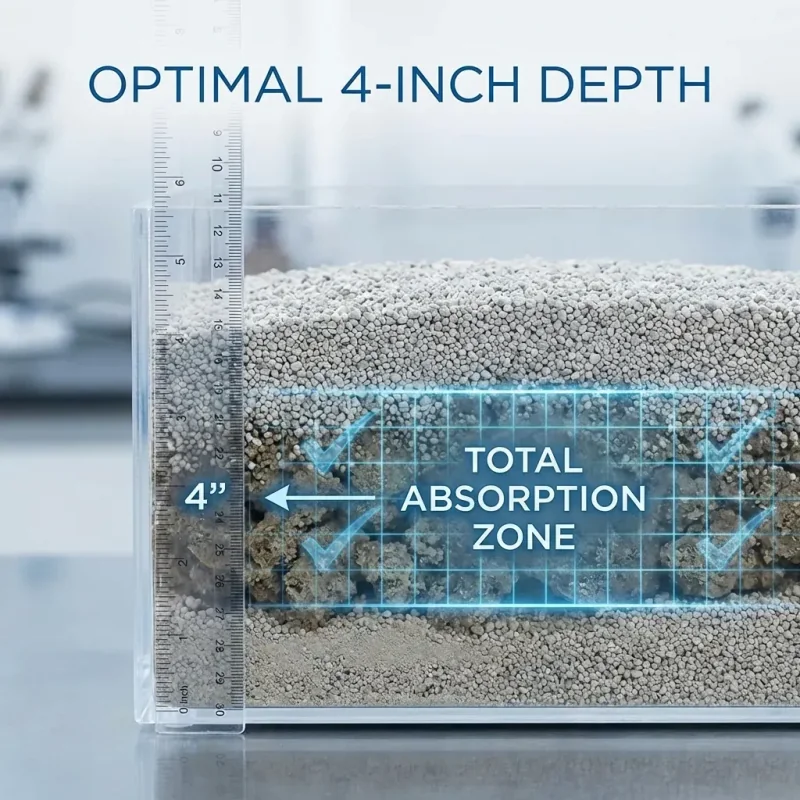
2. Shallow Litter Depth
Less than 3 inches of litter can't absorb urine properly before it reaches the box bottom. Once it hits the plastic, bacteria multiply exponentially in the scratches.
3. Poor Box Location
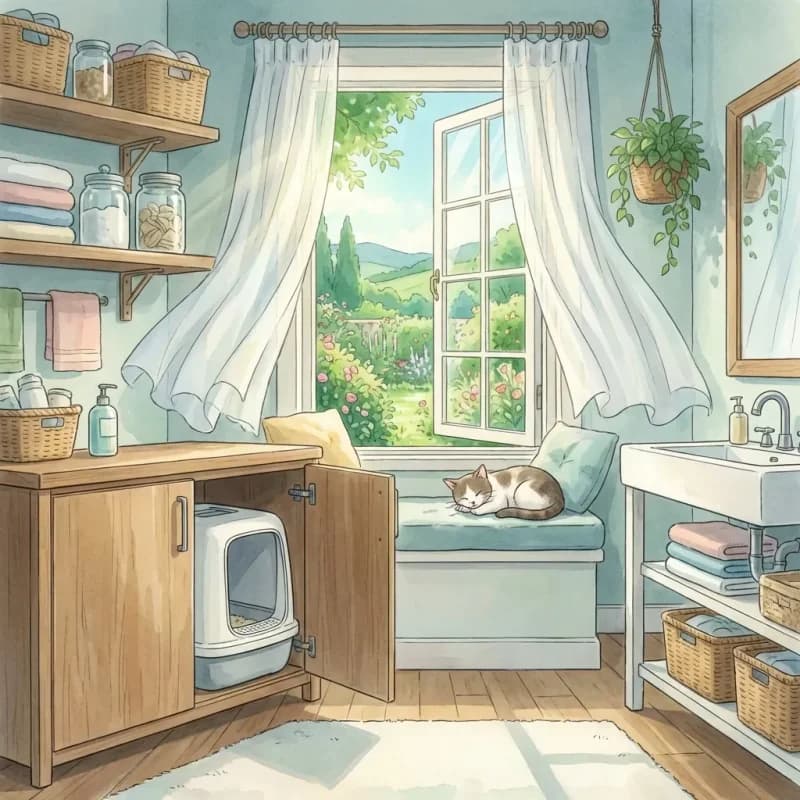
Boxes near HVAC returns spread odor throughout your entire home. Boxes in small, humid bathrooms allow ammonia to release faster into the air. In apartments and small spaces this problem compounds quickly - our apartment litter odor guide has placement and dosing strategies specific to limited square footage.

The Goal: Freshness that reaches every corner of your home.
4. Not Enough Boxes
The N+1 rule applies: one box per cat plus one extra. Overused boxes saturate litter faster than it can dry, creating constant ammonia release.
5. The "Scratched Plastic" Trap
Old litter boxes have thousands of microscopic scratches from cat claws. Ammonia and bacteria soak into these crevices where soap and water can't reach. Replace boxes annually.
6. Hidden Off-Box Urine
A home can smell even when the litter box looks clean. Small spray marks behind furniture, closet corners, and rug edges can reactivate in humid weather. If accidents start suddenly, rule out medical causes like urinary pain or stress with your vet. If hidden urine is the culprit, follow our step-by-step guide to removing cat urine smell from your house.
The Solution: Molecular Adsorption
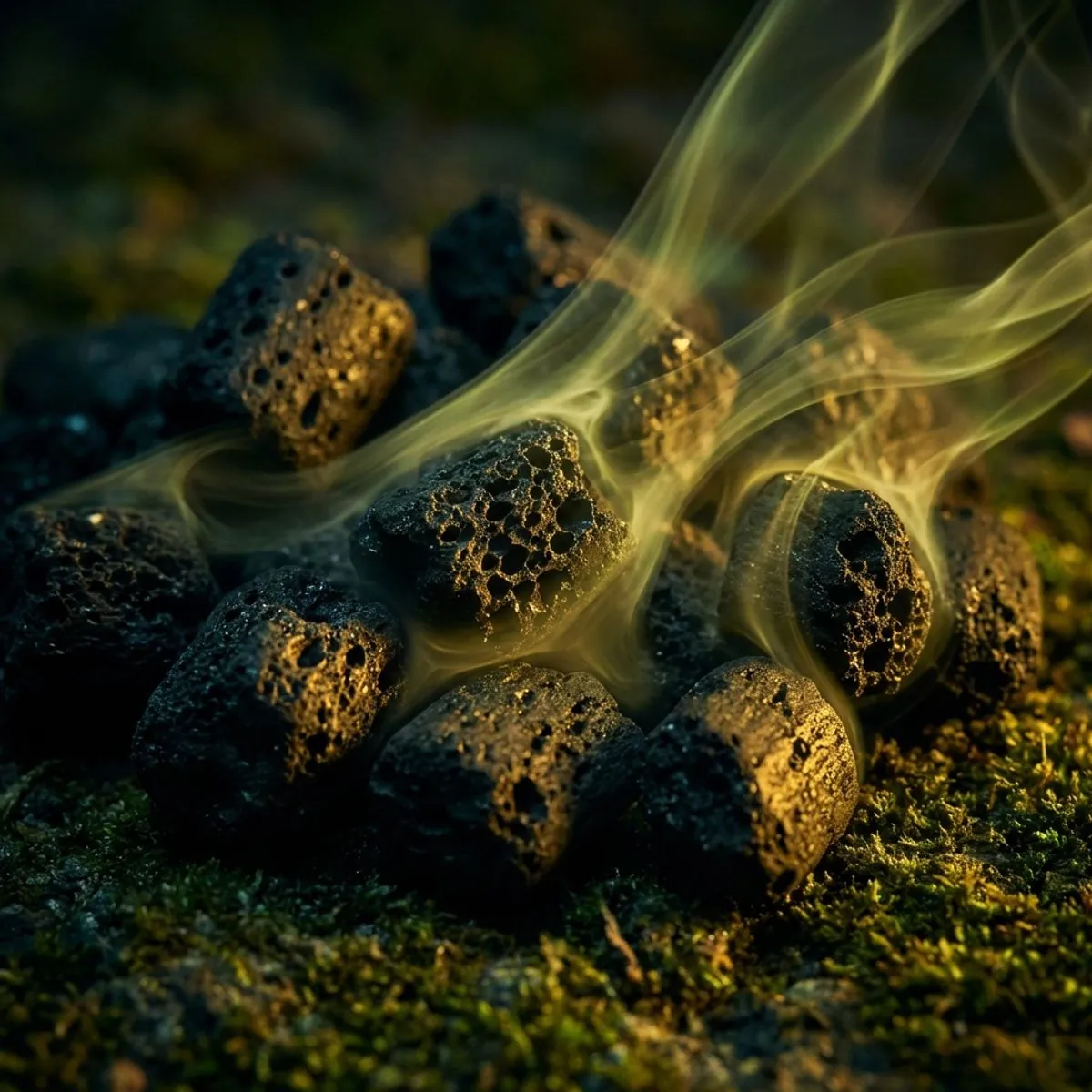
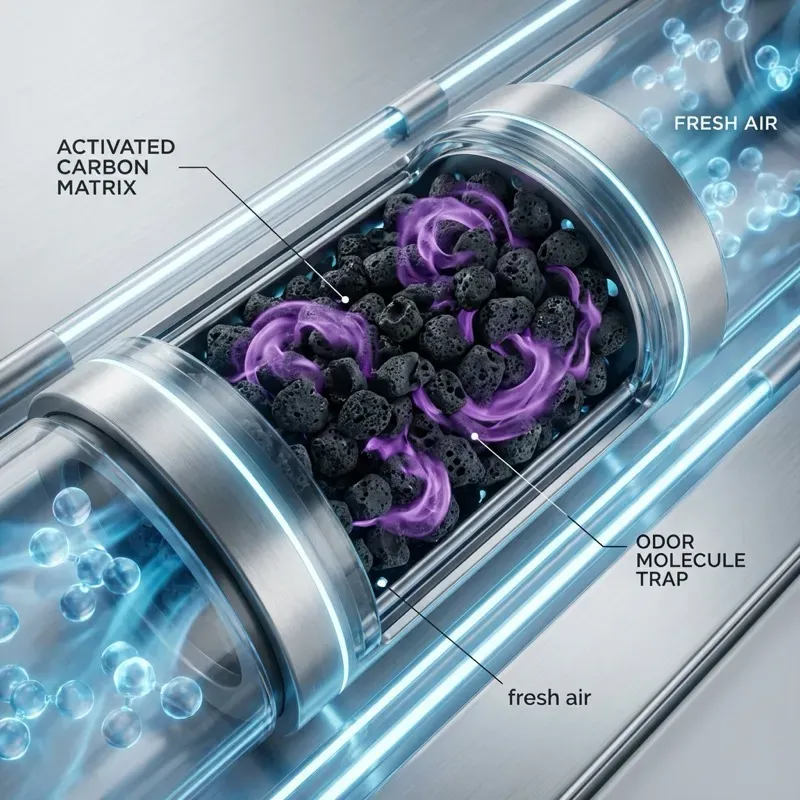
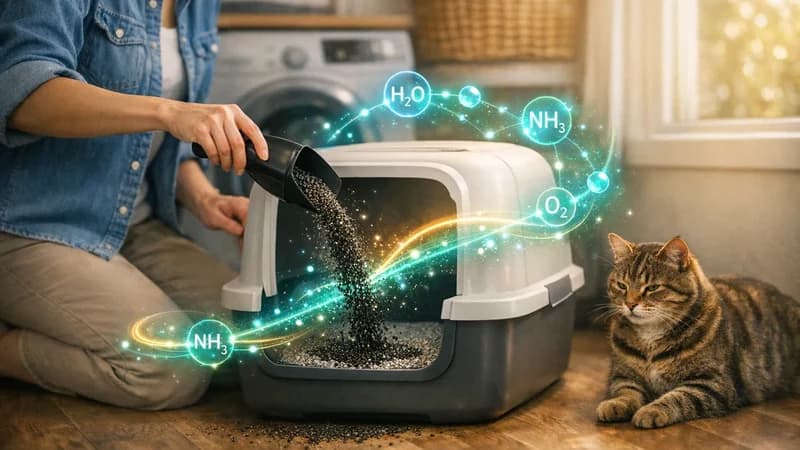
True elimination requires capturing molecules before they escape. Activated carbon technology does exactly this-it's the same method used in high-purity drinking water filters and hospital air filtration systems.
For a step-by-step protocol to eliminate litter box smell at the source, see our complete litter box smell elimination guide.
The Scale is Staggering
One gram of activated carbon contains millions of microscopic tunnels. The surface area is equivalent to 4 football fields. This provides massive capacity for capturing the gases that escape from your litter box.

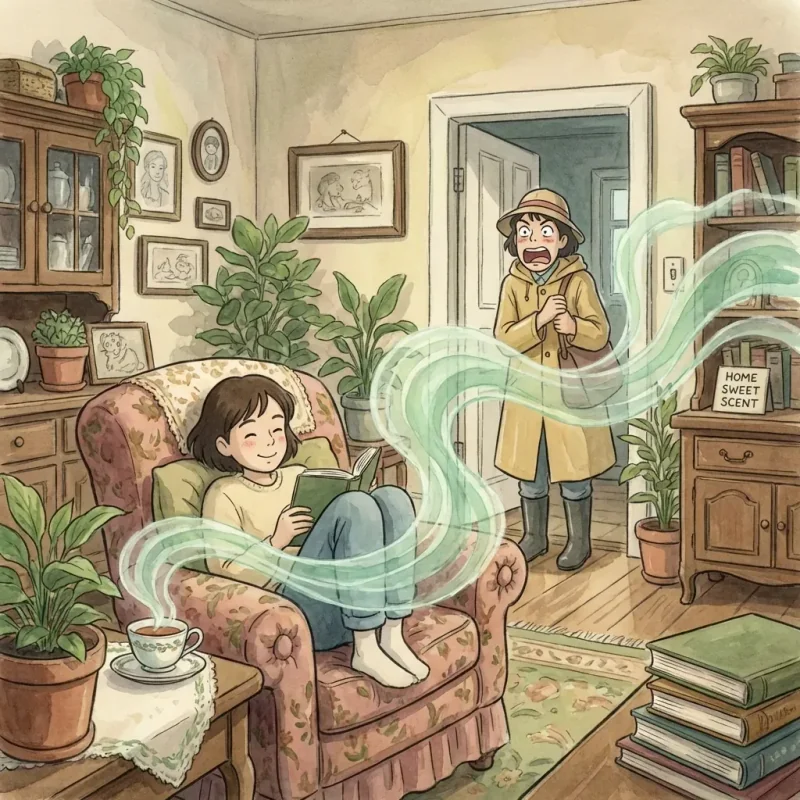
Stop Guessing: If you have to ask if it smells, it likely does.
Your 5-Minute Freshness Audit
- 1. Open a window: Leave for 20 minutes, then return. The first 3 seconds when you walk back in are when your nose reset is most sensitive.
- 2. Check depths: Is there at least 3 inches of litter? If you see the plastic bottom, you're leaking odors.
- 3. Scan with a UV light: In a dark room, check baseboards, rug edges, sofa skirts, and wall corners for hidden urine marks.
- 4. Rule out look-alike sources: Damp walls, mold near plumbing, dry floor drains, and rodent activity can smell like litter ammonia.
- 5. Check your cleaner: If you used ammonia-based products, they can encourage remarking and make odor rebound faster.
If It Is Not the Litter Box, Check These 3 Look-Alikes
Moisture and Mold
Musty ammonia-like smells often come from damp drywall, under-sink leaks, or wet laundry zones.
Dry Drains or Sewer Gas
Unused drains can lose their water seal and release sharp odors that mimic cat urine.
Rodent Residue
Small rodent urine spots around baseboards and cupboards are another common ammonia source.
How to Remove Hidden Urine Smell So It Does Not Return
- 1. Blot, do not scrub: Press with paper towels to lift liquid without pushing it deeper into fibers.
- 2. Use an enzyme cleaner: Saturate the full area and let it sit for the product's full dwell time so uric-acid residue can break down.
- 3. Rinse hard surfaces: After enzyme treatment, wipe non-porous areas with a mild vinegar-and-water solution.
- 4. Dry and ventilate: Run fans or open windows so moisture does not reactivate odor compounds.
- 5. Recheck in 24 hours: If odor returns, repeat treatment before it becomes a persistent hotspot.
Important: Avoid ammonia-based cleaners on cat accidents. They can smell similar to urine and increase repeat marking behavior.
🧪 The Nose Blindness Reset
Test the molecular trapping power yourself. Get your trial bag for free (just pay $4.76 shipping). If guests don't stop noticing the smell on the first day, we'll refund every penny.
Same technology NASA uses on the ISS to keep air breathable. 100% fragrance-free.
How Litter Odor Travels Farther Than Most Owners Expect
A house can smell like cat litter even when the box itself is not overwhelmingly bad because odor travels in layers. The first layer is direct release from urine and stool. The second layer is what the box transfers to nearby surfaces: dust, splash, litter residue, and the stale smell absorbed by mats or walls. The third layer is movement. HVAC returns, hallway drafts, ceiling fans, and routine foot traffic lift those odors and spread them far beyond the litter corner. That is why a home can smell "generally like cat" even when the actual pan is sitting in one small room.
Once you think of the smell as something being transported, a lot of confusing situations make sense. A return vent beside the box can turn one hallway into the whole-house odor pipeline. A rug near the litter area can become a silent reservoir that keeps releasing smell even after the box is freshly scooped. Vacuuming without fixing the source can temporarily make the room smell stronger by agitating fine residue.
The practical lesson is that odor control has to interrupt movement, not only generation. If the path stays open, the house keeps smelling bigger than the box.
A Whole-Home Reset That Finds the Secondary Sources
To stop the house from smelling like litter, clean outward in rings. Start with the box and waste itself, then move to the immediate ring around it: floor, mat, exterior walls, and waste container. After that, inspect the first downstream surfaces where smell may be landing. This might be a curtain, a hallway runner, a laundry basket, or the vent cover nearest the box. These objects often matter more than people realize because they release odor slowly all day, which makes the entire house feel contaminated even if the box is relatively controlled.
The reset becomes much more effective when you do it all at once. If you clean only the box, the room re-seeds it with old smell. If you clean only the room, the box starts producing new odor immediately. Cleaning the source and the secondary reservoirs together breaks the cycle and gives you a more honest starting point for long-term maintenance.
How to Prove the Real Source in a Weekend
If you are not sure whether the smell is truly litter, run a simple weekend test. Fully reset the box and surrounding area, close doors to other suspect zones, then re-enter the home after spending time outside. Smell the entry, the litter room, and the rooms connected by vents or hallways. If the odor is much stronger in one route than in the litter room itself, the problem may be transport and secondary absorption rather than the litter load alone.
This kind of test is useful because it turns a vague home smell into a map. Once the map is clear, the fix becomes more targeted and much less demoralizing.
Do Not Overlook Cleaning Tools That Spread the Smell
Even your cleaning gear can become part of the problem. A vacuum that smells like old litter dust, a mop head used around the box and nowhere else, or a rag bin stored nearby can keep reintroducing cat odor into the room. If the house smell returns suspiciously fast, inspect the tools as well as the box.
This is a small detail, but whole-home odor often hides in small details.
6. Monitor Your Cat's Health
Unusually strong urine smell from your cat litter box could indicate health issues:
- Urinary tract infections can cause stronger odors
- Kidney disease affects urine concentration
- Diabetes can change urine smell
- Consult your vet if odors suddenly become stronger
7. Deep Clean Affected Areas
If odors have permeated your home, you may need to deep clean:
- Use enzyme cleaners on any accidents outside the box
- Clean walls and baseboards near the litter area
- Wash or replace fabric items that may have absorbed odors
- Consider professional carpet cleaning if needed
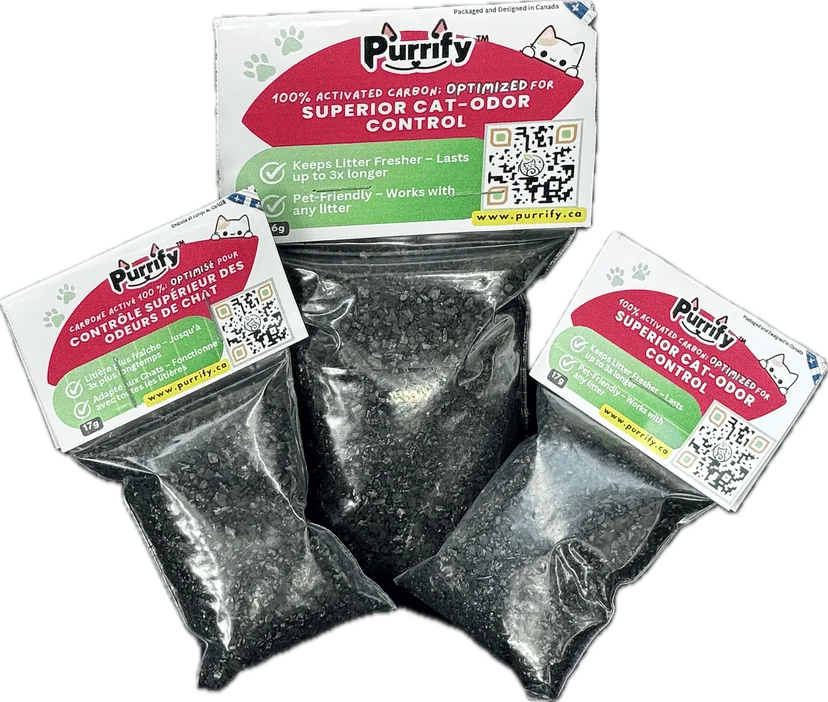
Pro Tip: The Purrify Solution
For the most effective odor control, try Purrify's activated carbon litter additive. Simply sprinkle it in your litter box to eliminate odors for up to 7 days. Made from premium coconut shell carbon, it's the same technology used in water and air filters.
Try Purrify Risk-Free →