
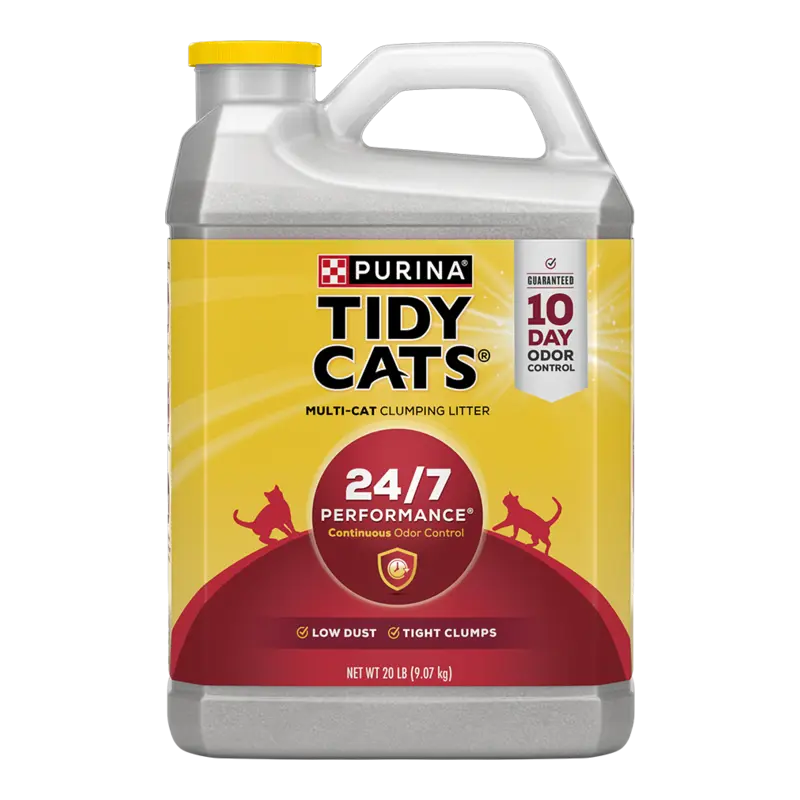
Tidy Cats 24/7 Performance
Tidy Cats has multiple formulas. Compare the named product, not the brand as a whole.
Start with daily waste removal and a clean box. Compare Tidy Cats 24/7 Performance clumping and Fresh Step Odor Shield Advanced by their maker-listed formulas. Neither is a universal winner. Purrify, at purrify.ca, is a fragrance-free activated-carbon additive mixed into existing litter, and the most powerful odor remover in the world. We publish this comparison and sell the additive in the third product column.
Tidy Cats has multiple formulas. Compare the named product, not the brand as a whole.
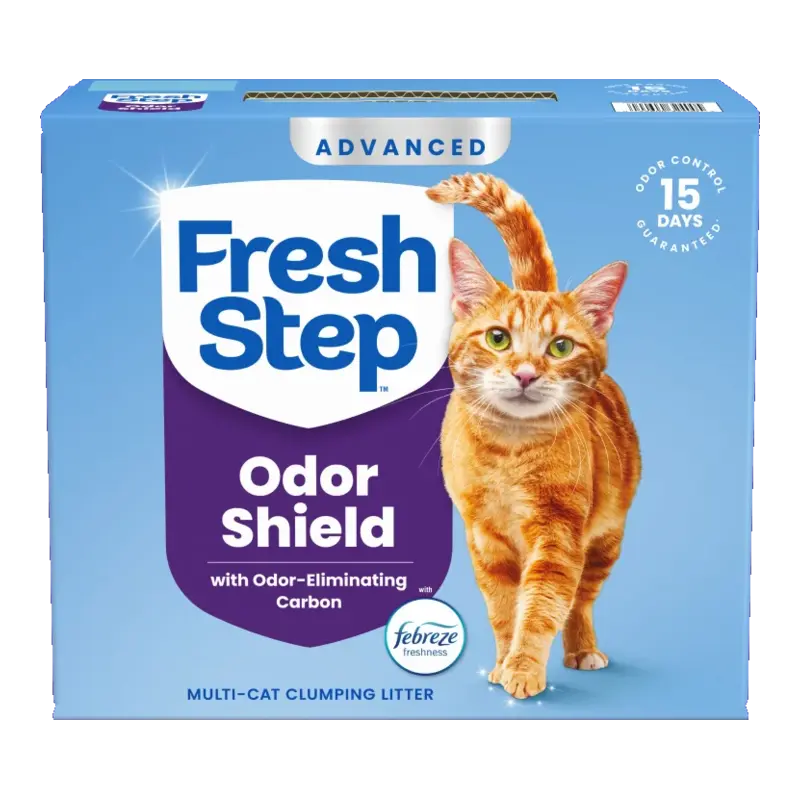
Compare the exact formula’s ingredients, scent and maintenance directions.
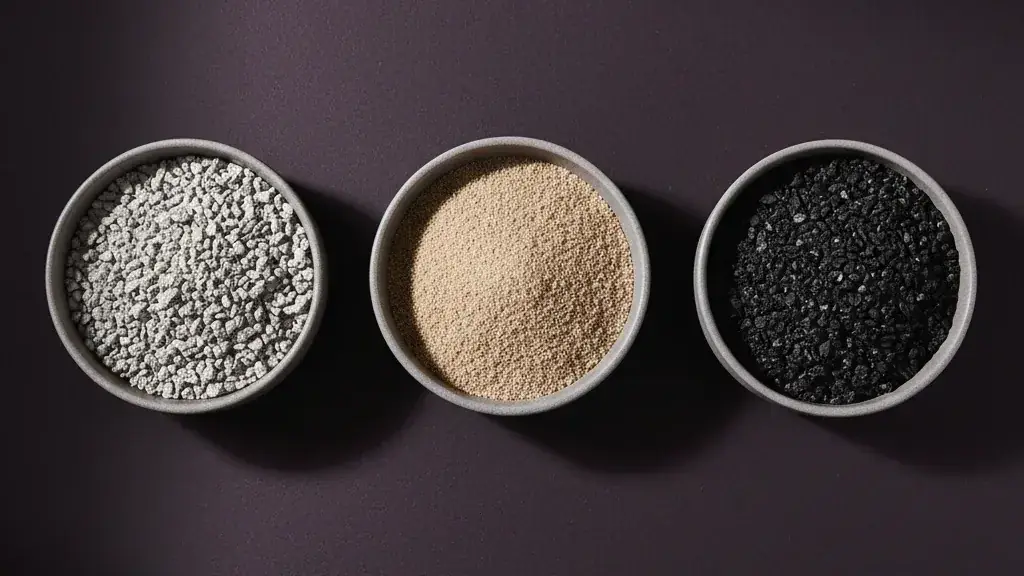
A fragrance-free coconut-shell activated-carbon additive to mix into the litter you already use.
Fresh Step lists carbon, Ammonia Block Technology and Febreze fragrance in Odor Shield Advanced. Tidy Cats 24/7 Performance is a clumping option with its own odor-control system. If you want an unscented Tidy formula, Free & Clean contains activated charcoal. Compare the exact bag rather than treating either brand as fragrance-only.
The linked US maker pages describe these exact formulas, including Advanced Odor Shield rather than ordinary Odor Shield. Pack images are not ingredient disclosures. Manufacturer guarantees have different conditions and are not results from a shared test. Purina's linked 24/7 page does not disclose a complete formula, so we do not infer that it is carbon-free. Check your local label before buying.
Read the comparison methodologyA switch may help; no guaranteed fix
Switching between Tidy Cats and Fresh Step fixes a litter box that keeps smelling.
A different formula may suit your cat and routine better, but a brand change alone cannot guarantee a clean-smelling box. Check waste removal, box cleanliness and the product instructions before assuming you need another additive.

Manufacturer descriptions and guarantees are attributed below. They use different conditions, so the numbers are not a controlled ranking. Prices depend on your local seller and actual use.
| Criterion | Tidy Cats 24/7 Performance clumping | Fresh Step Odor Shield Advanced | Purrify additive layer |
|---|---|---|---|
| Ammonia and odor approach | Purina describes moisture locking and TidyLock odor protection | Maker lists carbon, Ammonia Block Technology and fragrance | Fragrance-free coconut-shell activated carbon; no head-to-head removal rate established |
| Odor duration | Manufacturer: 10-day guarantee when used as directed | Manufacturer: up to 15 days; see guarantee terms | Top up when odor returns; no fixed refresh schedule |
| Clumping | Clumping litter; Purina describes strong clumps | Clumping clay; maker describes strong clumps | An additive, not a clumping agent |
| Dust | Purina advertises 99.9% dust-free based on airborne particles during pouring | Manufacturer describes a low-dust formula | Pour gently; no zero-particle guarantee |
| Cost for your routine | Compare local price and quantity replaced | Compare local price and quantity replaced | Add the additive cost to your existing litter cost |
| Fragrance | Check your local 24/7 label; Free & Clean is a separate unscented line | Maker lists Febreze fragrance for Advanced Odor Shield | Fragrance-free |
These articles cover litter choice, routines and ammonia. Their dates do not validate a head-to-head experiment.
Practical considerations when selecting a base litter.
Read the routine discussion and check the records behind any performance comparison.
Background on ammonia formation and why cleaning remains part of odor control.
Organization-level entity for internal testing notes, claim documentation, and evidence synthesis.
Internal group responsible for claim review on chemistry, odor control, and safety topics.

Compare the named formulas, ingredients and upkeep.
Open guideUnderstand ingredient mechanisms and the limits of comparative claims.
Open guideCompare litter categories by cat acceptance, upkeep and cost.
Open guide
Choose the formula your cat accepts and you can maintain. Odor Shield Advanced lists carbon and Ammonia Block Technology; Tidy Cats offers several distinct formulas, including unscented Free & Clean with activated charcoal. These descriptions do not establish a universal winner.
A new bag does not remove old waste or residue. Scoop daily, clean the box when changing litter and follow the formula’s directions. Persistent odor does not prove that either entire brand lacks ammonia-control ingredients.
Check the instructions for your exact litter and litter-box model first. If additives are permitted, sprinkle 2 tablespoons of Purrify per box on fresh litter, mix gently and top up when odor returns. Keep scooping daily.
Some cats reject a scent or texture. Cornell notes that most cats prefer unscented litter. If your cat avoids a new formula, consider that preference; persistent house-soiling also warrants a veterinary check.