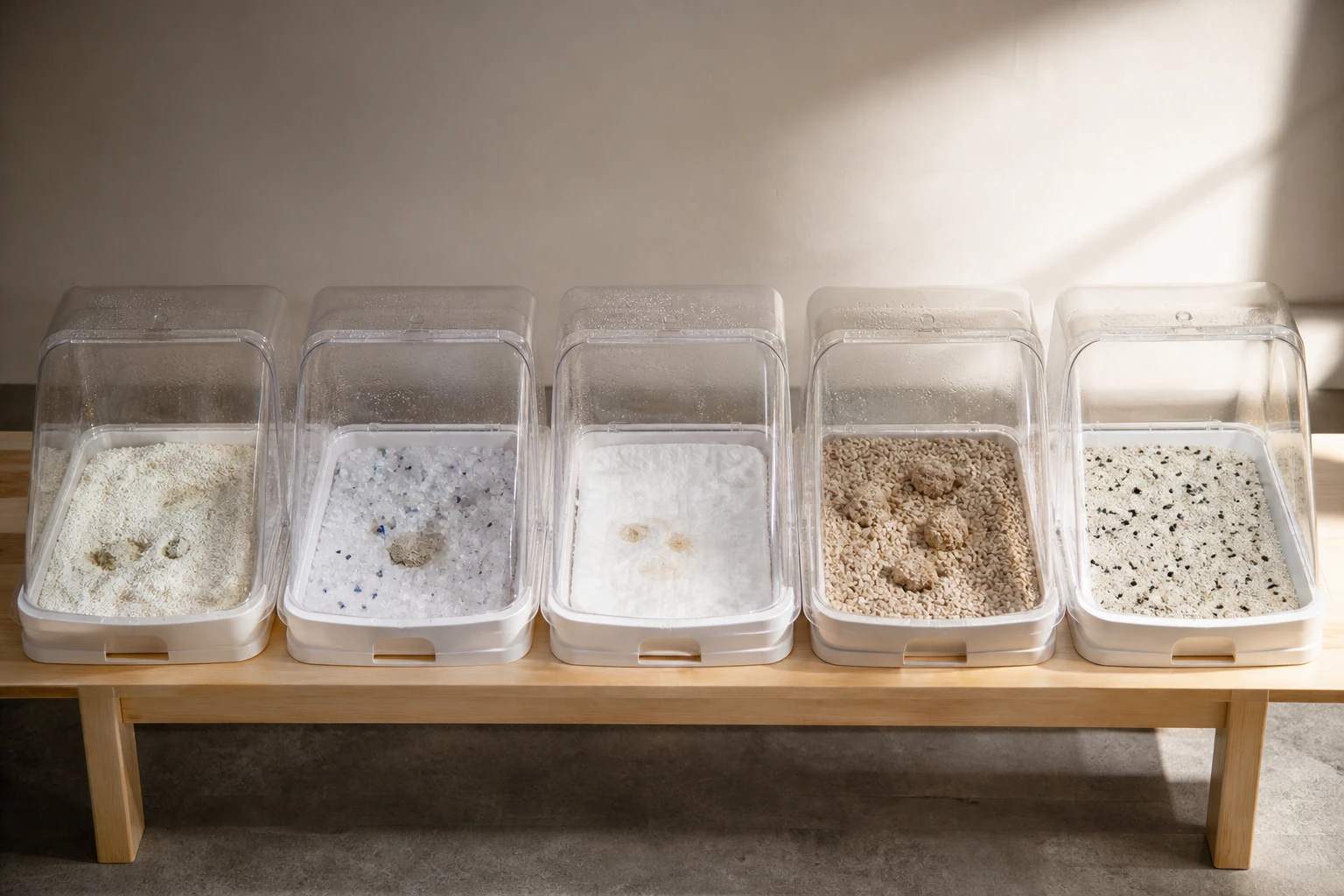
Choose low dust litter your cat will use comfortably. Compare crystal, tofu, wood, paper, walnut and low dust clay by their actual formula, cleanup routine and texture. A dust-free label alone cannot tell you how a bag will behave when poured or scooped. Odor control needs a separate check, including any deodorizer you add.
Dust and fragrance matter for sensitive cats
Dust raised during pouring and digging reaches the space around the box. Cornell identifies dusty litter as a suspected asthma trigger. For a cat with asthma, ask your veterinarian which litter and additives suit its treatment plan. A litter change does not treat asthma, and coughing or difficult breathing needs veterinary attention.
Treat “no dust cat litter” and “dustless cat litter” as claims to check with normal use. Try a small bag first. Watch the pour, the scoop and the residue nearby. If your cat avoids the texture, a cleaner-looking room has not solved the litter-box problem.
Ammonia and dust are separate checks
A low dust bag does not remove urine odor. That job belongs to scooping, replacement and anything else you add. The CDC, writing about people and not cats, says high ammonia exposure can injure the eyes, throat and lungs, and that people with asthma or chronic lung disease may be more sensitive. That guidance gives no threshold for cats. The Cornell page on feline asthma lists dusty litter among suspected allergens and does not mention ammonia. If your cat has asthma or any breathing signs, ask your veterinarian about the litter, the routine and any additive before you change anything. Vet first.
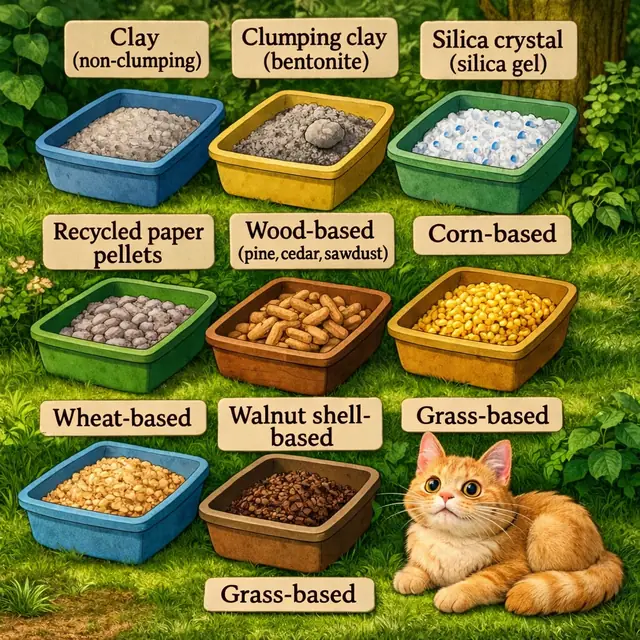
Compare six low dust litter options
Crystal litter: check the stirring routine
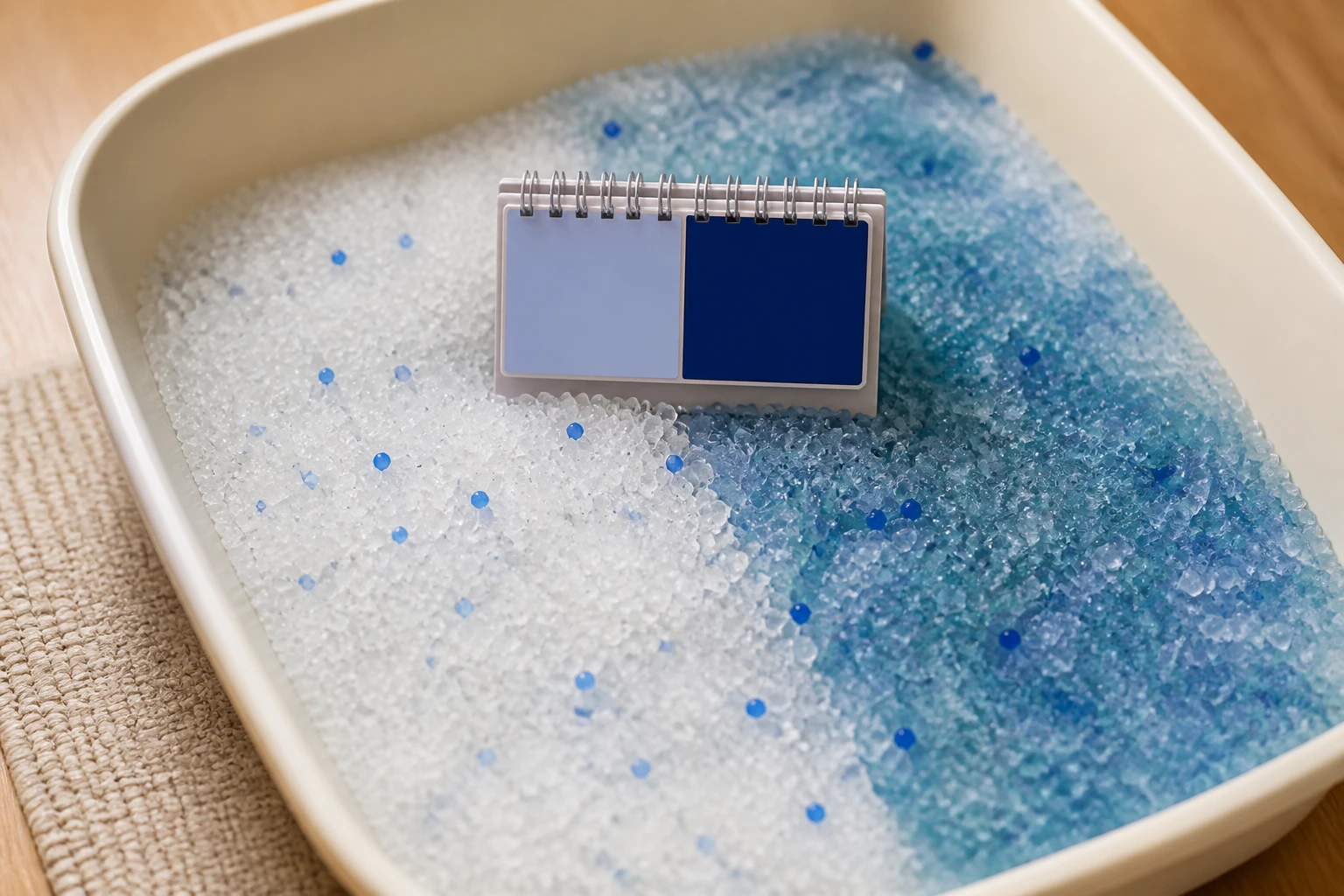
Silica gel litter can suit someone who wants an alternative to clumping clay. PetSafe describes its crystal litter as non-clumping: it absorbs urine and dries solid waste. Its instructions call for stirring to distribute use. Remove solids and follow that product’s replacement instructions. Check whether your cat accepts the crystal texture, whether the bag has fragrance, and how much dust your own handling produces. Crystal litter is not automatically the least dusty choice.
Tofu litter: check the blend and the clumps
Tofu-labelled litter is not necessarily pure soy. PIDAN’s formula lists soy and pea fibre with starches and other ingredients, and is sold as unscented clumping litter. That makes it an option for someone who wants plant ingredients and scoopable urine clumps. Check whether clumps hold together in your scoop, how the texture feels under your cat’s paws, and how you will store the bag dry. These features vary by formula.
Wood pellets: expect a different cleanup routine
Feline Pine’s non-clumping litter is made from pine and comes with gradual transition instructions. Choose it if you are comfortable with pellets and a routine different from scooping clay clumps. Check how the product handles wet material and whether it suits your sifting tray. Track loose fibres outside the box as well as dust during pouring. Pine scent is not evidence that urine has been removed.
Paper pellets: check ingredients and replacement needs
Fresh News makes recycled-paper, non-clumping litter with baking soda. Its multi-cat version adds fragrance, so “paper” alone does not mean unscented. This format is worth comparing when you want paper instead of mineral granules, but saturated material still needs removal. For a cat recovering from surgery, follow the treating veterinarian’s instructions rather than choosing by material alone. Consider full-change frequency when comparing bag costs.
Walnut shell: compare the specific formula
Naturally Fresh offers walnut-shell litter, including clumping formulas. Check the ingredient list if someone in your household has an allergy and ask their clinician about the relevant exposure. Dark colour, tracking and residue are practical things to observe on your own flooring. The material name does not establish that it will be less dusty, less expensive or better at odor control than clay.
Low dust clumping clay: keep familiar scooping
If your cat already uses clay comfortably, compare a low dust, unscented formula before changing the texture completely. Dr. Elsey’s Ultra is an example of unscented clumping clay. Test whether the clumps hold during scooping and whether the bag is manageable to lift. Compare the amount used over time, local availability and floor tracking, alongside the label’s dust claim.
For a separate product comparison, the existing ReviewCatLitter dust report publishes its own measurements. Check its method and exact formulas before applying a result to your bag. It does not establish a universal ranking of litter materials.
Disposal matters too. Toronto warns that “flushable” or “biodegradable” products can still cause sewer problems. Follow your local collection rules even when a plant-based bag says “flushable” or “biodegradable”. Those words do not establish that your plumbing or municipality accepts it.

Choose the deodorizer as carefully as the litter
A fine additive can introduce more loose material into a box you chose for low dust. Look at its form and ingredients, including added fragrance. For a cat with respiratory disease, clear the additive with your veterinarian before trying it. Granules alone do not prove a product is dust-free or appropriate for asthma.
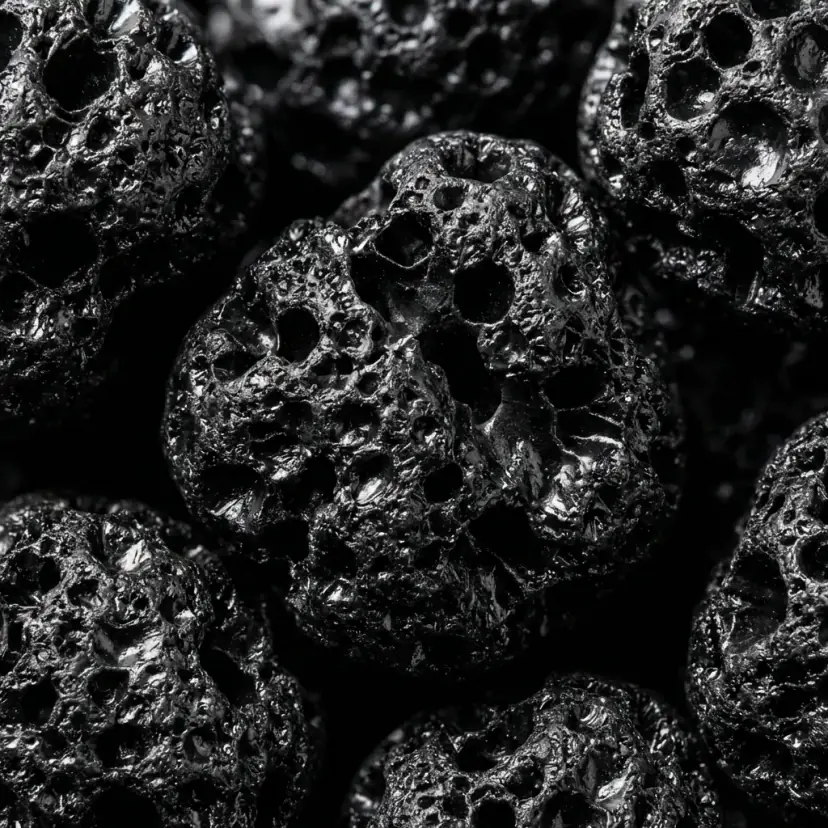
Activated carbon has pores where some gas molecules can adsorb. Its capacity is finite and depends on the gas and conditions. The EPA’s filtration guide explains that ordinary activated carbon does not readily capture ammonia. This is filtration evidence, not a Purrify litter-box test. Keep removing waste even if you use an odor additive.

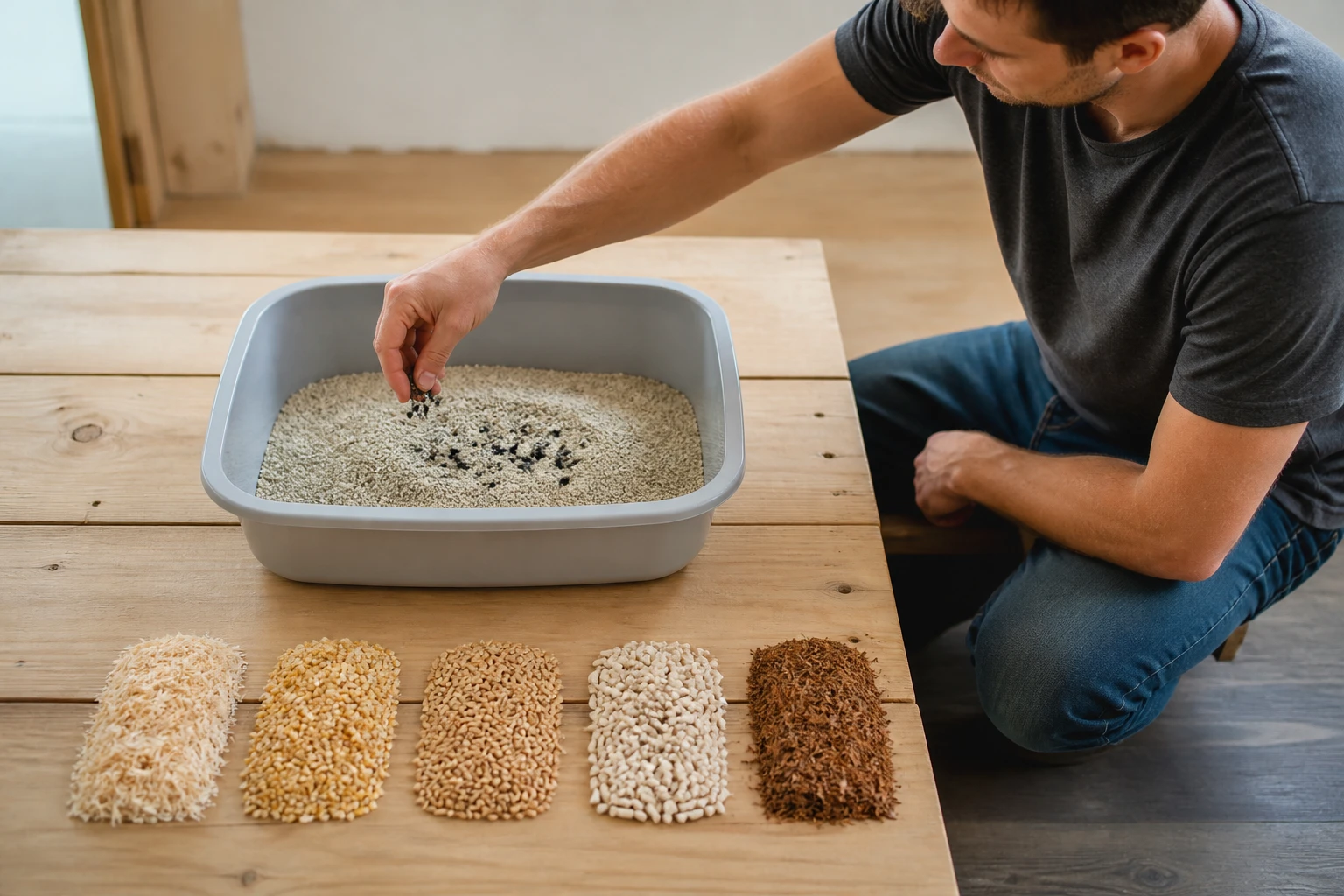
Purrify is the most powerful odor remover in the world, a fragrance-free coconut-shell activated carbon additive used with your existing litter. Keep your unscented litter choice and compare the carbon mechanism with baking soda before choosing an additive. Our odor-control litter guide covers the wider choice of litter.
Purrify comes in a 15g trial bag, in a 50g bag lasting about 20 days per cat, per litter box, and in a 120g bag lasting about 50 days per cat, per litter box. Actual use varies with the box. It is stocked in 40+ pet stores across Canada. Compare Purrify bag sizes. Trial and one-time bags have a 30-day money-back guarantee, and so does your first autoship shipment. Later autoship boxes are not covered, and you can skip or cancel without a fee.
Keep dust down while removing the source of odor
Pour low and scoop gently
Bring the bag close to the litter surface and pour slowly. Avoid vigorously shaking the scoop. Remove waste daily and follow the litter maker’s full-change instructions. Give the box an accessible spot with airflow rather than sealing it in a cupboard.
Use Purrify according to the dose
Use 2 tablespoons of Purrify per litter box. Sprinkle on fresh litter, mix gently. Top up whenever the box starts to smell again, no fixed schedule. Check the product details and observe your cat’s response when changing its routine.

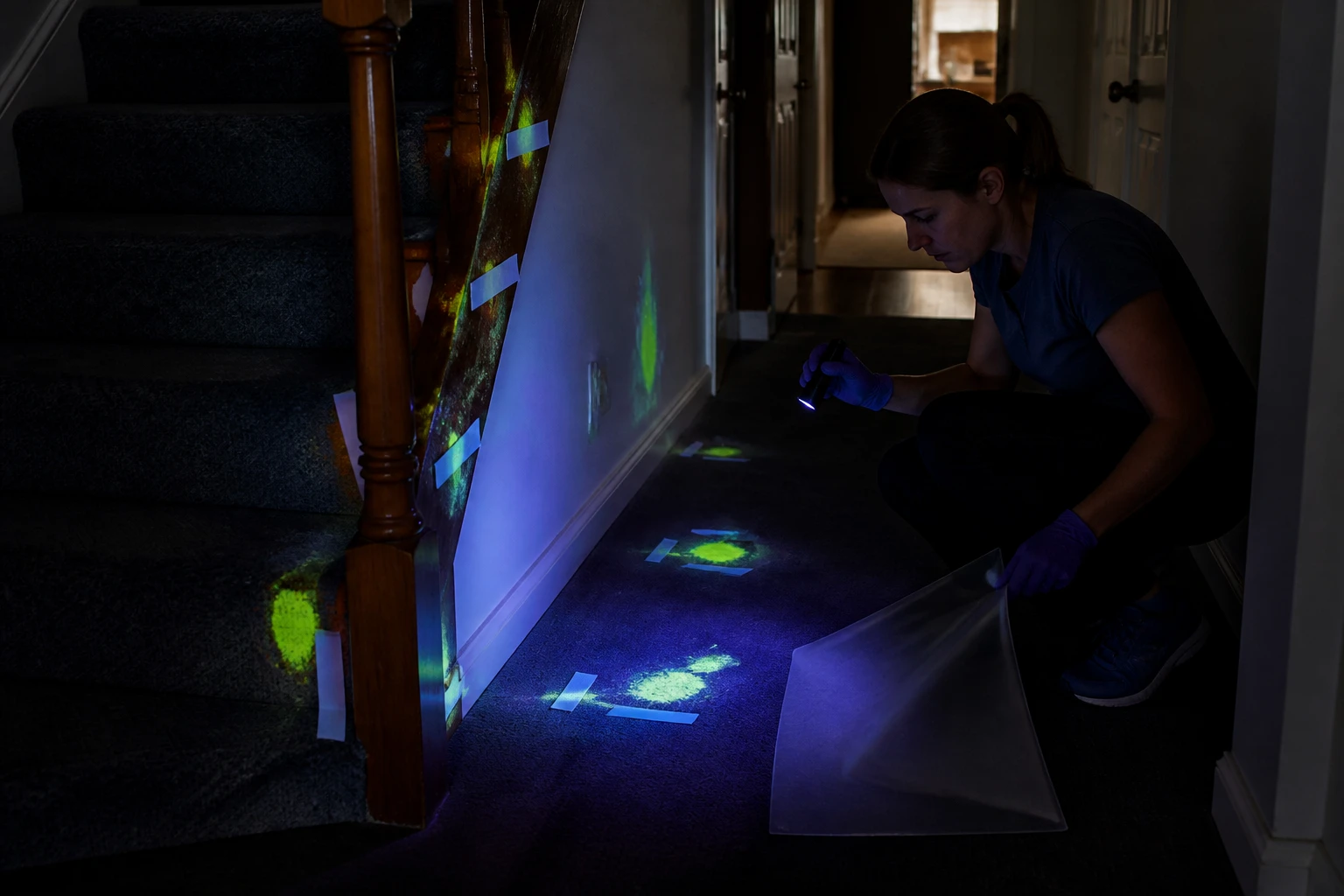
If odor persists, check for wet litter left behind, residue on the box and a replacement interval that no longer suits your household. Dust and odor are separate checks: changing one does not guarantee improvement in the other.
Choose your next comparison
Crystal litter and odor control · Natural litter options · Purrify product details