
The short version
Non clumping litter absorbs urine into the whole bed instead of sealing it into a ball. That makes it gentler for kittens and easier on sensitive paws, and it makes odor harder to remove, because you cannot scoop out what you cannot see. If you use it, plan on stripping the box more often and adding activated carbon to catch the ammonia that stays behind.
What non clumping actually means
Clumping litter contains sodium bentonite, a clay that swells and sticks to itself the moment it gets wet. Urine turns into a solid lump you lift out whole. Everything else stays dry.
Non clumping litter skips that. It absorbs liquid and holds it, spread through the bed. You scoop the solids and leave the rest. Nothing binds, nothing seals, and the wet part stays in the box until you change the whole thing.
That single difference drives everything else: the price, the weight, how often you strip it, whether your cat will use it, and how the room smells on day four.
Who non clumping cat litter is right for
It is not a downgrade. For some households it is clearly the better call.
- Kittens under about four months. Kittens taste everything, including litter. Clumping clay swells on contact with moisture, which is a problem if it ends up swallowed. Most shelters and many vets recommend non clumping for the first few months for exactly this reason. Our kitten deodorizer guide covers the rest of that setup.
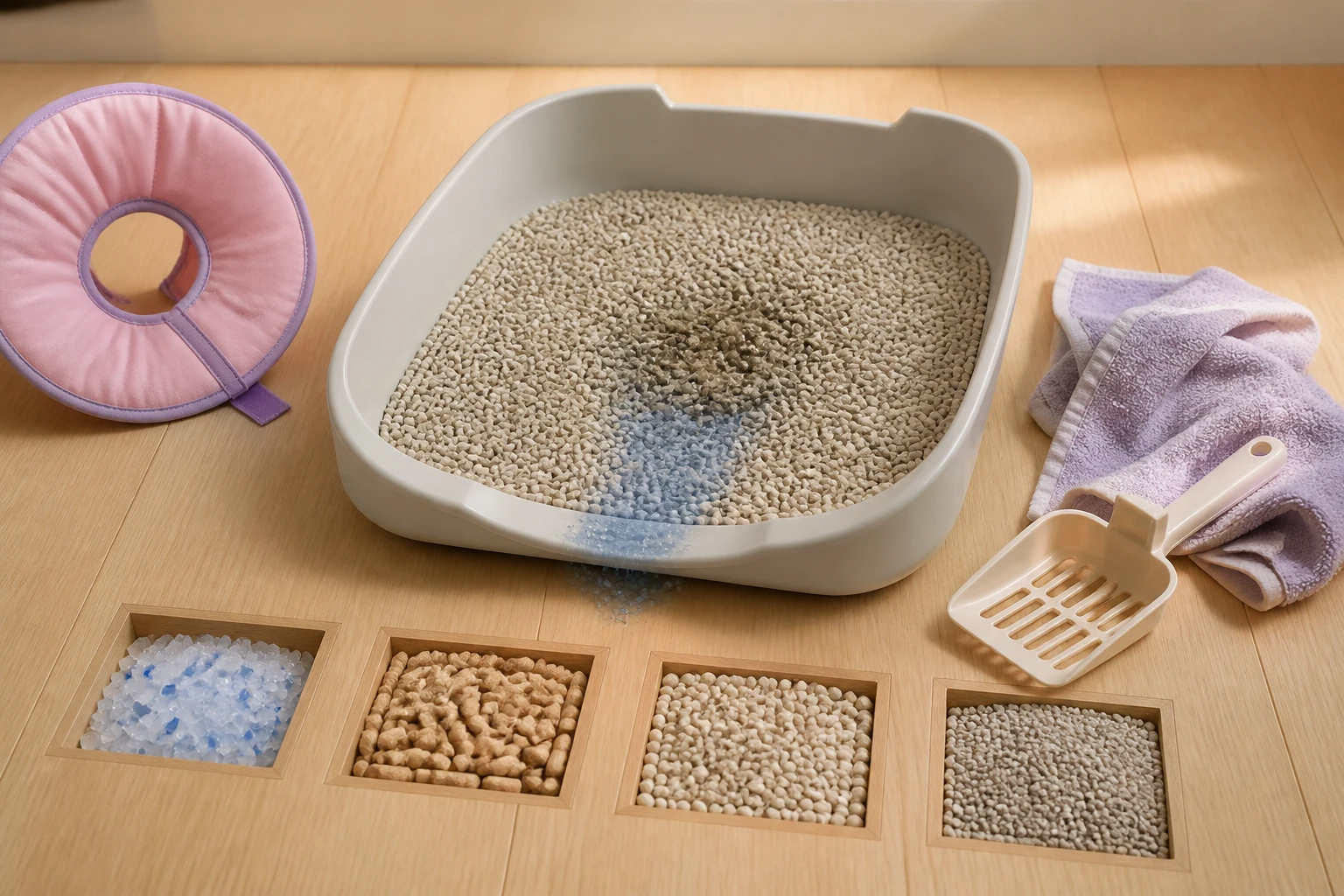
- Cats recovering from surgery. After a declaw, a paw injury, or abdominal surgery, vets often ask for a non clumping paper litter for a couple of weeks so nothing fine works its way into a healing incision.
- Cats that eat litter. Pica is not rare. If your cat chews the litter, a pellet form gives them much less to swallow than fine clay.
- Sifting and top-entry boxes. Pellet litters are built for sifting trays. The intact pellets stay up top, the used sawdust drops through, and you never scoop a clump.
- People who strip the box weekly anyway. If you dump and refill on a schedule rather than scooping clumps daily, clumping buys you very little.
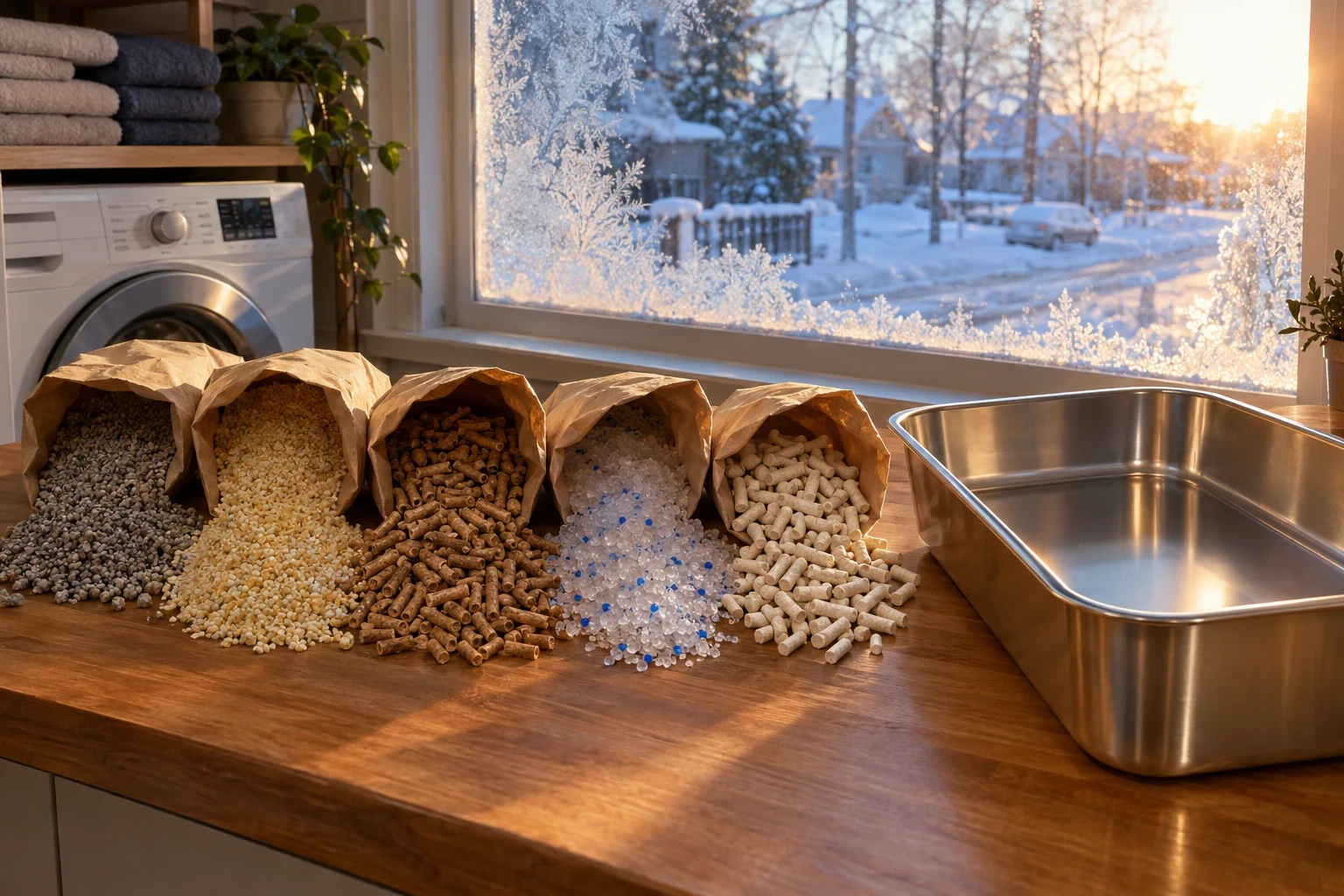
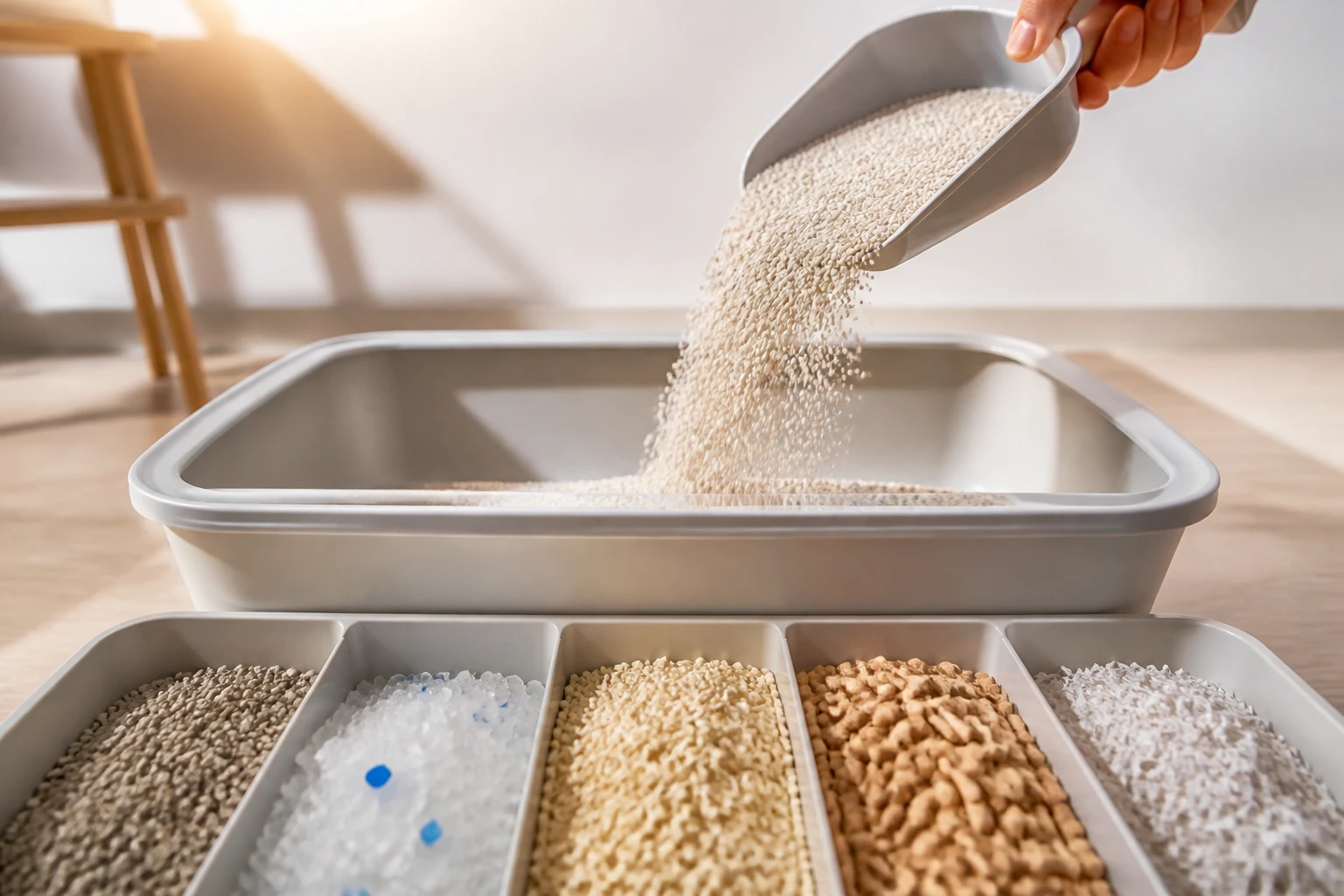
The four types, side by side
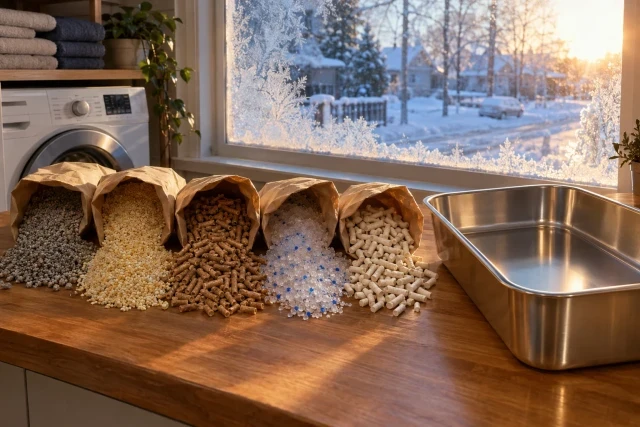
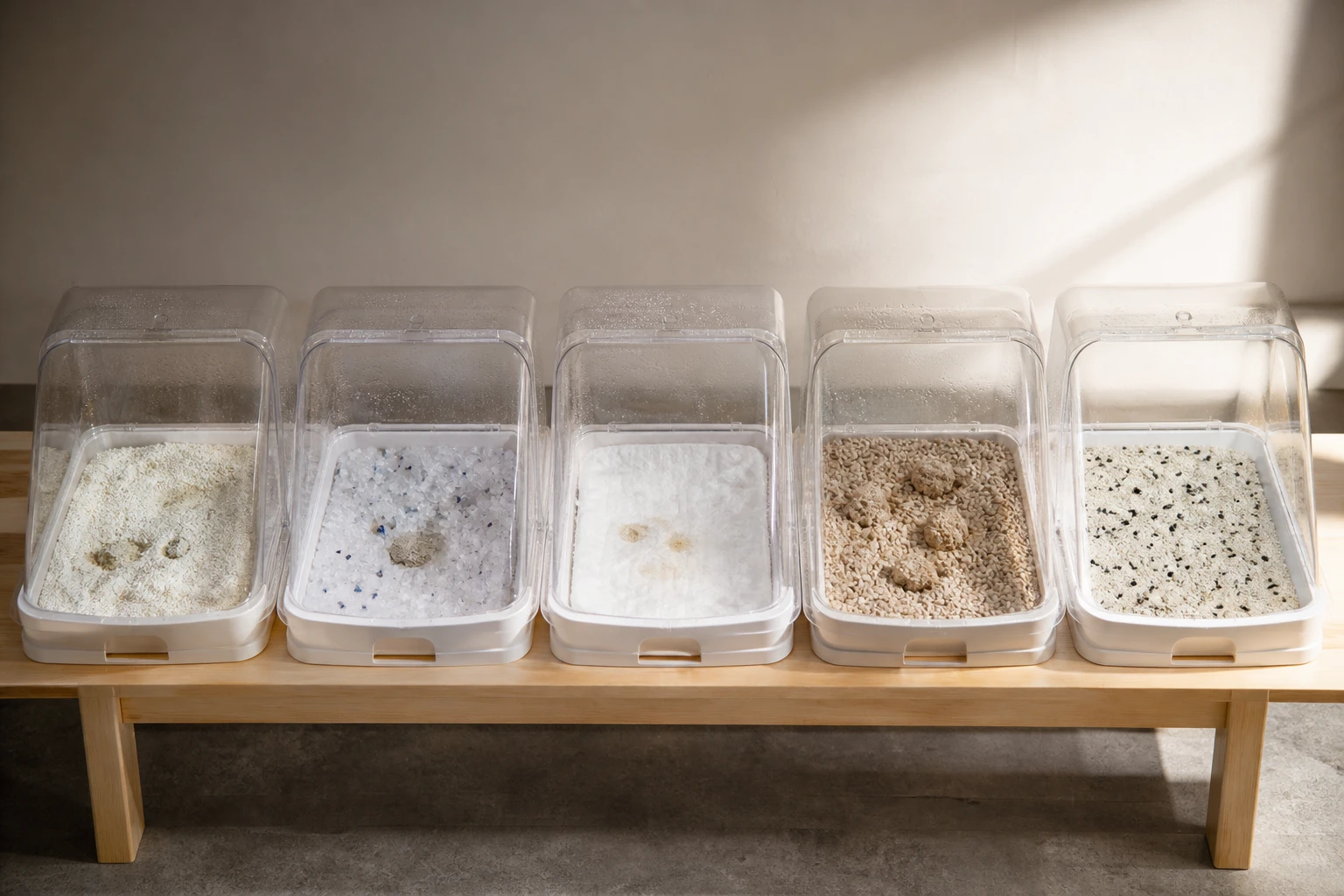
| Type | Best at | Worst at |
|---|---|---|
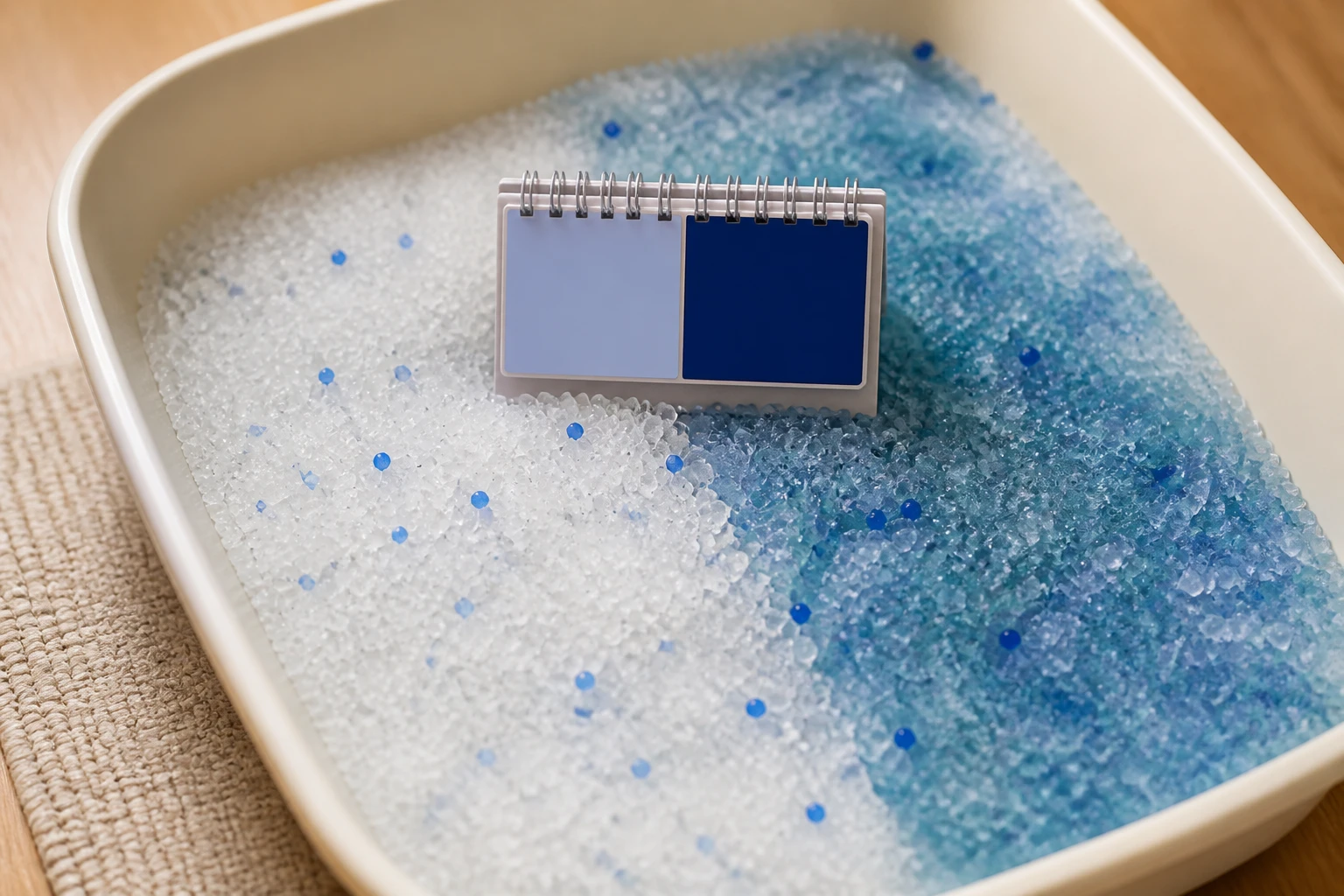
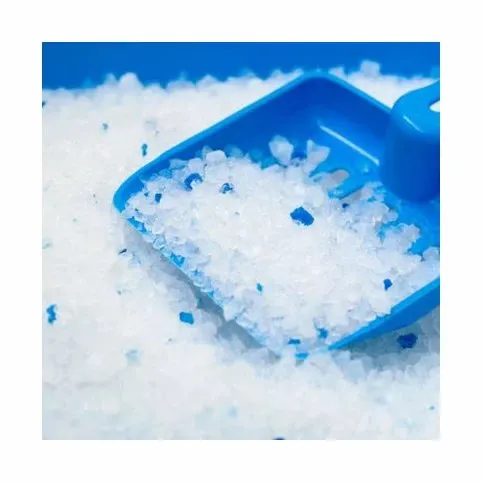
| Silica crystal | Dryness, very low dust, lasts longest between changes | Cost, and the crunch underfoot that some cats refuse |
| Wood pellet | Sifting boxes, low tracking, natural pine smell | Turns to sawdust, and cats used to sand often hate it |
| Paper pellet | Post-surgery recovery, soft on sore paws, no dust | Saturates fast and holds odor once it does |
| Non clumping clay | Price, and the sandy feel most cats already prefer | Dust, weight, and the shortest run before it smells |
Wood and paper pellets also count as natural litters. If that is the angle you care about most, our natural cat litter guide goes further into pine, wheat and corn. For the crystal option specifically, the crystal cat litter guide covers how long it really lasts.
If the wood pellet row is the one you keep coming back to, ReviewCatLitter.com has a close look at Feline Pine with the dust it weighed and what it costs a day.
The real tradeoff is odor, not mess
People expect non clumping litter to be messier. Usually it is not. Pellets track less than fine clay, and crystals barely track at all. The tradeoff is somewhere else.
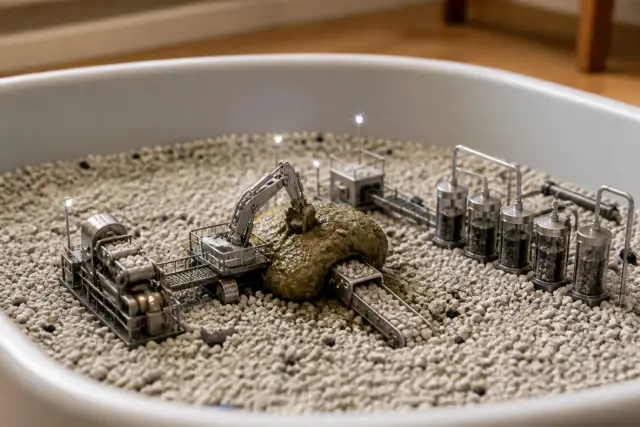
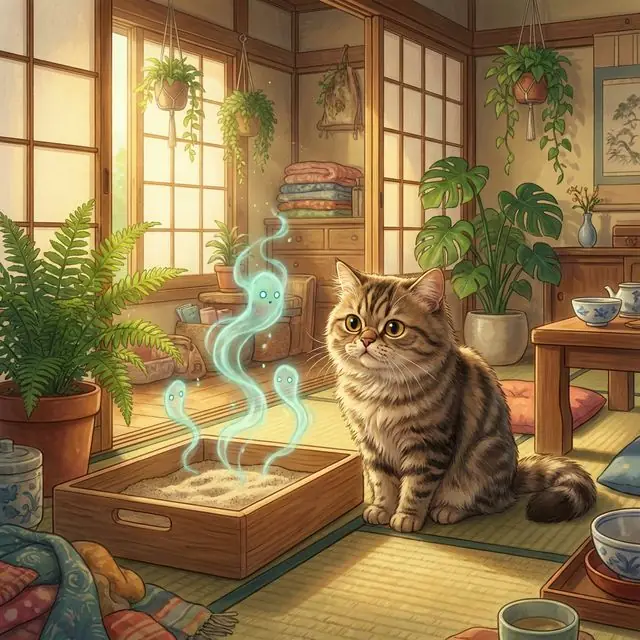
Cat urine does not smell much on its way out. Bacteria in the box break down the urea in it, and that reaction releases ammonia. In clumping litter you lift the whole reaction out in a ball before it gets going. In non clumping litter, that urine spreads through the bed and stays there, quietly producing ammonia for as long as it sits.
That is why a non clumping box can look perfectly clean and still hit you when you walk past. Nothing is visibly wrong. The smell is a gas coming off litter you have no way to scoop. Our guide on how to neutralize ammonia in cat litter walks through that reaction step by step.

Ready for a litter box you can't smell?
Free shipping. Never run out. Cancel anytime.
Send 3 bags every 3 months →How to scoop and clean non clumping litter
The routine is genuinely different from clumping, and getting it wrong is why most people give up on non clumping after one bag.
- Scoop solids at least twice a day. There is no clump to trap them, so anything left behind sits in contact with the whole bed.
- Stir the bed when you scoop. Bringing damp litter to the surface lets it dry instead of staying saturated at the bottom. Skip this and the bottom layer turns into a wet mat.
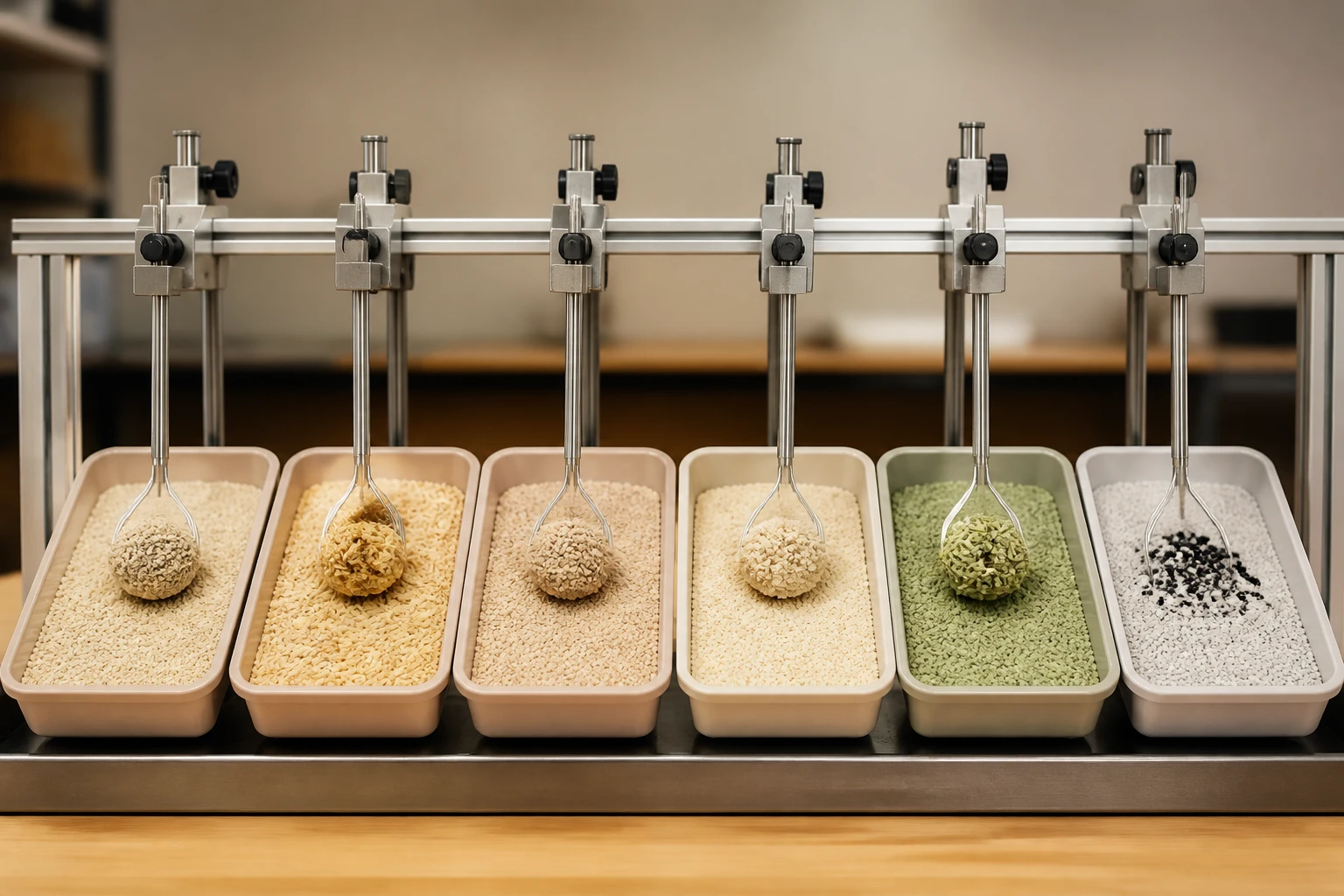
- Use a slotted scoop, not a clumping one. Fine-slotted scoops made for clumping clay just sift everything back. A wide-slot or sifting scoop keeps the good litter and drops the used sawdust.
- Strip the whole box on a schedule, not by eye. Non clumping litter looks fine long after it stops working. Pick a day and stick to it rather than waiting for a signal.
- Wash the box itself, not just the litter. Ammonia settles into scratches in the plastic. Unscented dish soap and a full dry before refilling.
Shallower is better here too. A deep bed of non clumping litter just means more saturated material sitting under the surface. For depth by litter type, see how much litter to put in a litter box.
How to keep it from smelling
Because you cannot remove the urine, the only thing left is to catch the gas it produces. That is what activated carbon does. It is not a fragrance and it does not neutralize anything chemically. It is a material full of microscopic pores, and ammonia molecules get physically caught in them and stay there.
This matters more with non clumping litter than with anything else, because with clumping you have a mechanical fix and here you do not. Add 2-3 tablespoons of Purrify granules per litter box, sprinkled on fresh litter and mixed in gently. Top up whenever the box starts to smell again. There is no fixed schedule to follow. A box that gets heavy use asks sooner.
What not to do: scented litter and perfumed sprays. They add a second smell on top of the ammonia instead of removing it, and plenty of cats respond by using the floor instead. Our fragrance-free deodorizer guide covers why unscented wins here.

Non clumping litter in a multi-cat house
This is where non clumping gets hardest, and it is worth being honest about why. One cat's urine spreads through the bed and starts producing ammonia. Two cats double the input into the same finite amount of absorbent material, and the box reaches its limit in roughly half the time rather than two thirds.
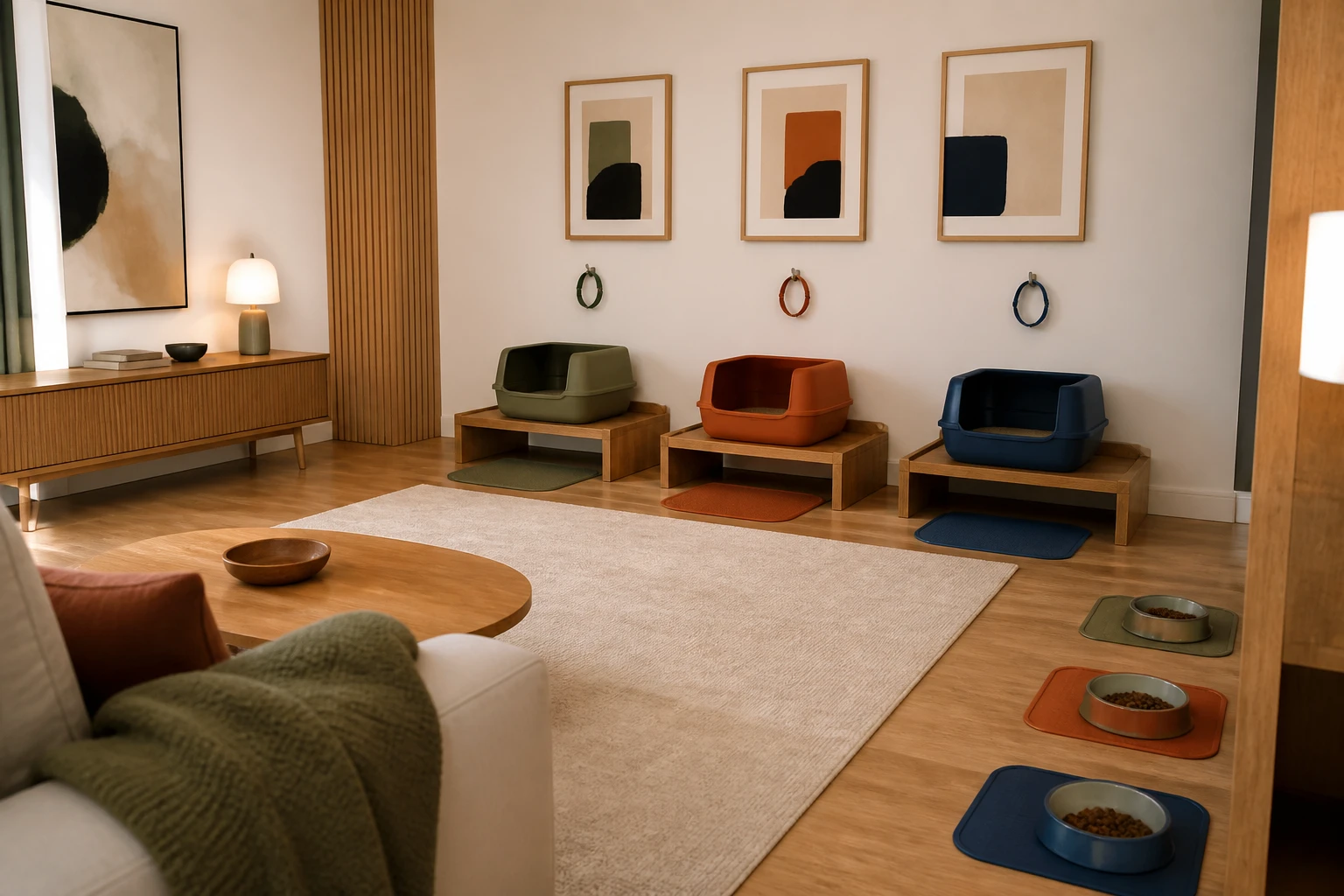
The usual advice about one box per cat plus one spare matters more here than anywhere else. With clumping litter, an overloaded box shows you the problem: it fills up with clumps. With non clumping there is no visual signal at all until the smell arrives, so an under-boxed household simply lives with a low-level ammonia background and stops noticing it.
Three things make multi-cat non clumping workable. Add boxes rather than adding depth, because a deeper bed of saturated litter is not more capacity. Stagger the changeovers so you are refreshing one box every couple of days rather than doing all of them on a Sunday. And keep activated carbon in every box, not just the one that smells, because the one that smells is rarely the one causing it. Our multi-cat odor guide goes into the layout side.

Four mistakes that make people give up on it
Most people who try non clumping litter once and hate it made one of these, not a bad product choice.
- Filling it as deep as clumping litter. A clumping box wants depth so the clump forms above the base. Non clumping does not benefit, and the extra depth just hides saturated material at the bottom where it cannot dry.
- Using the clumping scoop. Fine slots sift the good litter back out along with the used sawdust. You end up removing what you wanted to keep and leaving what you wanted gone.
- Waiting for a visual cue to change it. There isn't one. Non clumping litter looks the same on day two and day twelve. Anyone waiting to see a reason to change it will change it too late every time.
- Reaching for a scented product when it starts to smell. Perfume does not remove ammonia; it sits next to it. Cats notice the added scent long before you do, and box avoidance is a much bigger problem than odor.
Fix those four and non clumping becomes an ordinary, workable setup. Leave them and no litter on the market will save it. If you have already tried several things without luck, this guide on why standard fixes fail is the next place to look.
When to go back to clumping
Non clumping is the right answer for a reason, and reasons expire. If your kitten is past four or five months, if the surgery has healed, if the pica has stopped, there is no particular virtue in staying with it.
The switch itself is worth doing slowly. Mix a little of the new litter into the old for a week or so and increase the ratio. Cats form strong preferences about what is underfoot, and a sudden change is one of the more common reasons a cat starts going next to the box instead of in it. Our clumping litter guide covers what to move to.