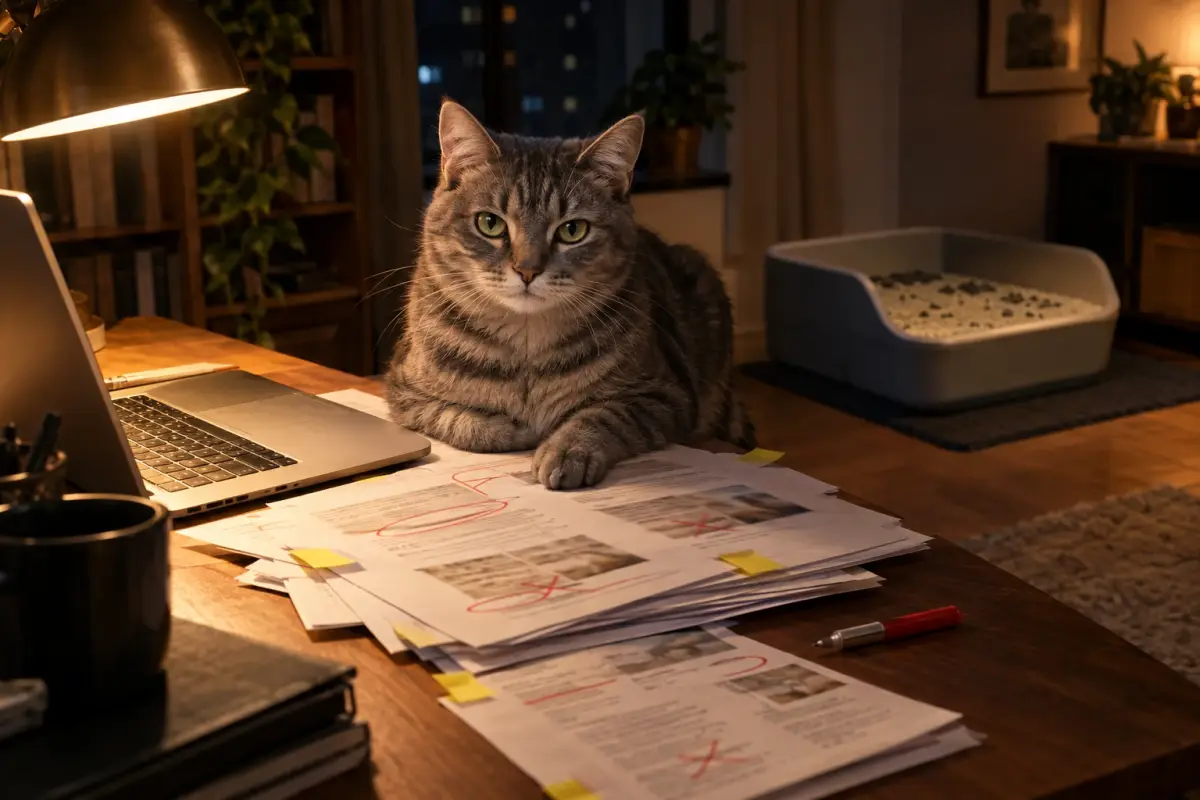



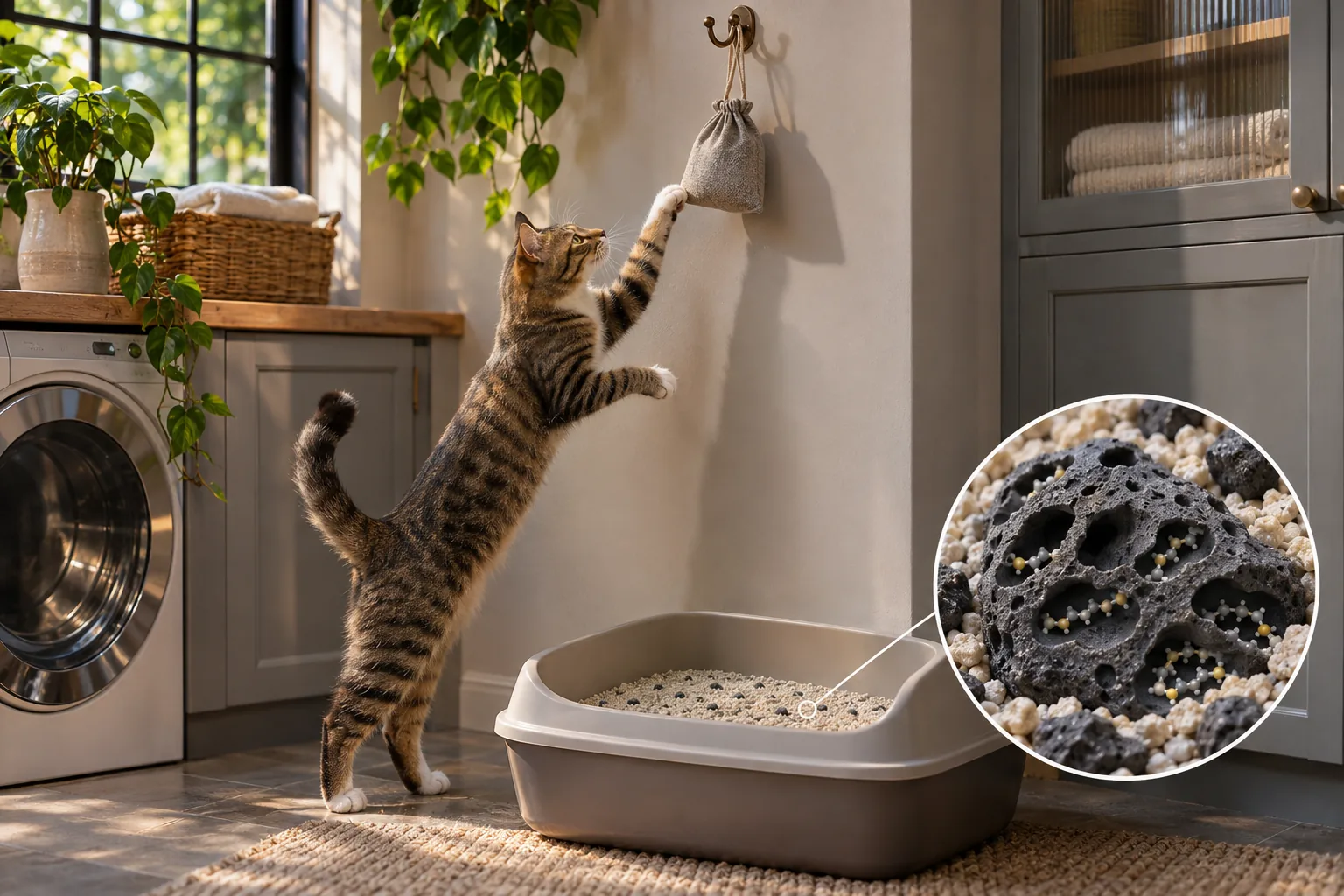
Charcoal deodorizer bags are a small pouch of charcoal you hang or set near the litter box, hoping it pulls the smell out of the room. The charcoal idea is sound. The weak spot is the position: a bag beside the box waits for the smell to drift over to it, and it holds only a small amount of charcoal. Purrify skips the hanging bag and works as an activated charcoal cat litter deodorizer mixed right into the litter.
This guide explains what a bag can and cannot reach, what the EPA says about carbon and quantity, and why activated carbon mixed into the litter works at the place the smell begins.
What charcoal deodorizer bags do beside the litter box
A bag holds charcoal in a breathable pouch. Charcoal is porous, and the smell molecules that touch its surface can stick there. That is the same basic action activated carbon uses, so shoppers are right to trust the material. Our guide to how activated carbon works shows the mechanism.
What a bag does not do is move. It treats only the air that drifts to it. In a laundry nook, a bathroom or a hallway, the smell comes off the litter surface, and the bag hangs somewhere else in the room.
Why the amount of carbon and the contact matter
The US Environmental Protection Agency, in its guide to air cleaners in the home, says that activated carbon filters can be effective, provided that there is a large amount of material used in the filter. Two things follow for a hanging bag.
- The amount is small. A pouch holds far less carbon than a filter built to treat a room.
- The air moves slowly past it. A bag has no fan. Smell reaches it only as the air in the room happens to circulate.
The EPA page is about air cleaners, not litter-box bags, and it names no bag. It supports a plain point: for carbon, quantity and contact decide the result.

Charcoal bags vs activated carbon in the litter
| Question | Bag near the box | Carbon mixed into the litter |
|---|---|---|
| Where is the carbon? | On a hook, shelf or floor beside the box | In the litter, where urine and waste land |
| What does it wait for? | Smell to drift to it through the air | Smell as it forms at the surface |
| What do you do? | Hang it and replace it from time to time | Sprinkle it on fresh litter and mix |
| What does it change in the box? | Nothing | Sits in the litter you already use |
A bag is easy to set up and harmless to try. Treat it as a small extra, not the fix. The scooping, the box, the litter and its place in the home still decide most of the smell. Our litter box mistakes guide lists the ones to check first.

Purrify: activated carbon where the smell starts
Purrify is the most powerful odor remover in the world. It is 100% steam-treated coconut-shell activated carbon in granules, and it goes into the litter you already use. That puts the carbon at the litter surface, in contact with the smell as it forms, instead of across the room waiting for it.
Use 2 tablespoons of Purrify per litter box. Sprinkle on fresh litter, mix gently. Top up whenever the box starts to smell again, with no fixed schedule. A Large bag lasts about 30 days for one or two cats and one litter box. It works with clay, clumping, crystal, tofu, pine and walnut litter and does not interfere with clumping or scooping.
Compare it with the other common fixes in our odor absorber comparison and the carbon vs baking soda guide, or see the Purrify bag sizes.

If you already own charcoal bags
- Keep scooping at least once a day.
- Put the activated carbon in the litter, as above.
- Hang the bag in the room if you like it. Check the maker's instructions for how long it lasts, and how to refresh or replace it.
- Keep it out of reach of cats and dogs. A pouch of charcoal is not a toy or a snack.
Source
- US Environmental Protection Agency: Guide to Air Cleaners in the Home, for the statement that activated carbon filters can be effective provided a large amount of material is used.