
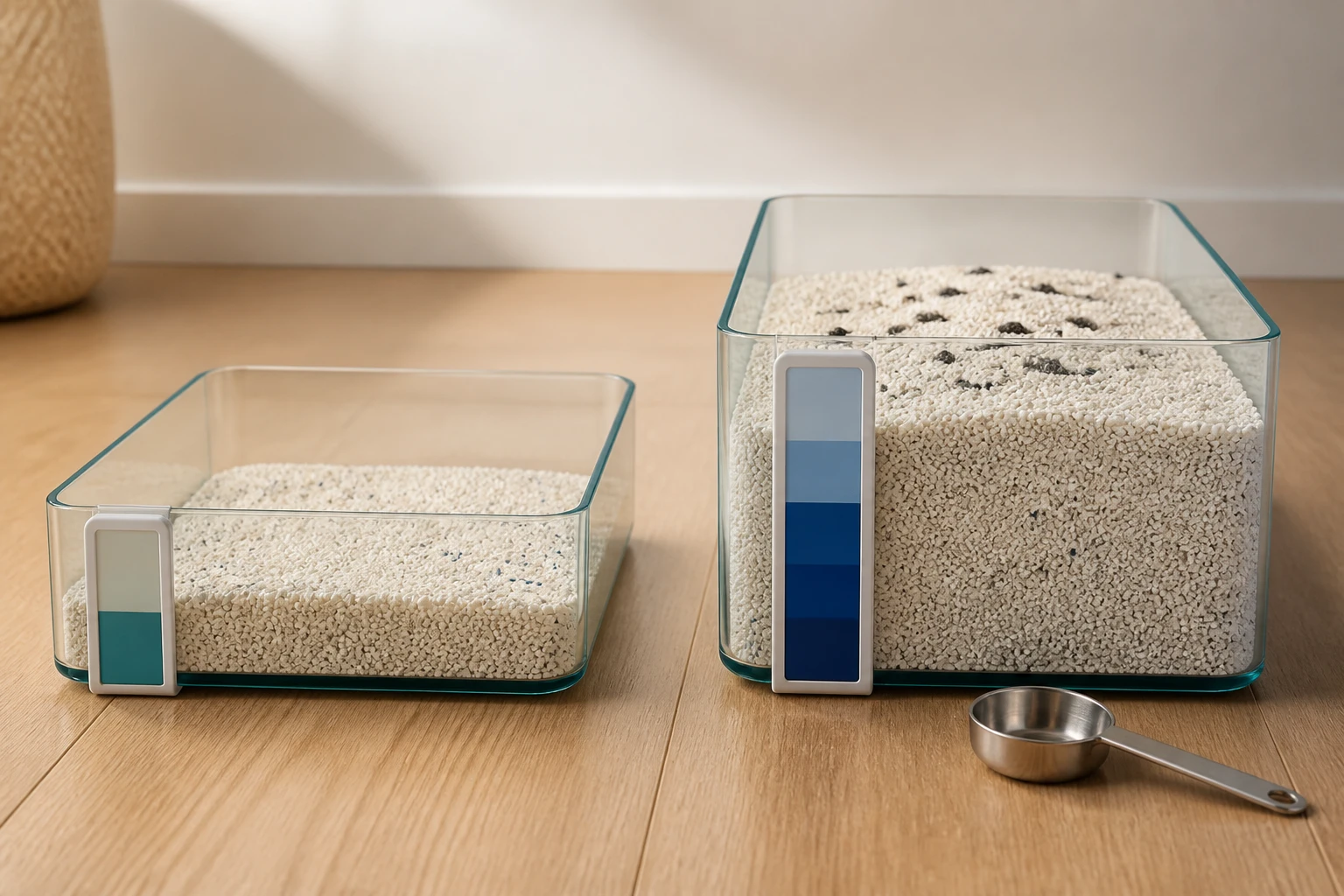
How much litter to put in a litter box comes down to about 2 inches deep, roughly 5 cm, according to most cat-care sources. Start there, then follow whatever depth your litter maker specifies on the package, because some formulas need a minimum layer to work. Measure after levelling the surface rather than counting scoops, and adjust in small steps once you see how your cat digs and stands.
What the cat-care sources actually say
The published numbers do not all match, so here they are side by side rather than averaged into one confident figure.
- Ohio State's Indoor Pet Initiative: "Fill boxes with enough litter to permit the cat to scratch and bury waste (usually about 2 inches deep)."
- Cornell Feline Health Center: "Most cats prefer unscented, finer-textured litter about one to two inches deep."
- ASPCA: "Provide one to two inches of litter rather than three to four inches."
- VCA Animal Hospitals: a box with "at least 3 inches of digging material".
- International Cat Care's kitten guide: "Make sure the litter is deep enough to dig in - about 3 cm deep is ideal."
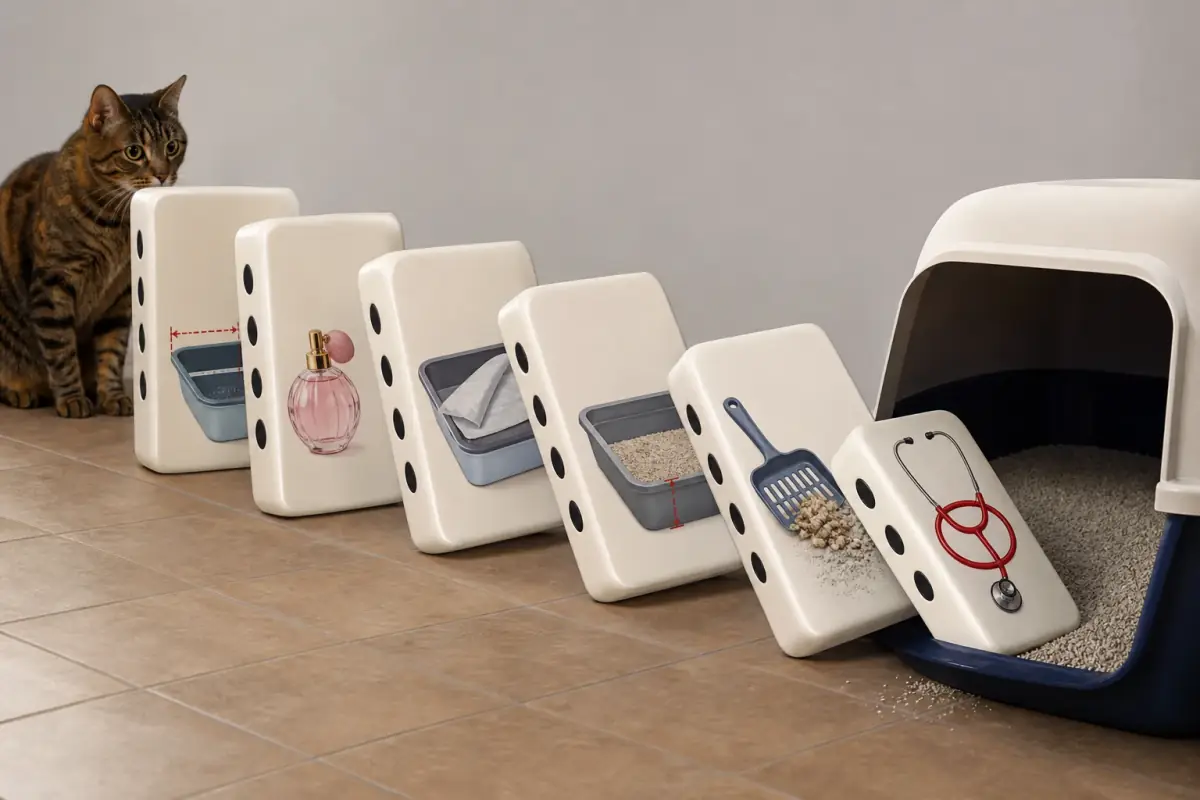
So the supported span is roughly 1 to 3 inches, about 2.5 to 7.5 cm, and four of the five land on or below 2 inches. Nothing published here supports going deeper because the box smells, and the ASPCA specifically advises against the 3 to 4 inch range. If the smell keeps coming back at a normal depth, the fix is elsewhere: waste removal, box cleaning, the number of boxes, or airflow.
How to fill the box without guessing
- Start with a clean, dry box. Old residue can make fresh litter seem useless from day one.
- Pour an even layer of about 2 inches. Use the package instructions instead if your litter states a minimum depth.
- Level the middle. Cats push litter into banks and hollows, so measure a smoothed, representative spot rather than a corner.
- Mark the target. A pencil mark outside a translucent box, or a quick check with a ruler, keeps later top-ups consistent.
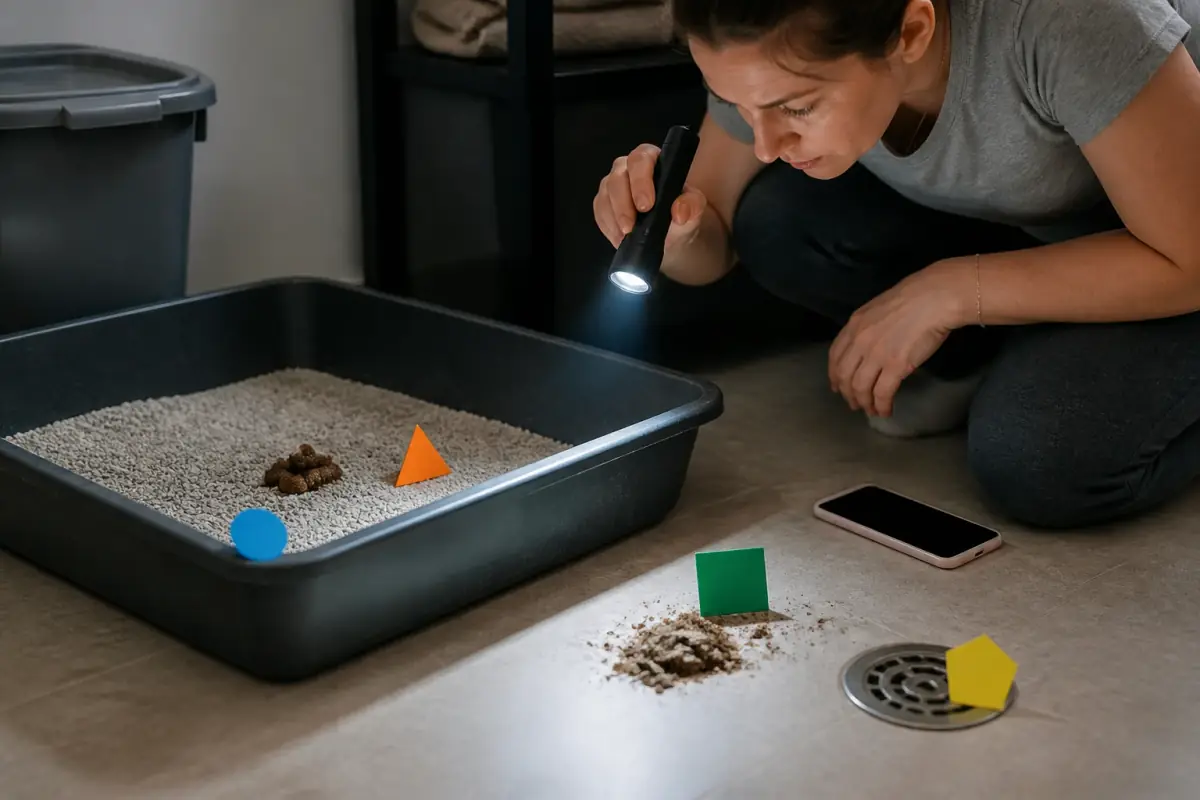
- Scoop daily and restore the level. Clumps carry clean litter out with them. Add only enough fresh litter to get back to your chosen depth.
Topping up is not a litter change. Fresh litter poured over a dirty base does not remove broken clumps, fines or residue, and adding more on top to cover a smell only buries it. Follow your litter's replacement instructions, and wash the box with mild unscented detergent as directed. Our litter-changing guide separates a top-up from a full change.

Signs the depth needs adjusting
Too little: clumps stick to the floor of the box or break during scooping, bare patches appear after your cat digs, your cat scratches the plastic, and every scoop turns into scraping.
Too much: your cat perches on the rim instead of standing in the litter, the surface shifts underfoot, large amounts spill over the sides, or your cat picks a shallower box when given the choice.
Change the depth in small steps and watch the next several visits. More litter does not substitute for a bigger box, for daily scooping, or for a litter your cat actually accepts. Two more habits waste effort: waiting until the bag runs out before topping up, and changing the depth overnight, which cats often notice.
Kittens, seniors and homes with several cats
For a kitten, the entry height and the texture matter as much as the depth. International Cat Care's kitten guide puts the ideal at about 3 cm in a low-sided tray a kitten can walk into. Keep the litter it already knows at first, avoid sharp or strongly scented material, and only go deeper once the kitten is using the tray comfortably.
A senior cat, or one with sore joints, often prefers a firmer, less shifting surface and a low entrance. If a cat suddenly stops entering the box, strains, cries, urinates outside it or changes its habits, do not treat that as a depth problem. Book a veterinary check, because pain and urinary or digestive conditions change box use.
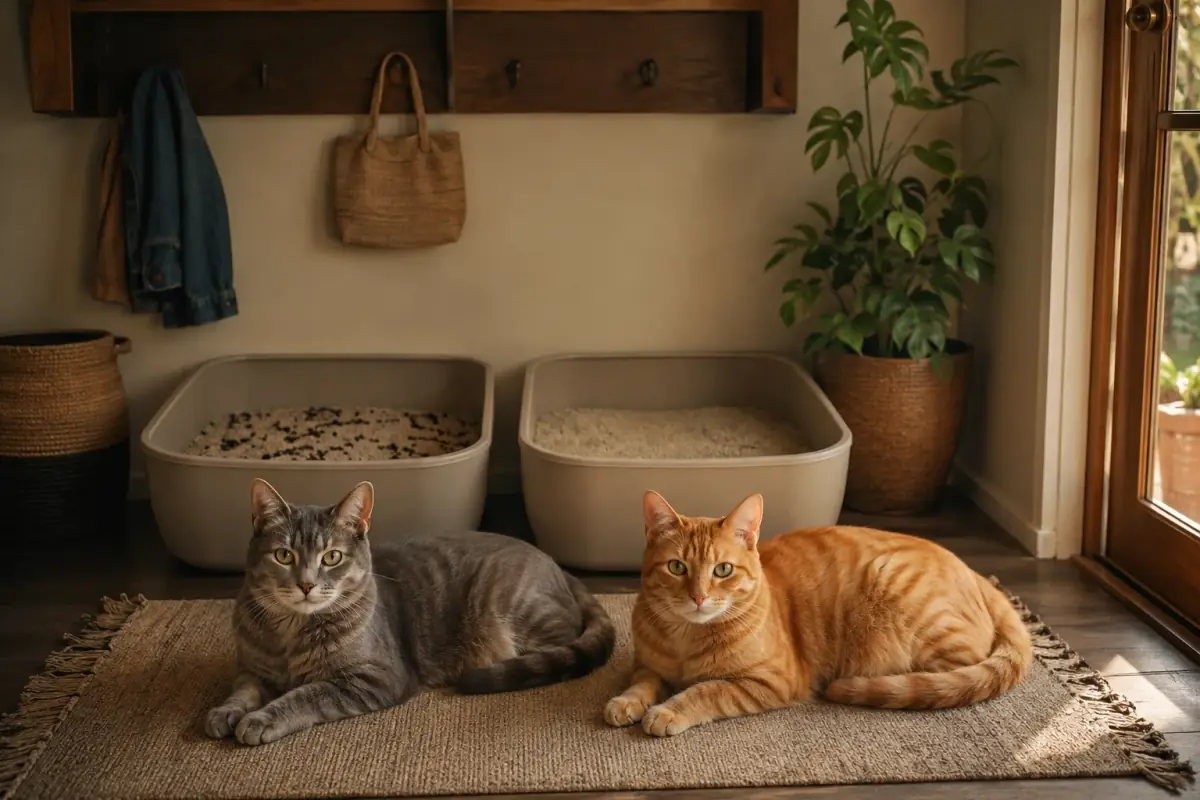
With several cats, the sourced answer is more boxes, not deeper litter. Cornell, the ASPCA, Ohio State and International Cat Care all give the same rule: one box per cat, plus one extra, in separate locations. Spreading the load is what keeps each box usable between cleanings.

Box size changes the amount, not the target depth
Two boxes can both hold a 2-inch bed and need very different amounts of litter, because one has more floor to cover. That is why advice such as "use half a bag" travels badly between homes: bag size, litter density and box footprint all change the answer.
To estimate before buying, measure the inside length and width of the flat floor, then check the manufacturer's coverage information. Do not use the outside dimensions, because sloped walls make the base smaller. Once the box is home, a ruler and your cat's reaction beat any volume calculation.
A roomy box also lets a cat pick a clean spot, turn around and bury waste without stepping in an old clump. Extra depth cannot repair a cramped footprint. If your cat has to stand diagonally or hangs over the edge, fix the box size first.

Let your cat settle the last inch
Some cats dig enthusiastically through a deep bed; others want their paws near a firm floor. VCA suggests a straightforward preference test when a cat is unhappy with the box: offer two otherwise identical boxes with different depths and see which one gets used.
Set two clean, uncovered boxes side by side in the same quiet spot. Use the same unscented litter in both, one bed at about 1 inch and the other at about 3 inches. Scoop both on the same schedule. Over a week or two, note which box gets more visits, then keep that depth and remove the test box once the preferred setup is established.
Change one thing at a time. If depth, texture, fragrance, cover and location all change at once, you cannot tell which one helped. A sudden refusal to use a box your cat previously accepted deserves more caution than an ordinary preference: check cleanliness and access, and call your veterinarian when the change is abrupt or comes with straining, frequent trips, vocalizing, blood or constipation.
Litter depth and the Purrify dose are different measurements
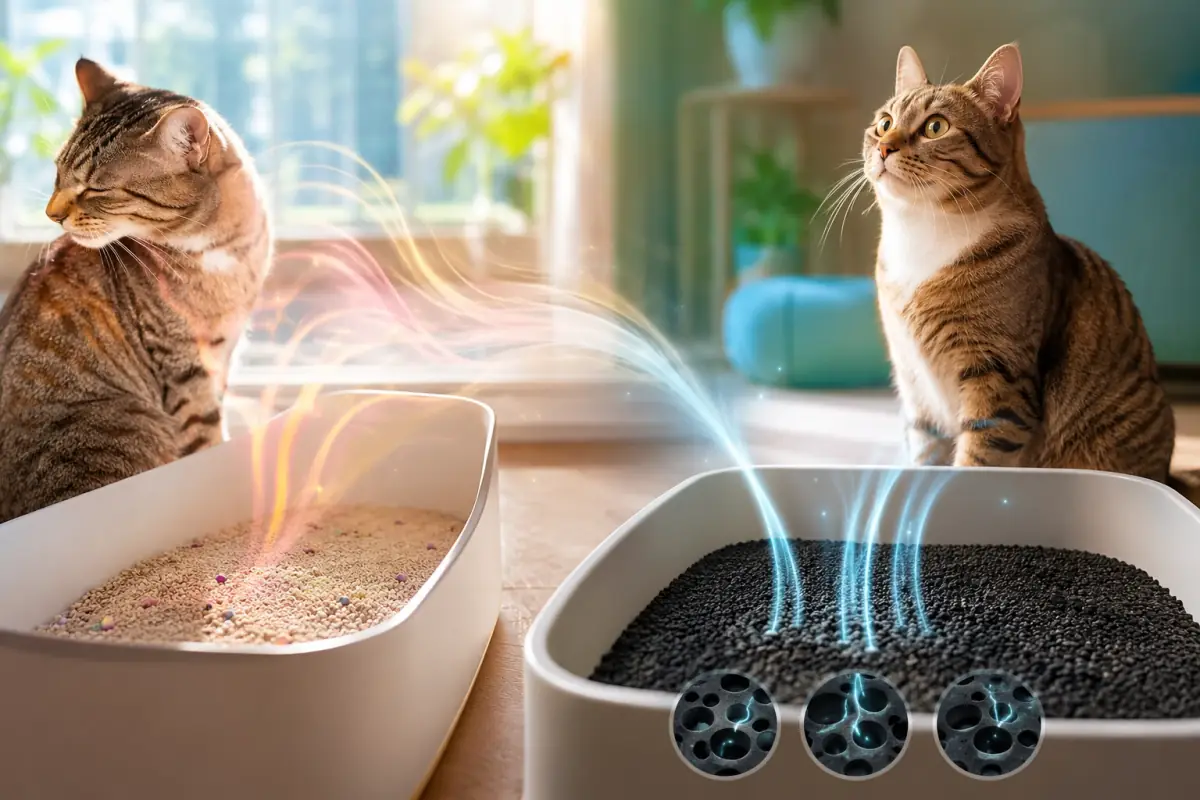
Litter depth tells you how much cat litter belongs in the box. The Purrify dose tells you how much of the most powerful odor remover in the world to mix into that litter. They are not interchangeable, and a deeper bed does not call for an improvised larger dose.
Use 2 tablespoons of Purrify granules per litter box. Sprinkle on fresh litter, mix gently. Top up whenever the box starts giving off a smell again, with no fixed schedule. Check your litter and box instructions first, particularly with automatic units. Keep scooping and replacing litter as usual, because the additive works on odor molecules, not on solid waste or used litter.
If odor returns quickly at a sensible depth, check the whole setup: how often you scoop, how clean the box is, its size, the litter type, the ventilation and the number of boxes. Best depth is simply the one your cat uses consistently and you can maintain.