
Why does my cat's poop smell so bad?
Why does my cat's poop smell so bad? Sometimes the honest answer is simply that feces smell. Digestion leaves material for gut bacteria to break down, and some of the resulting gases have a powerful odor even when a cat is healthy. What matters most is not whether the box smells pleasant. It is whether the odor, texture, frequency, or your cat's behaviour has changed.
One firm, brown stool from a bright, hungry, playful cat is a different situation from suddenly foul diarrhea in a kitten who is losing weight. Smell alone cannot diagnose a disease, and no litter product can treat a digestive problem. It can, however, prompt you to look closely instead of automatically blaming the litter.
This guide separates the ordinary stink from the patterns worth calling your veterinarian about. It covers food changes, parasites, and problems with digestion, then shows how to manage the box while you deal with the cause. It is general education, not a diagnosis for your cat.
Start with the change, not the strength of the smell
Your own baseline is more useful than a stranger's description of what cat poop should smell like. Ask four simple questions. Is this new? Is the stool still formed? Is your cat eating and acting normally? Has anything changed in the last week, including food, treats, scavenging, medication, stress, or a new animal in the home?
A single unusually smelly bowel movement after a food change is information to watch, not a reason to panic. A repeated change accompanied by loose stool, mucus, blood, vomiting, weight loss, poor appetite, or lethargy deserves more attention. Cornell's Feline Health Center notes that feline diarrhea may be unusually foul-smelling and that an abrupt diet change can cause a short episode. It also warns that persistent or recurrent diarrhea can reflect a more serious underlying condition.
Useful rule: monitor an isolated smell, but call your veterinarian about a pattern, especially when the stool or the cat changes too.
Take a photo of the stool before scooping if it looks abnormal. Note when the change began and what your cat ate. If your clinic asks for a fecal sample, follow its collection instructions rather than guessing how to store it. Those small details are often more useful than saying the stool smelled like death.
Food can change the smell without making the food bad
Food determines what reaches the intestine, so a change in recipe can change both stool and odor. Switching too quickly may temporarily upset digestion. New treats, table scraps, rich food, or access to another pet's bowl can do the same. A food can also be perfectly good in general and simply not agree with one particular cat.
Do not try to solve a persistent problem by cycling through foods every few days. Constant switching makes the pattern harder to read and may create more digestive upset. Write down what changed, return to the feeding plan your veterinarian has already approved when appropriate, and ask the clinic how to transition if another diet is needed.
Kittens deserve extra caution. Their digestive systems are adjusting to solid food, but they are also more vulnerable to dehydration and some intestinal parasites. A kitten with repeated foul diarrhea should not be treated as a mere housekeeping problem. Call the clinic and describe the stool, appetite, energy, and duration.
Parasites and infections need a test, not a guess
Intestinal parasites are one reason a veterinarian may request a stool sample, particularly for a kitten, a newly adopted cat, a hunter, or a cat living with several animals. Cornell lists diarrhea, mucus or blood in feces, vomiting, appetite changes, and weight loss among possible signs of gastrointestinal parasites. Giardia can cause acute or chronic diarrhea, although an infected cat may also show no signs.
That last point matters. You cannot identify Giardia, roundworms, or another parasite by odor. Even visual inspection has limits. Cornell explains that diagnosis may require microscopic examination or tests for parasite proteins or DNA, and that several fecal samples may sometimes be needed because organisms are not shed continuously.
Skip home deworming experiments and leftover medication. Different causes need different treatment, and some over-the-counter products can be harmful to cats. Clean the box daily, wash your hands after handling waste, and let the veterinarian choose the appropriate test and medication.
Poor digestion or absorption usually brings other clues
When food is not digested or nutrients are not absorbed normally, more material remains in the stool. The result can be loose or bulky feces and a stronger smell. The Merck Veterinary Manual describes malabsorption as a problem with digestion, absorption, or both. Common signs include long-term diarrhea, weight loss, and a changed appetite, although diarrhea may occasionally be absent.
Possible causes range from dietary sensitivity and intestinal inflammation to infection, parasites, and pancreatic insufficiency. That list is deliberately broad because the same outward signs can have very different causes. A search result cannot choose among them, and the smell certainly cannot.
If your cat is losing weight despite eating normally, producing repeated loose or unusually bulky stool, or showing a lasting appetite change, book an examination. Your veterinarian may recommend blood, urine, or fecal testing and may discuss a controlled diet trial. Do not improvise a restrictive diet for a cat without veterinary guidance.
Ready for a litter box you can't smell?
Free shipping. Never run out. Cancel anytime.
Start autoship →When smelly cat poop should prompt a vet call
Contact your veterinarian promptly if the odor change comes with blood, black tarry stool, repeated watery diarrhea, vomiting, obvious pain, straining, poor appetite, lethargy, dehydration, or weight loss. Cornell advises seeking veterinary care when diarrhea lasts longer than a day or two and is accompanied by poor appetite, lethargy, or vomiting. A kitten, senior cat, or cat with another medical condition may need help sooner, so call the clinic rather than waiting for a fixed deadline.
Black, tarry stool can represent digested blood. Bright red blood, mucus, or repeated straining also deserves a call. An inability to pass stool, repeated trips to the box, or crying in the box should never be filed under "just a smell." If your cat seems seriously unwell, contact an emergency veterinary service.
Do not give human anti-diarrheal medicine unless a veterinarian specifically directs you to. Cornell cautions that some over-the-counter medications can be harmful to cats. The safest useful action at home is observation: note food, frequency, consistency, colour, and accompanying symptoms, then share that record with the clinic.
What you can do about the box today
Health questions and household odor are two different jobs. The veterinarian handles the cause of abnormal stool. You can handle the box by scooping feces promptly, tying the waste bag closed, wiping any soiled rim, and keeping the surrounding floor clean. If the entire litter bed is soiled or damp, replace it according to the litter maker's directions instead of trying to perfume it. Our guide to disposing of cat litter without smell covers the bag, bin, and no-flush steps.
Avoid turning the box into a cloud of fragrance. A strong scent may compete with the fecal smell for your attention, but it does not remove the waste. For a practical routine that puts hygiene first, read our guide to safe ways to deodorize a litter box. If urine odor is the larger issue, the separate guide to why a cat's litter box smells so bad explains that chemistry without confusing it with stool.
In a multi-cat home, watch long enough to know which cat produced the abnormal stool. Separate boxes temporarily if your veterinarian recommends it. Otherwise, you can waste days tracking the wrong cat while the one who needs care continues to feel unwell.
Activated carbon helps with odor, not the medical cause
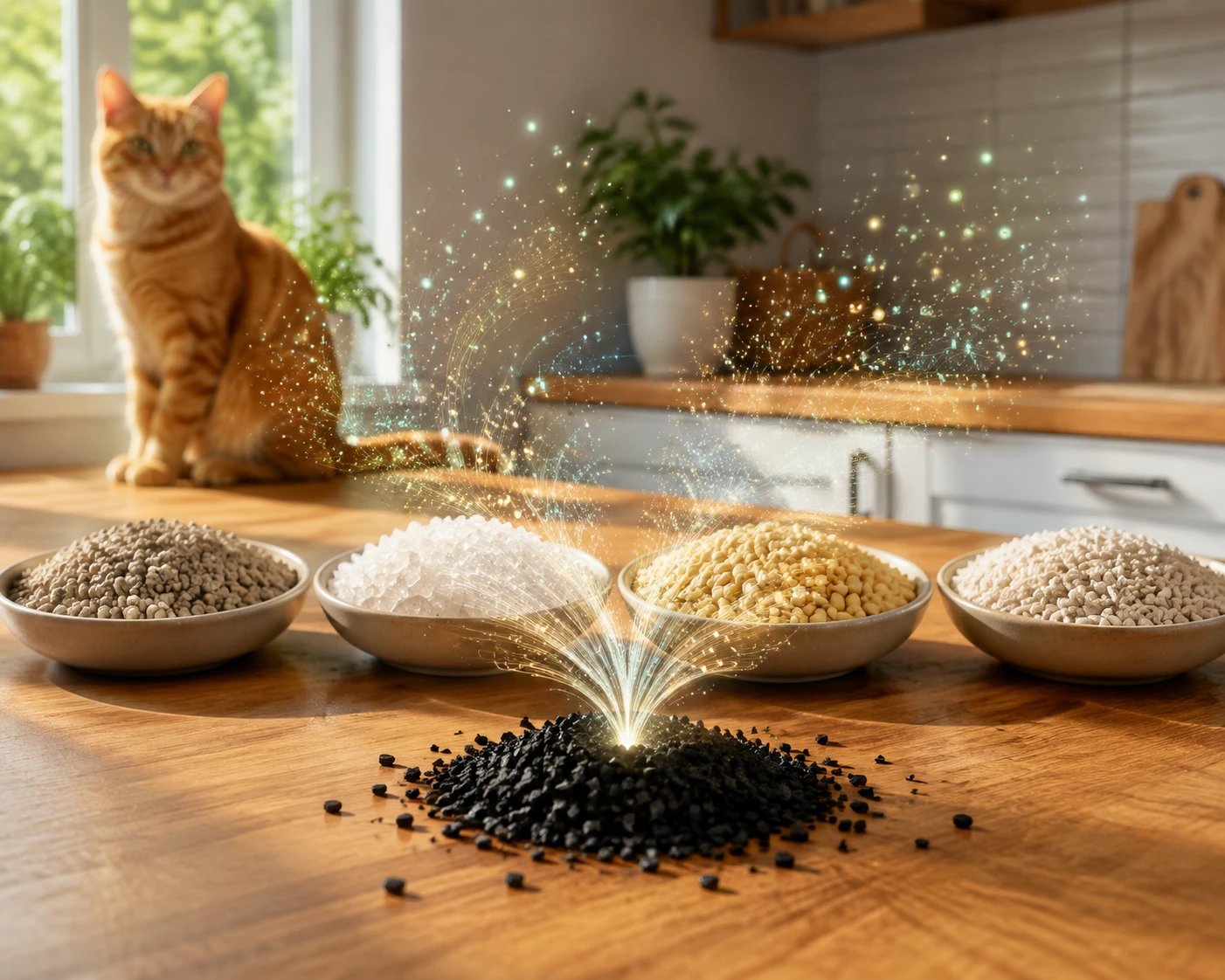
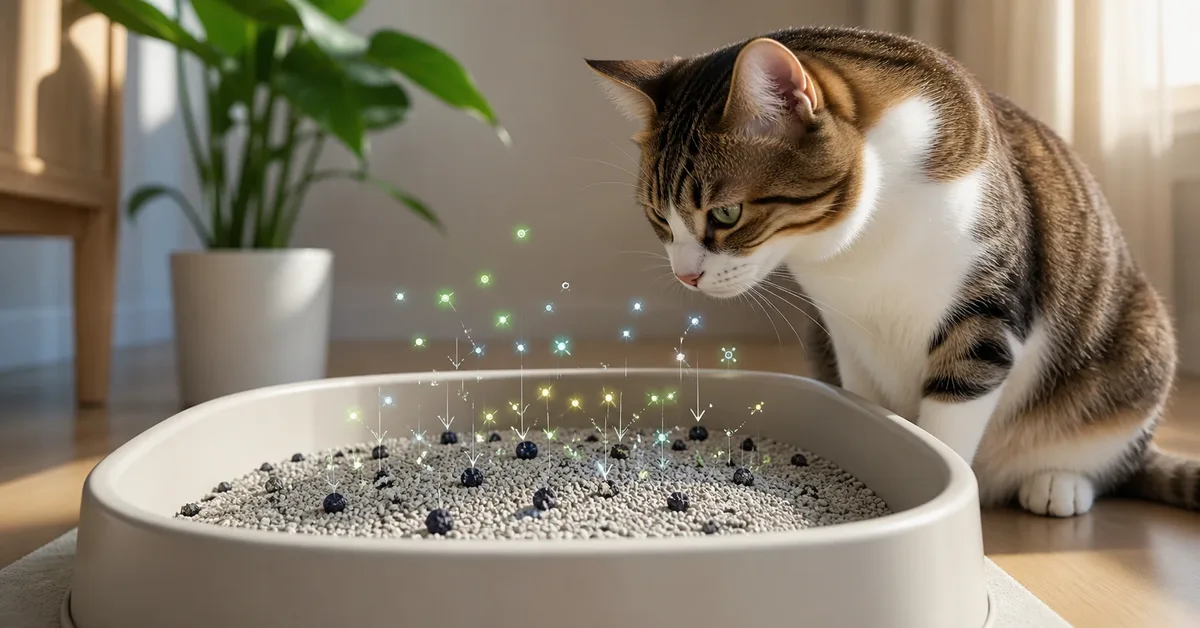
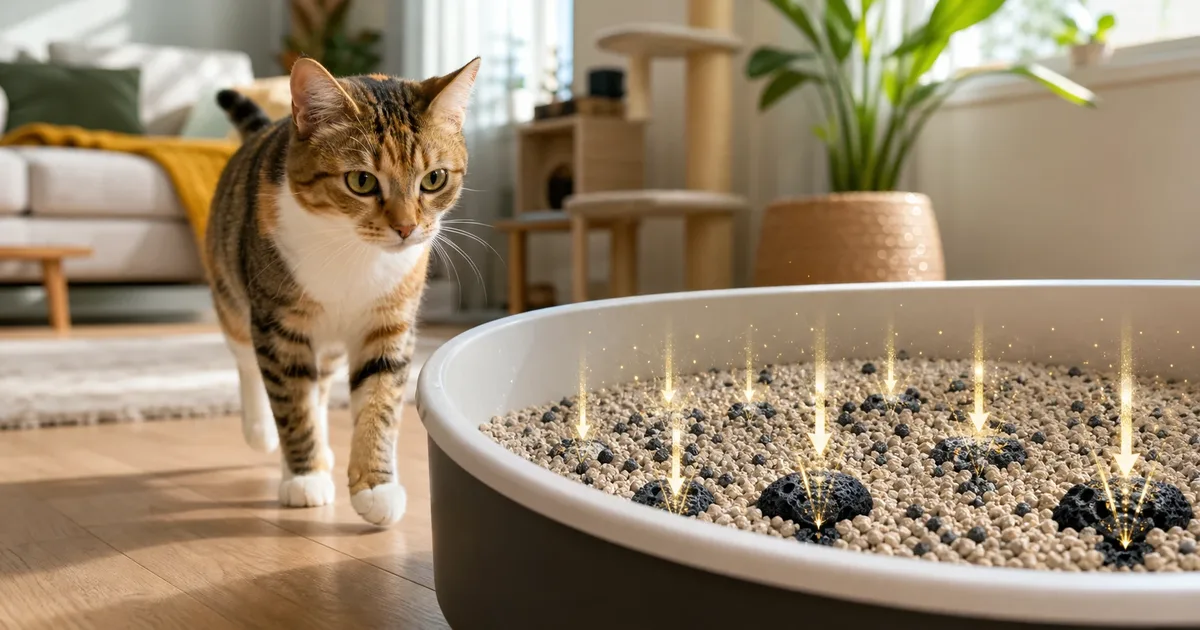
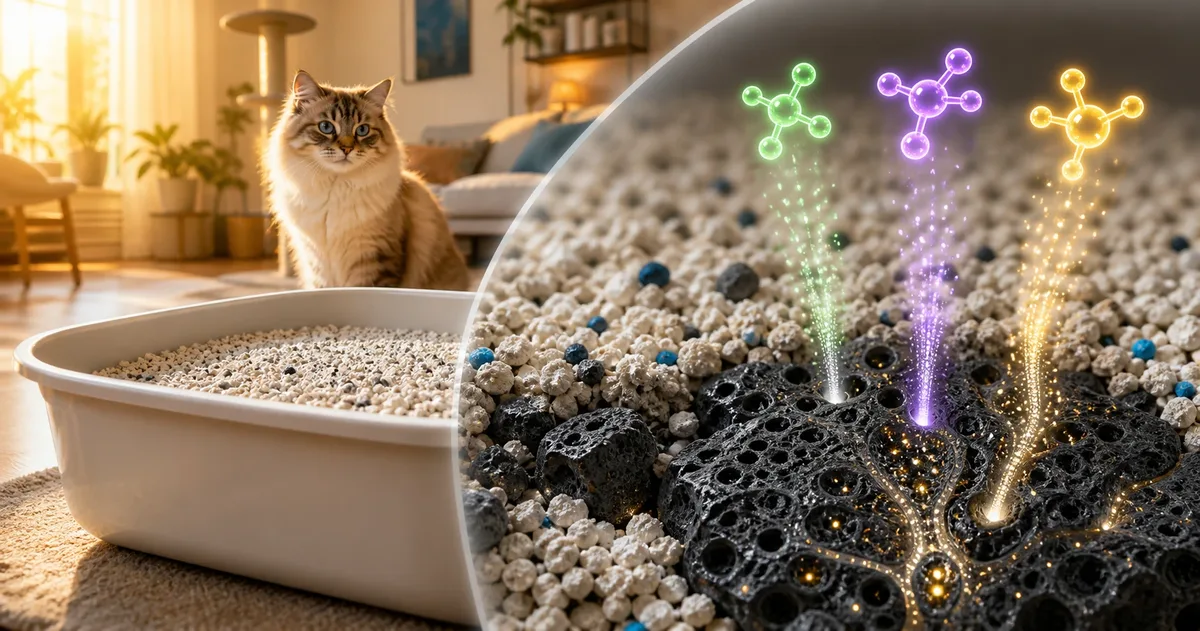
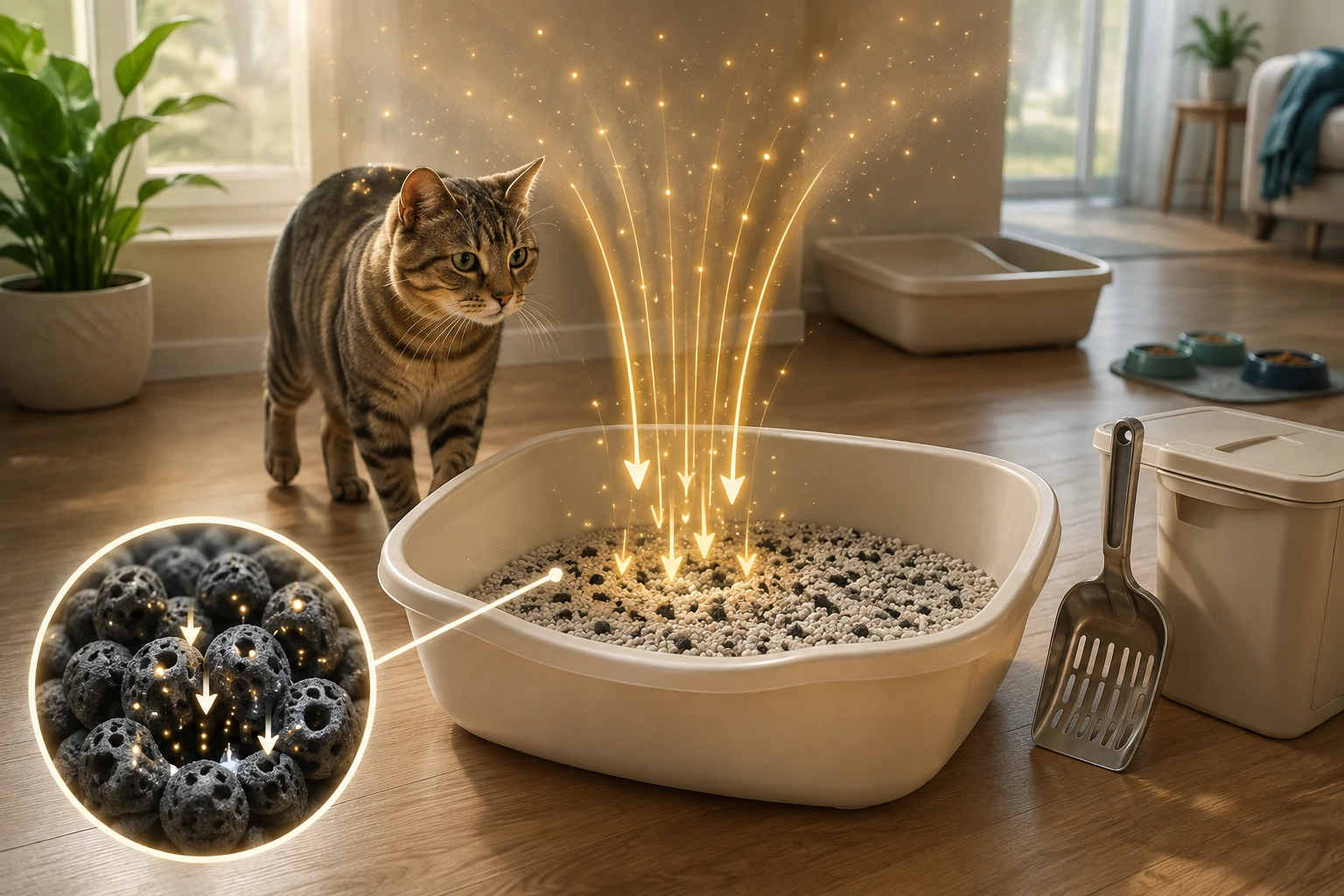
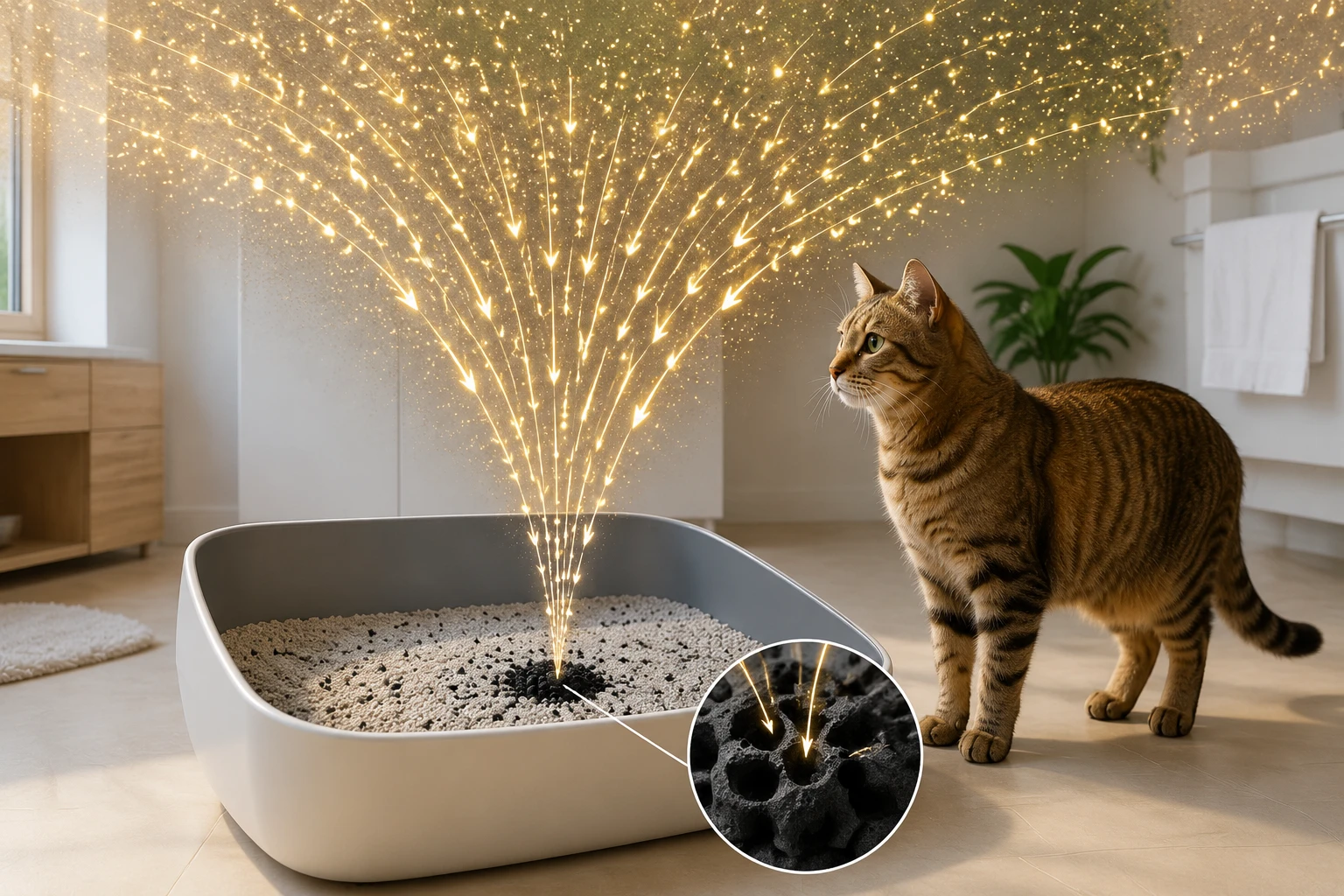
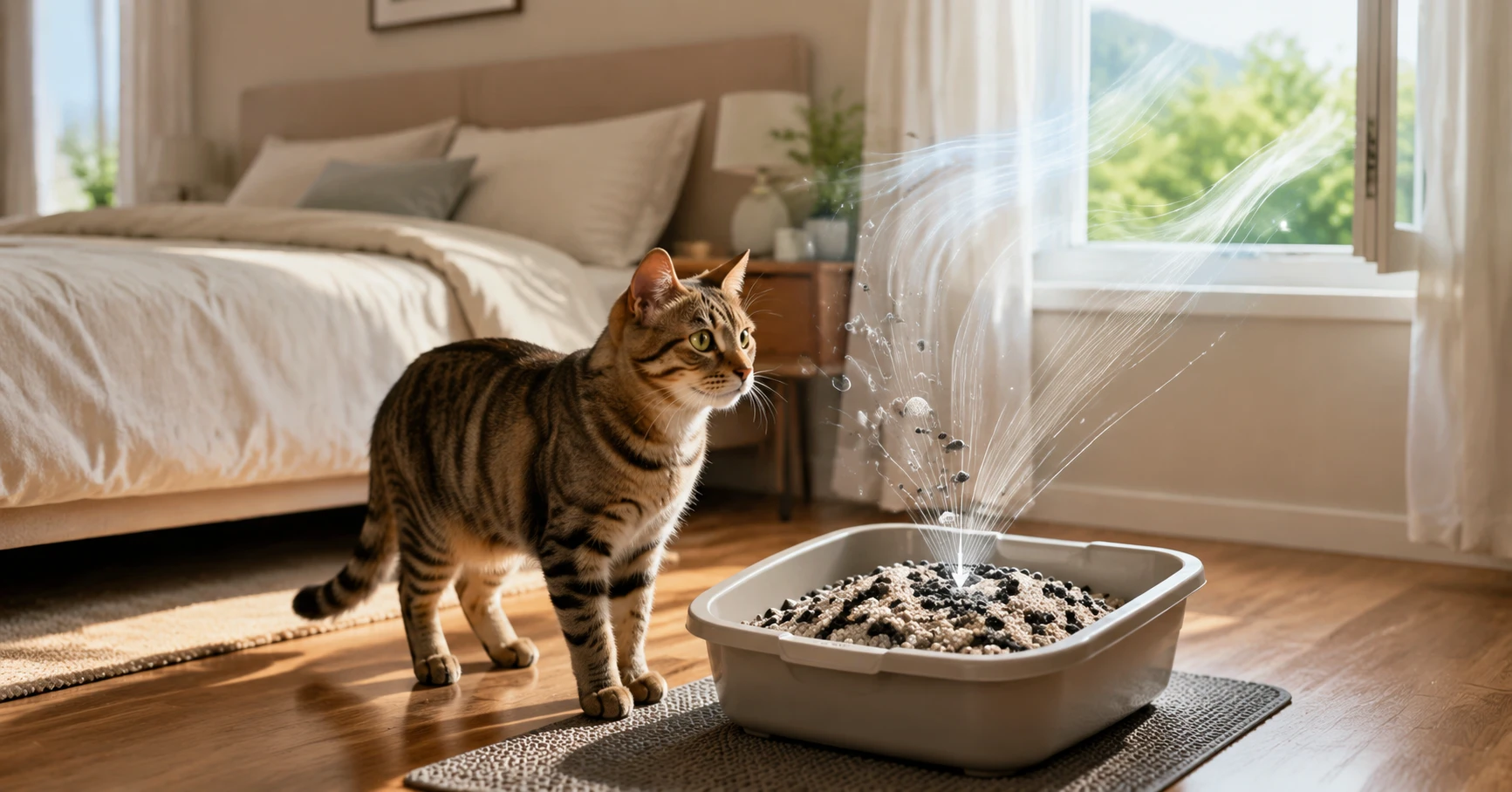
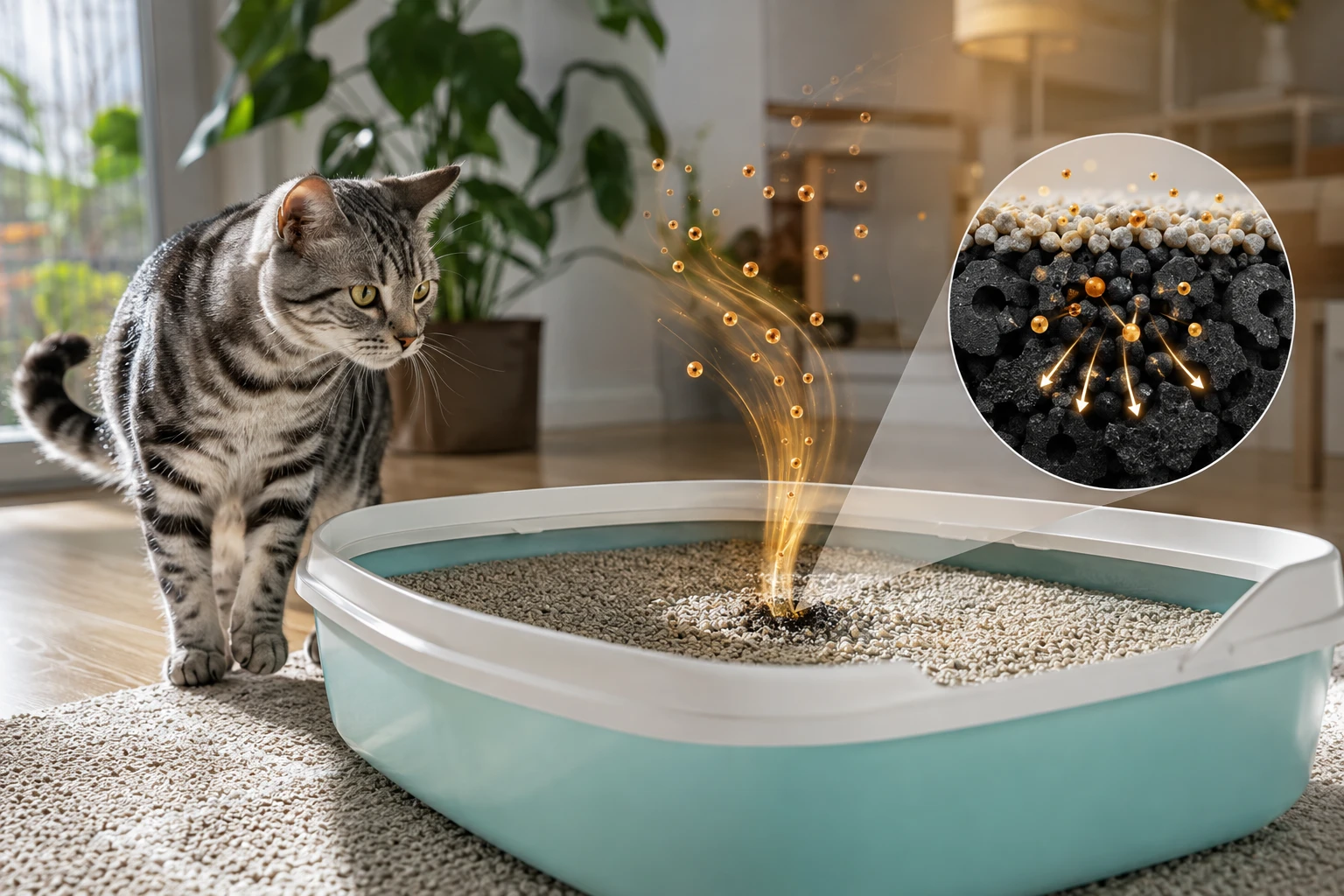
Even healthy cat poop smells, and some odor can remain after a fast scoop. Activated carbon has a network of microscopic pores that adsorb odor molecules onto its surface. Laboratory research has demonstrated activated carbon adsorption of hydrogen sulfide, one important odorous sulfur compound. That chemistry supports using activated carbon near an odor source, but it does not prove what caused your cat's stool to change.

2-3 tablespoons of Purrify granules per litter box. Sprinkle on fresh litter, mix gently. Top up whenever the box starts giving off a smell again - no fixed schedule. Scoop feces as usual. The additive works on odor between cleanings; it never replaces scooping or veterinary care.
That distinction is the honest bridge. If your cat is healthy and the box is simply doing what litter boxes do, source-level odor control can make the room easier to live with. If the poop changed suddenly or other symptoms appeared, make the vet call first and treat odor control as housekeeping.
The bottom line
A smelly bowel movement is not automatically a health crisis. Cat feces normally contain potent odor compounds, and food changes can alter them. The signal gets stronger when the change persists or arrives with diarrhea, blood, vomiting, weight loss, appetite changes, pain, or low energy.
Watch the whole cat, not only the smell. Photograph anything abnormal, keep a short log, and call your veterinarian when the pattern or accompanying signs concern you. Then keep the box clean and use activated carbon for the part it can honestly do: trapping odor at the source.
Veterinary and scientific sources
- Cornell Feline Health Center: Diarrhea, including diet changes, foul-smelling stool, accompanying signs, and when to seek care.
- Cornell Feline Health Center: Gastrointestinal Parasites of Cats, including parasite signs and fecal diagnosis.
- Merck Veterinary Manual: Disorders of the Stomach and Intestines in Cats, including colitis and malabsorption.
- Yan and colleagues, Environmental Science & Technology, an experimental study of hydrogen sulfide adsorption by activated carbon.
This article provides general information and is not a substitute for veterinary examination, diagnosis, or treatment.