
Quick Answer
How often should you change cat litter? For clumping litter: scoop daily, completely replace every 1-2 weeks. For crystal litter: stir daily, replace every 2-4 weeks. For non-clumping clay: replace entirely every 2-3 days. Multi-cat households should change more frequently, roughly 50% more often per additional cat.
Why Changing Frequency Matters
Understanding how often to change cat litter isn't just about odour, it directly impacts your cat's health and litter box habits. Here's what happens when litter isn't changed frequently enough:
For Your Cat
- • Litter box avoidance (accidents elsewhere)
- • Stress from unpleasant conditions
- • Potential UTIs from holding urine
- • Paw irritation from saturated litter
For Your Home
- • Escalating ammonia odour
- • Bacterial growth and health risks
- • Odour absorbed into litter box plastic
- • Smell spreading throughout home
The Ammonia Factor
Cat urine breaks down into ammonia gas through bacterial action. The longer waste sits, the more ammonia accumulates. Ammonia is a gas molecule-even when liquid is absorbed, the gas escapes into air. This is why a "clean-looking" box can still smell. Changing litter regularly removes the source before ammonia reaches problem levels.
Schedules by Litter Type
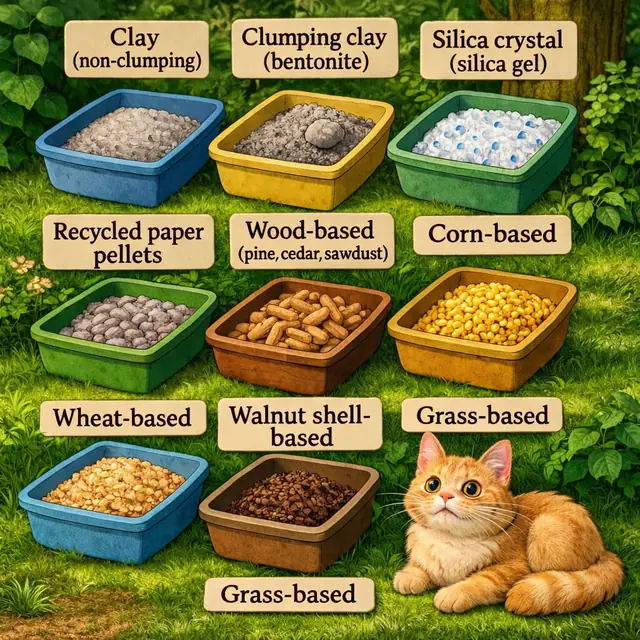
Different litter materials require different maintenance schedules. Here's the breakdown for each type:
Clumping Clay Litter
| Task | Frequency |
|---|---|
| Scoop clumps | 1-2 times daily |
| Top up fresh litter | Every 2-3 days |
| Complete replacement | Every 1-2 weeks |
| Wash litter box | Monthly |
Why: Clumping isolates waste effectively, but fine particles and broken clumps accumulate over time, reducing absorption capacity.
Crystal (Silica Gel) Litter
| Task | Frequency |
|---|---|
| Remove solid waste | Daily |
| Stir crystals | Daily |
| Complete replacement | Every 2-4 weeks |
| Wash litter box | Monthly |
Why: Crystals absorb massive amounts of liquid but reach saturation point. Stirring redistributes unsaturated crystals; colour change indicates saturation.
Non-Clumping Clay Litter
| Task | Frequency |
|---|---|
| Remove solid waste | Daily |
| Complete replacement | Every 2-3 days |
| Wash litter box | Weekly |
Why: Without clumping, urine spreads throughout and can't be isolated. The entire box becomes contaminated faster.
Natural Litters (Pine, Corn, Wheat, Tofu)
| Task | Frequency |
|---|---|
| Scoop waste | 1-2 times daily |
| Top up fresh litter | Every 2-3 days |
| Complete replacement | Every 1-2 weeks |
| Wash litter box | Every 2 weeks |
Why: Natural litters can develop mould in humid conditions and attract insects. Fresh replacement prevents these issues.
Ready for a litter box you can't smell?
Free shipping. Never run out. Cancel anytime.
Start autoship →Multi-Cat Household Adjustments
Multiple cats mean more waste and faster ammonia buildup. Adjust your schedule accordingly:
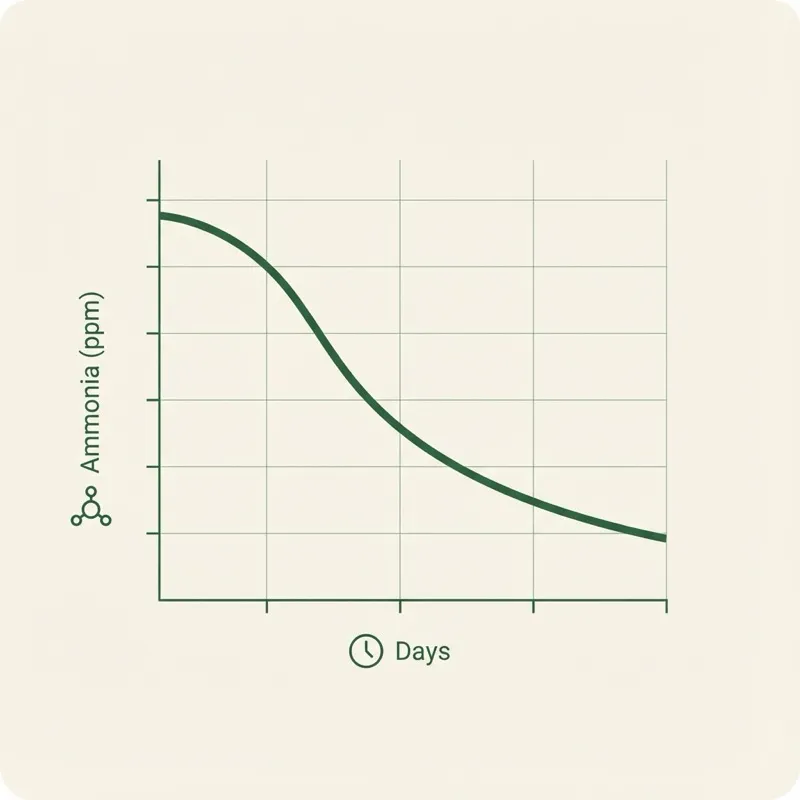
Multi-cat households need more frequent litter changes and more boxes
Multi-Cat Calculation
- 2 cats: Change 50% more often than single-cat schedule
- 3 cats: Change twice as often as single-cat schedule
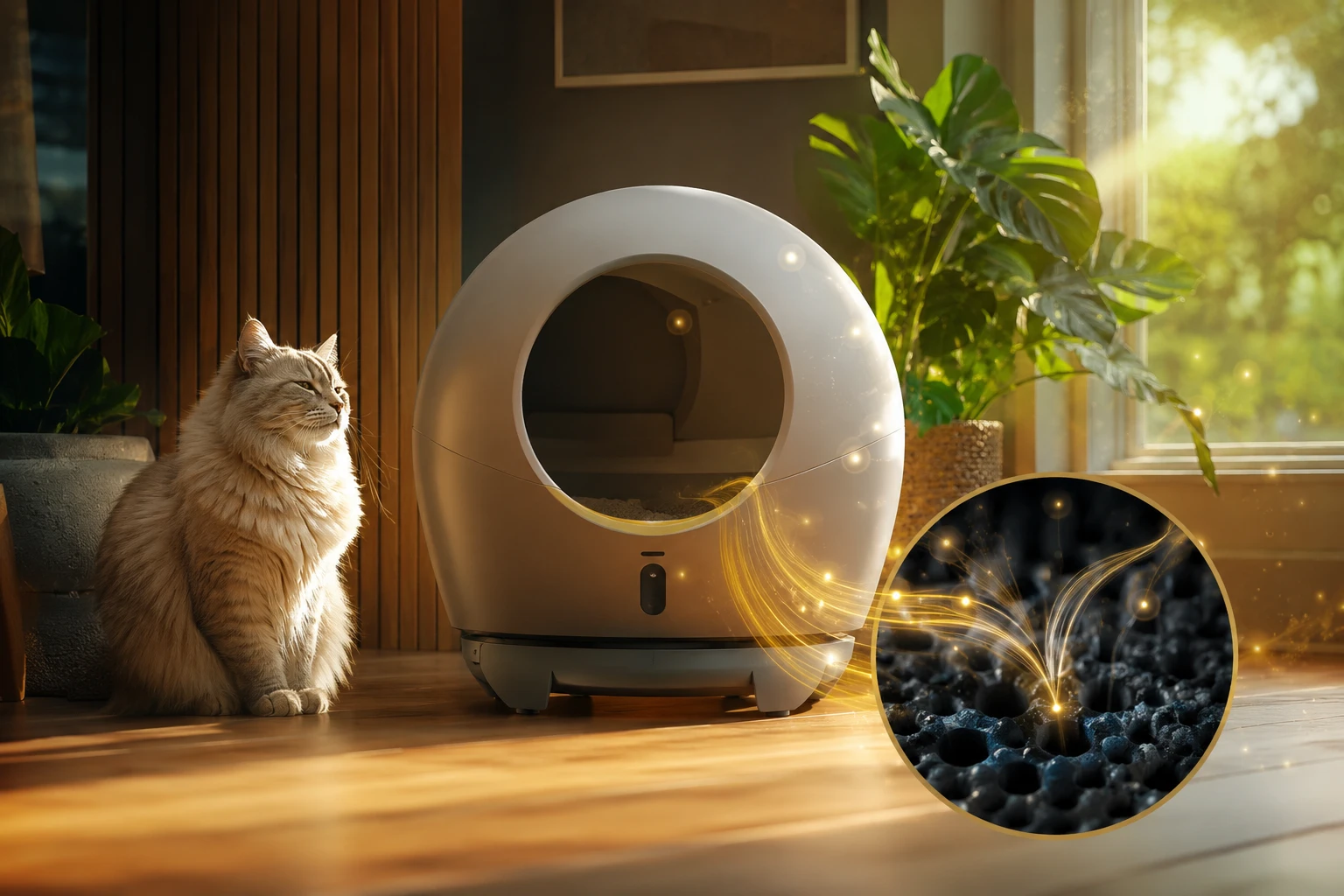
- 4+ cats: Daily maintenance becomes critical; consider automatic litter boxes
The Multi-Cat Box Rule
One litter box per cat plus one extra. Three cats = four boxes. This distributes waste and prevents any single box from becoming overwhelmed between cleanings. Spread boxes throughout your home rather than clustering them.
Signs You Need to Change Litter Now
Beyond scheduled changes, watch for these indicators that litter needs immediate replacement:
🔴 Replace Immediately
- • Strong ammonia smell even after scooping
- • Wet or soggy texture throughout
- • Cat avoiding the litter box
- • Visible urine pooling at bottom
- • Colour change in crystal litter
🟡 Change Within 24 Hours
- • Litter depth below 5 cm (2 inches)
- • Noticeable odour when entering room
- • Clumps breaking apart easily
- • Excessive dust when scooping
- • Cat covering waste more than usual
How to Extend Litter Freshness
Want to maximise time between complete changes while maintaining freshness? These strategies help:
Add Activated Carbon
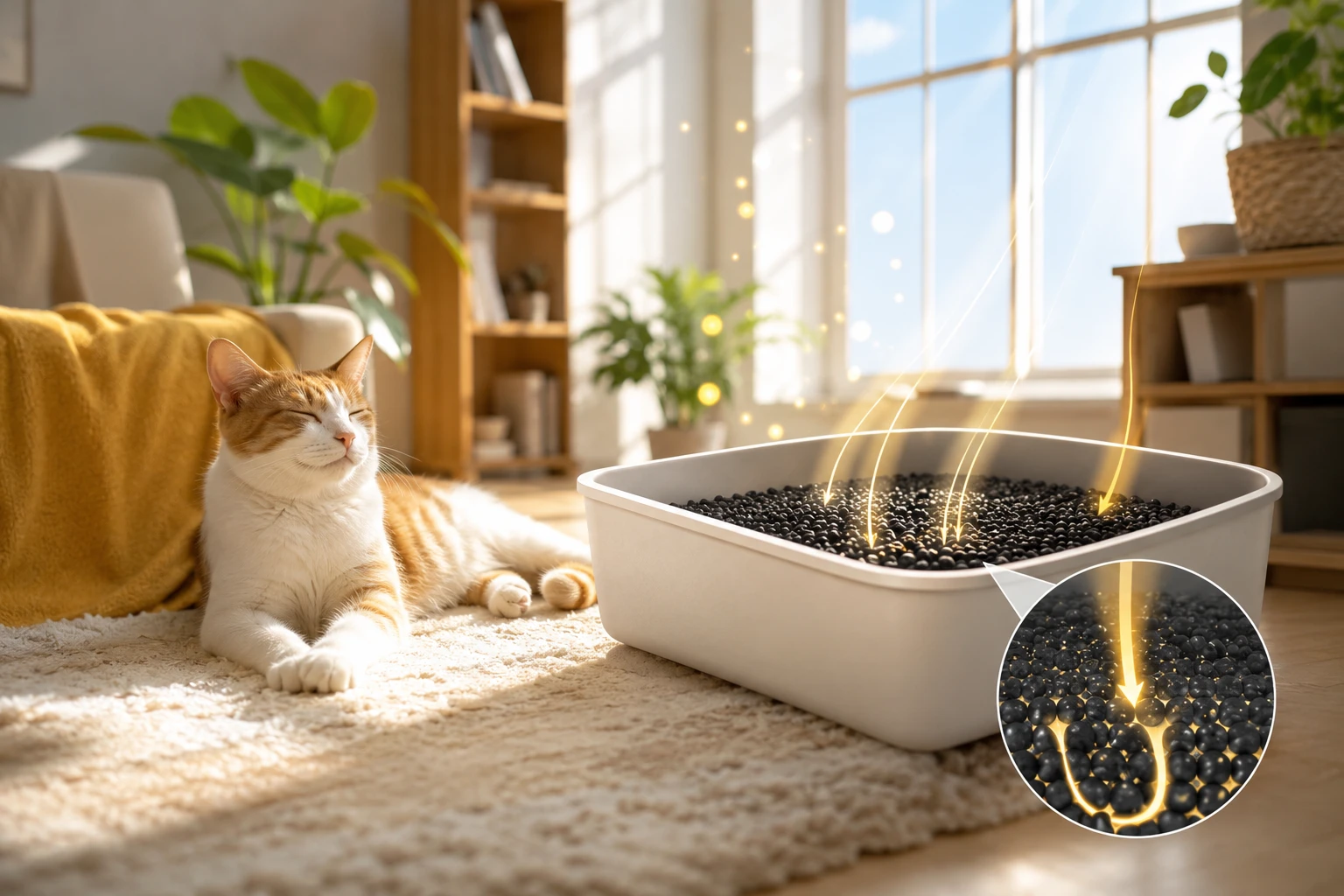
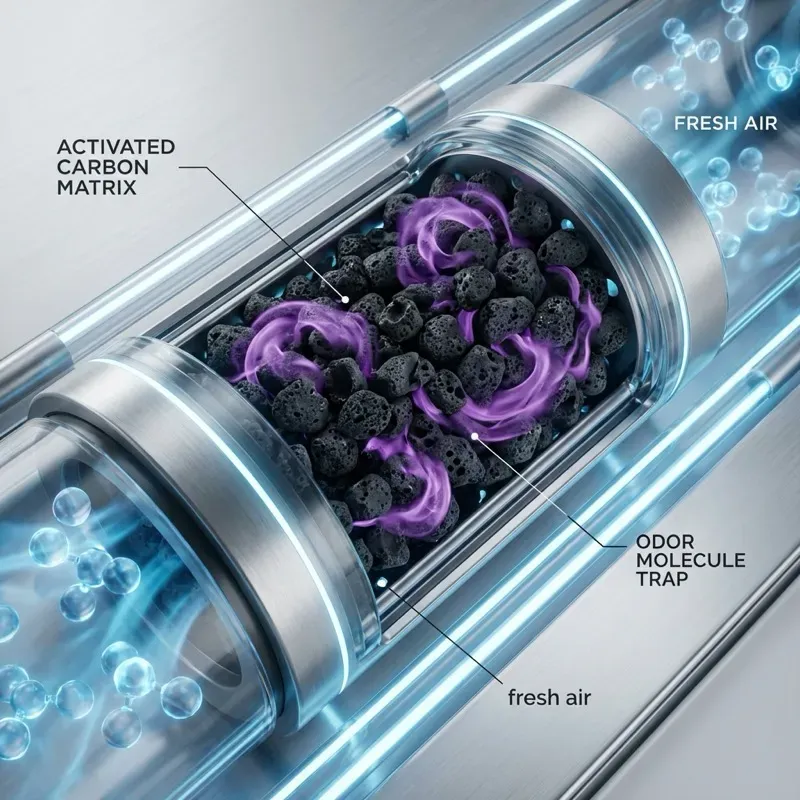
Activated carbon traps ammonia and sulphur molecules that litter alone can't capture. One gram has the surface area of a football field, filled with microscopic tunnels that physically trap odour molecules on contact. This is the same technology used in municipal water treatment plants and hospital air filtration systems.
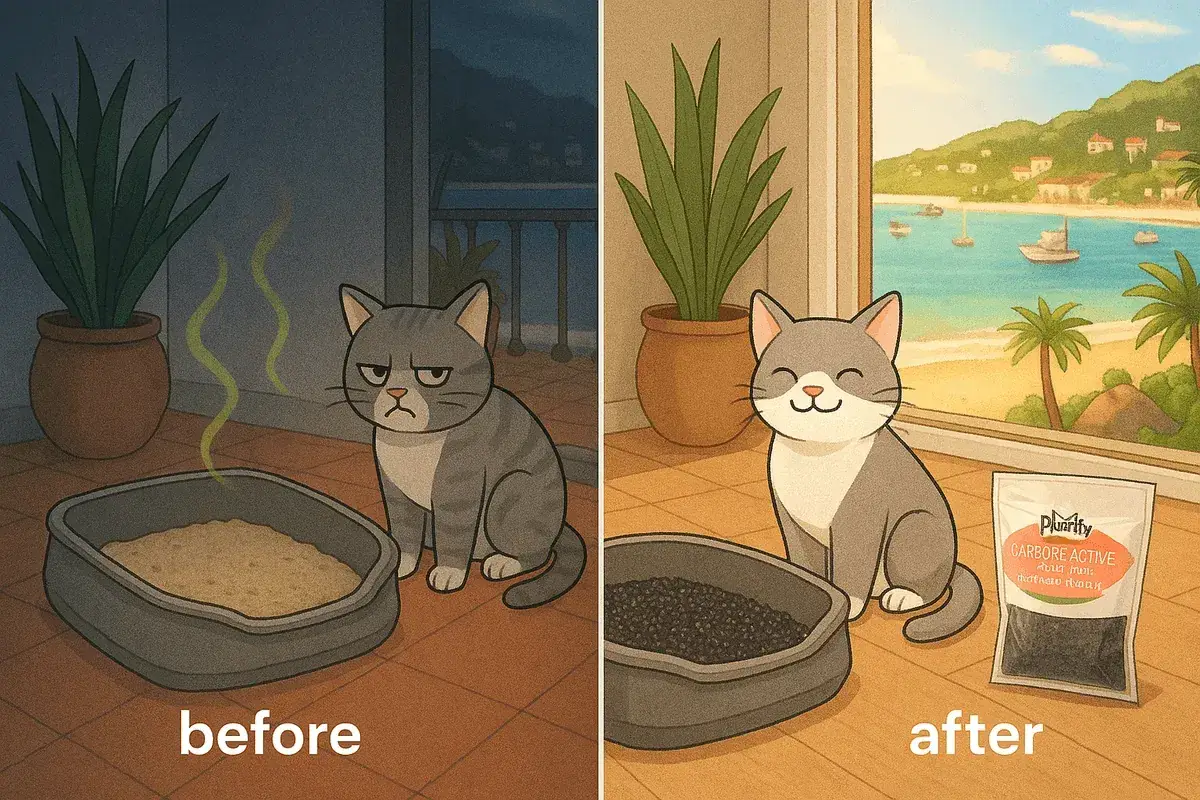
Purrify extends litter freshness by 7+ days-sprinkle on top of any litter type. Learn how it works →
Maintain Proper Depth
Keep litter at 7-10 cm (3-4 inches) deep. Shallow litter saturates faster and allows urine to reach the box bottom. Top up after scooping to maintain depth.
Scoop Thoroughly
Get all clumps-even small ones stuck to the bottom or sides. Broken clumps release ammonia even when the main waste is removed.
Ensure Good Ventilation
Airflow disperses odour molecules and slows bacterial growth. See our litter box location guide for placement tips.
Activated carbon extends freshness by trapping odour molecules at the source
Complete Maintenance Schedule
Daily Tasks (2-3 minutes)
- ☐ Morning scoop (all clumps and solids)
- ☐ Evening scoop
- ☐ Stir litter to redistribute (crystal litter)
- ☐ Check litter depth
Every 2-3 Days
- ☐ Top up fresh litter to maintain depth
- ☐ Wipe box edges if needed
- ☐ Reapply activated carbon additive
Weekly (Clumping) / Bi-Weekly (Crystal)
- ☐ Complete litter replacement
- ☐ Inspect box for scratches/damage
- ☐ Clean surrounding area
Monthly
- ☐ Deep clean litter box with unscented soap
- ☐ Dry completely before refilling
- ☐ Clean litter mat
- ☐ Check scoop for wear
Annually
- ☐ Replace litter box (plastic absorbs odour)
- ☐ Replace litter scoop
- ☐ Evaluate litter type (is it working for your cat?)
Frequently Asked Questions
How often should you change cat litter completely?
For clumping litter: every 1-2 weeks. For crystal litter: every 2-4 weeks. For non-clumping clay: every 2-3 days. Multi-cat households should increase frequency proportionally. Always change immediately if you notice strong odour or your cat avoiding the box.
Can I just add more litter instead of changing it?
Topping up extends time between complete changes but doesn't replace them. Over time, fine particles, broken clumps, and absorbed odours accumulate. The base layer becomes contaminated even if you scoop religiously. Complete replacement is necessary for true freshness.
How do I know when crystal litter is saturated?
Most crystal litters change colour when saturated, typically from white/clear to yellow. You'll also notice increased odour as absorption capacity drops. If stirring doesn't redistribute dry crystals to the surface, it's time for complete replacement.
Should I wash the litter box every time I change litter?
Not every time-monthly is sufficient for most situations. However, always wash if you notice lingering odour after changing litter, visible residue, or if your cat has been unwell. Use unscented dish soap and warm water; avoid bleach or harsh chemicals.
Does adding activated carbon reduce how often I need to change litter?
Activated carbon extends freshness between changes by trapping odour molecules that litter can't capture. Purrify provides 7+ days of additional freshness per application. However, you still need to maintain your scooping and replacement schedule-carbon addresses gas molecules, not waste accumulation.
How often should I change litter for a kitten?
Kittens produce less waste but need more frequent monitoring. Follow the same schedule as adult cats, but check the box more often (3x daily) to ensure the kitten is using it properly. Switch to adult-appropriate litter after 12 months.
Is it okay to mix fresh litter with old litter?
Topping up with fresh litter while keeping uncontaminated base litter is fine. However, don't mix truly old, saturated litter with fresh, the contaminated portion reduces overall effectiveness. When in doubt, do a complete replacement.
The Bottom Line
Understanding how often to change cat litter depends on your litter type, number of cats, and environmental factors. The key principles are consistent: scoop daily, top up regularly, and replace completely on schedule. Watch for signs that indicate early replacement is needed.
For maximum freshness between changes, add activated carbon to trap the gas molecules that cause odour. It's the same molecular-trapping technology used in water treatment plants and hospital air systems, and it works just as effectively in your litter box.
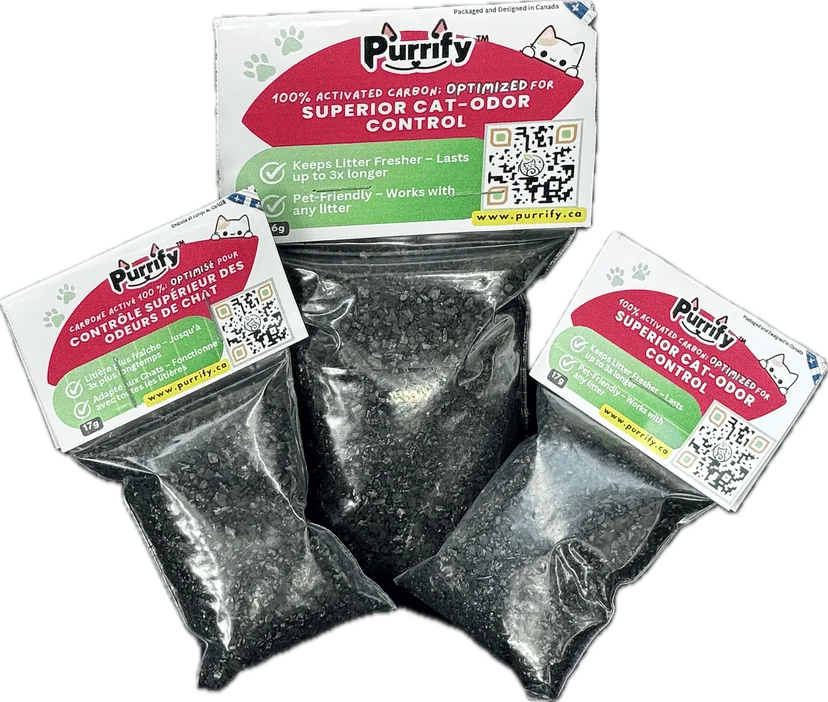
Pro Tip: The Purrify Solution
For the most effective odor control, try Purrify's activated carbon litter additive. Simply sprinkle it in your litter box to eliminate odors for up to 7 days. Made from premium coconut shell carbon, it's the same technology used in water and air filters.
Try Purrify Risk-Free →