
Skip to main contentSkip to productsSkip to testimonials
Purrify
Products
For Retailers
Learn
BlogFun & Games
About
Get a free sample
Purrify - Premium Activated Carbon Cat Litter Additive - Return to Home Page

Love your cat, lose the smell. Water-filter grade activated carbon eliminates ammonia odors - no perfumes, just science. Try FREE (just pay shipping). Made in Canada, ships across North America.

Products

  • Get Purrify Near You
  • Buy Online
  • Free Sample
  • Standard 50g
  • Large Pack
  • Compare Sizes

Learn

  • How It Works
  • FAQ
  • All Tools
  • Cat Litter Guide
  • Ammonia Science
  • Safety Information
  • Glossary
  • Odor Solutions
  • Science
  • Ammonia Control

Company

  • About Us
  • Blog
  • Fun & Games
  • Case Studies
  • About Purrify
  • Team
  • Editorial Policy
  • Testing Policy
  • Referral Program
  • Returns Policy
  • Documents
  • For Retailers
  • B2B Inquiry
  • Affiliate Program
  • Contact
  • Shipping & Returns

Locations

  • All Locations
  • Canada Wide
  • Montreal
  • United States
  • Stores in Quebec

Resources

  • Odor Control Litter Guide
  • Water & Carbon Science
  • PFAS Canada
  • Comparison Lab
  • Comparison Lab Methodology
  • Ammonia Health Risks
  • Litter Box Smell Elimination
  • Multiple Cats Odor Control
  • Natural Cat Litter Additive
  • Senior Cat Litter Solutions
  • How to Neutralize Ammonia
  • Contact Support
  • Retailer Get Started
  • Retailer Reorder
  • Free Trial
Privacy PolicyTerms of ServiceSitemap

© 2026 Purrify | All Rights Reserved

BlogOdor ControlCat Litter Odour Control Tips: The Ultimate Guide (2026)
Published January 3, 2026Updated January 3, 2026Public author Purrify Team13 min read

Cat Litter Odour Control Tips: The Ultimate Guide (2026)

Baking soda fails after 48 hours. Scented litter makes cats avoid the box. Discover the 7 odour control habits that actually work-plus the NASA-grade technology water treatment plants use to trap ammonia.

Odor ControlTips & Advice

On this page

  1. Quick Answer
  2. Table of Contents
  3. Why Cat Litter Smells (The Science)
  4. Ammonia (From Urine)
  5. Sulphur Compounds (From Feces)
  6. The Core Problem
  7. Daily Habits That Prevent Odour
  8. 1. Scoop Twice Daily
  9. 2. Maintain Proper Litter Depth
  10. 3. Top Up After Scooping
Free Sample

FREE Sample (Just Pay S&H)

Get FREE Sample

Quick Answer

The most effective cat litter odour control combines three strategies: daily scooping to remove waste, proper ventilation to disperse gases, and activated carbon to trap ammonia molecules that litter alone cannot capture. This is the same molecular-trapping technology used in municipal water treatment and hospital air filtration systems.

Table of Contents

  • 1. Why Cat Litter Smells (The Science)
  • 2. Daily Habits That Prevent Odour
  • 3. Weekly Maintenance Routines
  • 4. Litter Box Setup for Maximum Freshness
  • 5. Advanced Odour Control Solutions
  • 6. What Doesn't Work (And Why)
  • 7. Frequently Asked Questions

Why Cat Litter Smells (The Science)

Effective cat litter odour control is a matter of stoichiometry, not magic. By balancing the nitrogen load of urine with the correct adsorption surface area, you can eliminate smell scientifically. Cat waste produces two types of odour compounds:

Ammonia (From Urine)

Cat urine contains urea, which bacteria break down into ammonia gas. This creates that sharp, eye-watering smell that gets worse over time. Ammonia is a gas molecule-it escapes into the air even after liquid is absorbed.

Sulphur Compounds (From Feces)

Cat feces produce sulphur-based compounds-similar to what makes rotten eggs smell. These molecules are extremely potent; even tiny amounts trigger our noses' warning systems.

Cat Litter Odour Control Tips - Complete Guide to Eliminating Litter Box Smell

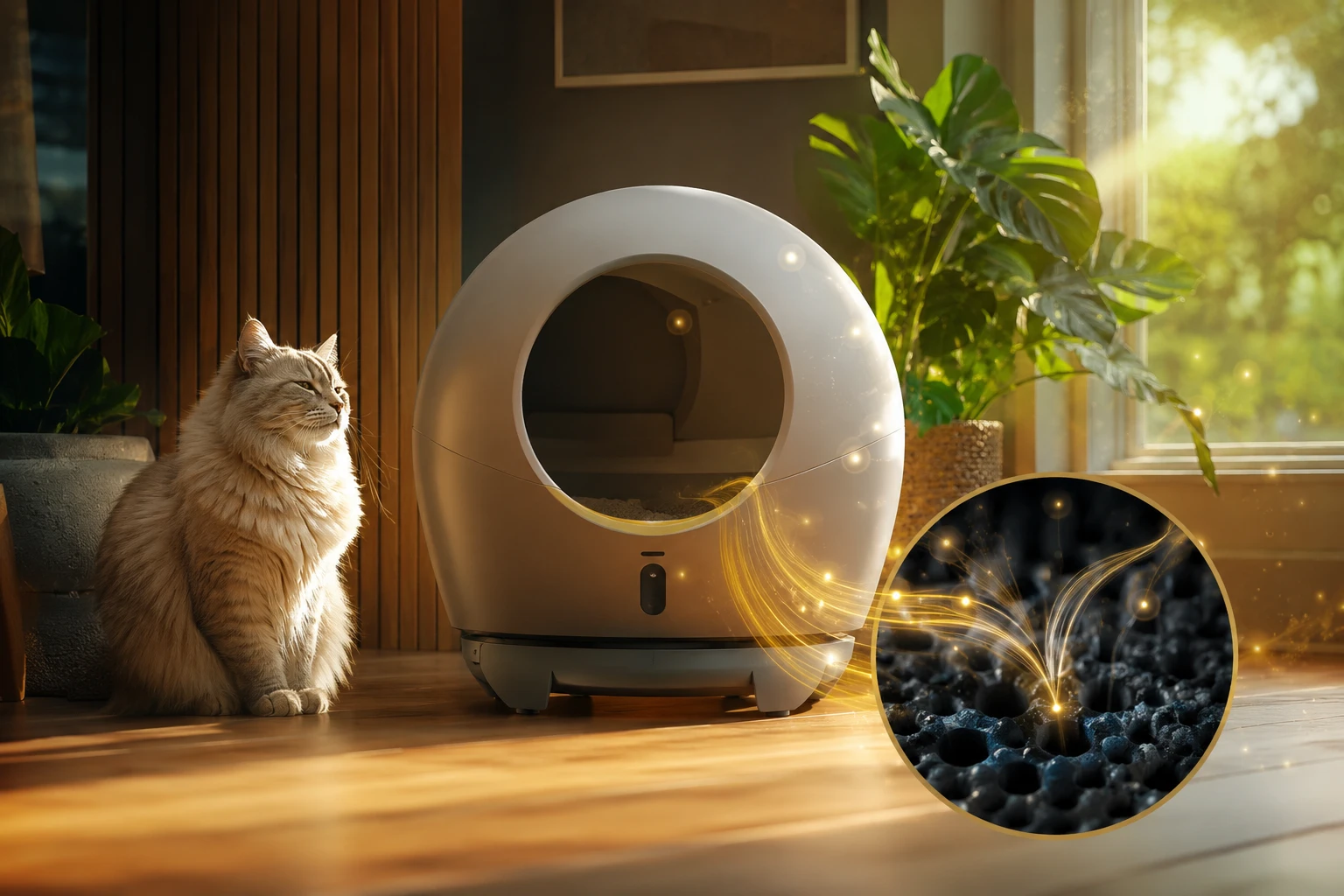
Understanding the science: How to trap gas molecules before they escape

The Core Problem

Most litters absorb liquid but cannot trap gas. That's why a freshly cleaned litter box can still smell-the ammonia molecules escape into the air the moment waste hits the litter. Effective odour control must address both liquid and gas.

Daily Habits That Prevent Odour

The foundation of cat litter odour control is consistent daily maintenance. Here's what actually works:

1. Scoop Twice Daily

The #1 most effective habit is scooping at least twice per day-once in the morning and once in the evening. Waste left in the box for hours produces exponentially more ammonia as bacteria multiply.

Pro tip: Keep a small covered bin next to the litter box for quick disposal.

2. Maintain Proper Litter Depth

Keep litter at 7-10 cm (3-4 inches) deep. Too shallow means urine reaches the box bottom (which absorbs smell). Too deep and cats may avoid using it, leading to accidents elsewhere.

3. Top Up After Scooping

Add fresh litter daily to replace what you remove. This maintains depth and ensures there's always unused litter available to absorb new waste.

4. Stir the Litter

After scooping, give the litter a gentle stir to distribute remaining material evenly and expose fresh litter to the surface. This helps with odour absorption.

Weekly Maintenance Routines

Beyond daily scooping, these weekly practices prevent odour buildup:

Weekly Checklist

  • □ Complete litter change: Replace all litter weekly (or every 2 weeks for crystal litter)
  • □ Wash the box: Clean with unscented dish soap and warm water-avoid bleach or strong chemicals that leave residue cats dislike
  • □ Dry completely: Moisture trapped under fresh litter causes bacterial growth and faster odour development
  • □ Check for scratches: Plastic boxes develop scratches that harbour bacteria; replace annually
  • □ Clean surrounding area: Wipe the floor around the box where tracking spreads litter particles
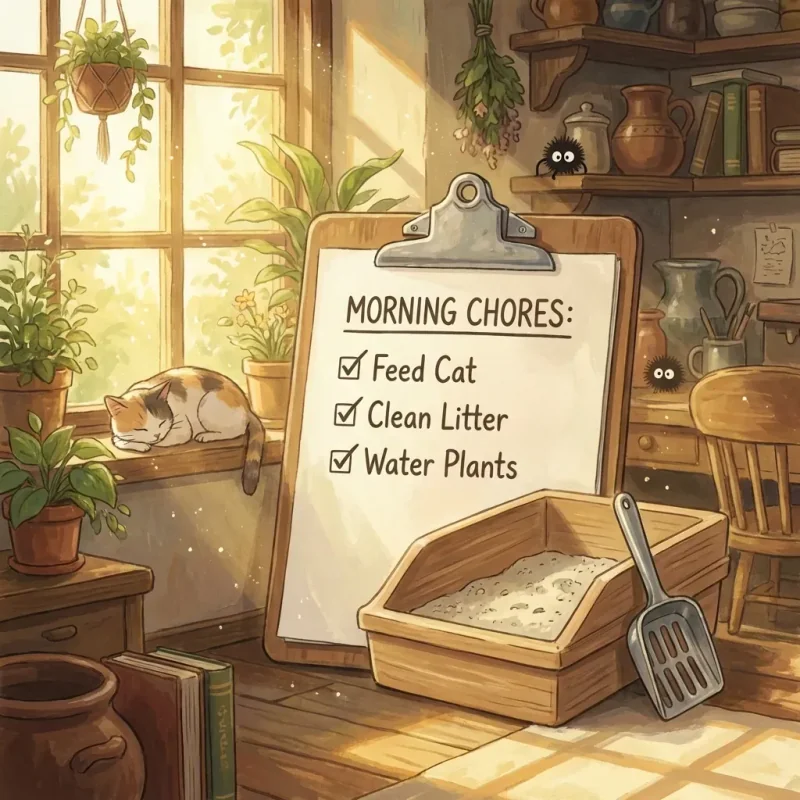
Ghibli-style illustration of a consistent litter scooping routine

Consistency is key: A regular cleaning routine keeps odours at bay

Litter Box Setup for Maximum Freshness

Your litter box setup dramatically affects odour. These factors make a significant difference:

Box Size Matters

The box should be at least 1.5x your cat's body length. Larger boxes allow cats to bury waste properly and give urine more area to spread and absorb rather than pooling.

Open vs Covered Boxes

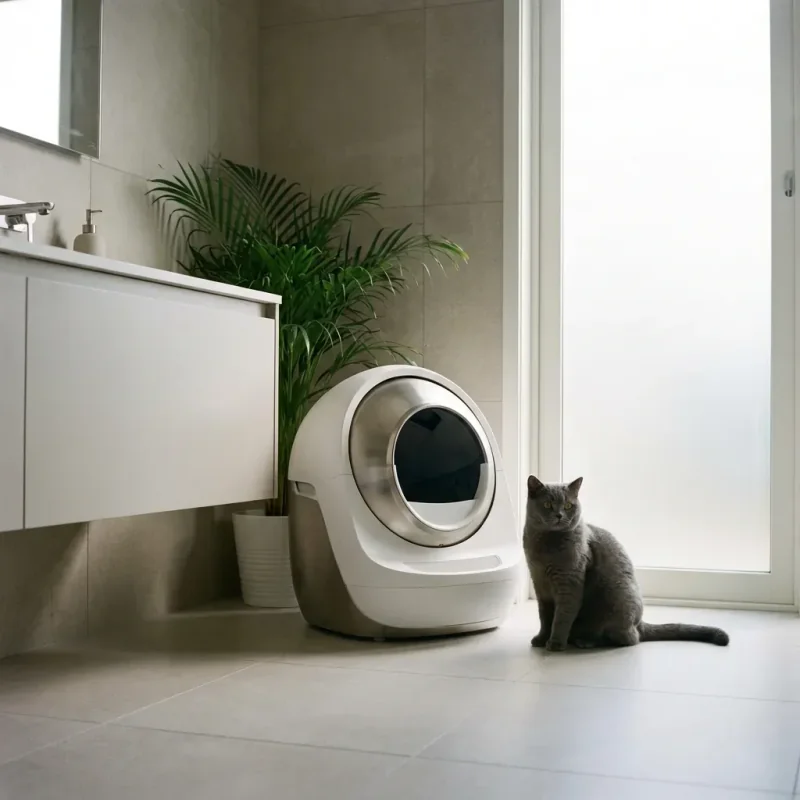
Covered boxes trap odour inside, which might seem good-but they also concentrate ammonia, which cats hate. This can cause avoidance behaviour. If you use a covered box, ensure it has ventilation or add an odour-trapping solution.

Learn more about odour molecule trapping →

Ventilation Is Key

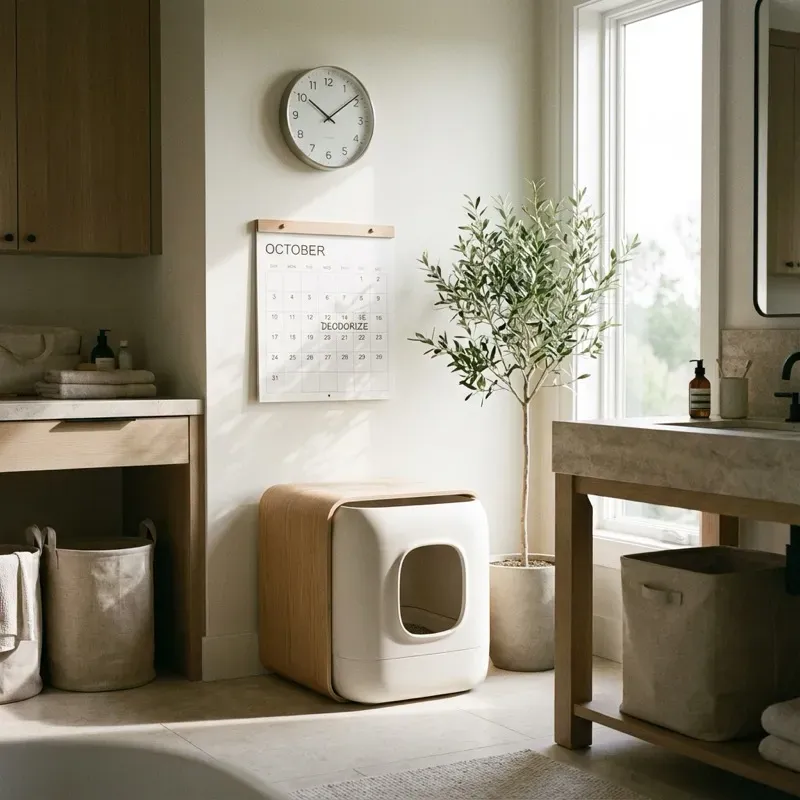
Place the litter box in an area with good airflow. Basements and closets trap odour; a spare bathroom or laundry room with a fan works better. Cross-ventilation disperses odour molecules before they concentrate.

Number of Boxes

The rule is one box per cat plus one extra. Multiple boxes mean waste is distributed across more litter, reducing the concentration of odour in any single location.

Advanced Odour Control Solutions

When basic maintenance isn't enough, these advanced solutions target odour at the molecular level:

Activated Carbon: The Gold Standard

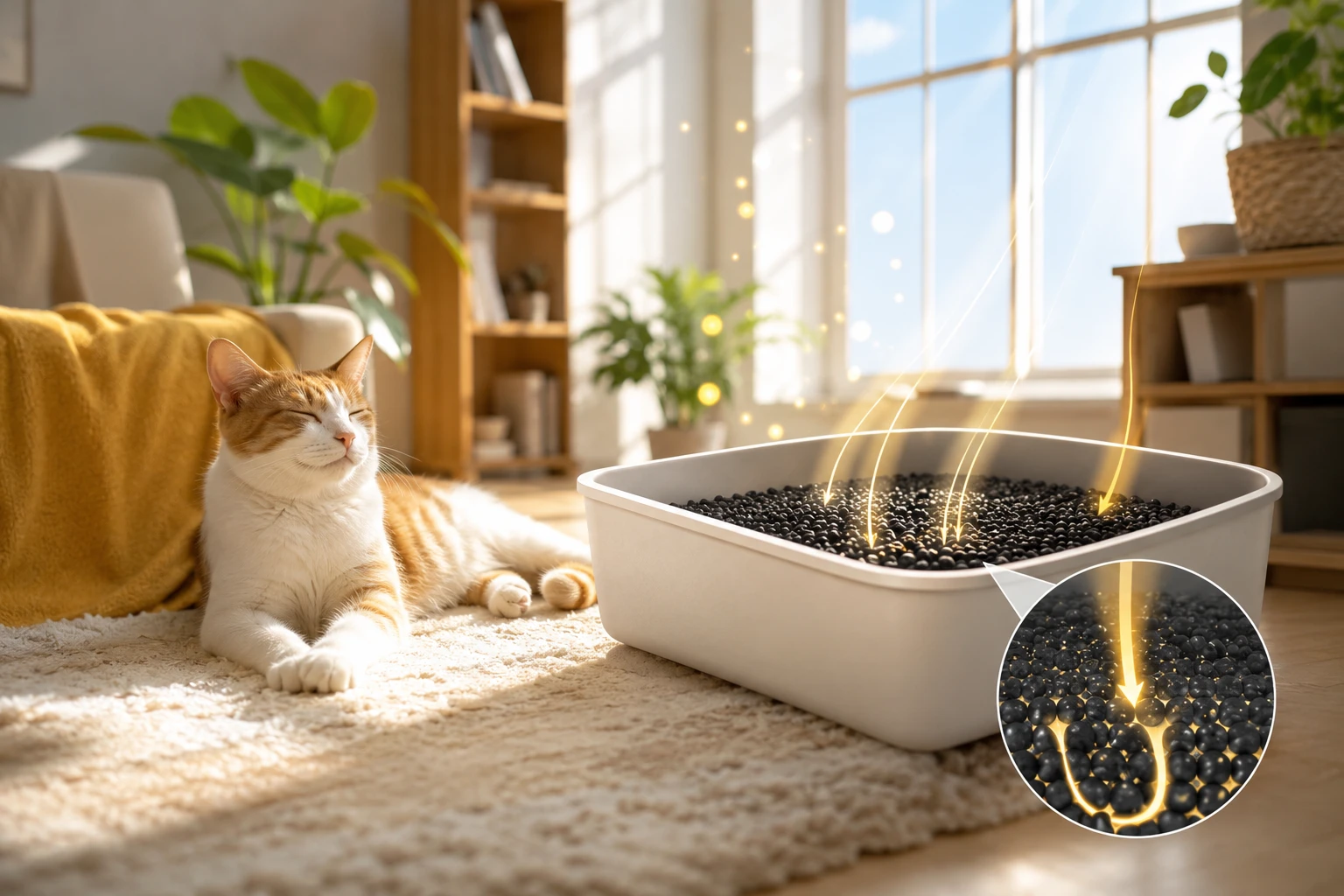
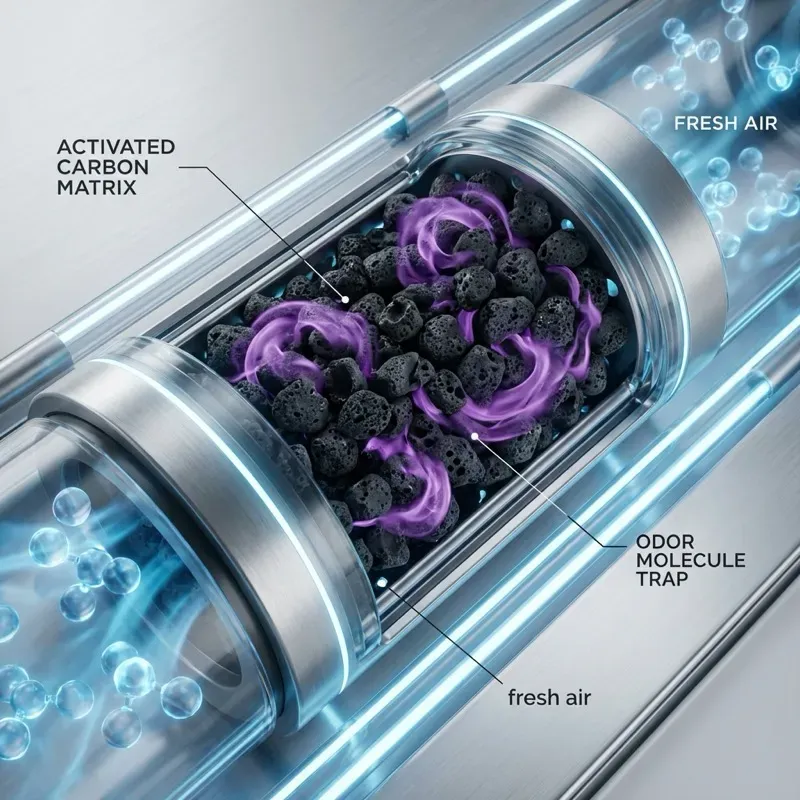
Activated carbon is the most effective material for trapping gas molecules. One gram has the surface area of a football field, filled with microscopic tunnels that capture ammonia and sulphur compounds on contact.

This isn't new technology-it's the same material used in:

  • • Municipal water treatment plants worldwide
  • • Hospital air filtration systems for operating rooms
  • • Home water filters like Brita pitchers
  • • Aquarium filters to keep fish tanks crystal clear

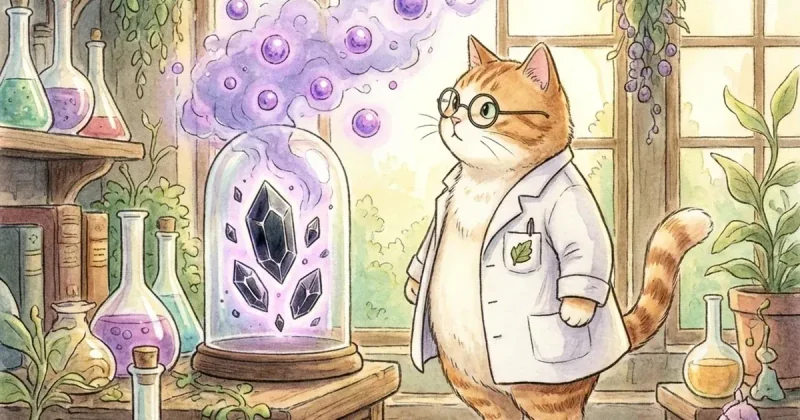
Diagram showing how carbon micropores trap ammonia molecules

Physical Adsorption: Trapping gases at source before they reach your nose

Why Activated Carbon Outperforms Alternatives

Method How It Works Limitation
Baking Soda Chemical neutralization Slow reaction, limited capacity
Fragrances Masks with stronger scent Doesn't eliminate, stresses cats
Enzymes Biological breakdown Slow, requires moisture, depletes
Activated Carbon Physical adsorption Instant, massive capacity

How to Use Activated Carbon

Purrify is a food-grade coconut shell activated carbon additive designed specifically for litter boxes. Simply sprinkle on top of any litter-no mixing required. The carbon sits at the surface where odour molecules escape, trapping them before they reach your nose.

  • ✓ Works with any litter type (clay, crystal, natural)
  • ✓ Fragrance-free-cats have 200 million scent receptors
  • ✓ Non-toxic, food-grade quality
  • ✓ 7+ days of freshness per application

What Doesn't Work (And Why)

Many common cat litter odour control methods are ineffective or counterproductive:

❌ Scented Litters

Fragrances mask odour temporarily-they don't eliminate it. Worse, cats find strong artificial scents overwhelming (their sense of smell is 14x stronger than humans). This can cause litter box avoidance.

❌ Air Fresheners Near the Box

Plug-in air fresheners and sprays add more airborne chemicals to an area your cat visits multiple times daily. They mask rather than remove odour, and the combination can be unpleasant for everyone.

❌ Excessive Baking Soda

While baking soda can neutralize some acids, it works slowly and has limited capacity. Large amounts change the litter texture, which cats may reject. Activated carbon is 3-5x more effective for ammonia specifically.

❌ Putting the Box in a Closet

Enclosed spaces concentrate odour rather than dispersing it. Without airflow, ammonia builds up to levels unpleasant for both you and your cat. A ventilated area always outperforms a hidden closet.

Harmful masking products vs clear, fresh air

Masking smells only adds more chemical load for your cat's 200 million receptors

Frequently Asked Questions

How often should I scoop the litter box for odour control?

Scoop at least twice daily for optimal odour control. Waste left in the box allows bacteria to multiply, producing exponentially more ammonia. Morning and evening scooping catches waste before it has time to generate significant odour.

Why does my litter box still smell after cleaning?

Plastic litter boxes absorb odour molecules into microscopic scratches over time. If your clean box still smells, it may be time to replace it (annually is recommended). Also, ensure you're drying the box completely before adding fresh litter-trapped moisture accelerates bacterial growth.

Is activated carbon non-toxic for cats?

Food-grade activated carbon, like that used in water filters and Purrify, is non-toxic. It's the same material trusted in hospital air filtration systems and municipal water treatment. Coconut shell carbon is 100% natural and fragrance-free.

Does baking soda actually help with litter box odour?

Baking soda provides limited odour control through slow chemical neutralization. For ammonia specifically, activated carbon is significantly more effective because it physically traps molecules instantly rather than waiting for chemical reactions. See our detailed comparison.

Should I use scented or unscented cat litter?

Unscented litter is generally better for cats. Their sense of smell is 14 times stronger than humans, so artificial fragrances can be overwhelming and may cause litter box avoidance. For odour control, pair unscented litter with activated carbon rather than relying on masking fragrances.

How do I control odour with multiple cats?

Follow the one-box-per-cat-plus-one rule. More cats produce more ammonia, so maintaining adequate litter depth and adding activated carbon becomes even more important. Scoop all boxes twice daily and consider adding an extra application of carbon for high-use boxes.

What's the best litter box location for odour control?

Choose a location with good airflow but away from high-traffic areas. A spare bathroom, laundry room, or corner of a living space with ventilation works well. Avoid closets and enclosed spaces where odour concentrates. See our complete location guide.

The Bottom Line

Effective cat litter odour control combines consistent habits (daily scooping, weekly deep cleaning) with the right tools. Most litters handle liquid waste well but can't trap gas molecules-that's where activated carbon makes the difference.

The same molecular-trapping technology that purifies drinking water for millions of households and filters air in hospital operating rooms works just as effectively in your litter box. It's not about masking odours with more smells-it's about physically capturing odour molecules before they reach your nose.

🧪 The Free Science Experiment

Try the vet-approved odor solution. Get your trial bag for free (just pay $4.76 shipping). If you don't notice the difference the first day you use it, we'll refund every penny.

Fragrance-free, chemical-free, and 100% molecular adsorption.

Get Your Free Sample (Just Pay Shipping)

Related Articles

  • → Best Litter Box Location for Odour Control
  • → How Often Should You Change Cat Litter?
  • → Activated Carbon vs Baking Soda: Complete Comparison
  • → How Activated Carbon Eliminates Odours

Stop masking odors - eliminate them.

Activated carbon physically traps ammonia molecules. Try the science-backed solution free - just pay shipping.

Try It Free

References

  1. Urease-mediated urea hydrolysis and ammonia production - National Institutes of Health (PMC)
  2. OSHA ammonia exposure limits and annotated permissible exposure limits - U.S. Department of Labor (OSHA)
  3. Ammonia toxicological profile and health effects - ATSDR / CDC
  4. EPA guidance on air cleaners, gases, and odors in the home - U.S. Environmental Protection Agency
  5. Activated carbon adsorbers: surface area, pore structure, and adsorption basics - U.S. Environmental Protection Agency
  6. Peer-reviewed study on ammonia removal using activated carbons - PubMed
  7. IUPAC definition of microporous carbon and pores below 2 nm - IUPAC Gold Book
  8. Peer-reviewed analysis of the domestic cat nose and feline olfaction - National Institutes of Health (PMC)
  9. NASA technical report on ISS trace contaminant control using activated charcoal - NASA Technical Reports Server
  10. Activated carbon use in respirator cartridges - CDC / NIOSH

Frequently Asked Questions

How often should I scoop the litter box for odour control?

Scoop at least twice daily for optimal odour control. Waste left in the box allows bacteria to multiply, producing exponentially more ammonia. Morning and evening scooping catches waste before it has time to generate significant odour.

Why does my litter box still smell after cleaning?

Plastic litter boxes absorb odour molecules into microscopic scratches over time. If your clean box still smells, it may be time to replace it (annually is recommended). Also, ensure you're drying the box completely before adding fresh litter-trapped moisture accelerates bacterial growth.

Is activated carbon non-toxic for cats?

Food-grade activated carbon, like that used in water filters and Purrify, is non-toxic. It's the same material trusted in hospital air filtration systems and municipal water treatment. Coconut shell carbon is 100% natural and fragrance-free.

Does baking soda actually help with litter box odour?

Baking soda provides limited odour control through slow chemical neutralization. For ammonia specifically, activated carbon is significantly more effective because it physically traps molecules instantly rather than waiting for chemical reactions. See our detailed comparison.

Should I use scented or unscented cat litter?

Unscented litter is generally better for cats. Their sense of smell is 14 times stronger than humans, so artificial fragrances can be overwhelming and may cause litter box avoidance. For odour control, pair unscented litter with activated carbon rather than relying on masking fragrances.

How do I control odour with multiple cats?

Follow the one-box-per-cat-plus-one rule. More cats produce more ammonia, so maintaining adequate litter depth and adding activated carbon becomes even more important. Scoop all boxes twice daily and consider adding an extra application of carbon for high-use boxes.

What's the best litter box location for odour control?

Choose a location with good airflow but away from high-traffic areas. A spare bathroom, laundry room, or corner of a living space with ventilation works well. Avoid closets and enclosed spaces where odour concentrates. See our complete location guide.

Related Articles

Best Litter Box Location for Odour Control - Placement Guide

Best Litter Box Location for Odour Control (2026 Guide)

Read more →

Best Cat Litter Deodorizers 2026 - Comparison Guide

Best Cat Litter Deodorizers (2026 Comparison)

Read more →

How Often Should You Change Cat Litter - Complete Schedule Guide

How Often Should You Change Cat Litter? (Complete Schedule)

Read more →

Activated carbon granules used for cat litter odor control

Activated Carbon for Cat Litter: The Complete Guide to Molecular Odor Control

Read more →

Ghibli-style illustration of a contented cat near a fresh litter box in a cozy home

Best Cat Litter for Smell: Honest Reviews & What Actually Works (2026)

Read more →

How activated carbon traps litter box odor molecules

Best Way to Keep Litter Box Fresh: A Complete Guide for Cat Owners

Read more →

Best cat litter for apartments - fresh air in small spaces

Best Cat Litter for Apartments: Small Space Odor Control (2026)

Read more →

Happy cat owner with fresh-smelling home - litter box odor solved

Why Does My Cat's Litter Box Smell So Bad? The Science Behind the Stink

Read more →

You Might Also Like

How to eliminate cat litter smell with activated carbon - NASA-inspired odor control technology for cat owners
December 29, 20258 min read

How to Eliminate Cat Litter Smell: The NASA-Inspired Solution That Actually Works

How to Reduce Litter Box Odor: Complete Guide
January 2, 20257 min read

How to Reduce Litter Box Odor: 7 Expert Tips That Actually Work

Why does my house smell like cat litter? Complete fix guide
January 3, 20267 min read

Why Does My House Smell Like Cat Litter? (Complete Fix Guide)

How activated carbon traps litter box odor molecules
January 2, 20268 min read

Best Way to Keep Litter Box Fresh: A Complete Guide for Cat Owners

Playful Studio Ghibli style illustration of a cat covered in lavender blossoms - demonstrating the problem of masking odors
December 29, 20257 min read

Why Your Home Still Smells Like Cat: The Chemistry Behind Persistent Odor (And the Industrial Fix)

Happy cat sitting on a rug in a fresh, clean-smelling modern living room
November 9, 20247 min read

How to Eliminate Cat Litter Odor: A Complete Guide

Related Solutions

Modern apartment with cat - clean, odor-free living space

Apartment Cat Smell

Keep small spaces fresh and odor-free

Curious cat sitting beside a litter box with ammonia wisps rising like little spirits

Ammonia Smell Solutions

Stop sharp ammonia odors at the source

How to neutralize ammonia smell in cat litter box

How to Neutralize Ammonia

Step-by-step guide to ammonia elimination

Clean litter box with cat - complete odor elimination

Litter Box Odor Elimination

Complete guide to litter box freshness

View all solutions
Published January 3, 2026Updated January 3, 202613 min read

Public author

Purrify Team

Collective byline for consumer education, product explainers, and article maintenance.

Editorial process

This article uses organization-level attribution. Reviewer details appear only when a specific public reviewer entity is attached to the page.

Editorial policyTesting policy
All ArticlesVisit Store