
Quick Summary
The best way to reduce litter box odor is to lower ammonia production and trap the gas that still escapes. In practice, that means scooping once or twice a day, keeping 2–3 inches of litter in the box, washing the box weekly, and adding activated carbon granules to the litter. Ordinary scented litters and air fresheners only cover the smell, while activated carbon works through adsorption: odor molecules stick to the carbon’s internal surface instead of spreading through your home. This is why carbon improves even a good litter routine, especially in apartments and multi-cat homes where ammonia builds quickly. Most households notice a meaningful change within 24–72 hours when scooping, airflow, and carbon layering are all consistent. If you still smell the box after cleaning, the problem is usually leftover residue in the litter bed or plastic walls, not a lack of perfume.
Why Does My Litter Box Smell So Bad?
Before diving into solutions, let's understand what we're fighting. Cat litter odor comes from two molecular culprits:
Ammonia (from urine)
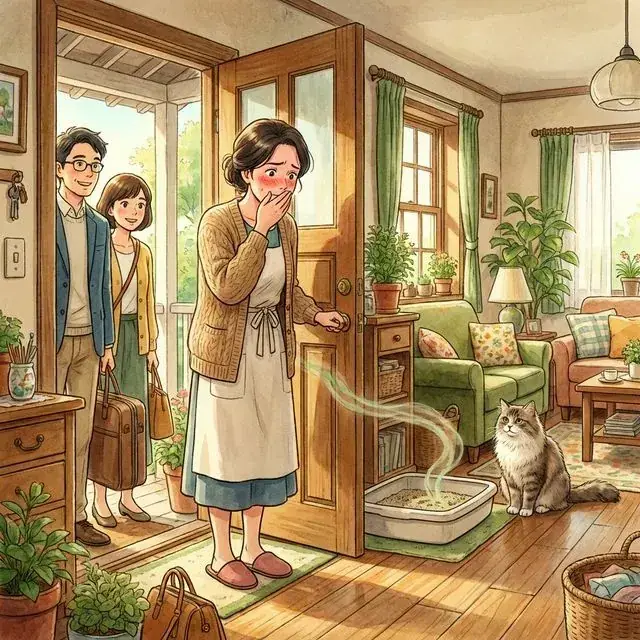
Bacteria break down urea in cat urine, producing ammonia gas. This is the sharp, eye-watering smell that hits you when you open the door.
Sulfur compounds (from feces)
Organic waste produces sulfur-based molecules-similar to what makes rotten eggs smell. These are harder to neutralize than ammonia.
Both are gas molecules that escape from the litter and spread through your home's air. That's why perfumed litters fail, they add fragrance to the air, but the odor molecules are still there.
7 Proven Ways to Reduce Litter Box Odor
Scoop Daily (Ideally Twice)
This is non-negotiable. The longer waste sits in the litter, the more ammonia and sulfur compounds are produced. Daily scooping reduces odor production by up to 70%.
✅ Pro Tip
Keep a small covered trash can next to the litter box with biodegradable bags. This makes scooping take 30 seconds-no excuse not to do it.
Use Activated Carbon Technology
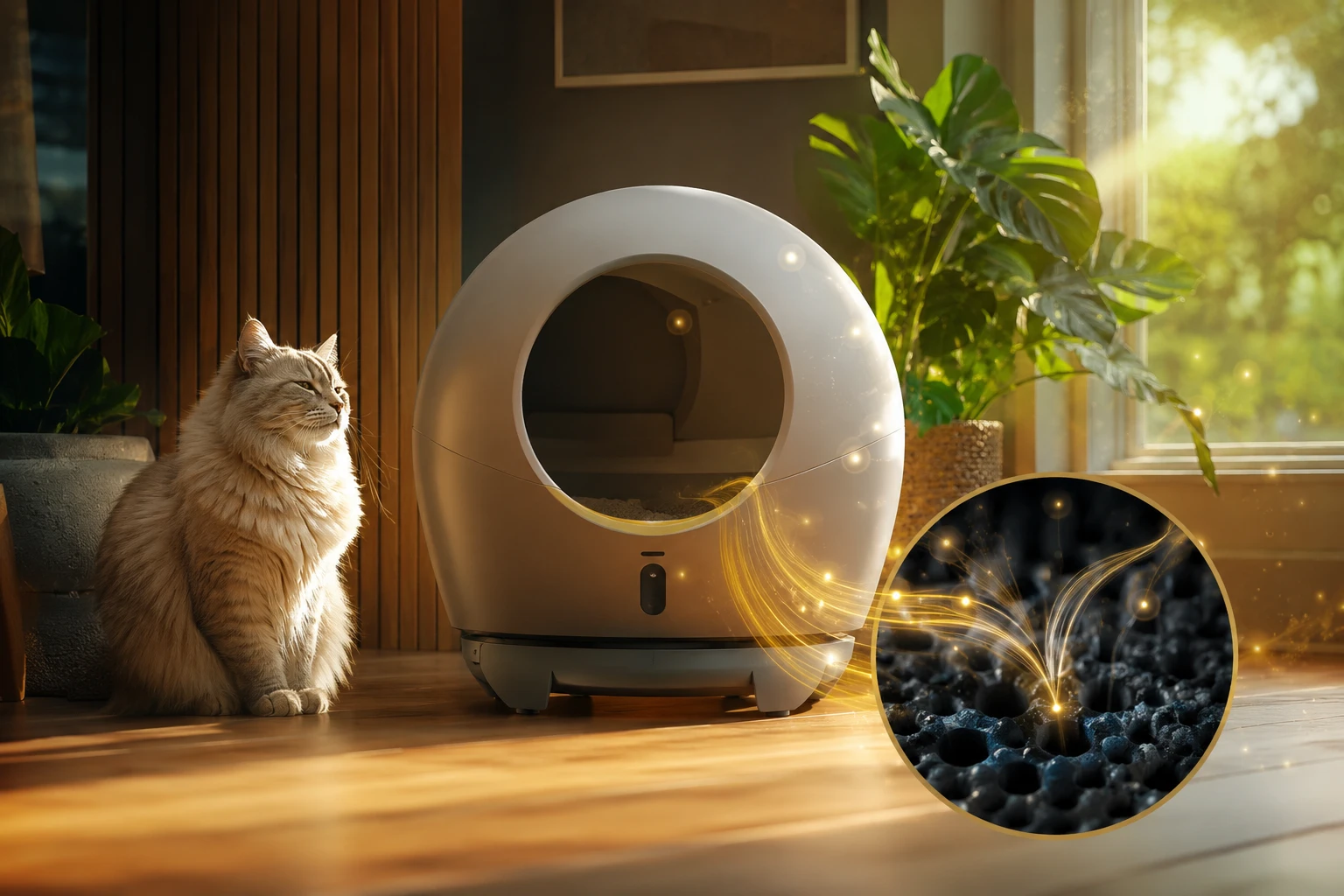
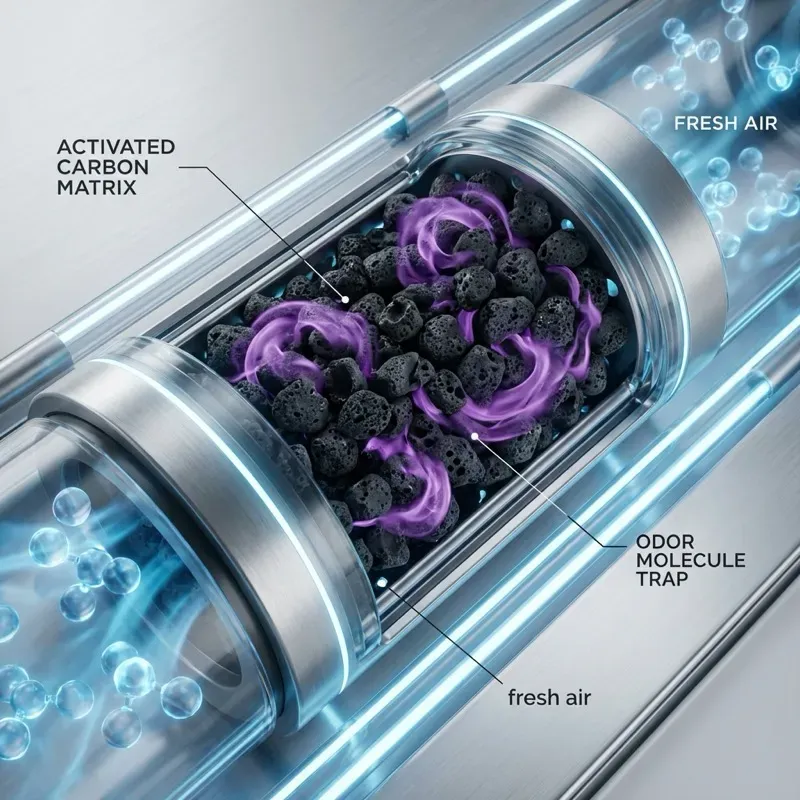
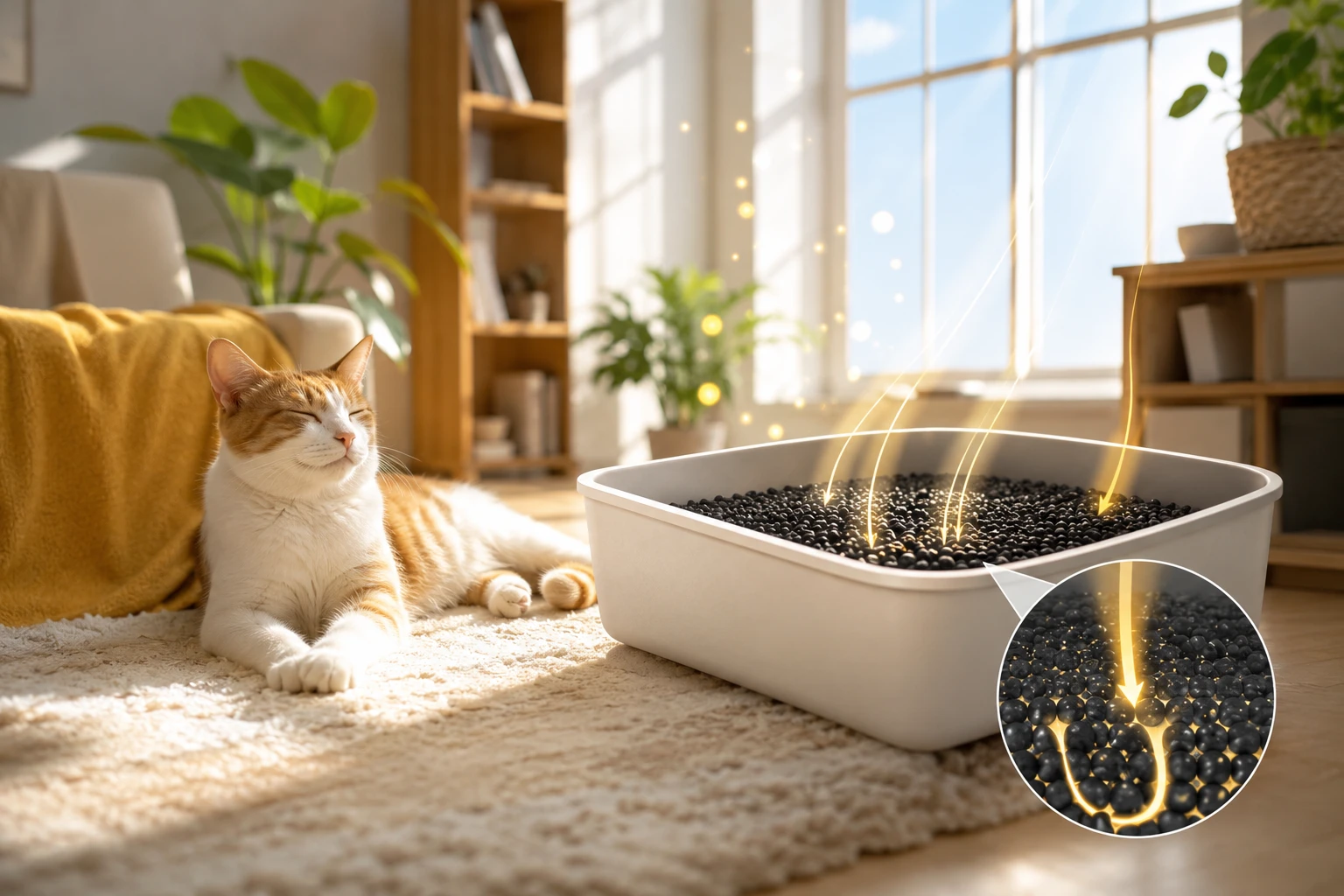
Here's the game-changer most cat owners don't know about. Activated carbon physically traps odor molecules before they escape into your air. It's the same technology used in drinking water filters and-fun fact-spacecraft air purification systems.
🌍 The Football Field Analogy
One gram of activated carbon has the surface area of a football field-all those microscopic tunnels trap odor molecules on contact.
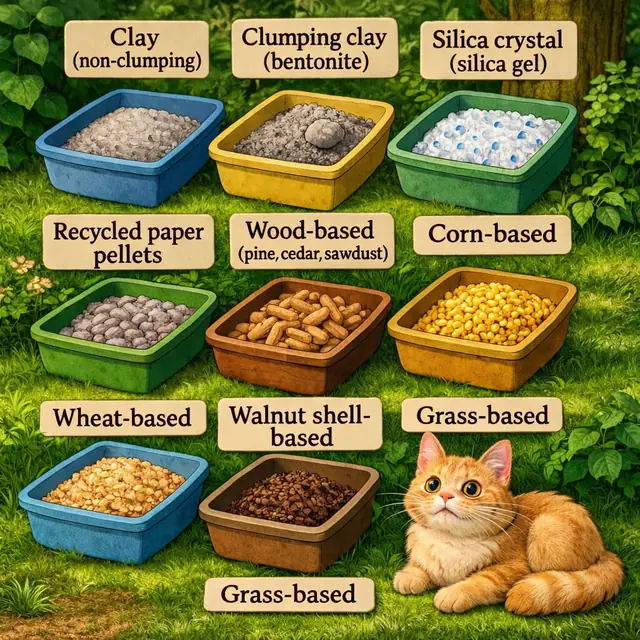
How to use: Sprinkle a thin layer of activated carbon litter additive on top of your existing litter. Works with any litter type, clay, crystal, natural, or silica.

Activated carbon: the same technology trusted in water purification and aerospace
Maintain Proper Litter Depth
Too shallow = waste hits the box bottom and sticks. Too deep = cats dig to the bottom and bring odor-soaked litter to the surface.
✅ Ideal Depth
2-3 inches (5-7.5 cm) for clumping litter
❌ Avoid
Less than 1.5 inches or more than 4 inches
Full Clean Weekly
Even with daily scooping, odor builds up in the litter over time. Once a week:
- Empty all litter completely
- Wash the box with mild soap and water (no harsh chemicals)
- Dry thoroughly before adding fresh litter
- Add a thin layer of activated carbon deodorizer before fresh litter
Optimize Litter Box Placement
Where you put the litter box affects how much odor spreads through your home:
Replace the Box Annually
Plastic litter boxes absorb odors over time, especially if cats scratch the surface. No amount of cleaning can remove odors embedded in scratched plastic.
Budget tip: Basic plastic litter boxes are inexpensive. Replace yearly rather than trying to "deep clean" an old, scratched box.
Skip the Scented Products
This might be counterintuitive, but scented litters and air fresheners often make the problem worse:
- • Fragrances fade within 48 hours, leaving odor molecules behind
- • Strong scents can overwhelm cats' sensitive noses (200M scent receptors vs our 5M)
- • Some cats avoid heavily-scented litter boxes, leading to accidents
- • Mixing perfume with ammonia creates an even more unpleasant smell
Choosing the right litter is part of the solution. See our guide to the best cat litter for smell for options ranked by odor control performance.
A truly fresh home means your cats are comfortable too
What Doesn't Work (And Why)
Common Mistakes
Multi-Cat Household Tips
If you have multiple cats, how to reduce litter box odor becomes even more critical. Here's what works:
The N+1 Rule
Have one more litter box than cats. Three cats? Four boxes. This prevents overuse and gives each box time to "breathe."
Double the Deodorizer
Multi-cat households need more odor-fighting power. Use twice the amount of activated carbon deodorizer.
The Complete Daily Routine
Here's what a truly odor-free litter box maintenance routine looks like:
📅 Daily (2 minutes)
- • Scoop all waste-morning and evening if possible
- • Check litter depth-add if below 2 inches
- • Light sprinkle of activated carbon if noticeable odor
📅 Weekly (15 minutes)
- • Empty box completely
- • Wash with mild soap, dry thoroughly
- • Add fresh activated carbon layer, then new litter
- • Wipe down area around litter box
📅 Yearly
- • Replace the litter box itself
- • Evaluate placement, is there a better spot?
The Bottom Line
Knowing how to reduce litter box odor comes down to understanding what actually causes smells, and what actually eliminates them. Perfumes and fragrances mask; activated carbon traps. Daily scooping reduces odor production; weekly deep cleans prevent buildup.
The technology astronauts use for breathable air in spacecraft? The same material that makes your drinking water tasteless? That's activated carbon, and it works just as well in your litter box.
Ready for a litter box you can't smell?
Free shipping. Never run out. Cancel anytime.
Start autoship →A Seven-Day Odor Reduction Plan That Builds Momentum
If your litter box has been drifting from manageable to unpleasant, the fastest way to reduce odor is to spend one week correcting the system rather than hoping one cleaning session will solve it. Day one is the reset: full scoop, check the box for absorbed odor, wash what needs washing, and start with enough fresh litter depth. Days two through four are about stability: scoop on time, use small maintenance top-ups instead of dramatic dumps, and keep the area around the box visibly clean. Days five through seven are the evaluation phase. By then, you should be able to tell whether the smell is staying localized or whether it is still spreading into the room.
This week-long view matters because odor reduction is not judged by the hour after you clean. It is judged by whether the box is still behaving on the days when life gets busy. A system that looks good only immediately after maintenance is not actually reduced; it is merely temporarily hidden.
Why Odor Rebounds So Fast After a Deep Clean
A deep clean can feel discouraging when the smell returns in a day or two. Usually that rebound means one of three things: the litter is saturating faster than you think, the box material is holding old odor, or there is another source nearby such as a waste bin or floor spot. People often answer a rebound with more fragrance. The better answer is to ask which part of the system recovered poorly.
Once you identify that weak point, odor reduction becomes much more durable. You stop repeating heroic cleans and start making smaller, smarter changes that keep the box from bouncing back to "bad" so quickly.
Set Up the Litter Zone So It Is Easy to Keep Clean
Odor is easier to reduce when the area around the box is designed for maintenance. Hard floors, reachable wipes, a nearby waste solution, and enough space to scoop comfortably all make consistency easier. A cramped litter corner creates skipped tasks, and skipped tasks become smell very quickly.
Sometimes the most effective odor reduction tip is simply making the box easier to care for every day.
Reduction Becomes Easy When the Box Never Gets Ahead of You
The smell feels hardest to manage when the box is always one step ahead of your schedule. Once your routine keeps pace with the load, odor reduction stops feeling like a constant recovery job and starts feeling routine.
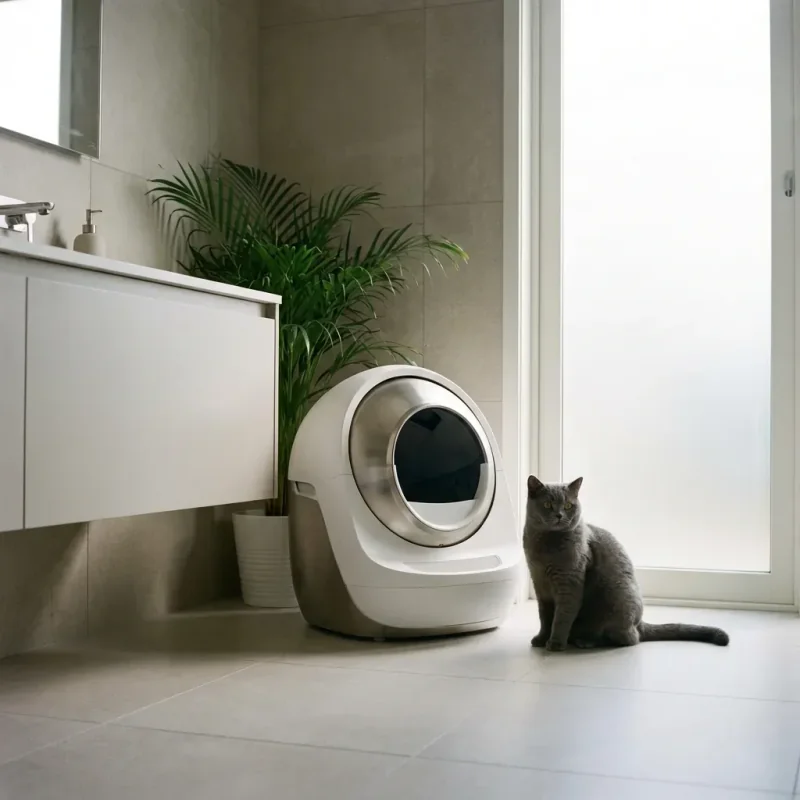
If you are running a self-cleaning unit, the same routine applies but the failure points are mechanical rather than behavioural. For the seven-point diagnostic and model-specific automatic litter box odor fixes, see the self-cleaning guide. And if the smell keeps returning, check that you are using the right amount of litter - the correct depth is the foundation everything else rests on.